
International Research Journal of Engineering and Technology (IRJET) e-ISSN: 2395-0056
Volume: 11 Issue: 04 | Apr 2024 www.irjet.net p-ISSN: 2395-0072
International Research Journal of Engineering and Technology (IRJET) e-ISSN: 2395-0056
Volume: 11 Issue: 04 | Apr 2024 www.irjet.net p-ISSN: 2395-0072
Camacho Monar Mélida1 , Bajaña Escobar Andrea2 , Paredes Proaño Ariana3
1 Professor of the Faculty of Engineering, civil engineering career at the Catholic University of Santiago de Guayaquil
2 Graduated from the Faculty of Engineering, at the Catholic University of Santiago de Guayaquil
3 Graduated from the Faculty of Engineering, at the Catholic University of Santiago de Guayaquil
Abstract - The Guayaquil canton, located on the southwest coast of Ecuador, currently has efficient management of the collection, transportation and final disposal of solid waste. The city of Guayaquil, being located in a region of high seismicity, faces the need for an emerging waste management plan as part of its preparation for possible natural disasters such as earthquakes. The importance of waste management after a natural disaster lies in several aspects such as the proper management of debris to minimize the risks of damage to public health and for the restoration of infrastructure and the reconstruction of the city.
The present investigation addresses the quantification of the volume of debris in the central area of the city covering an area of 1396 Ha and an initial proposal for management and identification of areas for rubble dumps in the Guayaquil canton due to disaster situations is presented.
Key Words: DebrisManagement,DisasterSituations,Solid Waste,risks,earthquakes.
1.INTRODUCTION
ThegeographicalareasinthecityofGuayaquilthataremost likelytobeaffectedbyearthquakesweredetermined,based on historical data of seismic activity and the tectonic characteristicsoftheregion.Forthisresearch,datafromthe RADIUSproject[1]wereusedtoquantifythedebrisandan initialmanagementofdebrismanagementlocationofwaste dumpsiteswasproposed.
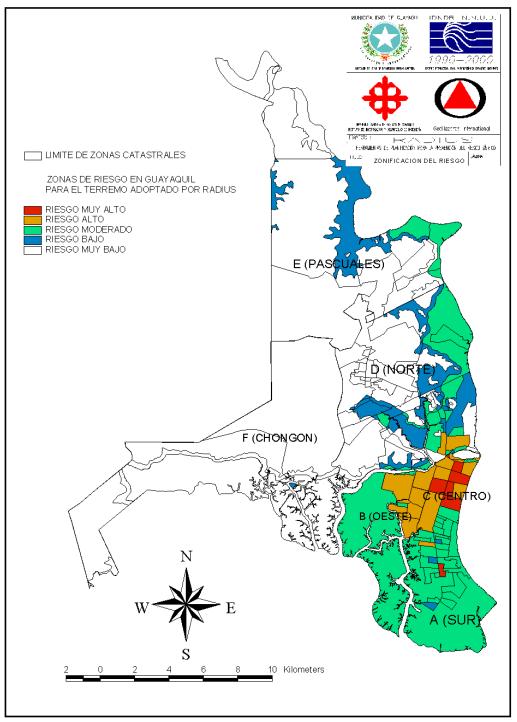
Thefigureofthemapofexpectedseismicintensitiesin the city of Guayaquil and their risks: very high, high, moderate and low as shown in figures 1 for a seismic scenario of VIII, VII and VI presents a visualization of the distribution of seismic forces in the city. Through differentiatedcolors,themapshowsthedifferentareasand theirrespectivelevelsofseismicintensityanticipatedinthe eventofanearthquakeofmagnitude8ormore.
Theextensionoftheurbanarea ofGuayaquil is33,825 hectares.TheareaofthecenterofGuayaquilwasselected, which is characterized by its dense concentration of
infrastructures with more than 50 years of construction, therearemedium-risebuildings,commercialandresidential types,andinaddition,itislimitedtothenorthwithAvenida7 NE-CoronelGregorioEscobedoyRodríguez,Tothesouth with Cjón. 11 S-E – Ayacucho, to the east with Av. Simón BolívarPalaciosandtothewestwithAV.1N-O-Machala(See figure2).
ItshouldbenotedthataccordingtotheRADIUSProject [1];A10%estimateddamagetobuildingswasestimatedin the event ofa Magnitude VIII earthquake,sothissituation will beconsidered.Theestimationofthevolumeofdebris generatedinthecityofGuayaquilafteranearthquakewas carriedoutbyanalyzingaspecificarea(a)inthecitycenter, considering1hawithmediumandhigh-risebuildingsand
International Research Journal of Engineering and Technology (IRJET) e-ISSN: 2395-0056
Volume: 11 Issue: 04 | Apr 2024 www.irjet.net p-ISSN: 2395-0072
anotherarea(b)ofonehectareconsideringlow-riseoneand twofloors,asseeninfigure2.
Furthermore,ifthedensityofdebrisisconsideredtobe 11Ton/m3[2],andtheresultsareshowninTable1
Table -1: QuantificationofDebrisgeneratedinthecentral areaofGuayaquil
b 3´655.798,00
a 2´607.171,84 1.1 [2]
TOTAL 6´262.969,84
1.2 Results
2´867.889,02
4´021.377,80
6´889.266,82
Furthermore,ifthedensityofdebrisisconsideredtobe 1.1Ton/m3[2],thefollowingresultstablewouldbeobtained withanapproximatequantificationof6´889266,82tonsof debrisinthecentralareaofthecitywheretheriskofdisaster isgreater
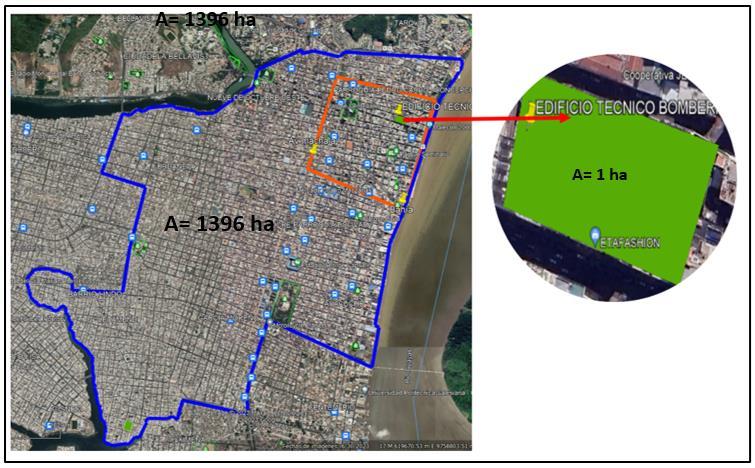
Delimitationofthestudyareainthecentralareaof Guayaquiltodeterminethevolumeofdebris[3]
2.PRELIMINARY POST-EARTHQUAKE DEBRIS MANAGEMENT PROPOSAL
Earthquakesgenerateaconsiderableamountofdebris,which consistsofwasteaccordingtoanestimatedpercentage[4].
Table -2: TypesofdebrisgeneratedVsPercentage
Apreliminaryproposalispresentedforthemanagement of debris in a disaster situation with the priority considerationsof:
HandlingofCorpses;
Debrismanagementand,
Identificationofareasfordebrisdisposal
Inaddition,5possibleareasforthefinaldisposalofthe debris were identified in the city of Guayaquil and Durán, with the characteristics noted in the Summary Table detailing:
LocationinUTMcoordinates-WGS84,
Availablearea,
Approximatevolumeofdebristobedeposited,
Approximatelengthfromthedisastersite(centerof Guayaquilandthewastedump)
Approximatemobilizationtimeperdumptruck
Table -3: PreliminaryDebrisManagementProposal
PreliminaryDebrisManagementProposal
i. CorpseManagement ii. PreliminaryDebris Management
DamageAssessment
ImmediateRemovalofDebrisinFirst AidCareAreasandAreasofCritical andEssentialFacilities
SituationAssessment
Informationgathering
VictimRegistry
IdentificationofCorpses
TransferofCorpses:
Temporarystorageofcorpses
Removal of Debris That May RepresentaThreat
DemolitionofAffectedStructures
Collection and transportation of debris
Classification
Recycling
Transportation
FinalDebrisDisposal
iii. Identificationof Areasfor FinalDebris Disposal after anEarthquake
International Research Journal of Engineering and Technology (IRJET) e-ISSN: 2395-0056
Volume: 11 Issue: 04 | Apr 2024 www.irjet.net p-ISSN: 2395-0072
Among the items considered in the preliminary approximatebudgetwereincluded:
The execution of cleaning tasks, the demolition of structures considering a percentage of 50% of the total volume of debris and the efficient transportation of this debrisusingdumptrucks,overadistanceof19.2kilometers to the site designated for its disposal final (Area 3: Las IguanasSanitaryLandfillSectorE).
Theapproximatecostoftransportationandfinaldisposal isapproximately$28.49/ton,whichrepresentsanessential component in the analysis of debris generation due to disastersituations.
Indisastersituations,especiallycollapsesinthedrinking water and sanitation system due to earthquakes, various considerationsmustbetakentoguaranteethesupplyofsafe water. This involves accurate damage assessment, finding alternative water sources, gradually restoring the system, storingcleanandsafewater,andpromotingpersonalhygiene practices.Furthermore,itisessentialtocollaboratewithlocal authoritiesforanorganizeddistributionofdrinkingwater, prioritizingthebasicneedsoftheaffectedpopulation.
Toimprovewastemanagementindisastersituations,itis essentialtoestablishandmaintain:
Completedatabasethatrecordsavailableequipmentand machinery, operating status such as excavators and dump trucks, by public entities such as the Municipality of Guayaquil and the Government. A constant update of this database guarantees the accuracy of the information and avoidsoperationaldelays.
Theuseofstandardizedsheetsprovidesessentialdetails abouttheequipment,facilitatinginformeddecision-making duringemergenciesandconsideringaspectsbeforeandafter anearthquake,environmental impact,wastemanagement, andhandlingofcorpses.
In addition, the importance of staff training and awarenessaboutresourceconservationishighlighted,aswell ascoordinationbetweeninstitutionsatthelocalandregional level for an effective and strategic response to disasters, including public service companies must have emergency planstoavoiddifficultiesafteranearthquake
[1] Argudo, J, (2000). RADIUS Project. “Risk assessment tools for the diagnosis of urban areas against seismic disasters. Guayaquil, Ecuador. Vol. I Obtenido de https://www.jaimeargudo.com/wp-
content/uploads/2011/04/RADIUS-VOLUMEN-IRESUMEN-EJECUTIVO.pdf
[2] RC Miajadas., (2023). Obtenido de http://www.residuosdeconstruccion.com/planta-degestion-deresiduos.php#:~:text=Densidad%20entre%20850%20y %201100,de%20850%20Kg%2Fm3
[3] Bajaña, A. y Paredes, A. (2023). Proposal for management, handling and identification of areas for waste dumps in the Guayaquil Canton due to disaster situations. (UCSG, Ed.) Obtenido de http://repositorio.ucsg.edu.ec/handle/3317/21845.
[4] Hernández,F.,&Anglés,M.(2021).EarthquakeWaste Management, Is It Possible in Developing Countries? Case Study: 2017 Mexico City Seism. MDPI Journals Awarded Impact Factor, 17. Obtenido de https://www.mdpi.com/2071-1050/13/5/2431
[5] OPS/OMSElSalvador.(2002).Lossismospuedentener consecuenciassignificativasenelsistemadesuministro deaguapotable,incluyendoladevastacióncompletao parcial de las infraestructuras relacionadas con la recolección,transporte,tratamiento,almacenamientoy distribución. El Salvador. Obtenido de https://iris.paho.org/bitstream/handle/10665.2/55905 /vulnerabilidadsistemas_spa.pdf?sequence=1&isAllowe d=y
[6] OrganizaciónPanamericanadelaSalud[OPS].(2003). Gestiónderesiduossólidosensituacionesdedesastre. SERIE SALUD AMBIENTAL Y DESASTRES No.1. Organización Panamericana de la Salud (OPS), Washington,D.C.
[7] Vera, D. (2017). Reconstruyendo las cifras luego del sismo memorias. INEC. Obtenido de https://www.ecuadorencifras.gob.ec/documentos/webinec/Bibliotecas/Libros/Memorias%2013%20abr%202 017.pdf