
International Research Journal of Engineering and Technology (IRJET) e-ISSN: 2395-0056
Volume: 11 Issue: 04 | Apr 2024 www.irjet.net p-ISSN: 2395-0072
International Research Journal of Engineering and Technology (IRJET) e-ISSN: 2395-0056
Volume: 11 Issue: 04 | Apr 2024 www.irjet.net p-ISSN: 2395-0072
1Mali Vyankatesh S., 2Dr. K. M. Bagwan, 3 Jadhav Prathamesh D, 4Yewale Vikrant V. 5Hulage
Vipul D. 6Shinde Anisha S., 7Pawar Tanuja R. 8Thorat Jagdish A.
1,3,4,5,6,7,8 Students, Dept. of Civil Engineering, GP Karad, Maharashtra, India. 2 Professor, Dept. of Civil Engineering, GP Karad, Maharashtra, India.
Abstract - This project describes about the" Rural Development (Water Audit of GPK Institute Campus".) water audit is performed in the college with various aspectsofwater such as sources, supply, utilization, disposal etc. On location perception and talk with the related staff was taken up to get the information. Bore wells fulfil the all requirements of institute Water audit is a powerful control device for minimizing losses, optimizing numerous makes use of and accordingly permitting sizeable conservation of water. Water audits stability the quantity produced with the quantity billed and account for the closingwater(loss).Comprehensiveaudits can provide the software an in-depth profile of the water delivery device and water users, permitting less difficult control of assets and advanced reliability.Itisanessentialstep toward water conservation and, if connected with a leak detection plan, can keep the software a good-sized sum of money and time.
Key Words: - Water audit, Non-revenue water (NRW), effluent unaccounted for water (UFW),water conservation
The water audit displays the volume of water that the consumer uses, enters, and exits. A water audit is a systematic,empiricalinvestigationofthewateraccountsfor theproject.Itprovidesarational,empiricalframeworkthat categorizes each use of water in your system. It is an instrumenttocounteractshortages,leakage,andsystemic losses.Awaterauditcanbeusedtoidentifyandquantifythe stepsthatcanbetakentoreduce wateruseandlosses. In addition to providing solutions for various water-related problems,waterauditsandtheiranalysishavethepotential to save valuable public cash. A water audit is the most effectiveinstrumentforcontrollingwater.
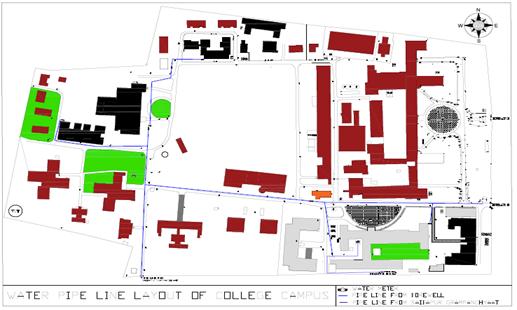
1.1
• To determinetheactuallossesbroughtonbyoverflow, unauthorizedconnections,andpipeleaks.
• To determine which areas, require control and maintenancemeasurestobetakenimmediately.
• To monitor excessive and unnecessary water use and waste.
2.1 R.A.Ganorkar, Isha. P. Khedikar, Nagpur.
They proposed that although water resources are limited globally, the globe has an endless supply of water. population growth. Throughout history, the emergence of civilizationshasbeenlargelydependentonthedevelopment ofwatersuppliesforhumanuse.However,therearefewer high-quality water resources available as our populations continuetoexpandandchange.Thebuildingofcitiesinarid regions, pollution, and climate change are a few of the elements aggravating the changing supply and demand imbalances. Man must use the water resources that are currentlyavailableascarefullyandeffectivelyaspossibleto accountforthis.Alogical,scientificfoundationforclassifying all of the water use in your system is provided by water audits.Inordertoaddressissueslinkedtoshortages,leaks,
International Research Journal of Engineering and Technology (IRJET) e-ISSN: 2395-0056
Volume: 11 Issue: 04 | Apr 2024 www.irjet.net p-ISSN: 2395-0072
and losses caused by drought, the American Water Work Association (AWWA) and the International Water Association(IWA)launchedacomprehensiveefforttoassess theaforementionedissueswiththeuseofaudits.
Mahish,Chennai
Acomponentofgreenorenvironmentalauditsisthewater audit, which is defined as the examination of work done inside of firms whose operations may pose a risk to the environment and public health. The National Assessment and Accreditation Council (NAAC) considers this aspect seriously when evaluating the educational institution. Accordingly,awaterauditcoveringseveralareasofwater, includingsourcesandsupplies,iscarriedoutinthecollege. Use, discarding, etc. In order to obtain the information, a discussionwiththerelevantstaffaboutperceptionwasheld. Borewellsmeetalloftheinstitute'srequirementsandarea requirementforstaffcolonies.providedbythemunicipality. Water from the institution is consumed by the following areas:laboratories(30–35%),gardens(20–25%),restrooms (15–20%),boys’hostel(15–20%),drinkingwater(10–15%), sports fields, and other areas (5–10%). Seepage in the previous construction, water reuse, and lack of rainwater gatheringarethereasonsfortheinstitute'stransformation. concludedthatwhiletheinstitutehasitsownwatersupply and source based on necessity, there were still areas for improvement.
To comprehend the existing water utilization and project future requirements, an examination of the availability of water sources and historical consumption trends for different sectors is required. It is imperative to take into accountdatapertainingtotheadvancementofsustainable water sources, including those derived from the adaptive reuseofwastewater.
3.2
Directeyeobservationwasutilizedtopreciselymeasurethe amount of water each user received, accounting for both drinking and non-drinking applications. Water is also utilizedinavarietyofwaysintheday-to-dayoperationsof colleges, such as gardening, manual labour, cleaning, restroomflushing,foodpreparation,sprinkling,andsoforth. Futuresystemupdates,additions,andmodernizationswill benefitfromthisresearchaswell.
3.3 System Audit
Examination of the current water usage and systems for various sectors in routine college activities such as gardening,practicalwork,flushingtoiletsandwashrooms,
cleaning corridors, preparing some food and drinks, sprinklinglawns,andothertasksisnecessarytodetermine theirlevelofupkeepandoperationalefficiency.
3.4 Discharge Analysis Input data:
Itisnecessarytoinvestigatetheeffluentsfromcompanies, irrigationreturnflows,andhomewastewatertoensurethat they meet environmental regulations and that there is a chance to recycle waste water and recover valuable byproducts.
3.5 Report Water Audit
1.Awaterauditreportmay,contain
2.Quantityofwaterallottedforaspecificactivity.
3.Waterlossandsystemefficiency,aswellasthe causesof suchlosses.
4. Recommended actions to reduce water loss and boost effectiveness.
3.6 Tests Performed
Itiscrucialtoconductavarietyoftestsonwatertoensure itsquality.Thiswillprovideinsightintothequalityofwater thatisfitforhumanuse.
Following tests are performed:
DeterminationofpHvalue
DeterminationofAcidityofwater.
DeterminationofAlkalinityofwater.
Measurement of Turbidity by Digital Turbidity meter.
DeterminationofHardnessofwater.
4. VISUAL EXAMINATION AND COMPUTATION
Table 1. Visual Examination
4.1 Process Study Data Input:
Phase I (New Building, Main Building & Workshop)
TotalconsumerofInstitute:
Totalstaff=210Nos
Totalstudents=1839Nos
Totalsupplywater:Grampanchyat=514500liter, permonth.
International Research Journal of Engineering and Technology (IRJET) e-ISSN: 2395-0056
Volume: 11 Issue: 04 | Apr 2024 www.irjet.net p-ISSN: 2395-0072
Borewell =125000liters,permonth.
Collegeworkingdaysconsider26
Totalwatersupplyperday24596.15literfrombothsources.
Table 2. (Flushing + Toilet + Basin) use by per consumer.
TotalConsumptionperdayaverage 20383.57 liter/day.
Table 3. For drinking purpose
Average = 2909.93 liter/day
• Regarding Additional College Activities:
1.Cleaningoftiles:-245liter/day.
2.Chemistrylaboratory30liter/day.
3.Geotechnicallab.45liter/day.
4.Gardening.150liter/day.
5.Physiclaboratory.:-20liter/day.
Totaldailyaverageconsumption: Fordrinking+forflushing/basin/toilet/forother all activity.
2909.93+20383.57+245+30+45+150+20 =23783.5liter/day.
•Actualwatersupply=24596.15litre.
Totaldailyaverageloss=24596.15–23783.5 = 812.65 liter/day
Phase II ( Girls Hostel)
Sourceofwater:-GrampanchyatSaidapur
Totalsupplyofwaterconsidering =16761.11liter/day
Considering30days:
•Consumer:-160girls.
•WaterConsumption:-
1.Forbathing=3.5liter/Capita/day.
2.Fortoilet=3.5liter/Capita/day.
3.Fordrinking=3Liter/Capita/day.
4.Forwashingclothandotheractivity =25lit/day/cap.
•Formess.=600lit/day.
•Gardening.=40lit/day.
Total Consumption per day = per capita activity
×Consumer)+mess+Gardening =(98×160)+800+40
Consume=16520liter/day.
•Actualwatersupply=16761.11lit/day.
•Totaldailyaverageloss=16761.11–16520. = 241.11 liter /day.
Phase III ( Boys Hostel)
Sourceofwater:-GrampanchyatSaidapur
Totalsupplyofwater=19000liter/day
Considering30days.
Consumer=240student.
Waterconsumption:-
1.Forbathing=30liter/day.
2.ForToilet=30liter/day.
3.ForDrinking=3Liter/day.
4.Forwashclothandotheractivity=15liter/Capita.
•TotalConsumptionperday:=(percapitaactivity×consumer) =(78×240) =18720liter/day.
Totaldailyaverageloss=19000-18720 = 280 liter / day
Phase IV (Canteen)
Source:GrampanchyatSaidapur.
Totalsupplyofwater=1711.53liter/day.
Considering=26days.
Canteenallactivityuseofwater=1650liter/day.
Totalaverageloss=1711.53–1650 = 61.53 liter / day.
Resultsareobtainedbyperformingabovetestsmentionedin 3.6
Table 4. Water Test and results.
Sr. No. Test Result obtained Permissible Value (As per WHO)
pH 7.02 6.5to8.5
Turbidity Nil 5mg/litto 10mg/lit
Acidity 14mg/lit lessthan 200mg/lit.
© 2024, IRJET | Impact Factor value: 8.226 | ISO 9001:2008
International Research Journal of Engineering and Technology (IRJET) e-ISSN: 2395-0056
Volume: 11 Issue: 04 | Apr 2024 www.irjet.net p-ISSN: 2395-0072
Followingconclusionareobtainedfromaboveresults:
1.Theexecutivesummaryacknowledgesthecollaboration with Government Polytechnic Karad for the water assessment study and highlights the key findings, observations,andrecommendationsforwaterreduction.It outlines the scope of the water audit and the measures proposedforconservingwaterresources.
2. The project examines a water audit at Government Polytechnic Karad, focusing on water distribution, leaks, fixtures, and consumption patterns, suggesting measures likereplacinghigh-flowfixtures.
3.Theprojectreportprovidesimportantinformationabout thevalueofwateraudits,howwelltheyarecarriedout,and thepossiblebenefitsofputtingwaterconservationmeasures intoplaceacrossarangeofindustries.
1.C.G.Shruthi,N.S.Sathisha,andP.Jeevitha,WaterAuditing of Chikmagalur Water Supply Scheme, Journal on EnvironmentalScience,ComputerScienceandEngineering& Technology.2013,PageNo.1088-1093.
2.KennethBedu-Addo,WilliamGaribaAkanwariwiak,Isaac FrimpongMensa-Bonsu,"WaterAuditofBreweries:ACase StudyofaModernBreweryinGhana"UniversalJournalof Environmental ResearchandTechnology,2013Volume-3, PageNo.311-317.
3.GeneralGuidelinesforWaterAudit&WaterConservation, GovernmentofIndiaMinistryofWaterResources,December 2005.
4. Rathi Dinesh (2005), "Water audit in National scenario National conference water management conservation and sustainabledevelopment.AbstractVol1,pp26-27.
5. Rathi Dinesh (2005), "Water audit in National scenario National conference water management conservation and sustainabledevelopment.AbstractVol1,pp26-27.
BIOGRAPHIES
Dr. K. M. Bagwan I/CPrincipal, HeadAndProfessorofCivil Engg. Dept.
Government PolytechnicKarad

Mr. Vyankatesh S. Mali Student
Government PolytechnicKarad
Mr Vipul D Hulge
Student
Government PolytechnicKarad
Mr. Prathamesh D. Jadhav
Student
Government PolytechnicKarad
Mr. Vikrant V. Yewale
Student
Government PolytechnicKarad