
International Research Journal of Engineering and Technology (IRJET) e-ISSN: 2395-0056
Volume: 11 Issue: 04 | Apr 2024 www.irjet.net p-ISSN: 2395-0072
International Research Journal of Engineering and Technology (IRJET) e-ISSN: 2395-0056
Volume: 11 Issue: 04 | Apr 2024 www.irjet.net p-ISSN: 2395-0072
Chirag Chaudhari1 , Kunal Girme2 , Omkar Ghatge3 , Parikshita Gaikwad4, Prof. Sarita Khedikar5
1234Students, Department Of Computer Science And Engineering (IOT And Cybersecurity Including Blockchain Technology), Smt. Indira Gandhi College Of Engineering, Navi Mumbai, India.
5Professor, Department Of Computer Science And Engineering (IOT And Cybersecurity Including Blockchain Technology), Smt. Indira Gandhi College Of Engineering, Navi Mumbai, India.
Abstract – In a remarkably short span, non-fungible tokens (NFTs), a subset of blockchain-based virtual assets, have sparked extraordinary investor interest. Viewed as both a craze and the future of digital art, NFTs have fetched staggering sums at auctions, reaching into the millions of dollars.Thissurge ininterest reflectsagrowingrecognitionof the unique properties of NFTs, which may redefine the landscape of blockchain development and exchange. To understand NFTs, it's crucial to grasp the concept of nonfungibility. Unlike fungible assets, which are interchangeable with identicalorsimilarobjects,non-fungibletokensrepresent digital information stored on a blockchain that cannot be exchanged on a one-to-one basis. This distinction from traditional currencies, which rely on fungibility for their role as mediums of exchange, opens up new avenues for digital ownership and expression. The process of creating an NFT typically involves uploading a digital file to an NFT auction market, where it is recorded on the blockchain as a unique token. Artists can create exclusive NFTs representing their work, enabling them to produce additional tokens based on the same artwork. Consequently, purchasers of NFTs do not necessarily gain access to the original digital file, yet they acquire ownership of a tokenized representation of the artwork.Audio-centeredcreativeworkscanalsobetokenized as NFTs, broadening the scope of possibilities within the NFT ecosystem.
Key Words: NFTs; Blockchain; Marketplace; Scalability; Security; Internet Computer Platform.
The advent of Non-Fungible Tokens (NFTs) has marked a transformative epoch in the realm of digital ownership and expression, introducing a groundbreaking concept to the digital landscape-uniqueness and indivisibility. NFTs represent a paradigm shift in how we perceive and transact digital assets, and their influence extendstoabroadspectrumofcreativefields.Thesetokens, oftenassociatedwithuniquepiecesofdigitalcontent,have introducedanovelconcepttothedigitalspace'suniqueness and indivisibility. Unlike traditional cryptocurrencies like BitcoinandEthereum,whereeachunitisinterchangeable, NFTsareoneofakind,makingthemidealforrepresenting ownership of digital or physical items in the digital landscape.Thisuniqueness,alongwiththesecurityandtrust providedbyblockchaintechnology,formsthecornerstoneof
the NFT ecosystem. We embark on a comprehensive explorationofNFTmarketplaces,focusingontheirrolein the creation, sale, and management of video, audio, and image NFTs. We will scrutinize the burgeoning trend of decentralized NFT marketplaces and their potential to reshapetheindustry.Throughvariouscasestudies,weaim toprovideaholisticunderstandingofthisdynamicdigital frontier, emphasizing the profound impactonthe way we create,trade,andexperiencedigitalcontentacrossdifferent mediaformats.
TheriseofNon-FungibleTokens(NFTs)hascreated many NFT marketplaces where artists and collectors can trade digital items. However, these marketplaces face important problems. They don'torganize items,making it hardforuserstofindwhattheywant.Thetechnologythey useisnotveryeco-friendlyandcanharmtheenvironment. There'softenconfusionaboutwhoownsdigitalstuff,which leadstolegalissues.Keepinguserssafefromscamsanddata leaksissuperimportant.Also,makingsureeveryonecanuse thesemarketplaceseasily,andthattheyworktogetherwith differentblockchains,isachallenge.Becausetherulesabout NFTs are always changing, these marketplaces need to followthelawcarefully.SolvingtheseissuesisvitalforNFT marketplaces to grow smartly and responsibly while still beinghelpfultoeveryoneinthedigitalworld.
SeveralNFTmarketplaceshaveemergedinrecentyears, includingOpenSea,Rarible,SuperRare,andNiftyGateway. Suchmarketplacesallowuserstobuy,sell,andtradeNFTs usingvariouscryptocurrenciesandalsoofferfeaturessuch asauctions,fixed-pricesales,andlimitededitiondrops.
TheuseofNFTshasrevolutionizedthewaydigital assetsweremanagedpreviously.BeforeNFTs,therightto ownership was not possible for digital assets. The demonstrationofthetechnologiesthatwillberequiredto build a proper NFT marketplace [14]. The purpose of providing extensive information on the NFT, including its application, method of operation, buying, creating, and sellingprocedures,aswellasitsuse.TheNFTwhenpaired withMetaverse,representsasignificantadvancementand revolution in the realm of virtual reality and blockchain,
International Research Journal of Engineering and Technology (IRJET) e-ISSN: 2395-0056
Volume: 11 Issue: 04 | Apr 2024 www.irjet.net p-ISSN: 2395-0072
giving artists a new avenue to express their unique and valuablework[28].NonfungibleTokensasCoreComponent of a Blockchain-based Event Ticketing Application. The widespread of NFTs built on the Ethereum blockchain in various fields. Also, it shows the comparison between the differentNFTmarketplacesthatarebuiltontheEthereum blockchainMainnetwork[29]. Thewidespreadapplication of blockchain-based technologies, and the mechanisms in place for verifying ownership of digital assets and thus, meansofsecuringthemremainedsusceptibletotampering thattranslatedintosignificantlosses.Decadesofresearch andadvancementsinblockchainledtothedevelopmentof Non-Fungible Tokens (NFTs), which are tokens that represent digital assets and have proof of ownership embedded [2]. Blockchain, a potentially disruptive technology, advances many different applications, e.g., crypto-currencies,supplychains,andtheInternetofThings. Under the hood of blockchain, it is required to handle different kinds of digital assets and data. The nextgeneration blockchain ecosystem is expected to consist of numerous applications, and each application may have a distinct representation of digital assets. However, digital assetscannotbedirectlyrecordedontheblockchain,anda tokenizationprocessisrequiredtoformattheseassets.the tokenizationprocessontheblockchain[30].Investigatedthe sustainabilityofNFTmarketplacesandsuggestedthatthe high energy consumption required for NFT minting and tradingcouldbereducedbyusingrenewableenergysources [8].InstudyingthepricingbehaviorofNFTs,wefoundthat thepriceofanNFTisinfluencedbytheobservedvalueofthe primaryassetandtherarityoftheNFT.Inspectedtheroleof NFT marketplaces in supporting creative industries. NFT marketplacescouldprovideanewrevenuestreamforartists andcreatorsandcouldalsoofferopportunitiesforsmaller artiststogainexposureandselltheirwork[10]. Studiedthe factorsthatinfluencetheadoptionofNFTmarketplacesand foundthatfactorssuchasusefulness,easeofuse,andtrust haveahugeimpactontheadoptionofNFTs[11].TheStudy relatedtoadescriptiveoverviewofNFTanditstechnologies specificallyblockchainandEthereum.NFTsaretransparent, traceable, and secure since they are built on blockchain technology,particularlyEthereum. Eachasset'sownership maybetracked,whichimprovesauthenticity.Artcollectors and fans were drawn to the concept of having total possession of an original, bought digital asset, such as photographs,gifs,films,music,etc.,whichspurredaquick expansion in the market [12]. Non-fungible tokens (NFT) utilized blockchain technology for the first time in early 2021 in a way that was readily apparent to the general public. The ownership of digital goods such as pictures, music, movies, and virtual creations is recorded in smart contractsonablockchain,andNFTsaretradablerightsto such assets. They investigated if NFT price is related to cryptocurrency pricing given that the NFT market was founded on cryptocurrencies. Only a small amount of volatilitytransmissionbetweencryptocurrenciesandNFTs is shown by a spillover index. However, the low volatility
transmissions also suggest that NFTs can be considered a low-correlation asset class [5]. Blockchain-enabled cryptographicassetsknownasnon-fungibletokens(NFTs) serveasevidenceofownershipfordigitalitems.Inthisquick responseessay,theyhaveexaminedtheimportanceofNFTs for business owners in the creative industries. First, they concentratedonthenewdigitalcapabilitiesprovidedbythe technology; second, they examined NFTs in light of the recent boom and bust in Initial Coin Offerings (ICO); and finally,theytookalonger-termhistoricalstancetoexamine how earlier speculative waves have impacted the current NFTeconomy[21].
TheNFTmarketplaceshaverevolutionizedtheart world by providing a new platform for buying and selling digital artwork. It also highlights the economic and social potentialofNFTmarketplacestosupportsmallerartistsand provide new revenue streams and opportunities, to gain exposureandselltheirwork.Futureresearchcouldfocuson the development of more sustainable methods for NFT mintingandtrading.
The process involved in creating an NFT (NonFungible Token) encompasses several steps. Initially, the artist uploads their digital file onto an NFT marketplace, where it undergoes a transformation into an NFT and becomes stored on a digital ledger. This transformation enables the artwork to be traded using digital currencies within the marketplace. Although an NFT representing an artist'screationmaybeuniquetothem,theartisttypically retainscopyrightownershipoftheoriginalwork.Thisallows themthefreedomtoproduceadditionalNFTsbasedonthe sameartwork.WhenanindividualpurchasesanNFT,they donotautomaticallyacquirethecopyrighttotheunderlying digitalfile,nordotheygainexclusiveaccesstoit.Anyonecan potentiallycontributetheirownorsomeoneelse'sartwork to an NFT without validating their status as the original artist. This phenomenon heightens the real-world risk of imposters uploading NFTs onto auction platforms under pretenses,claimingownershipofvaluableassets.Oneofthe definingcharacteristicsofNFTtokensistheirpeer-to-peer nature,devoidofanycentralizedauthorityforapprovingor executing transactions. Each NFT token possesses immutableproperties,ensuringthatitsvalueandattributes remain unalterable. Every NFT is stamped with a unique digitalsignature,preventinganysubstitutionorcomparison with other tokens. Within this decentralized ecosystem, artistshavetheopportunitytomonetizetheirartworksby selling them as NFTs. This process not only provides creators with a platform to showcase their talent but also offerscollectorsthechancetoownexclusivedigitalassets. Despite the potential for misuse and exploitation, the growingpopularityofNFTssignifiesaparadigmshiftinthe way digital art is perceived, valued, and traded in the contemporarylandscape
International Research Journal of Engineering and Technology (IRJET) e-ISSN: 2395-0056
Volume: 11 Issue: 04 | Apr 2024 www.irjet.net p-ISSN: 2395-0072
ThescopeforNFTmarketplacesissignificantand multifacetedways.Withtheongoingdigitaltransformation and the growing interest in owning and trading unique digital assets, NFT marketplaces have ample room for expansion. They can continue to serve as platforms for artists,musicians,celebrities,gamers,andcontentcreators tomonetizetheirwork.Non-fungibletokensorNFTshave beeninthespotlightforalmostallofthefirsthalfof2021. Theabilitytorepresentauniqueassetdigitallyandhavean immutableproofofownershipappealedtotheuserswhich resulted in the exponential growth of this space. NonfungibletokensorNFTshavebeeninthespotlightforalmost allofthefirsthalfof2021.Theabilitytorepresentaunique asset digitally and have an immutable proof of ownership appealed to the users which resulted in the exponential growth of this space. As more industries and businesses explore NFTs for various purposes, such as virtual real estate, event tickets, and digital collectibles, NFT marketplaces can diversify their offerings. Moreover, addressing current challenges, including standardization, security,andregulatorycompliance,willbecrucialfortheir sustainedgrowth.TheriseofNon-FungibleTokens(NFTs) has created many NFT marketplaces where artists and collectors can trade digital items. However, these marketplacesfaceimportantproblems.Theydon'torganize items,makingithardforuserstofindwhattheywant.The technologytheyuseisnotveryeco-friendlyandcanharm theenvironment. There'softenconfusionaboutwhoowns digitalstuff,whichleadstolegalissues.Keepinguserssafe fromscamsanddataleaksissuperimportant.Also,making sureeveryonecanusethesemarketplaceseasily,andthat theyworktogetherwithdifferentblockchains,isachallenge. Because the rules about NFTs are always changing, these marketplacesneedtofollowthelawcarefully.Solvingthese issues is vital for NFT marketplaces to grow smartly and responsiblywhilestillbeinghelpfultoeveryoneinthedigital world. The platform for this operation, WEB3.0, is the cominggenerationoftheinternetwhichholdstheimplicitin changing the way we interact and distribute online, by furnishing a more secure and decentralized terrain for druggies, inventors, and businesses in the form of DecentralizedoperationsandFinancewhichallowsforthe creationanduseofoperationsthatdon'tcalculateoncentral waiters and interposers, and also enabling the use of a decentralized fiscal system where druggies can directly manageandinvesttheirmeanswithouttheneedofacentral authority.Thebusinessplatformdealswithaspecifictypeof artratherthananabundantorderofNFTsavailableonthe internet,thereforeattractingamorefocusedandengaging crowd,leadingtofurtherdealsofNFTsandmoremintingby the possessors. As blockchain technology advances and becomes more eco-friendly, NFT marketplaces can also contributetoagreenerdigitalecosystem.ThescopeforNFT marketplaces extends into various sectors and has the
potential to reshape how we buy, sell, and interact with digitalassetsinthefuture.
ThecorecomponentsofNFTareasfollows:
Bitcoinemploysthe“proof ofwork”techniqueto achieve consensus on transaction data in a distributed system.Blockchainisadistributed,attached-onlydatabase thatmaintainstrackofalistofdataentriesthatarelinked and secured using cryptographic methods. Blockchain technology provides a solution to the long-standing Byzantinedilemma,whichwassolvedbyalargenetworkof dishonestindividuals.Becauseanychangestotherecorded datarenderallsubsequentdataincorrect,theshareddataon the blockchain becomes immutable after it has been validated by most nodes. Because it provides a secure environmentforsmartcontractexecution,Ethereumisthe mostoftenusedblockchainplatforminNFTschemes.
SMART
SmartcontractswereinitiallyproposedbySzaboas a means of speeding up, verifying, and executing digital agreements. Ethereum advanced smart contracts in blockchain technology. Blockchain-based smart contracts leverage Turing-complete scripting languages to perform complex operations and strict state transition replication through consensus procedures to ensure ultimate consistency. Smart contracts enable unknown parties and scatteredparticipantstoconductfairtransactionswithout theneedfora trustedthird party,andtheyalsoprovidea uniformfoundationfordesigningapplicationsacrossawide rangeofsectors.Appsthatoperateontopofsmartcontracts benefit from state-transition mechanisms. All users have access to the states containing the directions and parameters, assuring that the directions are carried out transparently. Furthermore, the placements of states betweendistantnodesmuststayconstant,whichiscrucial forconsistency.MostNFTsystemsleveragesmartcontractbased blockchain platforms to enable order-sensitive executions.
ADDRESS&TRANSACTION:
Blockchain addresses and transactions are fundamental concepts in cryptocurrencies. A blockchain addressisauniqueidentifierallowingausertomove and receiveassets,justlikeabankaccountwhenusingmoneyin abank.Itiscomposedofaseriesofalphanumericcharacters generatedbyapairofpublicandprivatekeys.Totransfer NFTs, the owner must show that s/he possesses the appropriate private key and send the assets to another addressusingavaliddigitalsignature.Thisstraightforward activityistypicallyperformedusingaBitcoinwalletandis
International Research Journal of Engineering and Technology (IRJET) e-ISSN: 2395-0056
Volume: 11 Issue: 04 | Apr 2024 www.irjet.net p-ISSN: 2395-0072
referredtoassubmittingatransactiontousetheERC-777 smartcontractstandard.
TOKENIZATION:
A token is typically a digital representation of an asset available in the physical or virtual worlds. In the blockchaindomain,atokencanbeusedtorepresentsome cryptocurrencies, such as Bitcoin or Ether. Technically, a token is implemented by an algorithm defined in a smart contract on a blockchain. Smart contracts are essentially computerprogramsthatverifyorimplementacontractby automatically carrying out a pre-defined set of terms in a trackableandirreversiblemannerwithouttheinvolvement of a third party. The output of a smart contract can be consideredasatoken.Forinstance,theEthereumplatform can be used to create arbitrary smart contracts, whose tokens (aka. Ethereum tokens) can be used to represent variousdigitalassets.Thesetokenscanrepresentanything frombothphysicalobjectsandvirtualobjects.Theycanuse themforavarietyofpurposes,e.g.,recordingtransactional datainformationorpayingtoaccessanetwork.
The NFT (Non-Fungible Token) marketplace is designedtofacilitatethecreation,trading,andownershipof digital assets securely and efficiently. At its core, the architecture comprises several key components. Firstly, thereisthefrontendinterface,accessibletousersthrough webormobileapplications,providinganintuitiveplatform for browsing, buying, and selling NFTs. This frontend interfaceiscomplementedbyabackendserverresponsible formanaginguserauthentication,handlingtransactions,and interfacing with the blockchain network. The blockchain network itself forms the backbone of the marketplace, servingasa decentralizedledger torecordtheownership andtransactionhistoryofNFTs.Smartcontracts,deployed ontheblockchain,encodethebusinesslogicgoverningthe creation, transfer, and verification of NFTs, ensuring transparencyandimmutabilityoftransactions.Additionally, decentralized storage solutions, such as IPFS (Inter PlanetaryFileSystem),areintegratedintothearchitecture tostorethedigitalfilesassociatedwithNFTssecurelyand efficiently.
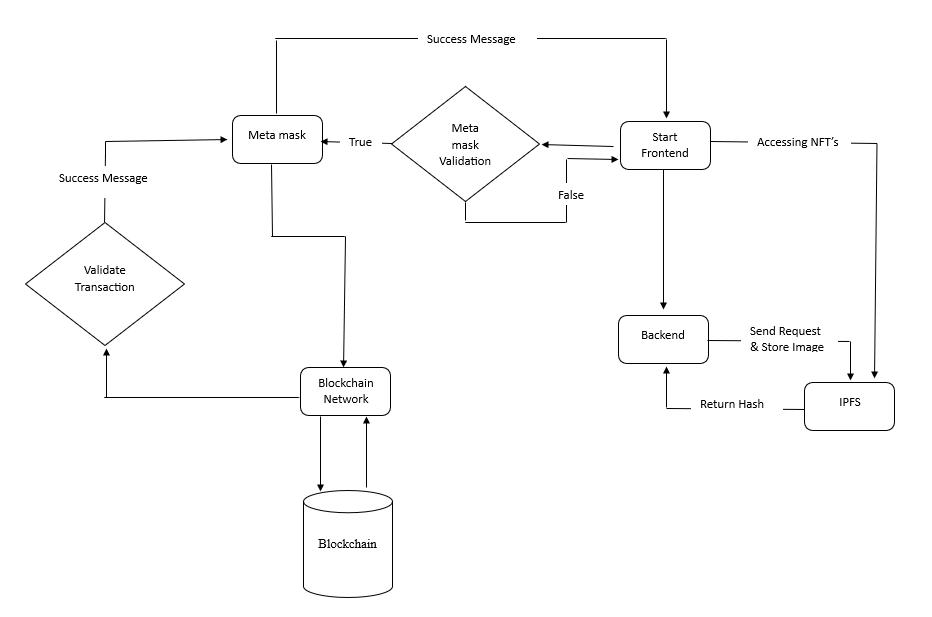
Toenhancescalabilityandperformance,thesystem mayincorporatecachingmechanisms,loadbalancers,and distributed computing frameworks. Moreover, robust securitymeasures,includingencryption,authentication,and authorizationprotocols,areimplementedatvariouslayers tosafeguarduserdataandassetsfromunauthorizedaccess andcyberthreats.Overall,theproposedsystemarchitecture aimstoprovideaseamlessandtrustworthyenvironmentfor creatorsandcollectorstoengageintheburgeoningmarket ofdigitalartandcollectiblesthroughNFTs.
International Research Journal of Engineering and Technology (IRJET) e-ISSN: 2395-0056
Volume: 11 Issue: 04 | Apr 2024 www.irjet.net p-ISSN: 2395-0072
ThefutureofNFTisanticipatedtobepromisingas they'vegainedsignificanttractioninsomeimplicitareaslike digitalartwhereNFThashandedartiststovendtheirdigital creationsasuniqueandpreciousmeans.NFTisalsousedto representuniquein-gameparticulars,similartoreaderdeals and wares. NFTs can be used to also represent exclusive collectibles,similartodigitaltradingcards,signatures,and othercairn.Theplatformforthisoperation,WEB3.0,isthe cominggenerationoftheinternetwhichholdstheimplicitin changing the way we interact and distribute online, by furnishing a more secure and decentralized terrain for druggies, inventors, and businesses in the form of DecentralizedoperationsandFinancewhichallowsforthe creationanduseofoperationsthatdon'tcalculateoncentral waiters and interposers, and also enabling the use of a decentralized fiscal system where druggies can directly manageandinvesttheirmeanswithouttheneedofacentral authority.Thebusinessplatformdealswithaspecifictypeof artratherthananabundantorderofNFTsavailableonthe internet,thereforeattractingamorefocusedandengaging crowd,leadingtofurtherdealsofNFTsandmoremintingby thepossessors.
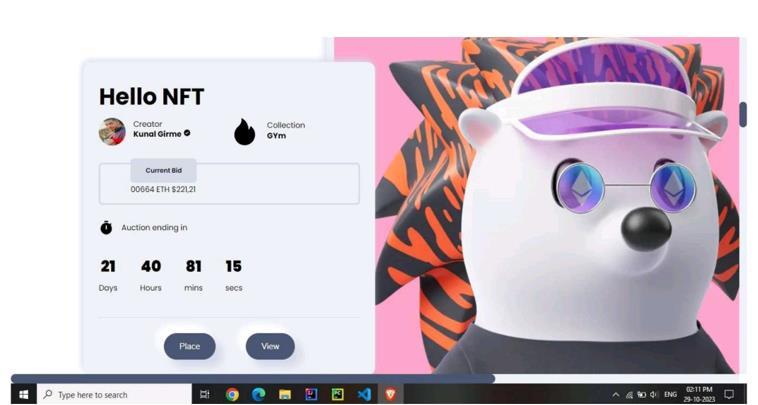
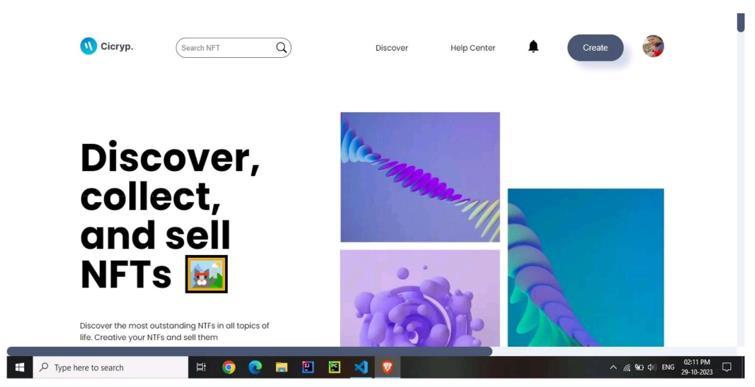
TheNFTMarketplaceoffersauniqueplatformfor generators to monetize their digital creations and for collectors to acquire one-of-a-kind digital means. The platform's use of blockchain technology ensures translucencyandsecurityinthebuyingandsellingprocess, whiletherangeoftoolsandfeaturesofferedtogenerators help to manage their NFTs effectively. The rise of NFT commercesimilartotheNFTMarketplacehascreatednew openings for generators and investors likewise, but also raisesimportantquestionsaboutintellectualpropertyrights inthedigitalage.AstheNFTrequestcontinuestoevolve,it'll beimportanttoconsidertheimplicitimpactontraditional creativediligenceandtoensurethattherightsofgenerators aredefended.TheNFTMarketplacerepresentsaninstigative development in the world of NFTs and blockchain technologyandislikelytoplayadecreasinglyimportantpart inthefutureofdigitalassettrading.Asfurthergenerators and collectors join the platform and the wider NFT ecosystem,theeventualityforinventionandnewformsof digitalexpressionisvast.
[1] Ante, L. Non-fungible token (NFT) markets on the Ethereumblockchain:Temporaldevelopment,cointegration andinterrelations.Econ.Innov.NewTechnol.2021,23,1–19.
[2]Rehman, Wajiha Zainab, HijabImran, Jaweria Bawany, Narmeen 2021/12/23NFTs: Applications and Challenges 10.1109/ACIT53391.2021.9677260.
[3]A.Mani,“AComprehensiveStudyofNFTs”,International Journal for Research in Applied Science and Engineering Technology, vol. 9, no. 4, pp. 1656-1660, 2021. Available: 10.22214/ijraset.2021.34017.
[4]Ante,Lennart,Non-fungibleToken(NFT)Marketsonthe EthereumBlockchain:TemporalDevelopment,Cointegration andInterrelationsAugust13,2021.
[5] C. Usman W, "Non-Fungible Tokens: Blockchains, Scarcity,andValue,"CriticalBlockchainResearchInitiative (CBRI)WorkingPapers,p.14,2021.
[6] Kabi, O.R., Franqueira, V.N.L.: Blockchain-Based Distributed Marketplace. In: Abramowicz W., Paschke A. (eds)BusinessInformationSystemsWorkshops.BIS2018. LectureNotesinBusinessInformationProcessing,vol339. Springer,Cham(2018).
[7] Casale-Brunet, S.; Ribeca, P.; Doyle, P.; Mattavelli, M. NetworksofEthereumNon-FungibleTokens:Agraph-based analysis of the ERC-721 ecosystem. In Proceedings of the 2021 IEEE International Conference on Blockchain (Blockchain),Melbourne,Australia,6–8December2021.
[8]Mingxiao,D.;Xiaofeng,M.;Zhe,Z.;Xiangwei,W.;Qijun,C. AReviewonConsensusofBlockchain.InProceedingsofthe 2017IEEEInternationalConferenceonSystems,Man,and Cybernetics(SMC),Banff,AB,Canada,5–8October2017.
[9]Nguyen,C.;Thai,H.D.;Nguyen,D.N.;Niyato,D.;Nguyen, H.T.;Dutkiewicz,E.Proof-of-StakeConsensusMechanisms forFutureBlockchainNetworks:Fundamentals,Applications andOpportunities.IEEEAccess2019,7,85727–85745.
[10]Wang,Gang&Nixon,Mark.(2021)SoK:Tokenization onBlockchain.10.1145/3492323.3495577.