
International Research Journal of Engineering and Technology (IRJET) e-ISSN: 2395-0056
Volume: 11 Issue: 04 | Apr 2024 www.irjet.net p-ISSN: 2395-0072
International Research Journal of Engineering and Technology (IRJET) e-ISSN: 2395-0056
Volume: 11 Issue: 04 | Apr 2024 www.irjet.net p-ISSN: 2395-0072
Vaishnavi Mardolker1, Dr. Aisha Fernandes2
1Student, Dept. of Information Technology and Engineering, Goa College of Engineering, Farmagudi, Goa, India 2Associate Professor, Dept. of Information Technology and Engineering, Goa College of Engineering, Farmagudi, Goa, India
Abstract - Information and Communication Technology(ICT) has massively transformed healthcare by improving daily accesstocare,enhancingcommunication,and empowering individuals. This paper focuses on the development of an mobile application as an ICT tool aimed at assisting the women of Goa in identifying symptoms and facilitating the diagnosisofPolycysticOvarySyndrome(PCOS). By using the power of ICT, we aims to empower women with knowledge about PCOS and help them to take proactive steps towards managing their health. This tool has been tailored to the local context of Goa
Key Words: Polycystic Ovary Syndrome, Information and Communication Technology, Mobile Application, Questionnaire, Survey.
1.INTRODUCTION
Polycystic Ovary Syndrome (PCOS) is an endocrine disorder characterized by the presence of ovarian cysts, anovulation, and hormonal fluctuations that significantly impact a woman's life. This condition occurs when the ovariesproduceelevatedlevelsofandrogens,disruptingthe normal hormonal balance. The imbalance in reproductive hormonessuchasLH(luteinizinghormone),FSH(folliclestimulating hormone), estrogen, and testosterone can disrupttheregularmenstrualcycle.Consequently,women with PCOS may experience various symptoms, including irregularperiods, excessivehairgrowth(hirsutism),acne, anddifficultieswithweightmanagement.
PCOS is a common condition affecting the ovaries, and its exact cause is not fully understood. However, insulin resistanceandgeneticsarebelievedtoplaysignificantroles initsdevelopment.Insulin resistancecanleadto elevated insulin levels, which in turn contribute to increased androgenproductionbytheovaries.Thisandrogenexcess can result in the formation of ovarian cysts and the manifestation of PCOS symptoms. The impact of PCOS extendsbeyonditsreproductiveaspects,asitisassociated withanincreasedriskofvarioushealthissues,suchastype2 diabetes,cardiovasculardisease,andinfertility.Additionally, theconditionmayhavepsychologicalimplications,affecting awoman'smentalhealthandwell-being.
According to the World Health Organization (WHO) estimation revealed over 116 million women (3.4%) are affectedbyPCOSworldwide.PCOSisdiagnosedwithhyper androgenism,menstrual irregularities,andvaryingsize of cystsinovaries,howeverampleof variationsexistamongst individuals..Thisdiverseconditioninitiallydevelopsdurin adolescentswhoareathighriskfortheemergenceofseveral symptoms including obesity, type II diabetes, in fertility, endometrial dysplasia, cardiovascular disorders, and psychoticdisorders.
PCOS isamultifaceteddisorder,andthesymptomscanvary widely from person to person. Hyperandrogenism, characterized by elevated levels of male hormones like testosterone,contributestothedistinctivefeaturesofPCOS, such as hirsutism (excessive hair growth) and acne. Menstrual irregularities, including irregular or absent periods, are common due to disruptions in the normal hormonal balance. Adolescents with PCOS face increased susceptibilityto healthchallenges, making earlydetection and intervention crucial. The potential complications associatedwithPCOS,suchasobesityandtypeIIdiabetes, highlighttheimportanceofcomprehensivehealthcareand lifestyle management. Additionally, the risk of cardiovasculardisordersunderscorestheneedforaholistic approach to address both the reproductive and overall healthaspectsofindividualswithPCOS.
VariousPCOSawarenessprogramsexistgloballytoeducate and inform the public about Polycystic Ovary Syndrome. Theseprogramsoftenincludeonlineresources,community events, and social media campaigns aimed at raising awareness about the symptoms, risks, and management strategies associated with PCOS. Additionally, healthcare organizationsconductawarenesscampaignstoencourage regularhealthcheck-upsforearlydiagnosis.Regardingselfdiagnosis tools, numerous online questionnaires are available for individuals to assess their symptoms and likelihood of having PCOS. These questionnaires typically inquireaboutmenstrualirregularities,hirsutism,acne,and othercommonPCOSindicators.However,relyingsolelyon self-diagnosistoolscanhavedrawbacks,assymptomscanbe diverse and may overlap with other conditions. Misinterpretation or incomplete understanding of the questionsmayleadtoinaccurateself-diagnosis.
International Research Journal of Engineering and Technology (IRJET) e-ISSN: 2395-0056
Volume: 11 Issue: 04 | Apr 2024 www.irjet.net p-ISSN: 2395-0072
TheeffectivenessofonlinePCOSawarenesscampaignsand diagnostictoolsisindeedlimitedbyfactorssuchasinternet access and healthcare infrastructure, particularly in rural areas.Inregionswithlimitedconnectivity,womenmayface challengesaccessingthewealthofinformationprovidedby onlinecampaigns,hinderingtheirabilitytounderstandand recognize the symptoms of PCOS. Limited healthcare infrastructure may also result in delayed detection and treatment, potentially leading to the exacerbation of symptomsandincreasedhealthrisksforwomenwithPCOS inruralcommunities.Community-basedinitiatives,outreach programs,andpartnershipswithlocalhealthcareproviders can help bridge the gap in knowledge dissemination and ensure that women in rural areas have access to the necessaryinformationandmedicalservicesfortheeffective managementofPCOS.
The effective method tentatively proposed involves the development of a mobile application as an innovative ICT tool aimed at assisting the women of Goa in identifying symptomsandfacilitatingthediagnosisofPolycysticOvary Syndrome(PCOS).ByleveragingthepowerofICT,thistool aims to empower women with knowledge about PCOS, providingthemwithauser-friendlyinterfaceandinteractive features for self-assessment. The application has been meticulously designed to cater specifically to the local contextofGoa,incorporatingculturallysensitivecontentand consideringtheuniquehealthcarelandscapeoftheregion. Throughthisinitiative,thegoalistobridgetheinformation gap,promotehealthawareness,andenablewomeninGoato takeproactivestepstowardsmanagingtheirwell-being.
The paper follows the subsequent structure: Section II providesabriefoverviewofallthereferencedpapersand provides details of conducted survey. Section III in detail elaborates on the proposed methodology. Section IV concludesthepaper.
2.1
PCOS affects women worldwide, causing various physical and mental challenges. The use of the internet to spread awareness about PCOS and develop various ICT tools has significantlyaidedwomeninunderstandingandmanaging the condition. Online resources provide accessible information,helpingwomenrecognizesymptomsandseek timelymedicaladvice.InternetawarenessandICTtools,like mobileapps,havehelpedwomenunderstandandmanage PCOS, promoting proactive health management and wellbeing.UponanalyzingvariouspapersonPCOSandICT tools,incorporatingdifferentapproaches,findingsfromeach papercanbesummarizedasfollows.
ThispaperaddressedPolycysticOvarySyndrome(PCOS),a multifaceted endocrine disorder characterized by ovarian
cysts, an ovulation, and hormonal variations affecting women[1].TheWorldHealthOrganizationestimatedthat 3.4%ofwomenworldwide,totalingover116million,were affected by PCOS. The disorder's development was influencedbypredisposingriskfactors,includinggenetics, neuroendocrineissues,lifestyle/environment,andobesity. ThepathophysiologicalaspectofPCOSfocusedonhormonal dysfunction, insulin resistance, and hyperandrogenism, resultinginimpairedfolliculogenesisandincreasingtherisk ofassociatedcomorbiditiessuchasendometrialcancerand typeIIdiabetes.Thereviewprovidedaconciseoverviewof the risks and pathophysiological aspects of PCOS, emphasizinghormonaldysfunctionandinsulinresistance. Additionally, it explored the use of drugs to address an ovulation,infertility,andclinicalsymptomsassociatedwith PCOS.
In the world of growing health apps, especially those for tracking menstruation, a study looked at something important that often got missed: checking how well these appshelpedwithmanagingpainandsymptoms[2].Thegoal was to understand the features of these apps, like how engagingthey were,how well they worked,andhow they looked. The study checked 119 menstrual apps from the AppleAppStoreandfoundthat64%ofthemhelpedtrack painandmenstrualsymptoms.However,onlyafewletyou makedetailedchartsofpainsymptomsoverdifferentcycles. While these apps were okay in general (according to the Mobile App Rating Scale), they didn't do much to help manage pain and symptoms. Only 10% of these apps included ways todeal with pain,showingthere wasmore researchneededtomaketheseappsbetterforusers.
Researchers wanted to understand how a common condition in women, called Polycystic Ovary Syndrome (PCOS), affects their quality of life[3]. They felt that the current ways of measuring this impact might not be very good, so they decided to create a new tool. In the United Kingdom,theyworkedwith714womenwhohavePCOSto develop and test a 35-question scale called the Polycystic OvarySyndromeQualityofLifeScale(PCOSQOL).Thisscale lookedatdifferentaspectsoflife,likehowPCOSaffectstheir mood, fertility, hirsutism (excessive hair growth), and the overallimpactofthecondition.Theresultsshowedthatthis newscalecouldbeahelpfulwaytounderstandhowPCOS affectswomen'slives,anditcouldbeusefulforbothdoctors andresearchersinthefuture.
This paper comprehensively reviewed past marketing researchonmobileapps,exploringhowtheseappsshaped customerexperiencesandvalueacrossdifferentcustomer journeys[4].Itfocusedoninstanceswhereappswerelinked toexistingbrandsandsituationswheretheappitselfserved asthebrand.Throughintegratingvariousconceptualbases, the researchers crafted a unified framework, simplifying insightsfromananalysisof471studies.
International Research Journal of Engineering and Technology (IRJET) e-ISSN: 2395-0056
Volume: 11 Issue: 04 | Apr 2024 www.irjet.net p-ISSN: 2395-0072
A survey was conducted on Polycystic Ovary Syndrome (PCOS) in the local area of Mardol, Goa and was made as part of our research initiative. Mardol, a developing small town in North Goa, has both rural and urban populations residing there. The aim was to explore the specific experiencesofwomeninthisuniquesetting,wherecultural experiences,lifestyle,andhealthcareaccessibilityvaried.By focusingonMardol,theresearchintendedtobridgethegap between general knowledge about PCOS and the circumstancesfacedbywomeninthistown.Thesurveywas designedtocaptureinsightsintotheprevalenceofPCOSand thechallengesencounteredbywomeninMardol,offeringa moreaccuraterepresentationoftheirexperiences
To understand how women in Mardol, Goa, experience PolycysticOvarySyndrome(PCOS),asurveywasconducted withacarefullydesignedquestionnaire.Thequestionswere likeafriendlychat,askingaboutdifferentpartsoftheirlives. Wewantedtoknowtheirage,toseeifPCOSisdifferentfor womenindifferentagegroups.Wealsoaskediftheywere trying to conceive because that can be important. The surveydelvedintolifestylehabits,suchashowmuchtime theyspentlookingatscreens,whatkindoffoodtheyate whethertheypreferredhealthyvegetablesornot-so-healthy junkfoodandmore.
The questionnaire had two versions to make it easy for everyone to take part. One version was on paper, and we handeditoutinthetown,makingitaccessibletothosewho might not use the internet much. The other version was onlinethroughGoogleForms,allowingpeopletoparticipate fromthecomfortoftheirhomes.Byusingbothmethods,we couldtalktomorewomenandgetabetterpictureofhow PCOSaffectsdifferentaspectsoftheirlives.
The survey aimed at understanding the prevalence and impactofPolycysticOvarySyndrome(PCOS)focusedona specific area with a total female population of 330. Out of this population, 145 responses were obtained through traditional manual surveys conducted directly within the town, showcasing local females' active engagement in sharing their experiences related to PCOS. In parallel, an onlineapproachusingGoogleFormsgathered34responses, contributing to the digital dimension of the survey. Additionally,atargetedmanualsurveywasconductedinthe girls'hostel of Goa EngineeringCollege,collectingdata on women'swellnessandPCOS.Thisspecificsurveyyielded66 responses,providingvaluableinsightsintotheexperiences ofhostelresidents.Thecombinationofmanualandonline survey methods ensured a diverse and inclusive representation of the female population, enhancing the overall reliability and depth of the gathered information regardingPCOSinthearea.
Toenhancethecomprehensibilityofthesurveyresults,we have incorporated tables illustrating the distribution of
responses for each question in both the manual questionnaires( held at Mardol and girls hostel at Goa EngineeringCollege)andtheGoogleFormssubmissions.
Afteranalyzingthemanuallyfilledformswithinthetown, thedistributionofagegroupsamongfemaleswasasfollows: 37.2%wereaged41andabove,28.3%fellwithinthe26to 40agerange,and34.5%werefemalesaged13to25.When asked about family history of PCOS, 6.9% responded yes, 75%saidno,and17.2%wereunsure.Regardingthetiming of their menstrual cycles, 77.9% reported having regular periods,8.3%mentionedacyclelengthof35daysormore, 11% indicated menopause, and 2.1% mentioned experiencing months without menstruation. Of those surveyed,2.1%reportedunsuccessfulattemptstoconceive, while97.9%arenotactivelytryingtogetpregnant. When queried about struggles in weight maintenance, 55.2% respondednegatively(no),while44.8%affirmedthatthey were facing challenges with weight management (yes). Concerningskinproblems,33.8%acknowledgedfacingsuch issues,whiletheremaining66.2%reportednotexperiencing skin problems. In relation to headaches and breast pain, 55.9% reported no issues, while the majority indicated experiencing these symptoms. Regarding alcohol and tobaccoconsumption,4.8%indicatedoccasionaluse,while the vast majority (95.2%) reported abstaining from these substances.Concerningregularexercise,32.4%responded affirmatively, while the remaining participants indicated they do not engage in regular exercise. In terms of regular health checkups, 55.2% responded negatively (no), while 44.8% affirmed that they undergo regular health examinations. When asked about frequent urinationandthirst,80%respondednegatively(no),while 20% indicated experiencing these symptoms. For hirsutism, 4.8% acknowledged facing this condition, with the remaining(95.2%) respondents confirming the absence of such symptoms. Regarding a diet rich in fruits andvegetables,80.7%affirmedfollowingsuchadiet,while the remaining participants denied adhering to it. Concerning the consumption of processed foods, 14.5% acknowledged a diet including processed foods, while the majority (85.5%) reported not incorporating processed foodsintotheirdiet.Inresponsetoinquiriesaboutfeeling lethargic,34.5%confirmedexperiencinglethargy,whilethe majority(65.5%)reportednotfeelinglethargic.Regarding the level of stress in life, 71.7% reported experiencing moderatestress,22.8%acknowledgedextremestress,and 5.5%indicatednostress.Whenaskedabouttheirsleeping hours, 31.3% responded affirmatively, while the majority (68.8%)indicatednotmeetingtheirdesiredsleepinghours. The final survey question inquired about screen time, revealing that 32.4% of respondents occasionally spend
International Research Journal of Engineering and Technology (IRJET) e-ISSN: 2395-0056
Volume: 11 Issue: 04 | Apr 2024 www.irjet.net p-ISSN: 2395-0072
extended hours on screens, 29% do not, and 38.6% mentionedtheydonot.
Belowisthetable(ReferTable1)thatillustratestheresults of the survey conducted at the girls' hostel of Goa EngineeringCollegeinGoaof66responses.
The data presented in the table provides insights into women's wellness and the prevalence of Polycystic Ovary Syndrome(PCOS)amongthehostelresidents,contributing toamoreunderstandingoftheissuewithinthe contextof thecollegeenvironment.
The second phase of the survey was conducted using an onlineGoogleForm,resultinginresponsesfrom34females of Goa. The detailed responses are elaborated in the table formatbelow.ReferTable2.
Insummary,thedualapproachofemployingbothonlineand traditionalsurveymethodsinallthreetargetedlocationshas proven invaluable in gaining profound insights into the experiencesandsymptomsofPCOSamongwomeninGoa. Throughcarefulanalysisofthecollecteddata,adiscernible patternemerges,indicatingthatfemales,particularlyinthe age brackets of adolescence and 26-40 years, who experience delays in periods along with other noticeable symptoms,aremorelikelytobesusceptibletoPCOS.This situation underscores the need for raising awareness and proactive healthcare measures. As such, it is strongly recommended that individuals falling within these composition, displaying potential signs of PCOS, promptly consultwithahealthcareprofessionalforaccuratediagnosis andtimelyintervention.
From the study, we can understand that if females have access to proper facilities, awareness initiatives, and leverageICTtoolsforeducation,itcansignificantlyenhance theirunderstandingandself-educationaboutPCOS.
ThediversityinlifestyleandgeographicaldisparitiesinGoa presentaconsiderablebarrierforwomen,especiallyinrural areas, to educate themselves about conditions like PCOS. Limitedaccesstoeducationfacilitiesandtheinternetcreates asignificanthurdle,preventingmanyfromgainingessential knowledgeaboutreproductivehealth.Intheseregions,the absenceofadequateeducationalinfrastructureoftenleads to a lack of awareness about prevalent health issues. Additionally, the challenging topography and remote locationsmakeitdifficultforhealthcareinitiativestoreach every corner of the state, leaving a significant portion of Goan females without the necessary facilities and
information to address PCOS. Bridging this gap requires targetedeffortsthatconsidertheuniquechallengesposedby Goa'sdiverselandscape,ensuringthateducationalresources and healthcare awareness programs are made accessible eveninthemostremoteandunderservedareas.
Thecurrentmethodologyinvolvesdevelopingaspecialized mobile application to empower women in Goa to educate themselves and identify PCOS symptoms. This ICT tool is being customized with recorded awareness programs presented in the local language of Goa. The mobile application features a user-friendly interface offering educational content on PCOS symptoms, risk factors, and relevanthealthinformation.Userscanengagewithrecorded awareness programs, ensuring that the information is deliveredinaculturallysensitiveandeasilyunderstandable manner.Additionally,interactivefeaturesallowwomento self-assessandinputpersonalhealthinformation,facilitating theidentificationofpotentialPCOSsymptoms.Thisongoing and localized approach aims to bridge information gaps, promoteawareness,andempowerwomeninGoatomake informeddecisionsabouttheirreproductivehealththrough theuseofmodernICTtools.
OptingforamobileapplicationastheprimaryICTtoolisa strategicchoicedrivenbyitsaccessibility,widespreaduse, and user-friendly nature. Smart phones have become ubiquitousintoday'ssociety,andtheirprevalenceensures that a significant portion of the population, regardless of geographicallocationoreducationalbackground,possesses these devices. By developing an app, we leverage the convenienceandfamiliaritythatindividualshavewiththeir smartphones.
Thesecondphaseoftheprojectinvolvedthedevelopmentof acomprehensiveapplication,forwhichastrategicselection oftoolswasmade.Node.jsservedasthefoundationalserversideJavaScriptruntime,ensuringthecreationofscalableand high-performance server applications. React Native, a versatile JavaScript framework , played a pivotal role in craftingacross-platformmobileexperience.Theeditorused wasVisualStudioCode.
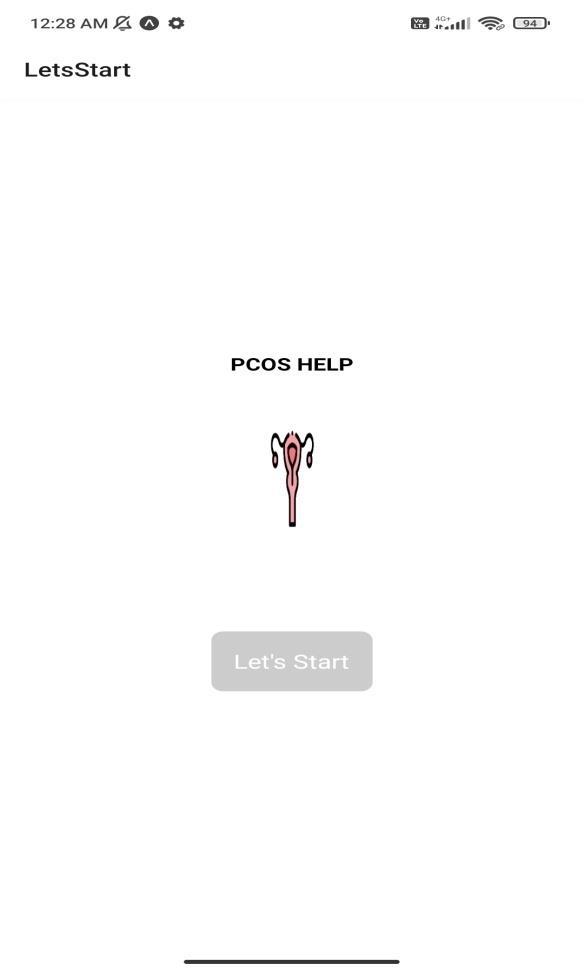
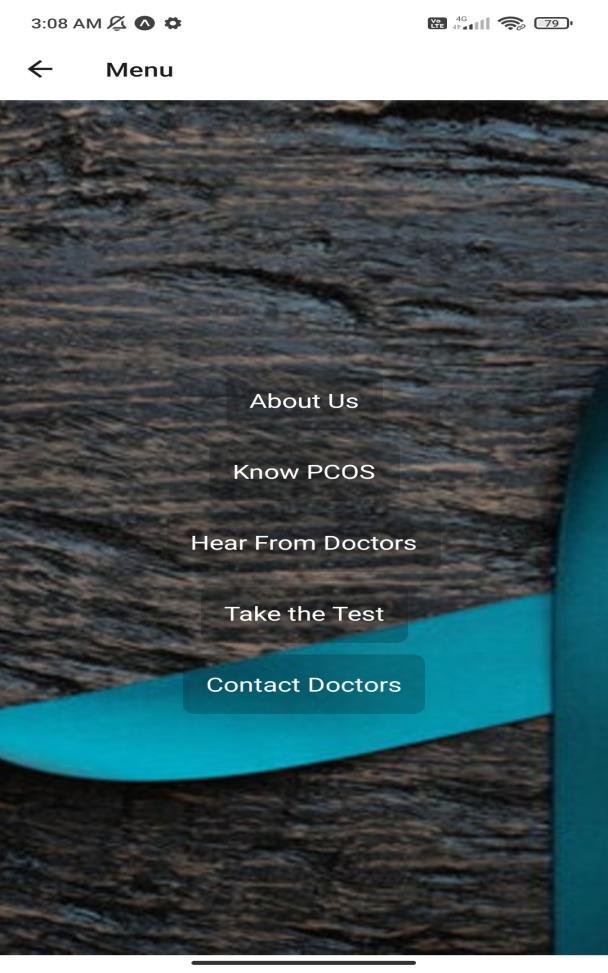
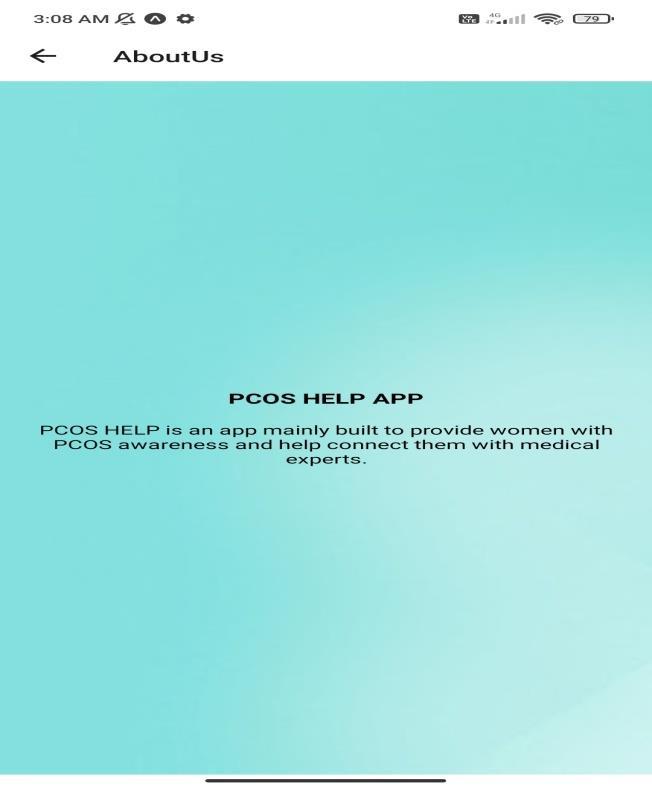
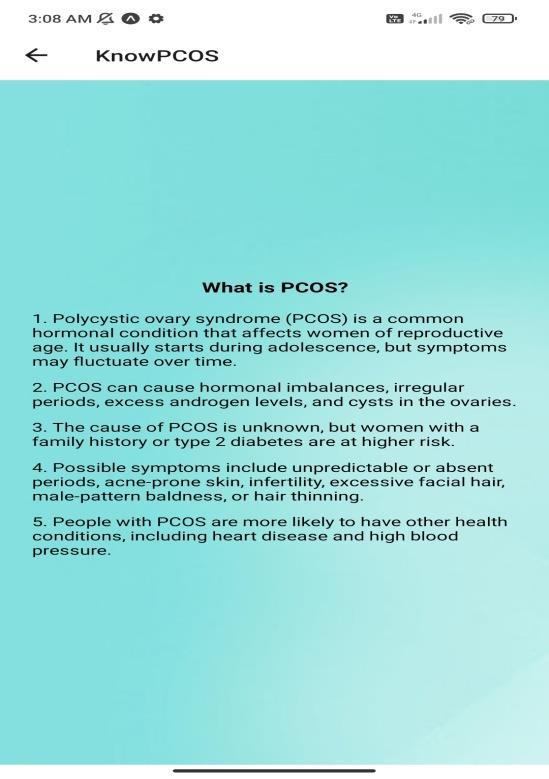
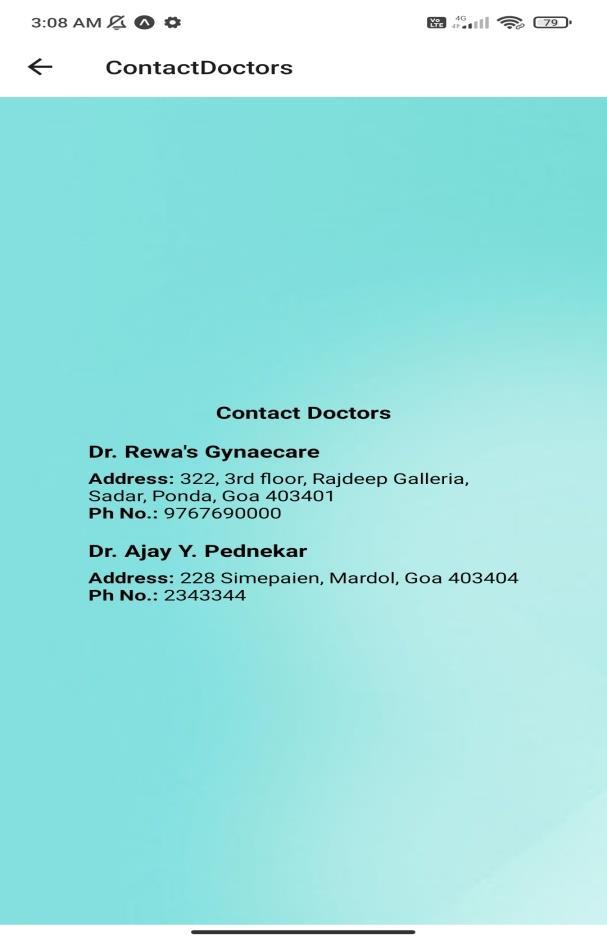
Enclosedbelow arethescreenshotsofthedevelopedmobile application named “PCOS HELP APP”. The initial screen depictedintheFigure1 belowservesasthewelcomescreen forapplication.Figure2representsthemenuscreenofthe application. Fig 3 provides information about the applicationthroughan"AboutUs"section.Fig4 showsthe “Know PCOS “ section that illustrates what is PCOS. Fig 5 showsthe“Hearfromdoctor”Screenthatcontainsthevideo ofmedicalexpertstalkingonPCOStoraiseawarenessabout the same. Fig 6 is the “Take the test” screen that have questionnaires for user for self assessment. Fig 7 shows nearbyDoctor’scontacts.
International Research Journal of Engineering and Technology (IRJET) e-ISSN:
Volume: 11 Issue: 04 | Apr 2024 www.irjet.net
Table -1: Analysisofhostelsurvey
International Research Journal of Engineering and Technology (IRJET) e-ISSN: 2395-0056
Volume: 11 Issue: 04 | Apr 2024 www.irjet.net p-ISSN: 2395-0072
Table -2: AnalysisofOnlineSurvey
International Research Journal of Engineering and Technology (IRJET) e-ISSN: 2395-0056
Volume: 11 Issue: 04 | Apr 2024 www.irjet.net p-ISSN: 2395-0072
International Research Journal of Engineering and Technology (IRJET) e-ISSN: 2395-0056
Volume: 11 Issue: 04 | Apr 2024 www.irjet.net p-ISSN: 2395-0072
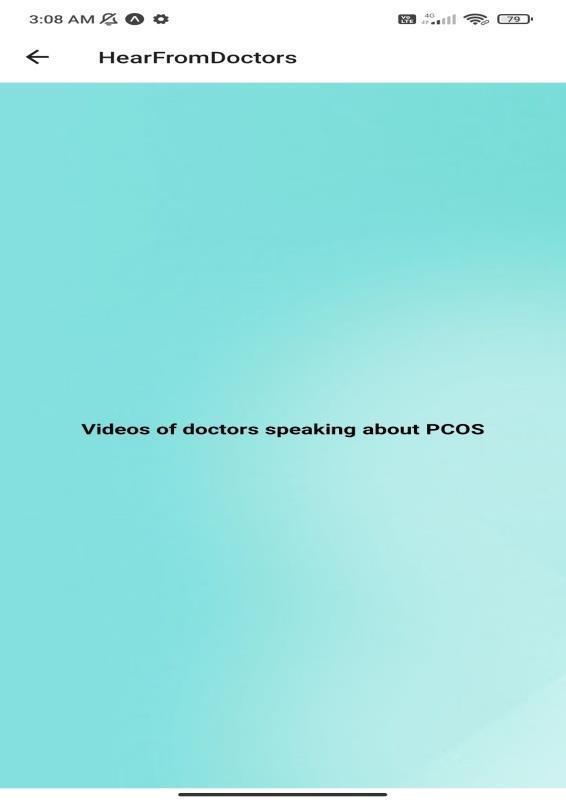
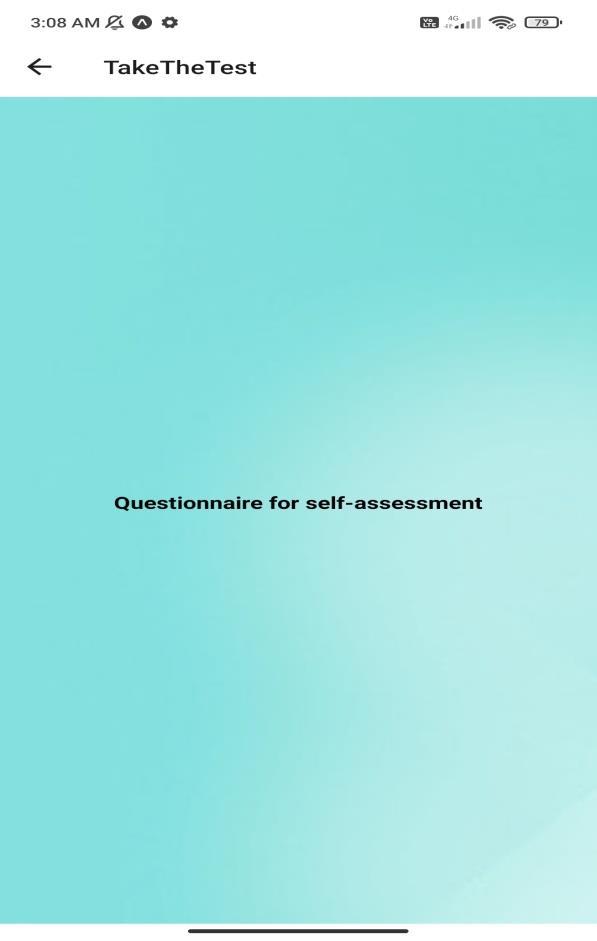
Intheapp,therearecurrentlysomeincompletesectionsthat weplantoaddressinournextcourseofaction.Oneofthe pendingareasisthequestionnairesection,wherewearein the process of incorporating specific questions related to PolycysticOvarySyndrome(PCOS).Thisenhancementaims togathermoretargetedandrelevantinformationfromusers. Additionally,wehaveaplannedfeaturecalledthe"Hearfrom Doctor"screen,whichwillinvolvehealthcareprofessionals sharing insights and raising awareness about PCOS. This section is designed to provide users with credible and informativecontent,contributingtoaholisticunderstanding of PCOS and promoting overall women's health. These upcomingdevelopmentsarepartofourongoingactionsto improvetheapp'sfunctionalityanduserexperience.
Inconclusion,theaimofthisresearchwastwo-fold:first,to educate and raise awareness among women in Goa about PCOS; and second, to develop a mobile app for identifying symptomsanddisseminatingcrucialinformation.Thesurvey, conducted both in town and online, provided valuable insightsintothecurrentsituationoffemalesinGoaregarding PCOS. However, the effectiveness of the survey was somewhathamperedbyalackofresponses,highlightingthe needforfurtheroutreachstrategies.Nevertheless,thestudy highlights the need for proactive efforts to improve awareness,education,andhealthcareaccessibilityforwomen inGoa,ensuringbetterunderstandingandmanagementof PCOS.
International Research Journal of Engineering and Technology (IRJET) e-ISSN: 2395-0056
Volume: 11 Issue: 04 | Apr 2024 www.irjet.net p-ISSN: 2395-0072
The mobile application developed will helps women in bothruralandurbanGoatounderstandPCOSsymptomsand guidethemtoseeknecessaryhealthcarefacilities,fostering proactiveengagementinmanagingtheirreproductivehealth oncetheapplicationisfullyfunctioningtoprovidesolutions.
[1] Jeshica Bulsaraa, Priyanshi Patel , Arun Soni , Sanjeev Acharya“Areview:BriefinsightintoPolycysticOvarian syndrome”EndocrineandMetabolicScience3,2021.
[2] Lisey C.Mnd. Tr´epanier a , Elisabeth ´ Lamoureux b , SarahE.Bjornson a, CayleyMackiea,NicoleM.Alberts b,MichelleM.Gagnon“Smartphoneappsformenstrual pain and symptom management: A scoping review” InternetInterventions31,2023.
[3] Sophie Williams,David Sheffield and Rebecca C Knibb “The Polycystic OvarySyndromeQualityofLifescale (PCOSQOL):Development andpreliminaryvalidation” , HealthPsychologyOpen,2018.
[4] LaraStocchi,NaserPourazad,Nina Michaelidou, ArryTanusondjaja,Paul Harrigan“Marketingresearch onMobileapps:past,presentandfuture” Journalofthe AcademyofMarketingScience,2021.