
Volume: 11 Issue: 04 | APR 2024 www.irjet.net p-ISSN: 2395-0072
Volume: 11 Issue: 04 | APR 2024 www.irjet.net p-ISSN: 2395-0072
Neelam W. Chorey1 , Diwanshu R. Randive2 , Aman Y. Barapatre3
1Asst. Professor, Civil Engineering Department, PRMIT&R, Badnera, Maharashtra, India
2B.E Student, Civil Engineering Department, PRMIT&R, Badnera, Maharashtra, India
3B.E Student, Civil Engineering Department, PRMIT&R, Badnera, Maharashtra, India
Abstract - Water pollution arises from the dischargeofdomesticwaste,whichcomprisesresidential, industrial, commercial, and agricultural wastewater. Traditional water treatment techniques involving aerobic/anaerobicprocessesmayexacerbatetheemissionof greenhousegases.Toaddressthisissue,amicrobial-based approach utilizing polyvinyl alcohol biofilm supporting mediahasbeenintroducedasaviablealternative.Thereisa pressingneedfortechnologiesthatensurelowexcesssludge yieldratesandhighlyefficientbiologicaltreatmentmethods fordomesticsewage.Themoving-bedbiofilmreactorshows significant potential in meeting these requirements. This study aims to estimate the bacterial diversity in polyvinyl alcohol(PVA)gelbeadsandproposesamethodtomitigate excess sludge yield rates while treating domestic sewage throughamoving-bedbiofilmreactorsystememployingPVA gelbeadsasabiomasscarrier.
The findings of the research demonstrate the efficiency of treating domestic wastewater across various parameters,includingpHlevels,biologicaloxygendemand, chemical oxygen demand, nitrate, ammonia, phosphorus, andtotalsuspendedanddissolvesolids.Consequently,the useofpolyvinylalcohol(PVA)beadsindomesticwastewater treatment proves effectiveness, reducing the necessity for constructing sewage treatment plants and eliminating the need for non-recyclable materials like syntheticsand plastics.
Key Words: PVA gel beads, Moving Bed Biofilm Reactor (MBBR), biofilmprocess, Domesticwastewatertreatment, sewageeffluent,PVABiomasscarrier,waterrecycling
WateristheSubstancethatAlllivingthings,fromsmall bacteriatogiantbluewhalesneedwatertosurvive.Lifeas weknowitwouldnotexistiftherewerenowater,andlife existswhereverthereiswater.Coveringabout71%ofthe earth'ssurface. Waterisan odorless, tasteless,andnearly colorlesschemicalsubstancewiththechemicalformulaH2O. Amoleculeisformedbybondingtwohydrogenatomswith one oxygenatom. It exists inthreeprimarystates:liquid, solid(ice),andgas(watervapor),anditsuniqueproperties make it essential for various physical, chemical, andbiological processes. Water is known as a universal
solvent, have the ability to dissolve a large range of chemicals.Thispropertyenablesvitalbiologicalprocesses, fromnutrienttransportinorganismstotheerosionofrock formationsovermillionsofyears.
Wateristheessenceoflife;itsuniquepropertiesmakeit vitalforallknownformsoflife.Notonlydoeswatersupport us by quenching ourthirst, butit alsoplays a vital part in differentbiologicalprocesses,fromdigestiontotemperature control Furthermore, its capacity to break down a wide extend of substances makes it agreat solvent, facilitating chemical reactions essential for life. Water could be a primary ingredient in cooking and food preparation. It is utilizedforboiling,steaming,washing,andrehydratingdried foods.Numerouscookingprocesseswouldbeimpossibleif there were no water. The human body is composed of around60%water,andkeepingupappropriatehydration levelsiscrucialforoverallwellbeing.Waterisfundamental for substantial functions such as circulation, absorption, absorption of nutrients, and the regulation of body temperature.Waterisfundamentalfortherightdigestionof food and the absorption of nutrients within the digestive tract. It helps break down food particles, helps within the development of nutrients over cell membranes, and encouragesthedisposalofwasteproducts
Wastewaterreferstoanyliquidwasteoriginatedfroma community generally conveyed by a sewer is called as wastewater. it consists of wastewater from kitchen, washbasin,urinals,WC,bathroomsfrompublicandprivate buildings;italsoincludeswaterfromindustrialprocesses, commercial activities, and agricultural practices and stormwaterrunoffandhasbecomecontaminatedoraltered inqualityasaresult,renderingitunsuitableforitsoriginal purpose.Domesticwastewaterreferstowatercontaminated byhuman dailyconsumption.Domestic wastewateris the most polluting source of natural water bodies in India. Accordingtoreports,COD,BOD,andammoniacal-nitrogen wereamongthepollutantsthatpollutedmorethan25%of India’sriverbasin.Commonly,Domesticsewagecontainsa low concentration of organic pollutants, a high content of suspended solids, and numerous pathogenic bacteria and worms. If it is directly discharged into bodies of water or groundwater, it will pollute the water and cause eutrophication of lakes and river. Wastewater typically contains a variety of pollutants, including organic and
International Research Journal of Engineering and Technology (IRJET) e-ISSN: 2395-0056
Volume: 11 Issue: 04 | APR 2024 www.irjet.net
inorganic substances, pathogens, chemicals, heavy metals, nutrients(suchasnitrogenandphosphorus),andsuspended solids. These contaminants can pose significant risks to humanhealthandtheenvironmentifnotproperlytreated. Propertreatmentofwastewaterisessentialtoremovethese contaminantsbeforeitcanbesafelyreleasedbackintothe environment or reused for purposes such as irrigation or industrialprocesses.
Accesstocleanwaterandsanitationisessentialforpublic health, economic development, and quality of life. Wastewatertreatmentplaysacriticalroleinprovidingsafe water for drinking, agriculture, industry, and recreation, contributing to the overall well-being and prosperityofcommunities.Wastewatertreatmentinvolves convertingwastewater,whichisnolongersuitableforuse, intodrainwaterthatcanbedischargedbackintofreshwater source.Thegoalofitstreatmentistodecreasecontaminants to acceptable levels, ensuring that the water is safe to be releasedbackintotheenvironment.
Themainobjectiveofwastewatertreatmentistopermit household,commercial&industrialeffluent,tobedisposein apropermannerwithoutriskingahumanhealth.Improper management of wastewater will contribute an environmentalpollution,besidestransmissiblediseasewill easy to spread due to presence of pathogenic organisminwastewater. Wastewater treatment is crucial forseveralreasonslike,Untreatedwastewatercancontain harmful pollutants and pathogens that can harm aquatic ecosystems,wildlife,andhumanhealth.Treatmentremoves or reduces these contaminants before the water is discharged back into the environment, helping to protect waterqualityandbiodiversity. Wastewateroftencontains disease-causing pathogens such as microbes, viruses, and parasites. Treating wastewater expels these pathogens, decreasingthehazardofwaterbornediseasesandsecuring public wellbeing. Treating wastewater allows for the recovery and reuse of valuable resources such as water, nutrients (like nitrogen and phosphorus), and energy. Recycling treated wastewater for irrigation, industrial processes, or even drinking water reduces the strain on freshwater resources and helps to preserve water. Numerouscountrieshaveregulationsandguidelinesinplace toensurethatwastewateristreatedbeforebeingreleased into the environment. Compliance with these regulations helpstoavoidcontaminationandensuresthatwaterbodies staysecureforhumanuseandbiologicalhealth
Excessivewastewaterreleasedtolandcanresultinthe areabecomingcontaminatedandgivesemittingunpleasant odors, leading to a dirty and unhygienic environment. In addition,ifasignificantamountofwastewaterisintroduced into waters source, it can render the water septic and unsuitable for any other purpose. Hence, wastewater treatmentisessentialtodecreaseitsstrengthandensureits
p-ISSN: 2395-0072
safe application on land or discharge into natural water source.Awastewatertreatmentsystemisacombinationof manyoperations,whichemployphysicaltreatmentmethods, and unit processes, which utilize biological and chemical treatmentmethods,allaimedatreducingcontaminantstoa standardlevel.
Physical treatment includes the separation of impurities from wastewater through basic physical mechanisms,suchasscreening,filtrationandsedimentation. These processes primarily target the removal of suspendedsolids.
Chemical treatment involves the application of chemicalstofacilitatethetransformationoreliminationof contaminants via chemical reactions. Examples include coagulation-flocculationforsolidsremoval,disinfectionfor pathogen destruction, and chemical precipitation for phosphoruselimination.
3.
Biological treatment employs microorganisms to convertorbreakdowncontaminants.Municipalwastewater treatmentplantsutilizemicroorganismsnaturallyfoundin wastewater for biological treatment processes. Examples includetheactivatedsludgeprocess,Movingbedbio-reactor (MBBR),membranebioreactor,andtricklingfilter.Themain objectiveofbiologicaltreatmentistoreducebiodegradable organicmatterinwastewatertomeetregulatorystandards. Additionally, biological treatment aids in the removal of nutrientslikenitrogenandphosphorusfromwastewater.
PVA,asyntheticpolymercomponent,isutilizedin PVA (polyvinyl alcohol) gel, which serves as a permeable hydrogelidealforimmobilizingmicroorganismscrucialfor environmentalpollutantdegradation.ThesePVAhydrogel beads boast have exceptional surface permeability and maintainawatercontentrangingfrom95%to98%.Withan averagediameterof150-400µm(1.5to4mm)andaspecific gravityof1.025±0.01,PVAgelbeadsexhibithighfluidityin water and can be easily suspended due to their similar specific gravity to water. Furthermore, PVA gel beads are non-biodegradableandinsolubleinwater.
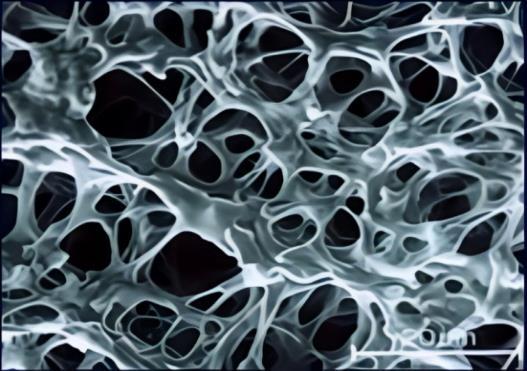
The extensive porosity of PVA gel beads, with a network of Minutes pores about 20 microns in diameter tunnellingthroughouteachbead.Beneficialbacteriacanbe enteredinagreatamountinthecentralprotectivecoreof the beads, hence reducing sloughing of biomass more effectivelywhilemaintaingstabletreatmentefficiencies.PVA
International Research Journal of Engineering and Technology (IRJET) e-ISSN: 2395-0056
Volume: 11 Issue: 04 | APR 2024 www.irjet.net p-ISSN: 2395-0072
gel treatment results in a reduced generation of excess sludge compared to traditional biological methods. The considerableporosityofPVAgelbeadsenablesahigh-water content, promoting favorable oxygen and nutrient permeability to the bacteria colonized within the beads. PolymerizedPVAgelbeadsarefundamentallyinsolublein waterandarenotrecognizedfortheirbiodegradability.Also, pva gel beads finds application in both nitrification and denitrificationprocesses,alongwithtreatingawiderangeof industrial pollutants. PVA gel beads have high efficiency treatment capability using PVA gel beads can be enriched about five times over that of activated sludge. As per research findings, the surface color of PVA gel beads transitioned from white to yellow within 30 days of operation, progressing to a red-brown hue after 85 days, indicatingmaturation.
InPVAgelbeadtreatment,thereisreducedsludge production, low construction and maintenance costs, and minimal space requirements for the treatment plant. The treatment employs a moving bed reactor, where bacterial culturescolonizethegelbeadsurfaces,creatingminiature bioreactors for pollutant elimination. This method is effectiveunderbothaerobicandanaerobicconditions,with high biomass concentration being removed in the sludge. The aeration phase requires more time than the settling phase,resultinginhigherremovalratesforCOD,BOD,TSS, VSS,TN,ammonia,nitrate,andheavymetalssuchassulfate.
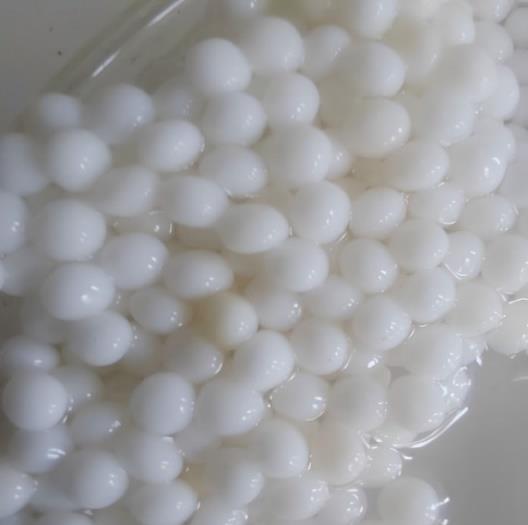
The analysis of microorganisms in the PVA process involvedobservingthetransformationofPVA-gelbeadsand theenrichmentofmicroorganisms.InitiallythecolorofPVA gel beadis white, thesurfaceof thePVA-gel beadsturned yellow after 30 days of operation, progressing to a redbrowntoneafter85days.Thepresenceofred-brownstrains onthebeadsurfaceafter85daysindicatesanincreaseinthe quantityofmicroorganismsadheringtothePVA-gelbeads overtime.Atthistime,theremovalefficiencyofNH4reached 96%.Previousresearchhasnotedasimilarcolorchangeto red-brown when treating ammonia nitrogen sewage withPVA-gelbeads.
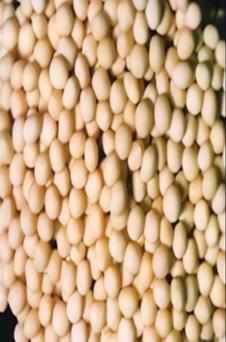
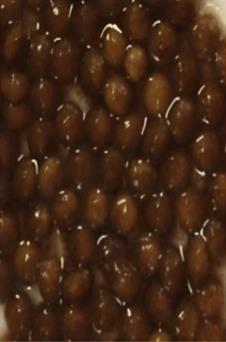
a) PVA Gel beads with a specific gravity of 1.025±0.01, exhibitneartowaterspecificgravity,enablingeffortless mixingwithlessenergyconsumption.
b) TheextensiveporosityofPVAgelbeads,withanetwork of Minutes pores about 20 microns in diameter tunnellingthroughouteachbead.Beneficialbacteriacan beenteredinagreatamountinthecentralprotective coreofthebeads,hencereducingsloughingofbiomass more effectively while maintain stable treatment efficiencies.
c) PVAgelbeadsbiologicaltreatmenthaslessproduction of sludge as compared to conventional biological treatmentmethod.
d) The considerable porosity of PVA gel beads enables a highwatercontent,promotingfavourableoxygenand nutrientpermeabilitytothebacteriacolonizedwithin thebeads.
e) PVAgelisessentiallyinsolubleinwaterwhichincreases lifespanofbeads.
f) PVAgelbeadsfindsapplicationinbothnitrificationand denitrification processes, along with treating a wide rangeofindustrialpollutants.
International Research Journal of Engineering and Technology (IRJET) e-ISSN: 2395-0056
Volume: 11 Issue: 04 | APR 2024 www.irjet.net p-ISSN: 2395-0072
a) Limited Specificity: Hydrogelbeadsmaynothavehigh selectivityforspecificpollutants,leadingtothepotential removal of beneficial ions or compounds alongside contaminants.
b) Saturation: Theadsorptioncapacityofhydrogelbeads isfinite,andtheybecomesaturatedafteracertainpoint, requiringregenerationorreplacement.
c) Physical Stability: Over time, hydrogel beads can degradeorbreakdown,releasingadsorbedpollutants backintothewaterandreducingtheireffectiveness.
d) Initial Investment: Incorporating hydrogel bead systemsmightrequireaninitialinvestmentintermsof equipment,materials,andprocessoptimization.
e) Disposal Considerations: Properdisposalofhydrogel beadsafteruse,especiallyifthey'vecapturedhazardous pollutants,canraiseenvironmentalconcerns.
a) Wastewater treatment: PVAgelbeadsareemployedin wastewatertreatmentasadsorbentsorabsorbentsfor the removal of various pollutants, including heavy metals,organiccontaminantsanddyes.Thesebeadscan allowthemicroorganismtocolonizeonthesurfaceof thebeadandwithinthebeadforthedigestionoforganic matters in wastewater. PVA gel beads are useful in moving bed bioreactor for wastewater treatment process.
b) Environmental Protection: PVAgelbeadsareavital component in enhancing biological wastewater treatment processes by facilitating the breakdown of environmental pollutants, thereby contributing significantly to environmental preservation. Their utilization boosts the effectiveness of wastewater treatment systems, aiding in the reduction of harmful substances in water bodies and promoting environmentalsustainability.
c) Control release of agricultural chemical: PVA gel beads are employed in agriculture for the control releaseofchemicalssuchasfertilizers,pesticidesand herbicides. These beads can encapsulate the active ingredients of agricultural chemicals, allowing for a gradualandsustainedreleaseovertime.Bycontrolling thereleasingrate,PVAgelbeadshelpoptimizetheuse ofchemicals,reducingwasteandenvironmentalimpact whileimprovingcropefficiencyandminimizingadverse effectonsoilandwaterquality.
d) Biotechnology: PVA hydrogel beads find widespread use in various applications such as enzyme immobilization, cell encapsulation, and bioreactors. Thesebeadsactasasupportivematrixforenzymesand cells, contributing to enhanced stability and activitylevels.
a) Enhanced Selectivity: Advancements in material sciencecouldleadtothedevelopmentofhydrogelbeads with higher selectivity for specific pollutants, minimizing the removal of beneficial ions and compounds.
b) Hybrid Systems: Combininghydrogelbeadswithother water treatment technologies, such as membranes, couldleadtohybridsystemsthatoffercomplementary benefitsandhigheroverallefficiency.
c) Application in Remote Areas: Hydrogel beads could play a vital role in providing clean water solutions to remote and underserved areas where traditional treatmentmethodsmightbeimpractical.
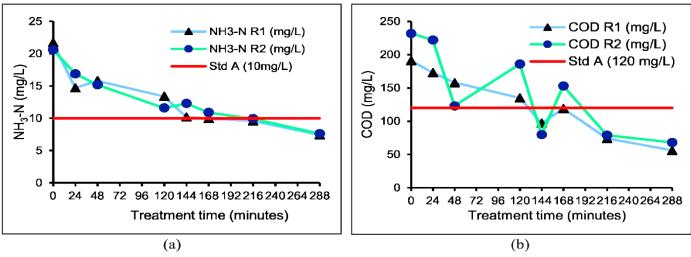
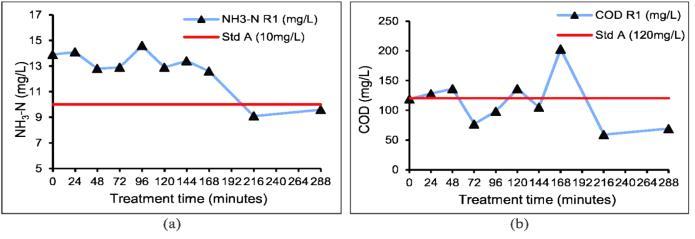
Intheir2023study,NordinSabilandNorzarinaZakaria, assessedtheefficiencyofpolyvinylalcohol(PVA)gelbeads as carriers for immobilized biofilms to enhance the reduction of Ammonia-Nitrogen (NH3-N) and Chemical Oxygen Demand (COD) in domestic wastewater. They createdalaboratory-scalereactortomeasurethereduction levelsofammonia-nitrogenandCODwithandwithoutPVA gel beads under both optimal and non-optimal treatment conditions. Utilizing an activated sludge sequencing batch reactorwithatreatmentcycledurationof288minutes,they observedthatthenon-optimaltreatmentmodeachieveda moreeffectivereductioninammonia-nitrogen,rangingfrom 62.96% to 65.71%, compared to the optimal treatment mode, which attained a reduction rate of 30.94%. Additionally, treatment without PVA gel beads (in both optimal and non-optimal settings) yielded reduced rates rangingfrom32.41%to47.85%.Remarkably,incorporating PVAgelbeadsinthenon-optimaltreatmentmodenotably boostedtheammonia-nitrogenreductionratefrom17.86% to18.82%,meetingtherequiredparameterof10mg/Lfor ammonia-nitrogenreduction.
Volume: 11 Issue: 04 | APR 2024 www.irjet.net p-ISSN: 2395-0072
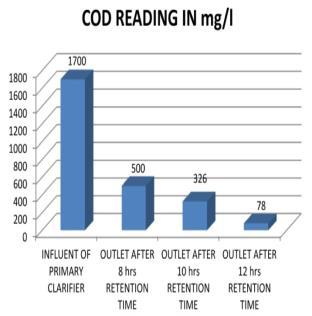
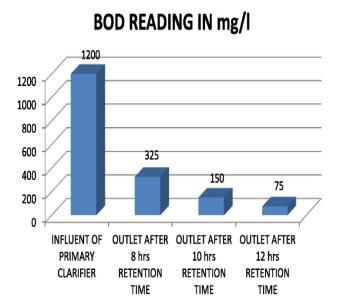
In their 2015 study, Pawan G. Ramteke and Omkar P. Gurav, examined the application of PVA Hydro-Gel as a MovingBedBio-MassCarrierfortreatingdairywastewater. Giventheglobalexpansionofthedairyindustry,thestudy aimedtoevaluatetheefficacyofalaboratory-scalebiological treatmentunitutilizingPVA-Gel.Theinitialphaseinvolved pre-treating the PVA-Gel to facilitate the attachment and growthofbiomasspresentinthewastewaterwithinthegel over a 30-day period. Subsequently, a Bio-Reactor, constructedfromfiberglassandmeasuring25cminheight, 15cminwidth,30cminlength,withan11-litercapacity,was employedinthesecondphase.TheBio-Reactorreceivedone literofpre-treatedgeland10litersofwastewaterfromthe primaryclarifier,undergoingthoroughmixingandaeration via a diffuser. Employing a batch process, samples were analyzed at retention times of 8, 10, and 12 hours, demonstrating a decline in BOD and COD levels. BOD decreasedfrom1200mg/litto325,150,and75mg/lit,while CODdecreasedfrom1700mg/litto500,326,and78mg/lit, respectively. Additionally, a reduction in biological treatment time with decreased sludge volume productionwasobserved
In their 2017 research, Yibo Wang and Yonghong Liu, investigatedthetreatmentofhouseholdwastewaterutilizing amovingbedbiofilmreactorsystemincorporatingPVAgel beadsasabiomasscarrier.Analysisconductedviascanning electron microscopy identified the presence of sphalerite, filamentous bacteria,and bacillus onboththesurfaceand internal structure of the PVA-gel beads. The study underscored the pivotal role of active sludge tanks in reducingexcesssludge.Theexperimentalsetupincludeda PVA reactor, two active sludge reactors, a sedimentation tank, and an ultraviolet disinfection device, with aeration andheatingsystemsstrategicallypositionedatthebaseof thePVAandactivesludgereactors.Initially,2.5Lof4mm diameterPVA-gelbeadsand20Lofactivatedsludgewere introduced into the PVA reactor. Despite the absence of activatedsludgeinitially,mostofiteventuallymigratedto the first and second sludge tanks over time. Dissolved oxygen(DO)levelsweremaintainedat4–5mg/LinthePVA reactorand2–3mg/Linthetwosludgetanks.Theprocess demonstrated effective sludge reduction, with an excess sludgeyieldrateofapproximately0.10gSS/gCODremoved ThisnoveltechnologyholdspromiseforimprovingtheCAS processwithoutrequiringextensivenewinfrastructure.
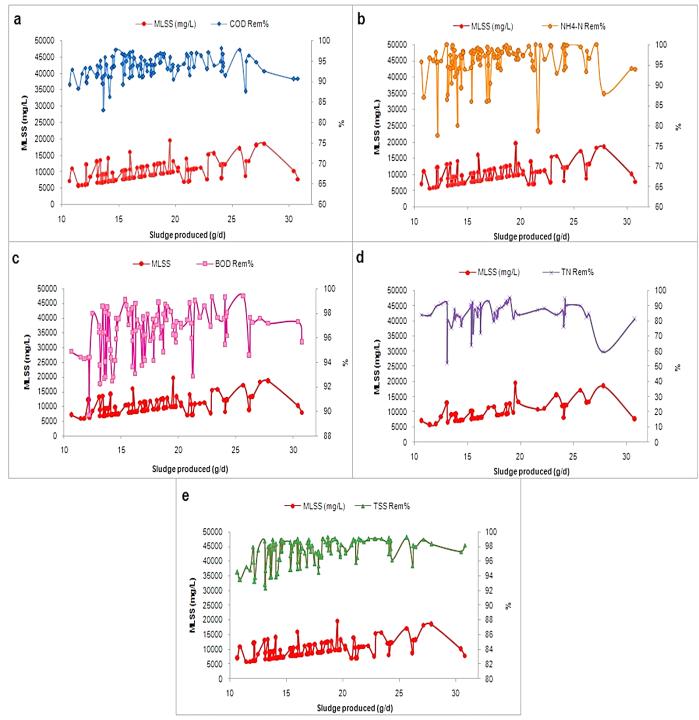
Intheir2021study,GhazalSrivastavandAnkurRajpal, addressed the pressing issue of sludge production in wastewater treatment operations and maintenance. She advocated for mitigating sludge production in the liquid treatment stream as a key management approach. By investigating a polyvinyl alcohol (PVA) gel-based oxicanoxic-oxicprocess,thestudyaimedtoevaluatewastewater treatmentperformanceandminimizesludgegeneration.The initial reactor setup comprised three reaction tanks, each withacapacityof10L,alongwithasettlerwithacapacityof 5L.Throughouttheexperimentalperiod,theinfluentflow rateremainedconstantat120L/d,with80%directedtothe PVA-gel reactor and 20% diverted to an anoxic reactor to supplement carbon sources for denitrification. The return activatedsludge(RAS)flowratewasmaintainedat60L/d, representing 50% of the inflow. Domestic wastewater sourcedfromanearbysewagepumpingstationwasutilized forthestudy.Theinfluentwastewatercharacteristicsduring thestudyperiodwereasfollows:TSS:272±69mg/L,BOD: 234±71mg/L,COD:453±104mg/L,Ammonia-N:35±10 mg/L, and TN: 42 ± 9 mg/L. Results and comparative evaluations demonstrated that the treatment process effectively reduced sludge production while achieving satisfactorywastewatertreatmentperformance.Thepilotscale plant generated high-quality effluent water that met stringent standards, making it suitable for reuse within a circulareconomyframework.Thisapproachholdspromise asasustainablesolutionapplicabletodevelopingcountries withvaryingtemperatureconditions. International Research Journal of Engineering and Technology (IRJET) e-ISSN: 2395-0056
International Research Journal of Engineering and Technology (IRJET) e-ISSN: 2395-0056
Volume: 11 Issue: 04 | APR 2024 www.irjet.net p-ISSN: 2395-0072
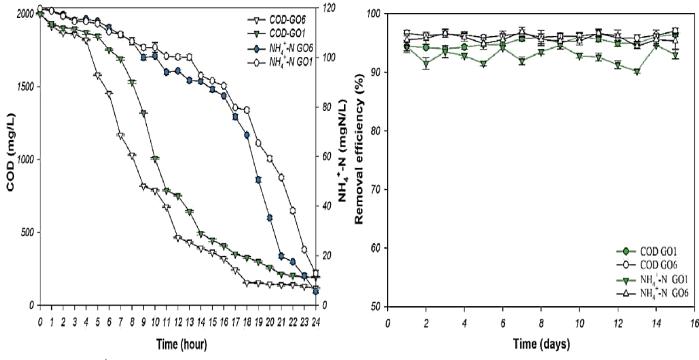
Intheir2023study,Tuyen-NguyenVanandDaehee Ahn, investigated the enhancement of polyvinyl alcohol/sodium alginate (PVA/SA) gel beads immobilizing aerobicsludgewithgrapheneoxide(GO)asananofiller.They utilizedvariousconcentrationsofGO(rangingfrom0.02to 200 mg/L) to produce different types of beads Batch experiments were carried out in two 3L reactors, each containing30%ofthebeads,overa15-dayperiod,withfour steps:fill,aeration,settle,andwithdraw,anda50%exchange ratio between the reactors. Peristaltic pumps facilitated wastewater filling and treated water withdrawal, while dissolved oxygen for aeration was provided by an air compressoranddiffuseratthereactorbottoms.Sensorsfor DO, pH, and temperature monitored reactor parameters, controlledviaanelectriccontrolbox.Resultsrevealedthat PVA/SA/GO gel carriers displayed superior reinforcement properties compared to non-GO gel carriers, with similar sphericity factor and methylene blue absorption. The strongestcarrier,GO6,containing200mg/LGO,exhibitedthe highest COD and NH4+-N removal efficiencies of 97% and 96.67%, respectively, outperforming a non-GO PVA/SA (GO1)gelcarrier.
FromtheabovestudythePVAgelbeadsasabiomasscarrier haveagreatpotentialtotreatcontaminateddomesticwastewater from different origins. With careful designing and planning a PVA gel beads can efficiently remove variety of organic, inorganic and biological contaminants from the domestic wastewater. The yield of activated sludge production from the treatmentofPVAgelbeadsasabiomasscarrieriscomparatively low than conventional wastewater treatment. The construction and maintenance cost of treatment plant using PVA gel beads is low as compared to conventional wastewater treatment plant. Also, this treatment can enhance the efficiency of wastewater treatment process. Although these paper deals with the study of mechanism of several contaminants removal in domestic wastewater but still a long-term investigation will be required. This treatment can prove best alternative over the conventional wastewater treatment process. The present study may help to cheque the feasibility criteria for using PVA gel beads as a biomass carrier for domestic wastewater treatment. The study
carriedoutonthePVAgelbeads will bebeneficial for theBOD, COD and TSS removal from the influent domestic wastewater. The performance of PVA gel beads in combination with attach growth system and moving bed bio-reactor system will give promisingresults.Thisstudycandefinitelybehelpfultoachieve the standards required for discharging back wastewater into the environment.
We gratefully acknowledge and express our deep sense of gratitude to Prof. Ms. N. W. Chorey, Assistant Professor,DepartmentofCivilEngineeringPRMITR,Badnera, for introducing the present topic and for her inspiring guidance and valuable suggestions throughout the project work. I am also thankful to Dr. N.W. Ingole Sir HOD, Department of civil engineering, PRMITR, Badnera, for extendingtheirvaluableguidanceandsupporttocomplete thestudywithinstipulatedtimeline.
WearealsothankfultotheKurarayIndiaPvt.Ltd. forprovidingusPVAgelbeadsresourceforourstudy.Lastly, I would like to thank and express our gratitude towards everybodywhoatvariousstageshadhelpusforourstudy.
[1] KurarayCo.Ltd.
[2] NordinSabliandNorzarinaZakaria“Ammonia-Nitogen reduction in low strength domestic wastewater by polyvinyl alcohol (PVA) gel beads”, Pertanika Journal, Volume31,January2023
[3] PawanG.Ramteke,KaranNKhirdeandOmkarP.Gurav “treatmentofdairywastewaterusingPVAhydro-gel”, ResearchPublishJournal,Volume3
International Research Journal of Engineering and Technology (IRJET) e-ISSN: 2395-0056
Volume: 11 Issue: 04 | APR 2024 www.irjet.net p-ISSN: 2395-0072
[4] YiboWang,MinquanFeng,YonghongLiuandLinaWang “StudyofthetreatmentofdomesticsewageusingPVA gelbeadsasabiomasscarrier”,IWApublishing,March 2017,pages340-349
[5] GhazalSrivastava,JasdeepSingh,KhalidMuzamilGani, Ankur Rajpal, Faizal Bux & Absar Ahmad Kazmi, “Reducedsludgeproductioninapolyvinylalcoholgelbased oxic-anoxic-oxic configured pilot-scale plant”, ScienceDirect,Volume4,December2021,100136
[6] Tuyen-Nguyenvan,Trung-DoQuang,tuan-HoangVan, Thuan-Tran Hung, Quang-chu Xuan, Hyungu Kim and Daehee Ahn “Enhancing mechanical properties of polyvinyl alcohol/sodium alginate gel beads by grapheneoxidefortheaerobicsludgeimmobilizationin wastewater treatment”, Environmental Engineering Research,Volume28,January2023
[7] Aparna Dutta and Sudipa Sarkar “Treatment on the miningimpactedwaterusingnovelpolyvinyl(PVA)gel beads bioreactor”, EGU, Volume 21, EGU2019-16144, June2019
[8] Zhang Li-sheng, WU Wei-Zhong and Wang Jian-long “Immobilization of activated sludge using improved polyvinylalcohol(PVA)gel”,ScienceDirect,Volume19, Issue11,pages1293-1297
[9] Meta Levstek, Joseph D. Rouse and Igor Plazl, “Estimation of the specific surface area for a porous carrier. In this study, they estimated the effective surfaceareaforaspherical”,Researchgate,57(1):45-51, March2010
[10] Himanshu Chaturvedi and Priyanka Kaushal “Processoptimizationoftertiarybiologicaltreatmentof MSW leachate by innovative PVA gel technology”, Journal of Emerging Technologies and Innovative Research,Volume11,February2024,page56-64
[11] MuhammadFaidsyafiqOthman,HassimiAbuHasan, Mohd Hafizuddin Muhamad and Badiea S. Babaqi “BiopolishingofDomesticWastewaterUsingPolyvinyl Alcohol supported Biofilm of Bacterial Strain Bacillus velezensis isolate JB7”, Journal of Ecological Engineering,Volume24,Issue8,pages33-42