
International Research Journal of Engineering and Technology (IRJET) e-ISSN: 2395-0056
Volume 11 Issue 04, Apr 2024 www.irjet.net p-ISSN: 2395-0072
International Research Journal of Engineering and Technology (IRJET) e-ISSN: 2395-0056
Volume 11 Issue 04, Apr 2024 www.irjet.net p-ISSN: 2395-0072
N.Sudha1 , C.Agalya 2, R.B. Jeevabrathusha 2, D.Krishna Kumari 2, M.Miruna 2
1Assistant Professor, Department of Civil, Vivekanandha College of Technology for Women, Tiruchengode, India 2UG students ,Department of Civil, Vivekanandha College of Technology for Women, Tiruchengode, India
Abstract - The textile industry is known for producing significant amounts of wastewater, which canbehighlycontaminatedwithdyes,chemicals,and other pollutants which affects the land and soil that leads to land pollution and soil degradation.In response to the environmental impact of this wastewater, there is a growing need for sustainable and cost-effective treatment methods. Coagulation is one of the effective method usually chemical coagulants are widely used but in our natural cogulants are used for the purification of textile wastewater. The main aim of this experiment is to reduce the environmental impact by purifying the textile waste water using natural coagulants i.e moringa seeds, casava powder and alum (chemical coagulant for more effectiveness and compared to other chemical coagulants alum produce low sludge) and using the purified water for other various purposes such as gardening,washing and other domestic purposes .In this starategy after coagulation the water is carried out to the step filtration and as a final step neem and lemon peel as disinfectants. The experiment was carried out by changing the pH, turbidity, total solids, dissolved oxygen, hardness according to the permissible parameters. The removal efficiency of turbidity after coagulation is 70% and after filtration turbidity removed upto 90%, and after disinfection the removal efficiency of Turbidity, Colour, Odour, pH, Total hardness, Total Solids, and Dissolved solids are 99.7%,95%,99.6%,92.6%,90.5%,and99.512%.
Keywords Textile wastewater, natural coagulants, Moringaseeds,Cassava,Neemleaves,Lemonpeel.
1.INTRODUCTION
The textile industry is known for producing significant amounts of wastewater, which can be highly contaminated with dyes, chemicals, and other pollutants. In response to the environmental impact of thiswastewater,thereisagrowingneedforsustainable and cost-effective treatment methods. One potential solution is the use of natural coagulants for the purification of textile waste water. This process is crucial for the production of clean and safe drinking water and for the treatment of industrial wastewater.
The coagulation process involves the addition of a coagulant to the water, which destabilizes the suspended particles and forms larger aggregates called flocs. These flocs can then be their effectiveness in coagulation. However, the use of these chemical coagulantscanraiseconcernsaboutthepotentialhealth andenvironmental impactsofresidual chemicalsinthe treated water. In contrast, natural coagulants offer an environmentally friendly alternative. Natural coagulants, derived from plant materials, have been found to be effective in the coagulation process. Examples of natural coagulants include chitosan, Moringaoleiferaseeds,andtanninsfromvariousplants. Moringa oleifera seeds, for instance, contain cationic proteinsthatcanbindtonegativelychargedparticlesin water, allowing them to clump together and be easily separated. Chitosan, derived from the shells of crustaceans, has also been shown to be effective as a natural coagulant due to its positively charged nature. Using natural coagulants is beneficial as they are generally biodegradable, pose fewer health risks, and have minimal environmental impact compared to traditional chemical coagulants. Additionally, natural coagulants can be easily sourced, making them an attractive option for water treatment in resourcelimited settings. It is important to note that the effectiveness of natural coagulants can vary depending on water quality and the specific application. Research and testing are necessary to determine the most suitable natural coagulant for a particular water treatment scenario. Overall, the use of natural coagulants presents a promising sustainable approach to water treatment, providing a safer and more environmentally friendly option for coagulation in watertreatmentprocesses.Thisprojectaimstoexplore the effectiveness of natural coagulants in removing pollutantsfromtextilewastewater,therebyreducingits environmental impact. Through this research, we hope to contribute to the development of sustainable methods for treating textile waste water, ultimately leadingtoacleanerandhealthierenvironment.
International Research Journal of Engineering and Technology (IRJET) e-ISSN: 2395-0056
Volume 11 Issue 04, Apr 2024 www.irjet.net p-ISSN: 2395-0072
2.1Materials
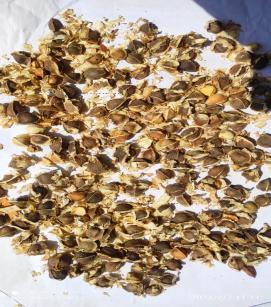
Moringa Oleifera Moringa seeds are used as a natural coagulant due to their cationic proteins and peptides. These proteins can bind with negatively charged particles in water,causingthem toclump together.This process,knownascoagulation,leadstotheformationof larger particles that can be easily removed through sedimentation or filtration. Moringa seeds are considered an effective and environmentally friendly alternativeforwatertreatmentincertainregionswhere they are readily available. Figure 1 depicts the Moringa Oleiferaandcassava.
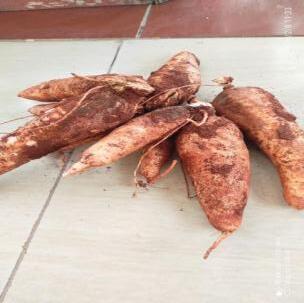
Cassava powder is sometimes used as a natural coagulant in water treatment processes due to its high content of cationic starch. The positivelychargedstarch particleshelpbindimpuritiesandsuspendedparticlesin water,facilitatingtheirremoval.Itactsasacoagulantby destabilizing colloidal particles, allowing them to aggregateandsettle.
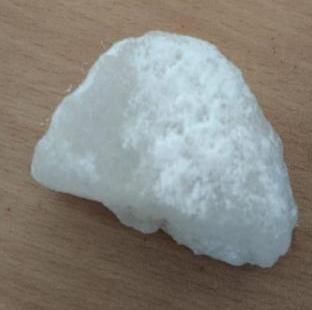
Alum, or aluminum sulfate, is commonly used as a coagulant in water treatment. Its efficacy lies in its abilitytoformaluminumhydroxideflocswhenaddedto water. These flocs attract suspended particles and impurities, causing them to clump together and settle. Alum's positive charge neutralizes the negative charges on particles, promoting coagulation and facilitating the removalofimpuritiesduringwatertreatmentprocesses.
Neem
Neem is utilized in the treatment of wastewater due to its natural properties, such as antimicrobial and antifungalattributes.Neemextractscontaincompounds like azadirachtin, which can help control the growth of bacteriaandfungiinwastewater.Neemisemployedasa biopesticide, helping to reduce microbial contamination in water. Additionally, it may contribute to the removal of certain pollutants through its bioactive components.
However, the effectiveness of neem in wastewater treatment can vary based on specific conditions and contaminantspresent
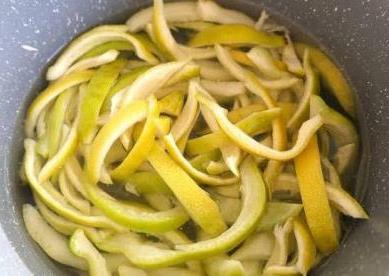
Lemon peel contains natural compounds like limonene, whichpossessantimicrobialproperties.Whenaddedto purified wastewater, it may help disinfect by inhibiting thegrowthofcertainmicroorganisms, contributingtoa more thorough purification process. Lemon peel also contains citric acid, which has additional disinfectant properties. The acidity can create an environment less favorable for bacterial growth. Additionally, the pleasantfragranceoflemoncanhelpmaskanyresidual odors in treated wastewater. Figure 3 depicts the sampleoflemonpeel.
2.2Collectionofwastewater
The Textile industry wastewater has been collected from Sandhya Textile, at S.N.D road, Tiruchengode, Namakkal.In that industry, the capacity of waste water produced everyday maximum 50 litres. We collected 4 ofsampleeveryday.
2.3Filteration
In filteration, there will three layers to get more pure wateraftercoagulationprocess.ThoselayersareCoarse aggregate, Fine aggregate, and Charcoal one liter of Jar withdepthof90mm,55mm,30mm.
International Research Journal of Engineering and Technology (IRJET) e-ISSN: 2395-0056
Volume 11 Issue 04, Apr 2024 www.irjet.net p-ISSN: 2395-0072
2.4Disinfection
Thisprocessistakenafterfilteration,wherelemonpeel and dry neem leaves are used in open air under sunlight.
3. EXPERIMENTAL PROCEDURE
3.1Coagulation:
In Coagulation, intially by taking different ratios to remove turbidity of 2 natural coagulants (Moringa seeds powder and Cassava powder) and chemical coagulant (Alum). Table 1 depicts the amount of materialsusedinthisstudy.
Table 1 Materials used in this study
S.no Moringa seed s powder Cassava powder Alum
R1 1g 1.5g 0.6g
R2 1g 1.5g 0.7g
R3 1.5g 2g 0.8g
R4 1.5g 2g -
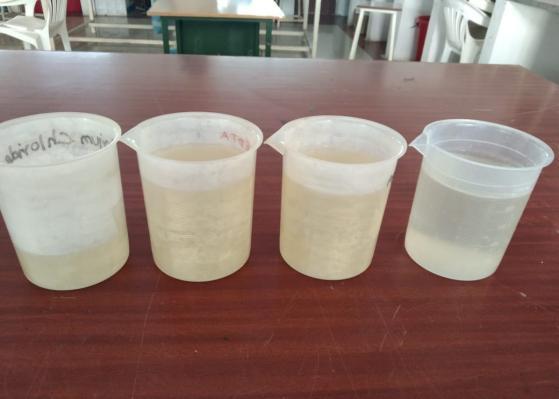
In this we found 3rd ratio get more effective after coagulation while compare to others. Figure 4& 5 illustratesthesamplebeforeandaftercoagulation.
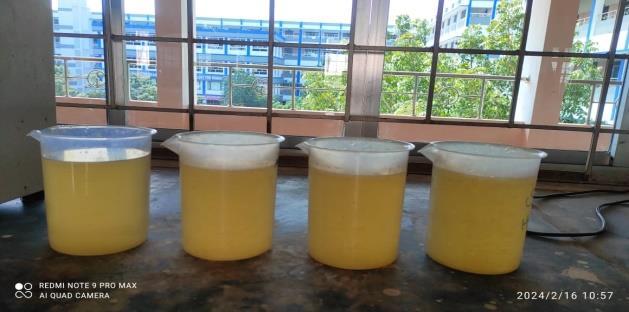
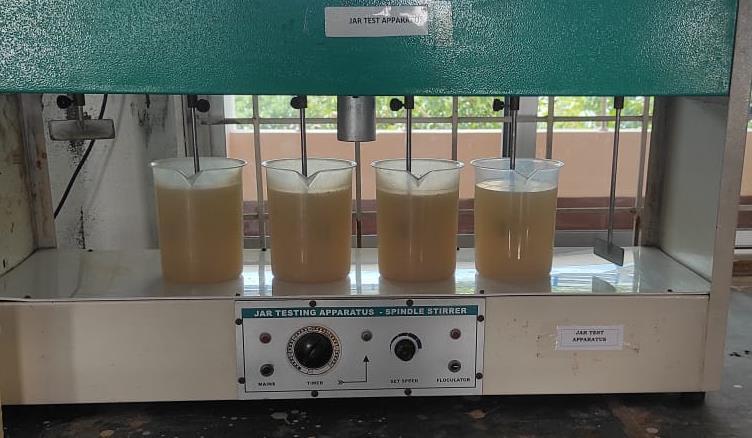
With this effective ratio R3, the coagulation process is carried out for 4L of textile wastewater for initial 40 minsathighspeed(120rpm),20minsatmidiumspeed (60rpm) and 10 mins at low speed (30 rpm). After coagulation, sedimentation is done for 2 hours at room temperation. After sedimentation the turbidity of the wastewater is reduced, the removal efficiency of Turbidity, Odour, colour and pH is 70%,5%, 25% and 60%.
3.2Filtration:
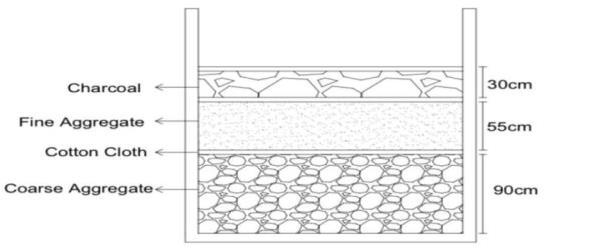
Figure 6 Filtration setup
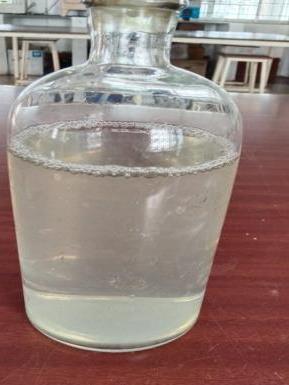
After sediments of Sludge, the sample is collected by filterwithfilterpaperinanotherjar,andthenthe4Lof sample is filled into filtration setup for 24hrs. After filtration the water sample is collected in another jars. The efficiency of Turbidity, pH, colour and odour are reduced to 90%, 75%, 85% and 85%. By filtration controlled of Turbidity and Odour is carried. In this filtration, inlet of wastewater of 4L and outlet of wastewateris3.4Lwhichisthewastewateriscollected upto85%in17minsfromfiltration Figure7showsthe collectedwater.
3.3Disinfection:
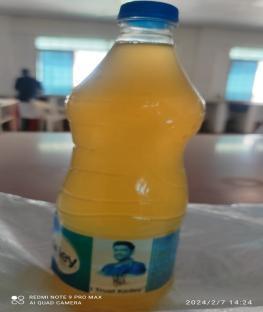
After filteration, 1/4 of lemon peel and 5 leaves of dry neem in 1L of sample and keep in open air under sunlightfor3hrs.Thencollectsampleandthenfilterby using filter paper. Then proceed for futher test parameters like Turbidity, pH, Total solids, Total Hardness and Dissolved oxygen. Figure 8 depicts the sampleafterdisinfection.
Volume 11 Issue 04, Apr 2024 www.irjet.net
4. Results and discussions
Results and discussions of this study are presented in theforthcomingsection
Table2BeforeTreatment
Efficiency removal of physical parameters during Coagulation, Filteration and Disinfection
Coagulation Filteration
Disinfection
9 Summary of test results
Table3AfterTreatment
Result
Turbidity 27NTU
pH 11
Hardness 860ppm Total
Dissolved
3500mg/l
mg/l
The conclusions on the test results before and after treatmentwerederivedfromthedatashowninTable2 and 3. In order to decrease turbidity, pH, total solids, anddissolvedoxygenlevels,arangeoffilteringmethods were utilized, such as coagulation, filtration, and disinfection. The test outcomes of several techniques aredepictedinFigures9and10. Aftertreatment,there was a notable change in properties of waste water. it might be used other than drinking purposes such as gardening
Figure 10 Test findings on before and after treatment
In conclusion, it is imperative to conduct research in order to get additional knowledge on the utilization of natural coagulants for the treatment of textile wastewater, with a focus on their prospective applications. It can be verified that the majority of hazardous chemicals and color from wastewater are effectively eliminated, demonstrating a significant capacitytoremovetypicalparameterssuchasturbidity, pH, color, dissolved oxygen, total suspended solids (TSS), and total hardness. The treated wastewater generated by the textile industry is subsequently utilizedforseveralpurposes,includinggardening,reuse in the textile industry for dyeing, and sanitation. By employing these techniques, the wastewater has been purified to a level of 85% suitable for human consumption, such as drinking, vegetation cultivation, andbathing.
International Research Journal of Engineering and Technology (IRJET) e-ISSN: 2395-0056
Volume 11 Issue 04, Apr 2024 www.irjet.net p-ISSN: 2395-0072
1.H.Ganjidoust,K.Tatsumi,T.Yamagishi,R.N.Gholianhttps://doi.org/10.1016/S0273-1223(96)00943-2
2.Arunima Sharma, Krishna G Bhattacharyya CSIR,2005http://nopr.niscpr.res.in/handle/123456789/8643
3.Rashmi Sanghi, Bani Bhattacharya, Awantika Dixit, Vandana Singh Journal of environmental management 81 (1), 36-41, 2006https://doi.org/10.1016/j.jenvman.2005.09.015
4.Mohammad Hadi Mehdinejad, Bijan Bina, Mahnaz Nikaeen, Hossein Movahedian Attar - Journal of Food, Agriculture and Environment 7 (3-4), 845-850, 2009https://in.docworkspace.com/d/sIK7D4rZZodO1rwY
5.Han Khim Lim, Norli Ismail, Ismail Abustan, Mohamad Fared Murshed, Anees Ahmad - Journal of environmental management 112, 353-359, 2012https://doi.org/10.1016/j.jenvman.2012.08.001
6.Marcelo JM Silva, José ES Paterniani, Adriana R Francisco - African Journal of Agricultural Research 8 (24), 3102-3106, 2013https://in.docworkspace.com/d/sIDnD4rZZtda1rwY
7. John P Sutherland, Geoff K Folkard, MA Mtawali, WD Grant - Loughborough University, 1994https://in.docworkspace.com/d/sIDzD4rZZl9e1rwY
8.Mahshid Loloei, Hosein Alidadi, Gholamabbas Nekonam, Yousef Kor -International Journal of Environmental Health Engineering 3 (1), 12, 2014https://in.docworkspace.com/d/sIKrD4rZZ79e1rwY
9.Heber M de Paula, Marina Sangoi de Oliveira Ilha, LeonardoSAndrade - Journal ofcleanerproduction76, 125-130, 2014https://doi.org/10.1016/j.jclepro.2014.04.031
10.Chee Yang Teh, Ta Yeong Wu, Joon Ching JuanEcological engineering 71, 509-519, 2014https://doi.org/10.1016/j.ecoleng.2014.07.005
11.Chee Yang Teh, Ta Yeong Wu, Joon Ching JuanIndustrial Crops and Products 56, 17-26, 2014https://doi.org/10.1016/j.indcrop.2014.02.018
12.Katrina Pui Yee Shak, Ta Yeong Wu - Chemical Engineering Journal 256, 293-305, 2014https://doi.org/10.1016/j.cej.2014.06.093
13.N Muralimohan, T Palanisamy - Asian Journal of Chemistry 26 (3), 911, 2014https://in.docworkspace.com/d/sIAjD4rZZ99u1rwY
14.Gabriele Wolf, Roselene Maria Schneider, Milene Carvalho Bongiovani, Eduardo Morgan Uliana, Adriana Garcia do Amaral - Chemical engineering 43, 2015https://in.docworkspace.com/d/sIKXD4rZZ0Ny1rwY
15.Sorour Shamsnejati, Naz Chaibakhsh, Ali Reza Pendashteh, Sam Hayeripour - Industrial Crops and Products 69, 40-47, 2015https://doi.org/10.1016/j.indcrop.2015.01.045
16.TKFS Freitas, VM Oliveira, MTF De Souza, HCL Geraldino, VC Almeida, SL Fávaro, JC Garcia - Industrial Crops and Products 76, 538-544, 2015https://doi.org/10.1016/j.indcrop.2015.06.027
17.NurudeenAbiolaOladoja -JournalofWaterProcess Engineering 6, 174-192, 2015https://doi.org/10.1016/j.jwpe.2015.04.004
18.Beatrice Kakoi, James Wambua Kaluli, Peter Ndiba, George Thiong’o - Ecological engineering 95, 699-705, 2016-https://doi.org/10.1016/j.ecoleng.2016.07.001
19.SAnju,KMophin-Kani-IJSER7(4),238-244,2016https://in.docworkspace.com/d/sIGHD4rZZq-C1rwY
20.Dragana Kukić, Marina Šćiban, Jelena Prodanović, VesnaVasić,MirjanaAntov,NatašaNastić -Advancesin CivilandArchitecturalEngineering9(16),77-84,2018https://in.docworkspace.com/d/sIHDD4rZZkOK1rwY
21.A Hariz Amran, N Syamimi Zaidi, Khalida Muda, L Wai Loan - Int J Eng Technol 7 (3), 34-7, 2018https://in.docworkspace.com/d/sIG_D4rZZieS1rwY
22.HA Aziz, YC Yii, SFF Syed Zainal, SF Ramli, CO Akinbile - Global NEST Journal 20 (2), 373-380, 2018https://in.docworkspace.com/d/sID7D4rZZ6-S1rwY
23.Hans Kristianto, Maria Angelina Kurniawan, Jenny NM Soetedjo - Int. J. Adv. Sci. Eng. Inf. Technol 8, 20712077, 2018https://in.docworkspace.com/d/sIIrD4rZZuuW1rwY
24.P Balamurugan, K Shunmugapriya - International Journal of Recent Technology and Engineering (IJRTE) Volume-8 Issue, 355-362, 2019https://in.docworkspace.com/d/sICHD4rZZ W1rwY
25.AMMarey-RevistaBionatura4(2),856-860,2019https://in.docworkspace.com/d/sIIbD4rZZ6ea1rwY
International Research Journal of Engineering and Technology (IRJET) e-ISSN: 2395-0056
Volume 11 Issue 04, Apr 2024 www.irjet.net p-ISSN: 2395-0072

Mrs. N.Sudha
Assistant Professor in DepartmentofCivilEngineering, Vivekanandha College of Technology, Tiruchengode, for Women,TamilNadu,India
C.Agalya
FinalyearB.EStudent, DepartmentofCivilEngineering, Vivekanandha College of Technology for Women, Tiruchengode,TamilNadu,India
R.B. Jeevabrathusha
FinalyearB.EStudent, DepartmentofCivilEngineering, Vivekanandha College of Technology for Women, Tiruchengode,TamilNadu,India
D.Krishna Kumari
FinalyearB.EStudent, DepartmentofCivilEngineering, Vivekanandha College of Technology for Women, Tiruchengode,TamilNadu,India
M.Miruna
FinalyearB.EStudent, DepartmentofCivilEngineering, Vivekanandha College of Technology for Women, Tiruchengode,TamilNadu,India