
International Research Journal of Engineering and Technology (IRJET) e-ISSN:2395-0056 Volume: 11 Issue: 04 | Apr 2024 www.irjet.net p-ISSN:2395-0072
International Research Journal of Engineering and Technology (IRJET) e-ISSN:2395-0056 Volume: 11 Issue: 04 | Apr 2024 www.irjet.net p-ISSN:2395-0072
Murugavel Elakkiya1, Saravanan Madhumitha2, Deivasagayam Cathalin Salaman3 Nagappan Muthukumaran ⁴, Aziza Seitova⁵, Aigul Momunova⁶
1,2,3,4 Student, Medicine, International Medical Faculty Of Osh State University, Osh, Kyrgyzstan. 5Teacher Of Pharmacology Department, International Medical Faculty Of Osh State University, Osh, Kyrgyzstan. ⁶HOD Of Pathology Basic And Clinical Pharmacology Department, Associate Professor, Osh, Kyrgyzstan.
Abstract - Rabies presents as an acute Inflammation of the brain and spinal cord in humans and animals, caused by the rabies virus. The virus is commonly transmitted through animal bites. Throughout history, Rabies has left a significant mark . Globally , dogs serve as the primary carriers, while wild animals, particularly bats, pose the most significant threat to humans in North America . Following an Incubation period , the rabies virus spreads rapidly through the nervous system using fast axonal transport. Rabies can be effectively prevented if recognized promptly after an Animal bite through proper wound cleansing and the administration of Rabies vaccine and immune globulin.
KeyWords: Rabies, Vaccines, Fatalities, Dog bites, Prognosis
1.INTRODUCTION
“A stitch in time saves nine, especially with rabies.”
Rabiesisanacuteviraldisease,oneofthemostimportant Zoonotic diseases,thatcausesEncephalitis(Inflammation of the brain) in humans and warm -blooded animals. It is historicallyreferredtoasHydrophobia (i.e.,fearof water). It is primarily transmitted through saliva/bites/scratches/licks from rabid Animals. This virus belongs to RHABDOVIRIDAE family (Genus : Lyssavirus), with a distinct bullet shape and a genome encoding with five proteins – Nucleoprotein(N), Phosphoprotein(P), Matrix protein(M), Glycoprotein(G) andpolymerase(L).
2.OBJECTIVE
1) Theaimofthisarticleistounderstandthecauses, risk factors, treatment , clinical features, prevention and otheraspectsofRabies.
2) The investigative study was carried out from online resources like scholarly journals and articles authoredby numerouswell–knownexpertsinthefields.
3.METHOD OF STUDY
CAUSES
1]BitefromanInfectedanimalsnamelybats,raccoons,
cats,dogs,Skunk,foxesetc…
2]Scratchesfromaninfectedanimal.
3] Contact with the saliva or nervous system tissue of an infectedAnimal.
SYMPTOMS
Early symptoms(1-2 weeks after exposure):
• Fever.
• Headache.
• Weakness.
• Malaise.
• Anorexia.
• Generaldiscomfort.
• Nausea.
• Pharyngitis • Emesis.
Neurological symptoms(2-4 weeks after exposure):
• Hydrophobia.
• Musclespasms.
• Seizures.
• Paralysis.
• Confusion.
• Anxiety.
• Agitation.
• Hallucinations.
• Insomnia.
• Abnormalvocalization.
CLINICAL PHASES
Rabiestypicallyprogressthroughseveralstages:
Incubation period:
• It is typically 2-3 months, and varies significantly from 1 week to 1 year, depending on factors like locationofthevirusentryandtheviralload.
Prodromal period:
• In this period, Rabies lasts 2-10 days and is characterized by mild and nonspecific symptoms, eg. Malaise Chills, Fever, Headache, Photophobia,
International Research Journal of Engineering and Technology (IRJET) e-ISSN:2395-0056
Volume: 11 Issue: 04 | Apr 2024 www.irjet.net p-ISSN:2395-0072
Anorexia, Nausea, Vomiting, Diarrhoea, Sore throat,Cough,andmusculoskeletalpain.
Acute neurological period:
• In this period Rabies lasts 2-7 days and is associated with objective signs of central nervous systemdysfunction.
Paralytic period:
• IntheparalyticformofRabies,paralysisdevelops from the outset, it usually runs less dramatic and longer course than the furious form. Muscles gradually becomes paralyzed, starting from the woundsite.Acomaslowlydevelops,whichisfatal.
DIAGNOSIS :
Laboratory Testing
• Direct fluorescent Antibody (DFA) Test: It Involves examining brain tissue samples (usually obtained post-mortem) for the presence of the Rabies virususingfluorescentantibodies.
• Polymerase chain reaction (PCR): It detects viral genetic material(RNA)in saliva, cerebrospinal fluid, or brain tissue. This method is specifically useful in diagnosing Rabies before the onset or in cases where brain tissue samples are not available.
Other Diagnostic Tests
• Serology:
Blood tests can detect the antibodies produced by the immunesysteminresponsetoRabiesvirus exposure.But are not typically used for diagnosing acute Rabies infectionsduetotheirsensitivityandspecificity.
• Immunohistochemistry: In this method uses antibodies to detect viral antigens in tissuesamples,suchasskin biopsyspecimens orcorneal impressions.
Differential Diagnosis
Severalotherconditionscanmimic theclinicalfeatures of Rabies, including other viral Encephalitides,tetanus and psychiatricdisorders.Athoroughevaluationismandatory toensurethepresenceofRabies.
• Post-mortem Diagnosis
In cases where the patient has died and Rabies is suspected, post-mortem examination of brain tissue is performed to confirm the Diagnosis using DFA testing or PCR.
ItusuallyInvolves:
• 2 or more doses of the Rabies vaccine, for example; RabAvert and Imovax.
• Botharethree-doseschedulevaccines.
• Theygiveyou10yearsofimmunization.
• Boostshotscanbegivenevery6to24months. NOTE: Egg allergy sufferers should avoid RabAvert.
Human rabies immune globulin (HRIG).
• Shotsaregivenaroundthewound.HRIGgivesyou theantibodiesthatwilldestroythevirusnearthe wound until the body takes over. NOTE: HRIG should be avoided if the individual has been vaccinated before the exposure.
4.DATA ANALYSIS AND EPIDEMIOLOGY
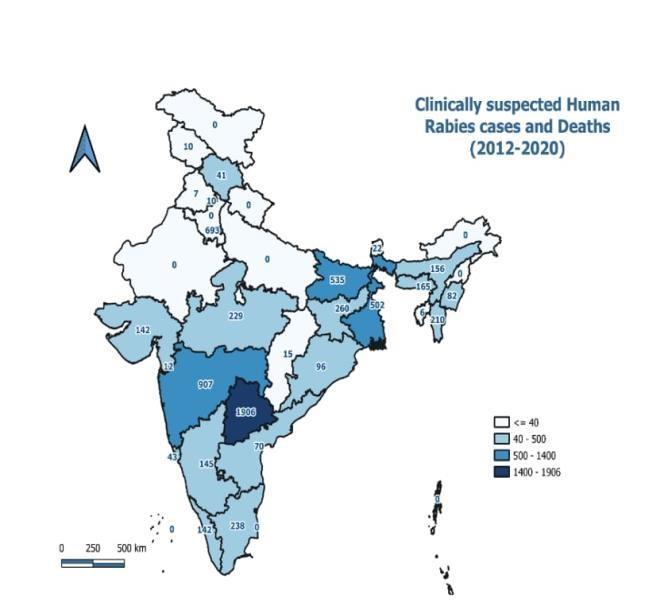
Figure 1: National Rabies control programme (NRCP) Data for clinically suspected human rabies cases And death (2012-2020), data taken from 26 states.
TABLE 1: The frequency of dog bites has risen steadily since 2021, and within a span of three years ,it has doubled
However,thenumberofdogbitecaseswasquitehigh in2018.Therewereoverwhopping75lakhdogbitecases reportedin2018whichdecreasedtoover72lakhand46 lakh in subsequent years 2019 and 2020,respectively. Surprisingly, then after number of dog bite cases sharply declinedbymorethantwice.
The Ministry of Health and Family welfare and the MinistryofFisheries,AnimalHusbandry&Dairy inguinal jointlylaunchedtheNationalActionplanforDogMediated RabiesEliminationintheyear2021.
TABLE 2: Arrangement of most to least, the counts of cases and fatalities caused by rabies in different States of India.
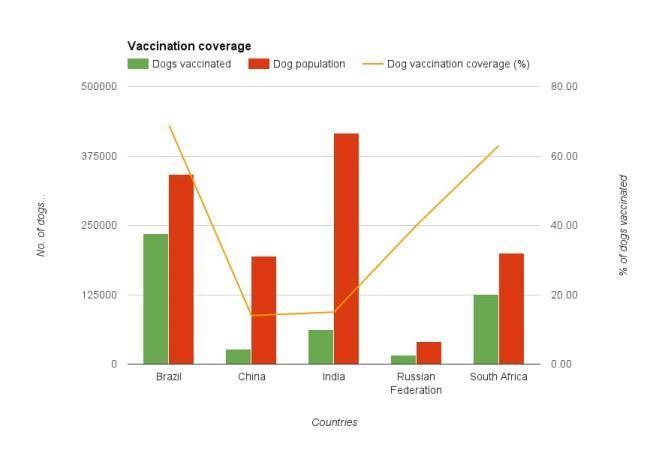
FIGURE 2:India,among the BRICS Nations,boasts the largest population of dogs and ranks among the Lowest in terms of vaccination rates.
Given the surge in animal bite incidents and rabiesrelated fatalities, it is imperative for India to contemplate employing pre-exposure Prophylaxis (prEP) as an interim measure until effective canine control is established. Furthermore, all youngsters residing in high-risk areas shouldreceivePrEPasa preventivemeasure.Additionally, a collaborative approach for sharing vaccines and Rabies immune globulin(RIG) across states during emergencies should be adopted. The availability of essential resources should be transparently showcased on online platforms like e-Raktkosh in numerous Healthcare facilities situated in high-risk zones. Encouraging the adoption of stray dogs and implementing stringent regulations on pet ownershipare crucial steps to minimize the presence of dogs onpublic roads. To sum up, there is a pressing need for aholistic and coordinated strategy concerning stray dogmanagementandbitepreventionprotocols.
Some important guidelines must be followed by the individualinordertopreventRabies,including:
IfYouarebittenorscratchedbyanAnimal,
• Washthewoundwithsoapandwater.
• Contact your Healthcare provider as soon as possible.
• Youmayneedtogetavaccinetopreventarabies( postexposureprophylaxis/PEP).
• Makesureyourpetsvaccinationsareup-todate.
• Do not let your pets roam free without supervision.
• Leavewildlifealone.
• DonottouchInjuredanimals.
International Research Journal of Engineering and Technology (IRJET) e-ISSN:2395-0056 Volume: 11 Issue: 04 | Apr 2024 www.irjet.net p-ISSN:2395-0072
• Dogs are the most common source of Rabies in
India , so minimize contacts with dogs to reduce theriskofContractingrabies.
• If you are at high risk for rabies, ask your HealthcareprovideraboutPrEP.
• If you have been attacked by an aggressive wild animal,callanimalcontrol.
Rabies Encephalitis persists as an overlooked tropical ailment that disproportionately impacts the most marginalized communities globally ,posing significant clinical hurdles. Persistent and courageous rescue endeavors have advanced our comprehension of Rabies virus(RABV)pathologyandit’scourseinnature.Sustained dedication within the rabies research sector has yielded additional revelations that could pave the way for prospectivetreatments.Innovativestrategiesfortreatment could ideally involve a comprehensive approach integrating antiviral medication, immunotherapy, and neuroprotectivemeasures.
Rabies continues to be a significant pubic health hazard underestimated in majority of member countries of the Middle East region. The situation in some countries has worsened due to the emergence of Rabies in the region , especiallyinwildlife,duetodeterioratingenvironment.As a consequence in a majority of countries of the region the number of post-exposure prophylaxis provided has steadily increased over time. Countries of the region are spending increasing part of their health budget on procurement of modern rabies vaccines and immunoglobulins to meet the increasing demand for Rabies post-exposure treatment. The region as a whole experiences shortage in vaccines and immunoglobulins. Vaccinations of domestic animals remain limited in the region and insufficient for the control of Rabies. Public health education and awareness are still insufficient to contribute to national Rabies control and prevention programmes.
1) G.yale,M.Loopes,S.Isloor, et Al, Review Of oral rabies vaccinations of dogs and it’s applications in India. MDPI,Jan,2022;14(1):155. https://doi.org/10.3390%2Fv14010155
2) Sudarshan,M.K;Narayana,D.H.A , appraisal of surveillance of human rabies and Animal bites in seven states of India. Indian J.Public health Sep,2019;63(5):p3-8.DOI:10.4103/ijph.IJPH_377_19
3) Meyer K.F. Can man be protected against rabies? Bull. WorldHealthOrgan.1954;10:845–866.
4) Wallace R.M, Clique F, Fehlner-GardinerC,et.al. Role of oralrabiesvaccinesintheEliminationofDogMediated Human rabies deaths. Emerg infect dis, Dec,2020;26(12):p1-9. https://doi.org/10.3201/eid2612.201266
5) SrinivasanK,kurzT,kuttuvaP,pearsonC.Reorienting rabies research and practice:lesson from India. Palgrave Commun. Dec,2019,5:152. https://doi.org/10.1057/s41599-019-0358-y
6) J K Dutta.Human rabies in India: Epidemiological features, management and current methods of prevention. Tropical doctor,Oct,1999;29(4):196-201. https://doi.org/10.1177/004947559902900404
7) N R Ramesh Masthi,T V Sanjay, S B Pradeep, et Al. Indian J Public health,sep,2019;63(5):p 15-19. https://doi.org/10.4103/ijph.ijph_373_19
8) Meagan C Fitzpatrick, Hiral A Shah, Abhishek Pandey, et Al. One health approach to cost effective rabies control in India.PNAS,Dec,2016;113(51) 1457414581.https://doi.org/10.1073/pnas.1604975113
9) SusanANadin-Davis,Geoffturner,etAl.,Emergenceof Artic-like rabies lineage in India. Emerg infect Dis.Jan,2007;13(1):111-6. https://doi.org/10.3201/eid1301.060702
10)Shyam Chand Chaudhary, Akash khandelwal, et Al. Rabies Encephalitis. BMJ case Rep, Apr,2021;14(4) https://doi.org/10.1080/01652176.2017.1343516
11)Rajendra singh, Karam pal singh, Susan cherian, et Al. Rabies-epidemiology, pathogenesis, Public he concerns and advances in Diagnosis and control:A comprehensivereview.VetQ.Dec,201737(1):212-251 https://doi.org/10.1080/01652176.2017.1343516
12)Sangeet Bagcchi. Rabies: the most common cause of fatal encephalitis in India. Lancet Neurol.,Jul,2016;15(8):793-794. https://doi.org/10.1016/s1474-4422(16)30083-7