
International Research Journal of Engineering and Technology (IRJET) e-ISSN: 2395-0056
Volume: 11 Issue: 04 | Apr 2024 www.irjet.net p-ISSN: 2395-0072
International Research Journal of Engineering and Technology (IRJET) e-ISSN: 2395-0056
Volume: 11 Issue: 04 | Apr 2024 www.irjet.net p-ISSN: 2395-0072
Keshav kashyap1 , Kaushal patel2 , Anil kumar3
Professor. Jay Kishan Gupta, Dept. of Mechanical Engineering Chouksey Engineering College,Bilaspur C.G India
123Student of Mechanical Engineering Chouksey Engineering College,Bilaspur C.G India
ABSTRACT :- A regenerative braking is a system that converts a portion of a vehicle's kinetic energy into electrical or mechanical energy, which can be stored for later use. This technology aims to improve efficiency by reducing the energy required to drive the vehicle. Our project focuses on studying and demonstrating this innovative braking system, which has the potential to significantly save energy, especially in vehicles with frequent braking events like buses, taxis, and delivery vans. By harnessing this technology, we aim to contribute to the conservation of non-renewable energy sources
Keywords: Regenerative Braking, Generator, Brake pad, EnergyRecovery,
I. Introduction
Regenerative braking fundamentally shares the same objectiveasconventional braking:toslowdown orstop a vehicle safely. However, the mechanism and outcomes of regenerativebrakingdiffersignificantly,offeringadditional benefitsbeyondsimpledeceleration.
Conventionalbrakingsystemsrelyonfrictionbetweenbrake padsandrotorstodissipatekineticenergyasheat,thereby slowing down the vehicle. While effective, this process results in significant energy loss, as much of the kinetic energy is converted into heat and dispersed into the environment.Thiswastedenergycontributestoreducedfuel efficiencyandincreasedenvironmentalimpact.
Regenerativebraking,ontheotherhand,seekstocapturea portionofthiskineticenergythatwouldotherwisebelost and convert it into a usable form, such as electrical or mechanicalenergy.Thiscapturedenergycanthenbestored in batteries or other storage devices for later use, such as poweringelectricmotorsduringacceleration.Byharnessing thisotherwise wasted energy,regenerative braking offers severaladvantages:
1. Improved Fuel Efficiency: By recycling kinetic energy backintothevehicle'ssystem,regenerativebrakingreduces theamountofenergyneededfromtheenginetopropelthe vehicleforward.Thiscanleadtosignificantimprovementsin fuelefficiency,withsomeestimatessuggestingincreasesof upto33%overconventionalbrakingsystems.
2 Reduced Environmental Impact:Byminimizingenergy waste and reducing the need for fuel consumption, regenerativebrakinghelpslowergreenhousegasemissions
andotherpollutantsassociatedwithconventionalvehicles. This contributes to a cleaner and more sustainable transportationecosystem.
3. Extended Range for Electric Vehicles: In electric and hybridvehicles,regenerativebrakingplaysacrucialrolein extending the vehicle's range by recapturing energy that would otherwise be lost during braking. This captured energy canthen beusedto rechargethevehicle'sbattery, effectivelyincreasingitsdrivingrangebetweencharges.
4. Enhanced Brake Lifespan:Regenerativebrakingsystems canalsoreducewearandtearontraditionalfrictionbrakes, as they help dissipate some of the braking force and heat generated duringoperation. Thiscanleadtolonger brake lifespanandreducedmaintenancecostsovertime.
While regenerative braking offers numerous benefits, its effectivenesscanvarydependingondrivingconditions.For instance,itismostefficientinstop-and-gotrafficsituations, wherefrequentbrakingoccurs.Conversely,itseffectiveness diminishes during constant-speed driving, such as on highways,wherebrakingeventsarelessfrequent.
A. Tushar L. Patil, Rohit S. Yadav, Abhishek D. are, Mahesh Saggam, Ankul Pratap, ‘Performance Improvement of Regenerative braking system’, International Journal of Scientific & Engineering Research Volume 9, Issue 5, (2018). 2229-5518
InthispaperToenhancetheeffectivenessofregenerative braking systems, a few methods are suggested. Firstly, trimmingtheweightofthevehiclecannotablyimproveits performance. By shedding excess weight, the vehicle requires less energy for acceleration and deceleration, thereby enabling the regenerative braking system to efficientlycaptureandutilizekineticenergy.
B. Siddharth K. Sheladia, Karan K. Patel, V. raj D. Savalia, Rutvik G. Savaliya, ‘A Review on Regenerative Braking Methodology in Electric Vehicle’, International Journal of Creative Research Thoughts, Volume 6, Issue 1 (2018). 23202882
In this paper ,Regenerative braking systems have been upgraded with cutting-edge power electronics like ultracapacitors,DC-DCconverters(Buck-Boost),andflywheels.
International Research Journal of Engineering and Technology (IRJET) e-ISSN: 2395-0056
Volume: 11 Issue: 04 | Apr 2024 www.irjet.net p-ISSN: 2395-0072
Theseadvancementshavesignificantlyimprovedefficiency, enablingregenerativebrakingtosaveapproximately5%to 8%ofwastedenergy.
C Y. Luo, D. Huang and X. Gao’s "Research on energy recovery for electric vehicle based on motor-generator integration system,"
Inthispaper,Theresearchfocusedonelectricvehiclesand specificallyinvestigatedtheirenergyrecoverysystems.One significantproposalwastheintegrationofmotor-generator units. Detailed explanations were provided regarding the theory and methodology behind this integration. Furthermore, a novel addition to the study was the incorporation of an intelligent gearbox into the vehicle model, representing a pioneering effort in electric vehicle research.ThisstudywasconductedbyZhangGuironginthe paper titled "Exploring Regenerative Braking and Energy RecoverySystemsforElectricVehicles.
D. M. Boisvert, D. Mammosser, P. Micheau, A.Desrochers, “Comparison of two strategies for optimalregenerative braking, with their sensitivity to variations inmass,” IFAC Proceedings Volumes, vol.46, pp.626-630,2013
In this paper,This study examines regenerative braking control in a three-wheeled recreational vehicle. Unlike traditionalmethodsbasedonvehiclespeed,itintroducesa newstrategyfocusedoncontrollingrearwheelslip.Usinga MatLab/Simulink simulator validated with experimental data, the study compares the effectiveness of both approachesandfindsthatslip-basedregenerativebrakingis less affected by changes in parameters, ensuring optimal energyrecoveryandvehiclestabilityevenwithfluctuations inmass,slope,androadconditions
Traditionalbrakingsystems,likehydraulicandpneumatic systems, rely on friction pads to slow down or stop the wheels.Thesesystemsusemechanical orfluidlinkagesto activate the brakes. In hydraulic systems, brake fluid transmits the force from the brake pedal to the brake calipers, while pneumatic systems use compressed air. However,despitetheirwidespreaduse,thesesystemshave limitations. They can be prone to wear and heat buildup, reducingeffectivenessandrequiringfrequentmaintenance. Additionally,theywasteenergyintheformofheatduring braking. Therefore, there's a need for improvement to enhance efficiency, reduce maintenance, and minimize energyloss.
Faraday'sfirstlawstatesthatwhenthemagneticfluxlinked with a conductor changes, an electromotive force (emf) is inducedintheconductor.
Faraday's second law states that the magnitude of the inducedemfisdirectlyproportionaltotherateofchangeof magneticfluxwithtime.
Lenz's law asserts that the induced emf in a conductor alwaysopposesthechangeinmagneticfluxthatcausesit.
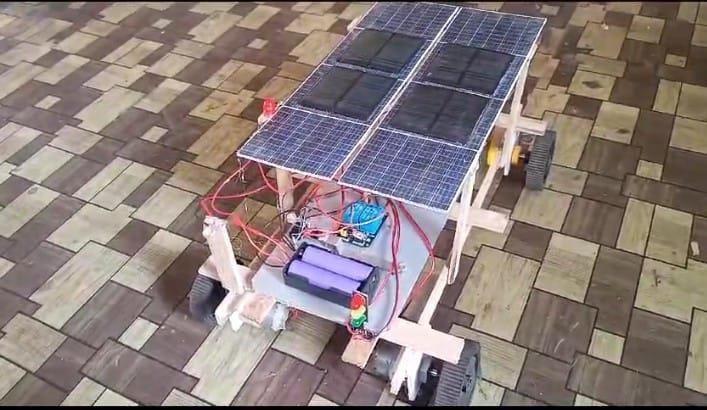
Arduino UNO:- The Arduino Uno is a versatile microcontroller board used for electronics projects.It features input/output pins, USB connectivity, and is programmed using the Arduino IDE. It's popular for beginners and experts alike, allowing for a wide range of projectsincludingroboticsandsensors.

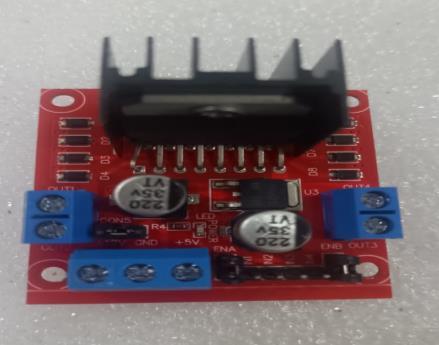
MOTER DRIVER :- Amotordriverisanelectronicdevice thatcontrolsthespeedanddirectionofamotor.Ittypically takesinputsignalsfromamicrocontrollerorothercontrol system and converts them into the necessary power and voltagelevelstodrivethemotor.Motordriverscanvaryin complexity and features, but they generally include componentssuchaspowertransistorsorMOSFETstoswitch themotoronandoff,aswellascircuitrytoregulatecurrent and protect against overloads or short circuits. They are commonly used in robotics, automation, and other applicationswhereprecisemotorcontrolisrequired.
International Research Journal of Engineering and Technology (IRJET) e-ISSN: 2395-0056
Volume: 11 Issue: 04 | Apr 2024 www.irjet.net p-ISSN: 2395-0072
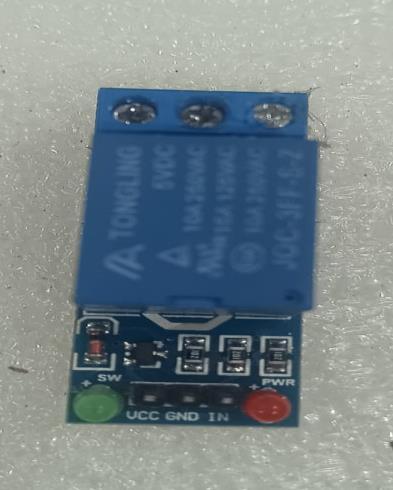
RELAY :- Arelayisanelectromechanicalswitchthatusesan electromagnet to mechanically operate a set of contacts. Whenanelectricalcurrentisappliedtothecoiloftherelay, itcreatesamagneticfieldthatattractsorrepelsthecontacts, causingthemtoopenorclose.Relaysarecommonlyusedto controlhigh-powerorhigh-voltagecircuitswithlow-power control signals, providing isolation between the control circuitandthecircuitbeingcontrolled.Theyarewidelyused in applications such as automation, electrical circuits, and industrialcontrolsystems.
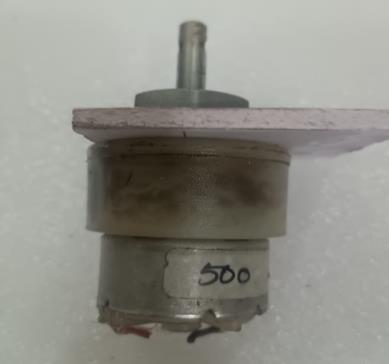
DC GEAR MOTOR :- ADCgearmotorisa typeofelectric motorthatcombinesaDCmotorwithagearboxtocontrol speed and torque. The DC motor provides the rotational motion,whilethegearboxreducesthespeedofthemotor and increases its torque output. This gearing mechanism allows DC gear motors to be used in applications where precisecontroloverspeedandpowerisrequired.Theyare commonly used in robotics, automation, electric vehicles, and various other applications that require controlled movement.
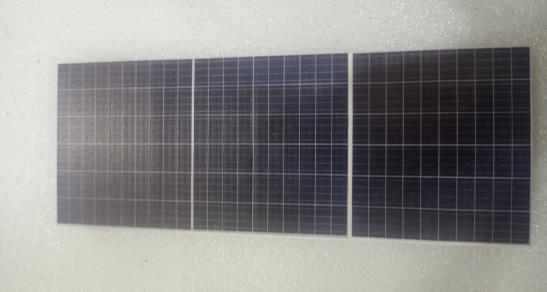
SOLAR PANEL:- Solarpanelscancomplementregenerative brakingsystemsbyprovidingadditional electrical energy. Theycanchargeauxiliarysystems,rechargebatteries,and increase overall efficiency, extending the vehicle's range. This integration enhances sustainability and reduces relianceontraditionalenergysources
Although regenerative braking systems offer significant benefits,suchasimprovedfueleconomyandenergycapture, they still require friction brakes for emergency stopping situations.Thisindicatesthepotentialforfurtherinnovation inthisfield.However,currentmodelsarestillvaluable,as studieshavedemonstratedtheirabilitytoenhanceengine efficiencyandreducefuelconsumptionbycapturingenergy thatwouldotherwisebewasted.Insummary,theoutcomes of this project are deemed satisfactory, highlighting the effectiveness of the regenerative braking system in optimizingvehicleperformance.
1. KevinLudlumThesis(3/6/13)OptimizingFlywheel DesignforuseasaKineticEnergyRecoverySystem for a Bicycle ( http://physastro.pomona.edu/wpcontent/uploads/2013/09/2013- Kevin-LudlumThesis.pdf)
2. Regenerative braking systems (Future of braking systems)-ISSN:2320-2902
International Research Journal of Engineering and Technology (IRJET) e-ISSN: 2395-0056
Volume: 11 Issue: 04 | Apr 2024 www.irjet.net p-ISSN: 2395-0072
3. Tushar L. Patil, Rohit S. Yadav, Abhishek D. are, Mahesh Saggam, Ankul Pratap, “Performance Improvement of Regenerative braking system”, “International Journal of Scientific & Engineering Research”,Volume9,Issue5,(2018).2229-5518
4. KetanWarake,Dr.S.R.Bhahulikar,Dr.N.V.Satpute, “Design & Development of Regenerative Braking System at Rear Axle”, “International Journal of Advanced Mechanical Engineering”, Volume 8, Number2(2018),2250-3234
5. Ranjan Kumar ,Department of Mechanical Engineering, Indian School Of Mines, Dhanbad, “RegenerativeBrake:ToHarnesstheKineticEnergy ofBraking”JETIR(ISSN-2349-5162)January2015, Volume2,Issue
6. S.J.Clegg, “A Review of Regenerative Braking System”,InstituteofTransportStudies,University ofLeeds,Workingpaperof471,1996.
2024, IRJET | Impact Factor value: 8.226 |