
International Research Journal of Engineering and Technology (IRJET) e-ISSN:2395-0056
Volume: 11 Issue: 04 | Apr 2024 www.irjet.net p-ISSN:2395-0072
International Research Journal of Engineering and Technology (IRJET) e-ISSN:2395-0056
Volume: 11 Issue: 04 | Apr 2024 www.irjet.net p-ISSN:2395-0072
Laraib Ahmad1, Mr. Ushendra Kumar2
1Master of Technology, Civil Engineering, Lucknow Institute of Technology, Lucknow, India
2Head of Department, Department of Civil Engineering, Lucknow Institute of Technology, Lucknow, India
Abstract - Long-spanbridgesrepresentvitalcomponentsof infrastructure, encountering diverse environmental and operational exigencies over their operational lifespan. This scholarly review scrutinizes the efficacy of Fiber Reinforced Polymer (FRP) jacketing as a means to augment the performance of long-span bridges when subjected to lateral loads.Synthesizingextantliterature,thereviewevaluatesthe structuralbehavior,performanceenhancement,andlongevity of long-span bridges retrofitted with FRP jackets. The examination delineates the fundamental mechanisms underlying FRP jacketing, elucidating its capacity to bolster theflexuralstrength,stiffness,andductilityofbridgeelements. Moreover, the discussion encompasses the impact of lateral loads, such as wind, seismic events, and vibrations induced by traffic, on the behavior of long-span bridges reinforced with FRP jackets. Emphasis is placed on the importance of meticulous design, material selection, and construction methodologies to ensure the efficacy and enduring resilience of FRP retrofitting solutions. Case studies spanning diverse geographic regions and bridge typologies are analyzed to underscorethepracticalapplicationandperformanceofFRP jacketing under lateral loading conditions. The review also confronts challenges and constraints associated with FRP retrofitting, including issues of adhesion, environmental degradation, and the imperative for sustained maintenance. Throughitscomprehensiveexamination,thisreviewfurnishes valuable insights into the optimization of long-span bridge performance via FRP jacketing under lateral loading circumstances, thereby providing guidance for researchers, engineers, and practitioners engaged in bridge retrofitting and maintenance endeavors.Long-span bridges are vital componentsoftransportationinfrastructureduetotheirvast lengths and intricate structural designs. However, their susceptibility to seismic forces makes it crucial to conduct a thorough seismic study to ensure their resilience and safety during earthquake occurrences. This study delves into the various facets of seismic analysis for long-span bridges, including Static analysis, adherence to seismic design guidelines,andtheimportantroleofFibreReinforcedPolymer (FRP) jacketing. The research explores seismic retrofitting techniques (FRP Jacketing) for existing structures and emphasizes the significance of understanding the behavior of specificbridgecomponentsandmaterialsunderseismicloads. The use of advanced technical methods such as energy dissipation devices and seismic isolation bearings is also covered inthe study to enhance the seismic resilience of long-
span bridges. By shedding light on the complex dynamics of these iconic structures and providing valuable recommendations for seismic design and retrofitting, this research advances the field of structural engineering. Ultimately,itensuresthesafetyandfunctionalityoflong-span bridges inseismicallyactiveareasorzoneswithhighlevels of seismic activity. In analyzing two models of a bridge using parameters like lateral force on the bridge, natural period, maximumdisplacementofthebridge,overturningmomenton the bridge, mode shape, and self-weight of the bridge; we can gain further insight into how these structures behave under differentconditions.Thisknowledgecaninformbetterdesign choices that improve safety measures against potential damage from earthquakes. Long-span bridges play a crucial role in modern transportation infrastructure. Their unique designs require careful consideration when it comes to ensuring their resilience against earthquakes. Through comprehensive studies like this one that examine various aspects like static analysis and FRP jacketing retrofitting techniques alongside advanced technical methods such as energydissipationdevicesorisolationbearings;wecanmake informed decisions that keep these structures safe while advancing our understanding of structural engineering as a whole.
Key Words: Long-span bridges, Seismic analysis, Seismic designcodes,Seismicretrofitting,Transportationinfrastructure, FRP Jacketing, ETABS.
Throughout history, the practice of jacketing bridge structures has evolved in tandem with advancements in engineering and construction materials. Initially, with the useofmaterialslikestone,wood,andlateriron,repairswere localized,focusingonreplacingdamagedcomponentsrather thanreinforcingentirestructures.However,theemergence ofsteelinthelate19thcenturyallowedforlongerandmore ambitiousbridgedesigns,promptingtheneedforjacketing toaddressissuessuchascorrosionandfatigue.Steeljackets wereemployedtostrengthenvulnerableareasandsupport sectionsexperiencingexcessiveloads.Asconcretebecamea primary construction material in the early 20th century, jacketingtechniquesadaptedtoreinforceconcreteelements, often involving the application of additional layers of concreteorsteelreinforcement.Overtime,advancementsin materialsscienceintroducedspecializedmaterialslikefiber-
International Research Journal of Engineering and Technology (IRJET) e-ISSN:2395-0056
Volume: 11 Issue: 04 | Apr 2024 www.irjet.net p-ISSN:2395-0072
reinforced polymers (FRP), offering lightweight yet highstrengthsolutionsforjacketing.Today,jacketingremainsa common practice for rehabilitating aging bridges and strengthening structures to meet modern demands, with engineers utilizing advanced computational modeling and analysistoolstodesigntailoredsolutionsforspecificneeds.
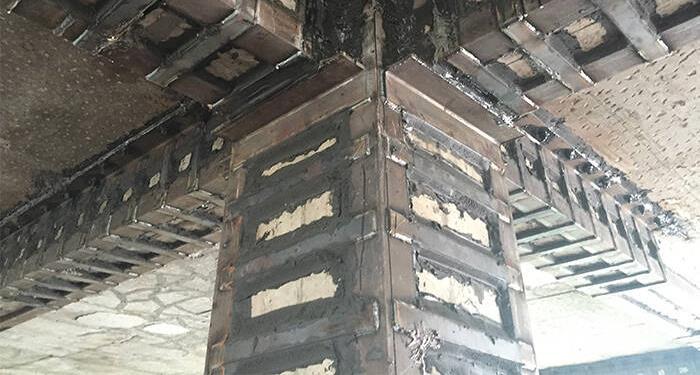
Jacketingplaysacrucialroleinmaintainingtheintegrityand functionality of transportation infrastructure, particularly bridges.Askeycomponentsofroadandrailwaynetworks, bridges facilitate the movement of people, goods, and services.Ensuringthestructuralstabilityandsafetyofthese bridges is paramount for maintaining uninterrupted transportationflowandsafeguardingpublicsafety.Jacketing techniques allow engineers to address various challenges faced by aging bridges, including deterioration due to environmentalfactors,increasedtrafficloads,andevolving design standards. By reinforcing vulnerable sections and repairing damage, jacketing extends the service life of bridges, reducing the need for costly replacements and minimizing disruptions to transportation networks. Moreover, jacketing enables bridges to adapt to changing usage patterns and accommodate future growth in traffic volume and vehicle types. In essence, the application of jacketing in transportation infrastructure enhances resilience, longevity, and efficiency, thereby supporting sustainable economic development and ensuring safe and reliablemobilityforcommunities.
FiberReinforcedPolymer(FRP)jacketinghasrevolutionized the rehabilitation and reinforcement of bridge structures, offeringaversatileanddurablesolutiontoaddressvarious challengesfacedbyaginginfrastructure.Composedofhighstrengthfibersembeddedinapolymermatrix,FRPmaterials provide exceptional strength-to-weight ratio, significantly lighterthantraditionalmaterialslikesteelorconcrete.This characteristicnotonlysimplifieshandlingduringinstallation but also imposes minimal additional load on the bridge.
Furthermore, FRP exhibits remarkable resistance to corrosion, a critical factor in prolonging the service life of bridges exposed to harsh environmental conditions. Its flexibility allows for tailored solutions, fitting the unique geometry and needs of each structure. Moreover, FRP jacketingenablesrapidinstallationandcuring,minimizing disruptiontotrafficandreducingoverallconstructiontime. Inessence,FRPjacketingoffersacost-effective,sustainable, andefficientmethodtoenhancethestructuralintegrityand longevityoftransportationinfrastructure,ensuringsafeand reliablemobilityforcommunities.
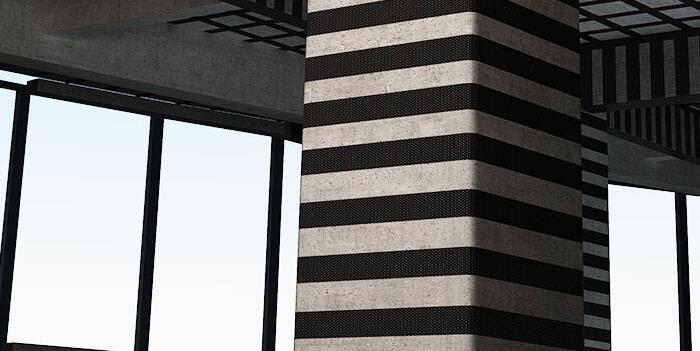
Fiber Reinforced Polymer (FRP) materials have found extensive application in strengthening bridge structures, offeringaversatileandeffectivesolutiontoaddressvarious structural deficiencies and extend the service life of aging infrastructure.OneprominentapplicationofFRPinbridge strengthening involves externally bonded reinforcement, where FRP sheets or strips are bonded to the surface of concrete elements suchasbeams,columns,ordecks.This method enhances the flexural and shear capacity of the bridgecomponents,allowingthemtowithstandincreased loads and mitigate the effects of deterioration or damage. Additionally, FRP materials can be used to wrap or jacket existing structural members, providing confinement and enhancing their resistance to axial and lateral forces. The lightweight and high-strength properties of FRP make it particularly suitable for strengthening bridges without significantly increasing dead loads or altering the original aestheticsof thestructure. Moreover,FRPoffersexcellent corrosionresistance,makingitidealforbridgesexposedto aggressive environmental conditions, such as marine or industrial environments. By providing targeted reinforcementtocriticalareasandextendingtheservicelife of bridge components, FRP contributes to the safety, reliability, and longevity of transportation infrastructure, ultimatelyensuringuninterruptedmobilityforcommunities.
International Research Journal of Engineering and Technology (IRJET) e-ISSN:2395-0056
Volume: 11 Issue: 04 | Apr 2024 www.irjet.net p-ISSN:2395-0072
Lateralloadsinbridgeengineeringarecrucialfactorsthat significantlyinfluencethedesign,analysis,andperformance ofbridgestructures.Thesehorizontalforces,stemmingfrom sources like wind, seismic activity, and dynamic vehicle loads,exertpressureonthebridgedeckandsuperstructure. Theconsiderationoflateralloadsisparamountinensuring thestructuralintegrityandstabilityofbridges,particularly inmitigatingtheriskofinstabilityorfailure.For instance, strongwindscaninducestructuralvibrationsoroscillations, potentiallyleadingtocollapseifnotadequatelyaccounted for in the design. Similarly, seismic events can subject bridges to lateral displacements and accelerations, necessitating robust structural design to withstand such forces.Furthermore,understandingthedynamicresponseof bridges to lateral loads is crucial for optimizing their performance and ensuring user comfort and safety. Engineersmustintegratelateralloadconsiderationsintothe geometric and aesthetic design of bridges to minimize aerodynamic effects, enhance stability, and improve resilience against external forces. Overall, accounting for lateral loads is essential for creating structurally sound, resilient,andsafebridgeinfrastructurethatcanwithstand diverse environmental and operational conditions, ultimatelyfacilitatingefficienttransportationnetworks.
Jacketing of bridges is a vital process in civil engineering aimed at strengthening and prolonging the lifespan of existing bridge structures. This method involves the application of additional materials or components to reinforcevulnerableareas,addressstructuraldeficiencies, oraccommodateincreasedloaddemands.Typicallyinitiated afterathoroughstructuralassessment,jacketingsolutions arecustomizedtothespecificconditionandrequirementsof each bridge. Common jacketing techniques include steel, concrete,andfiberreinforcedpolymer(FRP)jacketing,each offering unique advantages such as increased strength, durability,andcorrosionresistance.Whetherit'srepairing deteriorated concrete decks, reinforcing steel beams, or enhancingoverallstructuralperformance,jacketingplaysa crucial role in maintaining the safety, reliability, and longevity of bridge infrastructure. By implementing jacketing solutions, engineers can effectively extend the service life of bridges, minimize maintenance costs, and ensuretheuninterruptedflowoftransportationnetworks forcommunities.
Lateralloadsexertsignificantinfluenceonthebehaviorof bridge structures, impacting their stability, dynamics, and overall performance. These horizontal forces, originating fromsourcessuchas wind, seismic activity,andvehicular
movements, induce various responses within bridge components and systems. Wind, for instance, can cause lateral displacements and vibrations in bridge decks and superstructures,potentiallycompromisingtheirstabilityif not adequately accounted for in design. Moreover, windinduced aerodynamic effects like vortex shedding and buffeting can lead to dynamic instabilities and structural fatigue,necessitatingcarefulconsiderationofaerodynamic design measures. In seismic regions, lateral loads from earthquakessubjectbridgestodynamicdisplacementsand accelerations,requiringrobustseismicdesignstrategiesto ensurestructuralresilienceandsafety.Additionally,lateral loadsinfluencethe dynamic response ofbridges,affecting factors such as natural frequencies and mode shapes. Engineers must employ appropriate design and reinforcement techniques to mitigate the effects of lateral loads,ensuringthestructuralintegrityandsafetyofbridge infrastructure under diverse loading conditions. By understandingandaddressingtheseeffects,engineerscan developresilientbridgedesignsthatwithstandlateralforces and ensure reliable transportation networks for communities.
In order to evaluate the load analysis of two models, a methodologywasdevisedwhichinvolvedutilizingsoftware as well as adhering to the Indian Standard Code. This approachallowedforacomprehensiveexaminationofthe models, ensuring that all aspects related to load analysis were thoroughly analyzed. By incorporating these techniques,amoreaccurateandreliableassessmentcould bemaderegardingtheperformanceandstructuralintegrity ofeachmodel.Overall,thismethodologyprovedtobehighly effectiveinprovidingvaluableinsightsintotheloadanalysis ofbothmodels.
Computers and Structures, Inc. (CSI) has developed the ETABS (Extended Three-dimensional Analysis of Building Systems), a robust program for structural analysis and design.Tailoredtomeettheneedsofstructuralengineers,it simplifiesthecreationofintricatethree-dimensionalmodels, supports diverse structural components, and conducts thorough static, dynamic, and nonlinear analyses. It seamlesslyintegrateswithotherCSItoolswhileprovidingan intuitiveuserinterfacethatstreamlinesdesigncompliance with regulations and standards. In engineering and constructionindustries,ETABSisanindispensabletoolthat ensuresoptimalsafetyinstructuresthroughouttheentire design and analysis process [7]. This is achieved through graphicalrepresentationsaswellascomprehensivereports thatfacilitateeffectivevisualizationoffindings.Theresearch utilized version 17 of ETABS Software which was instrumentalinupdatingIndianStandardCodeforSeismic ResearchorISCode1893part-1:2016.
International Research Journal of Engineering and Technology (IRJET) e-ISSN:2395-0056
Volume: 11 Issue: 04 | Apr 2024 www.irjet.net p-ISSN:2395-0072
Static analysis is a crucial technique used to evaluate two models created using the ETABS program. Model analysis can be carried out in two distinct ways, namely Static AnalysisandDynamicAnalysis,asperIndianStandardCode 1893 part-1:2016. For earthquake-resistant design, Equivalent Static Analysis is employed following IS Code 1893 Part 1:2016. This strategy involves seismic forces beingtreatedasstaticloadsdistributedateachfloorlevel, thereby minimizing dynamic complexities. To compute design seismic forces, certain elements like the Response ReductionFactor(R),ImportanceFactor(I),andZoneFactor (Z)mustbetakenintoaccountaccordingtothecode.TheI factorindicatestheimportanceofthestructure,whiletheR factor considers energy dissipation and ductility. Additionally, the Z factor accounts for seismicity in the region. The code prescribes a systematic process that involvescomputingseismicbaseshearandforcedistribution throughout the structure's height. It also highlights the significanceofsite-specificresponsespectrawhennecessary [8]. In order to implement this technique effectively in seismic design projects, it is essential for engineers to collaboratewithexperiencedstructuralengineersandkeep up-to-datewithanyrevisionsmadetothecode.
In this study project, our team utilized dynamic analysis techniques,withaparticularfocusonTimeHistoryAnalysis (THA),whichfollowsthestandardssetoutinIS1893Part1. Dynamic analysis is a systematic approach used to assess howastructurerespondstoexternalpressuresthatchange overtime,suchasearthquakesorotherforcesthatvarywith time.THAinvolvesapplyingaloadpatternthatvariesover time to the structure, thereby replicating dynamic circumstancesobservedintherealworld.IS1893Part1isa seismicdesigncodethatprovidesdetailedinstructionsand methods for conducting dynamic analysis to evaluate the seismicbehaviorofstructures.Thegoalofourstudywasto gain insights into how structures behave under dynamic loadingconditions,specificallyseismicstresses.Byutilizing THA in compliance with IS 1893 Part 1, we were able to conductcomprehensiveanalysesofstructuralresponsesto differentstressesovertime.Thisenabledustocreaterobust and earthquake-resistant structural designs that can withstanddynamicloading conditions.Our useofIS1893 Part 1 ensured that our dynamic analysis adhered to recognized industry norms, thus enhancing the dependabilityandtrustworthinessofourstudyresults.In conducting our analyses, we used ElCENTRO data for two modelsofabridge.ThisdatawasobtainedfromtheETABS software library and allowed us to conduct accurate and reliable analyses of the bridge's response under seismic stresses.Overall,thisstudydemonstratestheimportanceof utilizingdynamicanalysistechniqueslikeTHAinaccordance
with industry standards for creating earthquake-resistant structuraldesigns.
The research work at hand delves into the various Indian standardcodesthatareutilizedforloadcase. Specifically, the Indian Standard Code 875 part-1 is employed for the self-weight of the bridge, while Indian Roads Congress 6:2017 serves as the go-to code for vehicle load and considersvehicleswithTrackedVehicle70R[9](Tracked) Vehiclecharacteristics.Lastly,theseismicloadisdetermined bywayoftheIndianStandardCode1893part-1:2016.These codesplayan integral role in ensuring thatstructuresare designedandbuiltinaccordancewithsafetystandardsand regulations,therebysafeguardingbothpeopleandproperty alike.
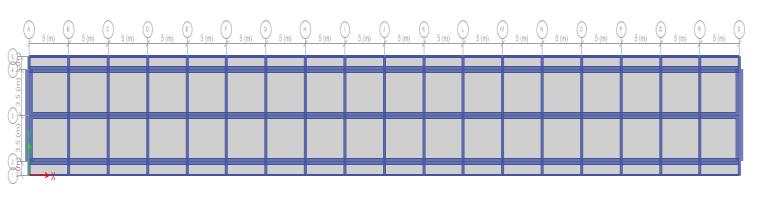
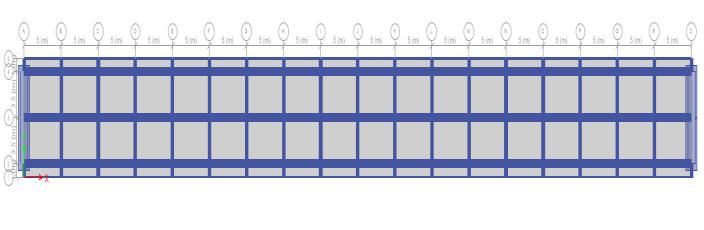
TherearetwomodelcreatedintheETABSSoftware,where one model is without FRP jacketing and other one is with FRP Jacketing. The Plan, Elevation, and 3D View of each modelaregivenbelow:
Volume: 11 Issue: 04 | Apr 2024 www.irjet.net p-ISSN:2395-0072
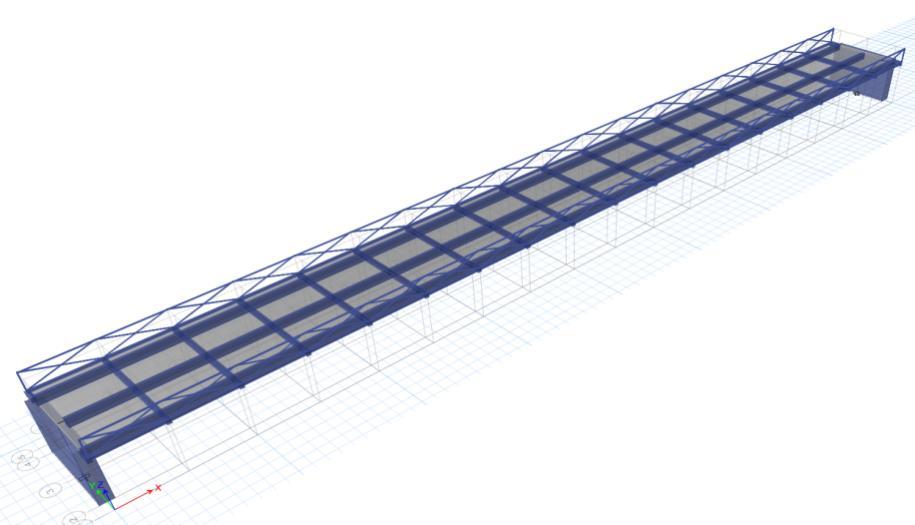
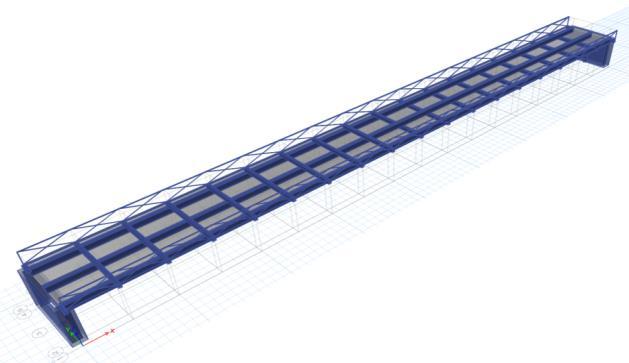
Figure-6: 3D View of the Second Model.
6.RESULT AND ANALYSIS
Intheupcomingsectiondedicatedtoresultandanalysis,we will carefully scrutinize and examine the outcome of our staticanalysisoftwomodels.Tocarryoutthistask,wewill makeuseofthehighlysophisticatedETABSSoftware[11]. Our current focus is on conducting a seismic analysis of a long-spanbridge.Therefore,itisessentialtoconsidersome criticalparametersthatplayavitalroleindeterminingthe impact of an earthquake on the bridge. These parameters includebaseshear(whichindicatesthelateralforceexerted byanearthquakeonthebridge),fundamentalperiod,and maximumdisplacementofthebridgecausedbylateralload. By taking into account these crucial factors, we can gain valuableinsightsintohowearthquakesmayaffectlong-span bridges and devise effective strategies to mitigate any potentialdamage.
Perpendicularhorizontal forcesactingonthelongitudinal axisarecommonlyreferredtoaslateralloadswhenitcomes to bridges. These types of forces can stem from various sources, such as wind gusts, earthquakes, and vehicleinducedpressurethatpushsideways.Engineersmusttake intoaccounttheselateralloadsduringthedesignphasein order to ensure structural stability, prevent collapse, and guaranteesafeoperationundermultipleexternalpressures [12].Inthisparticularcase,wehaveselectedseismiclateral
loadonthebridge. The graphbelowillustratesthelateral forceexertedonthebridgeatloadcaseEXwhereEXdenotes seismiceffect-relatedsidewayspressureinX-direction.
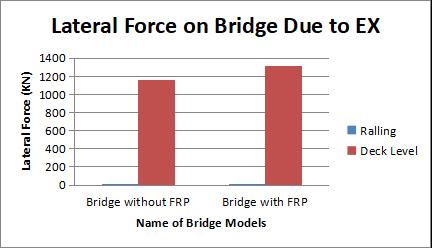
Graph 01: Lateral Force on the Bridge.
As we know concerning the Indian Standard Code 1893 part1:2016, the value of the lateral force increases by increasingtheself-weightofthestructure.
The bridge's fundamental period refers to the duration required for the bridge to complete one oscillation cycle causedbyanearthquake.Thisessentialperiodisdetermined throughstructuralanalysisanddependsonvariousfactors, such as the structure's geometry, material qualities, and boundaryconditions[13].AspertheIndianStandardCode 1893part1:2016,itisrecommendedthatthisvalueshould notfallbelow0.05secondsorexceed2.0seconds.
Belowisagraphillustratingthefundamentalperiodsoftwo modelsofthebridge.
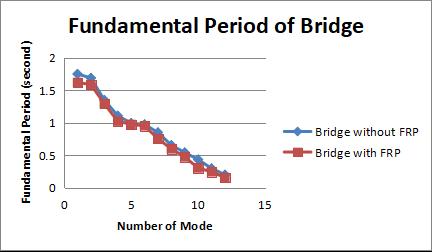
As we can see from Graph 02, the maximum value of the fundamentalperiodisnotgreaterthan2.0secondsornot less than 0.05 seconds, which means that all these two modelsofthebridgeareinsafecondition. International Research Journal of Engineering and Technology (IRJET) e-ISSN:2395-0056
International Research Journal of Engineering and Technology (IRJET) e-ISSN:2395-0056
Volume: 11 Issue: 04 | Apr 2024 www.irjet.net p-ISSN:2395-0072
Thedisplacementofabridgereferstothemovementofits upperlevelinrelationtoitsbase,whichcanbecausedby variousloadscenariossuchasweight,vehicleorpedestrian load.However,whenitcomestoanalyzingseismicactivity onlong-spanbridges,engineersfocusonearthquakeloads. One critical aspect of seismic design for bridges is determining their maximum displacement, which is influencedbyfactorssuchasseismicforces,materialquality, and bridge shape. Engineers calculate the maximum displacement to ensure that the bridge can withstand seismiceventswithoutcompromisingitsstructuralintegrity. For instance, the chart below shows the maximum displacementofabridgeunderearthquakeloadconditions intheX-direction.Thisinformationiscrucialfordesigning saferandmoreresilientbridgesthatcanwithstandnatural disastersandotherunexpectedevents.
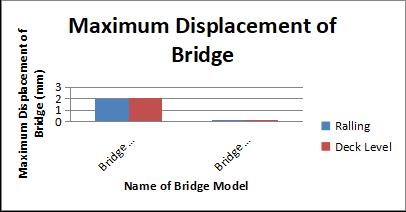
Graph-03: Maximum Displacement of the Bridge.
From Chart 03, we can see that the displacement of the bridge decreased due to applying the jacketing of Fiber ReinforcedPolymer.
UponanalyzingtheresultsoftheETABSsoftwareandstatic method analysis model for the bridge, we have come to severalconclusions.Uponcalculatingtheself-weightofboth models, it was discovered that model-02, which included fiber-reinforced polymer jacketing on the abutment, main girder, and supporting girder experienced a 3.48 percent increaseinself-weightcomparedtomodel-01withoutany jacketing.Despitethisincrease,therewasnotasignificant changeinoverallbridgeweight.
Additionally, after analyzing both models using ETABS software,itwasfoundthatatrailingslevelanddecklevelof the bridge lateral force increased by 0.06426% and 11.4223%,respectivelyinModel-02ascomparedtoModel01(bridgewithoutFRPjacketing).Moreoverfundamental
perioddecreasedby7.4158%whenFRPJacketingisusedon abutment ,main girder & supporting girders indicating its safety.
According to Indian Standard Code 1893 part-1:2016 standards state that maximum displacement should not exceedH/205whereHrepresentstotalheightfrombaseto top; thus given our total height of 8000 mm ,the displacementshouldbenogreaterthan32mm.Howeverin Model -01,the maximum displacement measured only up to2.035mmwhereaswithapplicationofFRPjacketingonto Bridgeresultedindecreaseby92..38percentascomparedto Model-01ofBridge..
1. IRC: 6-2010 Standard Specifications and Code of Practice for Bridges Section II Load stresses, Indian RoadCongress,2010
2. IRC: 21-2000 Standard Specifications and Code of PracticeforBridgesSectionIII,
3. N. Krishna Raju, “Design of bridges”, Oxford & IBH publishingCo.Pvt.ltd,ISBN81-204-0344-4
4. N.KrishnaRaju,“Prestressedconcrete”,2014,Mcgraw HillEducationPrivateLimitedISBN81-204-0396-7.
5. D. Johnson Victor,1973, “Essentials of bridge engineering”,Oxford&IBHpublishingco.Pvt.ltd.ISBN 81-204-0396-7.
6. IS:456-2000IndianStandardCodeofPracticeforPlain andReinforcedConcrete
7. Hellon G. Ogallob, Manoj K. Jhaa, ―A Quantitative Analysis of Sustainability and Green Transportation Initiatives in Highway Design and Maintenance‖ EWGT2013–16thMeetingoftheEUROWorkingGroup onTransportationvol.no.111(2014)pp.1185–1194.
8. INyoman Sutarja, Ida Bagus Rai Widiarsa, ―Partial prestressedconcreteslabsasanalternativeforvehicle decks of steel truss bridges‖ The 5th International Conference of Euro Asia Civil Engineering Forum (EACEF-5)vol.no.125pp.974–978.
9. Khairmode A. S., Kulkarni D. B. ― Analysis of Prestressed Concrete Multi-cell Box Girder Curved Bridge‖InternationalJournalofScienceandResearch (IJSR)Volume5Issue6,June2016.
10. Klaudiusz Fross, Marek Salamak ―Bridges in Urban Planning and Architectural Culture‖ World MultidisciplinaryCivilEngineering‖vol.no.161(2016 )PP.207–212.