
Volume: 11 Issue: 04 | Apr 2024 www.irjet.net p-ISSN: 2395-0072
Volume: 11 Issue: 04 | Apr 2024 www.irjet.net p-ISSN: 2395-0072
San-Yuan Wang,1 , Chi-Chun Chen2 , Tain-Lieng Kao3*
1Associate Professor, Department of Information Engineering, I-Shou University, Taiwan, R.O.C.
2Software Development Engineer in Test, FINFARE INC. 17192 Murphy Ave Irvine, CA 92623, USA
3*Assistant professor, Department of Intelligent Network Technology, I-Shou University, Taiwan, R.O.C.
Corresponding Author
Abstract - With the development of technology, the Internet has become inseparable from life. The development of the 5G application and the core network architecture of the 5G will start to use the Software-Define-Network (SDN) architecture for transmission. Google Data Centers have already begun to develop and use the SDN to gain network bandwidth usage. The traditional VLANs will gradually migrate to network virtualization because excessive data traffic will inevitably lead to network saturation. Therefore, major equipment vendors have begun to focus on SDN related research, and hence data center related topics possess great potential of development. Caching is one of the most important topics. Attention will be on how to balance the cache hit rate and node replacement rate, and furthermore, to speed up the network and to make the transmission more efficient. Therefore, this research proposes a direct transmission mechanism, which can quickly confirm the connection information in the initial stage, find a better transmission path, and improve the cache hit ratio. Through exhausted simulation, the research finding include the relationship between network speed and cache hit ratio, so that the speed can be faster and more accurate in the initial stage and reduce the waste of cache resources or network performance degradation due to excessive network coverage can be avoided. From these experimental results the network speed can be improved by 5% in the initial transmission, and proposed strategy can make the cache hit ratio increase by3-5%.
Key Words: SDN,CCN,ICN,Cache,Controller,Switch
With the flourishing development of cloud computing, mobile networking, as well as the Internet of Things (IoT) andtheInternet,intoday'snetworkenvironment,network traffic must be heavily loaded. It's no longer based on a singleserverasinthepast,butisgraduallytransitioningto multiple servers or a vast number of virtual networks to serve as bridges for communication between each other. To address the surge in network traffic today and to quicklyallocatenetworkresourcesbasedontrafficvolume, as well as to make frequent and rapid configurations, the conceptoftheSDNarchitecturewasintroducedattheIEEE
Infocom conference in 2009[19].Thisconcept was further exemplified by the OpenFlow technology [3][7], Google utilized OpenFlow in 2012 to create an SDN architecture for its datacenter, which increased Google's network utilization rate from 30% to 95% in one fell swoop. This substantial improvement made various network equipment manufacturers realize the importance of SDN andfurthermotivatedthemtodevelopproductsrelatedto SDN[5].
The most widely used aspects of the internet today includecontentaccess AccordingtoCiscoAnnualInternet Report (2018–2023) [22], video and other applications continue to be of enormous demand in today’s home, but there will be significant bandwidth demands with the application requirements of the future. Consequently, network virtualization has become an inevitable trend. However, the internet operates on an IP protocol and a host-to-hostcommunicationmodel,wherecontentdelivery was not part of its initial architecture. Therefore, several Information-CentricNetworking(ICN)[25]proposalshave begun to emerge, offering alternatives to the traditional TCP/IP communication architecture, such as ContentCentricNetworking(CCN)[24].
Among those services and applications of the Internet, the most extensively used are video streaming and P2P usage. CCN, however, proposes a model for content by storing packet addresses and non-host content along the delivery path, known as network caching [1][2]. The advantageofthisapproachisthatanynodeinthenetwork can make requests, leading to massive caching that could potentially overload the network, causing it to become paralyzed or inefficient, and wasting network resources, therebyreducingoverallnetworkperformance.
As the internet continues to develop, traditional network architectures are increasingly unable to handle the growing volume of network traffic. This challenge has led to the emergence of SDN architectures. Within an SDN framework,there'saseparationbetweentrafficforwarding and routing decisions in the network. An SDN Controller manages switches and routers, effectively transforming these nodes into forwarding devices. Through the OpenFlow communication protocol, these nodes can
International Research Journal of Engineering and Technology (IRJET) e-ISSN: 2395-0056
Volume: 11 Issue: 04 | Apr 2024 www.irjet.net p-ISSN: 2395-0072
communicate with the Controller, enhancing network managementandefficiency.
Most of the research on CCN so far has focused on caching, with only a minority addressing routing issues. Given CCN's multifaceted nature, it lacks a clear routing scheme, which is one of the main challenges for future deployments since network devices must adapt to changingdemands.However,thesefewstudiesstillrelyon theTCP/IPstack.Therefore,proposalslikeNetSoft'saimto implement CCN within an SDN architecture, employing a clean-slateapproach[23]withoutdependingonTCP/IPto increasenetworktrafficutilization.
InexistingCCNschemes,there'satrade-offexemplified in cachingstrategies: if thecache hit rateishigh,the node replacement rate is also high, which can lead to a significantloadinashortperiod.Conversely,reducingthe nodereplacementratemayresultinalowercachehitrate, presentingadilemmabetweenefficiencyandperformance [15][16]
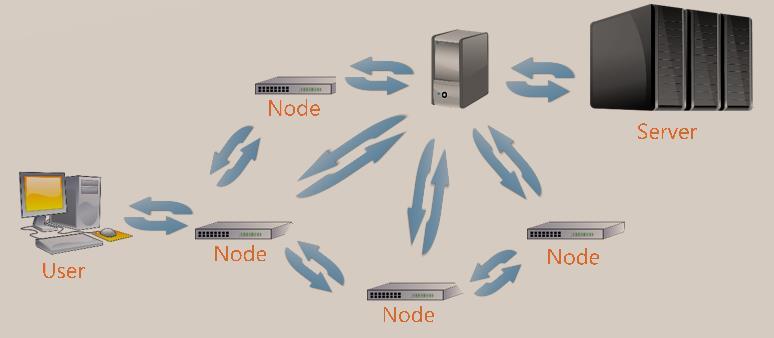
Figure1showsthetransmissionstrategyofLeaveCopy Everywhere (LCE) CCN [20]. When user issues request to the controller, it will flood through the whole networks. Let all nodes on the path cache the request. Other nodes also transfer their requests to the controller. Then the controller issues command to let all nodes send data back to the controller, as shown in Figure 1. This strategy will cause huge cache data in continuous mass transmission, increasingthenetwork resourcewasteanddecreasingthe performance[6].
To achieve efficient caching, we have designed a direct transmissionstrategy, allowing for the rapididentification of optimal paths ina singlenetwork, thereby reducingthe use of cache resources. We modified the controller to changethelinkagepathsamong nodes,servers,andusers, enablingdirectcommunicationbetweenusersandservers through the controller. The controller filters the nodes along the path, increasing the cache hit rate and reducing the node replacement rate due to the optimization of the path.
Finally, the performance differences are compared using data collected from traditional CCN without the direct transmission strategy and the new approach that utilizesthedirecttransmissionstrategy,againsta baseline of general network transmission modes. This comparison highlights the efficiency gains achieved by our proposed method.
Weconstructedasystemwhereusersconnectandsend requests to the controller, which then communicates with servers.Thecontrollercentrallymanagesandidentifiesthe optimal transmission path to make communication between users and servers more efficient. It also determines which nodes along the best path to cache, moving away from the traditional Least Recently Used (LRU) caching strategy to reduce the rate of node replacementandincreasethecachehitrate.Thisapproach leverages the advantages of centralized control within an SDN framework to optimize network performance by carefully selecting cache locations based on the flow of traffic,therebyenhancingtheoverallefficiencyofnetwork resourceutilization.
Whenausersendsarequesttothecontroller,itpasses throughallthenodeswithinthedomain,necessitatingthat all nodes cache the data. After all the nodes receive these requests, they relay the message back to the controller, which then issues a command for all nodes to return the dataorinformationtotheuser.
Thisround-tripmethodleadstoasignificantincreasein caching, which in turn causes unnecessary resource wastage and reduces the efficiency of network resources. The extensive caching required by each node in response to a single user request can greatly inflate the network's cache storage requirements, leading to inefficiencies and potentialdegradationinnetworkperformanceasittriesto manage the increased load and maintain the cache across allnodes.
The rest of the paper is organizedas follows. Section2 serves as the focal point of the text, detailing the setup of the experimental environments and the methods of improvement. It discusses how the proposed hypotheses were tested through simulation experiments, including network topologies, Controllers, and Switches, to find the shortest path. The aim was to enhance the cache hit rate and reduce the node replacement rate through adjustments in the environmental setup and program architecture. Section 3 describes the experimental environment configuration and the stages of the experiment. Section 4 analyzes the parameters and data obtained from the experiments. It summarizes the issues thatmayhavearisenduringtheexperimental processdue tocertainfactorsormethodsused.Section5concludesthe research by summarizing the findings and the data collected. It discusses the contributions and value of the
Volume: 11 Issue: 04 | Apr 2024 www.irjet.net
work and plans for future development, reflecting on how the processes undertaken and findings might influence furtheradvancementsinthisfield.
The primary objective of this section is to describe the direct transmission mechanism (DT) which constructs a virtual SDN environment that leverages a Controller to manage the allocation of resources between users and servers.Bydirectingtrafficthroughswitchesornodes,the system aims to identify the shortest path for faster communication connections. This setup seeks to bypass peripheral or infrequently used nodes, allowing various usersorswitchestoactasnodeswithinthenetwork.This approach provides a distinct networking environment from the traditional TCP/IP transmission modes, facilitating a more efficient and optimized communication pathwaybetweenusersandservers.
In doing so, this architecture not only enhances the efficiency of data transmission but also improves the overallnetworkperformancebydynamicallyadjustingthe flow of traffic based on current network conditions. This adaptabilityensuresthatnetworkresourcesareutilizedin the most effective manner, contributing to the scalability and flexibility of network infrastructures in accommodating the growing demands of modern internet usage.
2.1 Controller Collect Information between user and server



Figure2.controllercollectexchangeinformation betweenuserandserver
Initially,thecommunicationbetweenusersandservers isswiftly facilitatedbythecontroller.This methodutilizes the users' IP or MAC addresses for quick identification within the controller. Following this, the location of the server is pinpointed, allowing for the connection between users and servers to be pre-established within the controller,asshowninFigure2.
By leveraging such an approach, the controller acts as an intelligent hub that efficiently manages network traffic. It streamlines the process of establishing connections by immediately recognizing devices based on their unique identifiersandmappingoutthemostefficientroutetothe server. This preemptive connection setup significantly reduces the time it takes for data to travel between the userandserver,enhancingtheresponsivenessandoverall userexperienceofthenetwork.
Implementing a whitelist within the controller enables rapid identification of users' IP or MAC addresses. This system synchronously sends connection requests to the server, facilitating quicker alignment between the source andthedestination.
By utilizing a whitelist, the controller can efficiently filter and prioritize legitimate devices and users, ensuring that only authorized entities are allowed to communicate through the network. This method not only enhances security by preventing unauthorized access but also optimizes the network's performance by reducing unnecessary connection attempts and streamlining the process of establishing communications. The immediate recognition and processing of connection requests from knownandtrusted devicesexpeditethedata transmission process, resulting in a more efficient and responsive networkinfrastructure.
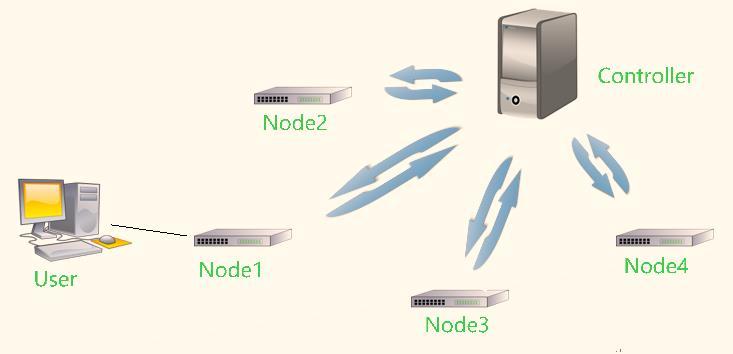
Whenausersendsarequest,thecontrollercanquickly filter the nodes within the same domain to determine if there are any recently frequently used or popular data or information. It then confirms the transmission path and identifies a viable shortest path, which constitutes the directtransmissionpathstrategy.
Figure 3 illustrates a centralized control approach, where the controller connects with each node in the network domain to analyze the resources, data, or informationavailableateachnode.
After the communication between the user and the serveriscompletedandintegratedintotheentiredomain,
International Research Journal of Engineering and Technology (IRJET) e-ISSN: 2395-0056
Volume: 11 Issue: 04 | Apr 2024 www.irjet.net p-ISSN: 2395-0072
based on the requirements and commands given by the user and server, the system filters out the data or information that meets the user's needs. It determines whether the nodes have previously cached or hold data that is popular or in high demand, aiming to synchronize thetransmissionofdatatotheuser.Thisprocessalsohelps avoid unnecessary node replacement rates by ensuring that only relevant and efficient pathways are utilized for datatransmission.
In Content-Centric Networking (CCN), both users and switches can act as nodes, allowing the controller to send commandstocontrol thesenodes within thedomain. This enables the transmission of the data or information requested by the user, thereby shortening transmission times and reducing unnecessary network or cache resourcewastage.
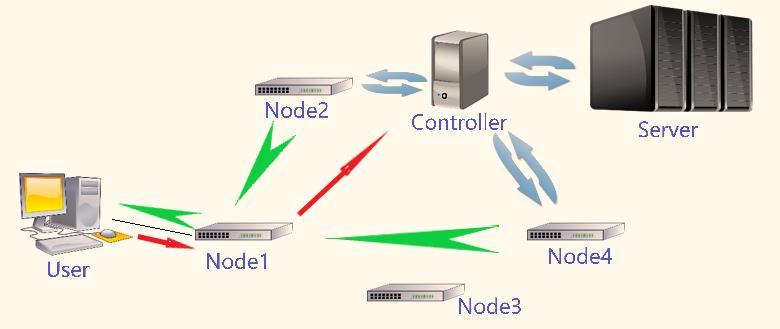
Figure4. Anexampleofdirecttransmissionmechanism
AsshowninFigure4,aftera usersendsa request,itis directly transmitted to the controller via the connected nodes. The controller then synchronously sends a communication request to the server, completing the communicationbetweentheuserandtheserver.
Upon analyzing the content of the request, if it is assumedthatNodes2and4haveacacheofthecontentor it is highly popular, then the controller will command Nodes 2 and 4. Upon receiving the command, these nodes will transmitthedata totheuser'spreviouslayer,Node1, andsynchronizethedatatransmission.
This process omits Node 3, which may not have the cache or whose content is less popular, thereby not increasing the node replacement rate and indirectly improvingthecachehitrate.
Such an approach also reduces the server's performance burden when several users are transmitting the same content. If users within the same domain are transmitting different files, the controller will allocate network resources based on the cache and popularity of content relative to each user and node, thus enhancing overallnetworkefficiency.
In this section, the experimental environment is firstly configured to construct a virtual SDN environment. Then, thedetailedexperimentdesignandthestagesarestated.
After testing across various network topology environments, Mininet was chosen due to its support for OpenFlow, Open vSwitch, complex topologies, and customizable environment settings. It also offers a Python API for convenient multi-user collaboration, making it an excellenttoolforenvironmentalarchitecture.
Regarding the choice of controller, there are several options available, including OpenDaylight, OpenContrail, Floodlight,Flowvisor,andRyu.Ryuwasselectedprimarily for its simple architecture, cost-effectiveness in deployment, and suitability for small to medium-sized network architectures, making it convenient for traffic controlandallocation.
Mininetisa platformthatallowsthecreationofvirtual network topologies through the connection of virtual terminals,routers,switches,etc.TheMininetswitchesalso support the OpenFlow protocol, enabling the creation of a Software-Defined Networking (SDN) capable local area network within a personal computer. Moreover, virtual Hosts can be utilized to simulate real computers for sending packets, allowing for comprehensive testing and developmentofnetworkconfigurationsandapplicationsin a controlled, cost-effective environment. Figure 5 shows the steps to establish a network: (1) create 4 switches, s1,s2,s3,ands4,(2)addlinksbetweenswitchesandhosts, (3)configure 9 hosts and one controller. After setting the network topology, one can use pingall command to let switchesandhoststoexchangepackagesforverifying that theconnections arework.
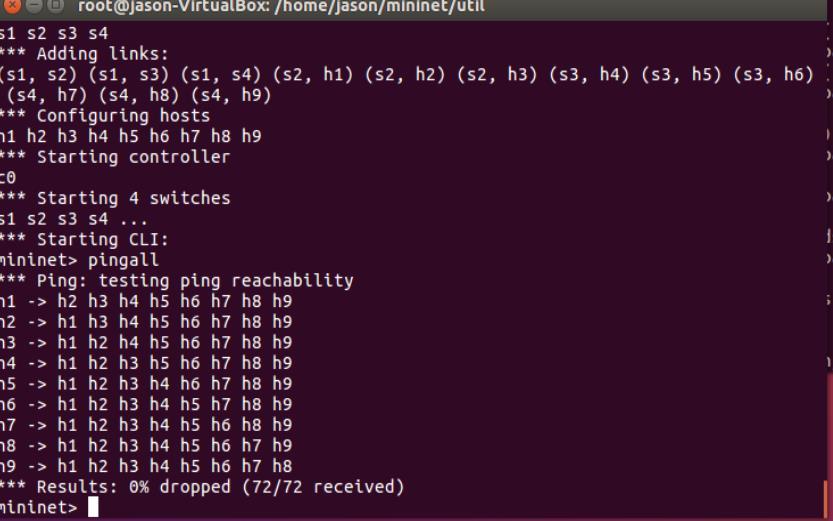
Figure5.networktopologysettingandswitches connecting byMininet
International Research Journal of Engineering and Technology (IRJET) e-ISSN: 2395-0056
Volume: 11 Issue: 04 | Apr 2024 www.irjet.net p-ISSN: 2395-0072
Ryu[28] is a development framework for SDN controllers, developed and designed by NTT in Japan. It includes the functionality of an OpenFlow Controller and encompasses most protocol, hence it is referred to as a Controller. In essence, its primary role is to act as a framework responsible for dispatching events. Within this framework, an application called Ofphandler is used to deliverOpenFlowmessagesthroughtheframework.
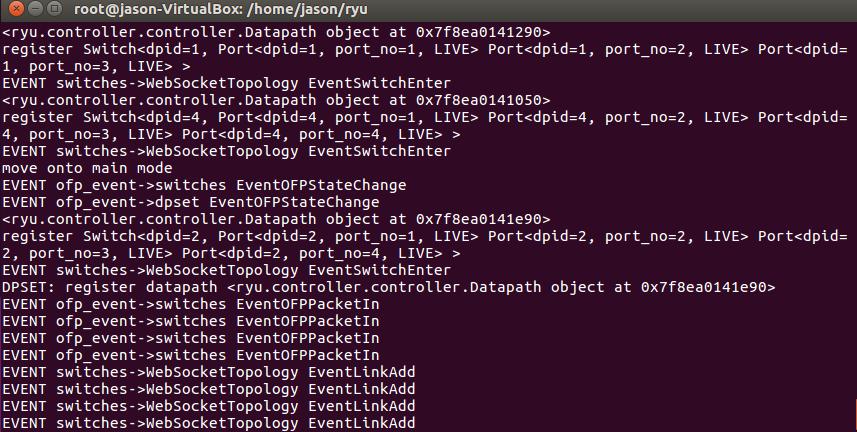
Figure6.DatapathgeneratedbyRyuController
ThenextlayeristheDatapath:itiscreatedbyenclosing theControllerwiththeOfphandler,andtheControllerthen generates and stores Datapath objects. The Datapath objectscomeinto playwhen a new switchconnectstothe network.EachDatapathoperatesasanindependentthread without interfering with others. When a switch sends an asynchronous message to it, it generates an Event object andsendsitbacktoRyu.
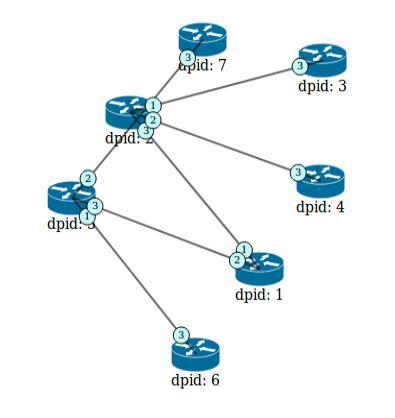
Figure7.CombineRyucontrollerandMininettopology
Finally, on the lower level, Ryu accepts connections fromspecificportsbasedontheuser'sconfigurationofthe Stream Server. These connections can be either
unencrypted TCP or encrypted SSL, providing flexibilityin securingthenetworkcommunications.
There are two stages to configure the Ryu controller. Firstly,asshowninFigure6,aseriesofcommandsarekey in, the controller will handle the whole structure, joining switchesgenerateandfeedbackDatapath.Secondly,linking Ryu controller and Mininet topology generate new topology,showninFigure7.
Setting up a Mininet virtual network environment creates an infrastructure that supports SDN networking and OpenFlow. Installing a Ryu Controller allows the controller to use OpenFlow and communicates messages through the Datapaths generated. After establishing Mininet and the Ryu Controller and creating virtual switches based on topology structures, these switches are linked via Ryu's protocols and OpenFlow, enabling communicationbetweenthecontrollerandtheswitches.
Within this setup, each switch and virtual host can act asanode.UsingthefullSDNarchitecture,thesystemsends andreceivesfilesfromexternalsources,monitoringtraffic flow, packet transmission, and speed. After the initial data transmissionandreceipt,temporarydataofthesametype is generated between these nodes. When these data are requestedagain,theycanbecollected fromvariousnodes, thereby reducing the time traditionally required to rerequestfromtheserverandfurtherincreasingthespeedof transmissionandreception.
For comparison, traditional TCP/IP methods are used to transmit and receive files from the same source as Control Group One, and an undirected CCN mode establishesControlGroupTwo.
Finally, by analyzing and compiling these data, and comparing the differences in traffic and transmission speeds between the large data experimental group and control groups, it's possible to determine the efficiency improvementsenabledbytheSDNnetworkarchitecture
We used the Ryu Controller to modify our assumed directtransmissionmode,makingconfigurationchangesto its Address, Port, MAC, and the search mode, so that the Datapath can be more efficient and more accurate in determiningwhentheSwitchconnects.
International Research Journal of Engineering and Technology (IRJET) e-ISSN: 2395-0056
Volume: 11 Issue: 04 | Apr 2024 www.irjet.net
3.2.2 Whitelist in Controller
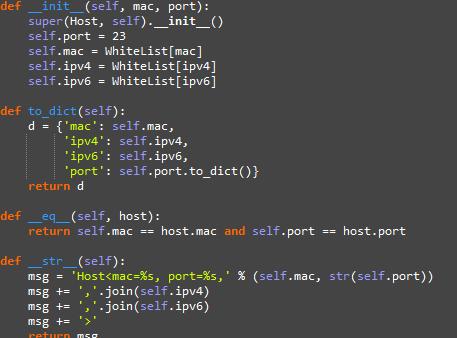
Figure8.SettingtheaddressesofUserandSwitch
Figure 8 shows the Host parameters selected in the code. Originally, it was to search for the location of the access port. We changed the code to execute by direct positioning and established a list controlled by the controllerformanagement.
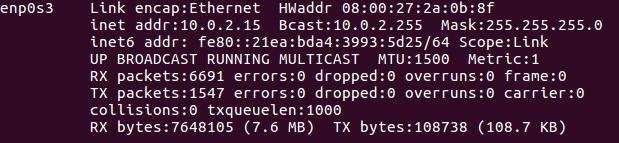
Figure 9 shows user information, which include MAC, IPv4, IPv6 address, and so on. Adding these information intoWhitelistleadsfasterconnectuserstonetwork.
3.2.3 Experimental Network Topology
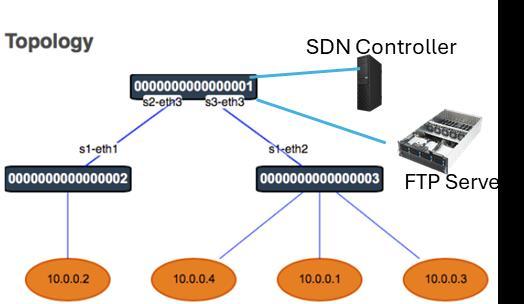
After completing the setup of the environment, the Figure 10 shows the connection between the Controller and the Switch. By structuring virtual hosts in a virtual manner, specifically hosts with IP addresses ranging from 10.0.0.1 to 10.0.0.4, and connecting these virtual hosts to the Switch, communication can be established through the Datapaths generated. This setup interconnects the entire environment. Furthermore, these Switches and virtual hosts can all function as Nodes within the network. The SDNcontrollerandFTPserverareconnectedviaSwitchs2 and s3. This configuration facilitates a comprehensive network structure where data flow can be efficiently managed and directed, showcasing the flexibility and scalabilityofanSDNenvironment.
topology
The experiment engages mass files transfer by FTP between users under 4G, Wi-Fi, and Ethernet networking models, respectively. Three transmission strategies are used: legacy TCP/IP, LCE CCN, and the proposed directly transmissionpath(DT) mechanismonCCN Transmission speed and cache hit ratio are used for comparing the performanceofthesethreetransmissionstrategies. Using the open source SpeedNet FTP to test the transmission strategies, the transmission speed in MB per time are recorded. For get more precision values, the connections between users do not go through public networks. The study builds caching system by Memcache, which can set caching period and caching sources. Then we can get the cachehitratioforcomparing.
During the transmission process, we employed the widely used or default Least Recently Used (LRU) caching algorithmandderivedthreetypesofresultsfromfixedfile transmissionsover4GandEthernet.
LRU, a default caching strategy in many InformationCentricNetworking(ICN)contexts,involvescachingdataat allnodesalongthepathasdatareturns.Thisapproachcan leadtothewastefuluseofcachingresources,reducingthe diversityofcontentthatthecachingsystemcanholddueto theduplicationofthesamelargefilesatmultiplenodes.
The experiment shows that in the control group not using the CCN architecture, the transmission speed remainsstableandtheconsumptionofnetwork resources isconsistent.
For the group using the CCN architecture without a directed mode, the LCE algorithm caches at all nodes, so with an increase in the number of transmissions, the network speed gradually improves over time but ultimatelystabilizesduetoenvironmentallimitations.
In the experimental group using the CCN with a directed mode, the system can quickly find the optimal path between users and servers from the outset due to
Volume: 11 Issue: 04 | Apr 2024 www.irjet.net p-ISSN: 2395-0072
precise positioning. This method does not require caching ateverynodealongthepath,thusimprovingthecachehit rate for faster and more efficient transmission, reducing theconsumptionofnetworkresources.
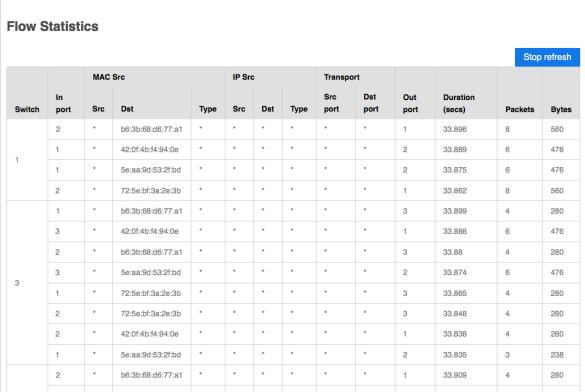
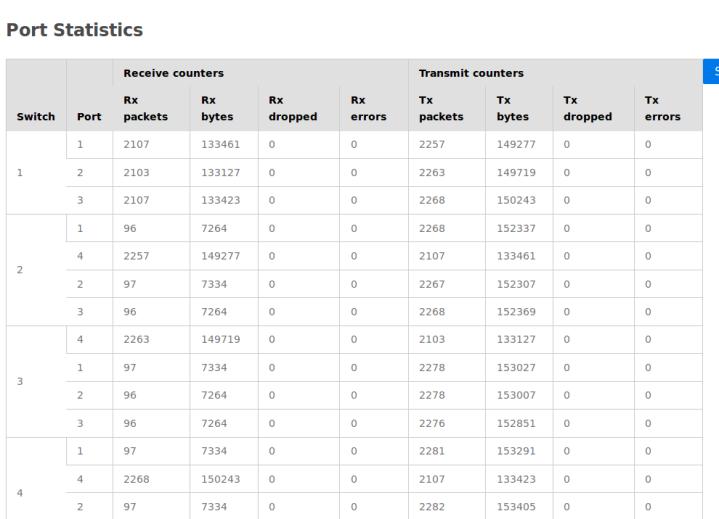
Figure12. portstatistics:throughputofTX/RX
As illustrated in Figure 4, a directed transmission method is constructed. Initially, users can make requests to the centrallycontrollednetworkcontrollerthroughconnected nodesorswitches.Thecontrollerthenforwardstheuser's access or request to the server. Once direct transmission communicationisestablishedbetweenthetwoparties,the controller filters the necessary caching resources for transmission, avoiding unnecessary waste of caching resources.
This section collects the experimental data for the performance analysis between transmission strategies on CCN
After establishing the network environment, traffic is initiated using Ping to confirm whether there is a connection between the Switch and the virtual host. As shown in Figure 11, we can confirm that the connection between the two is established Then, generating traffic messages is used to check the state of sending and receiving TheTxandRxthroughputcanbeseen,asshown in Figures 12. This can confirm user can communicate withtheserver.Itisinterchangeable.
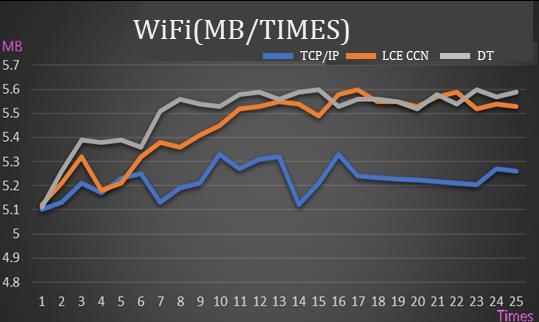
In the experiment, we used control groups and an experimentalgrouptoanalyzethedatashowninFigure13, 14,15,and16.ThebluelinerepresentsControlGroupOne, which follows a traditional network transmission architecture, TCP/IP. The orange line represents Control Group Two, which does LCE on the CCN. The grey line represents the Experimental Group, which employs the CCNdirecttransmissionstrategy(DT).
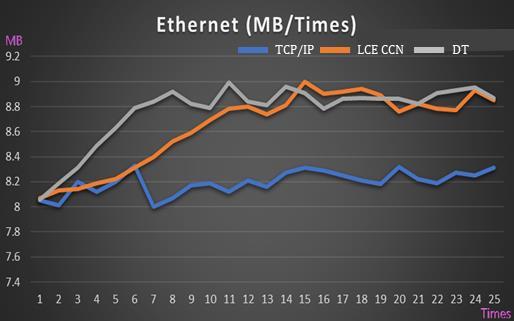
Within the same network environment, we processed requeststothesamefilesource(Speed.netFTP).Figure13 shows the transmission throughput between the three transmission strategies under Ethernet networking environment: TCP/IP without CCN, LCE CCN and direct transmission path onCCN. As you can see, the throughput are very closed to each other. However, as the transfer times increased, the throughput are different according to thecachehitratio. TheTCP/IPwithoutCCNstrategykeep speed around a lower 8.2 MB. Between LCE CCN an DT, although the final transmission speeds were similar, the addressing method in DT improved cache hit rates and reduced node replacement rates. This allowed for quicker identification of the optimal transmission path, thereby reducing the utilization of cache resources to enhance networkperformance.
The LCE CCN has a worse performance since the leave copy everywhere mechanism in the beginning stages. However, the speed will increase fast than TCP/IP just International Research Journal of Engineering and Technology (IRJET) e-ISSN: 2395-0056
International Research Journal of Engineering and Technology (IRJET) e-ISSN: 2395-0056
Volume: 11 Issue: 04 | Apr 2024 www.irjet.net p-ISSN: 2395-0072
because the leave copy everywhere mechanism. On the otherhand,theproposedDThasgoodperformancesinceit firstlycomputeashortestpathandcacheonthedirectpath. These methods leads a faster speed on the initial stages. The speed increased bounded around 8.9MB due to networkspeedlimitations.TheproposedDTapproachhas 5% improvement from LCE CCN in the begging stages but almost the same after a larger times of requests for transferringmassFTPfiles.
Figure 14 demonstrates the transmission throughput amongthethreetransmissionstrategiesunderthe4G/LTE networking environment. The trends are almost the same as Figure 13, except the numbers. The proposed DT also has goodperformance in the beginning stagessince it just cache content on the nodes on the shortest path. The proposed DT approach has 5% improvement from LCE CCN in the begging stages but almost the same after a largertimesofrequestsfortransferringmassFTPfiles.
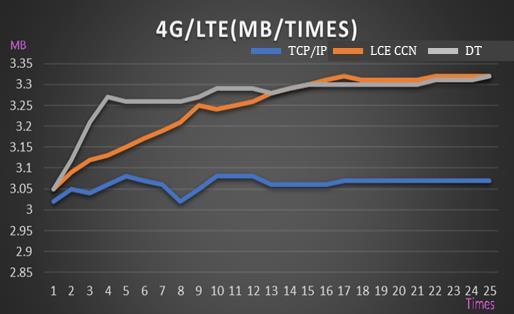
Figure14.transmissionthroughputunder4G/LTE
Figure15 shows the same experiment as Figure 13 and Figure14exceptthattheundernetworkingenvironmentis WiFi. Due to unstable wireless signal on a noise office environment, as you can see, DT outperforms other schemes in the beginning stages but has a smaller gate betweenthem.
Regardingcachehitrates,thenon-CCNmethod(TCP/IP) showed lower efficiency compared to architectures that utilizedCCN. By comparingthe CCN architecture with and without addressing, DT and LCE CCN, respectively, it's evidentthataddressingsignificantlyimprovesthecachehit rate initially. This prevents the excessive buildup of cache and access to nodes with no relevant data, which would otherwiseincreasethemissrate.TheDTapproachhas3%5%improvementfromLCECCN.
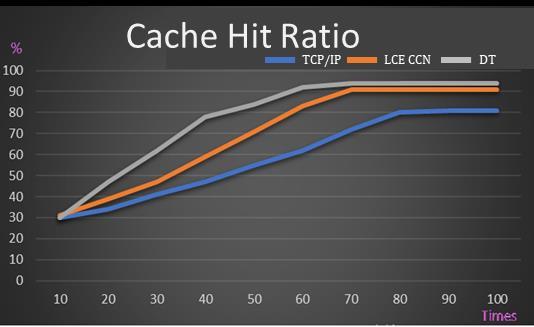
The proposed DT approach improved transmission speed,efficiency,andcachehitrate,whilealsoreducingthe nodereplacementrateformissednodes.
In these experiments, it was discovered that various environmental factors could potentially influence the outcomes, necessitating methods to eliminate such variables to maintain the integrity of the experiments. Factors such as public networks, wireless signal strength, and weather conditions were considered. To ensure data integrity and relevance, the experiments utilized private networks and long-duration transmissions, with simulations conducted at the same time, location, and networksegment.
Wirelessnetworkswereparticularlychallengingdueto unevensignalstrengths,obstructionsbybuildings,andthe presence of various signal sources in the environment, leadingtofluctuatingtransmissionratesandconsequently, datavariability.
A large volume of data was needed to calculate an overall average, as external factors often impact preliminary results. For instance, high network speeds withverysmallfilesizescouldeasilyskewaccuracy.
Comparing these experiments with control groups, a clear difference was evident. The use of a directed CCN architecture demonstrated that transmitting an unknown file between users and servers could facilitate faster
International Research Journal of Engineering and Technology (IRJET) e-ISSN: 2395-0056
Volume: 11 Issue: 04 | Apr 2024 www.irjet.net p-ISSN: 2395-0072
communication, thereby reducing network resource consumption and efficiently increasing the cache hit rate. Thisapproachalso minimized the burden typicallycaused by caching along the route, showcasing the benefits of optimizing network protocols and structures to improve overallnetworkperformanceandefficiency.
In anticipation of future internet usage trends, driven by the explosive growth of cloud computing, mobile networking, and the Internet of Things (IoT), SoftwareDefined Networking (SDN) has emerged as a pivotal technology. Within this domain, various solutions are continually proposed, among which Content-Centric Networking(CCN)hasgained notable recognition.Despite the innovative approaches within CCN, including early strategies like Least Recently Used (LCE) caching to later methods like Maximal Path Caching (MPC), there remains room for improvement. Thus, efforts haveshifted towards exploringmorebalancedandrapidstrategiesonasmaller scale, leading to the experimental hypothesis of a direct transmissionstrategy.
This research highlights the challenges of previous node-to-nodetransmissionmethods,which,whileaimedat increasing cache hit rates, inadvertently raised node replacementrates,producingcounterproductiveoutcomes. The proposed direct transmission mechanism adds whitelist on SDN controller and set the cache remanding time by Memcache. The DT mechanism introduced an adjustment by increasing the list of users and servers within the domain's virtual machines, prioritizing domain communications. This approach leveraged the benefits of direct transmission strategies, enabling algorithms to calculateoptimal paths thatlowernodereplacementrates and enhance cache hit rates, thereby improving network utilizationandtransmissionspeed.
Through exhausted experiments, the research setup SDN networks on different networking environments: TCP/IP without CCN, LCE CCN and the proposed direct path transmission (DT) on CCN. Trough mass FTP files transferring between users, collecting transmission throughput and cache hit ratios for comparison The experiment results showed that the proposed direct transmission scheme has 5% improvement on transmission throughput and 3%-5% improvement on cachehitratio.
Challenges identified during the experiments include communication barriers between different domains, potentially due to network protocol incompatibilities or authentication issues. The experiments, conducted in virtual machines and environments, demonstrate the feasibility of executing these strategies within a complete network architecture. However, application is currently limitedtosmallerlocalareanetworks(LANs).Forbroader
domains, future developments could explore more comprehensive algorithms capable of automatically selecting the best paths and adaptable to various communication protocols. The current experimental setup doesnotintegratedifferentdomainsandprotocols.
Furthermore, this foundation could inspire the development of new algorithms that accommodate temporary users with dynamic MAC and IP addresses, automatically assessing their security and controllability. Such advancements could enable a transition to direct transmission strategy modes, facilitating faster, simpler, and more efficient communication between servers and users.
[1] Marc Mendonca, Bruno Astuto A. Nunes, Xuan-Nam Nguyen, Katia Obraczka, and Thierry Turletti, "A SurveyofSoftware-DefinedNetworking:Past,Present, and Future of Programmable Networks," in submission2013.
[2] SakirSezer,BarbaraFraser,DavidLake,JimFinnegan, Niel Viljoen, Marc Miller, and Navneet Rao, " Are We Ready for SDN? Implementation Challenges for Software-Defined Networks," on IEEE Communications Magazine, issue 7, vol.51, p.36-43, Jul.2013.
[3] Nick McKeown, Tom Anderson, Hari Balakrishnan, GuruParulkar,LarryPeterson,JenniferRexford, Scott Shenker, and Jonathan Turner, "OpenFlow: Enabling Innovation in Campus Networks," on ACM SIGCOMM Computer Communication Review, vol.38, issue 2, pp.69-74,Apr.2008.
[4] Boris Koldehofe, Frank Durr, Muhammad Adnan Tariq, and Kurt Rothermel, "The power of softwaredefined networking: line rate content-based routing usingOpenFlow,"onProceedingsofthe7thWorkshop on Middleware for Next Generation Internet Computing,ArticleNo.3,2012.
[5] Advait Dixit, Fang Hao, Sarit Mukherjee, T.V. Lakshman, and Ramana Kompella, “ElastiCon: An elastic distributed SDN controller,” ACM/IEEE Symposium on Architectures for Networking and Communications Systems(ANCS 14), pp.17-28, October2014.
[6] Elian Aubry, Thomas Silverston, and Isabelle Chrisment,“SRSC:SDNbasedroutingschemeforCCN,” IEEE Conference on Network Softwarization (NetSoft 15),April2015.
[7] Bruno Nunes Astuto, Marc Mendonça, Xuan Nam Nguyen, Katia Obraczka, and Thierry Turletti. A
International Research Journal of Engineering and Technology (IRJET) e-ISSN: 2395-0056
Volume: 11 Issue: 04 | Apr 2024 www.irjet.net p-ISSN: 2395-0072
SurveyofSoftware-DefinedNetworking:Past,Present, and Future of Programmable Networks. Research Reporthal00825087,INRIA-UCSC,October2013.
[8] X.N.Nguyen.Softwaredefinednetworkingin wireless meshnetwork.Msc.thesis,INRIA,UNSA,August2012.
[9] Xuan-Nam Nguyen, Damien Saucez, and Thierry Turletti.EfficientcachinginContent-CentricNetworks using OpenFlow. In 2013 IEEE Conference on Computer Communications Workshops (INFOCOM WKSHPS),pages67–68.IEEE,April2013.
[10] L. Cui, F. R. Yu, and Q. Yan, “When big data meets software-defined networking (SDN): SDN for big data andbigdataforSDN,”IEEENetwork,vol.30,no.1,pp. 58–65,Jan.2016.
[11] A. Shah S, J. Faiz, A. Farooq, et al. “An architectural evaluation of SDN controllers,” IEEE. 2013 IEEE InternationalConferenceonIEEE.Budapest:ICC,013: 3504-3508.
[12] A. Cahn, J. Hoyos, M. Hulse, et al. “Software-defined energy communication networks: from substation automation to future smart grids,” IEEE. 2013 IEEE International Conference on IEEE. Vancouver: SmartGridComm,2013:558-563.
[13] P. Bosshart, G. Gibb, H.-S. Kim, G. Varghese, N. McKeown, M. Izzard, F. Mujica, and M. Horowitz, “Forwarding metamorphosis: fast programmable match-action processing in hardware for SDN,” in ACMSIGCOMM,2013.
[14] Open Networking Foundation, “Software-Defined Networking: The New Norm for Networks,” White paper, Open Networking Foundation, Palo Alto, CA, USA,April2012.
[15] D. Bernardini, T. Silverston and O. Festor, “Cache management strategy for CCN based on content popularity,”.Berlin:SpringerBerlinHeidelberg,2013.
[16] I. Psaras, W.K. Chai , G. Pavlou. “Probabilistic innetwork caching for information-centric networks, Edition of the ICN Workshop on Information-Centric Networking,” August 13-17, 2012, Helsinki, Finland, NewYork:ACMPress,2012:55-60.
[17] W.K.Chai,D.He,I.Psaras,G.Pavlou,etal.“Cache“less for more” in information-centric networks,” International Conference on Research in Networking
,NETWORKING2012pp27-40
[18] Eberhart, R.C. and Shi, Y., “Particle Swarm Optimization: Developments, Applications and Resources,” Proc. IEEE Int. Conf. On Evolutionary Computation,Vol.1,pp.81-86,2001.
[19] M. Srivatsa, A. Iyengar, and Ling Liu. Privacy in voip networks: A k-anonymity approach. In INFOCOM 2009,IEEE,pages2856–2860,April2009
[20] I.Abdullahi,S.Arif, and S.Hassan,“Surveyoncaching approaches in information centric networking,” J. Netw. Comput. Appl., vol. 56, no. C, pp. 48–59, Oct. 2015
[21] J. Kennedy, R. Eberhart Particle swarm optimization. Neural Networks, 1995. Proceedings., IEEE International Conference on (IEEE). 1995, 4: 1942–1948
[22] Cisco Annual Internet Report (2018–2023) White Paper,March,2024
[23] Orenstein, David (March 14, 2007)."A broad-based team of Stanford researchers aims to overhaul the Internet" StanfordNews.Retrieved2024-3-31
[24] Van Jacobson, "A New Way to look at Networking" https://www.youtube.com/watch?feature=player_em bedded&v=8Z685OF-PS8,Retrieved2024-3-31
[25] C.Liang,F.Yu,X.Zhang,“Information-CentricNetwork Function Virtualization over 5G Mobile Wireless Networks.” IEEE Network, vol. 29, no. 3, pp. 68-74, 2015
[26] Geoff Huston, “Web Caching”, The Internet Protocol Journal,vol.2,no.3.Retrieved2024-3-31.
[27] J. Elizabeth O’Neil, E. Patrick O’Neil, and Weikum Gerhard,“TheLRU-KPageReplacementAlgorithmfor Database Disk Buffering,” Proceedings of the 1993 ACMSIGMOD,ACMSIGMODRecord,Volume22,Issue 2, pp 297–306, https://doi.org/10.1145/170036.170081, Retrieved2024-3-31
[28] Ryu,https://ryu-sdn.org/,Retrieved2024-3-31