
International Research Journal of Engineering and Technology (IRJET) e-ISSN: 2395-0056
Volume 11 Issue 04, Apr 2024 www.irjet.net p-ISSN: 2395-0072
International Research Journal of Engineering and Technology (IRJET) e-ISSN: 2395-0056
Volume 11 Issue 04, Apr 2024 www.irjet.net p-ISSN: 2395-0072
Panneerselvam S 1 , Prathiksha T 2 , Reyashree M L 2 , Saranya S 2, Sindhu C 2
1 Assistant Professor, Department of Civil Engineering, Vivekanandha College of Technology for Women, Tamil Nadu, India.
2 UG Students, Department of Civil Engineering, Vivekanandha College of Technology for Women, Tamil Nadu, India.
Abstract - The research extensively explorestransforming concrete characteristics through the experimental examination of Aloevera gel and Large Caltrops gel. The primary components utilized in this investigation comprise of premium-grade Portland Pozzolana Cement (43 grade), M-sand, and 20-mm coarse aggregate. Aloevera gel and Large Caltrops gel are added to the concrete compositions in different ratios, ranging from 0% to 6%, all mixed with water. This study emphasizes the critical significance of conducting a thorough assessment of mechanical properties, with a specific focus on compressive strength, split tensile strength, and flexural strength. The primary aim of this study is to ascertain the most effective combination ratio basedonthe findingsandanalysisofthe data.Aloeveragel anda caltrops gelconcentration of6%are identifiedas the most promising formulations without any ambiguity. This research analysis centers on global initiatives aimed at mitigating the environmental impact of the construction sector by analyzing the reduction of chemical admixture consumption as a means to decrease the environmental footprint. The primary objective of this study is to investigate the capacity of concrete to withstand dry shrinkage, its environmental sustainability, water conservation,andcostefficiency.
Keywords: Concrete,AloeVeraGel,LargeCaltropsGel, CompressiveStrength,Workabilityetc
Conventional methods of concrete curing frequently requiresignificantamountsofwaterandtime-consuming external interventions, resulting in practical difficulties and environmental considerations. The incorporation of natural chemicals into self-curing concrete offers a potentially fruitful route for innovation in addressing these concerns. The objective of this study is to investigate the potential synergistic effects of self-curing mechanismsandtheincorporationofnaturaladditiveson the performance, mechanical qualities, and overall sustainability of the material. This work seeks to analyze the complex interactions inside the self-curing concrete matrix that has been enhanced with natural additives,
using careful experiments. Through a meticulous examinationofthehydrationkinetics,porestructure,and mechanical strengths, our aim is to offer a full comprehension of the manner in which these amalgamated components contribute to the resilience and enduring durability of the material. In addition, the scope of the inquiry goes beyond the confines of the laboratory, as it explores the economic viability and ecological consequences associated with the implementation of self-curing concrete using natural additives in practical construction situations. By providing the results of this experimental endeavor, we expect to provide significant contributions to the wider academic conversation surrounding concrete technology. Theobjectiveofthisstudyistoprovidevaluableinsights to industry experts, researchers, and policymakers, facilitating a more comprehensive comprehension of the possible advantages and obstacles linked to the incorporation of natural additives into self-curing concretesystems.
Aloe vera gel has been investigated for its potential as a bio-additive in concrete due to its unique properties, including high water retention capacity and viscosity. Research suggests that incorporating aloe vera gel into concrete mixes can improve workability and reduce water demand, resulting in enhanced hydration and strength development of the concrete (Saravanan et al., 2017). Additionally, aloe vera gel contains polysaccharides and other organic compounds that may contribute to the overall performance of concrete (Saravananetal.,2017)
Large Caltrops, also known as Tribulus terrestris, is a plant commonly found in arid regions. Recent studies have explored its potential as a natural bio-additive in concrete due to its fibrous nature and chemical composition. Large Caltrops fibers possess high tensile strengthandcanactasreinforcementwithintheconcrete matrix,improvingitscrackresistanceandductility(Kaur et al., 2020). Moreover, chemical constituents present in LargeCaltrops,suchassaponinsandflavonoids,mayalso contribute to the hydration process and overall performanceofconcretemixes(Kauretal.,2020).
International Research Journal of Engineering and Technology (IRJET) e-ISSN: 2395-0056
Volume 11 Issue 04, Apr 2024 www.irjet.net p-ISSN: 2395-0072
Neupane et al. (2019) This review highlights the increasing interest in using eco-friendly additives in concreteproduction.Naturaladditivesofferthepotential to enhance certain properties of concrete while reducing environmental impact. Patil, et al. (2019) Research indicates that aloe vera gel can potentially be used as a partial replacement for cement in concrete mixtures. Its presence may contribute to improved workability and possiblyenhanceddurabilityofconcrete.
Nambiar et al (2007) The incorporation of natural additives in concrete can influence its mechanical properties. Proper assessment of these additives is necessary to understand their effects on concrete's strength, durability, and other performance characteristics.
Silva et al. (2015) Utilizing natural additives in concrete aligns with the broader goal of environmental sustainability in construction. By reducing reliance on traditional cementitious materials and incorporating renewable resources, concrete production can become moreenvironmentallyfriendly.
The Cement used in this research is Portland Pozzolana Cement (PPC) 43 Grade is a construction material recognizedbytheBureauofIndianStandards(BIS)asper IS 1489 (Part 1 & Part 2): 2015. This cement offers a sustainable alternative to Ordinary Portland Cement (OPC) 43 Grade while meeting strength requirements. PPC 43 grade exhibits superior workability, mitigating challengesassociatedwithhandlingandplacingconcrete. Itsreducedheatofhydrationisparticularlyadvantageous in large-scale projects, minimizing the risk of thermal cracking during curing. During the experimental work in thelaboratorythefollowingcompositionofChemicalwas incorporated in the Portland Pozzolana cement which is accustomedinTable1.
Table1ChemicalcompositionsofPPC43Grade
Oxides
CaSO4.2H2O 75
CaO 67
SiO2(FlyAshContent) 60
Al2O3(FlyAshContent) 30
SiO2 25
Fe2O3(FlyAshContent) 15
Al2O3 9
Fe2O3 5
MgO 5
AGGREGATES
Aggregates was selected and prepared according to IS 383:2016particleproportionwasluggedout.
FIE AGGREGATE:
TheFineAggregateusedinthisresearchisManufactured sand,commonlyreferredtoasM-sand,isanalternativeto natural river sand used in construction applications. Msand is produced by crushing rocks, quarry stones, or largeraggregatestotherequiredsizeandshape,typically within the range of 0.075mm to 4.75mm. It is characterized by its uniform particle size distribution, angular shape, and clean texture, which make it suitable forvariousconstructionpurposes.TheSpecificGravityof FineAggregateinthisresearchis2.91.
COARSE AGGREGATE:
ThesizeofCoarseAggregateusedinthisresearch is 20mm. Coarse aggregate is a key component in concrete mixtures, providing strength, stability, and durability to the final product. It typically consists of larger particles ranging from 4.75mm to 75mm in size, derived from natural sources such as crushed stone, gravel. Coarse aggregate is primarily responsible for providing bulk to theconcretemix,fillingthevoidsbetweenfineaggregates and cement paste. Its properties including shape, size, and surface texture, influence the workability, strength, and durability of concrete. The Specific Gravity of Coarse Aggregateinthisresearchis2.71.
Portable Water is used in this research collected from laboratory with pH value 6.9 to 9.0. Water initiates the hydration process in concrete by reacting with cement particles. This chemical reaction forms a gel-like substance known as cement paste, which binds the aggregates together. The water-to-cement ratio is a critical factor, influencing the degree of hydration. Achieving an optimal ratio is vital for ensuring proper strength development without excess water, which can leadtoweakenedconcrete.
Aloe vera (Aloe barbadensis miller) is a succulent plant species of the genus Aloe. An ever green perennial, it originates from the arbian peninsula but grows around theworld.Aloeveraisashortstemplantthathasalmost 98% of water in its leaves. Each leaf is full of a slimy tissues which possesses water. This slimy water is called as“Gel”.Itisgoodformakingreadilymixconcretethatis more flowing as compared to conventional concrete. It also helps in the compressive strength and flexural strengthofconcrete.
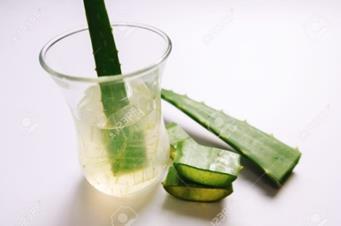
Figure 1 Extraction of aloe Vera gel
Table2. Chemical compositions of Aloe Vera gel
CHEMICAL COMPOSITIONS
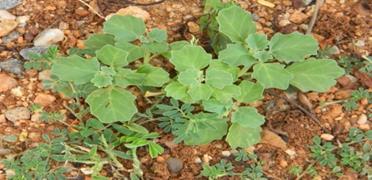
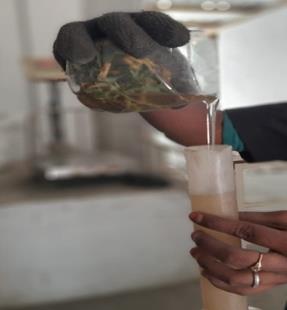
Table3 Chemical compositions of Large Caltrops Gel
(g/100g)
Moisture 97±0.17
Fat 0.02±0.01
Protein 0.12±0.00
CrudeFiber 0.13±0.00
Carbohydrate 0.60±0.02
Ash 0.16±0.09
Acidity 0.43±0.023
ReducingSugar 0.99±0.003 Non-Reducing
LARGE CALTROPS:
1.01±0.018
Pedalium murex, usually referred to as Large Caltrops, is a plant species. The genus Pedalium belongs to the Pedaliaceae family and consists of a single species, Pedalium murex. It is found in tropical regions of Africa, the Indian subcontinent, and Southeast Asia. This gel, which is obtained from the medicinal plant Pedalium Murex, shows great potential as a self-curing agent, thereby introducing a new era of construction materials thatareboth ecologicallyconsciousandlong-lasting.The gel derived from Pedalium Murex has a high concentration of naturally occurring chemicals, hence enhancing its capacity to retain water. The intrinsic characteristic of Pedalium Murex gel makes it a very suitable option for effectively preserving the correct moisturelevelsinsidetheconcretematrixthroughoutthe critical curing process. The inherent advantages of PedaliumMurexgelinthecontextofself-curingconcrete are apparent. In addition to its ability to hold water, Pedalium Murex gel may provide other benefits such as enhanced mechanical characteristics, environmental friendliness, and versatility in various construction situations
2.1 METHODOLOGY
By using Aloe Vera Gel and Large Caltrops Gel as a water reducing agent we have checked fresh and hardenedpropertiesofconcrete.Inordertocheckfresh property of concrete we conducted workability test, mix design of concrete at the proportion of (1:2.392:2.915) at water cement ratio of (0.53) where AloeVeraGelandLargeCaltropsGelwhichareaddedin the proportion of 0%, 2%, 4% & 6% to the weight of cement was made and slump cone test was done for workability.Table4depictsthemixproportion.
3. RESULTS AND DISCUSSIONS
3.1WORKABILITY ON CONCRETE:
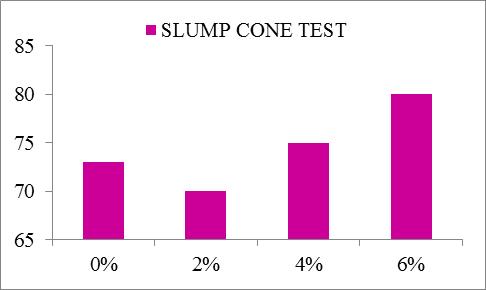
The graph shows the slump values of all concrete mixes. WorkabilityincreaseswithincreasesinAloeVeraGeland Large Caltrops Gel dosage. The Reason behind the
International Research Journal of Engineering and Technology (IRJET) e-ISSN: 2395-0056
Volume 11 Issue 04, Apr 2024 www.irjet.net p-ISSN: 2395-0072
increase in workability is that it is water containing material and contain high qualified properties in Aloe VeraGelandLargeCaltropsGel.Thischemicalhascertain properties to enhance the workability of concrete. The Maximumslumpwasrecorded80mmatthedosageof6% ofAloeVeraGelandLargeCaltropsGel.
3.2 COMPRESSIVE STRENGTH
Table 5 and Figure 4 present the compressive strength values for different natural additives at varying curing periods. The normal concrete reached a strength of 25.50MPaafter28days,butthealoeVeraandcaltropsgel (2%, 4%, and 6%) achieved strengths of 23.13MPa, 25.20MPa, and 26.60MPa, respectively. The highest compressive strength was achieved by 6% of aloe Vera andCaltropsgelmixedconcrete.
Table 5 summary of test results on compressive strength
3.3 SPLIT TENSILE STRENGTH
Thetestfindingspertainingtothesplittensilestrengthof different specimens at 14 and 28 days are illustrated in Figure 5. The concrete mixture containing 6% aloe Vera and Caltrops gel exhibited the highest split tensile strength. Conventional concrete exhibits strength of 3.5 MPa,howevertheincorporationofaloeVeraandcaltrops gel at concentrations of 2%, 4%, and 6% resulted in strengths of 3.35 MPa, 3.94 MPa, and 4.15 MPa, respectively.
Figure 5 Split tensile strength variation
3.4 FLEXURAL STRENGTH
The flexural strength test results for different specimens are illustrated in Figure 6. The standard mix reached a compressive strength of 3.2 Mpa after 28 days. The aloe
International Research Journal of Engineering and Technology (IRJET) e-ISSN: 2395-0056
Volume 11 Issue 04, Apr 2024 www.irjet.net p-ISSN: 2395-0072
Veraandcaltropsgel,withconcentrationsof2%,4%,and 6%, exhibited compressive strengths of 3.18MPa, 3.93MPa, and 4.28MPa, respectively. The concrete mixture using a combination of aloe Vera and Caltrops gel exhibited the maximum flexural strength.
The compressive strength, split tensile strength, and flexural strength can be increased by approximately 10% when using a maximum dosage of 6% Aloe Vera Gel with Large Caltrops Gel.
The experimental findings indicate that using AloeVeraGelandLargeCaltropsGelbyweightof cement in concrete can effectively mitigate honeycombinginstructures.Consequently,these materials have the potential to be utilized globally as a means to enhance workability in large-scaleconstructionprojects.
Thematerialisreadilyaccessiblewithinthelocal areaatareasonablecost.
1. Ramalingam Malathy, Balakrishnan Selvam and Mayakrishnan Prabakaran “Evaluation of Aloe barbadensis Miller and Musa x paradisiaca as Internal Curing Agents in Concrete” Multidisciplinary Digital Publishing Institute, Published:15February2023.
ThisstudyfocusesontheeffectsofAloeVeraGel and Large Caltrops Gel on the workability, compressive strength, split tensile strength, and flexural strength of concrete. The following conclusion indicates that positive research has beenachievedinthisageofthetopic.
• The addition of Aloe Vera Gel and Large Caltrops Gel to concrete has been found to enhance its workability and compaction factor. The maximum workability of 80mm and the compactionfactorrateof0.78areattainedwhen using the maximum dosage of Aloe Vera Gel and LargeCaltropsGel6%.
Based on the analysis of the hardened characteristics of concrete, it has been determined that the compression strength, split tensilestrength,andflexuralstrengthofconcrete specimens are minimally influenced when 2% of Aloe Vera Gel and Large Caltrops Gel are added. At greater dosages of Aloe Vera Gel and Large Caltrops Gel 4% and 6%, the compressive strength of the concrete specimen is slightly higher. However, the split tensile strength and flexuralstrengtharealsoincreased.
The utilization of Aloe Vera Gel and Large Caltrops Gel in congested reinforcement structuresislimitedtoamaximumdosageof6%.
2. Andrew Onderi Nyabuto, Silvester Ochieng Abuodha, JohnNyiroMwero, Lenka Scheinherrová, and Joseph Mwiti Marangu “Aloe Vera-Based Concrete Superplasticizer for Enhanced Consolidation with Limestone Calcined Clay Cement”,Published:30December2023.
3. Suhail Ahmed, Dr. Fareed Ahmed Memon, “ExperimentalStudyonAloeVeraGelasaWater Reducing Admixture in Concrete” International Research Journal of Modernization in Engineering Technology and Science, Volume 4 Issue:05May-2022.
4. Julio Mateo-Santiago, Pedro Flores-Becerra, Jose I. Anchondo Perez “Effect of Aloe Vera Dosed in Cement-Sand Mortar Crystallization and Energy Reducing”, International Journal of Applied Engineering & Technology, Vol. 4, No. 2, September,2022.
5. A.S.Shalini,B.EishaYokinya,R.Sathvika,M.Malini Gayathri “Experimental Study of Aloe Vera in Concrete”, International Journal of Research in Engineering and Science, Volume 9 Issue 12 2021.
6. Ahmed,K.S.,Kumari,N.V.,&Naidu,R.B.(2016). "EffectofAloeVeraandGlycerolonStrengthand Durability Properties of Concrete." International Journal of Current Engineering and Technology, 6(2),747-750.
International Research Journal of Engineering and Technology (IRJET) e-ISSN: 2395-0056
Volume 11 Issue 04, Apr 2024 www.irjet.net p-ISSN: 2395-0072
7. Bhagyasree, S. B., & Anu Appaiah, K. A. (2016). "Aloe Vera Plant Extract as a Water Reducing Admixture in Concrete." International Journal of Innovative Research in Science, Engineering and Technology,5(6),10231-10236.
8. Harini, K., & Nalankilli, G. (2018). "Utilization of Natural Fiber in Concrete." International Journal of Civil Engineering and Technology, 9(10), 1710-1717.
9. Khatri,A.R.,Gole,N. V., Deshpande,A. S., & Jape, S. B. (2015). "Study of Aloe Vera as Natural Superplasticizer in High Strength Concrete." International Journal of Engineering Research and General Science, 3(3), 305-310.Monteiro, S. N.,Lopes,F.P.D.,Barbosa,A.P.,Becegato,V.R.,& Ramos, L. P. (2014). "Cactus Fibers as a Reinforcement of Cementitious Composites." MaterialsResearch,17(3),735-740.
10. Santhanam, M., & Anand, K. B. (2006). "Use of Aloe Vera Juice as an Admixture in Cement Mortar and Concrete." Cement and Concrete Composites,28(10),904-908.
11. Sathiparan, N., Nadanasabapathy, S., & Thirumurugan,G.(2018)."EffectsofAloeVeraas a Natural Additive in Concrete." International Journal of Engineering and Technology, 7(3.30), 434-438.
12. Vijaykumar,M.,Partheeban,P.,&Harshavardhan, K. (2017). "Use of Cactus Fibres in Concrete." International Journal of Engineering Research andApplications,7(9),1-8.
13. Kaur, H., Singh, N., & Goyal, S. (2020). Investigating the potential of Tribulus terrestris fibersasreinforcementinconcrete.Construction andBuildingMaterials,232,117222.
14. Neupane, R., Ghale, A., & Shrestha, R. (2019). A Review on Eco-Friendly Concrete Using Solid Waste: An Overview. International Journal of Scientific and Research Publications, 9(1), 151156.
15. Patil, P. S., Chavan, M. M., & Kulkarni, D. D. (2019).StudyonpropertiesofconcretewithAloe Vera as a partial replacement of cement. MaterialsToday:Proceedings,18,3343-3347.
16. Nambiar, E. K. K., & Ramamurthy, K. (2007). Influenceofmineraladmixturesontherheology, microstructureandstrengthofhigh-performance concrete. Cement and Concrete Research, 37(2), 221-230.





Mr.PanneerselvamS, He is Currently working as an AssistantProfessorin Department of Civil Engineering, Vivekanandha College of Technology, Tiruchengode, forWomen,TamilNadu,India
PrathikshaT, FinalyearB.EStudent, DepartmentofCivilEngineering, VivekanandhaCollegeofTechnology, Tiruchengode, forWomen,TamilNadu,India
ReyashreeML, FinalyearB.EStudent, DepartmentofCivilEngineering, VivekanandhaCollegeofTechnology, Tiruchengode, forWomen,TamilNadu,India
SaranyaS, FinalyearB.EStudent, DepartmentofCivilEngineering, VivekanandhaCollegeofTechnology, Tiruchengode, forWomen,TamilNadu,India
SindhuC, FinalyearB.EStudent, DepartmentofCivilEngineering, VivekanandhaCollegeofTechnology, Tiruchengode, forWomen,TamilNadu,India