
International Research Journal of Engineering and Technology (IRJET) e-ISSN: 2395-0056
Volume: 11 Issue: 04 | Apr 2024 www.irjet.net p-ISSN: 2395-0072
International Research Journal of Engineering and Technology (IRJET) e-ISSN: 2395-0056
Volume: 11 Issue: 04 | Apr 2024 www.irjet.net p-ISSN: 2395-0072
Mr.
K.Srinivasan1 , P.Hareesh2 , G.Hariharan3,V.Vinothkumar4
1Assistant Professor, Civil Engineering Department, Sri Manakula Vinayagar Engineering College, Madagadipet, Puducherry, India
2-4UG Student, Civil Engineering Department, Sri Manakula Vinayagar Engineering College, Madagadipet, Puducherry, India ***
Abstract - This paper systematically reviews the utilization of brine sludge and silica fume into the production of M35 grade paver blocks. Brine sludge a byproduct of desalination processes and silica fume an industrial waste contribute to waste reduction, improved mechanicalperformancesandreduceenvironmentaleffects. This review includes the examining their effects on properties such as compressive strength, water absorption, abrasion, durability and toxicity characteristics leaching process. Brine sludge was used 30 Percent and different proportions of silica fume from 0-30 percent was used. Compressive strength at 10 percent of silica fume is higher than the other compositions. The paving blocks were meeting the standards of IS 15658-2006 and toxicity characteristics.
Key Words: Paver block, Brinesludge, fly ash, Aggregate, ToxicityCharacteristicsLeachingProcess.
1.INTRODUCTION
In India there are about 40 units of caustic soda manufacturing.Inmodernchlor-alkaliindustry,thebasisof the process is mainly in electrolysis, which may be separated in three different kinds of ways, including mercury cell, membrane ll and bipolar diaphragm cell.The brine sludge is produced from the byproduct of the chlorine and caustic soda. These huge amounts of industrialwastewillpollutetheenvironmentandincrease thecostfortransportation.Consequently,theutilizationof the brine sludge is quite desirable for the waste management and ecosystem protection. Recently, many studies have focused on this problem and experimented differentmethodstorecyclethebrinesludge.
Fly ash is a fine, powdery residue generated from the combustion of pulverized coal in thermal power plants. This byproduct is collected from the flue gases using electrostatic precipitators or other particle filtration methods. Composed mainly of silica, alumina, iron, and calcium,flyashpossessespozzolanic properties,makingit avaluablesupplementarycementitiousmaterialThereare two main types of fly ash: Class F, derived from burning anthraciteandbituminouscoal,andClassC,producedfrom sub-bituminousandlignitecoal.ClassFflyashisgenerally
low in calcium, while Class C fly ash contains higher amounts of calcium oxide. In construction, fly ash is often used as a partial replacement for Portland cement in concrete production.. The conversion of brine sludge into building materials includes bricks as Non-Structural used the brine sludge to manufacture the non-structured material for architecture engineering. Verma et al. applied the byproduct material, brine sludge, to develop the flexibleandmoldableradiationshieldingmaterial.Besides, they also improved the geopolymerized brine sludge by promoting the reaction taken place in the sludge incorporated advance matrix. Masilea et al. preliminarily studiedthatutilizationoftheindustrialbrinesludgewaste. (IBSW) as a sorbent in wet flue gas desulfurization (FGD) cansolvetheprobleminwastemanagementofchlor-alkali factories. Over the past decade, controlled low-strength materials(CLSM)havebeguntoapplyinalotofcountries.
ThemostimportantreasonwasthatCLSMcoulddistribute randomlyin complexsites.Researchesabout the adopting granular material in CLSM have been significantly published in recent processing of brine, which is a highly concentrated solution of salt in water. The formation of brine sludge typically occurs during various industrial processes,suchasdesalination,waterpurification,orhave beenseparatedorprecipitatedduringthetreatment.Brine sludgeisachallengingwastematerialthatrequiresproper handling an disposal due to its concentrated and potentially hazardous nature, especially if it contains contaminants from the original brine solution. Vireen Limbachiyahasdiscussedthatastudysuccessfullyreduced the cement content of concrete paving block by 40%. Sustainable urban drainage system (SUDs) is used for growing application of concrete paver block). K. Shyam Prakash had said, the mechanical properties and elastic modulus are improved by replacement of quarry dust. 100% replacement of sand with quarry dust gives better results in terms of compressive strength studies .The environmental effects and waste can be significantly reduced.M.NishanthpremharTheEffectofsilicafume(SF) various strength properties of replacement of cement, coarseaggregate.10%ofcementweightreplacedbysilica fume. Resultshows that 30% of silica fume in paver block attainitsmaximumcompressivestrength.
International Research Journal of Engineering and Technology (IRJET) e-ISSN: 2395-0056
Volume: 11 Issue: 04 | Apr 2024 www.irjet.net p-ISSN: 2395-0072
In the quest for sustainable construction practices, the utilization of alternative materials has emerged as a key strategy to reduce environmental impact and promote resource efficiency. Brine sludge, a by-product of desalination processes, and silica fume, a waste material from silicon and ferrosilicon alloy production, offer untappedpotentialassustainableconstructioningredients. This introduction serves as a gateway to explore the innovativeapplicationofbrinesludgeandsilicafumeinthe development of eco-friendly paver blocks, offering a sustainable solution to both waste management and constructionmaterialdemands.
Brine sludge, often regarded as a challenging waste stream due to its high salt content and alkalinity, poses significantenvironmentalconcernsifimproperlymanaged. On the other hand, silica fume, characterized by its high silicon dioxide content and pozzolanic properties, has traditionally been underutilized despite its potential to enhancethemechanicalpropertiesofconcreteandrelated products. By combining these two by-products, we aim to not only mitigate the environmental impact associated with their disposal but also create value-added construction materials that contribute to sustainable developmentgoals.
Theintegrationofbrinesludgeandsilicafumeintopaver blocks presents a compelling opportunity to address both environmental and construction challenges simultaneously. By harnessing the unique properties of theseby-products,suchasthebindingcapabilitiesofsilica fumeandthepotentialforsaltstabilizationinbrinesludge, weendeavor toproduce paver blocksthat meet or exceed industry standards for strength, durability, and environmentalsustainability.
This paper explores the synthesis process, mechanical properties, environmental implications, and potential applications of brine sludge and silica fume-based paver blocks. Through comprehensive analysis and evaluation, we aim to elucidate the feasibility and viability of this innovative construction material in real-world applications.Bydemonstratingthetechnicalfeasibilityand environmental benefits of these paver blocks, we seek to inspirebroaderadoptionwithintheconstructionindustry, driving a paradigm shift towards more sustainable practices.
The development of paver blocks utilizing brine sludge and silica fume represents a significant step towards achieving a circular economy where waste is minimized, andresourcesaremaximizedthroughinnovativereuseand recycling strategies. By embracing such sustainable innovations, we can pave the way for a greener, more resilient built environment, where construction materials
are not only functional and durable but also environmentallyresponsibleandsociallybeneficial.
Brinesludgerefers to thesolidresidue orsedimentthat resultsfromthetreatmentor processingofbrine,which is a highly concentrated solution of salt in water. The formation of brine sludge typically occurs during various industrial processes, such as desalination, water purification, or chemical production, where brine is a byproduct. The composition of brine sludge can vary depending on the specific treatment process and the impurities present in the original brine solution. It often containssalts,minerals,andothersolidparticlesthathave beenseparatedorprecipitatedduringthetreatment.Brine sludgeisachallengingwastematerialthatrequiresproper handling and disposal due to its concentrated and potentially hazardous nature, especially if it contains contaminants from the original brine solution. Effective managementofbrinesludgemayinvolvefurthertreatment processes, disposal in compliance with environmental regulations, or, in some cases, efforts to recover valuable materialsfromthesludge.
Table -1: PhysicalandChemicalPropertiesofBrine Sludge
International Research Journal of Engineering and Technology (IRJET) e-ISSN: 2395-0056
Volume: 11 Issue: 04 | Apr 2024 www.irjet.net p-ISSN: 2395-0072
12
Silica fume,alsoknownasmicrosilica,isa byproductof producing silicon metal or ferrosilicon alloys. Composed mainly of fine, amorphous particles of silicon dioxide (SiO2), it's collected from furnace flue gases during the production of silicon or ferrosilicon. These particles are extremely small, with an average diameter less than 1 micron,resultinginan exceptionallyhighsurfacearea per unit mass. Silica fume exhibits significant pozzolanic properties, reacting with calcium hydroxide in the presence of water to form cementitious compounds, therebyenhancingthestrengthanddurabilityofconcrete. It's primarily used as a supplementary cementitious material in concrete mixes to improve compressive strength, durability, and resistance to various environmental factors such as chloride ion penetration, sulfateattack,andalkali-silicareaction.Despiteitsbenefits, handling silica fume can be challenging due to its fine particlesizeandtendencytoformagglomerates,requiring special precautions.However,itsuseoffersenvironmental benefitsbyutilizingindustrialbyproductsandcontributing to the reduction of carbon dioxide emissions associated withcementproduction.Overall,silicafumeplaysacrucial role in improving the performance, durability, and sustainability of concrete structures in the construction industry.
Table -2: PhysicalandchemicalPropertiesofSilica
Cementisacrucialbuildingmaterialwithpropertiesthat make it integral to construction. It is a fine powder, primarily composed of limestone, clay, shells, and silica, which undergoes a high- temperature process called calcination in kilns. This process converts raw materials intoclinker,anodularsubstance.Grindingtheclinkerwith asmallamountofgypsumproducescement.Theresulting cement is used as a binder in concrete, mortar, and other construction materials. It undergoes a hydration reaction with water, forming a solid, durable matrix that binds aggregatestogether.Portlandcementisthemostcommon type, but variations like blended cements exist, incorporatingsupplementarymaterialstoenhancespecific properties.
Cement plays a fundamental role in the construction industry, contributing to the structural integrity and durability of buildings and infrastructure worldwide. Its versatilityandabilitytoadapttovariousapplicationsmake itacornerstoneinmodernconstructionpractices.
Table -3: PhysicalandChemicalPropertiesofCement
Research
Volume: 11 Issue: 04 | Apr 2024 www.irjet.net
Fine aggregate is a granular material with particle sizes typically smaller than 5 millimeters, commonly used in construction to produce concrete and mortar. It is an essential component that, when combined with coarse aggregate, cement, and water, forms the matrix in various construction applications. The most common types of fine aggregate include sand, crushed stone dust, and gravel fines. Sand, often derived from natural sources like rivers or quarries, is the most widely used fine aggregate. Its gradation, particle shape, and texture significantly influencethepropertiesofconcrete.Fineaggregateserves several crucial purposes in construction: Water Demand, Filling voids, Strength and Durability, Economy, surface Texture.
Table -4: PhysicalandChemicalpropertiesofFine Aggregate
The research initiated with a thorough literature collection and study, delving into existing knowledge to establish a solid foundation for the subsequent phases. In termsofmaterials,thestudyincorporatedadiverserange, includingbrinesludge,silicafume,cement,andbothcoarse and fine aggregate. The adherence to IS 15658 guidelines ensuredastandardizedapproachtomaterialselectionand concrete mix design The determination of the M35 mix ratio marked a crucial stage, establishing the specific proportions of components for optimal concrete performance.Ameticuloustrialmixwasexecutedtoassess the mix's workability, strength, and other pertinent properties. Subsequently, main tests were conducted, covering aspects such as compressive strength, durability, and consistency. The conclusion drawn from this comprehensive study encapsulates synthesized findings from the literature review, material analysis, mix ratio determination, and testing phases. It offers valuable insightsintotheoverall performanceandsuitabilityofthe M35concretemix,aligningwiththestudy'sobjectivesand contributingtothebroaderbodyofknowledgeinthefield.
Coarse aggregate is an essential component of concrete, consisting of larger particles with sizes typically ranging from 5 to 20 millimeters. These particles, derived from various sources such as crushed stone, gravel, or recycled concrete, contribute to the structural integrity and mechanical properties of concrete when combined with fine aggregate, cement, and water. Significance of coarse aggregate in construction: structural support, particle size distribution, materials sources, particle shape and surface texture,strengthanddurability.
Table 4: PhysicalandChemicalpropertiesofCoarse Aggregate
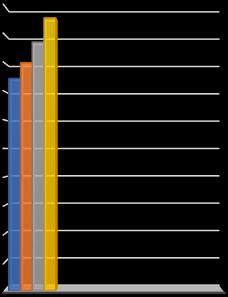
The main objective of this study is to find the compressive strength of hardened concrete after subjectingofcuringatroomtemperaturefordurationof7 and 28days. The specimens were taken out of the curing tank after the completion of the curing period. They were allowedtodryattheroomtemperatureforabout3hours. The actual dimensions of the specimens were accurately measured.
= Table -5: CompressivestrengthofPaverBlock
International Research Journal of Engineering and Technology (IRJET) e-ISSN: 2395-0056
Volume: 11 Issue: 04 | Apr 2024 www.irjet.net p-ISSN: 2395-0072
-1: CompressiveStrength
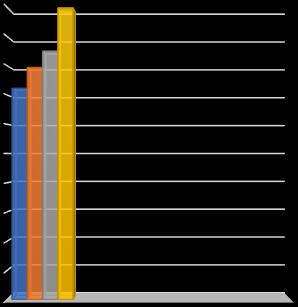
Flexural strength is one measure of the tensile strength ofconcrete.Itisameasureofanreinforcedconcretebeam or slab to resist failure in bending. Cracking is due to diagonal tension but mostly due to restrained shrinkage and temperature gradients. Direct application of pure tensionisdifficult.Thetheoreticalmaximumtensilestress reached in the bottom of the test beam is as modulus of rupture.
F=PL/(bd)2
Where,
F=Flexuralstrengthofconcrete(inMPa)
P=Failureload(inN)
L-Effectivespinoftheblock
B-Breadthoftheblock
Table -6: FlexuralstrengthofPaverBlock
This test method is used to determine the rate of absorption of water by hydraulic cement concrete by measuring the increase in the mass of a specimen resulting from absorption of water as a function of time when only one surface of the specimen is exposed to water.Thespecimenisconditionedinanenvironmentata standardrelativehumiditytoinduceaconsistentmoisture condition in the capillary pore system. The exposed surface of the specimen is immersed in water and water ingress of unsaturated concrete is dominated by capillary suction during initial contact with water. A brick is submerged in water for 24 hours. If its weight after 24hours exceeds its dry weight by 20%, the brick is not usedforconstruction.
Table -7: WaterAbsorptionofPaverBlock
International Research Journal of Engineering and Technology (IRJET) e-ISSN: 2395-0056
Volume: 11 Issue: 04 | Apr 2024 www.irjet.net p-ISSN: 2395-0072
The measured 7-day, 14-day, and 28-day compressive strength and other properties of the cement-silica fumebrine sludge binders are summarized. From the test results, it can be observed that the properties of binders areaffectedbythecement/silicafume/sludgeratios.
The mix composition M1 has comparatively lower values of setting time and soundness than the mix compositions M2,M3andM4.Datashowsthatthecompressivestrength increased with the increase in hydration period in all compositionsandMaximumstrengthwasachievedforthe mixcompositionM4.
The water absorption and porosity are key factors for estimationofstrengthanddurabilityofthebinders.
The toxic characteristic leaching procedure (TCLP) test is performed to evaluate the immobilization and stabilizationofmetalionspresentinthehydratedproduct. The leaching test was conducted for 28-day cured paver block samples using the ASTM extraction D3987-85 method. The sample was ground to fine powder with a particlesizepassingthroughanumber6sieve(0.333cm) andretainedonanumber16sieve(0.119cm).Thereafter, 10g of sample was added to 160mL of water and pH of solution was kept constant at 5.0 ± 0.2 by adding acetic acid (1 N). The samples were vigorously agitated (170 RPM) on a shaker for 24 hrs. Then, a 10mL sample was taken and filtered through a 0.45 ��m membrane filter paper. The amount of metals leached was determined by measuring their concentration using inductively coupled plasma optical emission spectroscopy (ICP-OES, model: ProdigyXP).Theresultswerecomparedwiththelimitsfor dischargeofpollutantsatinlandsurface watermentioned in Indian standard IS 10500.Theresults clearly revealed that the metal ions tested are tightly bound and retained into the material structure and do not readily leach from there. The concentration of leached metals is quite lower thanthelimitsspecifiedinIndianstandardexceptforiron metal.
4.1 Properties of the Silica Fume-Brine Sludge Binders
The incorporation of fine silica fume particles into the binders proves to be favorable in many ways. The silica fume particles fill into the internal voids and capillary channeltodecreasethenumberoflargepores.
Water absorption and porosity of all binders increased with an increase in the immersion period but became approximately linear after 7 days of immersion in water andrankedintheflowingorder:M4>M3>M2>M1.
These results clearly shows the absence of leaching in all compositionswhichisascribedtothefillingupofporesin the binder matrix with the hydration products that make thebinderparticlesintegratewitheachother.
[1] T. Jayachander- “conversion of non-hazardous brine sludgeintoblocks”
[2] Choong Hyun Kang, Taiwan Kim – “Development of construction materials using red mud and brine(Case Studies in Construction Materials)”, (2023)(18)
[3] Shin-Jen Chen1,ChaoShi Chen, Jyun-Yong Jhan1, and Ruei-Fu Chen-Utilization of Brine Sludge in Controlled Low Strength Materials (CLSM)”,(2019) (801)
[4] Juliana de C. Izidoro1, Denise A. Fungaro1 , Luciana C. Viviani and, Rogério da Costa Silva-” Brine sludge waste from a Chlor-alkali industry: characterization and its application for non-structural and structural construction materials”,(2021)Juliana de C. Izidoro1, Denise A. Fungaro1 , Luciana C. Viviani and, Rogério daCostaSilva
[5] Mridul Garg and Aakanksha Pundir – “Utilization of BrineSludgeinNonstructuralBuildingComponents:A SustainableApproach”,(2014)(389316)
[6] AnujKumar,SanjayKumar- “Developmentofpaving blocks from synergistic use of red mud and silica fumeusinggeopolymerization”,(2013)(38)
International Research Journal of Engineering and Technology (IRJET) e-ISSN: 2395-0056
Volume: 11 Issue: 04 | Apr 2024 www.irjet.net p-ISSN: 2395-0072
[7] Aeslina Abdul Kadir , Amir Detho, Azini Amiza Hashim,NurHidayahMatRozi-”Assessmentofpaving blocks from syngerstics use of red mud and silica fumeusinggeopolymerization”,(2013)(18)
[8] Vitalii Lundaev , A.A. Solomon , Upeksha Caldera Christian Breyer –”Material extraction potential of desalination brines: A technical and economic evaluation of brines as a possible new material source”,(2022)
[9] Amanda pradodeNicolas,Angel Molina Garcia,Juan tomas Garcia Bermejo-”Reject brine management: Denitrification and zero liquid discharge current status, challengesand future prospects”,(2022)
[10] Gyanendra Kumar Attri, R.C. Gupta, Sandeep Srivastava-” Effect of demolished concrete and stone crusher dust on properties ofM40 grade paver blocks”,(2021)
[11] RanaS.Al-Absi,MohammedAbu-Dieyeh,Mohammad A.Al-Ghouti–“Environmental
[12] Technology & Innovation Brine management strategies, technologies, and recovery using adsorptionprocesses”,(2021)(101541)
[13] Arjun Siva Rathan R.T., Aravinda Sai V, Sunitha V”Mechanical and structural performance evaluation ofperviousinterlockingpaverblocks”,(2021)(292)
[14] L.V.Prasad Meesaraganda (Prasadraju) , V.S.Prasad Kakumani (KVS)-”Effect of various combinations of aperture diameter and pattern on concrete paver block”,(2021)
[15] Jawad Mustafaa, Aya A.-H.I. Mourada, Ali H. AlMarzouqia,,Muftah
[16] H. El-Naas-” Simultaneous treatment of reject brine and capture of carbon dioxide: A comprehensive review”,(2020)
[17] M.Nishanth premhar, R.Jeyasundar, L.Muthukumar&A.Manojkumar(2019)“Experiment al investigation on concrete paver block by adding silica fume”.“International Research Journal of Engineering and Technology (IRJET)” Volume: 06 Issue4e-ISSN:2395-0056,ISSN:2395-0072.
[18] Srivastava, V., Agarwal, V.C. & Kumar, R. (2012). Effect of Silica Fume on Mechanical Properties of Concrete.Acad.IndusRes.,
[19] IS 15658 (2006) – Precast Concrete Blocks for Paving.
[20] IS 10262:2009 concrete mix proportioning –guidelines
[21] IS456:2000codeofpracticeforplainandreinforced concrete.
[22] IS 383-1970 specifications for coarse and fine aggregate.
[23] IS15388 SpecificationforSilicaFume