
International Research Journal of Engineering and Technology (IRJET) e-ISSN: 2395-0056
Volume: 11 Issue: 04 | April 2024 www.irjet.net p-ISSN: 2395-0072
International Research Journal of Engineering and Technology (IRJET) e-ISSN: 2395-0056
Volume: 11 Issue: 04 | April 2024 www.irjet.net p-ISSN: 2395-0072
Janhavi Mahale1 , Prajakta Pagare2 , Ketan Wadkar3 , Siddhesh Temkar4, Rohan Sabnis5, Nikhil Sul6
1Assitant Professor at Civil Engineering, RMD Sinhgad School of Engineering, Warje, Pune, Maharashtra, India
2Student of Civil Engineering, RMD Sinhgad School of Engineering, Warje, Pune, Maharashtra, India
3Student of Civil Engineering, RMD Sinhgad School of Engineering, Warje, Pune, Maharashtra, India
4Student of Civil Engineering, RMD Sinhgad School of Engineering, Warje, Pune, Maharashtra, India
5Student of Civil Engineering, RMD Sinhgad School of Engineering, Warje, Pune, Maharashtra, India
6Student of Civil Engineering, RMD Sinhgad School of Engineering, Warje, Pune, Maharashtra, India
Abstract – The present study focuses on exploring the feasibility and potential benefits of incorporating waste plastic into brick production as the disposal of plastic waste has become a significant environmental concern in today’s date. The study elaborates the work done on bricks made using the plastic waste composite along with cement, sand, and water. The small pieces of recycled waste plastic composite taken from leftover pieces of bottles, cans etc. After thorough mixing of sand, cement, water and plastic waste, mixture is poured into rectangular mold with standard brick dimensions. After 24 hours, bricks were removed from mold and kept for 3 days curing. Local brick testing methods were conducted such as free fall of the brick and scratch test Compressive strength test and water absorption test also conducted on bricks samples. The test results concluded that the Plastic Composite Brick is efficient than the normal cement brick. The bricks produced are light in weight, have smooth surface and fine edges, and have high crushing strength and very low water absorption.
Key Words: Plastic Bricks, Cement Bricks, Compressive Strength,WaterAbsorption,WastePlastic.
The way plastic waste is disposed of has emerged to be a majorenvironmentalconcerninthemodernworld.Plastic wasteaccumulatesinlandfills,seas,andothernaturalareas, harmingecosystems,andpublichealth.Itisnowessentialto findefficientwaystohandleandreusethiswaste.Utilizing wasteplasticinthebrick-makingprocessisonepromising approach that provides an extended solution to waste managementandbuildingrequirements.Thepurposeofthis research is to investigate the viability and possible advantages of using waste plastic in the manufacturing of bricks.Theprocessofmakingcementbricksnormallyusesa lotofcementandsand,whichhasnegativeenvironmental effectsofitsown,likesanderosion.
Thisstudyaimstomitigatetheplasticwasteproblemand reduce these negative effects by replacing a portion of cement with waste plastic. There are various benefits to usingwasteplasticintheproductionofbricks.Firstofall,it offersaworkablewaytogetridofplasticwastethatwould
otherwisepollutetheenvironmentorlandinalandfill.We divertplasticfromharmingecosystemsbymakingbricksout of it, and we also provide a useful resource for building. Furthermore, adding plastic to bricks can improve their insulatingqualities,loweringthecostofheatingandcooling buildingsandincreasingenergyefficiency.Furthermore,it hasbeendemonstratedthatbrickstreatedwithplasticmay bemoreresilienttoweatheringanddurable,extendingthe lifeofbuildings.
Thisstudycomprisesathoroughinvestigationofnumerous aspectsassociated with the useof leftover plasticin brick manufacturing. It involves assessing the mechanical characteristics, durability, and environmental effects of bricks modified with plastic to those made with regular cement. In addition, the initiative intends to create streamlinedproductionproceduresthatmaximizetheuseof leftoverwasteplasticwhileensuringthebricks'qualityand structural integrity. To sum up, using waste plastic in the production of bricks offers a viable way to solve issues relatedtoconstructionand theenvironment.Wecanturn plastic waste into a useful resource for sustainable development by utilizing creative solutions. This project aimstopromoteeffectiveplasticwastemanagementwhile advancingenvironmentallyfriendlyconstructiontechniques.
In-depthliteraturereviewwascompletedtofindthework doneonapplicationofplasticwasteinthemanufacturingof bricks.Thisextensiveliteraturesurveyalsohelpstofindout theresearchgapsassociatedwiththebricksmanufacturing industry and increasing demand of bricks for the developmentofdifferentinfrastructuralactivities.Following research papers investigated some gaps in the brick manufacturingusingplasticwaste.
ShettyS.etal.(2014)investigatedthat,Plasticsandbricks giveushopeandawaytoworkoninnovativethingsrelated totheplasticandtotrytoinventsomenewcivilengineering materialswhichshowssomeremarkablechangesinfuture industry and 5 changes the thoughts of the researchers, usersandindustries.Suchas,ingoingforplasticsandwall
International Research Journal of Engineering and Technology (IRJET) e-ISSN: 2395-0056
Volume: 11 Issue: 04 | April 2024 www.irjet.net p-ISSN: 2395-0072
up framed structures as a partition wall, plastic sand bencheswithintheparks,plasticsandtracksforrunningand jogginginplaceofconcrete.
Velmurugan V. et al. (2019) worked on the comparative studybetweenclaybricks,plasticsandbricksandplasticfly ashbricks.Thisprojectreusestheplasticwasteandprotects theenvironmentfromplasticpollutants.Thisprojectisdone withdifferentmixingratiosofsandandplastic.Allthebricks withdifferentratioaretestedand6finallycameupwiththe best ratio to construct brick and that is 70% of sand and 30%ofplastic.Comparingallthebricksitisbettertousethe brickmadewithplasticandflyashasbothareobtainedfrom waste. These produce harm separately thus this waste materials are often combined to make an ecofriendly product.
TapkireG.etal(2014)workedonanalysisofreplacementof conventionalaggregateswithrecycledplasticaggregatesin concrete.Theconcreteconsistsofcement,sand,Aggregate andwater.Outofwhichtheaggregatepercentageis60to70 %inconcreteandfromtheobservation,itiscomputedto usethe20% Recycled plasticaggregateinconcretewhich doesnotaffectthepropertiesofconcrete.
From the observation it is possible to use the plastic in concretemixupto20%weightofcoarseaggregate. Looking into above aspect they concluded that plastic can be in cementconcretemixincreasethe%inplastictodecrease thestrengthofconcrete.Byusingtheplasticinconcretemix toreducestheloadofcubeup15%.
SinghalA.etal.(2018)presentedareviewonutilizationof plasticwasteinmanufacturingofplasticsandbricks.They concludedthat,Wasteplastic,whichisavailableeverywhere, maybeputtoaneffectiveuseinbrick/tilesmaking.Plastic sand bricks/tiles also help to reduce the environmental pollution,thusmakingtheenvironmentcleanandhealthy. Plastic sand bricks/tiles minimize the usage of clay in making of bricks/tiles. Plastic sand bricks/tiles give an alternateoptionofbricks/tilestothepurchasersonwater absorption of plastic sand brick is verry less nearly zero percent.Compressivestrengthofplasticsandbrickfoundto be5.6N/mm2and,thecompressiveloadof96KN.Theyalso concluded 7 that the plastic sand bricks are useful for the constructionindustrywhencomparedwithFlyAshbricks and3rdclassclaybricks.
Kzumar A. et al. (2020) studied that the manufacturing of bricks using plastic waste. Based on the results obtained, they concluded that, Plastic bricks can a very good alternative of traditional earthen bricks. Plastic bricks are oftenusedforpartitionwallsandexteriorwalls;however, they need to not be utilized in load bearing walls. Cost of manufacturing per unit plastic brick is significantly lower than traditional earthen bricks, hence they are cheaper alternative. Plastic bricks are water-resistant, hence are oftenutilizedinunderwaterstructures.
DaftardarA.etal.(2017)performedanexperimentalstudy over use of waste plastic as a construction material. This workwasabletoachieveitsmainaimofreducingtheplastic waste throughout the globe. It makes use of extruder machine which is harmless to the environment and efficientlyutilizeswasteplastictoformaproducti.e.,brick, which is of higher strength, higher water absorption capacity,lowerWeight,etc.Thenconventionalbricks.It’sof multipleusesasbyincreasingthesizeofthemould,thebrick canbeutilizedasbuildingblocksaswell.
SaiprasadMKetal.(2019)studiedthefeasibilityofplasticsoilbrickasaconstructionmaterial.Anexperimentalstudy wasconductedincludingvarioustestsonbrickstocheckits strength and durability. Since test results found it was concludedthattheprojecthelpstoconverteffectivelywaste plastic into useful building materials like bricks and floor interlocks which can effectively reduce the pollution and further decreases the problem of waste plastic in society. Thevalueoftherecycledproductissignificantlyless than thecostofproducing
Fromtheextensiveliteraturesurvey,itisrevealedthatitis possible to use the plastic in concrete and bonding admixture in concrete and increase the half of plastic in concrete.TheuseofRecycledplasticaggregateinconcreteis the best option for the disposal of plastic & ultimately reducestheplasticpollutionintheEnvironment. Therefore, theobjectivesofthepresentstudyareasfollows:
I. Todevelopanefficientwayforeffectiveutilizationof thewasteplasticinconstructionworks.
II. Cost comparison between plastic waste composite bricksandconventionalbricks.
III. Tocomparethestrengthofbrickscastedfromwaste plasticcompositewithnormalcementbricks.
IV. Tominimizetheconsumptionofnaturalresourcessuch assandforthemanufacturingofbricks.
V. Toreduceandreusegenerationofwasteplasticonthe land and water to avoid land and water degradation andConsequentpollutionhazard.
3.1 SELECTION OF WASTE PLASTIC TYPES:
Different types of waste plastic, such as bottles, plastic containers,andplasticbags,willbecollectedfromrecycling centersorwastemanagementfacilities.Thecollectedwaste plastic will be sorted, cleaned, and shredded into uniform sizestofacilitateincorporationintobrickmanufacturing.
International Research Journal of Engineering and Technology (IRJET) e-ISSN: 2395-0056
Volume: 11 Issue: 04 | April 2024 www.irjet.net p-ISSN: 2395-0072
Various mix designs will be developed by substituting a percentage of clay with shredded waste plastic. The proportions of waste plastic to clay will be optimized to ensurethedesiredpropertiesoftheplastic-modifiedbricks, includingstrength,durability,andthermalinsulation.
ExperimentalProceduresforBrickManufacturing:
a. Mixing: The Fly ash, cement, sand and shredded waste plasticwillbemixedthoroughlyusingaconcretemixerora pugmilltoachievehomogeneity.
b.Molding:Thehomogeneousmixturewillbeplacedinbrick molds of standard dimensions, compacted, and leveled to formbrickshapes.
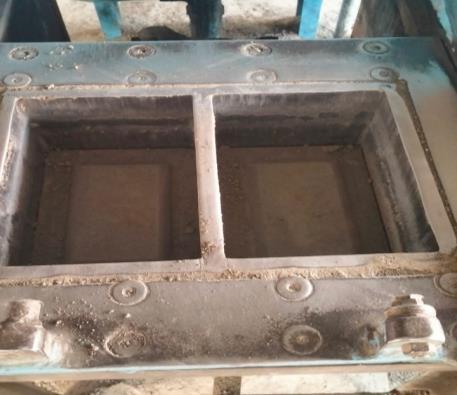
c. Curing: The molded bricks will undergo curing under controlled conditions of temperature and humidity to promotehydrationanddevelopmentofstrength.
d.Concretemixerorpugmill:Aconcretemixerorpugmill willbeusedformixingtheclayandshreddedwasteplastic toensureuniformdistributionofmaterialsandachieve homogeneityinthebrickcomposition.
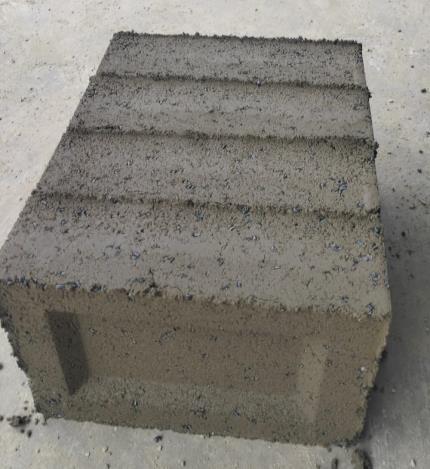
e.BrickMolds:Standard-sizedbrickmoldsmadeofmetalor plasticwillbeusedforshapingtheplastic-modifiedbricks during the molding process. These molds will have dimensionsconformingtoindustrystandardsforbricks.
f. Curing Chamber: A curing chamber equipped with temperatureandhumiditycontrolswillbeutilizedforcuring the molded bricks. This chamber provides a controlled environmentconducivetothehydrationprocess,promoting thedevelopmentofstrengthinthebricks.
Local TestingMethod:Free Falltestandscratchtestwere conductedonbrickstofindoutthequalityofplasticwaste compositebricks.
MechanicalProperties:Thecompressivestrength,andwater absorptioncharacteristicsoftheplastic-modifiedbrickswill bedeterminedaccordingtorelevantASTMorISOstandards.
Testing Equipment: Various testing equipment such as compression testing machines, flexural testing machines, waterabsorptionapparatus, areemployedtoevaluatethe mechanical,andphysicalpropertiesoftheplastic-modified bricksaccordingtostandardtestingprocedures.
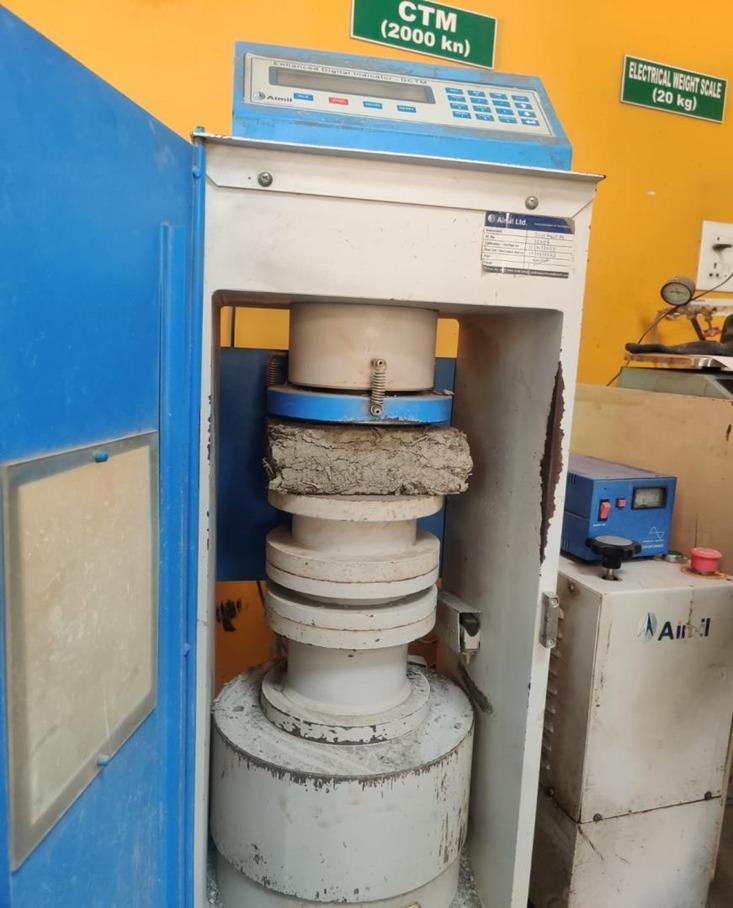
Testingthecompressivestrengthofplasticbricksinvolves subjectingthebrickstopressuretodeterminethemaximum load they can withstand before failing or deforming. The generalprocedurewasfollowedforconductingcompressive strength tests on plastic bricks. Firstly, the compression machinesetupisdonewithappropriateplatensforapplying loaduniformlybyensuringthemachineiscalibratedandset tozerocorrectly.Afterthat,plasticbrickisplacedcentrally to apply the load on bricks. Gradual application of load is giventoplasticbrickuntilitdeforms.Thefollowingresults were observed for varied proportions of plastic and sand duringthetest.
Table -1: Resultsofcompressivestrengthfortheratioof Plastic:Sand=1:2
Brick Number Brick1
Brick2
Brick3
Area(mm2) 26220 26220 26220
Max.Load onCrushing (KN) 630 647 622 Compressive
Average=(24.02+24.67+23.72)/3=24.133N/mm2
International Research Journal of Engineering and Technology (IRJET) e-ISSN: 2395-0056
Volume: 11 Issue: 04 | April 2024 www.irjet.net p-ISSN: 2395-0072
Table -2: Resultsofcompressivestrengthfortheratioof Plastic:Sand=1:2.5
Brick Number Brick1
Area(mm2)
Load onCrushing (KN)
Strength (N/mm2)
Brick2 Brick3
Average=(27.11+26.50+26.62)/3=26.74N/mm2
Table -3: Resultsofcompressivestrengthfortheratioof Plastic:Sand=1:3
Brick Number Brick1
Brick2 Brick3
Area(mm2) 26220 26220 26220
Max.Load onCrushing (KN) 570 553 567
2)
Average=(21.73+21.09+21.62)/3=21.48N/mm2
FromtheTable1,2and3, itcanbeobservedthat,highest compressive strength was achieved for the 1:2.5 ratio of Sand:Plasticandthestrengthwas26.74N/mm2 . Whenratio changedto1:3,compressivestrengthwasreducedto21.48 N/mm2
Tochecktheabilityofbrickstoabsorbthewater,thereis need to perform the water absorption test on bricks. The abilitytoabsorbthewatershouldnotexceed20%oftheir weightisthethumbruleasitaffectstoitsstrength.Firstly, themoistureinthebrickiseliminatedbyheatingthebrickin aovenatatemperatureof110oFtheitwascooledatroom temperature.Thenbricksaresoakedinwaterfor24hoursat room temperature. After that following results were observedforwaterabsorption.
Table -4: Resultsofwaterabsorptiontest
5.73
Results of water absorption test shows that the plastic composite bricks have lowest water absorption than the normalconventionalbricks
International Research Journal of Engineering and Technology (IRJET) e-ISSN: 2395-0056
Volume: 11 Issue: 04 | April 2024 www.irjet.net p-ISSN: 2395-0072
Usingplasticwasteinbricksoffersseveralpotentialbenefits, dependsonvariousfactorssuchasenvironmentalimpact, durability,andeconomicfeasibility.Theuseofplasticwaste inbricksholdspromiseasasustainablesolutiontoaddress bothwastemanagementandconstructionmaterialneeds.
The present study investigated that, highest compressive strengthwasachievedforthe1:2.5ratioofSand:Plasticasa partialreplacementofsandinbricksandthestrengthwas 26.74 N/mm2. When ratio changed to 1:3, compressive strength was reduced to 21.48 N/mm2. The study also investigated that water absorption test shows that the plasticcompositebrickshavelowestwaterabsorptionthan thenormalconventionalbricks.
Itisessentialtoconductcomprehensiveresearchandtesting toensurethatplastic-infusedbricksmeetsafetystandards, areenvironmentallyresponsiblethroughouttheirlifecycle, and are economically viable. Collaboration between researchers, policymakers, and industry stakeholders is crucial to realize the potential benefits of this innovative approachwhilemitigatingassociatedrisks.
[1] V. Velumurugan, R. Gokul Raj, A. Harinisree, “An Overview of Rebuilding of Plastic Waste to Pavement Bricks” International Journal for Research in Applied science&EngineeringandTechnology,April2019
[2] Arvind Singhal, Dr. Om Prakash Netula, “Utilization of plasticwasteinmanufacturingofplasticsandbricks”, 3rd International conference on New Frontiers of Engineering,Science,ManagementandHumanities.June 2018,ISBN:978-93-87433-29-8.
[3] SitiNabilahAmir&NurZulaikhaYusof,“PlasticinBrick Application” on 4th September 2018 by LUPINE PUBLISHERS. ISSN: 2637-4668. DOI: 10.32474/TCEIA.2018.03.000152.
[4] AiswariaK,KhansaAbdulla,EBAkhil,HarithaLakshmi V G, Jerin Jimmy “Manufacturing and Experimental Investigation of Bricks with Plastic And M-Sand” InternationalJournalofInnovativeResearchinScience, EngineeringandTechnologyVol.7,Issue6,June2018
[5] RonakShah,HimanshuGarg,ParthGandhi,RashmiPatil, AnandDaftardar.“Studyofplasticdustbrickmadefrom waste plastic.” on international journal of mechanical andproductionengineering.ISSN:2320-2092,volume5,issue-10,OCT-2017.
[6] A.S.Manjrekar,Ravi,D.Gulpatil,VivekP.Patil,RanjitS. Nikam, Chetali M. Jeur (2017). "Utilization of Plastic WasteinFoundrySandBricks",InternationalJournalfor
ResearchinAppliedScience&EngineeringTechnology (IJRASET).
[7] LoukhamGerionSingh,PongsumbamBossSingh,Suresh Thokchom(2017),"ManufacturingBricksfromSandand WastePlastics",NationalConferenceonInnovationsin ScienceandTechnology(NCIST-17).
[8] Dinesh.S,Dinesh.A,Kirubakaran.K,“UtilisationOfWaste Plastic In Manufacturing Of Bricks And Paver Blocks’’ InternationalJournalofAppliedEngineeringResearch, ISSN0973-4562,Volume1,2016.
[9] GopuMohanC,JikkuMathew,JithinXNinanKurian,John Thomas Moolayil, “Fabrication Of Plastic Brick O manufacturing Machine And Brick L analysis” InternationalJournalofInnovativeResearchinScience and Technology, ISSN (online) 2349-6010, Volume 2, Issue11thApril2016
[10] SinaSafinia,AmaniAlkalbani."UseofRecycledPlastic WaterBottlesinConcreteBlocks"MiddleEastCollege, KOM,Rusayl,MuscatPC124,Oman2016.
[11] Dibya Jivan Pati, Riken Homma, Kazuhisaikt, “Plastic Bottles Masonry As Alternate Solution To Housing ProblemsInUrbanAreaOfIndia”InternationalJournal ofArchitecturePlanningandBuildingEngineering,ISSN 2455-5045,Volume2,Issued2ndApril2015.
[12] Maneeth. P.D, Pramod. K, Kishore Kumar, Shanmukha Shetty,“UtilisationOfWastePlasticInManufacturingOf Plastic-SoilBricks’’ ,InternationalJournalofEngineering ResearchandTechnology(IJERT),Volume3,ISSN22780181,Issued8thAugust2014.
[13] AmitGawande,G.Zamare.,V.CRange.,SaurabhTaye,G. Barnacle. “An overview on waste plastic utilization in asphalting of roads”, Journal of Engineering Research andStudies(JERS),Vol.III,IssueII,AprilJune2012,pp 01-05.
[14] Bharath Raj, Varshith A, Rashmitha Kotian, N.G. Ashwath. “Study on Laterite-Cement bricks” Project report, K.V.G College of Engineering, Sullia.DK. 20112012.
[15] Hiremath PM, Shetty S (2014) Utilization of waste plastic in manufacturing of plastic-soil bricks. InternationalJournalofTechnologyEnhancementand EmergingEngineeringResearch2(4):2347-4289