
International Research Journal of Engineering and Technology (IRJET) e-ISSN: 2395-0056
Volume: 11 Issue: 04 | Apr 2024 www.irjet.net p-ISSN: 2395-0072
International Research Journal of Engineering and Technology (IRJET) e-ISSN: 2395-0056
Volume: 11 Issue: 04 | Apr 2024 www.irjet.net p-ISSN: 2395-0072
1Asst. Professor, Department of Civil Engineering, New Horizon Institute of Technology and Management, Maharashtra, India
2B.E student, Department of Civil Engineering, New Horizon Institute of Technology and Management, Maharashtra, India
3B.E. student, Department of Civil Engineering, New Horizon Institute of Technology and Management, Maharashtra, India
4B.E student, Department of Civil Engineering, New Horizon Institute of Technology and Management, Maharashtra, India
5B.E student, Department of Civil Engineering, New Horizon Institute of Technology and Management, Maharashtra, India
Abstract - The production of pollutants in wastewater has been increasing day by day, necessitating the reclamation of wastewater for reuse. While the traditional constructed wetland method has been used to naturally removepollutants from water, it is no longer efficient on its own. Microbial fuel cells (MFCs) have garnered global attention as an emerging environmental treatment technology. Previous studies have demonstrated that constructed wetland-microbial fuel cells (CWL-MFCs) are an eco-friendly and sustainable technology capable of simultaneously removing contaminants and generating electricity. The advantages of CW-MFCs include high treatment efficiency, electricity generation, and the reduction of persistent pollutants
Key Words: wastewater treatment, generation of electricity, constructed wetland-microbial fuel cells, pollutant removal
Inthecurrentscenario,wastewaterdisposalhasbecomea serious issue due to the increased concentration of pollutants and wastewater generation. This increase is attributedtofactorssuchastheriseinthestandardofliving, climate change, excessive population growth, and more. Connectingtheentirepopulationtoaseweragesystemand treatingwastewaterinacentralizedSewageTreatmentPlant (STP)ischallenging.ThisisbecausebuildinganewSTPina cityortownrequiresasubstantialcapitalinvestmentanda largelandarea.Thedischargeofwastewaterfromvarious sources, including industries, residences, agriculture, and commercial activities, poses a threat to nature and contributes to waterborne diseases. The lack of proper wastewater treatment and rapid urbanization are exacerbatingthesituation.
Constructed wetland (CW) technology utilizes natural processes to efficiently remove contaminants, offering an environmentally safe and cost-effective alternative to traditionalenergy-intensivetreatmentmethods.Ithasbeen successfully used to treat various types of wastewaters, including municipal, urban, industrial, and agricultural, stormwaterrun-off,miningeffluents,leachates,andseptic tankeffluent.
Constructed wetlands are a low-cost option for treating differenttypesofwastewaterssuchasdomestic,industrial, and agricultural run-off, including dairy and livestock wastewater.Theyareeasytomaintainandoperateandcan transformmanypersistentpollutantsfoundinconventional wastewater intoharmlessby-products. Whileconstructed wetlandshaveproventobeeffectiveforbothconventional and nonconventional pollutants, they do have some limitations,suchassubstrateclogging,lowpollutantremoval efficiency, and inability to address specific pollutants. Therefore, it is important to combine this technique with anothersuitablemethodtoovercometheselimitationsand simultaneouslyincreaseitsefficiency.
MFC, or Microbial Fuel Cell, represents a cutting-edge technologyconsistingofacathode,ananode,andaproton exchange membrane; combine microbial and electrochemical processes to form an intrinsic electrochemicalsystemthattransformschemicalenergyinto electrical energy. These components work together to provide electrical energy using microorganisms as biocatalysts and organic materials as substrates. This revolutionary technology offers a more energy-efficient alternativetotraditionalwastewatertreatmentplants,asit harnesses the organic matter in wastewater to generate
International Research Journal of Engineering and Technology (IRJET) e-ISSN: 2395-0056
Volume: 11 Issue: 04 | Apr 2024 www.irjet.net p-ISSN: 2395-0072
electricity,thusoffsettingtheenergyneedsofthetreatment plants.
Constructed wetland-microbial fuel cells (CWMFCs) are a brilliant combination of built wetlands and bioelectrochemical innovation. CWMFCs can decontaminate wastewater and create power through physical substrate aggregation,chemicalresponses(differentredoxresponses happen inside the substrate), and organic intuitive (microbialchange).InsidetheCWMFC,electricity-producing microorganisms produce electrons beneath anaerobic conditions in the anode. The electrons stream through outsidecircuitstothecathode,whereredoxresponsestake put.CWMFCshavebeenconnectedinthetreatmentoffollow contaminants in waterway water, wastewater containing colors,andresidentialwastewater.
2.1 Materials
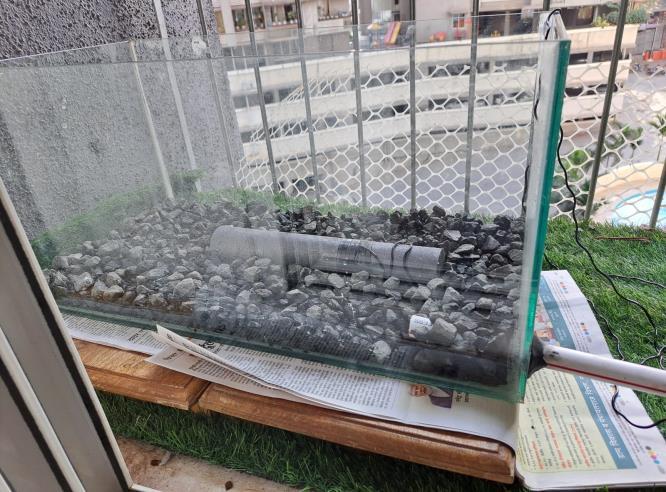
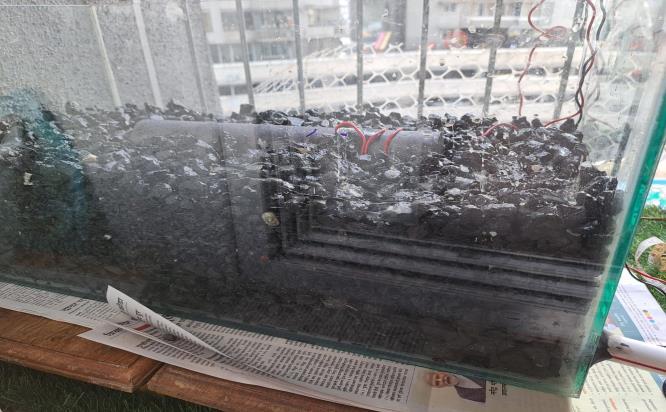
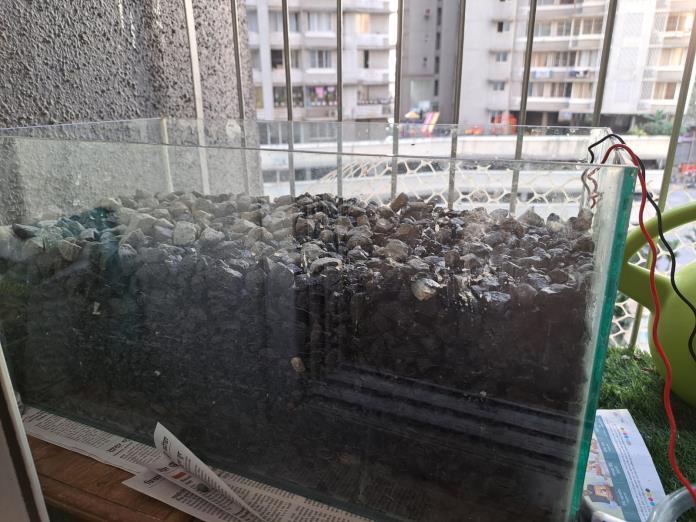
A glass container with external dimensions of 60cm in length,30cminwidth,and30cminheightwasutilizedfor theconstructionofthewetland-microbialfuelcellsystem. An outlet with a diameter of 2.5cm was installed at the bottom of one side of the width to release treated water (effluent).
The structure features a 6 cm thick top and bottom layer madeof gravel witha sizeof10-20mm, while the middle layer is 12 cm thick and composed of normal sandstone gravelwithasizeof4mm-5mm.
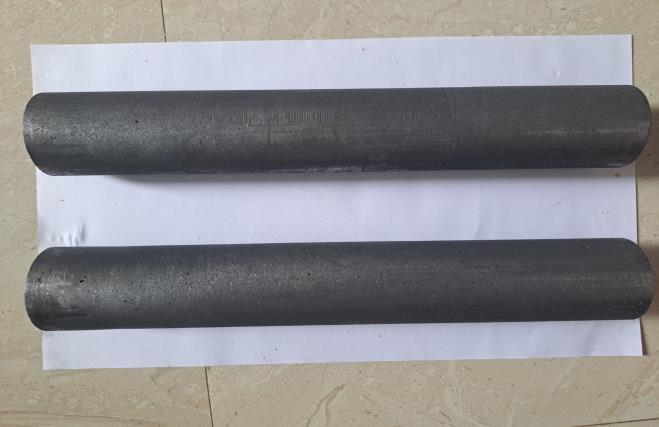
We employed two graphite electrodes with a diameter of 5cmandalengthof30cm.Thefirstelectrodeispositioned5 cmfromthebottom,andthesecondelectrodeissituated19 cmfromthebottom.Theseelectrodeswereconnectedusing 1mmdiametercopperwiretoformanelectriccircuit.
Typeofplantusedforconstructedwetland: CannaindicawhichisalsocalledasIndianshot,canbeused torecycledomesticwastewaterbyusingtherootsofitand soil bacteria for domestic re-usage such as for gardening, andflushingoftoils.
International Research Journal of Engineering and Technology (IRJET) e-ISSN: 2395-0056
Volume: 11 Issue: 04 | Apr 2024 www.irjet.net p-ISSN: 2395-0072
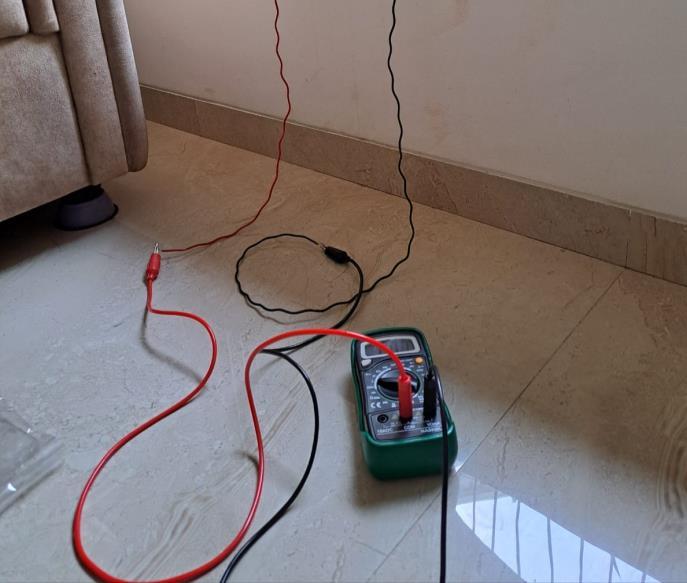
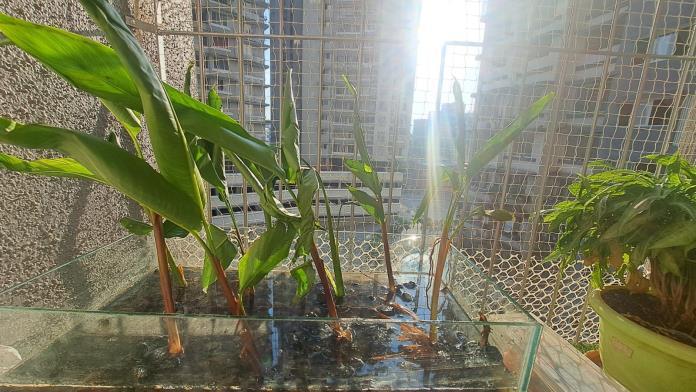
DuringTrial1,asubstantialexperimentwascarriedout.A totalof15litersofpre-sedimentwastewaterwasintroduced into the tank simultaneously with the valve sealed. The wastewaterwaslefttosettlefor1hour. The findings were extraordinary: 0.9V of electricity was producedforevery15litersofwater.
DuringTrial2,asubstantialexperimentwascarriedout.A totalof15litersofpre-sedimentwastewaterwasintroduced into the tank simultaneously with the valve sealed. The wastewaterwaslefttosettlefor1hour.Thefindingswere extraordinary:1.08Vofelectricitywasproducedforevery 15litersofwater.
DuringTrial3,asubstantialexperimentwascarriedout.A totalof15litersofpre-sedimentwastewaterwasintroduced into the tank simultaneously with the valve sealed. The wastewaterwaslefttosettlefor1hour.Thefindingswere extraordinary:0.87Vofelectricitywasproducedforevery 15litersofwater.
International Research Journal of Engineering and Technology (IRJET) e-ISSN: 2395-0056
Volume: 11 Issue: 04 | Apr 2024 www.irjet.net p-ISSN: 2395-0072
4. LiamDoherty,XiaohongZhao,etal.“Theimpactsof cathode dispersing and stream heading on the execution of microbial fuel cell-constructed wetland"BiologicalDesigning,2015.
5. A. Shukla, D. Parde, etal. "A survey on viable plan forms of developed wetlands", Universal Diary of NaturalScienceandInnovation,July2021.
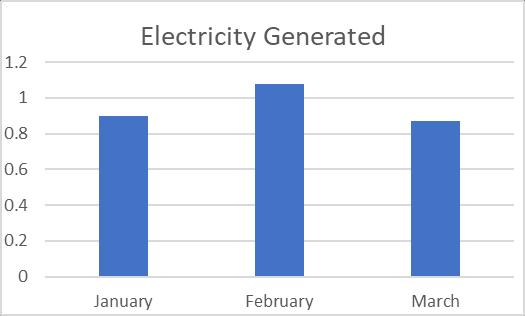
It has been observed that electricity can be successfully generated while treating wastewater. The CW-MFC technology is an innovative approach to enhancing wastewater treatment efficiency with simultaneous electricitygeneration.
To enhance electricity generation, we recommend the additionofgraphitegravelsandanincreaseinthenumberof electrodes.Withthesemeasures,wecansignificantlyboost theproductionofelectricity.
Byimplementingthismethod,wecaneffectivelyreclaimand reuse treated wastewater for various purposes such as cleaning,gardening,andmore.Thisapproachnotonlyhelps to conserve water but also contributes towards a greener andhealthierenvironment.
1. Wenjing Wang, Yu Zhang, etal. “Operation instrument of developed wetland-microbial fuel cells for wastewater treatment and power era: A review”,BioresourceInnovation314123808,2020.
2. Pratiksha Srivastava , Rouzbeh Abbassi, etal., “Performanceofpilot-scaleevensubsurfacestream developed wetland coupled with a microbial fuel cellfortreatingwastewater”.
3. Gupta,S.,Srivastava,P.,Patil,S.A.,KumarYadav,A., “A comprehensive survey on rising developed wetland coupled microbial fuel cell innovation: potentialapplicationsandchallenges”,Bioresource Innovation,2020.
6. AtiehEbrahimi,MuttucumaruSivakumar,etal.,"A basic survey of the advantageous relationship betweendevelopedwetlandandmicrobialfuelcell for improving poison expulsion and vitality era" DiaryofNaturalChemicalBuilding,2021.
7. FeiXua,De-longOuyanga,etal."Powergeneration upgradeinadevelopedwetland-microbialfuelcell framework for treating saline wastewater" BioresourceInnovation288,2019.
8. Corbella, C., Guivernau, M., Viñas, M., Puigagut, J., "Operational,planandmicrobialviewpointsrelated to control generation with microbial fuel cells executed in built wetlands", Water Inquire about, 2015.
9. DengmingYan,XinshanMelody,"Bioelectricityera from air-cathode microbial fuel cell associated to buildwetland”WaterScience&Innovation,2018.
10. Xiao Huang, Chongsen Duan, etal. "Part of anode materialsonexecutionandmicrobialcharacteristics inthedevelopedwetlandcoupledmicrobialfuelcell (CW-MFC):Asurvey",DiaryofCleanerGeneration 301126951,2021.
11. D. Parde, A. Patwa, A. Shukla et al.: A survey of developed wetland on sort, treatment and innovation of wastewater." Natural Innovation & Development,1012612020.
12. Arvind Kumar Swarnakar, et al, Soil and Natural Science1032,012026,2022.


SwaraBambade
Asst.Professor M.Tech.(Environ.Eng)
DepartmentofCivilEngineering, NewHorizonInstituteofTechnologyand Management,Maharashtra,India
MrugayaPujare
B.E.Student
DepartmentofCivilEngineering, NewHorizonInstituteofTechnologyand Management,Maharashtra,India
International Research Journal of Engineering and Technology (IRJET) e-ISSN: 2395-0056
Volume: 11 Issue: 04 | Apr 2024 www.irjet.net p-ISSN: 2395-0072



ShreyaJagtap
B.E.Student
DepartmentofCivilEngineering, NewHorizonInstituteofTechnologyand Management,Maharashtra,India
AdityaTandale
B.E.Student
DepartmentofCivilEngineering, NewHorizonInstituteofTechnologyand Management,Maharashtra,India
SureshkumarYadav
B.E.Student
DepartmentofCivilEngineering, NewHorizonInstituteofTechnologyand Management,Maharashtra,India