
International Research Journal of Engineering and Technology (IRJET) e-ISSN: 2395-0056
Volume: 11 Issue: 04 | Apr 2024 www.irjet.net p-ISSN: 2395-0072
International Research Journal of Engineering and Technology (IRJET) e-ISSN: 2395-0056
Volume: 11 Issue: 04 | Apr 2024 www.irjet.net p-ISSN: 2395-0072
Prathamesh A Mali1 , Tejas J Ghodake2 , Pranav V Patil3 , Rajratna B Kamble4
1 Department of Mechanical Engineering, Rajarambapu Institute of Technology, Islampur, MS 415409, India
2 Department of Mechanical Engineering, Rajarambapu Institute of Technology, Islampur, MS 415409, India
3 Department of Mechanical Engineering, Rajarambapu Institute of Technology, Islampur, MS 415409, India
4 Department of Mechanical Engineering, Rajarambapu Institute of Technology, Islampur, MS 415409, India
Abstract - Theneedforsupplychainnetworkstoconnect suppliers & customers located all over the world is growing. To address concerns about the lack of transparency & security in supply chain procedures, pilot projects are being run to test out blockchain solutions. These solutions will provide an IT architecture that addresses these needs. This essay offers a model for integrating blockchain solutions into supply chain processes & advances ongoing work. The purpose of this research is to provide a comprehensive review of the existingmodelsforintegratingtechnology.Furthermore,a systematic analysis of content is used to gather and classify needs for particular integration of blockchain technologies. These needs inform the evaluation, comparison, & eventual use of the models in the creation of new models. There is a need to refine the current models since they do not adequately address the unique needs of blockchain technology. Particularly, existing models do not accommodate for, and must be methodically integrated with, an increase in the quantity of external stakeholders & supply chain partners participating in blockchain-based systems. This study introducesa model forintegrationthattakesintoaccount the requirements of blockchain-based supply chain activities.
Key Words: Blockchain, Supply Chain, Technology, Integration Model.
Supplychainmanagementhasalwaysbeenachallengefor most multinational corporations. Spending a lot of money hasalwaysbeenaproblemfortheorganization,leadingto anumberofinefficiencies&needtofindwaystocutcosts. Businesses are planning ahead as blockchain technology approaches. This technology has the potential to improve the supply chain in the future. By enhancing supply chain efficiency, transparency, & trust, experts believe that blockchain technology could completely transform the current supply network [1]. Furthermore, a large number of supply chain executives are of the opinion that blockchain technology represents the future of the sector. According to a 2019 PwC report [2], over 25% of the industrial manufacturing industry is contemplating
utilizing blockchain technology for SCM. According to the 2020Deloitte global blockchainstudy [3], overhalf ofthe senior executives & practitioners surveyed considered blockchaintobetheirtoppriority.
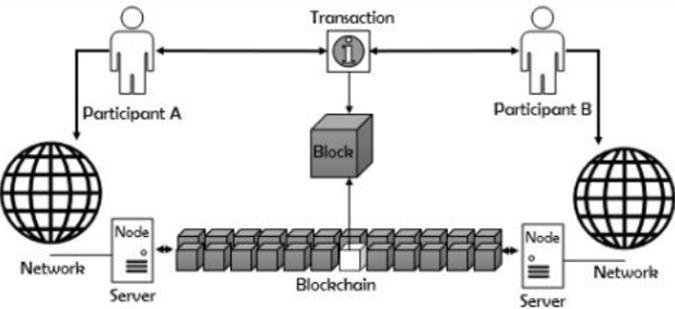
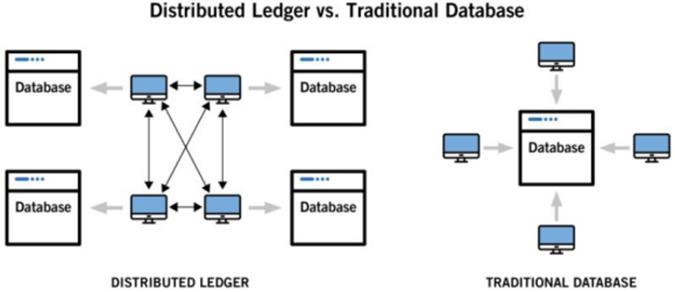
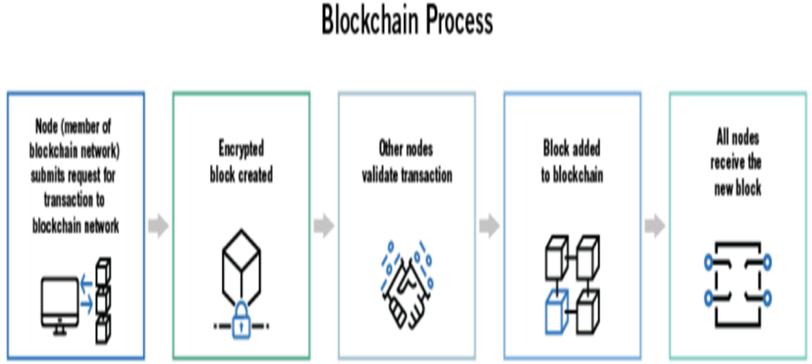
The industrial sector of the 4.0 era relies heavily on the distributed security aspects of blockchain technology, illustratedinFigures1,2,and3.
Prominent figures in academia and business have taken noticeofthetechnology[4].Forasmallfee,participantsin blockchain-based distributed ledger technologies can ensure the safety of financial transactions & transfers [5]. Even though blockchain has been around for a while, it is revolutionary in the realm of supply chain networks, whichholdthekeytoacompany'sfuturesuccess.
International Research Journal of Engineering and Technology (IRJET) e-ISSN: 2395-0056
Volume: 11 Issue: 04 | Apr 2024 www.irjet.net p-ISSN: 2395-0072
1.Blockchains and supply chain relationships-
When used to supply chain management, blockchain technology has the potential to cause revolutionary changes across all kinds of businesses. As a result, the disintermediation of transactions is primarily responsible for the reconfiguration of old relationship patterns. A smart-contract process is shown in Figure 4 to help further comprehend blockchains &relationships within the supply chain. The transaction between producer A & supermarket B is shown in fig 2. A contract is drafted, coded, and "stored" in a blockchain structure once all trade conditions have been met. When the terms of the negotiation are met, a contract is considered activated. Subsequently, the contract dictates the transfer of monies & things. An intermediary is not necessary for this procedure. Sinceall nodesorplayersin the network have acopyoftheledger,itnotonlyencouragescostreduction butalsospeedsupthetransaction&boostsconfidence[67].
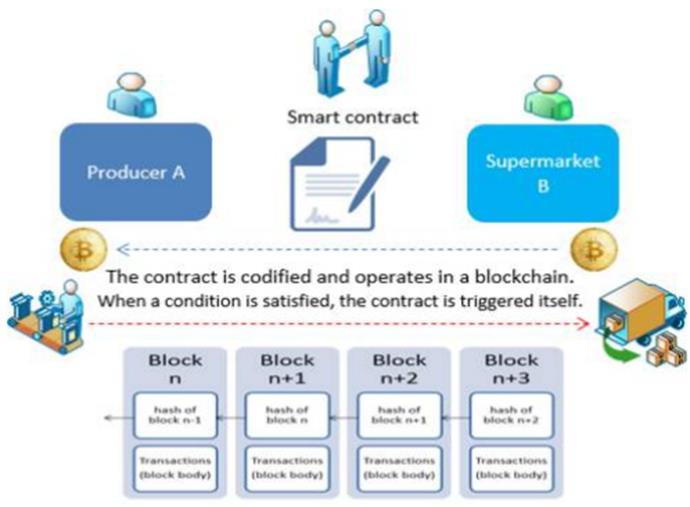
Figure 4: AnSCM-relatedexampleofasmartcontract
2.Methodology
Due to the lack of available integration models for blockchain technology, this study examines and synthesizes existing literature on integration models for other types of information technology. Thus, in order to assess the discovered models, requirements pertaining to blockchain technology are formulated and put into play. VanWee(2016)andDurachetal.(2017)[8-9]providethe basis for the literature research procedure. Information technology integration ideas are sourced from Scopus, Elsevier,IEEE,GoogleScholar,&SpringerLink.Byutilizing the filter functions & pyramid system, additional relevant articlesarefound.Thearticlesaremostlychosenbasedon their peer reviews, but gray literature is including to ensure a diverse range of models that are relevant to practice.
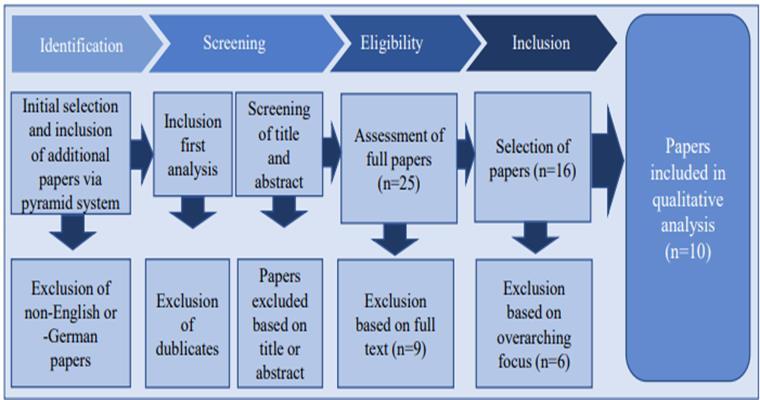
Figure 5: MethodsforSelectedLiterature,Referringto Casinoetal.,2019,p.59
Figure 5 shows the four steps of the model selection process. To begin, neither German nor English will be acceptedasanarticlelanguage.Additionally,titlesthatfail toadequatelyaddresstheincorporationofITtechnologies are disregarded. The third step is to review the other articles to make sure we can propose integration models that work. Fourthly, we do not include papers that are either overly general or overly detailed. The analysis is thenlimitedtotenmodels.
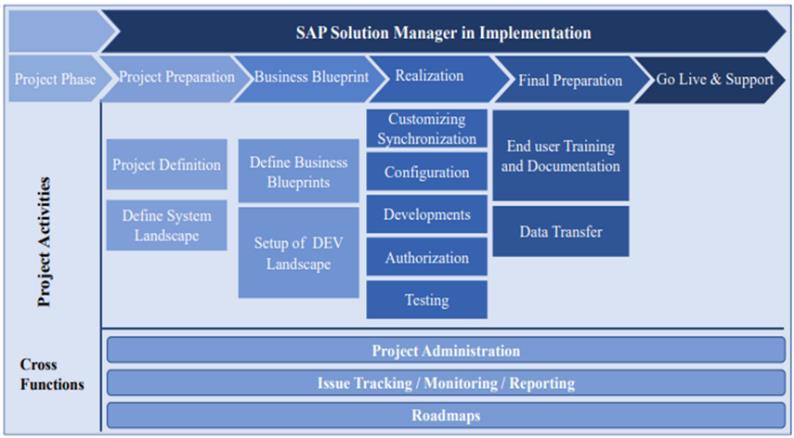
The five primary stages of the Accelerated SAP Model (ASAP) constitute a phase model. Project planning and preparationoccurinthefirststage."BusinessBlueprint"is the second step that lays out the criteria for the business. Phasethreeentailsconfiguringthebasesystem,settingup system administrators, planning interfaces, and converting data. Phase four entails training staff & conducting final system tests. Last but not least, there is constantsupport&systemcheck[10].
International Research Journal of Engineering and Technology (IRJET) e-ISSN: 2395-0056
Volume: 11 Issue: 04 | Apr 2024 www.irjet.net p-ISSN: 2395-0072
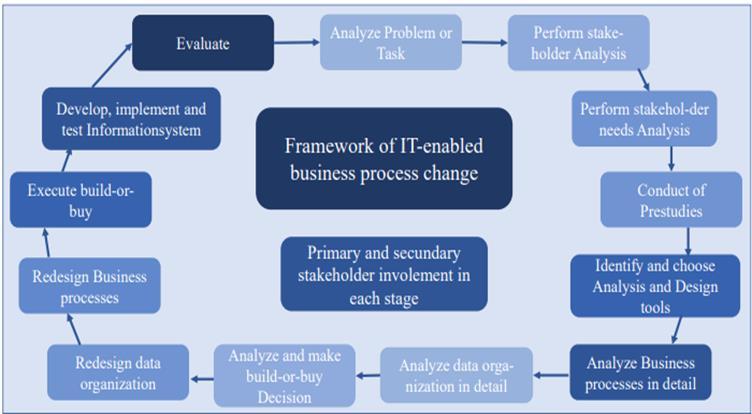
ThespiralmodelisthebasisofScholl'scycle.Theproblem and its associated duties are first specified. After that, we takeintoaccountthestakeholdersand whattheyrequire. After conducting preliminary research, the next step is to reorganizethecompany'sprocedures&dataorganization based on the findings. Following this, the information system is designed, implemented, & evaluated. Evaluation finishes the first run. Management &project team determine if another run is required. [11] The growth of this cycle is heavily dependent on stakeholders. The project team & stakeholders are able to gain a deeper understandingbyconcentratingonthisstakeholdergroup. [11].
process. Constant vigilance guarantees ongoing & longtermprogress.[12]
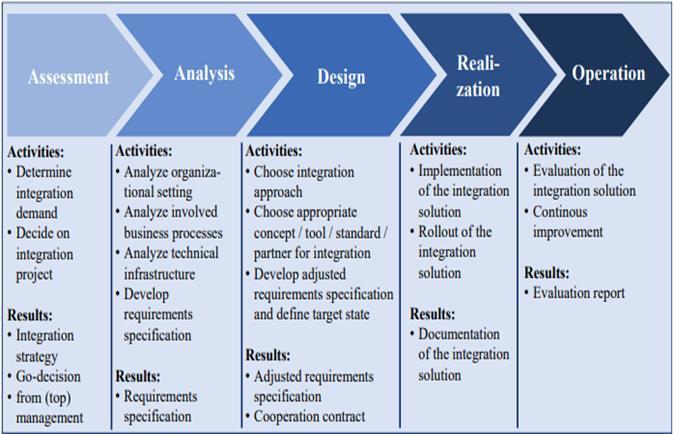
Figure 8: ThemodelofNedbal'sprocess
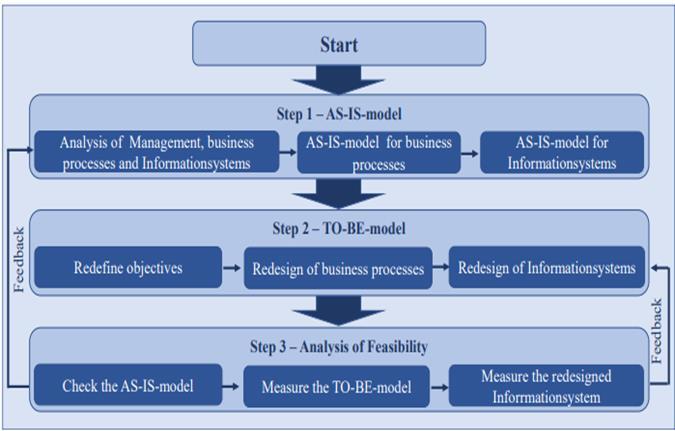
Management of knowledge, information flows, data flows, business processes, functional organization, and value generation are all aspects of Qu et al.'s framework. [13] There are three parts to the model: the ASIS, the TO-BE, &investigation of feasibility. Business procedures, IT infrastructure, ¤t state of management are all examinedintheAS-ISmodel.TheTO-BEparadigmentails revamping company procedures & information systems. Ideally, organizations would have a flat, decentralized structure and synchronized inter-organizational procedures would replace business processes. To make sure the new system is efficient, the feasibility study uses quantitative methodologies to test the information system.[13]
A literature review forms the basis of Nedbal's process model. The model's stages are not sequential but rather overlapandcanberearrangedasneeded.Thefirststepis toassessthecurrentstateofaffairsandestablishthemost important goals. Analyzing information systems, current businessprocesses,ortechnical infrastructuresis done in the second phase to determine the current status. Choosingappropriateideas&resourcesistheemphasisof the third stage. The technical implementation happens in the fourth step. We present the integration strategy and develop the integration solution that is ready to be used. Evaluationoftheintegrationsolutionisthelaststepinthe
4.Needs for Integrating Blockchain Technology- we design needs related to blockchain technology once we selectmodelsfortheintegrationofITtechnologies.Thisis accomplished by utilizing the requirements engineering methodology that was created by Pohl (2015) [14]. The role of necessities engineering involves "identifying the
International Research Journal of Engineering and Technology (IRJET) e-ISSN: 2395-0056
requirements of the stakeholders, documenting them correctly, checking & integrating them and managing the documented needs throughout the entire life cycle of the system". The procedures are shown in the illustration below.
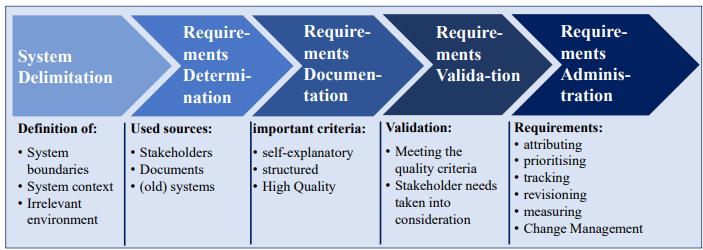
When doing requirements engineering, it is necessary to isolate the system under development from its surrounding environment. Blockchain technology and the demandsitputsonintegrationmodelsarethemaintopics of this research. Business & supply chain processes, together with the factors that affect them and the interfaces between them, are also important. Step two involves figuring out what needs doing, which involves lookingatkeyrequirementsourcesincludingstakeholders & documentation processes for current IT systems. In order to ascertain the needs, more literature study is conducted. Data is subsequently compiled and recorded. [14] Creating a list of all necessary specifications is the third stage. The objective is to simplify and organize the requirements such that they are easier to understand & implement. At this stage, eight criteria are established for an integration model via blockchain technology. In what follows, we shall go further into these points. [14] The quality of the specified requirements is checked in the fourth step, which also involves considering the demands of the stakeholders & fixing content problems. Completeness, verifiability, accuracy, consistency, and necessityarethecategoriesoferrorsthatareinvestigated. Here, we can combine two requirements. Step five involves handling the needs. Here, we sort the needs in order of priority so we may decide how to use them. According to Rupp, while deciding what to prioritize, one looksatfactorssuchimplementationcosts,risk,damagein the event of a failed implementation, volatility, importance, and duration. As it does not advance the integration project's goals, one criterion is omitted in this stage[14].Thesesixconditionsareadirectoutcomeofthe process. considerations must be made for a supply chain integration strategy that centers on blockchain technology:
The concerned parties and their wants, needs, or requirementsforaneffectiveintegration[15];
the current information systems being considered or examined from various angles in order to construct a completesystemarchitecture(Kahloun2016);[16]
The business and its surroundings to prevent further adaptationprocesses[17];
The management of data and the control mechanisms to besupplied[18];
The financial assessment of integration costs or benefits upfronttoguaranteefinancialstability[19];
The integration model's quality or complexity. A highquality,easily-understoodmodelisrequired[20].
Usingtheestablishedcriteria,theutilityanalysisisapplied to assess the chosen integration models for IT technologies. For both qualitative & semi-quantitative multi-criteria decision issues, the utility analysis is a common tool to employ. In addition to being easily adaptable to unique instances, it aids in decreasing complexity. It is also easy to remove or re-insert specific components. [21] The needs for evaluation are defined in thefirststageofutilityanalysis.Everythinghasbeentaken care of. Phase two involves developing a target tree to prioritize evaluation criteria. Internal & external factors are the two primary types of requirements used for this purpose. Phase three involves defining potential requirements' features. To achieve this goal, we use a utility value scale to numerically assign values to the spoken response options. (As an example, if a need is reallytakenintoaccountinthemodel,itwouldbe6,andif it is not, it would be 0.) [21] Phase four involves creating partial utility values to assess each integration model in lightofthespecificneeds.Thefinalstepinvolvesusingthe weighting factors to get the total utility of each model. Plausibility & sensitivity analyses are used to verify the outcome. The last step is to determine the order of importance.Inordertohighlightthebestoptions,thetotal benefits are arranged in a certain order. [21] Figure 7 displays the top four models, namely Scholl's cycle, ASAP, Nedbal'sprocess,&Quetal.framework.
Volume: 11 Issue: 04 | Apr 2024 www.irjet.net p-ISSN: 2395-0072 © 2024, IRJET | Impact Factor value: 8.226 | ISO 9001:2008
International Research Journal of Engineering and Technology (IRJET) e-ISSN: 2395-0056
Volume: 11 Issue: 04 | Apr 2024 www.irjet.net p-ISSN: 2395-0072
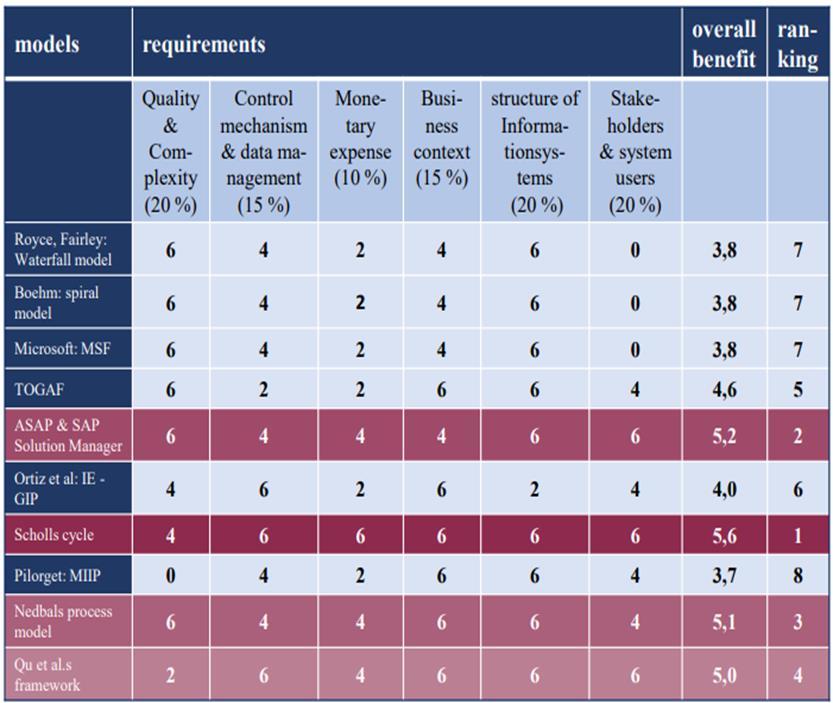
One distinctive feature of Scholl's cycle is the unique role that stakeholders play within it. In order to satisfy the needs & desires of stakeholders, thorough analysis is conducted. The model optimally meets several of the specified requirements because of the procedure's tiny phases. The model's intricacy and lack of use are its weaknesses. There is less complexity in the ASAP model. Thisgivesasolidoverviewoftheproject'sdevelopment& guarantees that the process is straightforward to understand. One potential issue with using blockchain technologyhereisthecontrolmechanisms.
With a distinct separation between actions & results, Nedbal's procedure model streamlines goal-oriented project work and allows stakeholders to be actively informed about development. Nevertheless, data management ought to take center stage in relation to blockchainintegration.Quetal.'sframeworkisdefinedby athoroughexaminationofthestartingpoint&structureof the current information system. Although it follows a three-stage process, this model is more involved and challenging to implement than others. The organization's information systems & their context are thoroughly examined by the TOGAF model. [22] is a but there aren't enough checks and balances to keep it in check. In the stakeholderandsystemuserarea,theIE-GIPmodelexcels. But the current information system architecture &monetary setting are almost completely ignored. The approach focuses heavily on data management and has a straightforward structure. [23] The waterfall model is notable for its straightforward structure and thorough analysis of the current information systems architecture; yet,itis notvery flexible.[24]Thesimplicityisa defining feature of Boehm's spiral model. At each stage, we also
thinkaboutwaystomanage&governthedata.TheMSFis straightforward and easy to understand, and it makes heavyuseofthepreexistingframeworkoftheinformation systems. There is a lack of consideration for stakeholders systemusers,similartothespiralandwaterfallmodels. [25] The 64 declared process dependencies & 17 MIIP processes make Pilorget's model exceedingly complex. [26] This model ranks last because it is difficult to work with,eventhoughitdoeswellinotherareas.
Using the blockchain-specific requirements that were created earlier, four applicable models for technological integration were chosen & subsequently evaluated for their merits and shortcomings. A novel approach to the targeted application of blockchain technology to supply chain operations is presented in this chapter. Finding a happymediumbetweensimple&intricatedepictionwasa topgoalthroughoutthemodel'sdevelopment.
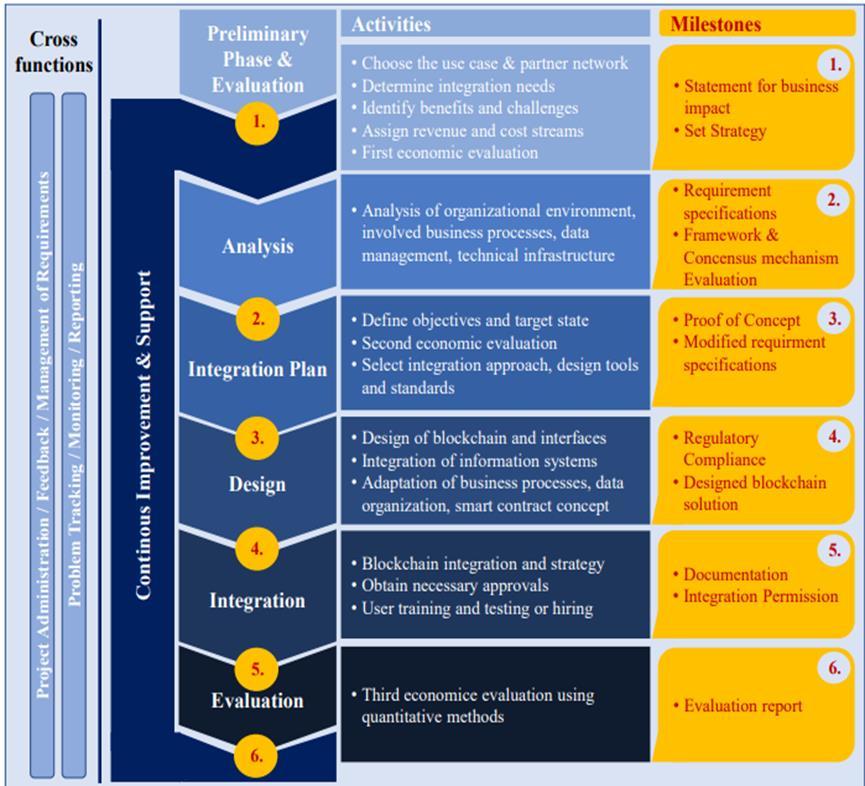
Figure 12: Anapproachtosupplychainintegration usingblockchaintechnology
There are six distinct parts to the new model. The onetime-only integration project begins with the preliminary & evaluation phase. After this initial step, there are six further procedures that can be executed in a cyclical fashion to take user feedback & changes into account and to do regular quality checks. In addition, the cyclical form allows for easy integration &identification of new requirements. This ensures the system will continue to work for the foreseeable future. Meeting milestones is necessarytogotothenextstageofthemodel.Inaddition to breaking the project down into more manageable
Volume: 11 Issue: 04 | Apr 2024 www.irjet.net p-ISSN: 2395-0072
chunks, milestones outline specific requirements for moving on to the next stage. [24] Additionally, the model includes the following cross-functional tasks: reporting; tracking problems; managing requirements; considering feedback; & administering the project. New requirements can be quickly registered & documented by focusing on these aspects so they can be considered in the future developmentcycle.Thisisalsoagoodmethodtotakeinto account the needs that stakeholders have expressed. In addition, the project & problem tracking is done continuously so that mistakes and anomalies are caught and fixed before they can ruin the whole thing. Management is able to track the integration process thanks to the documentation & reporting, which also provide a solid foundation for conversations with blockchain partners. It is possible to report on the project's success to other stakeholders or implement the acquired learnings to future blockchain projects. [10] The blockchain's use case, its domain of application, and possible collaborators are identified during the preparatory & assessment phase. Possible sources of income and expenses, as well as the advantages & disadvantagesofintegratingablockchain,arediscussed.A preliminary assessment of the effect on the company is generated through this process, in conjunction with the techniques used for economic evaluation. The last step is to issue and get agreement from the appropriate parties on an integration strategy including key objectives & requirements.
The next step is the integration model's primary cyclical phase. Parts of the chosen models form the basis of the analysisinthefirststage.Thisincludesnotjusttheproject team's selection &organization's overall climate, but also the data management system, business procedures, and technologicalframework.Attheendofthisanalyticalstep, we compile all of the findings into a requirements specification. At this stage, you should figure out which parts of your company and which procedures would be impactedbyintegratingblockchaintechnology.Becauseof the importance of selecting a consensus method and blockchain framework that prioritize data security & integrity,thisphaseisalsoheavilyfocusedontechnology. Modifying the requirements specifications is a part of the integrationplanningprocess.Duringthisstage,youshould look for an acceptable integration strategy & choose the righttoolstoimplementit.Thenextstepistosettleonan integration strategy, which involves decomposing it into smallerpartsandthenselectingthemostimportantones. All data types, information systems, middleware, and business processes that could be impacted must be considered in the integration strategy. It is at this stage thatsecurityprocedures,ancillarytoolsandstandardsare chosen.Atlonglast,wehavereacheda milestone: wecan add more details about the business processes to the economicevaluationwedidinstepone,andwecanmerge allofourresultsintoaformalneedspecification.
The technological system is created during the design phase. Considerations like as knowledge management, data & information flows, functional organization, and value-added activities are essential in this context. Businesses may need to rethink or rebuild their data organization, business processes, and how they deal with existing information technologies. System configuration, interface planning, and data conversion are subsequent tasks of the project team. The decision of whether data should be stored on-chain or off-chain is also part of the installation of a smart contract notion here. Last but not least, the launch of operations must be timed and regulated compliance must be guaranteed. At the end of thisphase,allpartnerswillhavecontributedtoafinalized, documenteddesignoftheblockchainsystem.
Theintegrationstepinvolvesincorporatingtheblockchain system into the evaluated company procedures. This can only be achieved by thoroughly testing the system both before & throughout the integration process. During this stage,thehumanelementisgivenmoreattentionthanthe organizational one. Every employee, including upper management, who must think about the strategic implicationsofalteredbusinessprocesses,needstraining, not just end users. At this point, we have secured all approvalsneededtolaunchthesystem.Itwill bepossible to test the blockchain solution if the necessary permissionshavebeenobtained.Approvaloftheready-touseblockchainsolutionisthemilestoneofthisphase.The blockchainsystemundergoesadditionaltestingduringthe review process. The third economic review takes into accountthegrowingamountofquantitativedataavailable foruseinmakingassessments,aswellasoperationalcosts & benefits, project risks, strategic importance, and the needs for internal resources. Quantitative methods are suggested by Qu et al. (2018) as a means to do this [13]. Assuring complete consideration and assistance for the business environment is the goal of the evaluation. This entails polling end users, validating technical factors, & evaluatingbusinessprocesses.Attheendofthisstage,you will have an evaluation report that proves the blockchain integration was a success. The next step, after the system evaluation, is support & continual change. The integrated blockchain solution is enhanced over time by the concept of continuous change. Since the cyclical organization permits the quick recording & incorporation of newly developing requirements, this last step in our model signifies the transition to the analysis phase. Therefore, the incorporation of blockchain technology is a part of a never-endingloopofrefinement.
Figure 13 shows the total number of articles included in the sample, broken down by publication year & article category,asastartingpointforthedescriptivestatistics&
International Research Journal of Engineering and Technology (IRJET) e-ISSN: 2395-0056
Volume: 11 Issue: 04 | Apr 2024 www.irjet.net p-ISSN: 2395-0072
literaturesampleanalysis.Withoutlimitingthetimeframe ofthesearch,theinauguralarticlecameoutin2016.
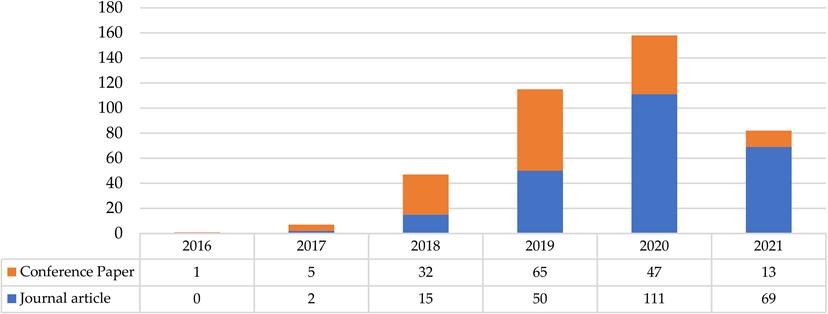
Journal publications are gradually replacing conference proceedings as the preferred method of publication (71% of all articles in 2017 vs. 29% in 2020), which bodes well for the topic's development & future prominence. We searched the literature set for instances of publications with substantially identical material, as occasionally scholars submit papers to conferences and then to journals, but we did not find any. By displaying just journalswithfourormorearticles,Figure14displaysthe journals with the greatest number of published papers. Other publications cover 153 stories as their only linked coverage, while sixteen other outlets cover three articles each.Figure 13analysisalreadyrevealstwointeresting& complementary topics of inquiry. There is one set of journals that focuses on business and engineering (e.g., International Journal of Production Economics, Supply Chain Management, and International Journal of Production Research) or another set that focuses on information systems research (e.g., IEEE Access, Lecture Notes in Computer Science, or International Journal of Information Management) and has nearly the same total numberofpublications.
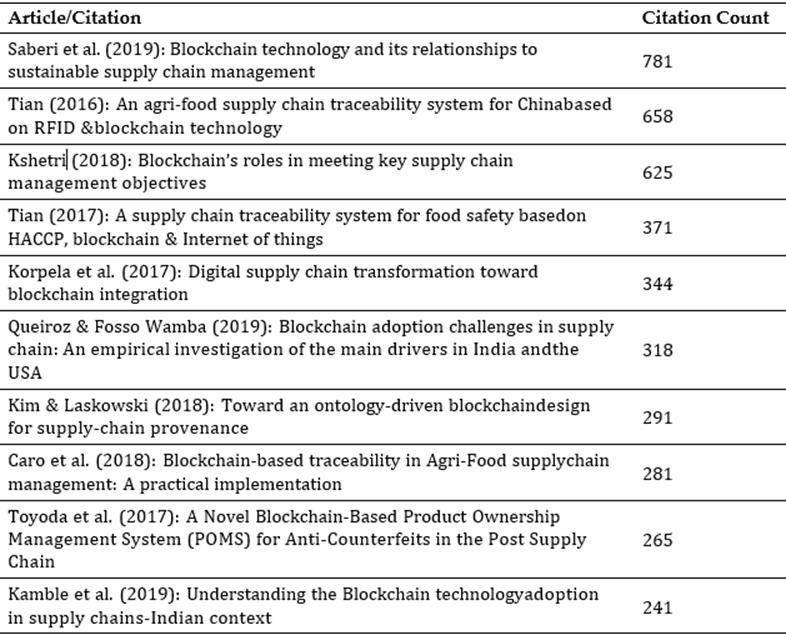
According to our research, more than a thousand writers worked on BCT studies in OM and SCM. Choi, T.-M. has writtenthirteenarticles,Li, Z.,&Huang,G.Q.havewritten seveneach,FossoWamba,S.haswrittensix,and Queiroz, M.M. has written five. Hong Kong Polytechnic University, The University of Hong Kong, Worcester Polytechnic Institute, TBS Business School, Chinese Academy of Sciences, and Hong Kong Polytechnic University are the topcontributinguniversities.SeeTable1forarundownof theliteratureset's10most-citedpapers.Thearticlesfrom various journals that focused on BCT and are part of this article's literature set include: International Journal of Production Economics ("Investigating supply chain structural dynamics: novel technologies that disrupt or disruption risks"), Robotics or Computer Integrated Manufacturing ("Blockchain technology in industry"), Computers or Industrial Engineering ("Blockchain or TokenizationforIndustry&Services").
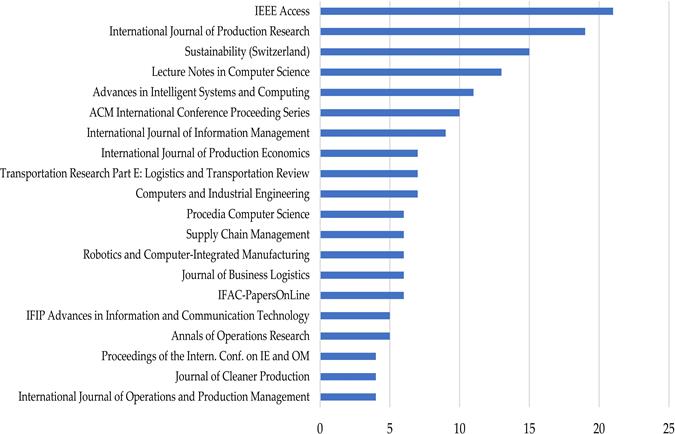
Figure 14: Quantityofarticlespublishedineach journal/conference
Table 1: TopScopus-citedliteraturearticles
Blockchain technology is still in its early stages of development, it is finding its way into many different supply chain activities of organizations. To find the best models for technology integration, researchers conduct extensiveliteraturereviews.Thesecondbodyofliterature reviews the integration approaches in light of the demands imposed by blockchain technology. This led to the development of four foundational frameworks for integratingtechnology.Thedevelopmentofanintegration model made it possible to incorporate blockchain technology into supply chain operations. But restrictions mustbethoughtupon.Firstly,informationtechnology(IT) is the central theme throughout all of the chosen papers for the literature review. Innovation and strategic management are two further examples of scientific methodsthatareignored.
International Research Journal of Engineering and Technology (IRJET) e-ISSN: 2395-0056
References
[1]. Meidute-Kavaliauskiene I, Yıldız B, Çiğdem Ş, Činčikaitė R. An Integrated Impact of Blockchain on Supply Chain Applications. Logistics, 2021; 5(2):33.
[2]. PwC. How can blockchain power industrial manufacturing? www.pwc.com, 2019. [Online]. Available: https://www.pwc.com/us/en/industries/industri alproducts/library/blockchain-industrialmanufacturing.html. [Accessed 22 February 2022].
[3]. Deloitte Insights. Deloitte’s 2020 Global Blockchain Survey: From Promise to Reality. Deloitte, 2020. [Online]. Available: https://www2.deloitte.com/content/dam/insight s/us/articles/6608_202 0-globalblockchainsurvey/DI_CIR%202020%20global%2 0blockchain%20survey.pdf. [Accessed 22 February2022].
[4]. Wang M, Wu Y, Chen B, Evans M. Blockchain and Supply Chain Management: A New Paradigm for Supply Chain Integration and Collaboration. Operations and Supply Chain Management and InternationalJournal,2020;14(1):111-122.
[5]. Swan M. Anticipating the Economic Benefits of Blockchain. Technology Innovation Management Review,2017;7(10):6-13
[6]. Al-Saqaf, W. and Seidler, N. (2017), “Blockchain technology for social impact: opportunities and challenges ahead”, Journal of Cyber Policy, Vol. 2 No.3,pp.338-354.
[7]. Yeoh, P. (2017), “Regulatory issues in blockchain technology”, Journal of Financial Regulation and Compliance,Vol.25No.2,pp.196-208.
[8]. VanWee,B.andBanister,D.,2016.HowtoWritea Literature Review Paper? In: Transport Reviews, 36(2016)2,S.278-288.
[9]. Durach, C., Kembro, J. and Wieland, A., 2017. A New Paradigm for Systematic Literature Reviews in Supply Chain Management. In: Journal of SupplyChainManagement,53(2017)4,S.67-85.
[10]. Gulledge, T. and Simon, G., 2005. The evolutionofSAPimplementationenvironments:a Case study from a complex public sector project. In: Industrial Management & Data Systems, 105 (2005)6,S.714-73
[11]. Scholl, H. J., 2004. Involving Salient Stakeholders. Beyond the technocratic view on change. In: Action Research, 2 (2004) 3, S. 281308.
[12]. Nedbal, D., 2013. A process model to guide the integration of business processes and services within and across organisations. In: International Journal of Services, Economics and Management,5(2013)1,S.154-1
[13]. Qu, Y., Ming, X., Ni, Y. et al., 2018. An integrated framework of enterprise information systems in smart manufacturing system via business process reengineering. In: Proceedings oftheInstitutionofMechanicalEngineers,PartB: Journal of Engineering Manufacture, 233 (2018) 11,S.2210-2224.
[14]. Pohl, K. and Rupp, C., 2015. Basiswissen Requirements Engineering. Aus- und Weiterbildung nach IREB-Standard zum Certified Professional for Requirements Engineering FoundationLevel.4.Aufl.,Heidelberg:dpunk
[15]. Fechtelpeter et al., 2019. Vorstudie zur Entwicklung einer bedarfs- und nutzergerechten Unterstützung von KMU bei der Einführung und AnwendungvonIndustrie4.0.In:Acatech(Hrsg.): Forschungsbeirat Plattform Industrie 4.0. 2019, München.
[16]. Kahloun, F. and Ghannouchi, S. A., 2016. Quality Criteria and Metrics for Business Process Models in Higher Education Domain: Case of a Tracking of Curriculum Offers Process. In: Procedia Computer Science, 100 (2016), S. 10161023.
[17]. Matthes, D., 2011. Enterprise Architecture Frameworks Kompendium. Berlin, Heidelberg:SpringerVerlagBerlinHeidelbe
[18]. Gupta Gourisetti, N., Mylrea, M. and Patangia, H., 2019. Application of Rank-Weight Methods to Blockchain Cybersecurity Vulnerability Assessment Framework. In: 9th AnnualComputingandCommunicationWorkshop and Conference (CCWC), vom 07. bis 09.01.2019 inLasVegas,USA,IEEE:S.206-213
[19]. Bosu,A.,Iqbal,A.,Shariyar,R.,etal.,2019. Understanding the motivations, challenges and needs of Blockchain software developers: a survey. In: Empirical Software Engineering, 24 (2019)4,S.2636-2673
Volume: 11 Issue: 04 | Apr 2024 www.irjet.net p-ISSN: 2395-0072 © 2024, IRJET | Impact Factor value: 8.226 | ISO 9001:2008 Certified Journal | Page1259
International Research Journal of Engineering and Technology (IRJET) e-ISSN: 2395-0056
Volume: 11 Issue: 04 | Apr 2024 www.irjet.net p-ISSN: 2395-0072
[20]. Nedbal, D., 2013. A process model to guide the integration of business processes and services within and across organisations. In: International Journal of Services, Economics and Management,5(2013)1,S.154-177
[21]. Stuhr, H. J., 2013. Untersuchung von Einsatzszenarien einer automatischen Mittelpufferkupplung. Dissertation, Technische UniversitätBerl
[22]. Lankhorst, M., 2017. Enterprise Architecture at Work. Modelling, Communication andAnalysis.4.Aufl.,Berlin,Heidelberg:SpringerVerlagBerlinHeidelberg.
[23]. Ortiz, A., Lario, F. and Ros, L., 1999. Enterprise Integration - Business Processes Integrated Management: a proposal for a methodology to develop Enterprise Integration Programs.In:ComputersinIndustry,40(1999)23,S.155-171.
[24]. Scharch, M., 2016. Vorgehensmodelle in der Software-Entwicklung. In: Professur BWL –Wirtschaftsinformatik, Justus-Liebig-Universität Gießen (Hrsg.):Arbeitspapiere WI,4 (2016), S.167.
[25]. Campbell,D.,Lory,G.andRobin,A.,2003. Microsoft Solutions Framework v3 Overview. In: Microsoft(Hrsg.):MicrosoftSolutionsFramework –WhitePaper,2003,S.1-30
[26]. Pilorget, L., 2010. MIIP: Modell zur Implementierung der IT-Prozesse. Wiesbaden: Vieweg+TeubnerVerlag.