
International Research Journal of Engineering and Technology (IRJET) e-ISSN: 2395-0056
Volume: 11 Issue: 04 | Apr 2024 www.irjet.net p-ISSN: 2395-0072
International Research Journal of Engineering and Technology (IRJET) e-ISSN: 2395-0056
Volume: 11 Issue: 04 | Apr 2024 www.irjet.net p-ISSN: 2395-0072
Anas Usmani1 , Abhinav Pandey2 , Pratham Solanki3 , Rahul Yadav4 , Zainab Mizwan5
Shree L R Tiwari College of Engineering, Mira Road
Abstract - The AutoBilling system represents a significant leap forward in the retail industry, harnessing the power of machine learning and computer vision to redefine the shoppingexperience.Traditionally,barcodescanninghasbeen the go-to method for product identification and billing, but it often proves time-consuming and labor-intensive for both customers and staff. By leveraging cutting-edge technology, AutoBillingeliminatestheneedformanualbarcodescanning, offering a seamless and contactless alternative. Using sophisticated algorithms, the system swiftly detects and identifies products as they are placed on the counter, significantly reducing wait times at checkout. This not only enhances efficiency but also minimizes human interaction, a crucial consideration in today's health-conscious climate.
Key Words: AutoBilling,retailindustry,machinelearning, computer vision, shopping experience, cutting-edge technology,contactless.
AI-Driven Billing System is an AI-powered autonomous checkout system for retail stores that utilizes computer vision and machine learning to offer a faster and more efficient shopping experience. The system is designed to minimizehumaninteractioninthestoretokeepshoppers andemployeessafeduringthepandemic.Thesystemworks byusingcomputervisionalgorithmsandmachinelearning modelstovisuallydetectandidentifyitems placedonthe counter-top.
The system is equipped with cameras that capture high resolutionimagesoftheproducts,andadeeplearningmodel processes these images in real-time to recognize the productsaccurately.Oncetheproductsarerecognized,the system automatically adds them to the virtual cart and generatesanitemizedbill.Inadditiontovisualrecognition, AI-Driven Billing System also utilizes a weight sensor to measuretheweightoftheitemsplacedonthecounter-top. Thesystemusesthisinformationtoensuretheaccuracyof thebillingprocessandpreventanydiscrepancies.Oneofthe mostsignificantadvantagesofAIDrivenBillingSystemisits abilitytogenerateaninstantbill.
This paper reviews the evolution of object detection from traditional methods to deep learning frameworks. It discusses the limitations of traditional approaches and highlightstheadvantagesofdeeplearninginlearninghigh-
level features. The review covers various deep learning architectures, modifications, and specific detection tasks, withexperimentalanalysesandfutureresearchdirections provided[1].ThepaperproposesaHybridPCA-SIFT-FREAK algorithmfor3Dobjectrecognitioninanautomatedbilling system. It balances accuracy and memory usage, offering advantages over traditional methods. Comparative study shows improved performance, with real-time application potential, achieving high recognition rates while reducing computationtimeandmemoryrequirements.[2].
This paper outlines machine learning's dual focus on constructingsystemsthatimprovethroughexperienceand understanding the statistical laws governing learning processes.Ithighlightsmachinelearning'sevolutionfroma laboratoryconcepttoapracticaltechnologywidelyusedin commercialapplications,spanningvariousfieldsfromAIto empirical sciences. [3]. This paper proposes a smart unstaffedretailshopschemeutilizingimageprocessingwith Pythontoenhancetheshoppingexperience.Bytrainingan end-to-end classification model on a dataset of images containingvariousstock keepingunits (SKUs),thesystem achievesaccurateSKUrecognitionandcounting,addressing limitationsoftraditionalunmannedcontainers.[4].
ThispaperintroducesMobileNets,aclassofefficientmodels designedformobileandembeddedvisiontasks.MobileNets utilize depth-wise separable convolutions to construct lightweightdeepneuralnetworks.Theauthorsproposetwo globalhyperparametersforbalancinglatencyandaccuracy, enabling model customization based on application constraints.ExtensiveexperimentsdemonstrateMobileNets' strong performance across various applications including ImageNet classification, object detection, fine-grain classification, face attributes, and geo-localization. [5]. Considering the time constraints that it takes to store memory;OMCLisproposedwithaPhaseshiftmechanism. Just doing this increases the performance by 86.1% but it alsohampersthelifeofthesystembyaminiscule3.4%[6].
International Research Journal of Engineering and Technology (IRJET) e-ISSN: 2395-0056
Volume: 11 Issue: 04 | Apr 2024 www.irjet.net p-ISSN: 2395-0072
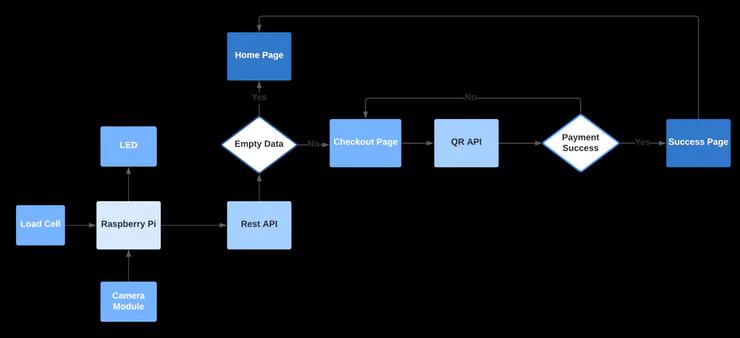
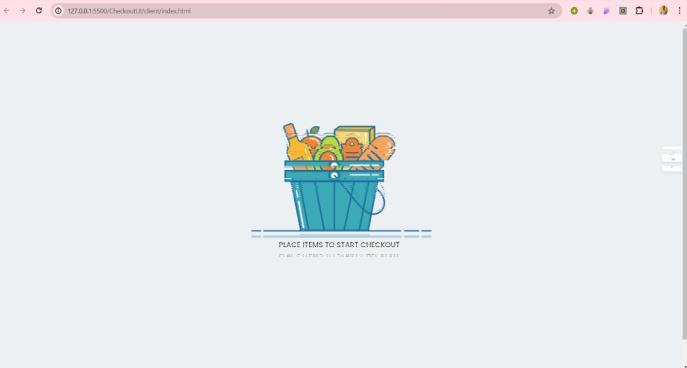
In the Flow chart, we can see the Raspberry Pi as a main controller with has been connected to the Load cell, Led, CameramoduleandAPI.Thecustomerplacestheproducton the load cell and the camera recognizes the product. This data is sent to the UI screen by using RESTAPI. Rest API helpstosenddatatothemainscreenwherecustomerscan seetheirproduct.Inthemainscreenwehavethehomepage andcheckoutpage.Homepageshowstheproductitemsand thedetailstothecustomersandCheckoutpageshowtheQR code,whichhelpsthecustomertopayforthereproductand checkoutthescreen.Ifcustomerwantstoaddmoreproducts theycanjustaddtheitemsandinthescreenwecangetthe dataofthatproducts.AftercompleteprocessofCheckouta success page is show up to screen, which said that successfullypay.
As shown in fig. we can see the raspberry pi is receiving input from load cell and camera module at the same time givingoutputtoLEDtouseitasflashtoidentifytheobjects orthingaccurately.
TheraspberrypithensendsthecollecteddatatorestAPIfor Billingandcheckout.
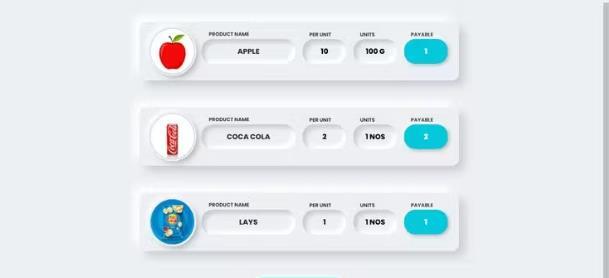
TheRestAPIcheckswhetherthereisanemptydataifyesit showsthehomepageandifdataisnotemptythenitshows the checkout page with identified items, their prices and Totalamounttobepaid.ThenshowsQRAPIforpaymentif paymentiscompleted then itshows the successpage and goesbacktohomepageandifpaymentisnotdoneorfailed itgoesbacktocheckoutpagewithitemdetails.
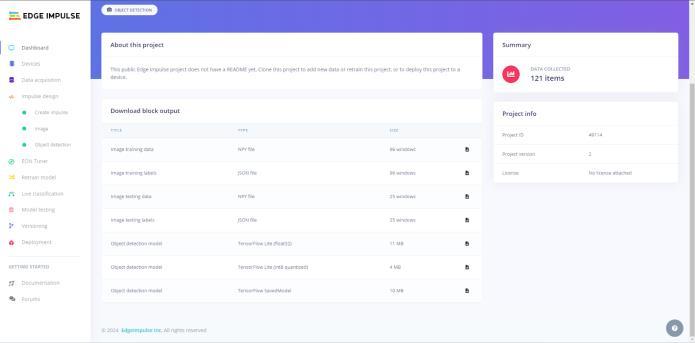
Edgeimpulseisoneoftheleadingdevelopmentplatforms for machine learning on edge devices, free for developers and trusted by enterprises. Here we are using machine learningtobuildasystemthatcanrecognizetheproducts available in the shops. Then we deploy the system on the raspberrypi3b.
Tomakethemachinelearningmodelit'simportanttohavea lotofimagesoftheproducts.Whentrainingthemodel,these product images are used to let the model distinguish betweenthem.Makesureyouhaveawidevarietyofangles andzoomlevelsoftheproductswhichareavailableinthe shops.Forthedataacquisition,youcancapturedatafrom anydeviceordevelopmentboard,oruploadyourexisting datasets.Sohereweareuploadingourexistingdatasets.
LABELLING DATA
Thelabellingqueueshowsyoualltheunlabeleddatainyour dataset.Labelingobjectsisaseasyasdraggingaboxaround theobject,andenteringalabel.Tomakethelifeabiteasier we try to automate this process by running an object trackingalgorithminthebackground.Ifyouhavethesame objectinmultiplephotoswethuscanmovetheboxesforyou andyoujustneedtoconfirmthenewbox.Afterfraggingthe boxes, click Save labels and repeat this until your whole datasetislabeled.
Withthetrainingsetinplace,youcandesignanimpulse.An impulsetakestherawdata,adjuststheimagesize,anduses a preprocessing block to manipulate the image, and then uses a learning block to classify new data. Preprocessing blocks always return the same values for the same input, whilelearningblockslearnfrompastexperiences.
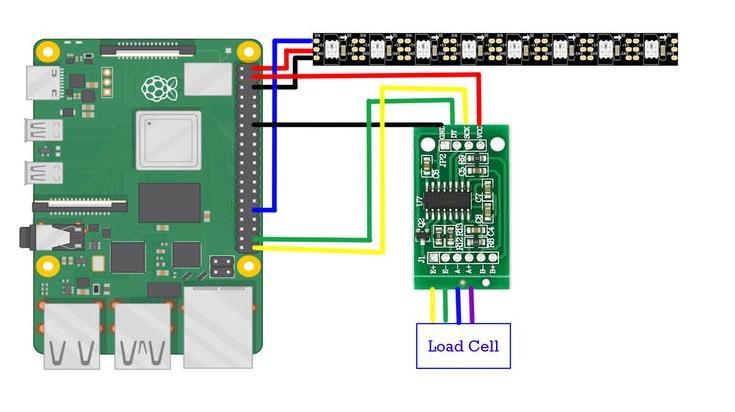
The Raspberry Pi 3b+ is the powerful development of the extremelysuccessfulcreditcard-sizedcomputersystem.The brainofthedeviceisRaspberryPi.Allmajorprocessesare carriedoutbythisdevice.settinguptheedgeimpulsewith raspberrypibyusingcommandstoconnecttheRaspberry Pi.AfterRaspberrypi3b+ wehave toconnectthecamera moduleandLoadcell(hx711amplifier).
International Research Journal of Engineering and Technology (IRJET) e-ISSN: 2395-0056
Volume: 11 Issue: 04 | Apr 2024 www.irjet.net p-ISSN: 2395-0072
FRONT-END USING HTML, JS
The front-end continuously checks for the changes happeningintheback-endAPIanddisplaysthechangesto the user. Once an item is added to the API, the front-end displaysitasanitemaddedtothecart.
BACK-END USING NODE.JS, EXPRESSJS
The backend REST API is developed using Nodejs and Express.ExpressJSisoneofthemostpopularHTTPserver libraries for Nodejs, which ships with very basic functionalities. The backend API keeps the details of the products that are visually identified. for setting out the interface we have used a small tablet which has a touch interfacewithasmallstand.DeployingtheAPIonHeroku.
the UI screen. The UI screen can show the product detail their weight, price and photo. After the customer has the optiontoaddtoacardorjustcompletetheirbuyingandjust payofftheirbuying.Theyhavetheoptionofaddingtoacard andpayingusingaQRcode.TheQRcodeshowstopayfor the product. After completing successful pay they get the msgofpaidbill.
https://www.electronicwings.com/users/CodersCafeTech/projects/2466/autobill
Figure6:Checkoutpage
The proposed work namely “AutoBilling System” started withtheneedofabillingsystemforanconclusion,theuseof artificialintelligence(AI)andcomputervisionintheretail industryhasthepotentialtosignificantlyimprovethebilling process, leading to increased efficiency, accuracy, and customer satisfaction. By leveraging deep learning architecturesforobjectdetectionandimageprocessing,we can automate the identification of products and generate bills in real-time. Additionally, by using machine learning algorithms, we can optimize pricing strategies, reduce inventory costs, and personalize promotions based on customerbehaviorandpreferences.
1. Zhao, Zhong-Qiu& Zheng, Peng & Xu, Shou-Tao & Wu, Xindong(2019),“ObjectDetectionwithDeepLearning: A Review”. In IEEE Transactions on Neural Networks andLearningSystems.(pages1-21)
2. Manisha Agrawal, Nathi Ram Chauhan “3D Object Recognition for Automated billing in a Supermarket usingHybridPCA-SIFTFREAKAlgorithm”Vol.6,Issue7, July2017IJAREEIE.
5. RESULTS AND DISCUSSION
Aftertrainingthemodelinedgeimpulse.Thecustomer willplacetheproductontheacrylictraybelowthattheLoad cell will sense the weight of the product and above that camera,themodulewillrecognizetheproduct.Allthisdata issenttotheRaspberryPi3b+model.IntheRaspberryPi, wehaveabillingcodewiththeAPIwhichsendsthedatato
3. M. I. Jordan and T. M. Mitchell,” Machine learning: Trends,perspectives,andprospects”Science349,255 (2015).
4. Suraj Charade, Prof. SmitaPalnitkar, Sujit Chavan, Anirudha Deshpande, “Automated Super Shop using imageprocessing(Python)”,Vol.13,No.2s,(2020),pp. 382–388,IJFGCN.
International Research Journal of Engineering and Technology (IRJET) e-ISSN: 2395-0056
Volume: 11 Issue: 04 | Apr 2024 www.irjet.net p-ISSN: 2395-0072
5. Howard,A.G.,Zhu,M.,Chen,B.,Kalenichenko,D.,Wang, W., Weyand, T., ... & Adam, H. (2017). MobileNets: Efficient convolutional neural networks for mobile visionapplications.
6. MagedShoman&ArmstrongAboahAlexMorehead&Ye DuanUniversityofMissouriColumbia.“ARegionBased Deep Learning Approach to Automated Retail Checkout.”
7. Prof. Rajkumar Patil, Mr. Alim Bahadur, Mr. AbhinandanKandekar,Mr.ShubhamKoli,Mr.Shridhar Bosge. “Automatic Billing System by using Artificial Intelligence.”
8. Module Zubin Thomas, Nikil Kumar and D. Jyothi Preshiya,IEEE.“AutomaticBillingSystemusingLi-Fi”.
9. AVennila,SBalambigai,GDeepa,MIlakkia,PHarshikaa Devi.”Imagerecognitionbasedbillingsystemforfruit shopusingraspberryPI”February2021.IOPConference SeriesMaterialsScienceandEngineering1055.
10. J Haritha, K Prakash , B Navina, S Saveetha .” A Novel MethodofBillingSystemUsingDeepLearning”March 2021. IOP Conference Series Materials Science and Engineering1084.