
International Research Journal of Engineering and Technology (IRJET) e-ISSN: 2395-0056
Volume: 11 Issue: 04 | Apr 2024 www.irjet.net p-ISSN: 2395-0072
International Research Journal of Engineering and Technology (IRJET) e-ISSN: 2395-0056
Volume: 11 Issue: 04 | Apr 2024 www.irjet.net p-ISSN: 2395-0072
Sri Lakshmi [1], Mery Lavanya [2], Nikhilesh Mohan [3], Naga Pavan [4], Kavya Reddy [5]
1Associate Professor, Dept. Electronics & Communication Engineering, SR Gudlavalleru Engineering College, Gudlavalleru, Andhra Pradesh, India.
2,3,4,5Undergraduate Students in, Dept. Electronics & Communication Engineering, SR Gudlavalleru Engineering College, Gudlavalleru, Andhra Pradesh, India.
Abstract -
Real-time image processing demands high performance that surpasses the capacity of conventional software-based techniques. This paper explores the utilization of FieldProgrammable Gate Arrays (FPGAs) with Verilog HDL to achieve hardware-accelerated image enhancement. Verilog implementationforfundamentalimageprocessingoperations, including thresholding, contrast adjustment, brightness manipulation, and inversion is being implemented. These operations are fulfilled by performing logical operations on the pixels of the subject image. Compared to software-based approaches, this hardware design offers significant speed advantages due to the parallel processing capabilities of FPGAs.Thisapproachisparticularlywell-suitedforreal-time applications where immediate image processing is critical.
Key Words: Image Processing, Verilog HDL, Image Operations
The ever-increasing demand for high-performance digital signalprocessing(DSP)applicationsnecessitatesthesearch forefficientschedulingmethods.Hardwaredesignlanguages (HDLs) have emerged as a powerful tool for hardware designers,offeringauniqueblendofsimulationcapabilities and real-world hardware implementation [1]. This paper explores the benefits of HDLs, particularly their ability to carefully simulate and test digital circuits, also and incorporates important timing considerations how this functionality translates seamlessly into the DSP field, enabling designers to optimize productivity and maintain hardwareavailability.Inaddition,thepaperexplorestheuse ofField-ProgrammableGateArrays(FPGAs)inconjunction with HDLs. Using conventional HDLs and traditionally configured,FPGAsprovideaflexible,cost-effectivehardware platformforimplementingDSPalgorithms[2]. VerilogHDL andVeryHigh-SpeedIntegratedCircuits(VHSIC)HDL,the two primary HDLs used for FPGA design, will be covered along with their key characteristics and how they help to streamlinetheDSPdesignprocess.
Imageenhancementremainsacornerstoneofdigitalimage processing,providingsignificantvalueintwokeyapplication
areas.First,itenhanceshumanunderstandingbyimproving theinterpretationandclarityofvisualinformationinimages. Second,itoptimizesimagedatarepresentationforefficient storage,transmission,ortailoreduseinautomatedmachine perception systems. The basic principle behind any enhancementmethodistogenerateademonstrablysuperior resultcomparedtotheoriginalimage,specificallycateringto therequirementsofaparticularapplication[3].
There are two main image enhancement methods: spatial domainandfrequencydomainmethods.[4,5]Spatialdomain methods directly manipulate the pixels within an image plane, leveraging the image's inherent pixel structure. Frequency domain methods, on the other hand, utilize mathematicaltransformstoinduceenhancementswithinthe image'sfrequencydomainusingtechniquesliketheFourier transform. Some of the earliest and most effective spatial domain techniques involve adjustments to an image's brightness,contrast,orcolor.Theseadjustmentsareoften employedtoaddresslimitationsencounteredduringimage acquisition.Forinstance,imageprocessingcanincreasethe overall brightness of a target object, revealing previously obscured details, or magnify subtle variations in contrast, allowingforclearerinterpretation.Asestablishedinvarious studies, each pixel value is determined solely by its correspondingvalueatthesamepositionwithintheimage, independentofitsneighbors.Afunctionisappliedtomap theoriginalpixelvaluestotheirenhancedcounterparts,with functions operating independently of image coordinates beingclassifiedasglobalorhomogeneousoperations.
This paper addresses the limitations of software-based imageprocessing,MATLABespeciallyitsstruggletoachieve real-timeperformanceduetosequentialprocessing.FieldProgrammable Gate Arrays (FPGAs) are used and programmedwithVerilogHDLtoovercomethisconstraint and obtain the actual evolution time of the image. [6] An alternativeapproachIbeingputforwardasFPGAsprovide greater efficiency by implementing parallel hardware operations, resulting in significant performance gains comparedtotraditionalsoftwareapproachesFurthermore, VerilogHDL optimizationalsoprovidesa potentiallycosteffectivesolution.Thisresearchpavesthewayforsignificant advances in real-time imaging, opening the doors for applications in critical areas such as medical imaging, autonomousvehiclesandsecuritysystems.
International Research Journal of Engineering and Technology (IRJET) e-ISSN: 2395-0056
Volume: 11 Issue: 04 | Apr 2024 www.irjet.net p-ISSN: 2395-0072
Point functions provide a powerful way to manipulate individual pixel values in an image. [7] This operation modifies the characteristics of individual pixels without affecting the size, form, or local relationships between adjacentpixelsoftheimageasawhole. Thenewvalueof eachpixel,denotedbya=I(u,v),isdeterminedbyitsinitial value,a=I(u,v),atthe samelocation.Thisindependence from the surrounding pixels allows for precise control of individualintensities. Eachpixelintheimage(represented by coordinates (u, v)) has a function, f(a), applied to it in order to convert the original values to their improved counterparts. a' ← f (a) I' (u, v) ← f (I (u, v))
Equation 1: Pointoperationsfortheproposedapproach
FromtheaboveEquation1,f()isafunctionthatrepresents thecoordinatesoftheimage,theoperationisclassifiedas globalorunitary. Commonexamplesofsuchhomogeneous point operations include optimized intensity conversion ("curve"), image quantization (or "posterization"), global thresholding, gamma correction, and various color conversions
Imageconversionsoftenintroducequalitydegradation.To counteract this, image enhancement techniques are employed to improve visual quality. These techniques include contrast stretching, brightness control, inversion, thresholding,andmore.Whilebothsoftwareandhardware implementations exist for image enhancement, hardware offerssuperiorperformance.Thisprojectfocusesonutilizing a reconfigurable hardware system, specifically FieldProgrammable Gate Arrays (FPGAs), to achieve real-time image enhancement. This approach leverages Hardware DescriptionLanguages(HDLs)forprogramming,offeringa novel technique within the digital system design domain usingVery-Large-ScaleIntegration(VLSI)[1].
Field-programmablegatearrays(FPGAs)haveemergedasa powerfulplatformforreal-timeimageprocessing.Compared to programmable digital signal processors (DSPs), FPGAs offer much higher performance due to their applicationspecific hardware implementation. This work delves into image enhancement algorithms implemented on FPGAs, focusingontechniquessuchasbrightnesscontrol,contrast propagation,negativetransformation,thresholding,filtering andmore. TheprogramusestheSystemGeneratortoolin MATLAB to develop a modular image algorithm platform. This platform facilitates the development and implementationofimageprocessingalgorithmsonFPGAs. After installing the algorithms on the Spartan-3E developmentboard,subsequentexperimentsareconducted toevaluatetheimpactondisplayimagequalityandresource
consumption. This experiment is expected to show the superiorityofSystemGeneratorforFPGAalgorithmdesign, highlightingitsgreatprocessingpowerinreal-timeimage processingtasks[2].
Bitmapimageformathasbeenutilizedforthisprocess.BMP isasimple,uncompressedformatdevelopedbyMicrosoft. It producesveryhugefilesizessinceitstoreseverypixelinthe image without any compression. BMP can be useful for storing raw image data for further processing or in situationswherepreservingeverydetailiscrucial.
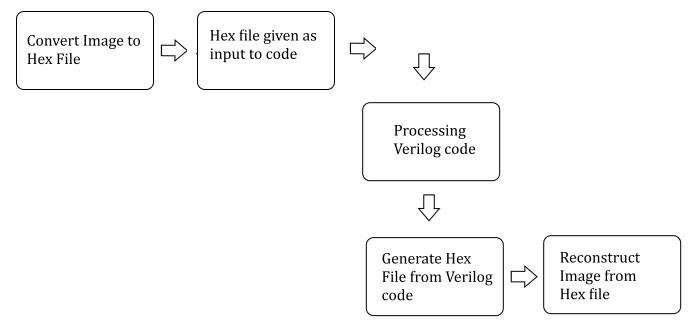
Fig. 1: BlockDiagramofthesuggestedmethodology
AlthoughVerilogprovidesapowerfulfileformat,itsprimary functionalityislimitedtoASCIIcharacters.Thispresentsa challengewhenworkingwithcommonmodelssuchasBMP, which cannot be directly read by Xilinx software. To overcome this limitation, as an alternative approach to imagepreprocessinginMATLAB.Here,asshownintheFig. 1, the BMP file is converted from its original format to a standardhexfilecontainingonlythenecessaryinformation: RGBvectorsforeachpixel.
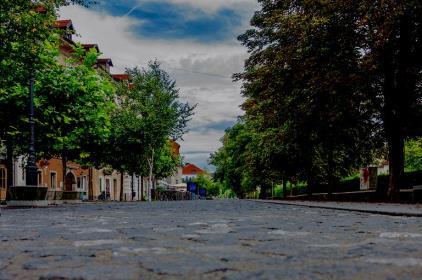
Animage'sred,green,andblue(RGB)elementsarestoredin different memory blocks. These memory blocks can be implementedusingeitherexternalmemorychipsorinternal memorybuiltintotheprocessingunit,dependingonfactors like cost and processing speed. To access the color informationforaspecificpixel,thecodereadsdatafroma designated memory address for each color channel. The value retrieved from this address corresponds to the intensityofthatcolorcomponentforthatparticularpixel. TheoriginalimageisasshownintheFig.2.
International Research Journal of Engineering and Technology (IRJET) e-ISSN: 2395-0056
Volume: 11 Issue: 04 | Apr 2024 www.irjet.net p-ISSN: 2395-0072

Weighted sum of the red, green, and blue components for each color (red, green, blue) of the output YUV image is performed.TheseweightsarespecifictotheYUVconversion anddeterminehoweachcolorcontributestotheluminance (brightness)andchrominance(color)information.Theseare thenaddedwithoffsetvalue128andthendividedby256for scaling. Anadditionaloffset(16or128)isaddedtothefinal valuestoensuretheoutputfallswithintheexpectedrange forYUVcomponents. Fig.3representstheYUVconverted image.
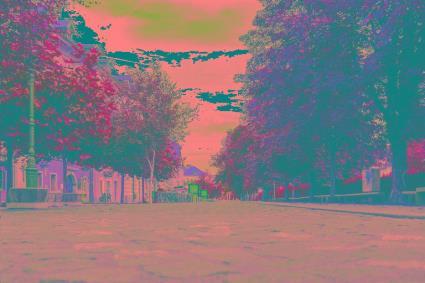
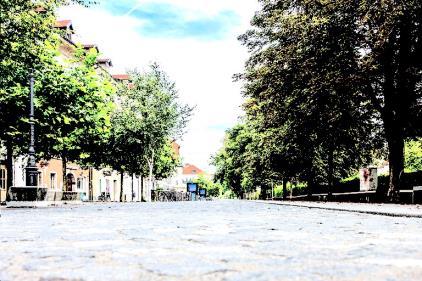
Intensityofthepixeliscalculatedbysummingitsred,green, and blue components. Assuming that the original color valuesrangefrom0(darkest)to255(brightest),thecode theninvertseachcolorbysubtractingtheintensityfromthe maximumvalue(255).Thisbasicallymakesthecolordetail floatonthecolor,makingbrightareasappeardarker,and viceversa.Finally,theconvertedcolorsarestoredbackinto thepixel’sdata,possiblyforuseinupdatingtheimage. This operation can aid in edge detection. Fig. 4 shows the invertedimageforthegiveoriginalinput.

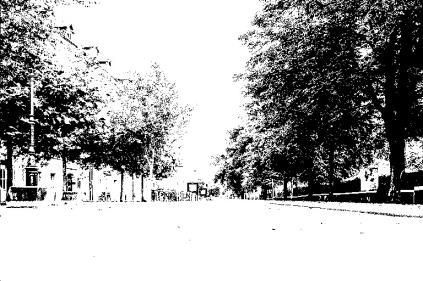
Conditional thresholding operation within an image processing framework is implemented by calculating average pixel intensity and comparing it to a predefined threshold.Iftheaverageintensityexceedsthethreshold,the pixelissettowhite(maximumintensity=255)forallcolor channels(red,green,blue).Conversely,iftheintensityfalls below the threshold, the pixel is set to black (minimum intensity=0). Fig.5representsthresholdconvertedimage.
A pixel's average RGB value is first compared to a predetermined threshold value. Each color channel is brightenedbythecodeiftheaverageintensityishigherthan thethreshold Topreventoverflowandmaintainvalidcolor value, the code checks if the temporary value exceeds the maximumintensity(255).Ifitdoes,thecolorvalueissetto themaximumvalue(255).Otherwise,theadjustedintensity fromthetemporaryvariableisassignedbacktothevalue. Conversely,iftheaverageintensityfallsbelowthethreshold, thecodeperformsadarkeningoperationbysubtractingthe samefixedvalue(Value)fromtheoriginalintensityofeach colorchannelandstoringtheresultintemporaryvariables. This could be used for improving image quality and for better analysis. The image after contrast adjustments is showninFig.6.
International Research Journal of Engineering and Technology (IRJET) e-ISSN: 2395-0056
Volume: 11 Issue: 04 | Apr 2024 www.irjet.net p-ISSN: 2395-0072
5.5
The image's color scheme is now HSV (hue, saturation, value)insteadofRGB(red,green,andblue). TheRGBvalues ofapixelareextractedandfindthemostdominant(highest intensity)andleastdominant(lowestintensity)colors.Hue is calculated based on the primary color and the contrast betweencolorcomponents.
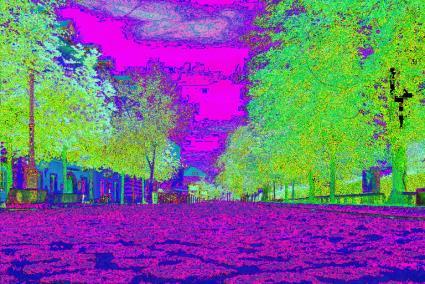
Saturation reflects color purity and is determined by the changeinintensityrelativetomaximumintensity.Finally, valuerepresentsthebrightness,andissettothemaximum intensityasshowninFig.7.
Intensity values of each color (red, green, and blue) are retrievedfromthememory.Thisvalueisthenincremented byaddingadefaultconstant.Theprocessensuresthatthe final value does not exceed a maximum limit (255). If the combinationpushesthetemporaryvaluebeyondthislimit,it is lowered back to the maximum value to remove invalid characterdata.Otherwise,theincrementedvalueisusedas thefinaloutput.Decrementingofthevalueisperformedfor brightnessdegradationwithsimilarstepsasenhancement.

Changingpixelintensitybasedonaspecificbrightnessrange iscalledgraylevelslicing.Theaverageintensityiscalculated bycombiningitsred,green,andbluevalues.Iftheaverage intensity falls within a specific range (based on requirement),thecodesetsallthosecolorvalues(red,green, andblue)totheirmaximumvalue(typically255),effectively makingthepixelwhite.Otherwise,theoriginalcolorvalues areleftastheyare.Thismethodselectivelybrightenspixels within a certain intensity range. For the result which is shown in Fig. 10, the pixels in between 50 and 90 will become255(white)andremainingwillbeasitis.

Obtainedbycalculatingweightedsumofthered,green,and bluecomponents. Theselectionoftheseweightsisintended tomimicthesensitivityofthehumaneyetovarioushues. Laterdividedby256toscalethevaluedowntograyscale intensityrange.Theresultingweightedaveragerepresents the grayscale intensity of the pixel. By setting all color channels to the same value, the pixel loses its color information and becomes a shade of gray. This could be
International Research Journal of Engineering and Technology (IRJET) e-ISSN: 2395-0056
Volume: 11 Issue: 04 | Apr 2024 www.irjet.net p-ISSN: 2395-0072
usedtocreateartisticeffectsasshowninFig.11andmodify imageforspecificpurposes.

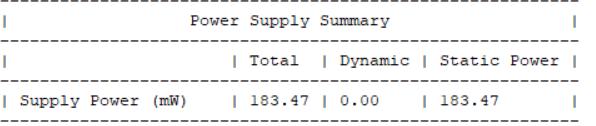
Withtheimagetransferredtomemory,theprocesseddata containingRGBcomponentsisnowsavedasahexfileandis converted into a bmp file to acquire the output image. Power analysis in circuit design, especially with FieldProgrammable Gate Arrays (FPGAs) from Xilinx, is the processofdetermininghowmuchpowerthedigitalcircuit willuseinthedesignstage.Utilizingsoftwarethatexamines the hardware description which is frequently written in Verilog and takes into account variables like operation frequency and logic gate usage, this assessment is accomplished. A truly efficient system sets a balance betweenhighperformanceandlowenergyusage.
So, the power observed after performing the above operationwereobtainedasshownintheFig.12.
12: PowerSupplySummary
Thepercentageofresources,suchaslogiccomponentsand memoryblocks,usedbythedesignontheselecteddeviceis disclosed in the Device Utilization report. This aids in determining whether the gadget can manage the incorporated functions. Timing Summary analyzes the timing properties, examines flip-flop data setup and hold times, clock frequencies, and signal delays in logic routes. The operations are represented in the below order respectively.
1. Brightnessenhancementoperation
2. Brightnessdegradationoperation
3. Invertoperation
4. Thresholdoperation
5. Contrastoperation
6. Graylevelslicingoperation
7. HSVconversionoperation
8. Grayscaleoperation
9. YUVconversionoperation
Table 1: TimingandDeviceUtilizationSummary
Logic Utilization Numbe rof Slice Registe
Numbe rof Slice LUTs
Numbe rused asLogic
Numbe rofLUT Flip Flop pairs used
with an unused Flip Flop
with an unused LUT
Numbe rof fully used LUT-FF pairs
Numbe rof unique control sets
Slice Logic Distribution
International Research Journal of Engineering and Technology (IRJET) e-ISSN: 2395-0056
Volume: 11 Issue: 04 | Apr 2024 www.irjet.net p-ISSN: 2395-0072
Numbe
of Block RAM/FI FO
rof DSP48E 1s
7. Conclusion
Thisprojectsuccessfullyimplementedaversatilegraphics module using Verilog HDL. The design was simulated and synthesized, demonstrating its functionality. Image enhancement techniques like, YUV transformation, image transformation, HSV transformation, and grayscale transformationarestudied andpracticallyperformedand theresultsareobserved.Byvisuallycomparingoriginaland processedimages, the effect ofthese techniquesonimage informationhasbeendemonstrated.
Thisworkestablishesafoundationforfutureinvestigations into the broad application of HDL in signal processing modeling. In a future study, additional hardware process simulationswillbeexaminedtobetterevaluatethebenefits ofthisapproach.Theincreasinglyrobustdigitalcomputer aided design (CAD) tools not only offer new development solutionsbutalsoopenthedoortoentirelynewapplications.
[1] MahavirSingh,GitanjaliPandove,“AnImplementationof ImageEnhancementonRealTimeConfigurablsesystem using HDL" published in International Journal of AdvancedResearchinElectronicsandCommunication engineeringvolume7,issue3,March2018
[2] Kalyani A. Dakre, “A Review on Image Enhancement using Hardware co-simulation for Biomedical Application" presented International Journal of Advanced Research in Computer Engineering & Technology (IJARCET) Volume 3 Issue 12, December 2014.
[3] M.B.Veena,R.Deodurg,V.ShrinidhiandS.Soundarya, "DesignofOptimizedCNN forImageProcessingusing Verilog," 2023 4th IEEE Global Conference for AdvancementinTechnology(GCAT),Bangalore,India, 2023.
[4] Ilham Majid Rabbani, Tito Waluyo Purboyo, “Image EnhancementanalysisusingvariousImageProcessing Techniques”, International Journal of Applied EngineeringResearch,volume13,Number2,2018
[5] R.C.Gonzalez,R.E.Woods–“DigitalImageProcessing”, PrenticeHall,ISBN0-13-094659-8,pp.1-142,2002.
[6] R. G. Poola, L. P.L and S. S. Yellampalli, "Design of Matlab/Simulink-based Edge Detection operators and hardwareimplementationonZYNQFPGA,"2023Second International Conference on Electrical, Electronics, Information and Communication Technologies (ICEEICT),Trichirappalli,India,2023.
[7] Dr.SagarPatel,KrineshPatel,KevalPatelandChaitanya Patel, "Image Enhancement on FPGA using Verilog" published in International Journal of Technical InnovationinModernEngineering&Science(IJTIMES) Impact Factor: 5.22 (SJIF-2017), e-ISSN: 2455-2585 Volume5,Issue03,March-2019
[8] Priyanka S. Chikkali, K. Prabhushetty - “FPGA based ImageEdgeDetectorandSegmentation”,International Journal of Advanced Engineering Sciences and Technologies, vol. no. 9, issue no.2, pp187- 192, ISSN 2230-7818,2011.
[9] Hasnae El Khoukhi, My Abdelouahed Sabri, “Comparative study Between HDLs Simulation and MATLAB for Image Processing” International ConferenceonintelligentSystemsandComputerVision (ISCV),IEEE,April2018
[10] ZhaochaoShi,HuiWu,WeimingMao,JingWang,Chao Zhang, “Implementation of An Automatic Image Enhancement Algorithm for Contrast Stretching on FPGA” Published in 2020 IEEE 9th Joint International
International Research Journal of Engineering and Technology (IRJET) e-ISSN: 2395-0056
Information Technology and Artificial Intelligence Conference,December2020
[11] Muhammed Yildirim, Ahmet Cinar, “Simultaneously RealizationofImageEnhancementTechniquesonRealTime FPGA”, 2019 International Artificial Intelligence and Data Processing Symposium (IDAP), IEEE, September2019
[12] Avra Ghosh, Sangita Roy, Sheli Sinha Chaudhuri, “Hardware Implementation of Image Dehazing MechanismusingVerilogHDLandParallelDCP”,2020 IEEEAppliedSignalProcessingConference(ASPCON), December2020
[13] Chaitra,NithyaPriya,Pragna,Spoorthy,“Enhancement of Image using Verilog & MATLAB”, International Research Journal of Modernization in Engineering TechnologyandScience,e-ISSN:2582-5208,vol.no.05, issueno.07,July2023
Volume: 11 Issue: 04 | Apr 2024 www.irjet.net p-ISSN: 2395-0072 © 2024, IRJET | Impact Factor value: 8.226 | ISO 9001:2008