
Health Insurance Cost Prediction Using Machine Learning
Dr. S. M. Iqbal1, Sayali D. Ghatol2, Prerana V. Jadhav3, Nikita D. Raspalle4
1Professor, Dept. of CSE Engineering, PRMIT&R college, Maharashtra, India
2Student, Dept. of CSE Engineering, PRMIT&R college, Maharashtra, India
3 Student, Dept. of CSE Engineering, PRMIT&R college, Maharashtra, India
4Student, Dept. of CSE Engineering, PRMIT&R college, Maharashtra, India
Abstract - Insurance is a policy that helps to cover up all losses or decrease losses in terms of expenses incurred by various risks. Several factors influence the insurance cost. Various factors contribute to the determination of insurance policy costs. Predicting medical insurance costs remains a challenging issue in the healthcare industry. Predicting medical insurance costs is still a problem in the healthcare industry and thus it requires more investigation and improvement. Machine learning is one of the computational intelligence aspects that may address diverse difficulties in a wide range of applications and systemswhenitcomestotheexploitationofhistoricaldata. Using a series of machine learning algorithms, a computational intelligence approach will be proposed for predicting healthcare insurance costs. The system will predict the approximate cost of health insurance for a person by using the dataset from KAGGLE. A medical insurance cost dataset was acquired from the KAGGLE repository for this purpose, and machine learning algorithms were used to show how different regression models can predict insurance costs and to compare the models’accuracy
Keywords: Machine learning (ML), Artificialintelligence(AI), Health insurance(HI), Premium cost, Regression algorithm(RA).
1. Introduction
Healthcare systems in developing countries depend heavilyonout-of-pocketpayments,themechanismthatis abarriertouniversalhealthcoverage,asitcontributesto inefficiency,inequity,andcost. Healthinsuranceservesas a means for individuals in different countries to manage the financial risk associated with medical expenses. It providescoverageagainstthecostsincurredfrommedical treatment and related services. However, due to the high rates that are charged by insurance companies, many people are without health insurance and so fail to access timelyhealthserviceswhichresultsinhighdeathrates. A health insurance policy is a policy that covers or minimizes the expenses of losses caused by a variety of hazards Accurately predicting individual healthcare expenses using prediction models is crucial for various stakeholders and health departments, as numerous factors influence the cost of insurance or healthcare. Accurate cost estimates can help health insurers and, increasingly, healthcare delivery organizations to plan for
the future and prioritize the allocation of limited care management resources. Furthermore, knowing ahead of time what their probable expenses are for the future can assist patients in choosing insurance plans with appropriate deductibles and premiums [1]. These factors contribute to the formulation and development of insurance policies. However, health insurance rates calculations are often complex as they need to determine theratesthatareacceptabletobothinsurancecompanies and beneficiaries; Insurance companies need to make money by collecting more money than they spend on the medical expenses of their beneficiaries, hence making a profit and continue to stay in businesses. These companiespricethepremiumsbasedontheprobabilityof certain events occurring among a pool of people [2]. However,themedicalexpensesandotherassociatedcosts are difficult to estimate because the costliest conditions are rare and seemingly random. Another complex part of estimating medical expenses is that the occurrence of certain diseases differs from one person to another and fromonesegmentofthepopulationtoanother.Therefore, there is a need for a fair premium calculation model that suits the unique population factors. In this regard, this study used demographic and behavioral data from the patients to develop a predictive model. While previous studies used conventional statistical methods, this study usedmachinelearninglogarithmsto developa predictive model. It compares the performance of several models to find the most suitable. In the insurance sector, machine learning can help enhance the efficiency of policy wording. In healthcare, machine learning algorithms are particularly good at predicting high-cost, high-need patientexpenditures.machinelearningcanbecategorized into three different types. There are three main types of machine learning: supervised, unsupervised, and reinforcement learning. Supervised machine learning involvestaskssuchasclassificationandregression,where the data is labeled, and the algorithm learns from provided input-output pairs Unsupervised machine learning, on the other hand, is used for tasks like clustering,wherethedataisunlabeled,andthealgorithm discovers patterns or structures within the data. Reinforcement learning is a type of learning where the algorithm learns through trial and error by interacting withanenvironmenttoachieveagoal[5].
2. Literature Review
In the literature review, various studies are discussed regarding the prediction of health insurance premiums andhealthcarecostsusingmachinelearningalgorithms.
One study recommends the use of Extreme Gradient Boosting(XGBoost)andRandomForestRegression(RFR) todevelopmoreaccuratemodelsforpredictingpremiums [1]. Another study employs gradient-boosting models for predicting medical insurance costs [2]. A computational intelligence approach using regression-based machine learning algorithms is proposed for predicting healthcare insurancecosts[3].
Additionally, new ensembles are developed for individual insurance cost prediction to improve prediction accuracy [4]. Various regression models are explored to forecast insurancecosts,withcomparisonsmadeamongthem[5]. Furthermore, novel ranking techniques with machine learningalgorithmsareappliedtoclassifycostprediction inhealthinsurance[6].
Another approach involves training and evaluating an artificial intelligence network-based regression model to predict health insurance premiums based on individual features [8]. The aim is to predict future high-cost patients using machine learning algorithms such as Random Forest, Gradient Boosting Machine, Artificial NeuralNetwork,andLogisticRegression[10].
Moreover, the temporal consistency of healthcare expendituresinastateMedicaidprogramisstudiedusing predictivemachinelearningmodels,particularlyforhighcost, high-need patients [12]. Another method utilizing machine learning algorithms is proposed for predicting medical costs, aiming to guide patients to affordable care and assist policymakers in identifying costly providers [13].
Finally,anartificialneuralnetworkmodelisdevelopedfor predicting annual medical claims [14]. Overall, these studies highlight the importance of machine learning techniques in predicting health insurance premiums and healthcarecosts,withvariousalgorithmsandapproaches beingexploredforimprovedaccuracyandefficiency.
3. Methodology
he medical cost personal datasets were sourced from the KAGGLE repository [15]. This dataset comprises eleven attributes,asoutlinedinTable1.Providedbynearly1000 customers voluntarily, the data includes various healthrelated parameters. The premium prices, denoted in INR (₹),representannualcostsforthecustomers
Attribute DataDescription
Age Theageoftheperson
Diabetes Whether The Person Has AbnormalBloodSugarLevels
Blood Pressure Prob Whether The Person Has AbnormalBloodPressureLevels
AnyTransplants AnyMajorOrganTransplants
Any Chronic Disease Whether Customer Suffers From Chronic Ailments Like Asthma, Etc.
Height HeightOfCustomer
Weight WeightOfCustomer
KnownAllergies Whether The Customer Has Any KnownAllergies
History Of Cancer InFamily Whether Any Blood Relative Of The Customer Has Had Any FormOfCancer
Number Of Major Surgeries The Number Of Major Surgeries ThatThePersonHasHad Premiums Premium Prices for A Whole Year
Table1.Overviewofthedataset
3.1 Data Analysis
Fig2.DistributionofAnyTransplants,AnyChronic Diseases,Height International Research Journal of Engineering and Technology (IRJET) e-ISSN:2395-0056 Volume: 11 Issue: 04 | Apr 2024 www.irjet.net p-ISSN:2395-0072

Fig1.DistributionofAge,Diabetes,andBloodpressure problems
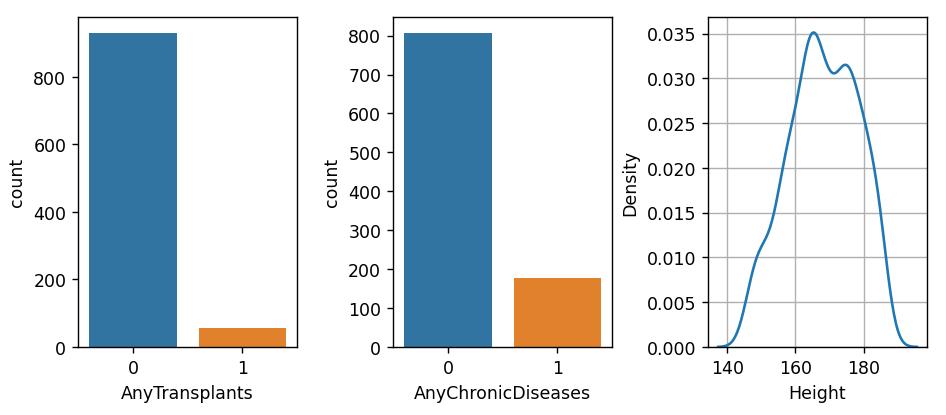

Fig3.DistributionofWeight,KnownAllergies,Historyof CancerinFamily
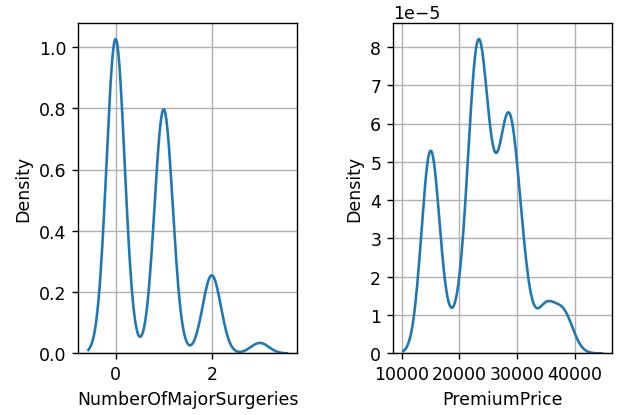
Fig4.DistributionofNumberofMajorSurgeries, PremiumPrice

Fig5.Candlestickpattern
3.2 Block Diagram
Weconductedmachinelearningtechniquesonmedical insurancedata.Thedatasetformedicalinsurancecosts was obtained from KAGGLE’s repository [15], and we conducted data preprocessing. Subsequently, we performed feature engineering to select the relevant features. The dataset was then split into two parts: a training set and a test set. Approximately 70% of the totaldatawasallocatedfortrainingpurposes,withthe remainingportionreservedfortesting.Thetrainingset wasutilizedtodevelopamodelforpredictingmedical insurance costs for the year, while the test set was employed to assess the performance of the regression models.Tofacilitateregressionanalysisonthedataset, categorical values were converted into numerical values.Thestepsofourmethodologyareillustratedin Figure6.
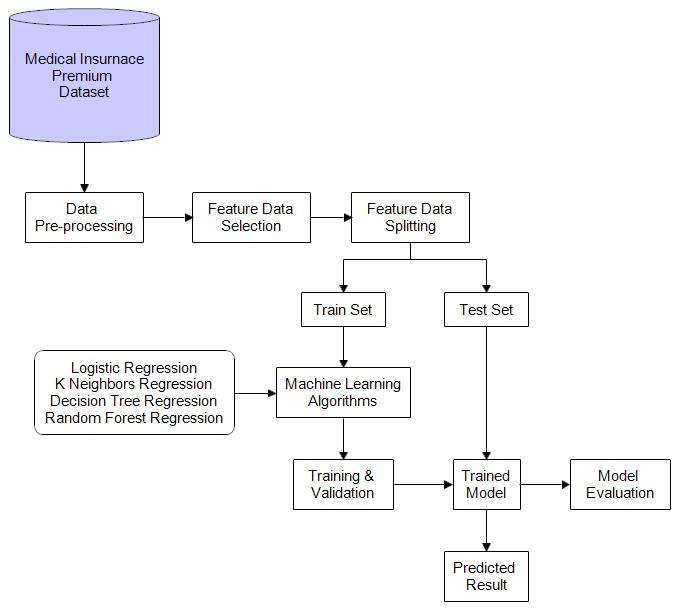
Fig6.Workingmethodology
3.3 Training Model Flowchart
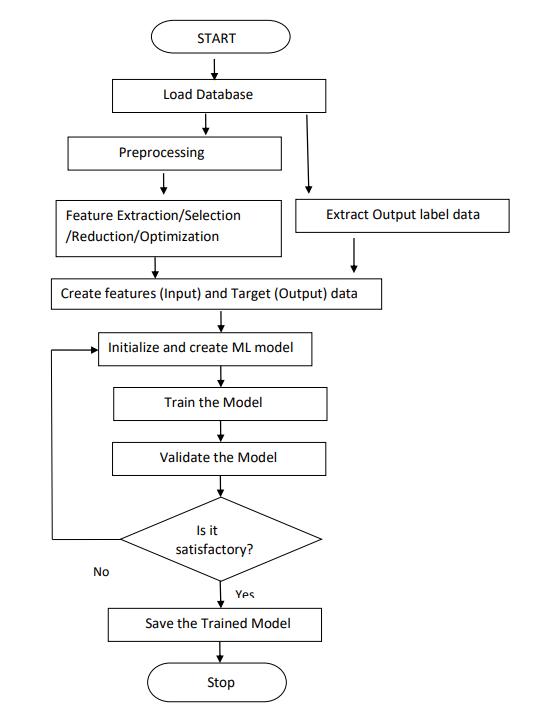
Fig7.TrainingModelFlowchart
3.4 Testing Model Flowchart

Fig8.TestingModelFlowchart
Training algorithm explanation
As we know, in supervised approach has a dataset that includes input data with several input attributes and its equivalentoutputlabeldatafortrainingandtesting.Soin general, data need to be divided in two ways based on validation strategies, which is further explained, as 7030% or 60-20- 20%for train, test or train, validate, and test. So input attributes that depend on the application scenario will be given to the preprocessing operation which includes several operations that again depend on input data, after features are extracted from preprocess data, if needed have feature reduction/selection depending on the methodology. Then extracted feature will be input START Load the Test data Load the Trained ModeI Predict and Classify based on test feature vector Validate the Model Stop Preprocessing and Feature Extraction features for machine learning implementation and its equivalent label will be taken directly from the original dataset as output/ target vector. Then need to initialize the parameters regarding selected /shortlisted ML algorithms and build the architecture for them. After that,wehavetotrainthearchitecturethatwebuiltusinga specific toolbox or toolkit depending on the implementation language and its platform. After successful learning or training, one needs to cross-check the trained model whether it is effectively trained or not. So for verification, there is a procedure called Validation. In validation there are two ways to do that, first directly usetraindataforvalidation,forthattraindataneedtobe simulated on the trained model to get 100% test results then only we can say, the model is validated. The second optionistousea validation datasetfor itto get 90-100% results to achieve maximum efficiency. If validation is not satisfactory as per the desired test value result as
mentionedforboth options,thenneedtodoseveral trialand-errorthingstoachieveitsdesiredresult.
1. Retrain the model by changing the network parameter valueandagaincheckforimprovementinvalidation.
2. If the first option doesn’t work with the possible parameters value option, make a change in the features step, extractmore distinctfeatures from attributedata or selectsuchfeatures that are moreuniqueaccording toits mentioned output category, or reduce the features length to avoid feature data complexity. After again train as per procedurewithstep1togetdesiredvalidation.
3. Again if the second step doesn’t work, then need to work on pre-processing operations like noise removal or many others and again check for validation with steps 1 and2.
4. Again if the third step also didn’t work by considering particular ML algorithms with step1,2,3. Then change ML algorithmstodothesamewithrepeattrialanderrorfrom step1tostep4.
Soaftergettingsuccessfulvalidation,weneedtostorethe trainedmodelforfurthertestingresults.
Testing algorithm explanation
In testing, whatever final preprocessing and feature extraction method is selected while training, needs to applythesameforthetestingprocedure.Thenthetrained modelwhichislocallystoredorfromcloudstorage,needs to apply it on the test input feature vector to get the predicted or classified result which can be verified from thetestdatabase.Further, theefficiencyofthetestmodel isevaluatedusingaconfusionmatrixandROCcurvefrom which we get statistical parameter values that can show theoverallprojectperformance.
Now, while doing all this we assumed that dataset splitting is done as discussed above (70-30% or 60-2020%fortrain,testortrain,validateandtest respectively) manually in one random manner. But there are no possible ways to split a dataset as dataset size increases numberof splitting possibilitiesincreases.It isyourgood luck if, in one attempt of splitting, you get maximum accuracy of the model by doing the above procedure of training and testing, then it is fine. If still, it is still not, then there is a method to improve the accuracy of an overallmodelcalled
K-foldcrossvalidationmethod
InK-fold,‘k’standsforthe numberofgroupsthata given data sample is to be split into. So we have to check the valueof‘K’toachievethemaximumvalueofyourdesired projectmodel International Research Journal of Engineering and Technology (IRJET) e-ISSN:2395-0056 Volume: 11 Issue: 04 | Apr 2024 www.irjet.net p-ISSN:2395-0072
3.5 Feature Engineering
Feature engineering in machine learning involves extracting meaningful features from raw data, often leveraging domain knowledge to enhance the performance of ML algorithms. Since the effectiveness of machine learning models heavily depends on the quality of input data during training, feature engineering plays a criticalroleasapreprocessingstep.Itentailsselectingthe most pertinent attributes from the raw training data, tailoredtoboththepredictivetaskandthetypeofmodel beingutilized.
Inthemedicalinsurancecostdataset,theattributeslisted are deemed crucial factors influencing the premium amount. Feature scaling is a common standardization technique used to normalize features and mitigate the impact of large-scale differences on the models. Unlike feature transformation, which converts data from one type to another, feature scaling adjusts data in terms of range and distribution while preserving its original data type
Min-max scaling is a specific method within feature scalingthatrescalesallvaluesofaparticularfeaturetofit within a predefined minimum and maximum range, typically 0 and 1. Each value of a data point for the selected feature is recalculated relative to the specified minimumandmaximumfeaturevalues,resultinginanew feature value for that data point. This process helps maintain consistency and comparability among different features.

3.6 Dataset Splitting
In machine learning modeling, dataset splitting is an essential step that aids in various stages from training to evaluating the model. It serves as a crucial sub-step, enablingarealisticassessmentofmodelperformanceand facilitating generalization to unseen data. Ensuring an adequate quantity of training data relative to testing and validationsetsisimperativeforeffectivelearningwithout biastowardsanyspecificclassorcategory.
Followingtheidentificationofthebest-performingmodel, the test set is employed to assess its performance quantitatively. The dataset is divided into two distinct subsets: a training set and a testing set. In the experimentationprocess,acommonsplittingratioof70% fortrainingdataand30%fortestingdataisoftenutilized tostrikeabalancebetweentrainingsufficiencyandmodel evaluationaccuracy.
3.7 Machine Learning Algorithms, Training and Validation
A machine learning model is a computational tool that utilizes algorithms to make predictions based on input data. Unlike traditional methods that rely on predefined equations, these models learn directly from the provided dataset. By analyzing a known set of input data and corresponding responses (outputs), the model is trained togeneratepredictionsfornew,unseendata
Supervised learning, the simplest form of machine learning, operates on the principle of input-output pairs. In this approach, the input data, also known as training data,is paired with knownlabelsor resultsas outputs. A function isthen created using the training dataset, which is subsequently applied to unseen data to make predictions. Supervised learning is task-oriented and evaluated using labeled datasets. It can be further categorized into two main types: classification and regression-basedapproaches
Classification models are utilized to conclude from categorical observations. These algorithms predict outcomesbycategorizingdataintodifferentgroupsbased on observed features. In contrast, regression models are employedwhentheoutputvariableiscontinuous
In the current experimentation, the regression models used are as follows: [mention specific models used]. Thesemodelsareappliedtopredictcontinuousvariables basedontheprovideddataset.
3.7.1 Logistic Regression (LR)
Logistic regression(LR)isasupervisedmachinelearning algorithm specifically crafted for binary classification tasks. It predicts the probability of an outcome, event, or observation. The resulting outcome is typically binary, represented as yes/no, 0/1, or true/false. By analyzing the relationship between one or more independent variables,logisticregressioncategorizesdataintodiscrete classes. This method is extensively used in predictive modeling to estimate the mathematical probability of whether an instance belongs to a particular category or not.
3.7.2 K Neighbors Regression (KNR)
K-nearestneighbors(KNN)regressionisanon-parametric method that approximates the relationship between independent variables and a continuous outcome. It's a supervised machine learning algorithm that's used for classification and regression problems. KNN regression storesallavailablecasesandpredictsthenumericaltarget based on a similarity measure. It does this by averaging observations in the same neighborhood. The size of the neighborhood can be set by the analyst or chosen using cross-validation. International Research Journal of Engineering and Technology (IRJET) e-ISSN:2395-0056 Volume: 11 Issue: 04 | Apr 2024 www.irjet.net
3.7.3
Decision Tree Regression (DTR)
The decisiontreeisa methodused to build regression or classificationmodels,presentedinatree-likestructure.It partitions a dataset into smaller subsets while constructinga correspondingdecision tree. The resulting treeconsistsofdecisionnodesandleafnodes.
In decision tree regression, the features of an object are examined,andamodelisconstructedintheformofatree to predict future data, generating continuous output. Continuous output implies that the result is not discrete; rather, it represents a range of values, providing meaningfulpredictionsforcontinuousvariables.
3.7.4 Random Forest Regression (RFR)
Random forest regression is a supervised learning algorithm employing an ensemble learning approach for regression tasks. It is a versatile technique used for predicting numerical values. By aggregating the predictions of multiple decision trees, random forest regression aims to mitigate overfitting and enhance accuracy.
In random forest regression, several decision trees serve asbaselearningmodels.Thealgorithminvolvesrandomly selecting rows and features from the dataset to create sample datasets for each model. During training, random forestconstructsnumerousdecisiontreesandaggregates their predictions to produce the final output. For regression tasks, the output is typically the mean prediction of the individual trees, aiming to provide a morerobustprediction.
Model Evaluation
In model evaluation, we assess the performance of the model using various metrics such as R Square, Mean Squared Error (MSE), and Root Mean Squared Error (RMSE).
Thefunctioncalculatesfourperformancemetrics:
1. RMSE (Root Mean Squared Error): This metric represents the square root of MSE. RMSE quantifies how farthemodel'spredictionsdeviatefromtheactualvalues. LowerRMSEvaluesindicatebettermodelperformance.
2.MSE(Mean Squared Error):MSE measurestheaverage squared difference between the actual values and the predicted values. A lower MSE suggests that the model's predictions are closer to the actual values, indicating betterperformance.
3. R2 (R-squared or Determination Coefficient): R2 evaluateshowwell theindependentvariables explainthe variabilityofthedependent variable.Itrangesbetween0 and 1, with higher values indicating a better fit of the
Fig11.KNRNet_Trained_model International Research Journal of Engineering and Technology (IRJET) e-ISSN:2395-0056 Volume: 11 Issue: 04 | Apr 2024 www.irjet.net p-ISSN:2395-0072
model to the data. A value closer to 1 signifies that the modelfitsthedatawell
These metrics collectively provide insights into the accuracy and effectiveness of the model in predicting the targetvariable.
4. Experimental Results and Discussion
The dataset contains health-related parameters of the customers. By using the health parameters attributes, an artificial intelligence model is built by performing the training and validation on the train feature dataset. A trained model is created that predicts the yearly medical cover cost of a customer based on their health parameters.
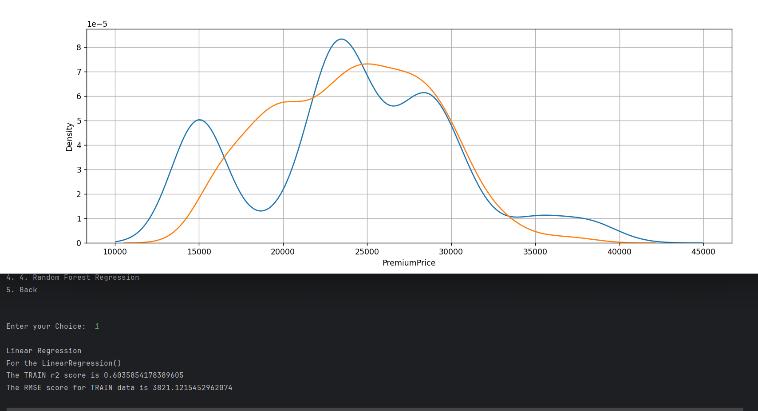
Fig9.LRNet_Trained_model

Fig10 LRNet_Testing_model


Fig12 KNRNet_Testing_model

Fig13.TRNet_Trained_model

Fig14.TRNet_Testing_model
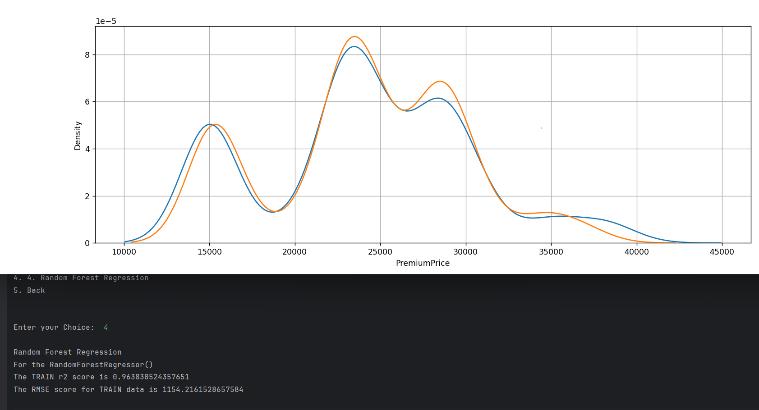
Fig15.RFRNet_Trained_model

Fig16.RFRNet_Testing_model
Here the training and testing of regression models are doneandeachmodelRMSEandR2scoreiscalculatedfor LR,KNR,DTR,andRFR.Also,theelapsedtimefortraining andtestingiscalculatedforeachregressionmodel.
Table2.Modelperformance
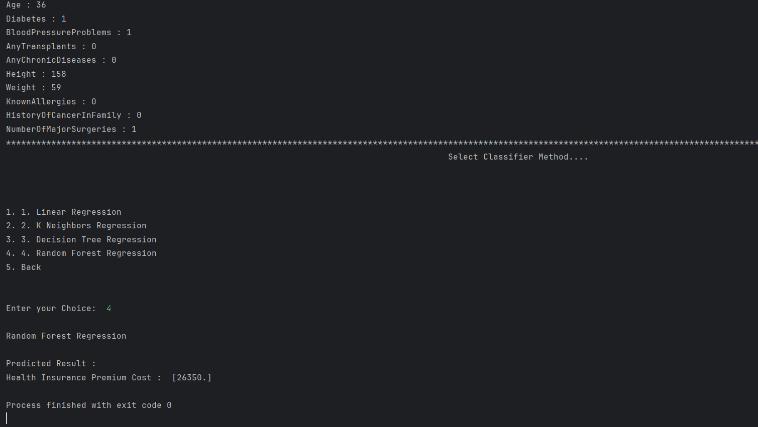
Fig17.Healthinsurancecostpredictionsystemdemo
In Figure 11: we can see how the medical insurance cost predictionsystempredictsthecostforLR,KNR,DTR, and RFR.
5. Conclusion
In the realm of healthcare, machine learning presents itself as a powerful tool capable of performing tasks at a faster pace compared to human counterparts. The integration of machine learning into health insurance processesstandstorevolutionizetheindustry,resultingin significant time and cost savings for both policyholders and insurers alike. By automating repetitive tasks, artificialintelligenceenablesinsuranceexpertstoallocate their time toward enhancing the overall experience for
International Research Journal of Engineering and Technology (IRJET) e-ISSN:2395-0056 Volume: 11 Issue: 04 | Apr 2024 www.irjet.net p-ISSN:2395-0072
policyholders. This shift not only streamlines administrative processes but also improves the efficiency of patient care, benefiting stakeholders across the healthcare ecosystem, including patients, hospitals, physicians,andinsuranceproviders.
This paper has explored various machine learning regressionmodelstailoredforpredictinghealthinsurance charges based on specific attributes. By leveraging these models,insuranceproviderscanexpeditetheformulation of tailored plans for individuals, thereby saving considerable time and effort in policymaking. Overall, the integration of machine learning holds the potential to revolutionize the health insurance landscape, making processes faster, more affordable, and ultimately more responsive to the needs of both policyholders and insurers.
References
1. Angela D. Kafuria, “Predictive Model for Computing Health Insurance Premium Rates Using Machine Learning Algorithms”, International Journal of Computer(IJC),2022,44(1),21–38.
2. Cenita, Jonelle Angelo & Asuncion, Paul Richie & Victoriano, Jayson. “Performance Evaluation of RegressionModelsinPredictingtheCostofMedical Insurance”. International Journal of Computing Sciences Research, 2023, (ISSN print: 2546-0552; ISSN online: 2546-115X) Vol. 7, pp. 2052-2065 doi: 10.25147/ijcsr.2017.001.1.146.
3. Ch.AnwarulHassan,JawaidIqbal,SaddamHussain, Hussain AlSalman, Mogeeb A. A. Mosleh, Syed Sajid Ullah, "A Computational Intelligence Approach for Predicting Medical Insurance Cost", Mathematical Problems in Engineering, vol. 2021, Article ID 1162553, 13 pages, 2021. https://doi.org/10.1155/2021/1162553
4. Shakhovska, Natalya & Melnykova, Nataliia & Chopiyak, Valentyna & machine learning, Michal., “An Ensemble Methods for Medical Insurance Costs Prediction Task”, Computers, Materials and Continua., 2022, 70. 3969-3984. 10.32604/cmc.2022.019882.
5. Hanafy,Mohamed.“PredictHealthInsuranceCostby using MACHINE LEARNING and DNN Regression Models”, International Journal of Innovative Technology and Exploring Engineering, 2021, Volume-10.137.10.35940/ijitee.C8364.0110321.
6. G.SatyaMounikaKalyani,RamaParvathyL,“ANovel Ranking Approach to Improved Health Insurance Cost Prediction by Comparing Linear Regression to Random Forest”, Journal of Survey in Fisheries Sciences,2023,10(1S)2030-2039.
7. Mukund Kulkarni, Dhammadeep D. Meshram, Bhagyesh Patil, Rahul More, Mridul Sharma, Pravin Patange, “Medical Insurance Cos3t Prediction using MACHINE LEARNING”, International Journal for Research in Applied Science & Engineering Technology (IJRASET), 2022, ISSN: 2321-9653; Volume10IssueXIIDec2022.
8. Kaushik K, Bhardwaj A, Dwivedi AD, Singh R. “MACHINE LEARNING-Based Regression Framework to Predict Health Insurance Premiums”, Int J Environ Res Public Health. 2022 Jun 28;19(13):7898. doi 10.3390/ijerph19137898. PMID:35805557;PMCID:PMC9265373
9. Prakash, V. S., Bushra, S. N., Subramanian, N., Indumathy, D., Mary, S. A. L., & Thiagarajan, R. “Random Forest regression with hyperparameter tuning for medical insurance premium prediction”, International Journal of Health Sciences, 2022, 6(S6), Page 9 7093–7101. https://doi.org/10.53730/ijhs.v6nS6.11762
10. Langenberger B, Schulte T, Groene O, “The applicationofMACHINELEARNINGtopredict highcost patients: A performance-comparison of differentmodelsusinghealthcareclaimsdata”.PLoS ONE 18(1): e0279540. 2023 https://doi.org/10.1371/journal.pone.0279540
11. K. Dutta, S. Chandra, M. K. Gourisaria and H. GM, "A Data Mining based Target Regression-Oriented Approach to Modelling of Health Insurance Claims," 2021 5th International Conference on Computing Methodologies andCommunication (ICCMC),Erode, India, 2021, pp. 1168-1175, doi: 10.1109/ICCMC51019.2021.9418038.
12. Yang, C., Delcher, C., Shenkman, E. et al., “MACHINE LEARNINGapproaches forpredictinghigh-costhigh need patient expenditures in health care”. BioMed Eng OnLine 17 (Suppl 1), 131 (2018). https://doi.org/10.1186/s12938-018-0568-3
13. Sahu, Ajay and Sharma, Gopal and Kaushik, Janvi and Agarwal, Kajal and Singh, Devendra, “Health Insurance Cost Prediction by Using MACHINE LEARNING”,(February22,2023).Proceedingsofthe International Conference on Innovative Computing &Communication(ICICC)2022.
14. Goundar, S.; Prakash, S.; Sadal, P.; Bhardwaj, A. “Health Insurance Claim Prediction Using Artificial NeuralNetworks”.Int.J.Syst.Dyn.Appl.2020,9,40–57.
15. Dataset link: https://www.kaggle.com/datasets/tejashvi14/medi cal-insurance-premium-prediction/data