
Volume: 11 Issue: 04 | Apr 2024 www.irjet.net p-ISSN: 2395-0072
Volume: 11 Issue: 04 | Apr 2024 www.irjet.net p-ISSN: 2395-0072
Prof. Sandip Buradkar1 , Shital Wakodikar2 , Ritika Gokhale3 , Sakshi Ambhore4
1 Assistant Professor , Department Of ETC, Guru Nanak Institute of Engineering and Technology, Nagpur, India 1234Department of ETC, Guru Nanak Institute of Engineering and Technology, Nagpur, India.
Abstract - In rural villages, access to proper sanitation facilitiesisoftenlimited,leadingtovarioushealthhazards. Toaddressthisissue,asmartsanitarysolutionisproposed, leveraging modern technology to improve hygiene and health outcomes. This solution incorporates user-friendly toilets equipped with sensors for monitoring usage and cleanliness. Additionally, waste management systems are implemented to ensure proper disposal and recycling of wastematerials.Byintegratingthesesmarttechnologies,the aimistopromotebettersanitationpractices,reducedisease transmission,andenhancetheoverallwell-beingofvillage communities.Thetoiletsaredesignedtobeeasytouseand maintain, catering to the needs and preferences of the villagers.Theyarebuiltwithsturdymaterialstowithstand the rural environment and are designed to be easily accessible to all members of the community, including children,elderly,andpeoplewithdisabilities.
In1986,Indiastarteditsfirstbigplantoimprovecleanliness inruralareas,calledtheCentralRuralSanitationProgram (CRSP).Thegoalwastomakelifebetterforpeoplelivingin villages.Thisprogramfocusedonbuildingtoiletsandwas mostlyfundedbythegovernment.Itaimedtoprovidetoilets toasmanyruralhouseholdsaspossible.Thesmartsanitary solutionisdesignedtobescalableandadaptabletovarying community needs and resources. It takes into account factors such as population density, water availability, and infrastructure constraints to tailor the solution to each village's unique circumstances. Furthermore, efforts are madetoensurethesustainabilityoftheprojectthroughlocal capacity building, partnership with local authorities, and leveragingavailableresourceseffectively.
Alongside the infrastructure, community engagement and education programs are essential components of the solution. Villagers are educated about the importance of sanitation and hygiene practices through workshops, training sessions, and awareness campaigns. By involving thecommunityintheimplementationandmaintenanceof the facilities, a sense of ownership and responsibility is fostered,ensuringthelong-termsustainabilityoftheproject. Proper waste management is a key aspect of the solution. Wastefromthetoiletsisefficientlycollectedandtreatedto prevent environmental contamination and public health risks. Innovative waste management techniques, such as composting or biogas generation, may be implemented to maximize resource recovery and minimize environmental
impact.Thesmartsanitarysolutionincludesa centralized managementsystemthatallowsforremotemonitoringand managementofmultipletoiletfacilities.
This enables authorities or designated personnel to keep track of the status of the facilities, schedule maintenance tasks, and respond promptly to any issues that may arise. Sensorsareinstalledinthetoiletstomonitorusagepatterns anddetectwhenmaintenanceorcleaningisrequired.This ensuresthatthefacilitiesremaininoptimalconditionand are always ready for use. The data collected from these sensorscanalsohelpinidentifyingareasforimprovement and optimizing resource allocation. Overall, the smart sanitarysolutionforvillagesaimstonotonlyprovideaccess to improved sanitation facilities but also empower communitiestotakechargeoftheirhealthandwell-being through sustainable practices and technology-driven solutions.
This paper talks about turning villages into smart villages quicklybygivingthemessentialfacilities,basedonprevious studies.Byusingdigitaltechnologyinasmartway,theaimis tomakeabigpositivedifferenceinmanyareaslikehealth, business, education, and farming. This is done by making sure that everyone in the village can benefit from digital solutions.Smartvillageplanshelpruralcommunitiestryout newideasandsolutionstotheproblemstheyhave,andalso explorenewwaysofdoingthings.
Somestudiessaythatusingsensorsintoiletscanhelpkeep themcleanandworkingwell.Thesesensorscantellwhen the toilet needs cleaning or fixing, so things stay in good shape.Theyalsogivehelpfulinformationtomakesurethe toiletsareusedproperly.It'snotjustaboutthetechnology. Studiesshowthatwhenpeopleinthevillageareinvolvedin decidinghowtosetupandusethesesmarttoilets,itworks better. This means talking to people in the village and teachingthemwhycleantoiletsareimportant.Researchhas found that having these smart toilets can make people in villageshealthier.Theycanreducesicknesscausedbydirty waterandimprovetheoverallhealthofthecommunity.To keepthingsgoingwell,weneedtomakesurethesesmart toiletsystemscankeepworkingforalongtime.Thismeans making sure they're affordable, that people in the village takecareofthem,andthatthewholesystemcanbeusedin othervillagestoo. International Research Journal of Engineering and Technology (IRJET) e-ISSN: 2395-0056
International Research Journal of Engineering and Technology (IRJET) e-ISSN: 2395-0056
Volume: 11 Issue: 04 | Apr 2024 www.irjet.net p-ISSN: 2395-0072
Usingsmarttoiletsinvillagescanmakeabigdifferencein people'shealthandcleanliness.Byusingtechnology,getting everyoneinvolved,andmakingsurethingscankeepgoing, wecanmakevillagescleanerandhealthierplacestolive.But westillneedmoreresearchtomakesurethesesmarttoilet systems work well everywhere. This paper talks about a newwaytosendinformationinmedicalwirelessnetworks, whichareusedformonitoringpeople'shealthfromfaraway. JournalofHealthcareEngineering,2014,5(5):95–122[5]
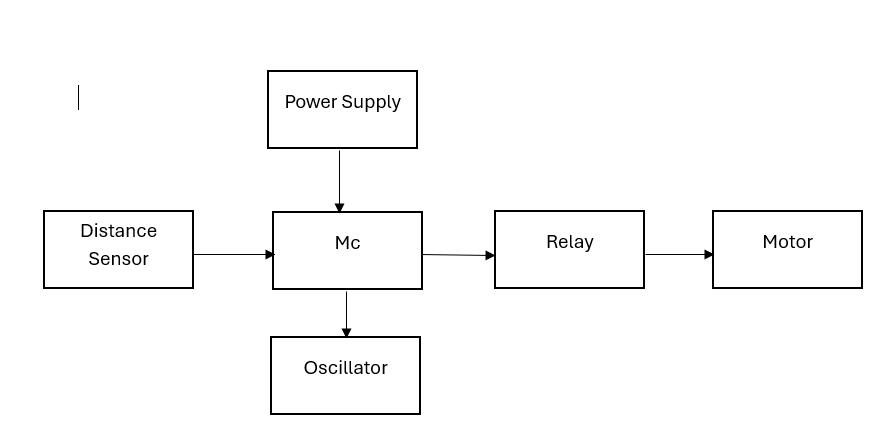
Placing Sensors: Putultrasonicsensorsinplaces liketoiletsandhandwashingareas.Thesesensors work like ears, listening to what's happening in theseplaces.
Checking Usage: The sensors can tell us when toiletsareusedorifpeoplearewashingtheirhands. This helps us know how often these facilities are usedandifthey'rebeingusedproperly.
Keeping Things Clean: Ultrasonicsensorscanalso help us check if things are clean. They measure thingslikewaterflowandsoapuse.Ifthingsaren't clean,theycanalertustocleanthemup.
Fixing Problems: Ifsomethinggoeswrong,likea toilet gets clogged or a sink isn't working, the sensorscantellussowecanfixitquickly.
Using Data: The information from the sensors helpsusunderstandhowoftenthingsareused,how clean they are, and if there are any problems. We can use this information to make decisions and improvethefacilities.
Teaching People: Wecanusethesensorstoteach people about hygiene and why it's important to keepthingsclean.Thishelpseveryoneunderstand whysmartsanitizationisimportant.
Component Needed :
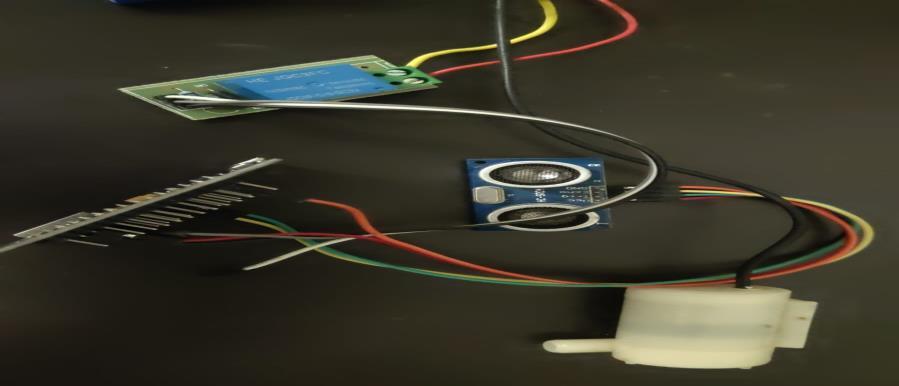
PowerSupply,NodeMCU,SingleChannelRelay,Mini Water Pump Dc , 6V Submersible Motor , Ultrasonic Sensor(HC-05)
1 . Power Supply
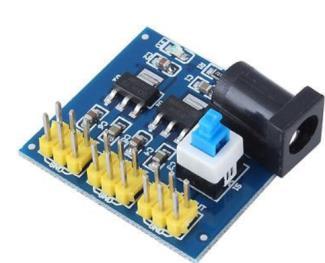
Powersupplyreferstotheprovisionofelectricalenergyto variousdevicesandsystemsforthemtofunction.Insimple terms, it's like providing fuel to a car so that it can move. Let's dive deeper into understanding power supply in simplerlanguage.
Poweristheenergythatmakesthingswork.Thinkofitas theforcethatpusheselectricitythroughwirestomakeyour gadgetsandappliancesfunction.
2. Node MCU
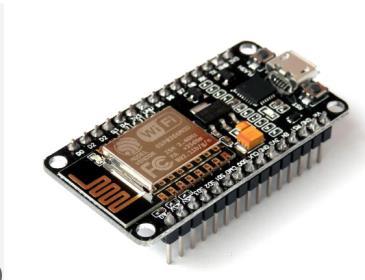
Node-MCUisatypeofsoftwarethat'sopenforanyonetouse and modify. The name combines "node" and "MCU" (microcontroller unit). Strictly speaking the term "NodeMCU" refers to firmware rather than the associated kits. Sure!NodeMCUislikeatiny,affordable,andopen-source
International Research Journal of Engineering and Technology (IRJET) e-ISSN: 2395-0056
Volume: 11 Issue: 04 | Apr 2024 www.irjet.net p-ISSN: 2395-0072
toolboxforconnectingthingstotheinternet.Atfirst,there wasasystemthatoperatedonacomponentcalledESP8266, whichisatypeofchipthathandlesWi-Ficonnections.This systemwasbuiltonhardwarethatusedaspecificmodule calledESP-12.
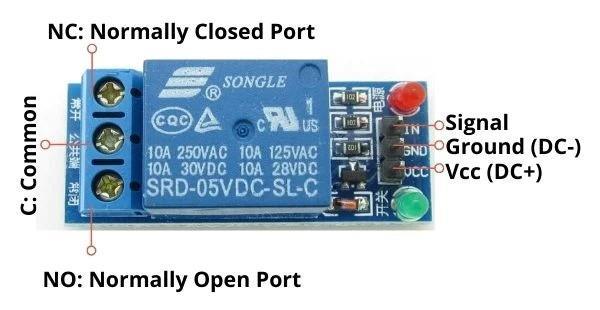
Asingle-channelrelayisadevicethathelpscontroltheflow of electricity to various electrical appliances or systems. Think of it as a traffic controller for electricity, deciding when to let it flow and when to stop it. Let's break down whatasingle-channelrelaydoesinsimplerterms.Now,let's focusonasingle-channelrelay.
"Single-channel"meansitcontrolsoneelectricalcircuitor channel.It'slikehavingonelaneonaroadwherecarscan eitherpassthroughorbestopped.Inthiscase,the"cars"are electricity,andtherelaydecideswhethertoletthemflowor not.
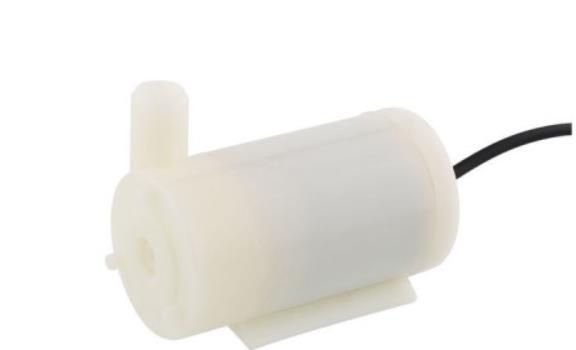
AminiwaterpumpDCisasmalldevicethatuseselectricity to pump water from one place to another. It's like a tiny enginethatmoveswater,butinsteadofusingfuellikeacar, itrunsonelectricity.Let'sbreakdownwhataminiwater pumpDCdoesinsimplerterms.Now,let'sfocusonamini water pump DC. "Mini" means it's small in size, like a handheld tool or a small gadget. "DC" stands for direct current, which is the type of electricity it uses. Direct current flows in one direction, like a steady stream of water, unlike alternating current (AC), which flows back andforth.
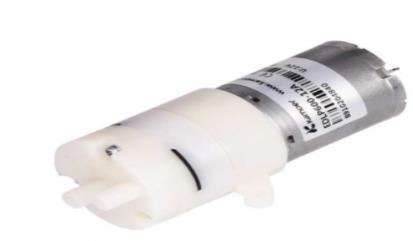
AminiwaterpumpDCisasmalldevicethatuseselectricity to pump water from one place to another. It's like a tiny enginethatmoveswater,butinsteadofusingfuellikeacar, itrunsonelectricity.Let'sbreakdownwhataminiwater pumpDCdoesinsimplerterms.Now,let'sfocusonamini water pump DC. "Mini" means it's small in size, like a handheldtoolorasmallgadget.
"DC" stands for direct current, which is the type of electricityituses.Directcurrentflowsinonedirection,like asteadystreamofwater,unlikealternatingcurrent(AC), whichflowsbackandforth.
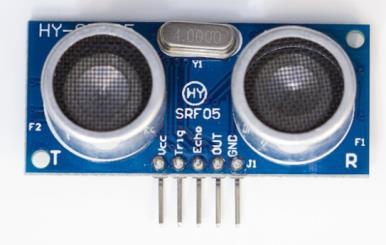
An ultrasonic sensor, specifically the HC-05 model, is a devicethatusessoundwavestodetectobjectsormeasure distances.It'slikeabatusingecholocationtonavigateinthe dark. Let's break down what an ultrasonic sensor does in simpler terms. The HC-05 ultrasonic sensor is a specific modelofultrasonicsensor."HC-05"isjustanamegivento thisparticularsensormodel.It'slikehowdifferentcarshave different model names, such as "Toyota Corolla" or "Ford Mustang."TheHC-05ultrasonicsensoriscommonlyusedin various applications, including robotics, automation, and distancemeasurement.
Inconclusion,smartsanitizationoffersapromisingsolution to improve hygiene and health outcomes in villages and communities. By leveraging modern technology such as sensor-based monitoring systems and innovative waste managementtechniques,wecanenhancetheeffectiveness andefficiencyofsanitationpractices.
International Research Journal of Engineering and Technology (IRJET) e-ISSN: 2395-0056
Volume: 11 Issue: 04 | Apr 2024 www.irjet.net p-ISSN: 2395-0072
[1] C.D. Nugent, D.D. Finlay, P. Fiorini, Y. Tsumaki, and E. Prassler, “Home Automation as a Means of Independent Living,”IEEETrans.OnAutomationScienceandEngineering, vol.5,no.1,pp.1-9,2008M.Young,TheTechnicalWriter’s Handbook.MillValley,CA:UniversityScience,1989.
[2] Nikhil Agrawal Engineering Manager, Siemens,Noida nikhil.pa@gmail.com,SmitaSinghalASET,AmityUniversity, Noida singhal.smita@gmail.com, Smart Drip Irrigation System using Raspberry pi and Arduino, International ConferenceonComputing,CommunicationandAutomation (ICCCA2015)ISBN:978-1-4799-8890-7/15/$31.00©2015
[3] H Katano, K Yokoyama, Y Takei, H Matsuki et al.(2011)The study of the bacterial contamination in the spray water of electronic toilets and in the gluteal and inguinal regions due to splashing following spray water. MicrobialEcologyinHealthandDisease.vol.25,pp.8-14.
[4] F Zakaria, J Ćurko, A Muratbegovic et al.(2018) Evaluation of a smart toilet in an emergency camp. InternationalJournalofDisasterRiskReduction.vol.27,pp. 512-523.
[5]SundararajanTVP,SumithraMG,MaheswarR.ANovel Smart Routing Protocol for Remote Health Monitoring in Medical Wireless Networks. Journal of healthcare engineering,2014,5(1):95–122.