
International Research Journal of Engineering and Technology (IRJET) e-ISSN:2395-0056
Volume: 11 Issue: 04 | Apr 2024 www.irjet.net p-ISSN:2395-0072
International Research Journal of Engineering and Technology (IRJET) e-ISSN:2395-0056
Volume: 11 Issue: 04 | Apr 2024 www.irjet.net p-ISSN:2395-0072
Yash Kasar1 , Yash Mhatre2 , Meet Dhotre3 , Abhishek Desai4 , Prof. Sandip Zade5
1234Students, Dept. Of Electronics and Telecommunication, Atharva College of Engineering, Mumbai 5Professor, Dept. Of Electronics and Telecommunication, Atharva College of Engineering, Mumbai
Abstract
This paper introduces an autonomous robotic systemthatemploysLiDAR(LightDetectionandRanging) technology, driven by a Raspberry Pi 4 single-board computer, and seamlessly integrated with the Robot OperatingSystem2(ROS2)forthepurposeof2Dmapping and Simultaneous Localization and Mapping (SLAM) in indoor environments The Raspberry Pi 4 serves as the onboardcomputer,responsibleforprocessingLiDARdata, sensor fusion, control algorithms, and communication with external devices. ROS2 acts as the middleware, ensuring a seamless use of sensors, control algorithms, and visualization tools. The implementation of SLAM algorithmsisanimportant aspectofthisproject,allowing the robot to construct an intricate 2D map of its environment while concurrently determining its own position within that map. This information proves indispensable for secure and efficient navigation within dynamicindoorsurroundings.
Furthermore, the autonomous robot adeptly maneuvers through these environmentswhilecontinually updating its map and self-localization estimations. The paper showcases performance metrics such as map precision, navigation speed and computational efficiency withintheprovidedresources.
This research contributes substantively to the domain of robotics by furnishing a practical implementation of an autonomous robot system utilizing LiDAR, Raspberry Pi 4, and ROS2, underscoring its efficiencyin2DmappingandSLAM.
Key Words: LiDBot, Simultaneous Localization and Mapping (SLAM), Light Detection and Ranging(LiDAR), Robot Operating System 2(ROS2), Raspberry Pi4, 2D Mapping.
With the advancement of intelligent manufacturingandtheexpansionoftheindustriallogistics industry,logisticsrobottechnologyhasbeencontinuously developed. As a member of the industrial logistics robots, autonomousmobilerobotsaredevelopinginthedirection of intelligent control, multi-machine collaboration, and design mode, and people's requirements for its functions
are getting higher and higher. Therefore, accelerating the developmentofautonomousmobilerobottechnologyisof great significance for promoting the development of the intelligentequipmentmanufacturingindustry.
At present, industrial robots at home and abroad are mainly oriented to tasks such as handling and distribution. Such robots are mainly produced by traditional large-scale equipment manufacturers and are controlled by special software and programming languages.
Throughaseriesofexperimentsandperformance evaluations, we will demonstrate the effectiveness of our autonomous robot system in creating precise 2D maps of complex indoor environments, showcasing its ability to adaptandnavigatedynamicallychangingsurroundings. In applications such as industrial automation, indoor navigation, and robotics, these bots excel at obstacle detection, collision avoidance, and mapping of the environment.
In summary, the integration of 2D LiDAR into autonomous bots opens opportunities for safer and more efficient navigation and automation in a wide range of industries. As technology continues to evolve, bots will likely become even more versatile and capable, contributing to advancements in mobility, safety, and productivityacrossvariousdomains.
International Research Journal of Engineering and Technology (IRJET) e-ISSN:2395-0056
Volume: 11 Issue: 04 | Apr 2024 www.irjet.net
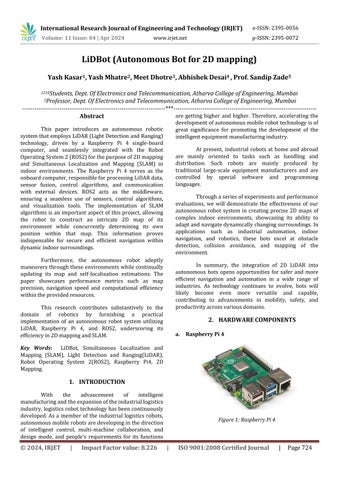
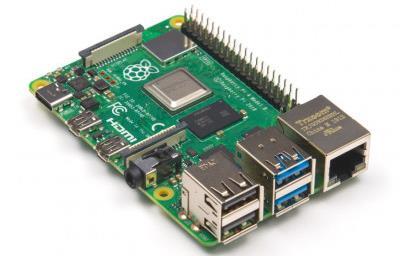
Asingle board computer whichisa brain of a robot,4 GB variant is used for ease of handling multiple process simultaneously.
b. LiDAR Sensor
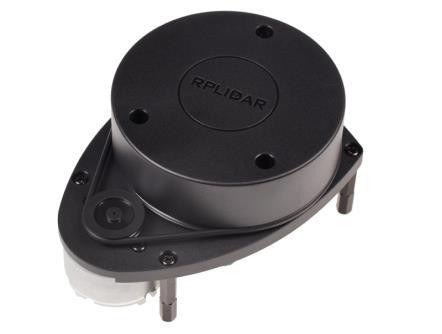
Figure 2: LiDAR Sensor
2D LiDAR sensor used for mapping and simultaneously navigatetherobotautonomously.
c. DC motors
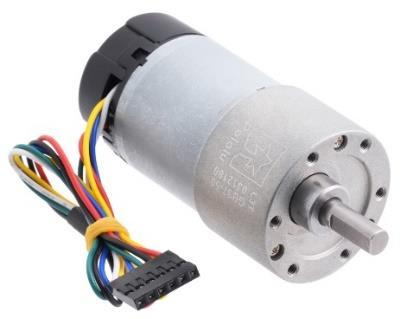
Figure 3: DC motors with Encoders
UsedforspeedcontrolfeedbackinDCmotors.
d. Motor driver
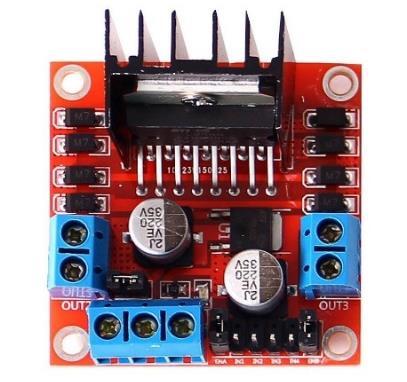
Figure 4: Motor Driver
Toprovideessentialinterfacebetweenboardandmotors andtodrivepowerfrombatterytohighpowermotors.
e. Battery pack
p-ISSN:2395-0072
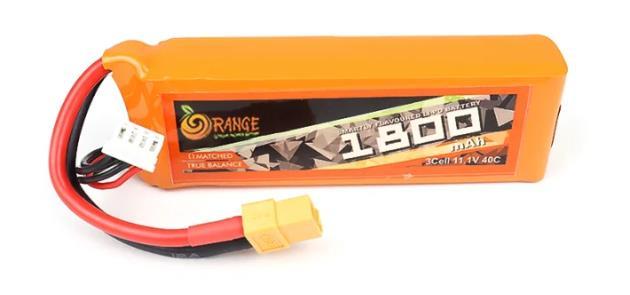
5: Battery Pack
Topowermotorsandothercomponents.
a. PC with Ubuntu
Ubuntu is a free and open-source distribution of Linux. It is an OS for cloud computing to support Open Stack. UbuntuisintegratedbytheCanonicalCommunityandit's freely available. It is designed for network servers, smartphones, and computers. Every principle used for developing the Ubuntu software is based on open-source softwaredevelopmentprinciples.
b. Robot Operating System 2 (ROS2)
ROS 2 (Robot Operating System 2) is an open source software development kit for robotics applications. The purpose of ROS 2 is to offer a standard software platform to developers across industries that will carry them from research and prototyping through to deployment and production.ROS2buildsonthesuccessofROS1,whichis used today in myriad robotics applications around the world.
SLAM (simultaneous localization and mapping) is a methodusedforautonomousvehiclesthatletsyoubuilda map and localize your vehicle in that map at the same time. SLAM algorithms allow the vehicle to map out unknown environments. Engineers use the map information to carry out tasks such as path planning and obstacleavoidance.
The process of constructing an autonomous robot, equipped with a LiDAR sensor for 2D mapping and integrated within the ROS 2 framework, this requires a method that includes hardware configuration, software engineering, and seamless integration within the ROS 2 ecosystem.
International Research Journal of Engineering and Technology (IRJET) e-ISSN:2395-0056
Volume: 11 Issue: 04 | Apr 2024 www.irjet.net p-ISSN:2395-0072
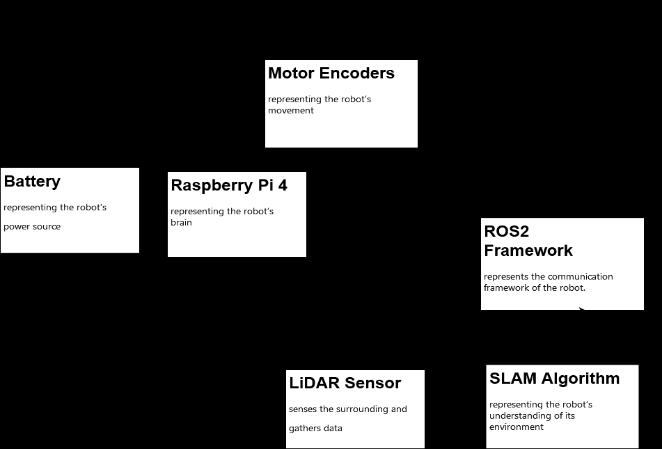
Initialization:TherobotispoweredonandtheRaspberry Pi4,whichservesastherobot’sbrain,isbootedup.
ROS2 Setup: The Robot Operating System 2 (ROS2) is initialized on the Raspberry Pi. ROS2 is a flexible framework that allows for communication between variouspartsofarobot’ssystem.
Sensor Integration: The LiDAR sensor, attached to the robot, is activated. This sensor will be used to map the environment.
Data Acquisition: As the robot moves, the LiDAR sensor collects data by sending out laser beams and measuring howlongittakesforthemtobouncebackafterhitting an object.
Data Processing: The Raspberry Pi 4 processes this data inreal-timetocreatea2Dor3Dmapoftheenvironment.
SLAM Algorithm: The Simultaneous Localization and Mapping (SLAM) algorithm is applied to this data. SLAM helps the robot understand its location within the environmentwhilealsomappingtheenvironment.
ROS2 Communication: The processed data and SLAM output are communicated across the system using ROS2, allowingforreal-timeadjustmentsanddecision-making.
Path Planning: Using the map created by the SLAM algorithm,therobotplansitspath,avoidingobstaclesand efficientlyreachingitstargetdestination.
Movement Execution: The robot executes the planned path, constantly collecting data and updating its map and pathasneededthroughROS2communication.
Continuous Learning:Overtime,astherobotencounters different environments and situations, it learns and improvesitsmappingandnavigationcapabilities.
Autonomous robots using LiDAR sensors have shown great potential in a variety of fields, from logistics and manufacturing to healthcare and security. The use of LiDAR sensors allows these robots to perceive their environment in real-time, enabling them to navigate complex environments and perform tasks with a high degreeofautonomy.
The advancements in LiDAR technology and the development of sophisticated algorithms for data processingandinterpretationhavesignificantlyenhanced the capabilities of these robots. As a result, they are becoming increasingly prevalent in our daily lives, improving efficiency and productivity in numerous sectors.
However, there are still challenges to be addressed, such as improving the robustness and reliability of these systems, particularly in dynamic and unpredictable environments. Ongoing research and development in this field are expected to lead to even more advanced autonomousrobotsinthefuture.
In conclusion, autonomous robots equipped with LiDAR sensors represent a significant technological advancement with wide-ranging applications and immensepotentialforfuturegrowth.
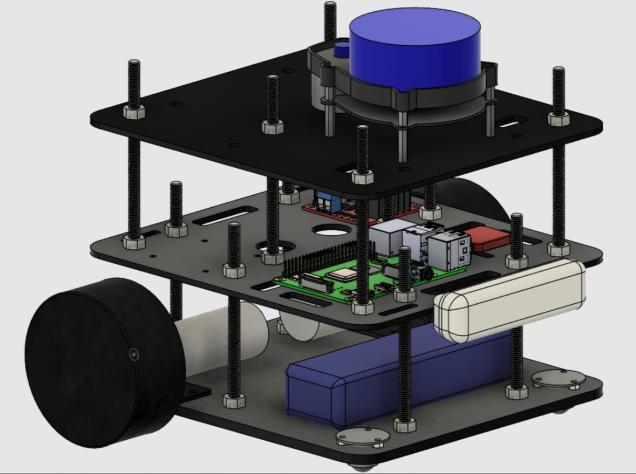
Aboveisthe3Ddesignonourproduct.Theadvancements inLiDARtechnologyandthedevelopmentofsophisticated algorithms for data processing and interpretation have significantlyenhancedthecapabilitiesoftheserobots.Asa result, they are becoming increasingly prevalent in our daily lives, improving efficiency and productivity in numerous sectors. However, there are still challenges to be addressed, such as improving the robustness and reliability of these systems, particularly in dynamic and
International Research Journal of Engineering and Technology (IRJET) e-ISSN:2395-0056
Volume: 11 Issue: 04 | Apr 2024 www.irjet.net p-ISSN:2395-0072
unpredictable environments. Ongoing research and development in this field are expected to lead to even more advanced autonomous robots in the future. In conclusion, autonomous robots equipped with LiDAR sensorsrepresentasignificanttechnologicaladvancement withwide-rangingapplicationsandimmensepotentialfor futuregrowth.
Advanced 3D LiDAR: The utilization of more advanced sensor and software technologies, such as advanced 3D LiDAR, will increase autonomous mobile robots’ (AMRs) abilities to monitor and respond to their changing surroundings in both indoor and outdoor applications. This will allow AMRs to perform increasingly complex tasks,improvingworkersafetyandefficiency.
Enhanced Navigation and Situational Awareness: LiDAR systems are key to enhancing the capabilities of future autonomous vehicles in terms of navigation and situational awareness3. Significant advancements are neededbyterrestrial,marine,aerial,andspacevehiclesto meetthelevelsofsafetyandperformancerequiredwithin presentandfutureapplicationscenarios.
Long-Term Robot Autonomy: Research is being conducted into long-term robot autonomy, LiDAR data processing under adverse weather conditions, as well as sensor fusion4. This could lead to more robust and adaptable autonomousrobots.
[1] M. Wang, Y. Tao, and H. Liu, "Current Research and Future Development Trend of Intelligent Robot: A Review," International Journal of Automation and Computing,vol.15,no.5,pp.525–546,2018.
[2] K. Alisher, K. Alexander, and B. Alexandr, "Control of the Mobile Robots with ROS in Robotics Courses," ProcediaEngineering,vol.100,pp.1475–1484,2015
[3] H. Cui, J. Zhang, and W. R. Norris, "An Enhanced Safe andReliableAutonomousDrivingPlatformusingROS2,"in 2020 IEEE International Conference on Mechatronics and Automation (ICMA), Beijing, China, Oct. 2020, pp. 290–295.
[4] N. A. B. Zaman, S. A. Rahman, S. Mutalib, and M. R. Shamsuddin, "ApplyingGraph-based SLAMAlgorithm ina SimulatedEnvironment,"IOPConferenceSeries:Materials ScienceandEngineering,vol.769,no.1,pp.12035–12042, 2020.
[5] P. Phueakthong and J. Varagul, "A Development of Mobile Robot Based on ROS2 for Navigation Application,"
in 2021 International Electronics Symposium (IES), 2021, pp.517–520.