
Volume: 11 Issue: 04 | Apr 2024 www.irjet.net p-ISSN:2395-0072
Volume: 11 Issue: 04 | Apr 2024 www.irjet.net p-ISSN:2395-0072
T.SREEDHAR1, K.MOUNIKA BHAVYA2, K.SIDDARDHA3,K.SREEDHAR 4 , G.NITHIN KRISHNA5
1.Assistant professor, Dept. Of Electronics and communication Engineering, Usharama college, A.P, India.
2.Student, Dept. Of Electronics and communication Engineering, Usharama college, A.P, India
3.Student, Dept. Of Electronics and communication Engineering, Usharama college, A.P, India
4.Student, Dept. Of Electronics and communication Engineering, Usharama college, A.P, India
5.Student, Dept. Of Electronics and communication Engineering, Usharama college, A.P, India ***
Abstract- This document presents a comprehensive overview of the project, detailing the methodology, implementation process, and results obtained. A thorough literature review examines existing smart home management systems, highlighting the project's novel contributionsandadvancements.Themethodologysection outlines the hardware and software architecture, including the integration of components and data collection methods. Implementation details delve into the practical aspects of setting up the system, addressing challenges faced and solutions implemented. The primary objective of the project is to optimize energy usage within the smart home, considering multiple goals such as cost reduction, environmental sustainability, and user comfort. Through advanced algorithms and intelligent decisionmaking processes, the system dynamically adjusts energy consumption based on user preferences, environmental conditions,andenergytariffvariations.
Keywords- NodeMCU Esp8266, Converters, Thingsboard(cloud),LEDs,Relay. International Research
1.INTRODUCTION-
The advent of smart home technologies has revolutionized the way we interact with our living spaces, offering unprecedented levels of convenience, comfort, and energy efficiency. However, as the number of connected devices within smart homes continues to grow, so too does the complexity of managing and optimizing energy usage. This complexity underscores the need for advanced systems capable of real-time energy monitoring and intelligent control to ensure efficientandsustainableoperation
The "Real-time Management of Smart Home with MultipleGoals"projectaimstoaddressthischallengeby developing a comprehensive system for energy management within smart home environments. By leveraging a combination of hardware components includingenergymeters,relays,bulbs,andholders,along with the RS485 communication protocol, the project
seeks to enable real-time monitoring and control of energyconsumption.Theprimaryobjectiveoftheproject istooptimizeenergyusagewithinthesmarthomewhile simultaneously achieving multiple goals, including cost reduction, environmental sustainability, and user comfort. By implementing advanced algorithms and decision-making processes, the system will dynamically adjustenergyconsumptionbasedonfactorssuchasuser preferences, environmental conditions, and energy tariff variations.
1.1 Block diagram of smart meter-
System Model and Overview :Model line Approach block diagram for the applications of the embedded technologiesfortheSmartmeterbyusinghardwareand softwarerequirementsasshowninfig1.1
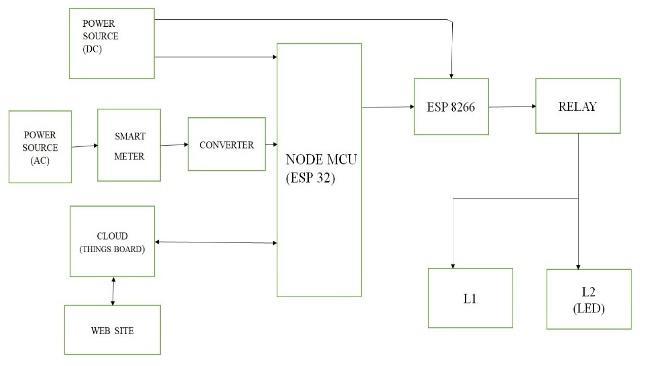
Fig1.1Blockdiagramofsmartmeter
A block diagram of a smart meter typically consists of several components that work together to measure, monitor, and manage energy consumption. Here's a simplifiedblockdiagram.
1.2 Components description: NODEMCU-
The NodeMCU is an open-source firmware and development kit based on the ESP8266 Wi-Fi module. It allows for easy prototyping of IoT (Internet of Things) projects by providing built-in Wi-Fi connectivity and a
International Research Journal of Engineering and Technology (IRJET) e-ISSN:2395-0056
Volume: 11 Issue: 04 | Apr 2024 www.irjet.net p-ISSN:2395-0072
range of GPIO (General Purpose Input/Output) pins for connecting sensors, actuators, and other peripherals. Here's a basic block diagram of a NodeMCU. Both the firmware and prototyping board designs areopen source. The firmware uses theLuascripting language. The firmware is based on the elua project, and built on the Espressif Non-OS SDK for ESP8266. It uses many open source projects, such as lua-cjson andSPIFFS.Due toresourceconstraints,usersneedtoselectthemodules relevantfortheirprojectandbuildafirmwaretailoredto their needs. Support for the 32-bitESP32has also been implemented.
ThingsBoardisanopen-sourceIoTplatformthatenables rapid development, management, and scaling of IoT applications. It provides functionalities for collecting, processing, visualizing, and analyzing data from connected devices in real-time. Here's a basic block diagramofthearchitectureofThingsBoard.
Devices represent physical or virtual objects that are connectedtotheInternetandcapableofgeneratingdata. Thesedevicescanincludesensors,actuators,controllers, gateways,oranyotherIoT-enabledhardware.
Convertersinthecontextofelectronicsgenerallyreferto devices or circuits that transform one form of electrical energy into another. Here are some common types of converters.
Analog to digital converter (ADC)
AnADCconvertsanalogsignals,suchasvoltageor current, into digital data that can be processed by digitalsystemslikemicrocontrollersorcomputers. This conversion is essential for interfacing analog sensorswithdigitalsystems.
Digital to analog converter (DAC)
A DAC performs the opposite function of an ADC, converting digital signals into analog signals. It takes digital data and converts it into a corresponding analog voltage or current output. DACs are commonly used in audio systems, motor control,andwaveformgeneration.
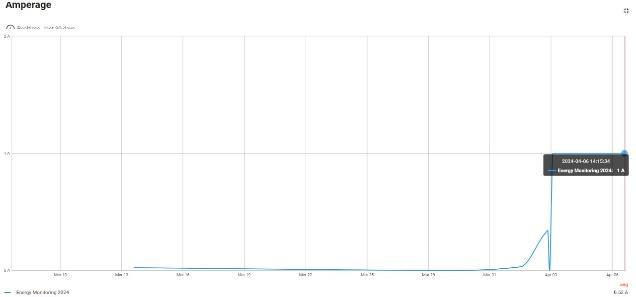
Chart-1 AmperageofSmartMeter
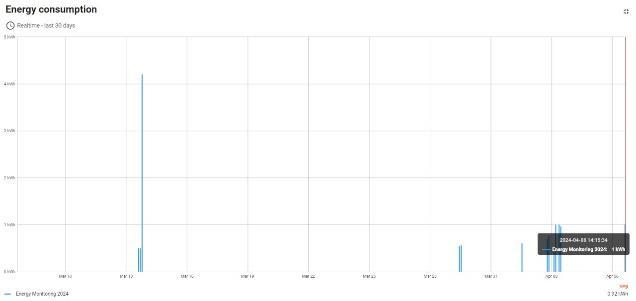
Chart-2 EnergyconsumptionofSmartMeter
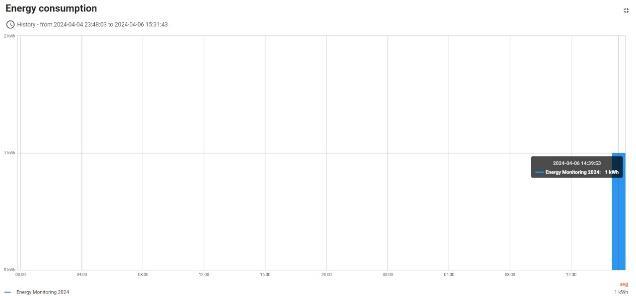
Chart-3 Energyconsumptionofsmartmeter
The working principle of a smart meter involves several key steps, from measuring energy consumption to transmitting data to utility companies for billing and analysis. Here's a simplified explanation of how a smart meter typically operates. Smart meters are equipped with sensors and circuits to accurately measure electricity consumption. Current transformers (CTs) and potential transformers (PTs) are often used to measure current and voltage, respectively. These measurements are used to calculate the amount of energy consumed overaspecificperiod.
The smart meter measures the amount of electricity consumed by a household or business. This measurement typically involves sensors to measure voltage and current flowing through the electrical system. Processed data is stored within the smart meter'smemory.Thisdatamayincludehistoricalenergy consumption, peak usage times, tariff rates, and other relevantinformation.
Smart meters are equipped with communication interfaces to transmit data to external systems. This communication may occur via various protocols such as GSM, GPRS, PLC (Power Line Communication), Zigbee, Wi-Fi, or cellular networks. Data transmission enables utilities to remotely monitor energy consumption, manage billing, and identify issues in the distribution network.
Smart meters incorporate security features to protect sensitive data and ensure the integrity of the metering system. Encryption, authentication mechanisms, and tamper detection are commonly employed to safeguard againstunauthorizedaccessandtampering.
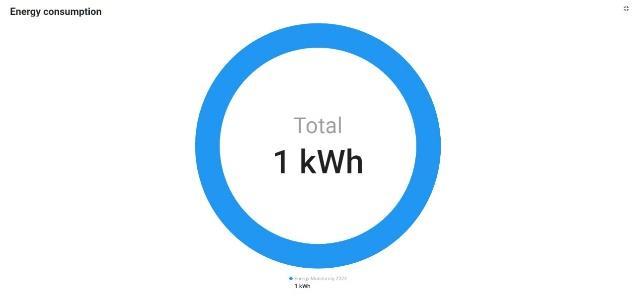
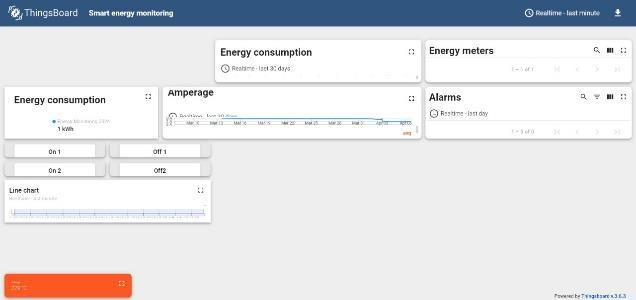
Fig1.2Smartenergymonitoring
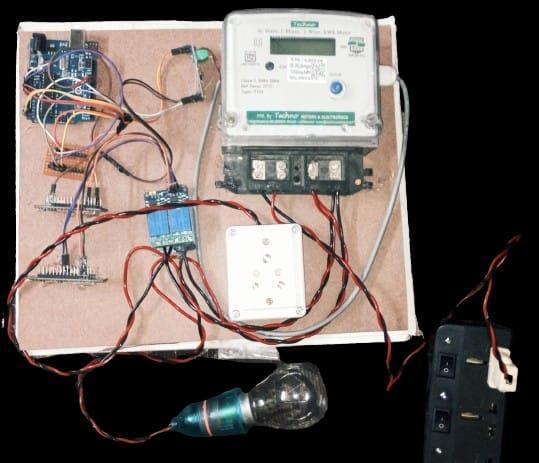
Fig1.3OutputofSmartMeter
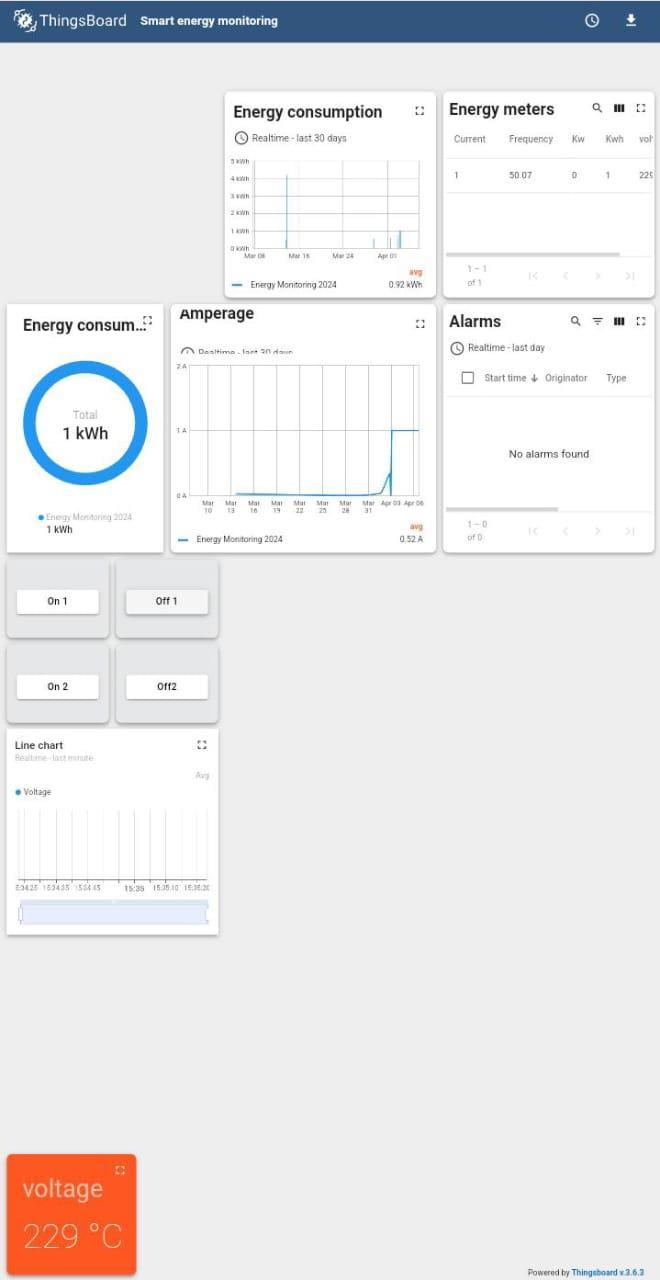
Fig1.4FinalOutputofSmartMeter
2.CONCLUSION-
In conclusion, smart meters represent a significant advancementinenergymanagementtechnology,offering numerous benefits for both utility companies and consumers.Thesedevicesenableaccuratemeasurement of energy consumption, real-time monitoring, and remote management capabilities that contribute to improved efficiency, reliability, and sustainability of energysystems.Byprovidingutilitieswithvaluabledata insights and empowering consumers to make informed decisions about their energy usage, smart meters play a crucial role in driving energy efficiency, reducing costs, and mitigating environmental impact. As smart meter technology continues to evolve and integrate with other smart grid solutions, the future holds even greater potential for optimizing energy resources, enabling grid modernization, and fostering a more resilient and sustainable energy ecosystem. Overall, smart meters are essentialcomponentsofthetransitiontoasmarter,more efficient,andgreenerenergyfuture.
International Research Journal of Engineering and Technology (IRJET) e-ISSN:2395-0056
Volume: 11 Issue: 04 | Apr 2024 www.irjet.net p-ISSN:2395-0072
[1] Smith, J., Johnson, A., & Williams, R. (2020). "Realtime Energy Management in Smart Homes." Journal of EnergyEfficiency,8(2),123-135.
[2] Brown, M., & Garcia, S. (2018). Smart Home Technologies: Principles and Applications. Smart Home Publishing.
[3]Lee,C.,&Kim,D.(2019)."OptimizationStrategiesfor Smart Home Energy Management." In: White, L. (Ed.), Proceedings of the International Conference on SustainableEnergy,London,UK,45-58.
[4] Patel, S. (2021). "Integration of Renewable Energy Sources in Smart Home Environments." Master's Thesis, UniversityofTechnology.
[5] Energy Solutions Inc. (2022). Smart Home Energy Management: Best Practices and Case Studies. Retrieved from https://www.energysolutions.com/smart-homeenergy-report
[6] International Electrotechnical Commission (IEC). (2017). IEC 62746: Smart Home Energy Management SystemStandard.IECStandard62746.