
International Research Journal of Engineering and Technology (IRJET) e-ISSN: 2395-0056
Volume: 11 Issue: 04 | Apr 2024 www.irjet.net p-ISSN: 2395-0072
International Research Journal of Engineering and Technology (IRJET) e-ISSN: 2395-0056
Volume: 11 Issue: 04 | Apr 2024 www.irjet.net p-ISSN: 2395-0072
Prakash
Kshirsagar1, Vrushali Wankhede2, Pratik Chumbalkar3, Srushti Hinge4, Kunal Mane5 , Yash Rebbawar6
1Professor, Dept of Computer Engineering, Keystone School of Engineering, Maharashtra, India
2Professor, Dept of Computer Engineering, Keystone School of Engineering, Maharashtra, India
3BE student, Dept of Computer Engineering, Keystone School of Engineering, Maharashtra, India
4BE student, Dept of Computer Engineering, Keystone School of Engineering, Maharashtra, India
5BE student, Dept of Computer Engineering, Keystone School of Engineering, Maharashtra, India
6BE student, Dept of Computer Engineering, Keystone School of Engineering, Maharashtra, India
Abstract - The rapid advancement of technology in recent years has ushered in a new era of consumer electronics, presenting consumers with a multitude of choices when it comes to purchasing electronic devices. Making informed decisions in this dynamic and crowded marketplace can be overwhelming, as consumers grapple with complex technical specifications, features, and performance metrics. Augmented Reality (AR) has emerged as a transformative technology that can revolutionize the way consumers evaluate and compare electronic products, This abstract explores the concept of Electronic Comparison with AR Models (ECAM), which integrates augmented reality into the consumer electronics shopping experience. ECAM leverages AR to provide users with an immersive, interactive, and informative platform for comparing electronic devices such as smartphones, laptops, cameras, and more. By overlaying digital information, specifications, and real-time data onto physical products, ECAM enables consumers to visualize and assessproductattributesmoretangiblyandengagingly.
Keywords: Augmented Reality (AR), Virtual Product Comparison, Electronics Consumers, 3D Model Integration, Electronic Device Evaluation, Comparative Analysis, Real-time Comparison, User Interface Design.
In the fast-paced world of technology and consumer electronics, the choices available to consumers seem endless, with an ever-expanding array of products and features to consider. Amid this complexity, making informed decisions about electronic devices can be a daunting task. Fortunately, the fusion of Electronic Comparison and Augmented Reality (AR) is changing the landscape of consumer decision-making, offering a transformative way to explore and evaluate electronic productsbeforemakingapurchase.
ElectroniccomparisonwithARrepresentstheconvergence of two powerful forces: the digitization of information and the immersive capabilities of augmented reality. This innovative approach leverages the capabilities of
smartphones, tablets, and AR headsets to empower consumers with real-time, interactive, and highly personalized experiences when shopping for electronic gadgets.
In this exploration of Electronic Comparison with AR, we will delve into the key components of this emerging technology, its impact on consumer decision-making, the industries it is reshaping, and the potential future developmentsthatpromisetofurtherblurthelinebetween thephysicalanddigitalworlds.Fromsimulatingthedisplay quality of a smartphone to experiencing the ergonomics of a gaming console, electronic comparison with AR is poised toredefinehowweinteractwithandchooseourelectronic companions.
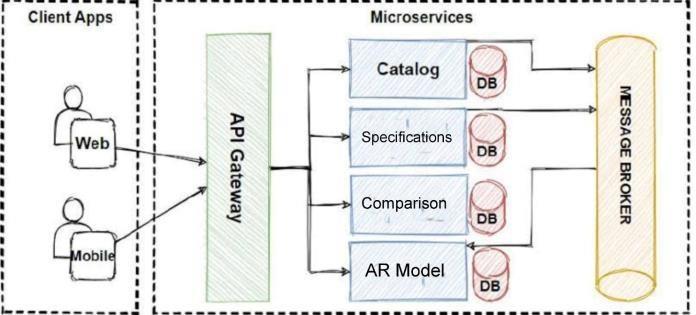
Fig1.SystemArchitecture
Client Apps: These are the user-facing applications that clients interact with to access the functionality of the web application. Examples include mobile apps (iOS, Android), web browsers, and desktop applications. Client apps typically don't handle complex application logic themselves.Instead, they presentan interfaceto usersand interact with the microservices via APIs to retrieve or manipulatedata.
Microservices: These are the independent building blocks of the application, each responsible for a specific, welldefinedbusinesscapability.
International Research Journal of Engineering and Technology (IRJET) e-ISSN: 2395-0056
Volume: 11 Issue: 04 | Apr 2024 www.irjet.net p-ISSN: 2395-0072
They are: Independent: Each service can be developed, deployed,andscaledindependentlywithoutaffectingother services.Looselycoupled:Servicescommunicatewitheach other through well-defined APIs, minimizing dependencies and promoting modularity. Fine-grained: Each service focuses on a single, well-defined task, promoting maintainabilityandreducingcomplexity.
Examplesofmicroservicesinclude:
User management service(handlesuser registration, login, andprofilemanagement)
Product catalog service (manages product information, inventory,andimages)
API Gateway: Acts as the single entry point for all API requests coming from the client applications. It receives requests, performs necessary authentication authorization checks, and then routes the request to the appropriate microservice based on pre-defined rules. The API Gateway helps to improve security by centralizing authentication andauthorizationlogic.Increasescalabilitybyallowingthe API Gateway to handle a high volume of requests and distributethemefficientlytomicroservices.
Message Broker: An intermediary component that enables asynchronous communication between microservices. A microservice publishes messages to the message broker, specifying the recipient and the message content. The message broker then routes the message to the intended recipient service. Asynchronous communication allows microservicestooperateindependentlywithoutwaitingfor a response from another service, improving overall application responsiveness and performance. Message brokers also offer features like message queuing, allowing messages to be delivered reliably even if the recipient serviceistemporarilyunavailable.
Database: Stores the application's data, which can be accessed and manipulated by the microservices. In a microservices architecture, there can be multiple databases: Each microservice might have its dedicated database for data it exclusively owns and manages. Alternatively, a shared database service might be used for data accessed by multiple microservices. The choice of database type and deployment model (centralized, distributed) depends on factors like data volume, access patterns,andconsistencyrequirements.
This paper presents an initial investigation into the techniques employed for user evaluation in Augmented Reality (AR) research. Our study aimed to identify papers featuring AR evaluations by scrutinizing research publications spanning from 1993 to 2007, sourced from onlinedatabasesofreputablescientificpublishers.Initially,
we encountered 6071 publications, which we systematically filtered through multiple stages, ultimately isolating165papersrelatedtoARwithuserevaluations.[1]
This article serves as a compendium of contemporary researchontheuserexperience(UX)ofMobileAugmented Reality(MAR),anadvancedtechnologythatoverlaysdigital information onto the real world via mobile devices. MAR represents a cutting-edge innovation that has profoundly transformed how individuals access and interact with information,offeringnovelexperiencesglobally.[2]
This paper delves into the transformative impact of the Covid-19 pandemic on consumer behavior and traditional practices within the retail industry. Despite prevailing preferencesinIndiaforofflinepurchases,influencedbythe "trybeforeyoubuy"mindset,thereexistsanopportunityto reshape this dynamic through technological intervention. Augmented Reality emerges as a solution capable of bridging the gap between offline and online shopping experiences.ByleveragingAR,userscanvirtuallyvisualize electronic products within their living spaces, enabling themtomakeinformeddecisionsremotely.[3]
This paper scrabble about the profound impact of new digital technologies on individuals' lives and the consequent transformation of marketing practices. As digital technologies continue to evolve, traditional advertising, promotion, and marketing communications undergosignificantdigitalization.TheemergenceofVirtual Reality (VR), Augmented Reality (AR), and digital marketing blurs the line between physical and digital realms,offeringnewavenuesforpromotion,branding,and consumer engagement.The paperlays thegroundwork for suchaninvestigationbyproposingaframeworktoevaluate the applicability of AR and other new technologies to advertisinganddigitalmarketingcommunications.[4]
This paper contributes to the exploration of Augmented Reality's(AR)impactonconsumerpsychology,particularly within the realm of advertising shopping experiences. AR, characterized by its ability to merge computer-generated data with the viewer's physical environment in real-time, hasgarneredattentionfromadvertisersforitsnoveltyand engaging potential. As part of a broader research endeavour,thispaperintroducesademonstrationplatform application tailored for real-time shoe shopping experiences.[5]
This paper gives the research on exploring state-of-the-art AR techniques, potential use cases, and barriers to widespreadadoption,thisreviewidentifiesfutureresearch directions and opportunities for innovation in the rapidly evolving AR landscape. Serving as a compendium of existing technologies, this study is particularly beneficial fornewcomerstoARandservesasavaluableresource for developers seeking to innovate or implement new
International Research Journal of Engineering and Technology (IRJET) e-ISSN: 2395-0056
Volume: 11 Issue: 04 | Apr 2024 www.irjet.net p-ISSN: 2395-0072
technologies,providinginsightsintocurrentchallengesand limitations.[6]
This comprehensive paper examines the evolution of Augmented Reality (AR) and Virtual Reality (VR) technologies in education over the past twelve years. Utilizing text mining and topic analysis methodologies, 1536 articles from the Scopus database were analysed to discern trends and advancements. The analysis focuses on the development, applications, advantages, and future directions of AR and VR in educational contexts. Findings indicate a surge in adoption, particularly in wearable devices, but also highlight challenges in implementing and customizing these technologies within educational institutions.AsAR andVRcontinueto mature,researchers are urged to explore gaps in their integration into education and devise effective strategies for maximizing theirbenefits.[7]
4.1. Define Comparison Criteria:
Clearly outline the parameters or features you want to compare electronically. Defining comparisoncriteria in the context of Augmented Reality (AR) involves establishing the specific parameters or features that will be used to evaluate and compare different aspects of AR experiences or applications. These criteria serve as the foundation for assessing the effectiveness, performance, and suitability of AR solutions for a given purpose or scenario. Here's a deeper explorationof how todefinecomparisoncriteria in AR This could include specifications, dimensions, or any otherrelevantfactors.
4.2. Select AR Platform:
Choose a suitable AR platform or development framework based on your application requirements. Selecting the appropriate Augmented Reality (AR) platform is a critical decision that directly influences the development, deployment,andoverallsuccessofARapplications.
4.3. Create 3D Models:
Developorobtain3Dmodelsoftheobjectsorproductsyou want to compare. These 3D models serve as the virtual content that users interact with within the AR experience. Ensure accuracy in representation and incorporate necessarydetails.
4.4. Integrate AR Features:
Implement AR features to overlay digital information onto the real-world view through the camera. This may involve integrating the 3D models with the AR platform using appropriate programming languages (e.g., Swift, Java, Unity).
DesignanintuitiveUItoallowuserstointeractwiththe AR comparison tool. Implementing a User Interface (UI) in Augmented Reality (AR) applications is crucial for providing users with intuitive controls and interactions within the augmented environment Include options to adjust viewing angles, zoom in/out, and switch between differentproductsormodels.
Optimize the rendering process for real-time performance, ensuring smooth and responsive interactions. This is crucial for providing users with a seamless comparison experience.Real-timerenderinginAugmentedReality(AR) refers to the process of generating and displaying digital contentseamlesslyandinteractivelywithintheuser'srealworld environment in near-instantaneous time. This is a critical aspect of AR applications as it directly impacts the user experience, ensuring that virtual objects appear integratedandresponsivewithinthephysicalworld.
If the comparison involves dynamic data or real-time updates, establish a mechanism for synchronizing information between the AR application and the backend system. Data synchronization in Augmented Reality (AR) refers to the process of ensuring that the digital information overlaid onto the real-world view remains updated and consistent with the underlying data source. This is particularly important in AR applications where dynamic or real-time data is involved, such as in locationbased AR experiences or AR applications that rely on live datafeeds.
Incorporate guidance elements, such as tooltips or instructions, to help users navigate and understand the comparisonprocesseffectively.Thequalityandaccuracyof the digital content presented within the AR application, including 3D models, textures, animations, and textual information. Ensure that the content aligns with the intended purpose and provides value to users in the contextofthecomparison.
Conduct thorough testing to identify and resolve any bugs or usability issues. Testing in AR comparison involves rigorouslyevaluatingdifferentaspectsofARapplicationsto ensure they meet desired standards of quality, usability, and performance. Ensure compatibility across different devicesandoperatingsystems.
International Research Journal of Engineering and Technology (IRJET) e-ISSN: 2395-0056
Volume: 11 Issue: 04 | Apr 2024 www.irjet.net p-ISSN: 2395-0072
4.10. User Feedback Integration:
Implement a feedback mechanism for users to provide comments or suggestions about the AR comparison tool. Thishelpsincontinuousimprovement.
4.11. Launch and Iterate:
Release the AR comparison tool and monitor user feedback.LaunchinganditeratinginanAugmentedReality (AR) project involves releasing the AR application to users and continuously improving it based on feedback and insights gathered from real-world usage. Use insights gained tomakeiterative improvementsandintroduce new featuresasneeded.
5. OUTPUT SNAPSHOTS
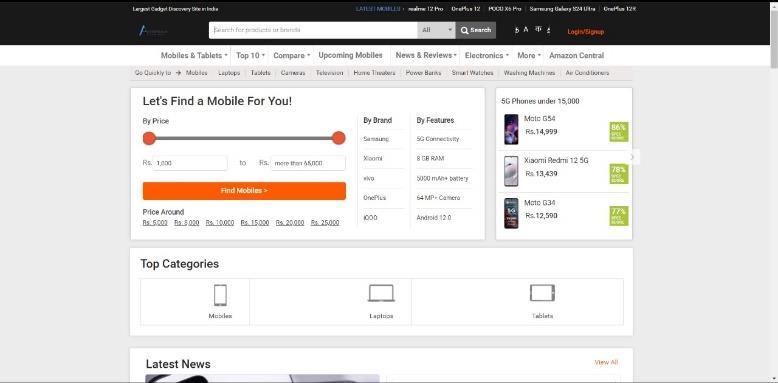
Fig2:Selectionofthedesiredfeatures
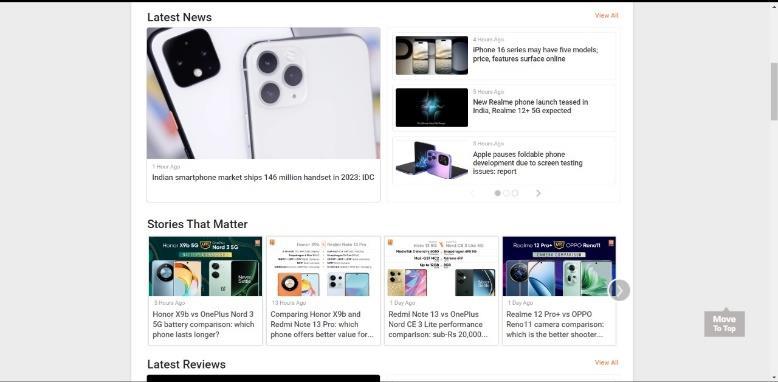
Fig3:Latestnewssectionaboutnewtechnologies.
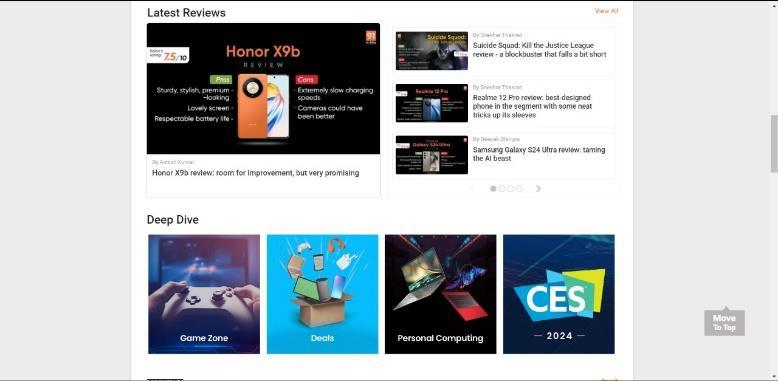
Fig4:Reviewsonthemodels.
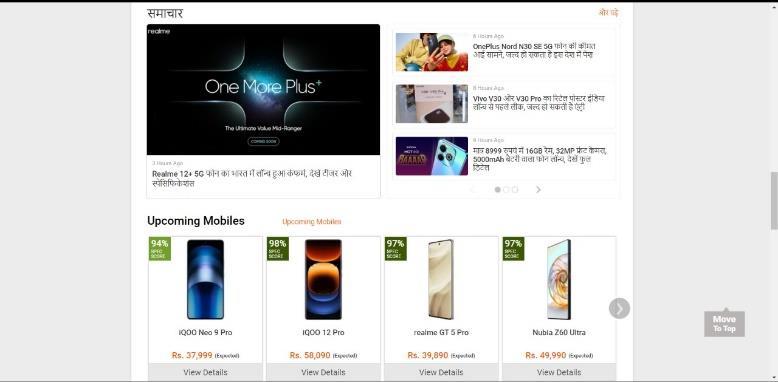
Fig5:Updatesofupcomingmodels.
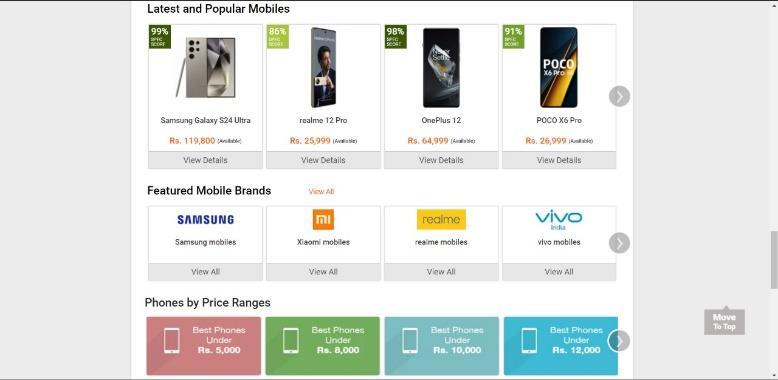
Fig6:Latestandpopularmodleandbrandsdisplay.
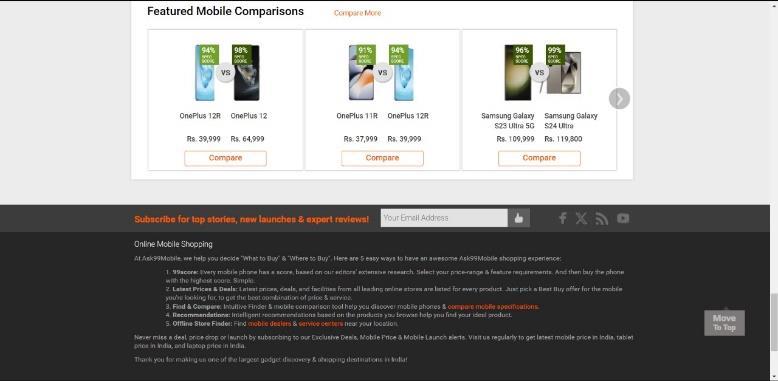
Fig7:Subscriptionpartfornewupdates.
In the culmination of the Electronic Comparison with Augmented Reality (AR) project, we have successfully craftedarevolutionarywebsitethatharnessesthepowerof augmented reality to redefine the user experience in the realm of comparing electronic devices. This project represents not just a technological achievement but a paradigm shift in how users interact with and make informeddecisionsaboutelectronicproducts.
Acknowledgments are extended to Director Prof. Y. R. Soman, Principal Dr. Sandeep Kadam, HOD, Project guide Prof. Prakash Kshirsagar, and Project Co-guide Prof.
International Research Journal of Engineering and Technology (IRJET) e-ISSN: 2395-0056
Volume: 11 Issue: 04 | Apr 2024 www.irjet.net p-ISSN: 2395-0072
Vrushali Wankhede for their invaluable support and guidance throughout the project. Their dynamism, vision, and motivation have been deeply inspiring, enriching our learning experience. We are grateful for their friendship, empathy, and humor, as well as the contributions of each group member, which were instrumental in the project's success. Special thanks to the Teaching staff of the Computer Department for their constant encouragement, support,andguidance.
[1] ASurveyofEvaluationTechniquesUsedinAugmented RealityStudies. Reference: https://www.researchgate.net/publication/21686763 1
[2] The user experience of mobile augmented reality: A reviewofstudies
Reference: https://ieeexplore.ieee.org/abstract/document/70068 9
[3] An Augmented Reality Application to Enhance the Shopping Experience of Electronic Appliances
Reference: https://ieeexplore.ieee.org/document/9573688
[4] Augmented Reality (AR) a New Technology for Advertising and Marketing Digital Communications
Reference: https://ieeexplore.ieee.org/document/10174141
[5] Real-time augmented reality shopping platform for studying consumer cognitive experiences
Reference: https://ieeexplore.ieee.org/document/6703069
[6] AugmentedReality:Survey
Reference:https://www.mdpi.com/20763417/13/18/10491
[7] Analysing augmented reality (AR) and virtual reality (VR)recentdevelopmentsineducation.
Reference: https://www.sciencedirect.com/science/article/pii/S 2590291123001377
[8] Augmented-Reality-Based Indoor Navigation: A ComparativeAnalysisofHandheldDevicesVersus GoogleGlass.
Reference: https://ieeexplore.ieee.org/document/7742972
[9] Use of augmented reality in the usability evaluation of products.
Reference: https://www.researchgate.net/publication/2781026 18_Use_of_augmented_reality_in_the_usability_evaluati on_of_products
[10] Consumers’ Experience and Satisfaction Using AugmentedRealityAppsinE-Shopping:NewEmpirical Evidence.
Reference: https://www.mdpi.com/2076-3417/13/17/9596
[11] AQualityofExperienceEvaluationComparing AugmentedRealityandPaper-BasedInstructionfor ComplexTaskAssistance
Reference:
https://ieeexplore.ieee.org/document/8901705