
International Research Journal of Engineering and Technology (IRJET) e-ISSN: 2395-0056
Volume: 11 Issue: 04 | Apr 2024 www.irjet.net p-ISSN: 2395-0072
International Research Journal of Engineering and Technology (IRJET) e-ISSN: 2395-0056
Volume: 11 Issue: 04 | Apr 2024 www.irjet.net p-ISSN: 2395-0072
P.C. Prakash1S.J. Sravan kumar2*, B. Moses3, P. Gokul Sai4, T. Harish5, S. Sai Kartheek6, V.A. Dheeraj7
1Assistant Professor, Department of Mechanical Engineering, Annamacharya Institute of Technology & Sciences, Tirupati, Andhra Pradesh, India
2 3 4 5 6 UG Students, Department of Mechanical Engineering, Annamacharya Institute of Technology & Sciences, Tirupati, Andhra Pradesh, India ***
Abstract: In this work, a battery handle is designed and modified on the bases of existing model for a battery capacity of 12V-100Ah. The existing model is made-up of PPCP (polypropylene co-polymer) is made to analysis under load of 350 N and 700 N to identify the loop holes. Later based on the analysis data a 3D model is created by changing of material from PPCP to FR-ABS. Size optimization method is selected for making a better and safe design for working conditions.
Key Words: Battery handle, FR-ABS material, 3D modelling,Sizeoptimizationmethod,Analysis.
1.
A battery handle, which is a device used to hold batteries securelyinplaceandfacilitatetheirinstallationandremoval fromelectronicdevicesorequipment.Theprimaryfunction ofabatteryhandleistoprovideaconvenientwaytoinsert and remove batteries from a device, making it easier for users to replace depleted batteries and ensuring reliable powersupply.Additionally,batteryhandlesmayalsooffer ergonomicbenefits,makingitmorecomfortableforusersto holdandoperatedevicesthatusebatteries.
1) Carmen M. et al. provide a comprehensive review of polymers in additive manufacturing (AM) and 4D printing,emphasizingtheirroleinfabricatingcomplex objects with customized geometries, particularly in biomedical applications. They discuss the basic principles,advantages,andlimitationsofpolymerAM technologies, as well as the development of materials andmethodologiesfor4Dprintedstructurescapableof changingovertime.
2) Fariba et al. explore modifications and research potentials of acrylonitrile/butadiene/styrene (ABS) membranes,focusingontheirapplicationin3Dprinting technology. They investigate the influence of selected fillers on the properties of ABS-based polymer composites, particularly in terms of rheological, mechanical,andphysicochemicalcharacteristics,aiming
to enhance their performance for additive manufacturing.
3) QianZhangetal.conductaninvestigationintoparticle emissionsandaerosoldynamicsfromconsumerfused depositionmodeling(FDM)3Dprinters.Theyproposea dynamicmodeltobetterunderstandparticleformation mechanisms,emphasizingtheimpactofprinterextruder temperature and filament material on particle emissions, with implications for environmental and healthconsiderations.
4) KaushikKumaretal.undertakeacomparativestudyof the mechanical and tribological behavior of thermoplastic-basedcomposites,particularlyfocusing on ABS polymer matrix filled with micron-sized inorganicandnatural/greenfillers.Theirresearchaims to elucidate the performance differences between compositeswithdifferentfillercompositions,providing insightsforoptimizingcompositematerialsforvarious applications.
5) Tai Gyun Kim et al. discuss the hydrometallurgical recycling of surface-coated metals from automobilediscardedABSplasticwaste.Theyreviewtheproperties and applications of polymer nanocomposites, emphasizing their mechanical performance improvementsthroughtheincorporationofnanosized particles or fillers into the polymer matrix, with implications for sustainable waste management and materialutilization.
6) MinjiJunetal.focusontheextractionofsurface-coated metalsfromwasteacrylonitrilebutadienestyrene(ABS) plasticsusinganammoniacalsolution.Theyinvestigate theflotationseparationofpolycarbonate(PC)andABS wasteplasticscombinedwithammoniapretreatment, aimingtoefficientlyseparateandrecoverpurePCand ABS plastics from mixed waste streams for recycling purposes.
7) MarziehHosseinabadietal.studythemorphologicaland rheologicalbehaviorofacrylonitrile-butadiene-styrene
International Research Journal of Engineering and Technology (IRJET) e-ISSN: 2395-0056
Volume: 11 Issue: 04 | Apr 2024 www.irjet.net p-ISSN: 2395-0072
(ABS)/thermoplastic polyurethane (TPU) blends for fused deposition modeling (FDM) printing. They optimizeblendcompositionsandprintingparametersto achieve 3D-printed objects with improved surface structure and minimized warpage, highlighting the potentialofABS/TPUblendsforadditivemanufacturing applications.
8) B Hermawan et al. investigate the effect of oil palm empty fruit bunches (OPEFB) fibers on recycled acrylonitrilebutadienestyrene(ABS)polymermatrix. Theyanalyzethemolecularandmechanicalproperties of ABS composites reinforced with OPEFB fibers of different sizes, aiming to understand the influence of fiber size on the material's capability to withstand external deformation, with implications for the development of sustainable and environmentally friendlycompositematerials.
Tothoroughlyanalyseanexistingmodel,identifyloopholes, optimize its size, and create a 3D model with FR-ABS material, a systematic approach is essential. First, the existing model undergoes detailed scrutiny using CAD software and simulations to assess its geometry, material properties, and structural integrity. Loopholes and weaknessesarepinpointed,consideringfactorslikethermal stressandmaxstress.Withtheoptimizeddesigninplace,a new 3D model is crafted using FR-ABS material, ensuring compliance with required specifications and performance criteria.Simulationsvalidatethenewmodel'sperformance, comparingittotheoriginaldesigntogaugeimprovements. Any remaining issues are addressed through further iteration, resulting in an enhanced model ready for prototypingorproduction,demonstratingtheefficacyofthe systematic approach in refining and improving existing models.
Thedesignofthehandleistobemadeinsuchawaythatit shouldfitinsidethecoverofthebatterywithoutanyextra projectionorspace.Therestpositionofthehandleistobe insidethecoverofthebatterysuchthatitistobe transportedeasilywithoutoccupyingextraspaceandit shouldbefitcorrectlyinaccordingtothecontainer.
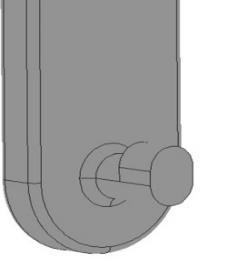
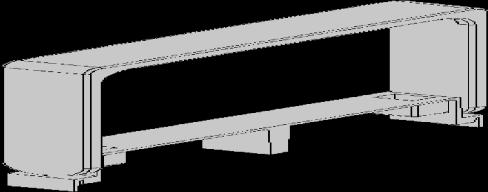
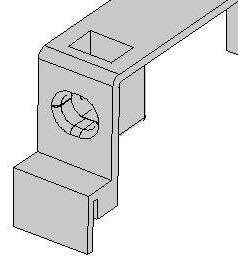
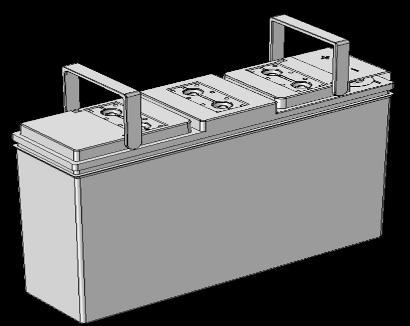
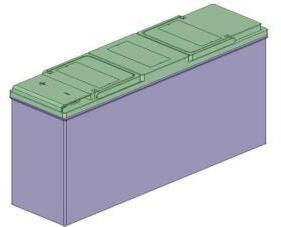
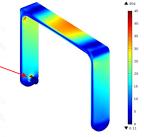
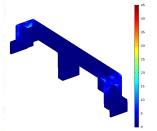
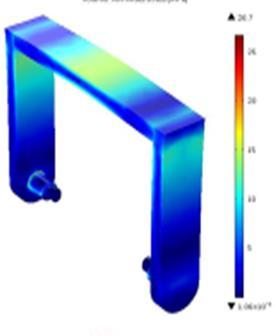
Currentdesignfor350N
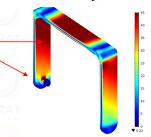
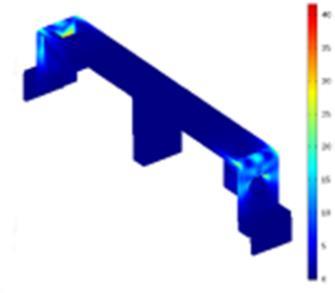
Fig Case(1b): Currentdesignfor700N
Loadoneachhandle350N,coverbottomdisplacement constrained
VonMoisesstress356MPa
Intheaboveimagethehandleisbearingtoitsbreak point
Table 1: criticalsegmentofexistingdesign
Loadoneachhandle700N,coverbottomdisplacement constrained
VonMoisesstress711MPa
Inthebelowimagethehandleisbearingtoitsbreak point
International Research Journal of Engineering and Technology (IRJET) e-ISSN: 2395-0056
Volume: 11 Issue: 04 | Apr 2024 www.irjet.net p-ISSN: 2395-0072
Intheabovecasethehandleofthebatteryisabouttobreak duetotheloadofthebattery.Needsomechangestohandle towithstandtotheloadofthebattery.Wecanobservein theaboveimagethatthemaxstressinthehandlehasbeen exceededtothebreakpoint.
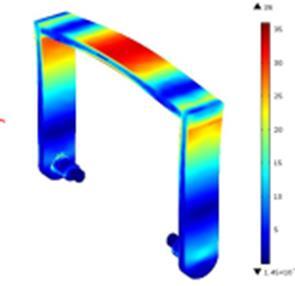
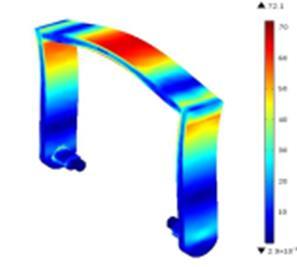
The new design demission are modifications of existing design.FornewdesignanewmaterialFR-ABSisusedforthe increaseofstiffnessandstrengthofthematerial.Indesign1 pinlengthisincreasedto10mm.Indesign2thecomplete handlethicknessandwidthisincreasedto7mmand21mm respectively and pin diameter is increased to 9 mm for designingwiththehighfactorofsafety.
Table 3: modifieddesignmeasurement
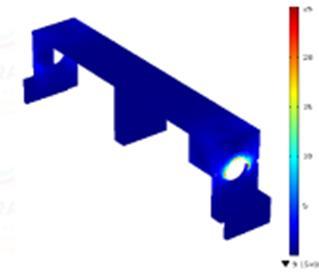
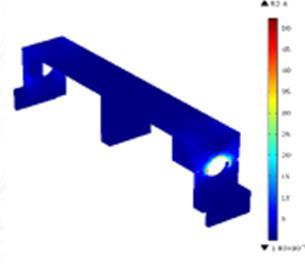
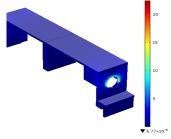
FR-ABS,orFlame-RetardantAcrylonitrileButadieneStyrene, isathermoplasticmaterialknownforitsblendofproperties suitable for diverse applications. Its primary feature is its flame retardancy, making it resistant to combustion and limiting the spread of flames, which is crucial for applicationsrequiringfiresafety.
Additionally, FR-ABS exhibits good mechanical strength, including high impact resistance and toughness, ensuring durability against impacts and stresses. It also offers moderateheatresistanceanddimensionalstabilityovera range of temperatures, along with resistance to various chemicals, oils, and solvents, enhancing its versatility in differentenvironments.
Furthermore, it provides good electrical insulation properties,contributingtoitsuseinapplicationsrequiring electricalsafety.
International Research Journal of Engineering and Technology (IRJET) e-ISSN: 2395-0056
Volume: 11 Issue: 04 | Apr 2024 www.irjet.net p-ISSN: 2395-0072
Table 4: SummaryofAllResults
Fromtheaboveanalysismodules,itisclearlyevidentthat case3hasmoreadvantagesintermsofstrength,abilityto withstandloadratherthantheabove2casesanditissafer whilecarryingthebattery.
Thecurrentmodel,composedofPPCPmaterial,undergoes analysissubjectedtoloadsof350Nand700Nforloophole identification. However, PPCP exhibits inadequate properties. In the redesigned iteration, FRABS plastic replaces PPCP, mitigating identified weaknesses. FRABS offerssuperiorpropertiesrelativetoPPCP.Furthermore,the redesign includes modifications to the handle and pin dimensions, which likely enhance the overall structural integrityandfunctionalityoftheproduct.Theseadjustments arecrucialforensuringoptimalperformanceunderdiverse operatingconditions.Overall,thetransitiontoFRABSplastic, coupledwithadjustmentstothehandleandpindimensions, represents a comprehensive approach to enhancing the design'sreliabilityandlongevity.
8.
1) Dimensions can be changed according to load of the battery
2) Therewillbeachancetouseanotherplastictoprepare handles
1) CarmenM.González-Henríquez,MauricioA.SarabiaVallejos and Juan Rodriguez-Hernandez, Polymers for additive manufacturing and 4D-printing: materials, methodologies, and biomedical applications, Progress in Polymer Science, 10.1016/j.progpolymsci.2019.03.001,(2019).
2) Fariba Sadat Kamelian, Ehsan Saljoughi, ParizadShojaeeNasirabadi and Seyed Mahmoud
Mousavi, Modifications and research potentials of acrylonitrile/butadiene/styrene(ABS)membranes: Areview,PolymerComposites,39,8,(2835-2846), (2017).
3) QianZhang,GirishSharma,JennyP.S.Wong,AikaY. Davis,MarilynS.Black,PratimBiswasandRodneyJ. Weber,investigatingparticleemissionsandaerosol dynamics from a consumer fused deposition modeling 3D printer with a lognormal moment aerosol model, Aerosol Science and Technology, 10.1080/02786826.2018.1464115,52,10,(10991111),(2018).
4) Kaushik Kumar and J. Paulo Davim, Comparative StudyofMechanicalandTribologicalBehaviourof Thermoplast-BasedComposites,EmergentResearch on Polymeric and Composite Materials, 10.4018/978-1-5225-3023-7.ch003,(78-98)
5) Tai Gyun Kim, Rajiv R. Srivastava, Minji Jun, Minseuk Kim and Jae-chun Lee, Hydrometallurgical recyclingofsurface-coatedmetalsfromautomobilediscarded ABS plastic waste, Waste Management, 10.1016/j.wasman.2018.09.037, 80, (414-422), (2018).
6) MinjiJun,TaeGyunKim,Jae-chunLee,RajivR. SrivastavaandMin-seukKim,Extractionofthe Surface-CoatedMetalsfromWasteAcrylonitrile Butadiene Styrene Plastics in an Ammoniacal Solution,Extraction2018,10.1007/978-3-31995022-8_144,(1743-1751),(2018).
7) MarziehHosseinabadi,MiladGhetmiri,Alireza ShojaeiDindarloo and Yousef Jahani, Polyacetal/Acrylonitrile-ButadieneStyrene/Thermoplastic Polyurethane Blends andTheirNanocompositesMorphologicaland Rheological Behavior as a Tertiary Blend, Polymer Science, Series A, 10.1134/S0965545X18070039, 60, 6, (816827),(2019).
8) BHermawan,SNikmatin,Sudaryanto,HAlatas andSGSukaryo,Effectofoilpalmemptyfruit bunchesfibersreinforcedpolymerrecycled,IOP Conference Series: Materials Science and Engineering
9) QianZhang,JennyP.S.Wong,AikaY.Davis,Marilyn S. Black and Rodney J. Weber, Characterization of particleemissionsfromconsumerfuseddeposition modeling 3D printers, Aerosol Science and Technology,51,11,(1275),(2017).
International Research Journal of Engineering and Technology (IRJET) e-ISSN: 2395-0056
Volume: 11 Issue: 04 | Apr 2024 www.irjet.net p-ISSN: 2395-0072
10) SzymonWojtyła,PiotrKlamaandTomaszBaran,Is 3Dprintingsafe?Analysisofthethermaltreatment ofthermoplastics:ABS,PLA,PET,andnylon,Journal ofOccupationalandEnvironmentalHygiene,14,6, (D80),(2017).
11) CheeKaiChua,CheeHowWongandWaiYeeYeong, Benchmarking for Additive Manufacturing, Standards, Quality Control, and Measurement Sciencesin3DPrintingandAdditiveManufacturing, 10.1016/B978-0-12-813489-4.00008-8,(181-212), (2017).
12) NguyenThi Thanh Truc and Byeong-Kyu Lee, SelectiveseparationofABS/PCcontainingBFRsfrom ABSsmixtureofWEEEbydevelopinghydrophilicity with ZnO coating under microwave treatment, JournalofHazardousMaterials,329,(84),(2017).