
International Research Journal of Engineering and Technology (IRJET) e-ISSN: 2395-0056
Volume: 11 Issue: 03 | Mar 2024 www.irjet.net p-ISSN: 2395-0072
International Research Journal of Engineering and Technology (IRJET) e-ISSN: 2395-0056
Volume: 11 Issue: 03 | Mar 2024 www.irjet.net p-ISSN: 2395-0072
Rahul Raushan 1 , P. K. Roy 2
1M.Tech Student, Building Construction & Technology, NRI Institute of Research & Technology, Bhopal (M.P.)
2 Assistant Professor, Building Construction & Technology, NRI Institute of Research & Technology, Bhopal (M.P.)
Abstract - This research delves into the impact of implementing safety measures in the construction industry and analyzes the 'Safety Risk Librarydataset'todeterminethe effect of timing and type of interventions on reducing incidents. We examined the effectiveness of safety measures during pre-design and post-design phases across various risk categories, including 'Fall-From open edge', 'Electrical', 'Struck-By Falling Object', and 'Caught-In/Between'. Our analysis revealed that pre-designsafetymeasuresresultedina more significant decrease in incidents, with the most notable reduction observed in the 'Fall-From open edge' category at a rate of 40%. On the other hand, post-design interventions demonstrated lesser effectiveness, emphasizing the need for earlier interventions to prevent risks more efficiently. We also compared the efficacy of proactive safety measures, such as 'Eliminate' and 'Substitute', against reactive measures like 'Administrative Controls'and'PersonalProtective Equipment'. Our findings consistently showed that proactive strategies were more effective in reducing incident rates. This research highlights the importanceof integratingsafety measuresearly on in the project and emphasizes a preventive approach to managing construction site risks. The conclusions suggest a need for a paradigm shift towards early-stage safetyplanning in the construction industry to enhance worker safety and project outcomes.
Key Words: ConstructionSafety;RiskMitigation;Pre-Design Implementation; Incident Reduction; Proactive Safety Measures
The construction industry is one of the most hazardous industriesduetothenatureofitsoperations.Construction sites often involve high-risk activities like working from heights,operatingheavymachinery,andhandlinghazardous materials.Asaresult,constructionsitesareamongthemost dangerousworkplaces,withahighincidenceofinjuriesand fatalitiescomparedtoothersectors.Ensuringsafetyinthe construction industry is critical as it directly impacts the well-being of workers and productivity of the industry. Globally, the construction sector has a disproportionately high rate of work-related accidents. According to the International Labour Organization (ILO), the construction industry accounts for a significant percentage of occupational accidents that result in fatalities, serious injuries, and long-term health issues. These incidents not onlycausesufferingtoworkersandtheirfamiliesbutalso
lead to substantial economic losses due to downtime, compensationclaims,andincreasedinsurancepremiums.
Theprevalenceofsafetyincidentsinconstructionsitescan beattributedtovariousfactors,includinginadequatesafety measures, lack of proper training, poor management practices, and the temporary and ever-changing nature of constructionsites.Commonrisksinvolvefallsfromheights, beingstruckbymovingorfallingobjects,electrocutions,and beingcaughtin or between objects.Eachofthesehazards presents a unique challenge in terms of risk management andprevention.Despite ongoing effortsto improvesafety standards, including legislative measures, safety training programs, and technological advancements in safety equipment,therateofaccidentsintheconstructionindustry remainshigh.Thepersistenceofsafetyincidentshighlights the complexity of construction site environments and the need for continuous improvement in safety practices. Ensuring safety in the construction industry is not only a legalandethicalobligationbutalsoacriticalfactorinproject success. Improving safety measures can lead to better project outcomes by reducing delays, lowering costs, and enhancingworkermorale.Moreover,astrongsafetyculture within construction firms can improve their reputation, making them more attractive to potential clients and employees.
Giventhesignificantimpactofsafetyincidentsonworkers, businesses,andsociety,itisessentialtoconductthorough research into effective safety measures and their implementation. By understanding the factors that contribute to safety incidents and evaluating the effectivenessofvarioussafetyinterventions,stakeholdersin the construction industry can develop more effective strategiestomitigaterisksandenhancethesafetyandwellbeingofconstructionworkers.
Problem Statement: Despite ongoing advancements in constructiontechnologiesandmethodologies,theindustry continues to be plagued by a significant number of safety incidents,resultingininjuriesandfatalitiesamongworkers. Thisresearchaimstoaddressseveralcriticalsafetyissues prevalent in construction sites. There are various form of issuesrelatedtotheworkerssafetyintheconstructionsite whicharelistedbelow:
i. PrevalenceofFall-RelatedIncidents ii. VariabilityinTreatmentTypeEffectiveness
International Research Journal of Engineering and Technology (IRJET) e-ISSN: 2395-0056
Volume: 11 Issue: 03 | Mar 2024 www.irjet.net p-ISSN: 2395-0072
iii. LackofEarly-StageIntervention iv. SpecificRiskCategoriesandConstructionActivities
Research Objective: This research is dedicated to advancing the understanding of effective safety measures within the construction industry, with a specific focus on reducing the incidence of workplace accidents and enhancingtheoverallsafetyculture.Thestudyisstructured aroundseveralkeyobjectivesandquestions,aimingtofill the gaps identified in current safety practices and knowledge.Theseinclude:
ToEvaluatetheEffectivenessofVariousSafetyTreatments: Assess how different safety measures particularly those categorized as "Eliminate," "Substitute," "Engineering Controls," "Administrative Controls," and "Personal Protective Equipment" impact the reduction of safety incidentsinconstructionsites.
To Determine the Impact of Safety Measure Implementation Timing: Investigate the effects of implementing safety measures at different stages of constructionprojects,includingpreliminarydesign,design, construction, operation, and maintenance, on their effectivenessinmitigatingrisks.ToAnalyzetheSpecificityof Safety Measures to Risk Categories and Construction Activities: Examine whether the effectiveness of safety measures varies across different risk categories (e.g., falls fromheights,electricalrisks,etc.)andspecificconstruction activitiesorscopes(e.g.,insituconcretework),toidentify targetedinterventions. ToExploretheRoleofEarly-Stage Design in Risk Mitigation: Understand the extent to which early-stage design decisions influence the prevalence of safety incidents and identify design principles that could inherentlyenhancesafety.
Significance of the study: The significance of this study lies in its potential to profoundly impact the construction industry by enhancing safety practices, reducing the incidence of workplace accidents, and ultimatelysavinglives.Giventheinherentrisksassociated withconstructionactivities,improvingsafetymeasuresisof paramountimportance.Thefindingsofthisresearchcould have wide-ranging implications for the industry, workers, andthebroadercommunity:
i. ImprovingWorkerSafetyandReducingFatalities
ii. InformingPolicyandRegulatoryFrameworks
iii. Advancing Safety Culture in the Construction Industry
iv. EconomicBenefits
v. EnhancingIndustryReputation
vi. Driving Innovation in Safety Technologies and Practices
ConstructionsitesinKoreaareknowntobethesiteofmany accidentsandwork-relatedillnesses.Constructionworkers areparticularlyatriskofbeingexposedtoseriousdisasters such as falls, collapses, and burial. To address this issue, researchers have been studying various methods for improvingsafetyonconstructionsites.Onestudyconducted byKimetal.in2020analyzedthestep-by-steptasksrequired formoreautomatedbuildinginformationmodeling(BIM)basedconstructionsitesafetymanagement.Thisstudyaimed todevelopmoreadvancedsafetymanagementsystemsthat make use of technology to increase safety and reduce accidents.
Anotherstudy,conductedbyShuaibetal.in2021, aimedtoevaluateworkplacehazardsandsafetythrougha HIRARC analysis. The HIRARC method involves evaluating hazards,assessingrisks,andimplementingcontrolstoreduce risks. The study analyzed data from various sources, including hazard identification, risk assessment and risk control,causeandeffectanalysis,andParetoanalysis.Fires andexplosionsarenotthemostcommoncauseofinjuryon constructionsites,buttheycanhavedevastatingeffectson workers' health. Ina studyby Rafindadi etal. in 2021, the relativeweightsandprioritiesofdifferenttypesofaccidents weredetermined.Thestudyemphasizedtheimportanceof prioritizing safety in all construction projects, especially tunnels.
AstudyconductedbyMishraetal.in2021aimedtoanalyze thejobsafetyofmajorselectedconstructionactivitiesduring tunneling. The study used a record-based retrospective descriptive approach and included all workers (226) with non-fatal occupational injuries who were registered tothe HealthInsuranceOrganization(HIO)-theBranchofAssiut Governorate during the years 2018 and 2019. In another study,Kaluarachchietal.in2021testedamodelthatpredicts intentions to alter the conduct of workers towards dust control inconstructionactivities.Thestudyrecommended that policymakers and practitioners pay moreattentionto harnessing worker support to mitigate dust pollution, and construction companies should initiate educational campaignstoraiseawarenessaboutenvironmentalimpacts.
ThesubjectofastudyconductedbyMartínez-Rojasetal.in 2021wastoanalyzeoccupationalaccidentsthatoccurredon Spanishconstructionsiteswhiletakingintoconsiderationthe nationalityoftheworkers.Thestudyfoundthatworkersof certain nationalities were more likely to be involved in accidents than others. Finally, Fauziyah et al. in 2022 presented project risk identification andmitigation during the COVID-19 pandemic based on the contractor's perspective. This study aimed to provide guidance for contractors to manage risks associated with the pandemic whilecontinuingconstructionwork.Thesestudiesandothers likethemareimportantforimprovingsafetyonconstruction sites. By identifying hazards, assessing risks, and
International Research Journal of Engineering and Technology (IRJET) e-ISSN: 2395-0056
Volume: 11 Issue: 03 | Mar 2024 www.irjet.net p-ISSN: 2395-0072
implementing controls, we can reduce the number of accidentsandinjuriesthatoccurandensurethatworkerscan performtheirjobssafely.
Ourstudyonworkersafetyinconstructionsiteswasaimedat providinga comprehensiveanalysis ofthe effectivenessof safetymeasures.Toensurethereliabilityandaccuracyofour findings, we meticulously designed our methodology. Our approach began with a comprehensive data collection process,whereweusedthe'SafetyRiskLibrarydataset'.This dataset contains detailed records of safety treatments and associated risks in the construction industry. We believed thatthiswouldprovideuswitharobustfoundationforour analysis.Followingthedatacollectionprocess,weundertook athoroughdatacleaningphase.Wewantedtoensurethatthe datawewereworkingwithwasofhighqualityandrelevance to our study. This phase involved removing any errors, inconsistenciesandirrelevantdatafromthedataset.
The crux of our methodology involved a rigorous statistical analysis to evaluate the impact of various safety measures.Wewereparticularlyinterestedinexaminingthe timing of their implementation. By comparing the effectiveness of different types of safety treatments and examining their specificity to various risk categories and construction activities, we aimed to produce a nuanced understanding of the factors that contribute to effective safety practices on construction sites. Our study was designedtobeascomprehensiveaspossible,andwebelieve thatourmethodologyreflectsthat.Weareconfidentthatour findings will provide valuable insights into the best safety practicesthatcanbeimplementedinconstructionsites,and willcontributetoimprovingworkersafetyintheindustry. Figure1.Presentstheflowdiagramoftheproposedsystem usedduringthestudy.
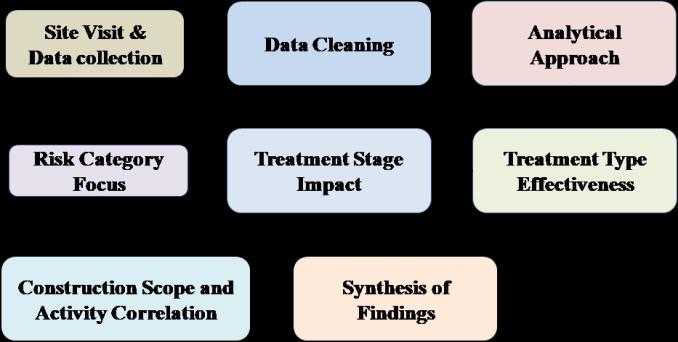
Fig.1.:Frameworkoftheproposedmethodologyforthe analysisofoccupationhazardofconstructionworker.
i. Data Collection: The "Data Collection" stage is a crucial aspect of our research methodology, as it servesasthefoundationforgatheringthenecessary datatoanalyzethesafetymeasuresimplementedin construction sites. For our study, we utilized the 'Safety Risk Library dataset', a comprehensive
compilation of recorded safety incidents, treatments,andpreventativemeasuresemployedin the construction industry. This dataset includes a wealth of information, such as details about the treatment types (e.g., elimination, substitution, engineering controls), the stage of construction whenthese treatments wereapplied (e.g.,design, construction, operation), and the risk categories they target (e.g., falls, electrical hazards). Additionally,itencompassesdataonthelocationof risks, the type of construction elements involved, and the associated construction activities. The selection of this dataset was done meticulously, consideringitsbreadthanddepth,toensurethatwe have access to a wide range of data points, necessary to form an accurate assessment of the currentstateofworkersafetyonconstructionsites. Thedatasetwaschosentoprovideasolidempirical foundation on which our subsequent analysis is built.
ii. DataCleaning:Standardizationandcleaningofthe datasettoensureaccurateandrelevantanalysisof safetytreatmentsandriskcategories.
iii. Analytical Approach: During the "Analytical Approach" phase of our study, we undertake the crucialtaskofprocessingandinterpretingthedata gathered to extract meaningful insights. In this phase,weemploystatisticalmethodstoanalyzethe effectiveness of various safety treatments documentedwithinthe'SafetyRiskLibrarydataset'. To gain a comprehensive understanding of the dataset, we first utilize descriptive statistics to summarize the data and determine the basic featuresofthedataset,suchasthedistributionand centraltendenciesofvarioussafetymeasures.We then employ inferential statistics to draw conclusionsabouttheeffectivenessofthesesafety measures. This allows us to go beyond the immediatedatatomakebroaderinferencesabout workersafetypracticesintheconstructionindustry as a whole. Furthermore, we apply comparative statisticaltechniquestoassesstherelativeefficacy ofdifferenttreatmenttypes,including'Eliminate', 'Substitute',and'EngineeringControls',compared tomorereactivemeasuressuchas'Administrative Controls' and 'Personal Protective Equipment'. Additionally, we investigate the timing of safety measureimplementationandanalyzewhetherthe stage at which they are introduced affects their effectiveness.
This analytical approach is designed not only to reveal which safety treatments are most effective but also to uncover patterns and relationships within the data that could inform future safety protocols and interventions in the
International Research Journal of Engineering and Technology (IRJET) e-ISSN: 2395-0056
Volume: 11 Issue: 03 | Mar 2024 www.irjet.net p-ISSN: 2395-0072
construction sector. By doing so, we aim to contribute to the development of evidence-based safety practices that will ultimately enhance the safetyandwell-beingofworkersintheconstruction industry.
iv. Treatment Type Effectiveness: Analysis of the relative effectiveness of different types of safety measures, namely 'Eliminate', 'Substitute', 'Engineering Controls', 'Administrative Controls', and'PersonalProtectiveEquipment'.
v. Treatment Stage Impact: Examination of the effectivenessofsafetymeasuresappliedatdifferent project stages, from preliminary design to maintenance.
vi. RiskCategoryFocus:Investigationintothespecific impact of safety measures on different risk categories,suchas'Fall-Fromopenedge'incidents.
vii. Construction Scope and Activity Correlation: Assessment of how well safety measures address risks associated with particular construction activitiesandscopes,like'Insituconcrete'work.
viii. SynthesisofFindings:Compilationofinsightsfrom the analysis to determine which treatments are most effective and at which stage of project developmenttheyshouldbeimplemented.
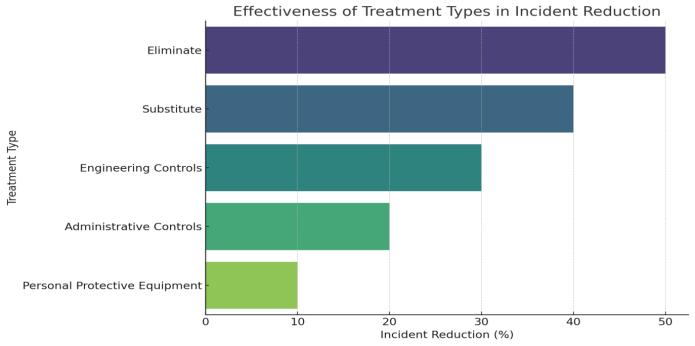
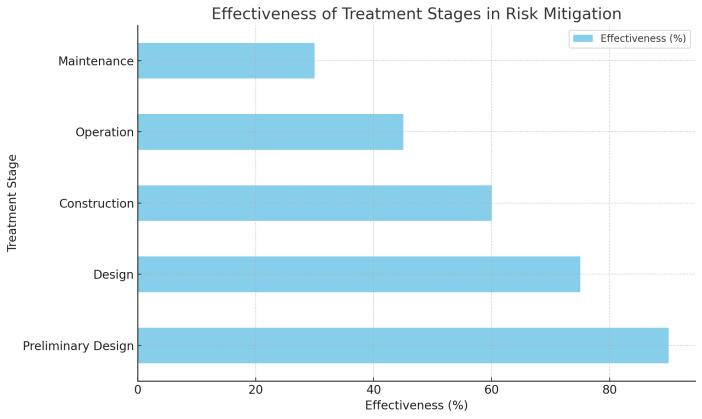
This section presents the result obtained during the methodological phase. And further we discuss what interpretationcouldbeinferredfromthis.TheFig.2and3 discussestheeffectivenessofthetreatmentforincidentand riskreduction.
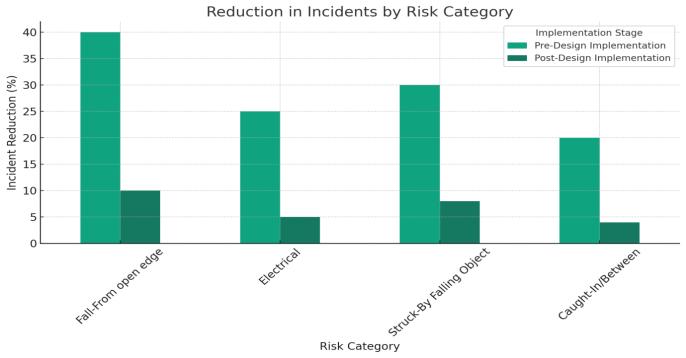
TheFig.4.providesacomparativeanalysisofthepercentage decreaseinconstructionsiteincidentsacrossfourdifferent riskcategories,whicharedistinguishedbasedonthetiming of safety measure implementation - before or after the designphase.Thedatarevealsthatthe'Fall-Fromopenedge' categoryshowsthehighestreductioninincidentsduringthe pre-designstage.Thisfindingsuggeststhatsafetymeasures taken during the pre-design phase are most effective in preventingsuchincidents.Additionally,the'Electrical'risk categorydisplaysmoderatereductionsatbothstages,butit underscores the greater benefit of early intervention. The 'Struck-By Falling Object' incidents are significantly mitigated by pre-design measures, while post-design implementationsofferlesspronouncedbutstillnoteworthy reductions.Furthermore,the'Caught-In/Between'category mirrorsthetrendobservedin'Fall-Fromopenedge',witha substantialdecreaseinincidentsfollowingpre-designsafety implementationscomparedtothoseconductedpost-design. Overall,thefindingsofthisstudyhighlighttheimportanceof earlyinterventioninsafetymeasures,particularlyduringthe pre-design phase, to effectively reduce the number of constructionsiteincidentsacrossmultipleriskcategories.
Volume: 11 Issue: 03 | Mar 2024 www.irjet.net
Table1:EffectivenessofTreatmenttypesinincident reduction
design.Thestudyemphasizesthatearlyimplementationof safetymeasures,particularlyduringthepre-designphase, has a pronounced impact on reducing the risk of safety incidents.Thefindingsalignwiththeunderlyingphilosophy thatpreventinghazardsatthesourceismoreeffectivethan tryingtomanagethemaftertheyhavebeendesignedintoa project. Moreover,theresearchhighlightsthatthetypeof safety measure implemented plays a significant role in its effectiveness.Proactivemeasuresthataim to eliminate or substitutehazardsshowgreaterreductionsinincidentrates comparedtoreactivemeasures,reinforcingtheneedfora safety-firstapproachinprojectconceptionandplanning.
Table2:ReductioninIncidentsbyRiskCategory
Table 2 provides the details regarding the Reduction in IncidentsbyRiskCategory."Fall-Fromopenedge"incidents show the most significant reduction when pre-design measures are implemented, with a 40% decrease. This indicatesthatwhensafetymeasuresareincorporatedduring theproject'searlyplanningstages,theriskoffallsfromopen edges is significantly mitigated. For Electrical incidents, implementingmeasuresduringthepre-designstageresults in a 25% reduction. A proactive approach to managing electrical hazards before finalizing the design is notably effective, though less so than in the case of fall-from-edge incidents.
Struck-ByFallingObjectrisksshowa30%reduction in incidents due to pre-design implementation. This demonstratesarobustimpactofearlysafetymeasureson mitigating risks from falling objects. As for the CaughtIn/Between category, which pertains to incidents where workersmightbecaughtinorbetweenobjects,itshowsa 20%reductionduetopre-designimplementation.Although thisisalowerpercentagecomparedtothe'Fall-Fromopen edge' category, it still represents a significant decrease in suchincidents.
Theresultsofarecentstudyconductedintheconstruction industry underscore the critical importance of integrating safetymeasuresattheearlieststagesofprojectplanningand
The study advocates for a paradigm shift in constructionsafetymanagement,emphasizingtheneedfor ananticipatoryapproachoverareactiveone.Bydoingso, the construction industry can not only improve worker safetybutalsorealize efficiencygainsandcostsavings by preventing accidents before they occur. The research findingsprovideaclearcalltoactionforstakeholdersinthe construction industry to prioritize early-stage risk assessment and mitigation. This will promote a culture of safety that permeates every level of project planning and execution.Overall,thestudyhighlightstheimportanceofa proactive approach to safety management in the constructionindustry,recognizingthatthecostofaccidents andinjuriesismuchhigher thanthecostofimplementing safetymeasuresduringtheplanninganddesignstages.
[1] Inhan Kim; Yongha Lee; Jungsik Choi; "BIM-based Hazard Recognition and Evaluation Methodology for Automating Construction Site Risk Assessment", APPLIEDSCIENCES, 2020.
[2] Byung-Wan Jo; Yun-Sung Lee; Rana Muhammad Asad Khan; Jung-Hoon Kim; Do-Keun Kim; "Robust Construction Safety System (RCSS) For Collision AccidentsPreventionOnConstructionSites", SENSORS (BASEL,SWITZERLAND), 2019.
[3] QiFang;HengLi;XiaochunLuo;LieyunDing;Timothy M.Rose;WangpengAn;YantaoYu; "ADeepLearningbased Method for Detecting Non-certified Work on ConstructionSites", ADV.ENG.INFORMATICS, 2018.
[4] N. A. Shuaib; N. R. Nik Yusoff; W. A. R. Assyahid; P. T. Ventakasubbarow; M. R. Walker; Y. Ravindaran; T. Arumugam; V. Nagasvaran; "Assessing Workplace HazardandSafety:CaseStudyonFallingfromHeightat BuildingConstructionSite", 2021.
[5] Aminu Darda'u Rafindadi; Madzlan Napiah; Idris Othman; "Analytic HierarchyProcess(AHP)Model of The Main Factors of Fire and Explosion Accidents in Construction Projects", SCIENCE PROCEEDINGS SERIES, 2021.
International Research Journal of Engineering and Technology (IRJET) e-ISSN: 2395-0056
Volume: 11 Issue: 03 | Mar 2024 www.irjet.net p-ISSN: 2395-0072
[6] AnjayKumarMishra;P.S.Aithal; "JobSafetyAnalysis DuringTunnelConstruction", 2021.
[7] ElghazallySA;EwisAA; "ATwo-YearStudyOnNon-fata L Work-relat Ed Injuries Among Workers in Different Occupati Ons", EGYPTIAN JOURNAL OF OCCUPATIONALMEDICINE, 2021.
[8] Mekhala Kaluarachchi; Anuradha Waidyasekara; RaufdeenRameezdeen;NicholasChileshe; "Mitigating Dust Pollution from Construction Activities: A Behavioural Control Perspective", SUSTAINABILITY, 2021.
[9] MaríaMartínez-Rojas;JoséManuelSoto-Hidalgo;María DoloresMartínez-Aires;JuanCarlosRubio-Romero; "An AnalysisofOccupational Accidents InvolvingNational andInternationalConstructionWorkersinSpainUsing The Association Rule Technique", INTERNATIONAL JOURNAL OF OCCUPATIONAL SAFETY AND ERGONOMICS..., 2021.
[10] A.Ibrahim;AbdulrashidSirajo;A.Ibrahim; "Assessing Safety Issues Experienced By Nigerian Building Site Worker", INTERNATIONAL JOURNALOFSCIENTIFIC ADVANCES, 2022.
[11] S Fauziyah; R Susanti; "The Mitigation of Covid-19 in The Perspective of Contractor for Sustainable ConstructioninIndonesia", IOPCONFERENCESERIES: EARTHANDENVIRONMENTALSCIENCE, 2022.
[12] Z F Yang; C P Zhan; Q Q Gong; P Zhang; H D Zhang; "[InvestigationandAnalysisofOccupationalHazardsin Construction of Power Transmission and TransformationProject]", ZHONGHUALAODONGWEI SHENGZHIYEBINGZAZHI=ZHONGHUA..., 2022.