
International Research Journal of Engineering and Technology (IRJET) e-ISSN: 2395-0056
Volume: 11 Issue: 03 | Mar 2024 www.irjet.net p-ISSN: 2395-0072
International Research Journal of Engineering and Technology (IRJET) e-ISSN: 2395-0056
Volume: 11 Issue: 03 | Mar 2024 www.irjet.net p-ISSN: 2395-0072
Abhishek Sapkal1*, Leoson Heisnam2, Satya Sri Kusi3
Under graduate, Bachelor of computer application, Amravati University, Akola, Maharashtra1 Visiting Faculty, Department of Cyber Security and Digital Forensics, Institute of Forensic Sciences for Training & Skilling, National Forensic Science University, Manipur2 Assistant professor, Department of Forensic science, Mohan Babu University, Andhra Pradesh3
Abstract
CloudcomputingisamethodofdeliveringITservicesthroughanetworkofinterconnectedservers,formingaunifiedsystem known as the "Cloud." This virtualized ecosystem integrates interconnected networks, servers, applications, storage, and services,enablinguserstoconvenientlyaccessthemasneededwithminimaladministrativeintervention.Thisreviewarticle focusesonvirtualizationandcontainerizationasfoundationalpillars,thepaperexplorestheirrevolutionaryimpactonresource management and deployment efficiency. It further delves into the impending trends and challenges set to shape the cloud computinglandscapefrom 2025to 2030.It reviews the anticipated adoption of hybridandmulti-cloudstrategies,offering organizationstailoredsolutionswhilemitigatingrisksofvendorlock-in.Theriseofedgecomputingishighlightedasapivotal solutiontoaddresslatencyissuesandfosteracompetitiveIoTecosystem.Additionally,integrationofAIandmachinelearning withincloud frameworksis poised tounlock newrealmsofinnovationand optimization, propelling digital transformation forward.Thearticleunderscorestheimperativeforenhancedsecuritymeasurestosafeguardsensitivedataandensureuser privacy.Ongoingpricecompetitionsamongcloudprovidersandincreasedregulatoryscrutinyarealsodiscussed,highlightingthe dynamic landscape of cloud computing. It provides valuable insights into the past, present, and future trajectory of cloud computing. It concludes by affirming the pivotal role of cloud computing in driving digital innovation and empowering organizationstothriveinanincreasinglyinterconnectedworld,offeringrecommendationsforbusinessestoleverageemerging technologiesandnavigateevolvingchallengeseffectively.
1. Introduction
Cloudcomputingdenotestheutilizationofnumerousservermachinesthroughadigitalnetwork,operatingcohesivelyasan integratedsystem.The"Cl
Keywords: Cloudcomputing,Hybridandmulti-cloudstrategies,IoTecosystem,AIandmachinelearningintegration,Security measuresetc. oud"isavirtualizedenvironmentcomprisingnetworks,servers,applications,storage,andservices, accessibletouserson-demandwithminimalmanagementinvolvement.Itoffersresourcesandserviceswithoutrequiringusers tohavein-depthsystemknowledge,providingawiderangeofapplicationsandscalableservicestailoredtousersandbusinesses [1].CloudcomputingisacomputingtechniquethatdeliversITservicesthroughinterconnectedlow-costcomputingunitsviaIP networks.Emerging from searchengine platformarchitecture,itpossesses fivepivotal technical traits:expansive resource capacity, exceptional scalability, shared resource pools encompassing both virtual and physical assets, dynamic resource allocation,andversatileapplicabilityacrossvariouspurposes[2]. Cloudcomputinggivesservicestousers,allowingthemto storeandprocessdatawithoutneedinghardware.It'sadeliverymodelforcomputingservicesthatfacilitatesthereal-time developmentofvariousservices.ExamplesincludeGoogleAccountsandAmazonElasticComputeCloud(EC2).
Table-1: Typesofcloudcomputingservices[3],[4],[5].
1. Public Cloud Providesopenaccesstoservicesovertheinternet,managedbydedicatedserviceproviders
InfrastructureasaService (IaaS)
Thisgenerallyoffersnetwork,storage,andsoftwaresystems,replacingtraditionaldatacenter functions
PlatformasaService(PaaS) Thisgenerallyprovidesvirtualizedserversforapplicationdevelopmentanddeployment, minimizingservermaintenance
International Research Journal of Engineering and Technology (IRJET) e-ISSN: 2395-0056
Volume: 11 Issue: 03 | Mar 2024 www.irjet.net p-ISSN: 2395-0072
-SoftwareasaService(SaaS) Deliverssoftwareapplicationsthroughawebbrowser,eliminatingtheneedforinstallation.
2. Private Cloud Usedbybusinessesforenhanceddatasecurityandcontrol.Canbeon-premiseorexternally hosted.
-On-premisePrivateCloud Cloudinfrastructurehostedwithintheorganization'sdatacenter. -ExternallyHostedPrivate Cloud Cloudinfrastructurehostedexternallybyacloudserviceprovider.
3. Hybrid Cloud Itgenerallycombinesthefeaturesofprivate&publicclouds,allowinguserstoleverage advantagesofboth.
4. Community Cloud Sharesinfrastructureamongmultipleorganizationswithcommonprivacy,security,and regulatoryneeds.Situatedbetweenpublicandprivateclouds,itprovidesexclusiveresourcesfor twoormoreorganizationswithsharedconsiderations.
5. Multi-cloud Computing Utilizesmultiplecloudnetworksandservicessimultaneouslytoaddressvariousissuesincloud computing.Usersorbusinessesleveragedifferentcloudservicesfordifferentapplications, enhancingflexibilityandresilience.
6. Distributed Cloud Model Amultitudeofmicrodatacenterslinkedtogetherviamediumtohighbandwidthconnections, administeredasaunifiedentity.Particularlyadvantageousforprivateenterprisecloudsetups, especiallyforsmaller-scaleoperationsincontrasttoextensivepublicdatacenters.
TheInternet'sexpansiondroveInternetserviceproviderstoadoptcost-effectivecommodityPCsforstorageandcomputing, sparking the emergence of three primary cloud computing styles: Amazon, Google, and Microsoft. Amazon pioneered InfrastructureasaService(IaaS)throughservervirtualization,offeringserviceslikeElasticComputeCloud.SimpleStorage Service,andSimpleDB.Googlefocusedonatechnique-specificsandbox,launchingGoogleAppEngineasaPlatformasaService (PaaS)solutionin2008.MicrosoftAzure,launchedinOctober2008,utilizestheWindowsAzureHypervisorand.NET,providing serviceslikeBlobObjectStorageandSQLService[6]
includingitsprogression,currentstatus,technologicaladvancements,futuredirections,challenges,andpracticalexamples.This delves into the origins, current landscape, architectural models, technological innovations, and specific applications within variousindustries.Throughthisanalysis,thisarticleaimstoprovideadeeperunderstandingofcloudcomputing'sevolution,its potentialfuturedevelopments,anditspracticalimplicationsforbusinessesandindividuals.
Intheyear2024,thecontemporarylandscapeofinformationtechnologyissignificantlydependentoncloudcomputing,serving as the foundational framework for diverse operational functions. According to Gartner, an anticipated 95% of emerging workloadsareexpectedtobehostedinthecloudby2025.Businessesarecompelledtoadjusttheirstrategiestoleveragethe adaptabilityandcost-effectivenessinherentincloudinfrastructuretomaintaincompetitiveness.Projectionsindicatethatglobal expendituresoncloudservicesinfrastructurewillexceed$1trillionin2024,drivenbyvariousprevailingtrends,suchasthe increaseddemandforinnovativeplatformsandas-a-servicesolutions,particularlythoseincorporatingartificialintelligence[7] Enterprises are increasingly recognizing the cloud not merely as a means of cost reduction but also as a strategic tool for fosteringinnovation,enhancingagility,andachievingsuccessacrossdiverseindustries.Thetrajectoryofcloudcomputingtrends isinfluencedbyrisingcloudcostsandthegrowingutilizationofadvancedAI,includingtechnologieslikeChatGPT.Companiesare proactivelyshiftingtheiractivitiestocloud-basedplatforms,aimingtooptimizeefficiencyandenhancecustomerinteractions. Organizations will persist in leveraging cloud services to access cutting-edge technologies, thereby improving the overall efficiency of their operations.Cloudcomputing facilitatesthe accessibility of new technologiesby eliminating the need for buildingoracquiringexpensiveinfrastructure,crucialforsupportingtheseresource-intensiveprocesses[8]
International Research Journal of Engineering and Technology (IRJET) e-ISSN: 2395-0056
Volume: 11 Issue: 03 | Mar 2024 www.irjet.net p-ISSN: 2395-0072
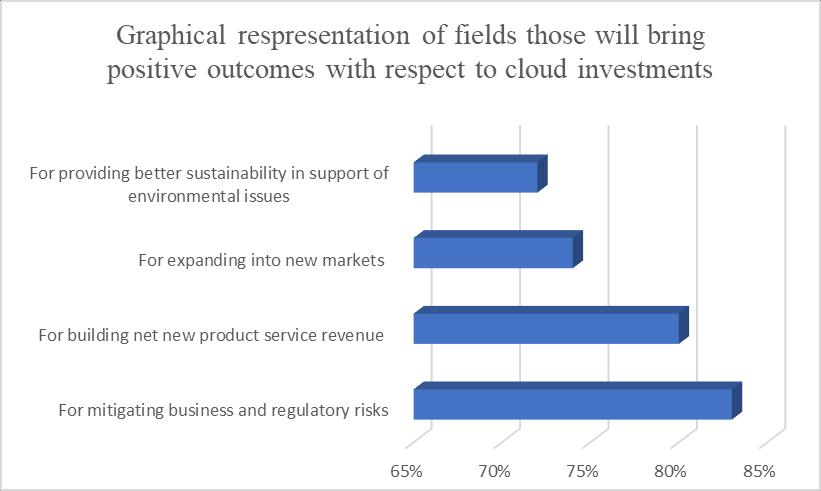
Figure-1: Graphicalrepresentationoffieldsthosewillbringpositiveoutcomeswithrespecttocloudinvestments[7]
TheDeloitteUSFutureofCloudsurveyreportrevealscompellinginsightsintothefavorableoutcomesexpectedfrominvestments incloudcomputingacrossvariousbusinessdomains.Asignificant83%ofrespondentshighlightthepotentialofcloudcomputing toeffectivelymitigatebusinessandregulatoryrisks.Moreover,asubstantial80%expressconfidenceinthecapabilityofcloud investmentstogeneratenetnewproductservicerevenue.Thesurveyalsoemphasizestheroleofcloudcomputinginfacilitating businessexpansion,with74%recognizingitspotentialforenteringnewmarkets.Additionally,72%ofparticipantsacknowledge thepositiveimpactofcloudinvestmentsinfosteringbettersustainabilitypractices,aligningwithenvironmentalconcerns.These findingsunderscorethemultifacetedbenefitsthatorganizationsanticipatefromembracingcloudtechnologies,rangingfromrisk mitigationandrevenuegenerationtomarketexpansionandenhancedsustainabilityefforts.
Table-2: RecentEmergingTechnologiesandPracticesinthefieldofCloudComputing[9]
Cloud Computing Trends for 2024
Description
1. Citizen Developer TheconceptofCitizenDeveloperallowsnon-coderstoconnectsystemsusingtoolslikeIfThis ThenThat.ExpecttoolsfromMicrosoft,AWS,Google,etc.,foreasyappdevelopmentwithadragand-dropinterface[10]
2. Better AI/ML AWS and Google are heavily invested in machine learning. Expect advancements in AI/ML integrations,suchasAWSDeepLensandGoogleLens,withafocusonmachinelearning-based products.IBMisaleaderinAIandmachinelearninginitiatives[11],[12].
3. Automation
4. Continued Investment in Data
AutomationisthekeytoCloudefficiency.WithinvestmentsincitizendevelopertoolsandAI,more devicesareexpectedtobereleasedtomakeautomationeasierforcloudvendors[13],[14]
Storing data in extensive databases within a distributed computing setting. The widespread utilizationofGPUsfordataprocessingwilldrivethenecessityfornovelcomputerarchitectures. Organizationswillexecutealgorithmsconcurrentlyacrossclusterstofacilitatereal-timeanalyses [9].
5. Competition IncreasingcompetitionbetweenAWS,MicrosoftAzure,andGoogleCloudPlatforminpricing, reliability,andagainstothervendors.Expectashifttowardspay-as-you-usemodelsacrossall services[15]
6. Kubernetes and Docker to Manage Cloud Deployment KubernetesandDockerare poisedtorevolutionizedevelopers'approachtooverseeingcloud deployments, streamlining the process of deploying, scaling, and managing containerized applicationsthroughautomation[16].
International Research Journal of Engineering and Technology (IRJET) e-ISSN: 2395-0056
Volume: 11 Issue: 03 | Mar 2024 www.irjet.net p-ISSN: 2395-0072
7. Cloud Security and Resilience
Cloudserviceprovidersaremakingsubstantialinvestmentsinsecurityandresiliencecapabilities, such as data encryption, access management, and disaster recovery measures, to safeguard customerdata[17]
8. Multi and Hybrid Cloud Solutions Businesses are adopting multi-cloud and hybrid cloud solutions to spread workloads across multipleproviderswhilemaintainingcontroloverdataandapplications[18],[19],[20].
9. Cloud Cost Optimization
Cloud providers are developing tools and services to help users manage costs, including cost monitoring,budgetingtools,instancesizingrecommendations,andreservedinstanceoptions[21], [22]
10. Edge Computing Adevelopingtrendisshiftingcomputationaltasksanddatastoragenearertodevices,thereby reducing latency and bandwidth demands, resulting in expedited and more effective data processing[23],[24].
11. Disaster Recovery A vital aspect for businesses moving operations to the cloud. Cloud providers are developing solutionsforquickrecoveryfromdisruptionslikenaturaldisastersorcyberattacks[25],[26]
12. Innovation and Consolidation in Cloud Gaming
Cloudprovidersareinvestingincloudgaming,withconsolidationhappeningasmajorplayers acquiresmallercompaniestoexpandofferingsandreach[27],[28],[29]
13. Serverless Computing A burgeoning trend enables developers to execute code without the burden of server management,therebyloweringinfrastructureexpensesandenhancingscalability.[30],[31],[32], [33]
14. Blockchain Integrationofblockchainwithcloudcomputingtocreatenewapplicationsandservices.Cloud providersofferblockchain-as-a-service(BaaS)solutionsforbuildinganddeployingblockchain applications[34],[35],[36].
15. IoT CloudserviceprovidersareallocatingresourcestodevelopInternetofThings(IoT)solutions, aimedatassistingbusinessesinthemanagementandprocessingofdatageneratedbyIoTdevices [37],[38]
16. Open-Source Cloud Growing popularityofopen-sourcecloud solutionsfor more flexibilityandcontrol over cloud infrastructure,offeringcustomizationoptionsandlowercosts[39],[40].
17. Low-Code and NoCode Cloud Services Enabling businesses to develop applications and services without deep technical expertise, speedingupdevelopmenttimesandreducingcosts[41],[42],[43],[44]
18. Cloud-Native Applications Applications have been designed to run on cloud infrastructure, taking advantage of cloud services. Cloud providers offer tools and services for building and deploying cloud-native applications[45],[46],[47],[48].
19. DevSecOps Anapproachintegratingsecurityintothesoftwaredevelopmentprocess.Cloudprovidersoffer toolsandservicestohelpbusinessesimplementDevSecOpspractices[49],[50],[51]
20. Service Mesh Advancedtechnologyoffersanetworkofmicroservicesequippedwithfunctionalitiessuchas loadbalancing,trafficcontrol,andsecurity.Cloudserviceproviderssupplyservicemeshsolutions tailoredforthemanagementofmicroservices[52],[53].
21. Increased Focus on Green Computing Initiatives Cloudproviders invest in green computing initiatives, suchasrenewable energy and energyefficientinfrastructure,toreducetheircarbonfootprintandmeetsustainabilitygoals[54],[55], [56]
3. Virtualization And Containerization in Cloud Computing
3.1. Virtualization
Virtualization serves as the fundamental element of cloud computing. Through virtualization, cloud computing delivers advantages in terms of convenience and efficiency [57], [58]. Virtualization fundamentally involves creating a virtual representationor"version"ofentitieslikeservers,operatingsystems,storagedevices,ornetworkresources,enablingtheir simultaneousutilizationacrossmultiplemachines.Theprimaryobjectiveofvirtualizationistooptimizeworkloadmanagement
International Research Journal of Engineering and Technology (IRJET) e-ISSN: 2395-0056
Volume: 11 Issue: 03 | Mar 2024 www.irjet.net p-ISSN: 2395-0072
bytransitioningconventionalcomputingmethodstoachievegreaterscalability,efficiency,andcost-effectiveness.Virtualization finds application in diverse domains including operating system virtualization, hardware-level virtualization, and server virtualization. This technology, characterized by hardware efficiency, cost reduction, and energy conservation, is swiftly reshapingthefoundationalprinciplesofcomputing.[59].
Software-based virtualization mechanisms used in cloud computing include virtualization software that separates a real calculatingunitintoseveralvirtualones,allowingforeasyallocationandmanagementofcomputingresources[60].LightIOV representsaninnovativesoftware-drivenNVMevirtualizationapproach,deliveringexceptionalperformanceandscalabilitywhile conservingpreciousCPUresourcesandoperatingindependentlyofspecifichardwarerequirements.[61].Hypervisors,which aresoftwarethatcreateandrunvirtualmachines(VMs),playanimportantroleinvirtualizationbyallowingthehostcomputer tosupportmultipleguestVMsandpreventinginterferencebetweenthem.QEMUisanopen-sourceemulatorandvirtualizer usedforvirtualization [62].
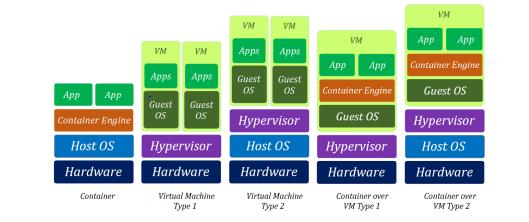
Virtualizationcanbeimplementedatvariouslevelswithinacomputingenvironment,eachofferingdifferentlevelsofabstraction andisolation.
DockerandKubernetesarepopularplatformsforcontainermanagementandorchestration.
Virtualizationbringsgreatchallengesinthefieldofdatasecurityandprivacyprotection.Forexample,itmaybinddifferent tenants’virtualresourcestothesamephysicalresource,thentheuserdatawillbeaccessedbyotherusers[57]
Containerizationisamethodusedfortheagilevirtualizationofsoftwareprogramswithincloudcomputingenvironments.It exertsabeneficialinfluenceonboththedevelopmentanddeploymentphasesofsoftware.Containerscanbecategorizedintotwo distinctgroupsaccordingtotheirconfiguration:ApplicationContainersandSystemContainers[64].Containersenhancethe efficacyofapplicationdeploymentandfindextensiveapplicationinbothcloudcomputingandhigh-performancecomputing (HPC)settings.Byencapsulatingintricateprogramsalongsidetheirdependencies,containersrenderapplicationsmoreadaptable and transportable. Nevertheless, HPC environments demand heightened security measures compared to cloud systems, necessitatingtheinclusionofextensivelibrarieswithinHPCcontainers,therebyimpactingtheirportability.Conversely,cloud containerspossessasmallerfootprintandexhibitgreaterportability.Moreover,cloudsystemstypicallyintegrateadvanced containerorchestrationmechanisms,whileHPCsystemsencounterobstaclesinfacilitatingcontainerorchestration[65]
Kubernetesstandsoutasawidelyembracedmanagingplatformdesignedtooverseecontainerizedworkloadsandservices.It facilitatesmulti-tenancyandoffersfeaturessuchasresourcequotasthroughtheResourceQuotaAPIobject,enablingeffective resourceallocationmanagementandensuringoptimalutilizationofcomputationalresources[66].
International Research Journal of Engineering and Technology (IRJET) e-ISSN: 2395-0056
Volume: 11 Issue: 03 | Mar 2024 www.irjet.net p-ISSN: 2395-0072
Features Virtualization
Security Offerscomprehensiveisolationfromthehost operatingsystemandothervirtualmachines
Guest Compatibility Supports running various operating system versionswithinthevirtualmachine
Deployment Utilizes Hypervisor software to deploy individualvirtualmachines
Persistent Storage
Utilizes technologies such as Virtual Hard Disk (VHD) or Server Message Block (SMB) forsharedstorage
Networking Utilizes virtual network adapters for communication
Containerization
Typicallyofferslightweightisolationfromthehostandother containers, albeit with a less robust security boundary comparedtovirtualmachines
Operatesonthesameoperatingsystemversionasthehost
Employs Docker for deploying individual containers or utilizes an orchestrator like Kubernetes for managing multiplecontainers
Relies on local disks for storage within a single node or leveragesSMBforsharedstorageacrossmultiplenodesor servers
Implements isolated virtual network adapters, offering slightlyreducedlevelsofvirtualization
[68],[69]Anovelapproachwasproposedfordynamicallyallocatingresourcesincloudenvironmentsusingvirtualization.This methodleveragedthe"skewness"strategytoanalyzeresourceutilizationacrossservers,dynamicallyassigningresourcesto optimizeworkloadsandimplementenergy-efficientcomputingalgorithms.Similarly,in [70]theobjectivewastodiminish energyconsumptionandenhanceresourceutilizationwithindatacentersbyemployingtheEnergy-EfficientVMallocation techniquewiththeInteriorSearchAlgorithm(EE-ISA)method,resultinginnotableenergyconservation.
[71]addressedthedecision-makingprocessforshuttingdownorstartingupphysicalmachines(PMs)incloudenvironments. TheyintroducedtheEnergyConservingResourceAllocationalgorithm(ECRASP)algorithm,focusingonconservingpower consumptionofPMs.Inarelatedstudy,[72]aimedtooptimizetheallocationofvirtualmachines(VMs)incloudenvironments usingtheHABBPalgorithm,outperformingtraditionalbindingpoliciesintermsofjobexecutiontime.
Loadbalancingwithincloudcomputingwasacommonfocusamongseveralstudies.[73]introducedaRound-Robinscheduling algorithmaimedatdiminishingaveragewaitingandturnaroundtimesforprocesses.Similarly,[74]presentedtheDynamicand ElasticAntColonyOptimizationLoadBalancing(DEACOLB)algorithmwiththegoalofminimizingtheaverageMakeSpanand reducingstandarddeviations.
[75]exploredtheinfluenceofvirtualizationonenergyconsumptionincloudcomputing.Theyconductedacomparativeanalysis betweenscenariosemployingthePowerSaverSchedulerAlgorithm(PSSA)andgreenalgorithms,underscoringtheenhanced efficiencyofvirtualizeddatacentreenvironmentsdespiteencounteringchallengesrelatedtoMakeSpan.
[76]addressedproblemsrelatedtounderutilizationandoverutilizationinclouddatacentersbyintroducinganautonomous resourceallocationmodel.ThismodelaimedtodiminishrequestwaitingtimesandoptimizeVirtualMachine(VM)allocation basedonworkload.
Several studies emphasized the importance of effective task scheduling and workload contribution to energy savings. [77] introducedtheLoadBalancingandTaskCompletionCostGeneticAlgorithm(LCGA)fortaskscheduling,successfullyachieving bothloadbalancingandminimizationofcompletioncostssimultaneously.Similarly, [78]introducedenergy-savingresource allocationalgorithmstocontributetoworkloadandreduceenergyconsumptioninclouddatacentres[69].
[79]aswell as[80] bothfocus onassessing the performanceof differentcloud quantumcomputing platforms,albeitwith different methodologies. Algorithm development for quantum computing is a prominent area of research. [81] proposes a quantumk-meansalgorithm,studyaimtoaddressspecificchallengesinquantumcomputing,highlightingtheimportance of algorithmic advancements. Architectural frameworks and resource management are key considerations. [82] presents an architecturalframeworkforintegratingquantumcomputingintoexistingenterprisearchitectures,emphasizingtheimportance
International Research Journal of Engineering and Technology (IRJET) e-ISSN: 2395-0056
Volume: 11 Issue: 03 | Mar 2024 www.irjet.net p-ISSN: 2395-0072
of efficient resource utilization. [80] analyses resource consumption and management trends in quantum cloud systems, highlightingtheneedforoptimizedresourceallocation.Lastly,cryptographictechniquesplayacrucialroleinensuringthe securityandprivacyofquantumdata.[83]explorescryptographicverificationforquantumcloudcomputing,while[84]proposes a quantum homomorphic encryption scheme. Both studies contribute to enhancing security measures in quantum cloud environments. Overall, these similarities underscore the multifaceted nature of research in cloud quantum computing, encompassingperformanceevaluation,algorithmdevelopment,architecturalintegration,resourcemanagement,andsecurity considerations.
Table- 4: ChallengesinthefieldofCloudComputingwiththeirprobablesolutions.[85],[86]
Challenges Description Solution
Privacy & Data Security
Notable concerns arise regarding the security, accountability, and privacy of data within Cloud environments.Theseconcernsstemfromfactorssuch as limited visibility, challenges with identity access management, potential data misuse, and misconfigurationswithintheCloud.
Multi-Cloud Environments
Performance Challenges
Themanagementofmulti-cloudenvironmentsposes various challenges, including configuration errors, inadequatesecuritypatching,concernsregardingdata governance,andgranularityissues.Moreover,tracking securityrequirementsandenforcingdatamanagement policies across diverse cloud platforms can be particularlydaunting.
Cloudcomputingperformanceiscontingentuponthe reliability of service providers, with potential implications for business operations in the event of vendordowntime.
Employ measures such as setting up network hardware,applyingthelatestsoftwareupdates, utilizing firewalls and antivirus software, and enhancing bandwidth to optimize the availabilityandsecurityofClouddata.
Utilize multi-cloud data management solutions and employ tools like Terraform to maintain controlovercomplexmulti-cloudarchitectures, therebyaddressingthecomplexitiesassociated with managing multiple cloud environments effectively.
Mitigate performance concerns by enrolling withCloudServiceProvidersofferingreal-time Software as a Service (SaaS) monitoring policies,andconsiderCloudSolutionArchitect Certification training to ensure optimal performanceevenduringchallengingsituations.
Interoperability & Flexibility
High Dependence on Network
Lack of Knowledge and Expertise
Reliability and Availability
Challenges arise with interoperability when transitioning applications between different Cloud ecosystems, involving tasks such as rebuilding application stacks, handling data encryption during migration, setting up networks, and managing apps andservicesinthetargetcloudecosystem.
Insufficient internet bandwidth during large data transferscanrenderdatavulnerabletosuddenoutages.
The shortage of qualified Cloud talent, especially in DevOpsandautomation,poseschallengesinfinding andhiringprofessionalswiththenecessaryskillsand knowledge.
Concerns regarding the high unavailability of Cloud services and a lack of reliability may necessitate additionalcomputingresources.
Establish standards for Cloud interoperability and portability before project initiation, and implement multi-layer authentication and authorizationtoolsforverifyingaccountsacross public,private,andhybridcloudecosystems.
Address network dependencies by investing in higher bandwidth and focusing on improving operational efficiency to ensure seamless data transferandaccessibility.
Bridge the skills gap by retraining existing IT staffandinvestinginCloudtrainingprogramsto enhance their expertise and capabilities in managingcloudinfrastructureeffectively.
Improve reliability and availability by implementing NIST Framework standards in Cloud environments, thus ensuring consistent servicedeliveryandminimizingdisruptionsin businessoperations.
Password Security Criticalissueswithpasswordmanagement,including Enhance password security by deploying a
International Research Journal of Engineering and Technology (IRJET) e-ISSN: 2395-0056
Volume: 11 Issue: 03 | Mar 2024 www.irjet.net p-ISSN: 2395-0072
theuseofthesamepasswordsacrossmultipleCloud accounts.
Cost Management Challengespersistinmanagingcostseffectivelydespite the pay-as-you-go model, with hidden costs often arisingfromunderutilizedresources.
Lack of Expertise Thescarcityofprofessionalswiththerequisiteskills andknowledgeforCloudcomputingcontributestoa gapinsupplyanddemandwithintheindustry.
Control or Governance Governanceissuesmayarise,leadingtotheutilization oftoolsthatdonotalignwiththeorganization'svision, and challenges may arise in gaining total control of compliance,riskmanagement,anddataqualitychecks duringCloudmigration.
Compliance ChallengesarisefromCloudServiceProviderslacking up-to-date data compliance policies, along with compliance issues concerning state laws and regulationsduringdatatransferstotheCloud.
robust password management solution and implementingMultifactorAuthentication(MFA) alongside a password manager to strengthen account security and mitigate the risk of unauthorizedaccess.
Managecostsefficientlythroughregularsystem audits and the implementation of resource utilizationmonitoringtoolstooptimizebudgets andensureoptimal resourceallocationacross cloudinfrastructure.
Address the lack of expertise by retraining existingITstaffandinvestinginCloudtraining programs to cultivate a skilled workforce capableofeffectivelymanagingandoptimizing cloudinfrastructure.
Ensure effective governance by adopting traditionalITprocessestoaccommodateCloud migrationsandimplementingmeasurestoalign tools and practices with organizational goals andcompliancerequirements,thusfacilitating seamlesstransitionandadherencetoregulatory standards.
Expect improvements in compliance by anticipating advancements in compliance standards such as the General Data Protection Regulation (GDPR) Act for Cloud Service Providers,therebyensuringdataprotectionand regulatory compliance throughout the data lifecyclewithintheCloudenvironment.
Multiple Cloud Management Managing multiple cloud environments poses challenges, particularly with the adoption of hybrid cloudstrategies,leadingtoincreasedcomplexitydueto technological differences and cloud computing challenges.
Migration ChallengesinmigratingdatatotheCloudmayresultin increased downtimes, security issues, and problems withdataformattingandconversions.
Implement effective data management and privacypoliciestostreamlinethemanagement of multi-cloud environments, thus enhancing operational efficiency and ensuring seamless integration and collaboration across diverse cloudplatformsandservices.
Facilitatesmoothdata migration byemploying in-houseprofessionalswithexpertiseinCloud data migration and increasing investments in analyzingcloudcomputingissuesandsolutions before adopting new platforms and services offeredbyCloudServiceProviders.
Hybrid-Cloud Complexity
Mixedcomputing,storage,andservicesinhybridcloud environments may lead to complexity in managing privatecloudservices,publicClouds,andon-premises infrastructuresacrossvariousplatforms.
Address hybrid-cloud complexity by utilizing centralized Cloud management solutions, increasing automation, and implementing robust security measures to streamline operationsandmitigatecomplexitiesassociated withmanagingdiversecloudenvironments.
Approaching the years 2025 to 2030, the future trajectory of cloud computing promises notable advancements. Several predictionsoutlinetheevolvinglandscape:
5.1. Hybrid and Multi-Cloud Adoption: Organizationsareanticipatedtoprogressivelyincorporatehybridandmulti-cloud strategies,strategicallyutilizingmultiplecloudproviderstooptimizefeaturesandservicestailoredtotheirspecificneeds
International Research Journal of Engineering and Technology (IRJET) e-ISSN: 2395-0056
Volume: 11 Issue: 03 | Mar 2024 www.irjet.net p-ISSN: 2395-0072
[87].Accordingtoempiricalsurveyfindingsfromacloud-basedsecurityfirm,TrendMicro,ithasbeenobservedthat"public cloudservicesmaynotfullyalignwiththeITandbusinessrequisitesofcertainbusinessorganizations."Conversely,the perceived"saferoption,"namelytheprivatecloud,necessitatessubstantialinvestmentsininfrastructureandoperational development,accompaniedbytheacquisitionofnewskillsetsbytheITstaff.Whilestrategiesexisttoaddresseachofthese concerns independently, the overarching trend is expected to steer towards the adoption of hybrid environments, encompassingablendofthesecloudconfigurationsandvariousnon-cloudenvironments[88].
5.2. Rise of Edge Computing: Limitationsinherentinthecurrentcloudcomputingmodelareprimarilyassociatedwiththe substantialvolumeandrapidaccumulationofdatafromInternetofThings(IoT)devices,latencyissuesstemmingfromthe considerable distance between edge IoT devices and centralizeddata centres, and concerns related to the monopolistic tendenciesincontrasttofosteringopencompetitionwithintheIoTlandscape.Addressingthesechallengescanbeachieved throughtheimplementationofopen-edgecloudinfrastructures.Firstly,theseinfrastructuresfacilitatetheprovisionoflocal computing,storage,andnetworkingresourcestoaugmenttheoftenresource-constrainedIoTdevices.Theoverwhelming datageneratedbyedgedevicescanbeefficientlystoredandpre-processedlocally,mitigatingtheneedfortransmittinglarge volumesofrawdatabacktocentraldatacentresandconsequentlyreducingnetworkingloads. Secondly,byallowingIoT devicestooffloadtheirtaskstoedgeserverswhentheircomputationalcapacitiesareexceeded,thelatency,attributabletothe proximityofedgecloudinfrastructuretothedevices,canbeeffectivelymanaged.Thisrepresentsanotableimprovement comparedtotheconventionalcloudcomputingmodel.Thirdly,theadoptionofanopen-edgecloudinnovationplatformhas thepotentialtodismantlemonopolies,fosteringamoreequitableandcompetitiveenvironment.Thisinclusiveplatform accommodatesfaircompetitionamongvariousstakeholders,whethertheyaremajorcorporationsorsmallerentitiessuchas inventors,vendors,orApplicationServiceProviders(ASPs).Particularly,smallerstakeholders,oftenclosertoend-users,are recognizedasdynamicandinnovativecontributorstotheinternetcommunity.Establishingsuchanopenenvironmentis conducivetonurturingfutureinnovationsinthefieldofedgecomputing[87],[89],[90],[91],[92] [93]discussestheintegrationofedgecomputingwithcloudcomputing,emphasizingitsroleinreducingdatatransmission costsandenhancingoverallsystemperformancebyprocessingdataatthenetwork'sedge.Theyemphasizethebenefitsof pre-processingdataattheedge,includingshortenedresponsetimesandreducedvulnerabilities.
Similarly,[94]delvesintothesignificanceofedgecomputingforIoTapplications,highlightingitsabilitytoalleviateresource congestionandreducelatencybyrelocatingdatacomputationandstorageclosertoendusers.Theyconductasurveyto categorizeedgecomputingarchitecturesandanalyzetheirperformanceacrossvariousmetrics,includingnetworklatency, bandwidth,energyconsumption,andsecurity.
[95] discusses the role of edge computing in enhancing agility, real-time processing, and autonomy in intelligent manufacturingwithintheIndustrialIoTframework.TheyproposeanedgecomputingarchitecturetailoredforIoT-based manufacturing,examiningitsimpactonvariousaspectssuchasedgeequipment,networkcommunication,andcooperative mechanisms with cloud computing. The study offers practical insights through a case study on active maintenance implementation,servingasatechnicalreferencefordeployingedgecomputinginsmartfactories.Similarly,[96]addressthe scalability issues associated with centralized cloud infrastructures for IoT data analysis. They propose distributing IoT analytics between core cloud and network edge to alleviate congestion and improve resource utilization. The paper introduces an IoT-aware multilayer transport software-defined networking and edge/cloud orchestration architecture, validatingadynamicIoTtrafficcontrolmechanismthatdeploysprocessingtotheedgebasedonnetworkresourcestate.This approachefficientlyintegratespacketandopticaltransportnetworkstoenablethedynamicdistributionofIoTanalyticsand optimizenetworkresources.
[97]emphasizethepotentialofedgecomputingtoreducelatenciesandnetworktrafficbymovingcomputationclosertodata sources.TheyproposeacombinededgeandcloudcomputingapproachforIoTdataanalytics,leveragingedgenodesfordata preprocessingandfeaturelearningtominimizedatatransfer.Similarly,[98]discussestheimpactofedgecomputingonIoT, focusingonitsabilitytoextendcloudcomputingcapabilitiestothenetworkedge.Theycategorizeexistingliteratureto establishataxonomyofedgecomputing,highlightingitssupportivefeaturesandindispensablescenariosinIoTapplications.
[99]introducestheconceptofCloudofThings(CoTs),whichintegratesIoTwithcloudcomputingtomanagetheincreasing volumeofdatageneratedbyIoTdevices.Theydiscussthearchitecture,workingprinciples,andissuesinvolvedinCoTs, emphasizingitsimportanceincreatingvaluableservicesthroughtheamalgamationofIoTandcloudcomputing.
[100]proposeaflexibleIoTedgecomputingarchitecturebasedonmulti-agentsystemstobalanceglobaloptimizationbythe cloud and local optimization by edge nodes. They demonstrate the effectiveness of their proposal through an energy managementsystemapplication,highlightingthedynamicoptimizationofcloudandedgeserverroles.
International Research Journal of Engineering and Technology (IRJET) e-ISSN: 2395-0056
Volume: 11 Issue: 03 | Mar 2024 www.irjet.net p-ISSN: 2395-0072
[101]addressesthechallengesandopportunitiesinintegratingIoTwithcloudcomputing.Theydiscusstheexponential growthofIoTdataandtheconstraintsofIIoTdevices,emphasizingtheimportanceofoutsourceddatastorageandcloudcompatiblecomputingtechniquestofacilitatethetransitionofIoTapplicationstothecloud.Overall,thesestudiesunderscore thesignificanceofedgecomputinginenhancingdataprocessingefficiency,reducingnetworkcongestion,andenabling innovativeIoTapplicationsthroughtheintegrationofedgeandcloudcomputingparadigms.
5.3. AI and Machine Learning Integration: Cloudserviceprovidersarepositionedtosignificantlyaugmenttheirinvestments inartificial intelligence(AI) andmachinelearning(ML). Thisstrategicemphasisisgeared towardsenablingadvanced functionalities,specificallyintherealmsofautomaticscalingandself-healingsystemswithincloudinfrastructures.The recent surge in data generation, coupled with substantial advancements in computing power, particularly in Graphics ProcessingUnits(GPUs),haspropelledAIintothespotlight.Notably,algorithmsandmodelsformachinelearninganddeep learninghavegarneredconsiderableattentionamongbothresearchersandpractitionersinthefieldofCloudcomputing.The symbioticrelationshipbetweenCloudcomputingandmachine/deeplearningisevident.Ononehand,theCloudstandsto benefitfromtheintegrationofmachine/deeplearning,enhancingresourcemanagementoptimization.Conversely,theCloud servesasanindispensableplatformforhostingmachine/deeplearningservices,capitalizingonitspay-as-you-gomodeland seamlessaccessibilitytocomputingresources.Manymachinelearninganddeeplearningalgorithmsnecessitateextensive computingpowerandaccesstoexternaldatasources,factorsthatcanbemorecost-effectiveandstreamlinedthroughCloud deployment compared to on-premise infrastructure. The current landscape emphasizes the significance of executing technologiesfortrainingintricatemachine/deeplearningmodelsinparallelatascalablelevel.Thistrendhaslednumerous companiestoofferAI-relatedservicesintheCloud,exemplifiedbyplatformssuchasIBMWatson,MicrosoftAzureMachine Learning,AWSDeepLearningAMIs,GoogleCloudMachineLearningEngine,amongothers.TheintegrationofAIservices withintheCloudframeworkunderscoresthegrowingsynergybetweenadvancedcomputationalcapabilitiesandscalable, accessibleresourcesinthepursuitofinnovation[87],[102],[103].Accordingtodifferentstudies,diverseapplicationsof artificialintelligence(AI)andmachinelearning(ML)acrossseveraldomains,includingcloudcomputing,InternetofThings (IoT),sports,security,andhealthcare.[12]delvesintotheapplicationsofAIandMLincloudcomputingandIoT,offeringa comprehensivereviewofthechallengesencounteredandtechnologicaladvancementsachievedinthesedomains.[104] underscoresthetransformativepotentialofAI,ML,andcloudcomputinginsports,emphasizingtheirroleinoptimizing performance,enhancingfanexperiences,andunlockingnewcapabilitiesinathletemanagementandgamestrategy.[105] examinestheuseofMLalgorithmstoaddresssecuritychallengesincloudcomputing,presentingvarioustechniquesand theirefficacyinmitigatingsecuritythreats,therebycontributingtoenhanceddataprotectionandprivacy.[106]exploresthe integrationofAIanddeeplearningtechniquesincloudcomputingtoimproveoperationalefficiency,focusingonresource management,scalability,anddependabilityissues,withaviewtooptimizingcloudservicesandinfrastructure.[107]discuss the integration challenges of AI in cloud computing, IoT, and software-defined networking, highlighting both the opportunitiesandcomplexitiesinvolvedincombiningthesetechnologiestoharnesstheirfullpotential. Lastly,[108]elaborateonthepracticalimplementationofAI-baseddeeplearningandcloudcomputinginthediagnosisand treatment of rheumatoid arthritis (RA), showcasing the transformative impact of AI on healthcare by enabling more accuratediagnoses,personalizedtreatmentplans,andimprovedpatientoutcomes.
5.4. Enhanced Security Focus: Astheupwardtrajectoryofcloudutilizationcontinues,aheightenedemphasisonsecurityis anticipated. Projections indicate substantial investments in cutting-edge security technologies, concomitant with the implementationofrigorousdataaccesscontrols.Thisstrategicapproachpositionssecurityasaparamountconcernwithin thefieldofcloudcomputing[103],[109],[110].
5.5. Ongoing Price Competitions: Theintensificationofcompetitionamongcloudprovidersisforeseentofuelpersistentprice wars. This competitive environment is expected to result in continual reductions in service costs, thereby benefiting consumers[87].
5.6. Increased Regulation: Thepervasiveubiquityofcloudservicesisanticipatedtopromptheightenedregulatorymeasures, particularly concerning data privacy and security. This regulatory landscape aims to safeguard user rights and ensure provideraccountabilityintheevolvingcloudcomputingparadigm[87].
6. Conclusion:
Theofcloudcomputinghasundergonesignificanttransformations,evolvingfromitshumbleoriginstobecomeanindispensable cornerstoneofmodernITinfrastructure.Virtualizationandcontainerizationhaverevolutionizedthewaycomputingresources aremanagedanddeployed,offeringunparalleledscalabilityandefficiencybenefits.Inthetimeframeof2025to2030,several trendsandchallengesemergeonthehorizon.Theadoptionofhybridandmulti-cloudstrategiesispoisedtoaccelerate,enabling organizationstooptimizefeaturesandservicestailoredtotheirspecificneedswhilemitigatingrisksassociatedwithvendorlockin.TheriseofedgecomputingpromisestoaddresslatencyissuesandfosteramoreequitableandcompetitiveIoTlandscape,
International Research Journal of Engineering and Technology (IRJET) e-ISSN: 2395-0056
Volume: 11 Issue: 03 | Mar 2024 www.irjet.net p-ISSN: 2395-0072
whileAIandmachinelearningintegrationwithincloudframeworksaresettounlocknewrealmsofinnovationandoptimization. Alongwithadvancements,therewillareandwillbemanychallengestoaddresslike,enhancedsecuritymeasuresareimperative tosafeguardsensitivedataandensureuserprivacyinthefaceofevolvingcyberthreats.Ongoingpricecompetitionsamong cloudprovidersmayleadtocontinualreductionsinservicecosts,benefitingconsumersbutpotentiallyimpactingproviders' profitability.Increasedregulationisalsoanticipatedtoshapethefutureofcloudcomputing,withafocusondataprivacyand securitytoupholduserrightsandensureprovideraccountability.Afteranalysingthepresentstateofcloudcomputing,itcanbe assuredthatcloudcomputingwillcontinuetoplayapivotalroleindrivingdigitalinnovationandempoweringorganizationsto thriveinanincreasinglyinterconnectedworld.Byembracingemergingtechnologies,addressingsecurityconcerns,andadapting toevolvingregulatoryframeworks,businessescanleveragethepowerofthecloudtounlocknewopportunitiesandstayaheadin anever-changingmarketplace.
References:
[1] M.Vuyyuru,P.Annapurna,K.G.Babu,andA.S.K.Ratnam,“Anoverviewofcloudcomputingtechnology,” International Journal of Soft Computing and Engineering,vol.2,no.3,pp.244–247,2012.
[2] L.Qian,Z.Luo,Y.Du,andL.Guo,“Cloudcomputing:Anoverview,”in Cloud Computing: First International Conference, CloudCom 2009, Beijing, China, December 1-4, 2009. Proceedings 1,Springer,2009,pp.626–631.
[3] J.Hong,T.Dreibholz,J.A.Schenkel,andJ.A.Hu,“Anoverviewofmulti-cloudcomputing,”in Web, Artificial Intelligence and Network Applications: Proceedings of the Workshops of the 33rd International Conference on Advanced Information Networking and Applications (WAINA-2019) 33,Springer,2019,pp.1055–1068.
[4] Y.Coady,O.Hohlfeld,J.Kempf,R.McGeer,andS.Schmid,“Distributedcloudcomputing:Applications,statusquo,and challenges,” ACM SIGCOMM Computer Communication Review,vol.45,no.2,pp.38–43,2015.
[5] S.Goyal,“Publicvsprivatevshybridvscommunity-cloudcomputing:acriticalreview,” International Journal of Computer Network and Information Security,vol.6,no.3,pp.20–29,2014.
[6] L.Qian,Z.Luo,Y.Du,andL.Guo,“Cloudcomputing:Anoverview,”in Cloud Computing: First International Conference, CloudCom 2009, Beijing, China, December 1-4, 2009. Proceedings 1,Springer,2009,pp.626–631.
[7] Andriy Varusha, “8 biggest cloud computing trends of 2024,” https://www.n-ix.com/cloud-computingtrends/#:~:text=7%20min%20read,8%20biggest%20cloud%20computing%20trends%20of%202024,%241T%20globally%20in%202024.
[8] KeithD.Foote,“CloudComputingTrendsin2024,”https://www.dataversity.net/cloud-computing-trends-in-2024/.
[9] MatthewDavid,“21CloudComputingTrendsThatWillDominatein2024!,”https://www.simplilearn.com/trends-incloud-computing-article.
[10] M.Oltrogge et al.,“Theriseofthecitizendeveloper:Assessingthesecurityimpactofonlineappgenerators,”in 2018 IEEE Symposium on Security and Privacy (SP),IEEE,2018,pp.634–647.
[11] S.Mishra and A. K. Tyagi, “The role of machinelearning techniques in internet of things-based cloud applications,” Artificial intelligence-based internet of things systems,pp.105–135,2022.
[12] M.Rath,J.Satpathy,andG.S.Oreku,“Artificialintelligenceandmachinelearningapplicationsincloudcomputingand InternetofThings,”in Artificial intelligence to solve pervasive internet of things issues,Elsevier,2021,pp.103–123.
[13] H.C.Lim,S.Babu,J.S.Chase,andS.S.Parekh,“Automatedcontrolincloudcomputing:challengesandopportunities,”in Proceedings of the 1st workshop on Automated control for datacenters and clouds,2009,pp.13–18.
[14] O. Givehchi, H. Trsek, and J. Jasperneite, “Cloud computing for industrial automation systems A comprehensive overview,”in 2013 IEEE 18th Conference on Emerging Technologies & Factory Automation (ETFA),IEEE,2013,pp.1–4.
[15] B.Gupta,P.Mittal,andT.Mufti,“Areviewonamazonwebservice(aws),microsoftazure&googlecloudplatform(gcp) services,”in Proceedings of the 2nd International Conference on ICT for Digital, Smart, and Sustainable Development, ICIDSSD 2020, 27-28 February 2020, Jamia Hamdard, New Delhi, India,2021.
International Research Journal of Engineering and Technology (IRJET) e-ISSN: 2395-0056
Volume: 11 Issue: 03 | Mar 2024 www.irjet.net p-ISSN: 2395-0072
[16] J.ShahandD.Dubaria,“Buildingmodernclouds:usingdocker,kubernetes&Googlecloudplatform,”in 2019 IEEE 9th Annual Computing and Communication Workshop and Conference (CCWC),IEEE,2019,pp.184–189.
[17] S. N. Shirazi, A. Gouglidis, A. Farshad, and D. Hutchison, “The extended cloud: Review and analysis of mobile edge computingandfogfromasecurityandresilienceperspective,” IEEE Journal on Selected Areas in Communications,vol.35, no.11,pp.2586–2595,2017.
[18] J.Hong,T.Dreibholz,J.A.Schenkel,andJ.A.Hu,“Anoverviewofmulti-cloudcomputing,”in Web, Artificial Intelligence and Network Applications: Proceedings of the Workshops of the 33rd International Conference on Advanced Information Networking and Applications (WAINA-2019) 33,Springer,2019,pp.1055–1068.
[19] R.S.S.Dittakavi,“EvaluatingtheEfficiencyandLimitationsofConfigurationStrategiesinHybridCloudEnvironments,” International Journal of Intelligent Automation and Computing,vol.5,no.2,pp.29–45,2022.
[20] S. R. Gundu, C. A. Panem, and A. Thimmapuram, “Hybrid IT and multi cloud an emerging trend and improved performanceincloudcomputing,” SN Comput Sci,vol.1,no.5,p.256,2020.
[21] E.N.Alkhanak,S.P.Lee,R.Rezaei,andR.M.Parizi,“Costoptimizationapproachesforscientificworkflowschedulingin cloudandgridcomputing:Areview,classifications,andopenissues,” Journal of Systems and Software,vol.113,pp.1–26, 2016.
[22] P. Osypanka and P. Nawrocki,“Resource usage costoptimizationincloud computing using machinelearning,” IEEE Transactions on Cloud Computing,vol.10,no.3,pp.2079–2089,2020.
[23] Y. Mao, C. You, J. Zhang, K. Huang, and K. B. Letaief, “A survey on mobile edge computing: The communication perspective,” IEEE communications surveys & tutorials,vol.19,no.4,pp.2322–2358,2017.
[24] E.N.Alkhanak,S.P.Lee,R.Rezaei,andR.M.Parizi,“Costoptimizationapproachesforscientificworkflowschedulingin cloudandgridcomputing:Areview,classifications,andopenissues,” Journal of Systems and Software,vol.113,pp.1–26, 2016.
[25] A.Z.Abualkishik,A.A.Alwan,andY.Gulzar,“Disasterrecoveryincloudcomputingsystems:Anoverview,” International Journal of Advanced Computer Science and Applications,vol.11,no.9,2020.
[26] K. Sharma and K. R. Singh, “Online data back-up and disaster recovery techniques in cloud computing: A review,” International Journal of Engineering and Innovative Technology (IJEIT),vol.2,no.5,pp.249–254,2012.
[27] H.-J.Hong,F.-C.Tao-Ya,C.-H.Hsu,K.-T.Chen,andC.-Y.Huang,“GPUconsolidationforcloudgames:Arewethereyet?,”in 2014 13th Annual Workshop on Network and Systems Support for Games,IEEE,2014,pp.1–6.
[28] W.Cai et al.,“Asurveyoncloudgaming:Futureofcomputergames,” IEEE Access,vol.4,pp.7605–7620,2016.
[29] A.WibowoandT.N.B.Duong,“CloudNPlay:Resourceoptimizationforacloud-nativegamingsystem,”in 2021 IEEE 30th International Conference on Enabling Technologies: Infrastructure for Collaborative Enterprises (WETICE),IEEE,2021,pp. 33–38.
[30] Z. Li, L. Guo, J. Cheng, Q. Chen, B. He, and M. Guo, “The serverless computing survey: A technical primer for design architecture,” ACM Computing Surveys (CSUR),vol.54,no.10s,pp.1–34,2022.
[31] Y.Li,Y.Lin,Y.Wang,K.Ye,andC.Xu,“Serverlesscomputing:state-of-the-art,challengesandopportunities,” IEEE Trans Serv Comput,vol.16,no.2,pp.1522–1539,2022.
[32] G.McGrathandP.R.Brenner,“Serverlesscomputing:Design,implementation,andperformance,”in 2017 IEEE 37th International Conference on Distributed Computing Systems Workshops (ICDCSW),IEEE,2017,pp.405–410.
[33] H.B.Hassan,S.A.Barakat,andQ.I.Sarhan,“Surveyonserverlesscomputing,” Journal of Cloud Computing,vol.10,pp.1–29,2021.
[34] K.Gai,J.Guo,L.Zhu,andS.Yu,“Blockchainmeetscloudcomputing:Asurvey,” IEEE Communications Surveys & Tutorials, vol.22,no.3,pp.2009–2030,2020.
International Research Journal of Engineering and Technology (IRJET) e-ISSN: 2395-0056
Volume: 11 Issue: 03 | Mar 2024 www.irjet.net p-ISSN: 2395-0072
[35] C.V.N.U.B.Murthy,M.L.Shri,S.Kadry,andS.Lim,“Blockchainbasedcloudcomputing:Architectureandresearch challenges,” IEEE access,vol.8,pp.205190–205205,2020.
[36] A. Gupta, S. T. Siddiqui, S. Alam, and M. Shuaib, “Cloud computing security using blockchain,” Journal of Emerging Technologies and Innovative Research (JETIR),vol.6,no.6,pp.791–794,2019.
[37] C.Stergiou,K.E.Psannis,B.-G.Kim,andB.Gupta,“SecureintegrationofIoTandcloudcomputing,” Future Generation Computer Systems,vol.78,pp.964–975,2018.
[38] A.Bhawiyuga,D.P.Kartikasari,K.Amron,O.B.Pratama,andM.W.Habibi,“ArchitecturaldesignofIoT-cloudcomputing integrationplatform,” TELKOMNIKA (Telecommunication Computing Electronics and Control),vol.17,no.3,pp.1399–1408,2019.
[39] T.D.Cordeiro et al.,“Opensourcecloudcomputingplatforms,”in 2010 Ninth International Conference on Grid and Cloud Computing,IEEE,2010,pp.366–371.
[40] P.T.Endo,G.E.Gonçalves,J.Kelner,andD.Sadok,“Asurveyonopen-sourcecloudcomputingsolutions,”in Brazilian symposium on computer networks and distributed systems,Citeseer,2010,pp.3–16.
[41] C. Y. Hyun, “Design and implementation of a low-code/no-code system,” International journal of advanced smart convergence,vol.8,no.4,pp.188–193,2019.
[42] M. A. M. Popescu, P. C. Simion, I. C. Costea-Marcu, and D. Dumitriu, “ANALYSIS OF LOW-CODE DEVELOPMENT PLATFORMS,”in International Conference on Management and Industrial Engineering,NiculescuPublishingHouse,2021, pp.256–263.
[43] F. Khorram, J.-M. Mottu, and G. Sunyé, “Challenges & opportunities in low-code testing,” in Proceedings of the 23rd ACM/IEEE International Conference on Model Driven Engineering Languages and Systems: Companion Proceedings,2020, pp.1–10.
[44] Z.Yan,“Theimpactsoflow/no-codedevelopmentondigitaltransformationandsoftwaredevelopment,” arXiv preprint arXiv:2112.14073,2021.
[45] N.KratzkeandP.-C.Quint,“Understandingcloud-nativeapplicationsafter10yearsofcloudcomputing-asystematic mappingstudy,” Journal of Systems and Software,vol.126,pp.1–16,2017.
[46] D.Gannon,R.Barga,andN.Sundaresan,“Cloud-nativeapplications,” IEEE Cloud Computing,vol.4,no.5,pp.16–21,2017.
[47] G.Toffetti,S.Brunner,M.Blöchlinger,J.Spillner,andT.M.Bohnert,“Self-managingcloud-nativeapplications:Design, implementation,andexperience,” Future Generation Computer Systems,vol.72,pp.165–179,2017.
[48] D.S.Linthicum,“Cloud-nativeapplicationsandcloudmigration:Thegood,thebad,andthepointsbetween,” IEEE Cloud Computing,vol.4,no.5,pp.12–14,2017.
[49] S.Rangaraju,S.Ness,andR.Dharmalingam,“IncorporatingAI-DrivenStrategiesinDevSecOpsforRobustCloudSecurity,” Int J Innov Sci Res Technol,vol.8,no.23592365,pp.10–5281,2023.
[50] M.BafanaandA.Abdulaziz,“DevSecOpsinAWS:EmbeddingSecurityintotheHeartofDevOpsPractices,” Asian American Research Letters Journal,vol.1,no.1,2024.
[51] N.G.Camacho,“UnlockingthePotentialofAI/MLinDevSecOps:EffectiveStrategiesandOptimalPractices,” Journal of Artificial Intelligence General science (JAIGS) ISSN: 3006-4023,vol.2,no.1,pp.79–89,2024.
[52] W. Li, Y. Lemieux, J. Gao, Z. Zhao, and Y. Han, “Service mesh: Challenges, state of the art, and future research opportunities,”in 2019 IEEE International Conference on Service-Oriented System Engineering (SOSE),IEEE,2019,pp. 122–1225.
[53] X.I.E.XiaojingandS.S.Govardhan,“Aservicemesh-basedloadbalancingandtaskschedulingsystemfordeeplearning applications,”in 2020 20th IEEE/ACM International Symposium on Cluster, Cloud and Internet Computing (CCGRID),IEEE, 2020,pp.843–849.
International Research Journal of Engineering and Technology (IRJET) e-ISSN: 2395-0056
Volume: 11 Issue: 03 | Mar 2024 www.irjet.net p-ISSN: 2395-0072
[54] R. R. Harmon and N. Auseklis, “Sustainable IT services: Assessing the impact of green computing practices,” in PICMET’09-2009 Portland International Conference on Management of Engineering & Technology,IEEE,2009,pp.1707–1717.
[55] J.Park,K.Han,andB.Lee,“Greencloud?Anempiricalanalysisofcloudcomputingandenergyefficiency,” Manage Sci,vol. 69,no.3,pp.1639–1664,2023.
[56] P. Sasikala, “Energy efficiency in cloud computing: way towards green computing,” International Journal of Cloud Computing,vol.2,no.4,pp.305–324,2013.
[57] Y.XingandY.Zhan,“Virtualizationandcloudcomputing,”in Future Wireless Networks and Information Systems: Volume 1, Springer,2012,pp.305–312.
[58] A. Bhardwaj and C. R. Krishna, “Virtualization in cloud computing: Moving from hypervisor to containerization a survey,” Arab J Sci Eng,vol.46,no.9,pp.8585–8601,2021.
[59] L.Malhotra,D.Agarwal,andA.Jaiswal,“Virtualizationincloudcomputing,” J. Inform. Tech. Softw. Eng,vol.4,no.2,pp.1–3, 2014.
[60] V.K.Sharma,A.Singh,K.R.Jaya,A.K.Bairwa,andD.K.Srivastava,“Introductiontovirtualizationincloudcomputing,”in Machine Learning and Optimization Models for Optimization in Cloud,ChapmanandHall/CRC,2022,pp.1–14.
[61] Y. Chen et al., “High-performance and Scalable Software-based NVMe Virtualization Mechanism with I/O Queues Passthrough,” arXiv preprint arXiv:2304.05148,2023.
[62] G.Goel,P.Tanwar,V.Bansal,andS.Sharma,“Thechallengesandissueswithvirtualizationincloudcomputing,”in 2021 5th International Conference on Trends in Electronics and Informatics (ICOEI),IEEE,2021,pp.1334–1338.
[63] H.Aqasizade,E.Ataie,andM.Bastam,“ExperimentalAssessmentofContainersRunningonTopofVirtualMachines,” arXiv preprint arXiv:2401.07539,2024.
[64] S.B.Verma,B.Pandey,andB.K.Gupta,“Containerizationanditsarchitectures:astudy,” ADCAIJ: Advances in Distributed Computing and Artificial Intelligence Journal,vol.11,no.4,pp.395–409,2022.
[65] N.Zhou,H.Zhou,andD.Hoppe,“Containerizationforhighperformancecomputingsystems:Surveyandprospects,” IEEE Transactions on Software Engineering,vol.49,no.4,pp.2722–2740,2022.
[66] Ltd.HuaweiTechnologiesCo.,“CloudComputingDevelopmentTrends,”in Cloud Computing Technology,Springer,2022, pp.343–374.
[67] Y.Zhou,B.Subramaniam,K.Keahey,andJ.Lange,“Comparisonofvirtualizationandcontainerizationtechniquesforhigh performancecomputing,”in Proceedings of the 2015 ACM/IEEE conference on Supercomputing,2015
[68] T. Deepika and A. N. Rao, “Active resource provision in cloud computing through virtualization,” in 2014 IEEE International Conference on Computational Intelligence and Computing Research,IEEE,2014,pp.1–4.
[69] H.Shukur,S.Zeebaree,R.Zebari, D.Zeebaree,O.Ahmed,andA.Salih,“Cloudcomputingvirtualizationofresources allocationfordistributedsystems,” Journal of Applied Science and Technology Trends,vol.1,no.2,pp.98–105,2020.
[70] M.J.Usman,A.Samad,H.Chizari,andA.Aliyu, “Energy-Efficientvirtualmachineallocationtechniqueusinginterior searchalgorithmforclouddatacenter,”in 2017 6th ICT international student project conference (ICT-ISPC),IEEE,2017,pp. 1–4.
[71] C.-F.Wang,W.-Y.Hung,and C.-S.Yang,“Apredictionbasedenergyconservingresourcesallocationschemeforcloud computing,”in 2014 IEEE International Conference on Granular Computing (GrC),IEEE,2014,pp.320–324.
[72] S.B.AkintoyeandA.Bagula,“Optimizationofvirtualresourcesallocationincloudcomputingenvironment,”in 2017 IEEE AFRICON,IEEE,2017,pp.873–880.
International Research Journal of Engineering and Technology (IRJET) e-ISSN: 2395-0056
Volume: 11 Issue: 03 | Mar 2024 www.irjet.net p-ISSN: 2395-0072
[73] P.Pradhan,P.K.Behera,andB.N.B.Ray,“Modifiedroundrobinalgorithmforresourceallocationincloudcomputing,” Procedia Comput Sci,vol.85,pp.878–890,2016.
[74] M.PadmavathiandS.M.Basha,“DynamicandelasticityACOloadbalancingalgorithmforcloudcomputing,”in 2017 International conference on intelligent computing and control systems (ICICCS),IEEE,2017,pp.77–81.
[75] S.Atiewi,A.Abuhussein,andM.A.Saleh,“Impactofvirtualizationoncloudcomputingenergyconsumption:Empirical study,”in Proceedings of the 2nd International Symposium on Computer Science and Intelligent Control,2018,pp.1–7.
[76] T. Bhardwaj, H. Upadhyay, and S. C. Sharma, “Autonomic resource allocation mechanism for service-based cloud applications,”in 2019 international conference on computing, communication, and intelligent systems (ICCCIS),IEEE, 2019,pp.183–187.
[77] S.Yin,P.Ke,andL.Tao,“Animprovedgeneticalgorithmfortaskschedulingincloudcomputing,”in 2018 13th IEEE Conference on Industrial Electronics and Applications (ICIEA),IEEE,2018,pp.526–530.
[78] M.M.ThanandT.Thein,“Energy-savingresourceallocationinclouddatacenters,”in 2020 IEEE Conference on Computer Applications (ICCA),IEEE,2020,pp.1–6.
[79] H.SoeparnoandA.S.Perbangsa,“Cloudquantumcomputingconceptanddevelopment:Asystematicliteraturereview,” Procedia Comput Sci,vol.179,pp.944–954,2021.
[80] G. S. Ravi, K. N. Smith, P. Gokhale, and F. T. Chong, “Quantum computing in the cloud: Analyzing job and machine characteristics,”in 2021 IEEE International Symposium on Workload Characterization (IISWC),IEEE,2021,pp.39–50.
[81] C.Gong,Z.Dong,A.Gani,andH.Qi,“Quantumk-meansalgorithmbasedontrustedserverinquantumcloudcomputing,” Quantum Inf Process,vol.20,pp.1–22,2021.
[82] M.Grossi et al.,“Aserverlesscloudintegrationforquantumcomputing,” arXiv preprint arXiv:2107.02007,2021.
[83] X.Chen et al.,“Experimentalcryptographicverificationfornear-termquantumcloudcomputing,” Sci Bull (Beijing),vol. 66,no.1,pp.23–28,2021.
[84] C.Gong et al.,“Groveralgorithm-basedquantumhomomorphicencryptionciphertextretrievalschemeinquantumcloud computing,” Quantum Inf Process,vol.19,pp.1–17,2020.
[85] KingsonJebaraj,“Top15CloudComputingChallenges[withSolution],”https://www.knowledgehut.com/blog/cloudcomputing/cloud-computing-challenges.
[86] Ayush Saxena, “Navigating the Challenges of Cloud Computing,” https://sprinto.com/blog/challenges-in-cloudcomputing/.
[87] MAPLWorld,“TheFutureofCloudComputing2025-2030,”https://www.linkedin.com/pulse/future-cloud-computing2025-2030-maplworld.
[88] S.U.Khan,H.U.Khan,N.Ullah,andR.A.Khan,“Challengesandtheirpracticesinadoptionofhybridcloudcomputing:An analyticalhierarchyapproach,” Security and Communication Networks,vol.2021,pp.1–20,2021.
[89] M. Nikravan and M. H. Kashani, “A review on trust management in fog/edge computing: Techniques, trends, and challenges,” Journal of Network and Computer Applications,vol.204,p.103402,2022.
[90] J.MouraandD.Hutchison,“Gametheoryformulti-accessedgecomputing:Survey,usecases,andfuturetrends,” IEEE Communications Surveys & Tutorials,vol.21,no.1,pp.260–288,2018.
[91] J.PanandJ.McElhannon,“Futureedgecloudandedgecomputingforinternetofthingsapplications,” IEEE Internet Things J,vol.5,no.1,pp.439–449,2017.
[92] G.Carvalho,B.Cabral,V.Pereira,andJ.Bernardino,“Edgecomputing:currenttrends,researchchallengesandfuture directions,” Computing,vol.103,no.5,pp.993–1023,2021.
International Research Journal of Engineering and Technology (IRJET) e-ISSN: 2395-0056
Volume: 11 Issue: 03 | Mar 2024 www.irjet.net p-ISSN: 2395-0072
[93] S. Mittal, N. Negi, and R. Chauhan, “Integration of edge computing with cloud computing,” in 2017 International Conference on Emerging Trends in Computing and Communication Technologies (ICETCCT),IEEE,2017,pp.1–6.
[94] W.Yu et al.,“AsurveyontheedgecomputingfortheInternetofThings,” IEEE access,vol.6,pp.6900–6919,2017.
[95] B. Chen, J. Wan, A. Celesti, D. Li, H. Abbas, and Q. Zhang, “Edge computing in IoT-based manufacturing,” IEEE Communications Magazine,vol.56,no.9,pp.103–109,2018.
[96] R.Muñoz et al.,“IntegrationofIoT,transportSDN,andedge/cloudcomputingfordynamicdistributionofIoTanalytics andefficientuseofnetworkresources,” Journal of Lightwave Technology,vol.36,no.7,pp.1420–1428,2018.
[97] A.M.GhoshandK.Grolinger,“Edge-cloudcomputingforInternetofThingsdataanalytics:Embeddingintelligenceinthe edgewithdeeplearning,” IEEE Trans Industr Inform,vol.17,no.3,pp.2191–2200,2020.
[98] N. Hassan, S. Gillani, E. Ahmed, I. Yaqoob, and M. Imran, “The role of edge computing in internet of things,” IEEE communications magazine,vol.56,no.11,pp.110–115,2018.
[99] M. Aazam, E.-N. Huh, M. St-Hilaire, C.-H. Lung, and I. Lambadaris, “Cloud of things: integration of IoT with cloud computing,” Robots and sensor clouds,pp.77–94,2016.
[100] T. Ogino, S. Kitagami, T. Suganuma, and N. Shiratori, “A multi-agent based flexible IoT edge computing architecture harmonizingitscontrolwithcloudcomputing,” International Journal of Networking and Computing,vol.8,no.2,pp.218–239,2018.
[101] M.M.Sadeeq,N.M.Abdulkareem,S.R.M.Zeebaree,D.M.Ahmed,A.S.Sami,andR.R.Zebari,“IoTandCloudcomputing issues,challengesandopportunities:Areview,” Qubahan Academic Journal,vol.1,no.2,pp.1–7,2021.
[102] S.S.Gill et al.,“AIfornextgenerationcomputing:Emergingtrendsandfuturedirections,” Internet of Things,vol.19,p. 100514,2022.
[103] R. Buyya et al., “A manifesto for future generation cloud computing: Research directions for the next decade,” ACM computing surveys (CSUR),vol.51,no.5,pp.1–38,2018.
[104] C.Chase,“Thedatarevolution:Cloudcomputing,artificialintelligence,andmachinelearninginthefutureofsports,” 21st century sports: How technologies will change sports in the digital age,pp.175–189,2020.
[105] U.A.Butt et al.,“Areviewofmachinelearningalgorithmsforcloudcomputingsecurity,” Electronics (Basel),vol.9,no.9,p. 1379,2020.
[106] S.Achar,“Adoptingartificialintelligenceanddeeplearningtechniquesincloudcomputingforoperationalefficiency,” International Journal of Information and Communication Engineering,vol.16,no.12,pp.567–572,2022.
[107] M.R.Belgaum,S.Musa,M.Alam,andM.S.Mazliham,“Integrationchallengesofartificialintelligenceincloudcomputing, InternetofThingsandsoftware-definednetworking,”in 2019 13th International Conference on Mathematics, Actuarial Science, Computer Science and Statistics (MACS),IEEE,2019,pp.1–5.
[108] S.Wang,Y.Hou,X.Li,X.Meng,Y.Zhang,andX.Wang,“Practicalimplementationofartificialintelligence-baseddeep learningandcloudcomputingontheapplicationoftraditionalmedicineandwesternmedicineinthediagnosisand treatmentofrheumatoidarthritis,” Front Pharmacol,vol.12,p.765435,2021.
[109] J. Agbaegbu, O. T. Arogundade, S. Misra, and R. Damaševičius, “Ontologies in cloud computing review and future directions,” Future Internet,vol.13,no.12,p.302,2021.
[110] A.Taherkordi,F.Zahid,Y.Verginadis,andG.Horn,“Futurecloudsystemsdesign:challengesandresearchdirections,” IEEE Access,vol.6,pp.74120–74150,2018.