
International Research Journal of Engineering and Technology (IRJET) e-ISSN: 2395-0056
Volume: 11 Issue: 03 | Mar 2024 www.irjet.net p-ISSN: 2395-0072
International Research Journal of Engineering and Technology (IRJET) e-ISSN: 2395-0056
Volume: 11 Issue: 03 | Mar 2024 www.irjet.net p-ISSN: 2395-0072
1Department of Mechanical Engineering, Annamacharya Institute of Technology & Sciences, Tirupati, India ***
Abstract - Productivity in particular process is depending on the process parameters at which operation is running. Therefore, selection of optimum process conditions is crucial particularly in multi objective interest. Al 6082 material is a light weight material widely used in aerospace application. GRA is one of the promising multi-objective techniques with a simple scientific methodology to select the cutting conditions.
Therefore, in the present work, an attempt wasmade to improve the drilling process performance during CNC drilling of Al 6082 material using Grey Relational Analysis (GRA) approach. In drilling process, spindle speed and feed rate, coolant type were selected as controllable process parameters and cutting temperature and surface roughness were considered as performance evaluation characteristics. Grey relational analysis (GRA) optimization technique was applied to select the optimum cutting parameters. The optimum drilling process parameters identified using GRA areas spindle speed 1500rpm, feed rate 0.1mm/rev and MQL condition combination respectively during drilling of Al 6082 material using tungsten carbide drill bit.
Key Words: Drilling Process; Al 6082 material; Cutting Temperature; Surface Roughness (Ra); Material Removal Rate (MRR); Grey Relational Analysis (GRA).
Drillingisoneofthemostefficientandusualactions thatareusuallyascertainedmetalprocessingcompaniesor inothermanufacturingindustries.Itisaneffectivemethod forproducingholesofordaineddiameterandroundnessof the hole on the surface. Computer Numerical Controlled (CNC) drilling machines are rapidly replacing the older production drilling machines due to their ease of setting, operation, repeatability and accuracy. The part may be designed and the tool paths can programmed by the CAD/CAMprocessormanuallybytheprogrammerandthe resulting file is uploaded to the machine. Once set, the machinewillcontinuetoturnoutpartsundertheoccasional supervisionofanoperator. Thedesignofthedrilledholes serveforfastenerssuchasrivets,boltsandnuts.
AkhilK.Tetal.[1]illustratedoptimizationofdrilling characteristicsusinggreyrelationalanalysis(GRA)inglass fiber reinforced polymer (GFRP).The cutting speed is the most significant process parameter which influences the
delamination factor and surface roughness. Cutting Speed has highest contribution on the multiple performance characteristic followed by feed rate as obtained from analysis.
Hemant.S et al. [2] inspected the modeling of temperature distribution in drilling of titanium. The temperaturedistributionsinthetoolandtheworkpieceare simultaneouslypredictedforvariationincuttingspeedand feed rate. In both the cases, increase in cutting speed and feedrateresultsinsignificantincreaseintemperature.
Balaji et al. [3] examined optimization of cutting parameters in drilling of AISI 304 stainless steel using taguchi and ANOVA. This work deals with the effect of cuttingparametersnamelycuttingspeed,feedrateandhelix angleonthetoollifeandobservedthatVibrationofdrillbit isfoundtobeincreasedalongwiththeprogressionofthe tool wear and also the result showed that Helix angle is found to be significant on surface roughness followed by accelerationofdrillvibrationvelocity.
SumanChatterjeeetal.[4]investigatedSimulation and optimization of machining parameters in drilling of titanium alloys. The response surface methodology is adopted to take experimental readings. Various drilling parameters such as spindle speed, feed rate and drill bit diameter on performance characteristics such as thrust force,torqueandcircularityatentryandexitoftheholesin drillingoftitaniumalloyusingcoateddrillbitwereanalyzed.
Thus, the Author concluded that the proposed simulation modelcanbeusedformachinabilityanalysisofdrillingof titanium alloys so as to save experimental time, cost and resources.
Abdelhafeezaetal.[5]studiedtheburrformation and hole quality when drilling titanium and aluminium alloys. Chemical vapour deposited (CVD) diamond coated carbide drills were used for the aluminium work pieces whileuncoatedcarbidetoolswereemployedforthetitanium material.Anexperimentaldesignbasedonresponsesurface methodologywasimplemented.Theauthorconcludedthat cuttingspeedwasfoundtobesignificantwhendrillingTi6Al-4V.
Gaurav Chaudhary et al. [6] demonstrated the Optimizationofdrillingparametersofhybridmetalmatrix composites using response surface methodology by using
International Research Journal of Engineering and Technology (IRJET) e-ISSN: 2395-0056
Volume: 11 Issue: 03 | Mar 2024 www.irjet.net p-ISSN: 2395-0072
inputresponseasspeed,feedandpointangleandtheoutput response parameters considered are MRR, oversize and surfaceroughness.Itisfoundthatthefeedrateisthemost significantmachiningparameterusedtopredictthesurface roughness.Andalsoobtain theoptimumconditionforthe outputresponse.
RamazanCakırogluetal.[7]inspectedoptimization ofcuttingparametersondrillbittemperatureindrillingby taguchi method. Here the factors consider as input are cutting speed, feed rate and cutting tool. The result found that the drill bit temperature increases with increase in cuttingspeedandtemperaturedecreaseswithincreasesin feedrate.Butthemostsignificantfactorinaffectingthedrill bittemperaturewasthefeedrate.
Inanyproductionline,processingcostandproductivity significantlydependontheselectionofprocessparameters. Ifitisaproductionlinewithmachiningworkstationsthen machining cost and productivity largely depend on the performing machining operation at optimum cutting conditions. In machining work stations, optimum cutting conditions are required for simultaneous improvement of different performance characteristics including tool wear, surfaceroughness,cuttingforce,surfaceintegrity,etc.Grey relational analysis is one of the promising multi-objective metaheuristic technique with a simple scientific methodology to select the cutting conditions for multiobjectiveoptimizationproblems.
Totheauthor’sbestunderstanding,countableliteratureis available in CNC drilling of superalloys, ceramics and composite materials. However, the literature lacks on Al 6082whichhavemuchapplicationinthedifferentfields.Yet again, tolerances limits of the drill hole are significantly depending on the surface roughness. Drilling a hole with meetingthestringentqualitystandardsisachallengingtask. Tofulfilmodernmanufacturingobligations,conductingthe drilling experiments at the optimum cutting conditions is preference. Nevertheless, deciding the optimum cutting conditionsisadifficultjobduetotheinvolvementofmany process parameters. Therefore, the main objective of the present work is to determine the optimum cutting conditionsinCNCdrillingofAl6082materialusingmultiobjective optimization techniques. In this work, optimum CNCdrillingprocessparameterswereidentifiedusinggrey relational analysis (GRA) to simultaneously reduce the surfaceroughnessandcuttingtemperature.
Inthepresentwork,TaguchiL27 orthogonalarray(OA) design has been used to conduct experiments on Al 6082 material usingCNCdrillingmachine.Eachexperimentwas conductedthreetimesandaveragewastakenasfinaloutput valuestogettheaccuracyinthedata.Aluminumalloy6082is a “medium strength alloy with excellent corrosion resistance.”Alloy6082isknownasastructuralalloy.Inplate
form,6082isthealloymostcommonlyusedformachining. Figure 1 depicts the CNC drilling experimental set-up. The TaguchiL27 OAdesignwasemployedtoexploretheanalysis due to the necessity of minimum effort and low manufacturing cost The surface roughness characteristics are measured using SJ 301 model Talysurf tester and the thermal image camera used to measure machining zone temperature. The process variables and their levels are shown in Table 1. As indicated in Table 2, L27 Taguchi orthogonal array was chosen for the current study and attainedoutputswererecorded.
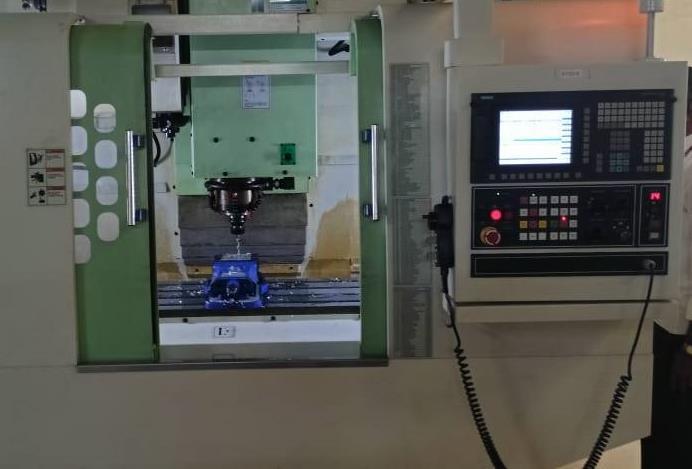
Table 2 Averageresponsevaluesofdifferentresponses
Volume: 11 Issue: 03 | Mar 2024 www.irjet.net p-ISSN: 2395-0072
18
Selectingtherightalternativeamongthemoreavailable choices is not an easy assignment. Therefore, a systematic andscientificmethodologyisrequiredtosolvesuchadifficult task. The researchers have shifted their concentration towards GRA because of easy understanding and simple methodology.Inthepresentwork,therelationbetweenthe process parameters and performance characteristics is unclearduringdrillingofAl6082materialandselectionof therightalternativewhichimprovesthelaserperformanceis adifficulttask.Hence,inthepresentworkGRAwasemployed to identify the right choice a followingsteps to choose the rightalternativeamongavailablealternatives
As the raw data cannot be compared because of differentrangesofdataandunits. For,comparisonpurpose data processing is required (i.e., normalizing the data between0and1).Normalizationisaprocessofconverting the original sequence into a compatible sequence. Experimentaldataisnormalizedas (0≤ ≤1) by the following formulae. Equation (2) is used for the larger-the-betterqualitycharacteristicandequation(1)is usedforthesmallerthebetterqualitycharacteristic. Inthe current study, to improve the productivity, cutting temperatureandsurfaceroughnesswerechosenforsmallerthe-bettercharacteristics. Thecalculatednormalizedvalues aretabulatedinthe Table3.
Smaller-the-better


Larger-the-better



Table 3 Normalizedvalues

The purpose of calculating the Grey relational coefficientistoknowtherelationbetweenthedesirableand real experimental data. The grey relation coefficients fortheallturningperformancesarecalculatedusing equation(4)andlistedintheTable4. = (3)



Where indicates the absolute difference betweencurrentdatasequencevalue(( )andideal value and isthedistinguishingcoefficientanditis usedtoalterthevariationofthegreyrelationalcoefficients and if lower distinguishing coefficient higher will be the distinguishing ability. is taken as 0.5 by taking into account of all the process variables are equally weighing (Sarikaya and Gullu, 2015). Equation (5), (6) and (7) are usedtocomputethevaluesof ,


Where =Sequenceafterdataprocessing =Originalsequence =Maximumvalueofentityp

Minimumvalueofentityp
p=Numberofcharacteristics(1,2,3,4)
q=Number


(1,2,…..,9)
Volume: 11 Issue: 03 | Mar 2024 www.irjet.net
Table 4 PerformancecharacteristicsGRC,GRGand
• Grey Relational Analysis (GRA) method involved simple mathematicalequationandcanbeappliedtomultiresponse optimizationproblemseffectively.
•Theoptimumcombinationofdrillingprocessparameters was determined as spindle speed 1500RPM, feed rate 0.1mm/revandMQLconditioncombinationduringdrilling ofAl6082materialusingtungstencarbidedrillbit.
• MQL cooling consumes less coolant over wet cooling condition therefore coolant cost involved in MQL is low comparedtowetcoolingmethod.
[1] Akhil,K.T.,Shunmugesh,K.,Aravind,S.,Pramodkumar, M. (2017). Optimization of Drilling Characteristics using Grey Relational Analysis (GRA) in Glass Fiber Reinforced Polymer (GFRP). Materials Today: Proceedings(ICMPC2016),4,1812–1819.
[2] Hemant S. Patne, Ankit Kumar, Shyamprasad Karagadde ,SuhasS. Joshi. (2017). Modeling of temperature distribution in drilling of titanium. InternationalJournalofMechanicalSciences,133,598610.
[3] Balaji, M., Murthy, B.S.N., Mohan Rao, N. (2016). OptimizationofCuttingParametersinDrillingofAISI 304StainlessSteelUsingTaguchiandANOVA.Global Colloquium in Recent Advancement and Effectual Researches in Engineering, Science and Technology (RAEREST2016),25,1106–1113.
Step 3: Calculation of Grey relational grade (GRG)
Grey relational grade is useful in evaluating the multipleperformancecharacteristics.Averageofallobtained grey relational coefficient gives the grey relation grade. Equation (7) is used to compute the grey relation grade ( and obtained results and grey relational grade ranksweretabulatedinTable4


WhereN=No.ofperformancecharacteristics.
The larger grey relational grade represents how closerthecorrespondingexperimentalresponsetotheideal value. FromtheTable4,18thexperimentwithspindlespeed 1500RPM, feed rate 0.1mm/rev and MQL condition combinationhasthehighestgradeamongalltheorthogonal experiments.Therefore,spindlespeed1500RPM,feedrate 0.1mm/revandMQLconditioncombinationhasidentifiedas theoptimumcuttingconditionusingGRATechnique.
[4] Suman Chatterjee, Siba Sankar Mahapatra, Kumar Abhishek. (2016). Simulation and optimization of machining parameters in drilling of titanium alloys. SimulationModellingPracticeandTheory,62,31–48.
[5] Abdelhafeez,A.M.,Soo,S.L.,Aspinwall,D.K.,Dowson,A., Arnold, D. (2015). Burr formation and hole quality when drilling titanium and aluminium alloys. CIRPe 2015 - Understanding the life cycle implications of manufacturing,37,230-235.
[6] Gaurav Chaudhary, Manoj Kumar, Santosh Verma, Anupam Srivastav. (2014). Optimization of drilling parameters of hybrid metal matrix composites using response surface methodology. 3rd International Conference on Materials Processing and Characterisation(ICMPC2014),6,229–237.
[7] ShuangYi,GuangxianLi,SonglinDing,JohnMo.(2017). Performance and mechanisms of graphene oxide suspendedcuttingfluidinthedrillingoftitaniumalloy
International Research Journal of Engineering and Technology (IRJET) e-ISSN: 2395-0056
Ti-6Al-4V.JournalofManufacturingProcesses,29,182193.
[8] Gurmeet Singh, Vivek Jain, DheerajGupta, AmanGhai. (2016).Optimizationofprocessparametersfordrilled holequalitycharacteristicsduringcorticalbonedrilling using Taguchi method. Journal of the mechanical behaviourofbiomedicalmaterials,62,355-365.
[9] Tebbe Paulsen, Oliver Pecat, EkkardBrinksmeier. (2016).Influenceofdifferentmachiningconditionson thesubsurfacepropertiesofdrilledTiAl6V4.7thHPC 2016–CIRPConferenceonHighPerformanceCutting, 46,472-475.
[10] NithinTomMathew,VijayaraghavanL.(2016).Drilling of titanium aluminide at different aspect ratio under dry and wet conditions. Journal of Manufacturing Processes,24,256-269.
[11] Nieslony, P., Cichosz, P., Krolczyk, G.M., Legutko, S., Smyczek,D.,Kolodziej,M.(2016).Experimentalstudies of the cutting force and surface morphology of explosivelycladTi–steelplates.Measurement,78,129137.
[12] Takashi Matsumura, Shoichi Tamura. (2015). Cutting simulation of titanium alloy drilling with energy analysisandFEM.15thCIRPConferenceonModelling ofMachiningOperations,31,252–257.
[13] Umesh Gowda, B.M., Ravindra, H.V., Naveen Prakash, G.V.,Nishanth,P.,Ugrasen,G.(2015).Optimizationof process parameters in drilling of epoxy Si3N4 composite material. 4th International Conference on Materials Processing and Characterization, 2, 2852 –2861.
[14] Prakash,S.,LillyMercy,J.,ManojKumarSalugu,Vineeth, K.S.M.(2015).Optimization ofdrillingcharacteristics using Grey Relational Analysis (GRA) in Medium Density Fiber Board (MDF). 4th International Conference on Materials Processing and Characterization,2,1541–1551.
[15] Priyadarshini, M., Pattnaik, S.K., Mishra, D., Panda, S., Dhalmahapatra, K. (2015). Multi Characteristics OptimizationofLaserDrillingProcessParameterUsing Grey Fuzzy Reasoning Method. 4th International Conference on Materials Processing and Characterization,2,1518–1532.
[16] Parida,A.K.,Routara,B.C.,Bhuyan,R.K.(2015).Surface roughness model and parametric optimization in machiningofGFRPcomposite:TaguchiandResponse surface methodology approach. 4th International Conference on Materials Processing and Characterization,2,3065–3074.
[17] Tej Pratap, Karali Patra, Dyakonov A.A. (2015). Modeling Cutting Force in Micro-Milling of Ti-6Al-4V TitaniumAlloy.InternationalConferenceonIndustrial Engineering,129,134-139.
[18] Díaz-Alvarez, A., de-la-Cruz-Hernández, A.J., DíazÁlvarez, J., Cantero- Guisández, J.L. (2015). Estimation of Thermal Effects in Dry Drilling of Ti6Al4V. The Manufacturing Engineering Society InternationalConference,MESIC2015,132,433-439.
[19] Nobre, J.P., Outerio, J.C., (2015). Evaluating Residual StressesInducedbyDrillingofTi-6Al-4VAlloybyUsing an Experimental-Numerical Methodology. 15th CIRP ConferenceonModelingofMachiningoperations,31, 215-220.
[20] Kaynak, Y., Manchiraju, S., Jawahir, I.S., (2015). ModelingandSimulationofMachining-InducedSurface IntegrityInternationalJournalofEngineeringResearch &Technology(IJERT)ISSN:2278-0181Publishedby, www.ijert.org ICONNECT - 2k18 Conference ProceedingsVolume6,Issue07SpecialIssue-20186 CharacteristicsofNiTiAlloy.15thCIRPConferenceon ModelingofMachiningOperations,31,557-562.
[21] DeepanBharathiKannan,T.,RajeshKannan,G.,Suresh Kumar,B.,Dr.Baskar,N.(2014).Applicationofartificial Neural Network Modeling for Machining Parameters Optimization In Drilling Operation. International Conference on Advances in Manufacturing and MaterialsEngineering(AMME2014),5,2242–2249.
[22] Rupesh Kumar Pandey, S., Panda, S. (2014). Optimization of Bone Drilling Process with Multiple Performance Characteristics Using Desirability Analysis. 5th International Conference on Chemical, Biological and Environmental Engineering (ICBEE 2013),9,48–53.
Volume: 11 Issue: 03 | Mar 2024 www.irjet.net p-ISSN: 2395-0072 © 2024, IRJET | Impact Factor value: 8.226 | ISO 9001:2008