
International Research Journal of Engineering and Technology (IRJET) e-ISSN: 2395-0056
Volume: 11 Issue: 03 | Mar 2024 www.irjet.net p-ISSN: 2395-0072

International Research Journal of Engineering and Technology (IRJET) e-ISSN: 2395-0056
Volume: 11 Issue: 03 | Mar 2024 www.irjet.net p-ISSN: 2395-0072
Rambabu Pasumarthy1, Naga Lakshmi Spandana Atyam2, Thanuja Mattaparthi3, Nani Pasupuleti4, Sujini Meripo5
1Associate Professor, Dept. of Computer Science and Engineering, Sasi Institute of Technology & Engineering, Tadepalligudem, A.P., India
2,3,4,5 Students of Computer Science and Engineering, Sasi Institute of Technology & Engineering, Tadepalligudem, A.P., India
Abstract - Rice, the most extensively cultivated crop in India, plays a crucial role as a primary dietary staple. It feeds a significant portion of the global population and underscores its pivotal position in ensuring food security. Approximately 70% of the Indian population consumes rice twice daily. The quality of rice is determined by various attributes that influence its taste, appearance, texture, and suitability for different culinary purposes. The quality of rice grains holds paramount importance in determining consumer satisfaction and economic value. In earlier times, identifying rice quality relied on manual inspection conducted by human inspectors an approach that was both time-consuming and prone to low accuracy. However, there are still difficulties in creating quick and inexpensive methods for assessing the features of commercial rice grain quality. Therefore, it is good to use machine learning algorithms. This adoption of machine learning not only ensures food security but also modernizes the agricultural landscape of India.
Key Words: Rice, Rice grain quality, supervised machinelearning algorithm, quality grading.
Theprimarysourceofagriculturalrevenueinournationis grains. While grains are growing, farmers pay the most attention to yields. However, quality becomes the main prioritywhenriceisprocessedandsold.Variouspollutants, likeasstones,weedseeds,chaff,andcrackedseeds,maybe presentinthatgrains.Grainqualitytestingiscurrentlynot highlyautomated,withthemajorityoftheworkbeingdone byhumans.Thismanualprocesscanleadtoworkerfatigue and increase both the cost and duration of testing. To addresstheseissues,amachinelearningmodelforassessing and identifying quality grades has been developed. This model utilizes features such as major and minor axis parameters, size, eccentricity, roundness and area, employingimageprocessingandothertechnologies.Grains areacrucialcropinournation,andtheirqualitysignificantly impacts agricultural income. However, the level of
automation in grain quality testing remains limited, primarilyrelyingonmanuallabour.
The assessment of grain quality is still only partially automated,themajorityoftheworkisstilldonebyhumans. Rice is particularly important, being one of the most consumedcerealgrainsinIndia.Thequalityofgrainsgreatly affectsboththenationalandinternationalricemarket.This identificationprocessispresentlycarriedoutmanuallyby human inspectors, which guarantees a certain level of accuracy[5].However,itrequiresalotofwork,takesalotof time,andisjudgment-based.Foridentifyingthericequality, a sample of rice must be separated into the following six categories:complete rice, crackedrice, paddy, stones,and foreignitems.
International Research Journal of Engineering and Technology (IRJET) e-ISSN: 2395-0056
Volume: 11 Issue: 03 | Mar 2024 www.irjet.net p-ISSN: 2395-0072
Manualtestingisbothlaboriousandtime-consuming,andit providesnopracticalmeanstodiscoverlow-qualitygrainsin themarket.Additionally,itisexpensive,complexandrelies oncomplexmanualanalysisinvolvingfactorslikeworking conditions, human error, cleaning rates, and salvage recovery. At present, the manual analysis of grain type, grading, and quality evaluation features is being used. Impuritieslikestones,sand particles,damagedseeds,and broken granules, referred to as adulteration, can also negativelyimpactricequality.However,theprimaryfactor affectinggrainsalesisitsquality.
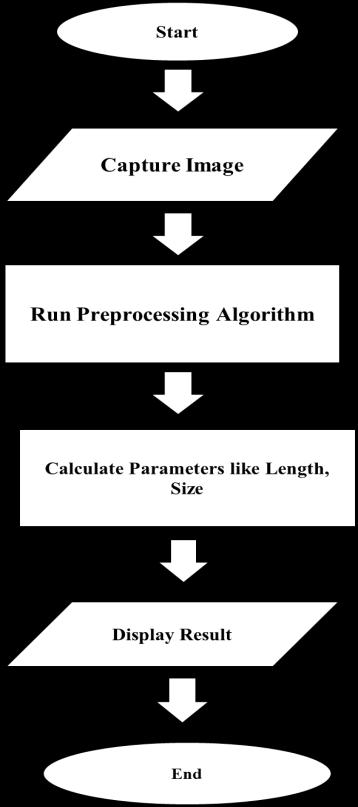
Manualinspectionsconductedbyhumaninspectorsareless reliable, increasing the risk of impurity mix-ups and a declineinricequality.Theseinspectionsarealsosubjectto operator concentration and time constraints, and sample testingmethodscanbecostly[3].Analyzingproductquality iscrucialintheagriculturalindustry.Inthepreviousdays, methods for rice grain quality analysis included manual inspectionandgradingbasedonvisualappearancessuchas size, shape, and color. An expert technician assesses the grainseed'squalityvisually.However,theoutcomesofsuch an evaluation are comparative, inconsistent, and timeconsuming. Since the technician's attitude also affects quality,anewandimprovedtechniqueisrequiredforthat andthecompleteprocessforthatisshowninFig-1.
De Oliveira Carneiro [1] have successfully tackled the challengeoffinding thequalityofmilledricegrainsbyusing the methods, non-destructive technologies and machine learningalgorithms.TheyemployedalgorithmslikeArtificial NeuralNetworksanddecisiontreealgorithmstoforecastthe grain quality. The experimentation involved a dataset that encompassedvariousmoisturecontentsofmilledricegrains. Byemployingnon-destructivetechnologieslikenearinfrared spectroscopy, they collected crucial data on the physicochemicalpropertiesofthegrains.Theteamutilized machinelearningalgorithmstopredictgrainqualitybasedon input variables such as whole grain yield, defects, and moisture content. Their findings revealed that leveraging machine learning algorithms alongside non-destructive technologiesprovidedafasterandmorepreciseapproachto predicting milled rice grain quality. Their method successfullypredictedthephysicochemicalpropertiesofrice grains with high accuracy, offering great potential for minimizing losses and enhancing efficiency in the rice industry.Theproposedapproachstandsoutforitsspeedand precisionindeterminingmilledricegrainquality.Moreover, by employing non-destructive technologies, it aids in reducing losses and optimizing operations within the industry. However, it is important to remember that this method focuses mainly on rice grains and may not be applicable to other grain types. Furthermore,variations in moisturecontentcanaffecttheaccuracyofpredictions.
Aznan, A. [2] To tackle the challenge of studying how consumersperceivedifferenttypesofcommercialricegrains,
researchers devised a digital approach. They developed a machine learning algorithm that utilizes dimensional morphological parameters to classify rice grains based on theirvisualappearance.Thestudyinvolvedcapturingimages of 15 samples using two different lightbox systems under controlledlightingconditions.Bytrainingandtestingtheir machine-learning model with this dataset, the authors achieved high accuracy in identifying grain quality and classifyingvariousricegraintypes.Theyconcludedthattheir proposed method is both reliable and robust, making it suitableforclassifyingdifferentcommerciallyavailablerice grainsworldwide.Theirmethodhascertainadvantages.Itis notdependentonspecificcamerasettingsandcanbeused withvarioustypesofcameras.However,therearelimitations to their approach. It is sensitive to lighting conditions and camerasettings,whichmayresultinmisclassificationwhen appliedtoanewdatasetcollectedunderdifferentconditions.
X.Ju[3]Anovelapproachhasbeendevelopedtosolvethe constraints of established biochemical methods for rice qualityevaluation,suchascomplexsamplepreparation,timeconsuming, and low accuracy in recognizing various rice speciesandadulteration.ThismethodutilizesHeadspace-gas chromatography-ion mobility spectrometry (HGC-IMS) to detect the uncertain flavor compounds present in five differenttypesofrice.Theidentificationofthesericetypesis achieved by generating ion migration fingerprint spectra using a semi-supervised generative adversarial network (SSGAN).Byreplacingthediscriminator’soutputlayerwitha soft max classifier, the GAN is extended into a semi supervised GAN. Through semi supervised training, the parametersofthenetworkareimprovedbysemi-supervised training, and the trained discriminant network is used to efficientlycategorizeHGC-IMSpictures.
Detectingadulteratedriceisasignificantchallengeinthe foodindustry,accordingtoC.Li'sresearch[4].Intheirstudy, they proposed a comprehensive approach that combines terahertzspectroscopyandpatternrecognitionalgorithmsto identifyadulteratedricesamples.Toconducttheexperiment, theyusedaterahertztimedomainspectroscopysystemand appliedvariouspreprocessingtechniquessuchasSavitzky Golayfiltering,standardnormalvariate,firstderivative,and baseline correction to the obtained spectral data. For categorization and screening of rice grain samples, they employed chemometric methods including principal component analysis, partial least squares discriminant analysis(PLSDA),geneticalgorithm,supportvectormachine, and backpropagation neural network. The experiment's dataset included 150 rice specimens with varying percentages of contaminated rice. The researchers used patternrecognitionalgorithmsandterahertzspectroscopyto detectadulteratedrice.Thesupportvectormachinemethod, combinedwiththefirstderivativepretreatment,yieldedthe highestaccuracyindistinguishingadulteratedrice.Thisnondestructiveandfastmethodofferspreciseresults.However, it is important to note that the equipment and expertise requiredforthismethodmaynotbereadilyaccessibleinall settings.
International Research Journal of Engineering and Technology (IRJET) e-ISSN: 2395-0056
Volume: 11 Issue: 03 | Mar 2024 www.irjet.net p-ISSN: 2395-0072
Theauthorsofthisstudydevelopedavision-basedsystem that addresses the time-consuming process of manually evaluatingricequality.Byanalyzingtheweightratiosofeach kind, their suggested automated method can categorize various types of defective rice kernels and evaluate their quality.The suggested multi-stage workflow begins with a detectionandseparationapproachofricekernelswithvaried flaws,followedbyaweight-per-pixelmetricforestimating weightratiosofeachtypeofkernel.X.Wang[5]conducted experimentsusingadatasetof322ricepictures,whichwere shuffledrandomlyandclassifiedintotrainingdata,validation data,andtestdatafor5times.Theycomparedtheirmodel with other models, including Yolov5, EfficientDet-D2, and DynamicHead+Resnet50+ATSS.The experimental setup includedablockdiagramandanarchitecturediagram.The authors found that their proposed system outperformed othermodelsintermsofclassificationaccuracyandweight estimation. The merits of the proposed method includeits abilitytoaccuratelyclassifyandevaluatethequalityofrice kernels, while the limitations include the requirement for highquality.
M.J.Asif[6]Tocategorizevariouskindsofriceandassess itsquality, animage-processing approachwaspresented.To accomplish classification, the method used principal componentanalysiswithcannyedgedetection.Tovalidate the system, 100 images were captured for each of the followingricevarieties:SuperColonel,Khushboo,Basmati, KainatSailla,andOldAwami.Theresultsshowedthatthis simpleandportablesystemisbothefficientandeffectivein analysing rice grain quality and distinguishing between different varieties. However, it's worth noting that the experimentonlytestedfivevarietiesofricegrains.Tofurther enhancetheefficiencyoftheproposedsystem,implementing algorithmssuchasGeneralHoughtransform(GHT)couldbe explored.
InastudyledbyY.N.Wan[7],thegoalwastocreatean automatedmachinevisionsystemforexaminingricequality. Theobjectivewastoaccuratelycategorizericekernelsbased ontheirvisualappearance.Toachievethis,theresearchers presentedrangeselectionsorting,whichtheyintegratedwith tabularlistboxesinauser-friendlywindowsgraphicaluser interface(GUI).Thisapproachaimedtomakegrainquality inspectionmoreconvenientandaccessible.
Toidentifyeachricekernelfromitsbackdrop,thesystem used a variety of image processing techniques, including histogram and threshold approaches. The studies were carried out byutilizing 67different kinds of roughrice (paddy)obtaineddirectlyfromlocalfarmersthroughoutthe harvestseason.Fortestingpurposes,thericewasrepeatedly placed in a humid environment to cause cracked kernels. Impressively, the system achieved an average processing speedofover1200kernelsperminuteforonlinericequality inspection.Theproposedmethodoffersseveraladvantages, includingexceptionalaccuracy,quickprocessingspeed,and convenientgrainqualityinspection.However,thereareafew limitationstoconsider.Firstly,themethodrequiresspecific softwareforricequalityinspection.Additionally,consistent resultscanonlybeachievedinacontrolledenvironment.
C.Kurade[8]presentedacost-effectiveandautomated system for evaluating the quality of rice using image processingtechniquesandmachinelearningalgorithms.The author extractedstructural and geometric data from 3081 photos of 8 distinct rice grain kinds using a Raspberry Pibased image collecting module. Using the Watershed technique, the images were processed, and a variety of characteristicsbasedongeometry,size,morphology,color, androughnesswereextracted.Toclassifythericetypes,eight machinelearningmodelswereemployed,andtheirefficiency was assessed in terms of F1 score, recall, accuracy, and precision.
Amongthevariousalgorithmstested,theRandomForest (RF) classifier had the best performance, achieving an accuracy of 76% (F1-score). The authors suggested that incorporatingtrainingonvariousdeeplearningmodelslike Efficient Net, Inception V3, Res Net, and Mobile Net could potentiallyenhancethecurrentaccuracy.Anadvantageous aspect of this proposed method is its low cost, portable naturewhichcanbeeasilyimplementwitha setupcostof USD50only.However,it'simportanttonotesomelimitations ofthemethodsuchastherequirementforincludingsamples of the same rice varieties grown in different regions and years withinthesamplepool.Samplesfromtypesthatare comparable but subjected to various seasonal or environmentalconditionsshouldalsobetakenintoaccount.
Thequalityofalloymaterialsheavilyreliesontheshape, size,andcoloroftheirgrains.MingchunLi[9]introduceda GF-RCFnetworkthatutilizesmulti-levellossfromfeatureto effectivelydetectgrainboundariesinmetallographicimages of Al-Mg-Si alloy. One notable benefit of this method is its ability to accurately identify grain boundaries even when theyarenotclearlyvisible,there-byenhancingtheaccuracy of grain size evaluation and reducing the time and cost neededformanualannotation.Itisimportanttoremember that this approach has certain limitations, such as its dependenceontheimagequalityinputtedintothenetwork andtherequirementforasignificantamountofannotated data for training purposes. Despite these limitations, the propose-d method holds promise in improving the overall grain qualityinalloy materials by offeringan efficientand precisemeansofdetectinggrainboundaries.
Y.Teng[10],Thegoalofthispaperwastoexaminethe decision and actions of government entities, farmers, and consumers in regard to agricultural product quality and safety Toanalysethis,anevolutionarygametheorymodel was developed, simulating interactions among these three groupsandstudyingidealscenariosforgovernmentsafety supervision,farmersuseofgreenpesticides,andconsumers purchase of safe agricultural products. The experiment utilized MATLAB simulation software with varying initial proportionsandparameterchangestoobservetheevolution processandoutcomes.Thefindingshighlightthecrucialrole playedbythegovernmentinpromotingthesafeproduction of agricultural goods and fostering collaboration across multiple departments. This proposed approach offers a valuable theoretical frame work for understanding how different stake holders in the agricultural sector make
International Research Journal of Engineering and Technology (IRJET) e-ISSN: 2395-0056
Volume: 11 Issue: 03 | Mar 2024 www.irjet.net p-ISSN: 2395-0072
decisions.Toconducttheexperiment,weutilizedMATLAB simulationsoftware.Wemanipulatedtheinitialproportions and related parameters to observe how the process and outcome evolved. Our findings indicate that government interventionispivotalinpromotingsafeagriculturalproduct manufacturing and fostering collaboration among various departments. This proposed method offers a valuable theoretical framework for comprehending the decisionmaking processes of diverse stakeholders within the agricultural sector. However, it's essential to acknowledge that our approach has limitations, such as oversimplifying real world complexities, which warrants further empirical validation.
Chengchenglei[11]Thisstudyfocusesattheregionaland temporalpatternsofgrainproductioninChina,aswellasthe effect caused by various factorson total and per capita output. Furthermore, it investigates the factors behind China's grain production for different types of growth orientations. Thepaperbrieflymentionstheproductionof high quality grain with geographical indications in certain regions of China. However, its primary research question doesnotspecificallyaddressgrainquality.Instead,thepaper providesvaluableinsightsintothespatialtemporalpatternof grainproduction.
According to Zhengjun Qiu and colleagues [12], they aimedtoimprovetheidentificationofriceseedvarietiesby combininghyperspectralimagingwithconvolutionalneural networks. Their deep learning algorithm identified seed varietywithintwospectralregionsusingcompletespectra. The experiment involved a dataset of 10,000 rice seed images,whichweresplitintotraining,validation,andtesting sets.Theauthorscomparedtheresultsoftheirdeeplearning approachwithsupportvectormachine(SVM)analysisandknearest neighbours (KNN) methods. The researchers discoveredthatthedeeplearningapproachshowedsuperior performance compared to the other two methods, particularly when more training samples were used. They alsohighlighted theadvantages of their proposed method, such as its ability to automatically learn features and its potential for exploring various feature combinations with additionaltrainingdata.Theyacknowledgedthattheneedfor a sizable quantity of training data and the possibility of overfittingareonlythedrawbacksofthemethod.
Yan Wang [13] utilized a technique called inductively coupled plasma mass spectrometry with tandem mass spectrometry(ICP-MS/MS)todevelopamethodfortracing the origin of rice. They employed multielement principal componentanalysistoanalysetheelementcompositionof ricesamplesfromdifferentsources.Byusinganalgorithm that involved principal component analysis and cluster analysis,theywereabletodeterminetheoriginoftherice samples. The suggested technique's benefits include its accuracyinclassifyingricesamplesaccordingtotheirsiteof production, while its drawbacks include the necessity for additionalvalidationandprocessoptimization.
Lin Lu [14] aimed to address the challenge of ongoing analysisandmonitoringofqualityofriceinSouthernChina. Their suggestion was to use principle component analysis
(PCA)tomakethedatalessdimensionalwhilepreservingthe mostimportantdetails.Variousricequalityindices,including amylosecontent,translucency,alkalispreadingvalue,brown riceyield,crackedrice,grainlength,lengthwidthratio,and chalkiness, roughness, size, eccentricity, were used in the experiment.Throughtheirresearch,theauthorsdiscovered thatPCAwaseffectiveindifferentiatingthelocalqualityof Southernriceandprovidedinsightfulinformationregarding theoverallqualityindicesforthisregion'sriceOneadvantage of the method is its ability to reduce data size while preserving relevant information. However, it has some drawbacks,suchasrequiringalargedatasetandtheriskof losingdataduringthedimensionreductionprocess.
Totacklethe problemofmicrobialcontaminationinrice, Ji Hae Lee [15] conducted a study to evaluate- the effectiveness of using high hydrostatic pressure and atmosphericpressureplasma.Theresearchersproposedan experimentalapproachwheretheysubjectedricesamplesto these treatments and assessed their physicochemical propertiesandlevelsofmicrobialcontamination.Tomeasure the pH and sugar content, they utilized high performance liquid chromatography anda pH meter respectively. The study's conclusions demonstrated that microbial contaminationinricecouldbereducedbybothatmospheric pressureplasmatreatmentsandhighhydrostaticpressure, with atmospheric pressure plasma being more successful thanhighhydrostaticpressure.
“Multivariate Analysis of Phenotypic Diversity of Rice (Oryza sativa L.) Landraces from Lamjung and Tanahun Districts,Nepal”inthispaperAnupDhakal[16]Thegoalof the study was to increase the phenotypic variety of rice landracesintheLamjungandTanahunDistrictsofNepalby finding suitable parents for hybridization. To determine whichtraitsweremostimportantandguidetheselectionof parents for transgressive segregation, researchers utilized multivariate analysistechniques likeprincipalcomponent analysisandMahalanobisdistance.Theyusedanalphalattice designwith two different replications to collect data on 13 quantitativefeaturesfrom30ricelandraces.Fivemajormain components,notablythoseconnectedtoyield,yield-related variables,andricecharacteristics(PC1),wereshowntohave a substantial impact on the variance This approach effectively identifies potential parent combinations for hybridization and helps choose desirable landraces for breedingprograms.However,furthervalidationandtesting are necessary with a larger sample size under different environmentalconditions.
Shakeel Ahmed Soomro [17] In a study titled “Mathematical modelling and optimisation of lowtemperature drying on quality aspects of rough rice” researchersexploredthechallengeofmaintainingthequality attributes of rough rice during the drying process. They examinedhowtemperature,duration,andvelocityinfluenced hardness,headriceyield(HRY),lightness,andcookingtime using response surface methods with a central composite design (CCD). The experiments involved using a lowtemperaturedryertodryroughriceatvarioustemperatures and durations. The results demonstrated that low-
International Research Journal of Engineering and Technology (IRJET) e-ISSN: 2395-0056
Volume: 11 Issue: 03 | Mar 2024 www.irjet.net p-ISSN: 2395-0072
temperature drying significantly impacted the quality attributes of rough rice. The optimal conditions for lowtemperaturedryingwerefoundtobeatemperatureof40°C, a duration of 6 hours, and an air velocity of 0.5 m/s. The researchsays,dryingriceatmoderatetemperaturescanbea goodwayofretainingthequalityofthegrainwhileit'sbeing dried.
By employing grain appearance and milling yields as variables,PedroSousaSampaio[18]soughttoevaluatethe prediction power of artificial neural networks (ANN) and multiple linear regression (MLR) in identifying rice biochemical components and pasting parameters and it is alsosaysallthefollowingdetailsaboutsamplescollectionof rice.
Inastudytitled"UseofArtificialNeuralNetworkModel for Rice Quality Prediction Based on Grain Physical Parameters,"theauthorsexamined66ricesamplesfromthe “Portuguese Rice Breeding Program”. They found that the ANNalgorithms,whichweredevelopedusinggrainphysical datatopredictricebiochemicalandpastingcharacteristics, hadsubstantialregressioncoefficients.Thesefindingshave the potential to enhance rice quality during breeding and processing, because they make it possible to precisely measurethemanyphysicochemicalpropertiesofrice.
The goal of Koan Sik Woo's [19] investigation was to ascertainhowbesttopreparerice/adzukibeanmixesand theirantioxidantcontent.Theyrecommendedsettingupthe experiment to look at the qualitative characteristics and antioxidant activity of various combinations of rice and adzukibeans.ThecultivarsVignaangularisvar.Nipponensis cv.Arariandcv.Geomguseulandcv.Geomguseulricewere used in the experiments by the authors.The researchers analysed the polyphenol and flavonoid content of the mixtures, along with their water binding, waterswelling, water solubility, and viscosity properties. They discovered that including adzuki beans increased the overall levels of polyphenols and flavonoids. Additionally, using a high pressurericecookermethodproducedmixtureswithhigher antioxidant activities and superior quality characteristics. Hence, further investigation is indispensable to ascertain whetherthesediscoveriescanbeuniversallyextrapolatedto encompass other assortments of beans and diverse geographicalregions.
In the rice grain filling stage, Jae-Ryoung Park [20] describes the screening and identification of genes that impactgrainqualityandsalesofgrains.Inadditiontogaining knowledgeabouthowclimatechangeaffectsriceproduction andgrainquality,thescientistssoughttofindgeneslinkedto spikeletfertilityandricequalityathightemperatures.They identified potential genes for amylose production and breakdown using quantitative trait locus mapping on a double haploid line. The researchers discovered that the manifestation of these genes exhibited a correlation with attributesofgrainquality,includingthecontentofamylose, the consistency of gel, and the length of the grain. The suggested approach has various advantages, including the use of a double haploid line for genetic study and the discoveryofpotential geneslinkedtospikeletfertilityand
grain quality at high temperatures. However, a constraint arisesasthe research was executed within the confinesof controlled experimental circumstances and might not entirelyembodytheintricacyofnaturalsurroundings.
ZhyldyzaiOzbekova[21]setouttoresearchtheabilityof fluorescence spectroscopy in order to promptly and nondestructivelydetectthemoisturecontentandwateractivity of rice Researchers conducted a study on the potential of fluorescencespectroscopyinordertoexpeditiouslyandnoninvasivelyassessthemoisturecontent.Theyusedprincipal component analysis (PCA) and partial least discriminant analysis (PLSDA) to analyse differences in fluorescence spectraanddivide ricespicemensbasedontheirmoisture contentandplaceofcultivation.Inordertostandardizethe fluorescence spectra, a distinct algorithm was formulated utilizingtheprogramminglanguageMatLab.
Theexperimentalprocedurecomprisedtheexamination ofdiversericesamplespossessingvaryinglevelsofmoisture andoriginatingfromdistinctcultivationsites,employinga fluorescencespectrophotometer.Thefindingsdemonstrated that the utilization of fluorescence spectroscopy in conjunction with multivariate analysis possesses the capability to effectively forecast the moisture content and water activity of rice, alongside the capacity to classify variousclassificationsofrice.
Table-1: Summary of machine learning algorithms (supervised, unsupervised), deep learning algorithms, differentalgorithmsusedinanalysisofricegrainquality
International Research Journal of Engineering and Technology (IRJET) e-ISSN: 2395-0056
Volume: 11 Issue: 03 | Mar 2024 www.irjet.net p-ISSN: 2395-0072
Machine, PCA=Principal Component Analysis, KNN=KNearestNeighbor,BPNN=BackPropagationNeuralNetwork, RF=Random Forest, HGC- IMS= Headspace-Gas, Chromatography-Ion Mobility Spectrometry, RS=Range sortingmethod,DT=DecisionTree,LR=LinearRegression
After reviewingnumerous papers, wediscoveredthat variousalgorithmshadbeenproposed,anddifferentmodels hadbeenutilizedwithvaryingparameters.Tothebestofour knowledge, we conducted a comparativeanalysisof these different parameters and compiled the results into the followingtable:
Table-2: Performance evaluation of rice grain quality analysisonseveralmodels
Paper No.
[1] Moisturecontent,Yieldofrice grains,Protein,Fat,Ash, Amylosecontent
[2] Grain’smajoraxis,length,length, Grain’sminoraxislength, Perimeter,Roundness,Aspect ratio,Eccentricity
[5] Grain’smajoraxislength,Grain’s minoraxislength,Perimeter, Eccentricity,Area,Size
[6] Area,Grain’smajoraxislength, Size,Grain’sminoraxislength, Perimeter,Eccentricity
[7] Area,Perimeter,Compactness, L/W,RGBaverages,Chalkyratio, Transparency
[8] Equivalentdiameter,Roundness, Compactness,Length,Width, Aspect
** ICP-MS/MS= Inductively Coupled Plasma Mass SpectrometrywithtandemMassSpectrometry,HHP=High Hydrostatic Pressure, APP=Atmospheric Pressure Plasma, SM=Surface methodology with CCD=Central Composite Design, PLSDA= Partial Least Discriminant Analysis, GT=Game Theory, NIR=Near-Infrared Spectroscopy, HIS=HydroSpectralImaging.
International Research Journal of Engineering and Technology (IRJET) e-ISSN: 2395-0056
Volume: 11 Issue: 03 | Mar 2024 www.irjet.net p-ISSN: 2395-0072
By studying above papers, it becomes evident that the challengesinricegrainqualityanalysisaremultifacetedand oftenrevolvearoundachievingfullautomationwithahigh degree of accuracy while considering various factors that influencericequality.Onefundamentaldifficultyresidesin thepursuitoftotalmechanization,inwhichtheentiretyof theprocedure,encompassingthecompilationofdataandthe evaluation of excellence, necessitates a harmonious integration within a framework of machine learning. Addressing these challenges is crucial not solely to streamlinetheevaluationprocessofricequality,butalsoto augment the overall effectiveness and productivity of the riceproductionandprocessingsectors.
This survey paper has shed light on the existing models employedforricegrainqualityanalysis.Byilluminatingthe current models used for analysing rice grain quality, this survey paper has highlighted their contributions and drawbacks.Theselimitationsincludearestrictedfocuson particular parameters and a decreased level of precision. Thus,itisimperativethatwemodifythecurrentapproaches to overcome these challenges. Our aim is to create a pioneeringmodelthatnotonlyresolvesthedeficienciesof previoustechniquesbutalsoprovidesamoreinclusiveand preciseevaluationofricegrainquality.Ouraspirationisto provide a significant contribution to improving the methodologiesusedtoassessricegrainquality.We'redoing this by integrating a wider range of parameters and advancedtechniques,whichwillrevolutionizethefield.Our proposed model ensures reliable and robust results for researchersandstakeholdersalike.
[1] deOliveiraCarneiro,Letícia,PauloCarteriCoradi,Dágila Melo Rodrigues, Roney Eloy Lima, Larissa Pereira Ribeiro Teodoro, Rosana Santos de Moraes, Paulo EduardoTeodoroetal."CharacterizingandPredicting theQualityofMilledRiceGrainsUsingMachineLearning Models."AgriEngineering5,no.3(2023):1196-1215.
[2] Aznan, Aimi, Claudia Gonzalez Viejo, Alexis Pang, and Sigfredo Fuentes. "Computer vision and machine learninganalysisofcommercialricegrains:Apotential digital approach for consumer perception studies." Sensors21,no.19(2021):6354.
[3] Ju, Xingang,FeiyuLian, HongyiGe, Yuying Jiang, Yuan Zhang,andDegang Xu."Identificationof ricevarieties andadulterationusinggaschromatography-ionmobility spectrometry."IEEEAccess9(2021):18222-18234.
[4] Li, Chao, Bin Li, and Dapeng Ye. "Analysis and identification of rice adulteration using terahertz spectroscopyandpatternrecognitionalgorithms."IEEE Access8(2020):26839-26850.
[5] Wang, Xiang, Kai Wang, Xiaohong Li, and Shiguo Lian. "Vision-Based Defect Classification and Weight Estimation of Rice Kernels." IEEE Access 10 (2022): 122243-122253.
[6] Asif, Muhammad Junaid, Tayyab Shahbaz, Syed Tahir HussainRizvi,andSajidIqbal."Ricegrainidentification and quality analysis using image processing based on principal component analysis." In 2018 International symposiumonrecentadvancesinelectricalengineering (RAEE),pp.1-6.IEEE,2018.
[7] Wan, Y–N., C–M. Lin, and J–F. Chiou. "Rice quality classificationusinganautomaticgrainqualityinspection system."TransactionsoftheASAE45,no.2(2002):379.
[8] Kurade,Chinmay,ManinderMeenu,SahilKalra,Ankur Miglani, Bala Chakravarthy Neelapu, Yong Yu, and Hosahalli S. Ramaswamy. "An Automated Image Processing Module for Quality Evaluation of Milled Rice."Foods12,no.6(2023):1273.
[9] Li,Mingchun,DaliChen,andShixinLiu."Grainboundary detection based on multi-level loss from feature and adversarial learning." IEEE Access 8 (2020): 135640135651.
[10] Teng, Yun, Xinlin Chen, Zhigang Yu, and Jingbo Wei. "Research on the evolutionary decision-making behavior among the government, farmers, and consumers: Based on the quality and safety of agricultural products." Ieee Access 9 (2021): 7374773756.
[11] Lei, Chengcheng, Qingwen Qi, Yan Fu, Lili Jiang, and QizhangLiang."AnalysisonMechanismofChina’sGrain ProductionDevelopmentandEvolutionFrom1985to 2019."IEEEAccess10(2022):43221-43234.
[12] Qiu, Zhengjun, Jian Chen, Yiying Zhao, Susu Zhu, Yong He,andChuZhang."Varietyidentificationofsinglerice seed using hyperspectral imaging combined with convolutionalneuralnetwork."AppliedSciences8,no.2 (2018):212.
[13] Wang,Yan,XiaoxuanYuan,LinanLiu,JunmeiMa,Sufang Fan,YanZhang,andQiangLi."Multielement principal componentanalysisandorigintraceabilityofricebased onICP-ms/MS."JournalofFoodQuality2021(2021):112.
[14] Wang,Yan,XiaoxuanYuan,LinanLiu,JunmeiMa,Sufang Fan,YanZhang,andQiang Li."Multielement principal
International Research Journal of Engineering and Technology (IRJET) e-ISSN: 2395-0056
Volume: 11 Issue: 03 | Mar 2024 www.irjet.net p-ISSN: 2395-0072
componentanalysisandorigintraceabilityofricebased onICP-ms/MS."JournalofFoodQuality2021(2021):112.
[15] Lee,JiHae,KoanSikWoo,CheorunJo,HeonSangJeong, SeukKiLee,ByongWonLee,Yu-YoungLee,Byoungkyu Lee, and Hyun-Joo Kim. "Quality evaluation of rice treatedbyhighhydrostaticpressureandatmospheric pressureplasma."JournalofFoodQuality2019(2019).
[16] Dhakal,Anup,AmritPokhrel,ShishirSharma,andAnkur Poudel."Multivariateanalysisofphenotypicdiversityof rice (Oryza sativa L.) landraces from Lamjung and Tanahun Districts, Nepal." International journal of agronomy2020(2020):1-8.
[17] Soomro,ShakeelAhmed,KunjieChen,andSohailAhmed Soomro."Mathematicalmodellingandoptimisationof low-temperature drying on quality aspects of rough rice."JournalofFoodQuality2020(2020):1-10.
[18] Sampaio, Pedro Sousa, Ana Sofia Almeida, and Carla MoitaBrites."Useofartificialneuralnetworkmodelfor rice quality prediction based on grain physical parameters."Foods10,no.12(2021):3016.
[19] Quality Characteristics and Antioxidant Activities of Rice/AdzukiBeanMixturesCookedUsingTwoDifferent Methods
[20] Park,Jae-Ryoung,Eun-GyeongKim,Yoon-HeeJang,and Kyung-MinKim."Screeningandidentificationofgenes affectinggrainqualityandspikeletfertilityduringhightemperature treatment in grain filling stage of rice." BMCplantbiology21,no.1(2021):1-21.
[21] Ozbekova,Zhyldyzai,andAsylbekKulmyrzaev."Studyof moisture content and water activity of rice using fluorescence spectroscopy and multivariate analysis." SpectrochimicaActaPartA:MolecularandBiomolecular Spectroscopy223(2019):117357.
2024, IRJET | Impact Factor value: 8.226 |