
International Research Journal of Engineering and Technology (IRJET) e-ISSN: 2395-0056
Volume: 11 Issue: 03 | Mar 2024 www.irjet.net p-ISSN: 2395-0072
International Research Journal of Engineering and Technology (IRJET) e-ISSN: 2395-0056
Volume: 11 Issue: 03 | Mar 2024 www.irjet.net p-ISSN: 2395-0072
Yuvraj
Sharma1 , Bhavik Chawan2 , Naved Akhtar3 , Prof.Sonali Karthik4
1 2 3 Student, Information Technology Theem college of engineering Mumbai, India 4 Professor, Information Technology Theem college of engineering Mumbai, India.
Abstract –The focus of the research is to propose the integrationofmachinelearningtechniquesintopoint-of-sale (POS) systems in order to boost client experiences and optimize performance. These systems can forecast demand, optimize inventory levels, and customize consumer experiences by evaluating past sales data, predictive models, and natural language processing. The interfaces for recommendation systems offer sales personnel and consumers clear recommendations that work with a variety ofdevices.Withdataprivacyandsmoothintegrationupheld, this integration is a strategic move toward modernizing retail operations, encouraging loyalty, and boosting revenue development. This information can be used to continuously refine product offerings and identify areas for improvement, enhancing the overall shopping experience. Balancing technical finesse with user-centric design, the recommendation system interfaces provide intuitive and actionablesuggestionstobothcustomersandsalesstaff. The system's adaptive capabilities cater to diverse devices, fostering engagement through user- friendly interfaces. Ultimately,the integrationofarecommendation system into a POS project represents a strategic step forward in modernizing retail operations. It redefines the shopping experience bymarryingtechnologywithcustomer-centricity, fostering loyalty, and fueling revenuegrowth while keeping dataprotectionandseamlessintegrationat itscore
Key Words: Sentiment Analysis,POS system, Inventory management, Sales Forecasting, Recommendation.
This Point of Sale (POS) system proposed in this project marks a significant advancement in retail technology, aimed at revolutionizing the traditional checkout process. OurPOSsystemintegratescutting-edgefeatures,including sales forecasting through algorithm and dynamic product recommendations powered by Convolutional Neural Network (CNN) algorithms. By leveraging these advanced algorithms, the system not only enhances transaction accuracy and inventory management but also creates a personalized shopping experience for customers. The integration of ARIMA allows for precise sales predictions, optimizing inventory levels and operational efficiency. Simultaneously, the CNN algorithm processes product images, providing customers with real-time, visuallydriven recommendations. As businesses embrace digital transformation,our POSsystem emergesasa crucial tool, fostering a seamless blend of technology, data analytics,
and customer-centric retail operations. The integration of advanced data analysis, machine learning algorithms, and user experience enhancement to create a dynamic shopping environment. The recommendation system's primary objective is to provide personalized product suggestions to customers based on their preferences, purchase history, and browsing behavior. This involves the collection, analysis, and utilization of customer data to offer targeted recommendations, ensuring a more engagement.
Proposed a deep learning-based medical material inventory management model is constructed through the reasonable classification of material management methods. This model effectively utilizes the data by analyzingdisasterdataindifferentregionsandestablishes a corresponding inventory management model according totheclassificationstandards [1]
They have implemented low efficiency of knowledge acquisition; this paper proposes a knowledge service framework based on case set. Three knowledge retrieval methodsaredesignedbasedonpartskeywords,customer orders and manufacturing processes. Additionally, a VSM based (vector space model) knowledge recommender method.[2]
A step-enhancement of memory retention (SEMR) model which integrates the cross-enhancement- effects of multiple historical behaviors under different time windowstocharacterizeuserinterest.Inaddition,weuse some extended correction methods to eliminate the effect of discontinuous records. Numerical experiments using real TV viewing data validate the efficiency of our proposed model and methods, which reduce the average prediction error to 0.3, outperforming the traditional modelsbyaround50%.[3]
Sentiment analysis of a large number of user reviews on e-commerce platforms can effectively improve user satisfaction.Thispaperproposesanewsentimentanalysis model-SLCABG, which is based on the sentiment lexicon and combines Convolutional Neural Network (CNN) and attention- based Bidirectional Gated Recurrent Unit (BiGRU). In terms of methods, the SLCABG model combines the advantages of sentiment lexicon and deep learning.[4]
International Research Journal of Engineering and Technology (IRJET) e-ISSN: 2395-0056
Volume: 11 Issue: 03 | Mar 2024 www.irjet.net p-ISSN: 2395-0072
This will produce a new method-using machine learning thatwillhelpforaccurateprediction.Thismethodcollects the previous data of a store and analyze those data. Gathering the important information process those data and get prepared for using in method. Applying related algorithms towards the process data. We know K-Nearest Neighbor, Support Vector Machine, Gaussian Nave Bayes, Random Forest, Decision Tree Classifier and regressions haverecentlyusedanalgorithmforprediction.[5]
The overall sales and product data feeds into a recommendation engine, which generates personalized product suggestions. Users access recommendations through web and mobile interfaces or in-store POS terminals, while feedback is collected for system improvement. Data is stored and managed in databases, and integration with POS systems and external sources enhances functionality. The architecture aims to enhance customer experiences, boost sales, optimize inventory management,andsupportdata-drivendecision-making.
Designed to transform retail operations. Leveraging advanced algorithms such as ARIMA for precise sales forecasting and CNN for dynamic product recommendations, the system aims to optimize inventory managementandInventorymanagementandenhancethe experience.
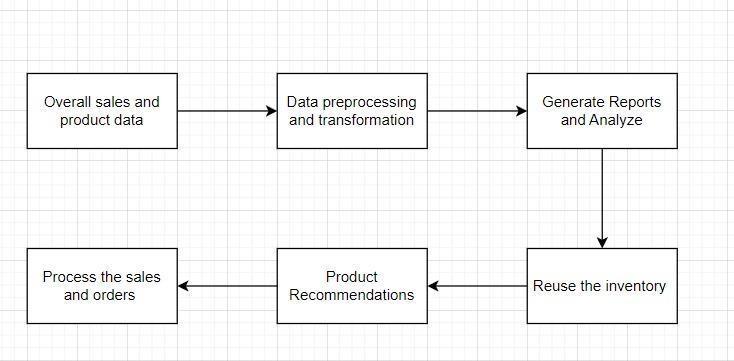
Fig -1:ProposedSystemofPOS
This integrated POS system offers a seamless blend of technologyanddataanalytics,providingreal-timeinsights for businesses. It focuses on increasing transaction accuracy, improving operational efficiency, and delivering personalized customer interactions. With features like ecommerceintegrationandloyaltyprograms,theproposed system seeks to position itself at the forefront of modern retail, offering adaptability and a customer-centric approach.
Theprocessbeginsatthe"StartSale" step,whereanitem is entered into the system by scanning or reading it. Following this, two simultaneous actions take place: getting the description of the item and getting its price. These actions converge at the "Process Sale" decision point, where a check is made to determine if the current itemistheonlyonebeingprocessed.
Ifitistheonlyitem,anewlistofitemsiscreated;ifthere are other items, the current item is added to an existing list. Subsequently, the sale is calculated and updated, leading to three concurrent actions: giving change to the customer,printingareceipt,andupdatingtheinventoryto reflectthesale.Aftertheseactionsarecompleted,thesale isfinalized.Theflowchartconcludeswitha decisionpoint where, if an item is recorded (presumably returned or recorded for some other reason), the process moves to "Recorded Item"; otherwise, the process ends, indicating thesaleiscompleteandnofurtheractionisrequired.
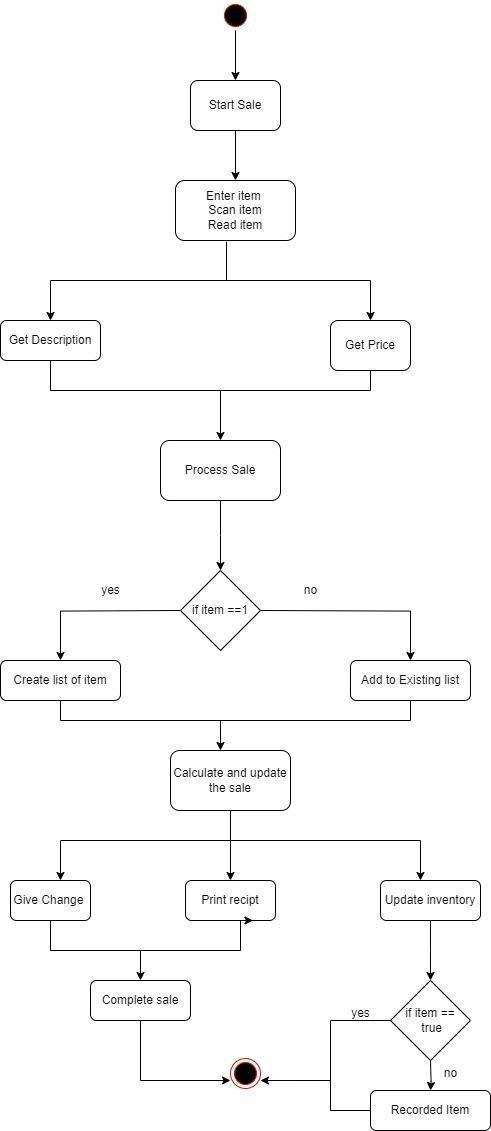
Fig. 2- SystemflowofthePOSsystem
International Research Journal of Engineering and Technology (IRJET) e-ISSN: 2395-0056
Volume: 11 Issue: 03 | Mar 2024 www.irjet.net p-ISSN: 2395-0072
The equations are the classic ARIMA model has three components:Auto-regressive, integrated(differencing), andMoving-Average.These are then linearly combined to formthemodel:
The model is often compactly writtenARIMA (p, d, q)wherep,d, andqrefer to theorderof auto regressors, differencing and moving-average components respectively.ARIMAaddsaseasonalitycomponenttoeach factor of the ARIMA equation to produceSARIMA (p, d, q)(P,D,Q)m:
Where:
y’:differencedtime series, through both regular,d, and seasonal,D,differencing
P:numberofseasonalauto-regressors
ω:coefficientsoftheseasonalautoregressivecomponents
Q:numberofseasonalmoving-averagecomponents
η:coefficientsoftheseasonalforecasterrors
m:lengthofseason.
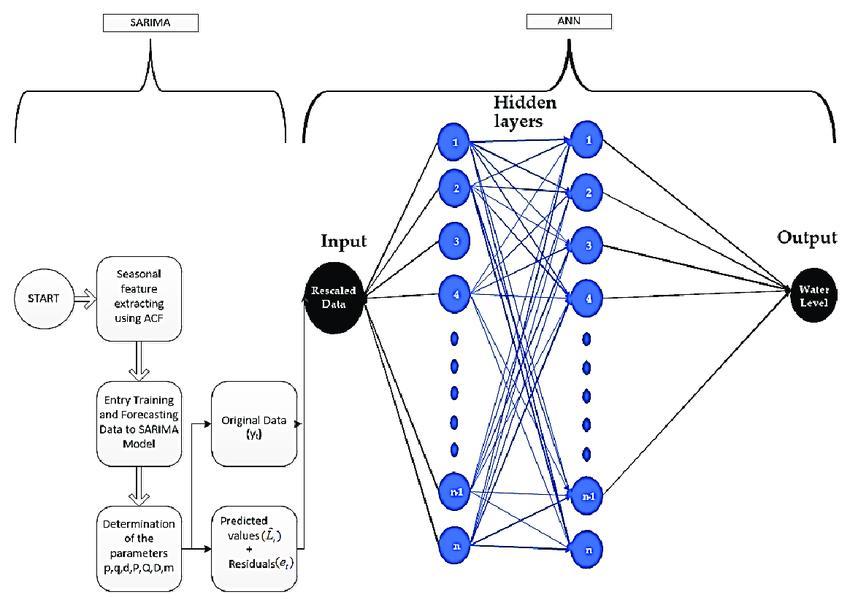
Fig. 3-SARIMAModelworking
Nowwearebuildingdifferentmodelsforeachitemofthe menuandmakeadataframeofrespectiveRMSEtodetect whichmodelisbestamongall.
1stModel:-
Winter Exponential Smoothing with Additive Seasonality andAdditiveTrendModel
st=γ∗(yt−ℓt)+(1−γ∗)st−m
2ndModel:-
HoltMethodModel
|yt+h|t=[ℓt+(ϕ+ϕ2+⋯+ϕh)bt]st+h−m(k+1).
AfterWepresenttheoutcomesofourimplementationand testingefforts.Wereportkeyfindingssuchasthesystem’s accuracy in processing transactions, its speed, and its reliability. Additionally, we provide data on how well the system managed inventory and customer information, detailinganyissuesencounteredduringreal-worldusage.
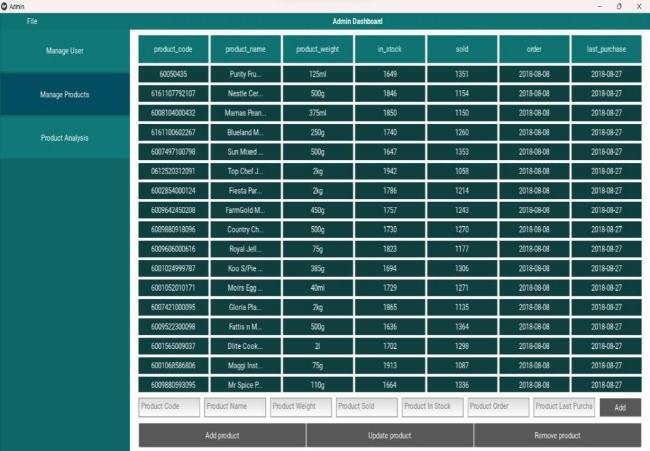
Fig. 4-AdminScreentomanageproducts
It organize and manipulate various aspects of a product catalog, including adding, editing, categorizing, and tracking inventory and sales data. This dashboard streamlinesproductmanagementtasks,enhancingcontrol andvisibilityovertheentireproductportfolio.
The Results and Discussion sections collectively serve to validate the effectiveness of our POS system and provide insights into its real-world performance and user experience. These findings will be invaluable for system refinement and future development, with a focus on enhancing both customer satisfaction and operational efficiency. We also explore potential improvements, such as optimizing the user interface for better customer experience and enhancing security measures to protect againstfraud.
International Research Journal of Engineering and Technology (IRJET) e-ISSN: 2395-0056
Volume: 11 Issue: 03 | Mar 2024 www.irjet.net p-ISSN: 2395-0072
A POS screen showcases the sales transaction interface, typically displaying items, prices, and a payment total, enabling cashiers to process customer purchases efficiently. It provides a user-friendly and intuitive interfaceforhandlingsalestransactionsinretailorservice businesses
Table -1: AlgorithmsUsed
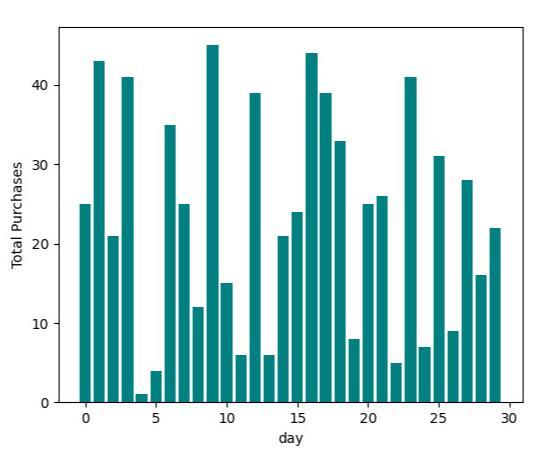
The inventory analysis revealed patterns of demand and consumption, helping to optimize stock levels and minimize overstock or stockout situations. Furthermore, theproductanalysishighlightedthe best- performing and least-performingproducts,enablinginformeddecisionson product offerings and marketing strategies. In conclusion, the insights derived from inventory and product analysis play a pivotal role in enhancingoperational efficiency and profitability for our business. By understanding our inventory needs and product performance, we are better equipped to meet customer demands, reduce waste, and improveoverallresourceallocation.Thesefindingsoffera strong foundation for informed decision-making and will guide us in tailoring our inventory management and product strategies to remain competitive and meet the evolving needs of our target audience. It provides a user-
friendly platform for tasks like adding, modifying, or deactivating user accounts and managing user roles and accessrights.
Wewouldliketoexpressoursinceregratitudetoallthose who contributed to the successful completion of this project integrating advanced forecasting models into the Point of Sale (POS) system. First and foremost, we extend our deepest appreciation to our project supervisor Prof.Sonali Karthik whose guidance, support, and invaluableinsightshavebeeninstrumentalthroughoutthe entire duration of this project. Their expertise and encouragement have been indispensable in steering us in the right direction and overcoming various challenges along the way. We are also immensely grateful to the entire team involved in the project, whose dedication, collaboration, and hard work have been vital in bringing this vision to fruition. Each team member's unique skills and contributions have played a crucial role in the development, implementation, and testing phases of the project.
[1] Bo Huang, Wei Gan, Zhi Li Application of Medical Material Inventory Model Under Deep Learning in SupplyPlanningofPublicEmergence.
[2] Zen Yon Wu , Lu Li, Haotina Lin. Process Knowledge Recommendation System for Mechanical Product Design
[3] “Step-Enhancement of Memory Retention for User InterestPrediction”.
[4] Bo Huang, Wei Gan, Zhi Li Application of Medical Material Inventory Model Under Deep Learning in SupplyPlanningofPublicEmergence.
[5] Sentiment Analysis for E-Commerce Product Reviews in Chinese Based on Sentiment Lexicon and Deep Learning.
[6] Md. Arif Islam ,Saiful Islam Sany ,Faiza Islam Nahin ,Shahariar Azad Rabby Product DemandForecasting withMachineLearningforShop.
[7] Hallegatte and A. Vogt-Schilb, ``Are losses from natural disasters more than just asset losses?'' in Advances in Spatial and Economic Modeling of DisasterImpacts.Springer,2019,pp.15_42.
J. Klomp and B. Hoogezand, ``Natural disasters and agricultural protection: A panel data analysis,''World Develop.,vol.104,pp.404_417,Apr.2018.