
International Research Journal of Engineering and Technology (IRJET) e-ISSN: 2395-0056
Volume: 11 Issue: 03 | Mar 2024 www.irjet.net p-ISSN: 2395-0072
International Research Journal of Engineering and Technology (IRJET) e-ISSN: 2395-0056
Volume: 11 Issue: 03 | Mar 2024 www.irjet.net p-ISSN: 2395-0072
JEEVAANANTH K1 , BRINDHA R2 , Dr. M. MOHANRAJ3
1PG Scholar Computer Aided Design Engineering, Government College of Engineering Salem-11, India
2PG Scholar Communication Systems Engineering, Government College of Engineering Salem-11, India
3Assistant Professor, Dept. of Mechanical Engineering, GovernmentCollegeofEngineeringSalem-11,India
Abstract - Electrichybridscooterscombinetheflexibility of recharging from any external power source with the option to run on a petrol engine. These scooters utilize a rechargeablebatterytostoreelectricity,providingpowerto oneormoreelectricmotorsformovement.Distinguishedby their absence of a step-through frame, these scooters can accelerateusingelectricityfromanexternalsource,witha speedlimitof45km/h.The batterystoreselectricity,and the vehicle is propelled by an electric hub motor. As pollution-free road transport, this project involves converting a petrol vehicle into a hybrid electric vehicle, emphasizingthereductionofbatterychargingtime.Theecofriendly approach minimizes human effort. The project detailsthedesignandmanufacturingprocessesinvolvedin creating an electric scooter, adhering to the aesthetic principleofthegoldensectionproportion.Thefinalproduct, constructed using traditional modeling and engineering techniques,featuresouterhousingsmadefromcarbonfiber.
Key Words: Electric vehicle, Hub motor, Chain motor, Lithium-ion Battery, key result indicators, etc
The escalating concerns regarding global warming and urban air pollution have led to a concentrated effort in transport policy decision-making to develop environmentally friendly vehicles. Research has been directed towards addressing the significantly lower air quality in cities, directly linked to vehicle emissions, particularlyfromprivatecars.EpisodesofhazeinSoutheast Asiainvariousyearsheightenedenvironmentalawareness. Urbantransportpoliciesaimingtoreduceprivatecarusage haveincreased theadoption ofnon-pollutingvehicleslike electric scooters. Despite the rising number of electric scooter users, challenges related to safety and comfort persist, hindering further adoption for meaningful environmental impact. Our study employs computer simulation to model the aerodynamic effects of existing safety and comfort features, presenting a new design that optimallyintegratestheseelements.Asfifth-yearmechanical engineering students, we were tasked with developing a single-seated electric scooter, emphasizing the design, fabrication,andlearningprocessesinvolved.Thissemester focusesoninformationgathering,conceptgeneration,and initialdrawingstages,pavingthewayforfabricationinthe
next semester. This hands-on process enables students to comprehend the intricacies of building a product from inception to completion, with each step serving as a selflearning opportunity. The design of the electric scooter involves three phases of the engineering design process: conceptualdesign,embodimentdesign,anddetaildesign.
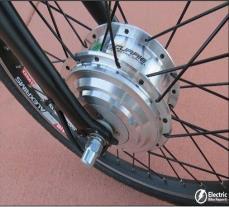
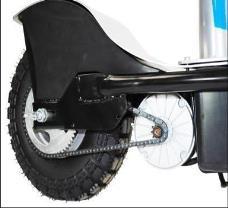
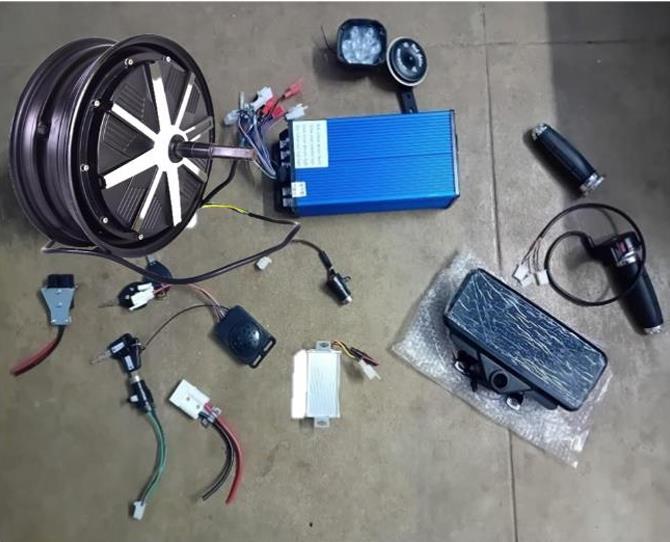
Electricscooterscanbebroadlycategorizedintotwomain typesofmotors:hubmotorandchainmotorsystems.Hub motorsarehousedinsidethehubofeitherthefrontorrear wheel,creatinganall-wheeldrive.Theyarecommonlyused in electric bikes as well. Unlike electric bikes, electric scootersuseathrottleforspeedcontrolinsteadofpedals. Thehubmotorsysteminelectricscootersiseasytoinstallor removefromthescooterwheel,providingabalancedweight distribution,especiallywhenthebatteryismountedinthe middle or back of the scooter. This design eliminates the need for a chain and offers versatility in scooter weight management.
The other type of electric scooter utilizes a chain motor, whichisconnectedwithachain,sprocket,andgeartopropel thescooter.Unlikethegearlesshubmotor,thechainmotor employsgears,influencingthescooter'storqueandspeed. Typically,thechainmotorisinstalledatthereartireofthe scooter,whilethehubmotorcanbepositionedateitherthe front or rear. Electric vehicles, including scooters, offer advantagessuchascostsavings,reducedpollution,andtax incentives. They ensure a safer driving experience with controlledspeedsandlowertirewear,universallyrelyingon Direct Current (DC) electric motors for propulsion. The critical force for setting the vehicle in motion and determiningdesirablecharacteristicsistorque,acommon requirementacrossthesemotors
International Research Journal of Engineering and Technology (IRJET) e-ISSN: 2395-0056
Volume: 11 Issue: 03 | Mar 2024 www.irjet.net p-ISSN: 2395-0072
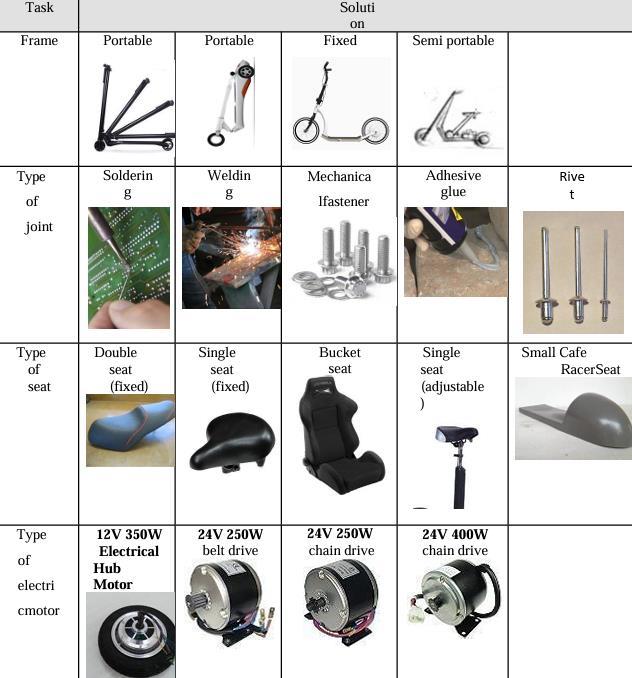
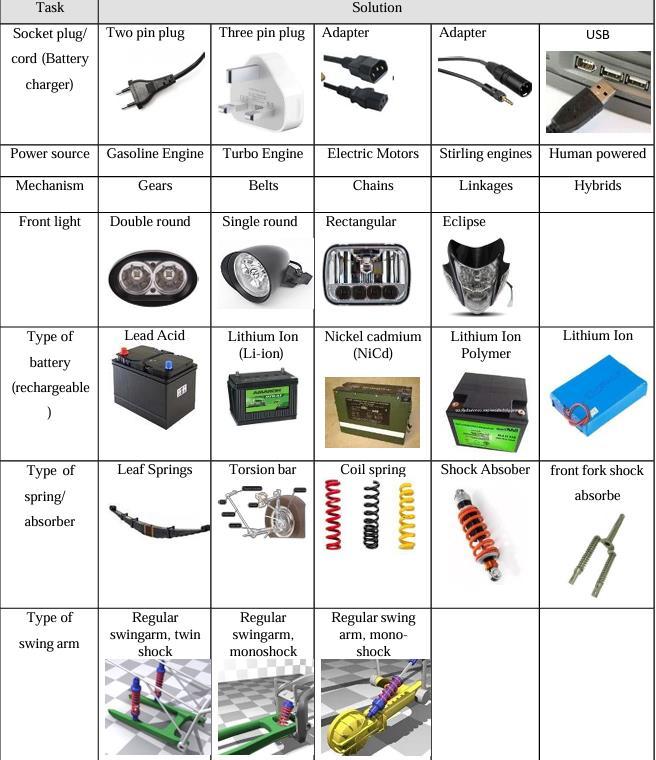
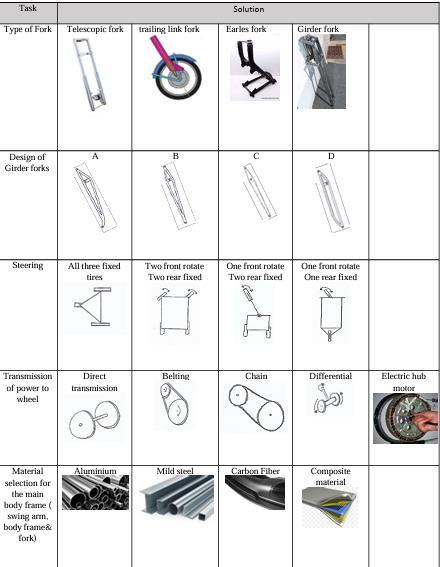
The morphological chart, derived from functional decomposition,servedasadesigntooltoaddresseach design criterion. The selected choices in the design process, highlighted in the chart, were thoroughly evaluated for optimal performance and maximum adherencetorequirements
Electric vehicles offer key advantages, including fuel cost savings, reduced pollution, and appealing tax incentives. Theyalsoensureasaferdrivingexperiencewithcontrolled speedsandminimizedtirewear.Despitevariationsinspeed, size, and operation methods among electric vehicles, they commonly utilize Direct Current (DC) electric motors for wheelpropulsion.Thecriticalfactorunifyingthesemotorsis therequirementfortorque,aforcethatinitiatesmotionand determinesessentialcharacteristics.
Essentially, torque signifies the motor's turning power, playing a pivotal role in wheel propulsion. This paper introducesatorquecalculationmethodtailoredforelectric vehicles. A. Factors Influencing Required Torque Several factorscomeintoplaywhenselectingadrivemotorforan
International Research Journal of Engineering and Technology (IRJET) e-ISSN: 2395-0056
Volume: 11 Issue: 03 | Mar 2024 www.irjet.net p-ISSN: 2395-0072
electricvehicletodeterminethemaximumtorquerequired. Theseinfluencingfactorsinclude:
1. Rollingresistance
2. Gradientresistance
3. Accelerationforce
4. Aerodynamicdrag
COMPONENT NAME
Frame 15
Battery(4*11)
Motor 6
AuxiliaryComponents 5
Pinion(2*100)
Total
Rolling Resistance:RollingResistanceistheforceopposing a vehicle's motion, influenced by the interaction between wheelsandthemovingsurface.CalculatedasFr(rolling)=m ×a×Crr,itdependsontirematerialandsurfaceroughness, resultingin10.59Ninthiscase.
Drag Resistance: DragResistance,theair'sopposingforce on the bike, is determined by the formula DR[N]=0.5×Cd×ζ×v² ×A, resulting in 417.35 N. It becomes significantatspeedsbeyondathreshold.
Acceleration Force: Acceleration Force, influencing the vehicle'sacceleration,isexpressedasAF=[W×v]÷t.For example,AFiscalculatedas70.36Nforaspecifiedvelocity.
Gradient Resistance: Gradient Resistance is the gravitationalforceonaninclinedsurface,calculatedasFg[N] =m×a×Sinθ,whereθisthegradientangle.Fora0ogradient angle,Fg[N]is0N.
Torque: Torque,crucialfordesireddrivingcharacteristics, is obtained as TTF [N] =RR [N] +DR [N] +GR [N] +AF [N], multipliedbythetireradius(R),resultingin35.8N-m.
Power Required: The motor's power requirement is expressedasP=2πNT÷60,leadingtoa10KWrequirement basedonstandardpowerratings,consideringgradientforce. These results demonstrate the feasibility of determining motortorqueforanelectricvehiclewithknownparameters, allowingadjustmentsifthecalculatedtorqueexceedsmotor specifications.
ThechoiceinFavorofthestaticmotorwasdrivenbyseveral considerations.Unlikethemid-drive,iteliminatestheneed for a specialized frame design, providing flexibility for potentialchangesinmotorsuppliersinthefuture.Moreover, the static motor ensures an optimal riding experience without compromising the durability of drive train components,aconcernwithmid-drivemotors.Additionally, thestaticmotoroffersafavorableweightbalance,facilitating easy lifting and making it suitable for cross-country hill climbing,similartothemid-driveconfiguration.
Benefits:
Effortlessremovalofboththerearandfrontwheel duetotheabsenceofextracables.
Optimal weight distribution, low and centralized, ensuringthebestbalance.
Ideal for mountain bicycles, excelling in hill climbingcapabilities.
Drawback:
Potentialwearondrive-traincomponents,aspower istransmittedthroughthedrive-train.
Requiresacustomframedesignandcommitstoa specific motor supplier from the outset, limiting flexibilityforfuturechanges.
1. Design calculation of chain sprocket diameter: n1=3000, n2=696.21, d1=50mm, therefore, d2=215.45mm.
2. Lengthofchain:L=2C+π,c=420mm,L=1395mm.
3. Number of teeth: ratio=3000/696.21=3.8, z1=15, z2=52.
4. Pitch of sprocket/chain: a=420, standard pitch=12.7mm.
5. Power transmits capacity of chain: P=Pt+Pc+Ps, Pt=2.21m/s, Pt=904.97 N, Pc=91.31 N, Ps=448.5, totalpower=2311.64N.
International Research Journal of Engineering and Technology (IRJET) e-ISSN: 2395-0056
Volume: 11 Issue: 03 | Mar 2024 www.irjet.net p-ISSN: 2395-0072
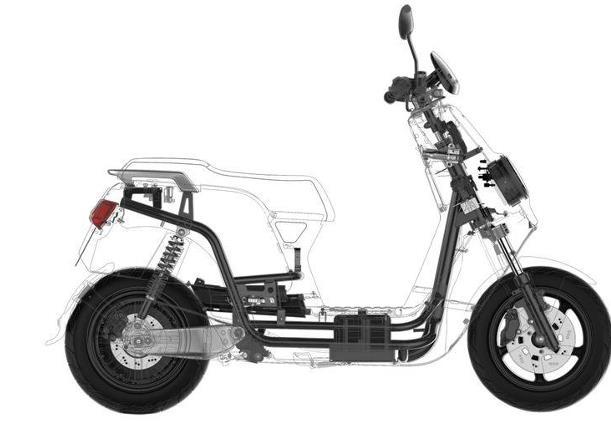
3. CONCLUSIONS
This project focused on developing a hybrid scooter powered by both petrol and electricity, with a specific emphasisonElectricBikes(e-bikes).E-bikesprovesuperior totraditionalmotorbikes,especiallyinurbanareas,offering pollutionreductionandcost-effectivetransportation.They provide convenient point-to-point travel and utilize BrushlessDC(BLDC)motorsforenhancedpowerefficiency.
To ensure optimal battery performance and lifespan, a Battery Management System (BMS) plays a crucial role. Monitoringthestateofchargeandstateofhealthallowsfor
efficient battery utilization. With the battery being the primary energy storage component in Electric Vehicles (EVs), a battery-assisted charging system prevents overcharging,ensuringbatteryhealth.
E-bikesserveasanaffordableandaccessibletransportation mode for individuals of all ages, particularly for shorter distances.Theircost-effectivenessperkilometer,simplified design with fewer components, and ease of dismantling contribute to reduced maintenance requirements. A key highlightistheireco-friendlyoperation,ase-bikeseliminate reliance on fossil fuels, resulting in pollution-free and noiselesstransportation.Theoverarchinggoalistoachievea comfortable,compact,high-speed,andefficientelectrictwowheeler.
[1] Amela Ajanovic*, Reinhard Haas, Dissemination of electric vehicles in urban areas: Major factors for success,EnergyEconomicsGroup,ViennaUniversityof Technology,AustriaEnergyxxx(2016)1-8 M.
[2] Qingping wu, wenchao Tian, Design of permanent magnet brushless dc motor control system based dspic30F4012, aChangZhou College of information Technology, Changzhou 213164, China,bXidian University, Xian, 710071, China procedia engineering 29(2012)42234227.K.
[3] Huazhang WANG, Design and Implementation of BrushlessDCMotorDriveandControlSystem,Institute ofElectronicsandInformationEngineering,Southwest University for Nationalities,Chengdu, 610041, China–ProcediaEngineering29(2012)2219-2224
[4] M.A. Hannan, A. hussain, A Mohamed, A review of lithium–ionstateofchargeestimationandmanagement system in electric vehicle application. Department of Electrical Power Engineering, University Tenaga National,Malaysia.DepartmentofElectrical,Electronic and Systems Engineering, University Kebangsaan Malaysia, Kajang. Renewable and Sustainable Energy Reviews78(2017)834–854.
[5] 5 Maitane berecibar, john crego, state of health estimationalgorithmoflifepo4batterypacksbasedon differential voltage curves for battery management system application. IK4-Ikerlan, Pº. J. Mª. Arizmendiarrieta,2,20500Arrasate-Mondragon,Spain. Energy103(2016)784e796.
[6] Kaichen,Linchen,structureoptimizationofparallelair cooled battery thermal management system. Key Laboratory of Enhanced Heat Transfer and Energy Conservation of the Ministry of Education, School of Chemistry and Chemical Engineering, South China University of Technology, Guangzhou 510640,
International Research Journal of Engineering and Technology (IRJET) e-ISSN: 2395-0056
Volume: 11 Issue: 03 | Mar 2024 www.irjet.net p-ISSN: 2395-0072
Guangdong, PR China .Department of Control Science and Engineering, Tongji University, Shanghai 201804, PRChina.KeyLaboratoryofConditionMonitoringand Control for Power Plant Equipment of Ministry of Education, North China Electric Power University, Beijing102206,PRChina.InternationalJournalofHeat andMassTransfer111(2017)943–952.
[7] N. Sujitha, S. Krithiga, RES based EV battery charging system:Areview.SchoolofElectricalEngineering,VIT University, Chennai 600 127, Tamil Nadu, India. RenewableandSustainableEnergyReviews.
[8] MuhammadAziz,batteryassistedchargingsystemfor simultaneous charging of electric vehicles. Solutions ResearchLaboratory,TokyoInstituteofTechnology,212-1 Ookayama, Meguro-ku, Tokyo 152-8550, Japan Advanced Collaborative Research Organization for Smart Society, Waseda University, 3-4-1 Ohkubo, Shinjuku-ku,Tokyo169-8555,Japan.Energy100(2016) 82to90.