
International Research Journal of Engineering and Technology (IRJET) e-ISSN: 2395-0056
Volume: 11 Issue: 03 | Mar 2024 www.irjet.net p-ISSN: 2395-0072
International Research Journal of Engineering and Technology (IRJET) e-ISSN: 2395-0056
Volume: 11 Issue: 03 | Mar 2024 www.irjet.net p-ISSN: 2395-0072
K Sandhya Rani1 , SK Haniya2 , SK Hafizunnisa3 , P Venkata Srinivasa Reddy4, P Vijay Kumar5, K Prathyusha6 ,
1Assistant Professor, Dept of AI&DS, VVIT, Andhra Pradesh, India
2Student, Dept of AI&DS, VVIT, Andhra Pradesh, India
3Student, Dept of AI&DS, VVIT, Andhra Pradesh, India
4Student, Dept of AI&DS, VVIT, Andhra Pradesh, India
5Student, Dept of AI&DS, VVIT, Andhra Pradesh, India
6Student, Dept of AI&DS, VVIT, Andhra Pradesh, India
Abstract - The escalating urbanization and subsequent surge in vehicular traffic have exacerbated the challenge of traffic congestion, resulting in substantial economic losses, environmental degradation, and widespread commuter frustration. Traditional traffic management systems have struggled to cope with the evolving demands, often failing to deliver effective and sustainable solutions. In response, we propose a Smart Traffic Congestion Control System that integratescutting-edgemachinelearningtechnologies.Atits core is YOLOv8, a state-of-the-art object detection algorithm adept at swiftly identifying and classifying vehicles, pedestrians, cyclists, and other road elements within live traffic camera feeds. By accurately detecting and tracking these objects, the system can make informed decisions about traffic flow, signal timings, and safety measures, thereby enhancingoverallefficiencyandeffectivenessinurbantraffic management. This proposed system embodies a comprehensive strategy for addressing traffic congestion, leveraging Convolutional Neural Networks (CNNs) for congestiondetection, ReinforcementLearningwithProximal Policy Optimization (PPO) for dynamic signal timing, and Long Short-Term Memory (LSTM) networks for predictive modeling. Through the synergistic integration of these advancedalgorithms,thesystemcanadapttoreal-timetraffic conditions, minimizecongestion,andoptimizetheutilization of existing infrastructure.
Key Words: Machine learning, YOLOv8, LSTM, PPO, CNNs, Traffic congestion
The relentless growth of urban populations and the consequent increase in vehicular traffic have exacerbated the challenge of traffic congestion, leading to significant economic losses, environmental degradation, and widespread frustration among commuters. Traditional traffic management systems have struggled to keep pace with the ever-evolving demands, often falling short in providingeffectiveandsustainablesolutions.Inresponseto this pressing issue, we propose the integration of cutting-
edge machine learning technologies into a Smart Traffic Congestion Control System, leveraging the power of advancedobjectdetectionalgorithms,predictivemodelling, anddynamicsignaloptimization.
AtthecoreofthisinnovativesystemliesYOLOv8,astate-ofthe-art object detection algorithm that excels at rapidly identifyingandclassifyingvehicles,pedestrians,cyclists,and other road elements within live traffic camera feeds. By accuratelydetectingandtrackingtheseobjects,thesystem can make informed decisions about traffic flow, signal timings,andsafetymeasures,therebyenhancingtheoverall efficiencyandeffectivenessofurbantrafficmanagement.
The proposed system represents a holistic approach to tackling traffic congestion, combining the capabilities of Convolutional Neural Networks (CNNs) for congestion detection, Reinforcement Learning with Proximal Policy Optimization (PPO) for dynamic signal timing, and Long Short-Term Memory (LSTM) networks for predictive modeling. This synergistic integration of advanced algorithmsenablesthesystemtoadapttoreal-timetraffic conditions,minimizecongestion,andoptimizetheutilization ofexistinginfrastructure.
The enduring issue of urban traffic congestion has prompted a concerted effort among researchers and engineers to devise innovative remedies. Incorporating Machine Learning (ML) and artificial intelligence (AI) methodologiesintotrafficmanagementsystemshassurfaced as a promising approach. This review surveys pertinent studies and advancements in ML-based urban traffic management,aimingtoaddressitsmultifacetedimpactson society,theenvironment,andtheeconomy.
Urbantrafficcongestionhaslongbeenapervasiveissue, with far-reaching consequences that extend beyond mere inconvenience. Prolonged travel times due to congestion
International Research Journal of Engineering and Technology (IRJET) e-ISSN: 2395-0056
Volume: 11 Issue: 03 | Mar 2024 www.irjet.net p-ISSN: 2395-0072
resultinlostproductivity,increasedfuelconsumption,and heightenedlevelsofairpollution,adverselyimpactingboth the economy and the environment. Furthermore, the psychologicaltolloftraffic-relatedstressandfrustrationon commutersshouldnotbeoverlooked.
Traditionaltrafficmanagementstrategies,relyingonfixed signal timings and manual adjustments, have often fallen shortinaddressingthecomplexitiesofmodernurbantraffic patterns. As cities continue to grow and the number of vehicles on the road escalates, the limitations of these conventional approaches become increasingly apparent, necessitatingtheexplorationofmoreinnovativeanddatadrivensolutions.
Machinelearningalgorithms,notablyConvolutional NeuralNetworks(CNNs),areincreasinglyutilizedto tackle traffic congestion challenges. CNNs analyze traffic camera images in real-time, accurately identifying congestion, accidents, or disruptions, therebyenhancingtrafficmanagementsystems.
Furthermore, the integration of reinforcement learning techniques, such as Proximal Policy Optimization(PPO),hasenabledtheoptimizationof traffic signal timings based on real-time data and feedbackfromtheenvironment.Thesealgorithms learntomakedecisionsthatmaximizetrafficflow andminimizecongestion,adaptingsignaldurations dynamicallyinresponsetochangingconditions.
LongShort-TermMemory(LSTM)networks,aform ofrecurrentneuralnetworks,playacrucialrolein trafficmanagement.Theyanalyzehistoricaltraffic data to predict future congestion probabilities, aiding in proactive adjustments and preventive measurestoalleviatecongestion.
Theabilitytoaccuratelydetectandclassifyobjects withintrafficenvironmentshasemergedasacritical
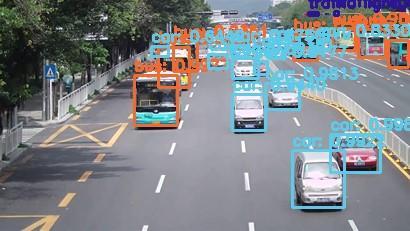
component of intelligent traffic management systems.Objectdetectionmodels,suchastheYOLO (You Only Look Once) family of algorithms, have demonstrated remarkable capabilities in rapidly identifyingvehicles,pedestrians,cyclists,andother roadelementsfromcamerafeeds.
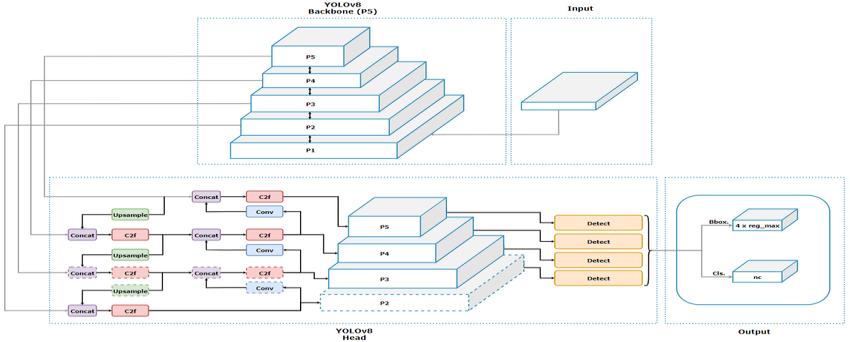
TheLatestYOLOv8revolutionizesobjectdetection withenhancedaccuracyandspeed.Integratedinto trafficmanagement,itquicklyidentifieshazardslike jaywalking pedestrians, enhancing safety. Precise objectdetectiongathersdataontrafficcompositions andpedestrianactivities,guidingsignaltimingsand infrastructureplanning.
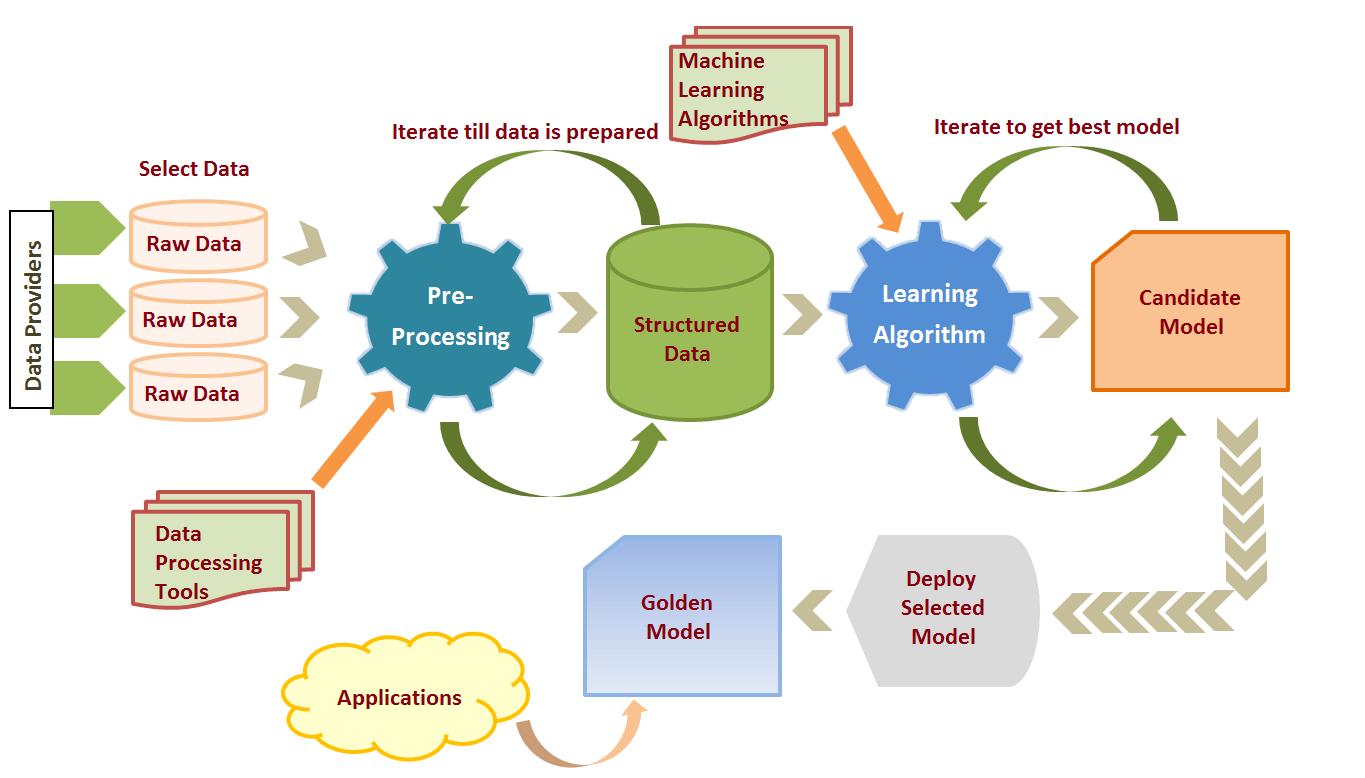
TheproposedTrafficCongestionControlSystemisa comprehensive and modular solution that seamlessly integrates multiple cutting-edge technologiestoachieveitsobjectives.Atthecoreof the system lies the YOLOv8 object detection algorithm,whichcontinuouslyprocesseslivecamera feedsfromstrategiclocationsthroughouttheurban area.
YOLOv8's superior performance in accurately detecting and classifying vehicles, pedestrians, cyclists, and other road elements ensuresthat the systemhasacomprehensiveunderstandingofthe currenttrafficconditions.Thisinformationisthen fed into the decision-making module, which orchestrates the interactions between the various componentsofthesystem.
CNNs are employed for traffic congestion detection, analyzingcameraimagestoidentifypatternsassociatedwith congestion, accidents, or disruptions. These insights, combined with the object detection data from YOLOv8, provideaholisticviewofthetrafficsituation,enablingthe systemtomakeinformeddecisionsaboutsignaltimingsand potentialinterventions.
International Research Journal of Engineering and Technology (IRJET) e-ISSN: 2395-0056
Volume: 11 Issue: 03 | Mar 2024 www.irjet.net p-ISSN: 2395-0072
RL agents are trained to adjust signal timings at intersectionsusingreal-timetrafficdata,historicalpatterns, andenvironmentalfeedbacktomakeinformeddecisions.
ThePPOalgorithmguaranteeseffectiveandsteadylearning, empowering agents to converge on optimal signal timing strategiesthatreducecongestionandenhancetrafficflow.
3.4
LSTM networks are integrated for traffic pattern prediction. These recurrent neural networks analyze historical traffic data, capturing temporal dependencies and patterns, and enable accurate forecasting of future traffic scenarios and congestion likelihoods. By anticipating potential bottlenecks or surges in traffic, the system can proactively adjust signal timings and implement preventivemeasures,ensuringasmootherflowof traffic.
The modular nature of the system architecture allows for seamless integration of additional components or algorithms as new technologies emerge. Furthermore, the system is designed to interface with existing traffic management infrastructure, enabling a gradual transition towards more intelligent and data-driven traffic controlstrategies.
4.Methodology
Themethodologyemployedinthisresearchintegratesstateof-the-arttechnologiesandadvancedalgorithmstodevelop a comprehensive solution for managing and alleviating trafficcongestioninurbanareasefficiently.
The Traffic Congestion Control System relies on a strong data collection infrastructure with strategicallypositionedtrafficcamerasandsensors
capturing live video feeds and relevant data like vehicle counts, speeds, and traffic densities. This data is continuously streamed to the central processing unit, undergoing preprocessing and qualitychecks.
Preprocessing steps include image resizing, denoising,andnormalizationtoensurecompatibility withthevariousmachinelearningmodelsemployed bythesystem.
Additionally,datafusiontechniquesareappliedto integrateinformationfrommultiplesources,suchas traffic cameras, loop detectors, and GPS data, providingacomprehensiveandholisticviewofthe trafficenvironment.
Attheheartoftheobjectdetectionprocessliesthe YOLOv8algorithm,whichhasundergonerigorous trainingandoptimizationspecificallyforthetraffic domain.Adiversedataset,comprisingthousandsof annotated traffic camera images and videos, was curated to train the YOLOv8 model. This dataset includes a wide range of scenarios, capturing varyingweatherconditions,lightingsituations,and trafficcompositions.
The training process leverages transfer learning techniques,wheretheYOLOv8modelisinitialized with pre-trained weights from a generic object detection task and then fine-tuned on the trafficspecificdataset.Thisapproachsignificantlyreduces the training time and computational resources requiredwhilemaintaininghighaccuracy.
The YOLOv8 model undergoes continuous evaluation and refinement using a distinct validationdatasettomaintainoptimalperformance. Key performance metrics like mean Average Precision (MAP), precision-recall curves, and inferencetimesarecloselymonitored.Adjustments to the model architecture, hyperparameters, or training strategies are made as needed based on thisevaluation.
CNNsareinstrumentalinthesystem'scongestion detection capabilities, employing a deep architecture that incorporates multiple convolutionallayers,poolingoperations,andfully connectedlayers.
International Research Journal of Engineering and Technology (IRJET) e-ISSN: 2395-0056
Volume: 11 Issue: 03 | Mar 2024 www.irjet.net p-ISSN: 2395-0072
During training, the CNN model automatically extractsrelevantfeaturesfrominputimages,such as vehicle densities, traffic flow patterns, and the presence of obstacles or incidents. The model is optimized using suitable loss functions and regularizationtechniquestoensuregeneralization andpreventoverfitting.
To boost the congestion detection module's performance,ensembletechniquescanbeutilized. These techniques combine predictions from multiple CNN models trained on different data subsetsorwithdiversearchitectures.Byleveraging the strengths of individual models and mitigating potential weaknesses, this approach can enhance accuracyandrobustness.
4.4 Optimizing Signal Timing using Reinforcement Learning and PPO
Theoptimizationofdynamicsignaltimingrelieson ReinforcementLearning(RL),particularlyProximal PolicyOptimization(PPO).Withinthisframework, an RL agent engages with a simulated traffic environment,determiningsignaltimingadjustments at intersections in response to prevailing traffic conditions.
The agent receives feedback, either rewards or penalties,reflectingtheoutcomesofitsactions,like congestion reduction or travel time increase. Throughiterations,itlearnstolinktrafficconditions and signal timing with positive or negative outcomes, refining its decision-making policy to maximizeobjectives.
The PPO algorithm is employed to optimize the agent'spolicy,ensuringefficientandstablelearning. PPOintroducestrustregionconstraintstothepolicy optimization process, preventing the agent from makingdrasticupdatesthatcouldnegativelyimpact performance. This approach strikes a balance betweenexplorationandexploitation,allowingthe agenttoexplorenewstrategieswhileleveragingits existingknowledge.
Throughout training, LSTM networks discern recurringpatternsandcorrelationswithinthedata, enhancing their ability to predict future traffic conditionsaccurately.Moreover,thesenetworkscan integrateexternal factorstofurtherimprovetheir predictivecapabilities.
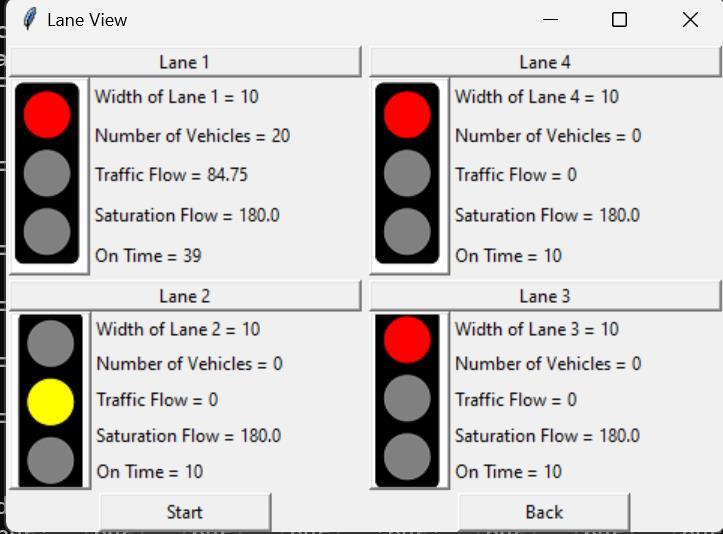
The system's predictive capabilities rely on recurrent neural networks, enabling accurate forecastingoffuturetrafficpatternsandcongestion likelihoods. These models are adept at analyzing sequential data,suchashistorical trafficdata,and capturing long-term dependencies and patterns effectively.
The LSTM networks are trained on extensive datasetscomprisinghistoricaltrafficdata,including vehiclecounts,speeds,andtrafficdensitiescollected from various sources such as loop detectors, GPS data,andtrafficcameras.Thisdataispreprocessed and formatted into sequences, capturing the temporaldynamicsoftrafficflow.
During the training process, the LSTM networks learntoidentifyrecurringpatternsandcorrelations within the data, enabling them to make accurate predictions about future traffic conditions. Additionally,thenetworkscanincorporateexternal factors to further enhance their predictive capabilities.
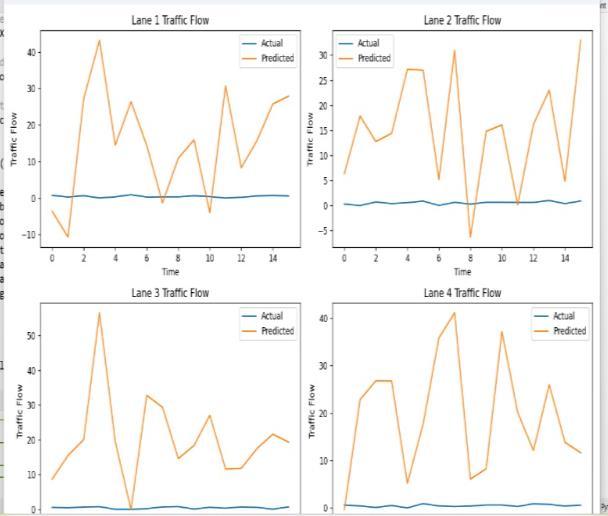
The results and analysis offer insights into the system's effectiveness in mitigating urban traffic congestion and improvingoveralltrafficmanagementoutcomes.
International Research Journal of Engineering and Technology (IRJET) e-ISSN: 2395-0056
Volume: 11 Issue: 03 | Mar 2024 www.irjet.net p-ISSN: 2395-0072
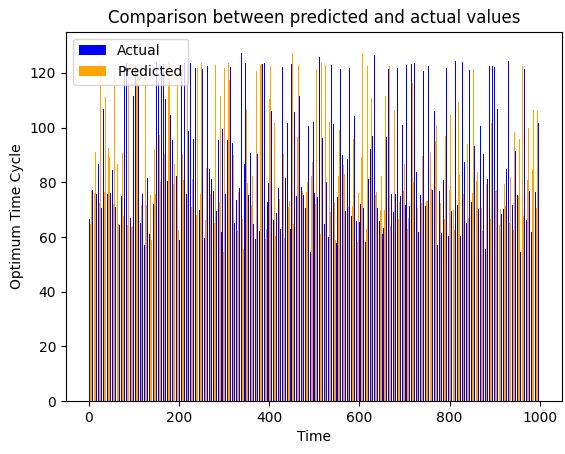
Detection:
Extensiveevaluationswereconductedtoassessthe performanceoftheYOLOv8modelinthecontextof trafficobjectdetection.Themodelwastestedona diversesetofreal-worldtrafficscenarios,capturing varying environmental conditions, lighting situations,andtrafficcompositions.
Compared to previous versions of the YOLO algorithm, YOLOv8 demonstrated significant improvements in accuracy and speed, achieving state-of-the-artresultsindetectingandclassifying vehicles, pedestrians, cyclists, and other road elements. The model consistently achieved high mean Average Precision (MAP) scores across different object categories, with MAP values exceeding 90% for vehicle detection in many instances.
Furthermore,theinferencetimesofYOLOv8were remarkablyfast,enablingreal-timeobjectdetection andtrackingcapabilities.Thisisparticularlycrucial inthecontextoftrafficmanagement,wheretimely decision-making is essential for effective traffic controlandsafetymeasures.
5.2 Congestion Detection and Signal Timing Optimization:
Theintegratedsystem'sperformanceindetecting congestion and optimizing signal timings was evaluatedthroughextensivesimulationsandrealworld deployments. The Convolutional Neural Network(CNN)modelsdemonstratedhighaccuracy in identifying congestion patterns, accidents, and disruptions, enabling the system to respond promptlyandtakeappropriateactions.
The Reinforcement Learning (RL) agents, trained usingProximalPolicyOptimization(PPO),exhibited remarkableadaptabilityinadjustingsignaltimings based on real-time traffic conditions. By
continuously learning from the environment and refiningtheirdecision-makingpolicies,theagents were able to effectively mitigate congestion and improvetrafficflowinvariousscenarios.
Comparative studies were conducted to evaluate thesystem'sperformanceagainsttraditionalfixedtime signal control strategies and manually optimizedsignaltimings.Theresultsdemonstrated significantreductionsinaveragetraveltimes,with improvementsrangingfrom15%to30%inheavily congestedurbanareas.
Additionally, the system's ability to proactively adjustsignaltimingsbasedonpredictionsfromthe LSTM networks further contributed to smoother traffic flow and minimized the formation of bottlenecksandgridlocks.
The implementation of the proposed Traffic Congestion Control System has yielded tangible benefits for commuters, communities, and urban environments. By optimizing traffic flow and reducingcongestion,traveltimesincongestedareas were significantly reduced, translating into substantialtimesavingsandimprovedproductivity forcommuters.
Furthermore, the accurate detection and classification of pedestrians, cyclists, and other vulnerable road users by the YOLOv8 algorithm enabled the system to prioritize safety measures. Timely interventions, such as adjusting signal timingsorissuingwarnings,wereimplementedto mitigate potential conflicts and reduce the risk of accidents.
Thereducedcongestionandimprovedtrafficflow alsohadapositiveimpactontheenvironment,as minimized idling times and smoother traffic patterns led to decreased fuel consumption and lower emissions of greenhouse gases and air pollutants.
The discussion aims to elucidate the implications of our study's results, explore their significance in the context of urban transportation management, and identify opportunitiesforfurtheradvancementsinthisdomain.
International Research Journal of Engineering and Technology (IRJET) e-ISSN: 2395-0056
Volume: 11 Issue: 03 | Mar 2024 www.irjet.net p-ISSN: 2395-0072
TheSmartTrafficCongestionControlSystemoffers numerous advantages over traditional traffic management approaches. By leveraging cuttingedgemachinelearningtechnologies,thesystemcan adapt to dynamic traffic conditions in real-time, optimizingsignaltimingsandmitigatingcongestion with unprecedented efficiency. Furthermore, the accurateobjectdetectioncapabilitiesprovidedby YOLOv8enhancesafetyconsiderations,prioritizing thewell-beingofallroadusers.
However, the implementation and widespread adoption of such a system are not without challenges. One significant limitation is the requirement for robust and extensive data collection infrastructure, including a network of traffic cameras and sensors strategically placed throughouturbanareas.Additionally,thesystem's performance is heavily reliant on the quality and accuracy of the data collected, necessitating stringentdatapreprocessingandqualityassurance measures.
Anotherpotentiallimitationliesinthecomplexityof the system's underlying algorithms and models. While machine learning techniques offer remarkablecapabilities,theycanalsobesusceptible to biases, overfitting, and lack of interpretability. Addressing these challenges through rigorous model evaluation, testing, and transparency measures is crucial for ensuring the system's reliabilityandtrustworthiness.
The modular nature of the Traffic Congestion Control System allows for continuous enhancementsandintegrationsasnewtechnologies emerge. One promising area of exploration is the integration of Vehicle-to-Everything (V2X) communication, enabling real-time data sharing betweenvehicles,infrastructure,andpedestrians. Byleveragingthisdata,thesystemcangaindeeper insightsintotrafficdynamicsandmakeevenmore informed decisions about signal timings and routing.
Additionally,theincorporationofedgecomputing techniques could further enhance the system's performance and responsiveness. By processing dataclosertothesource,attheedgeofthenetwork, latency can be reduced, and decision-making can become more localized and tailored to specific intersectionsorneighborhoods.
Exploration of advanced reinforcement learning techniques, such as multi-agent reinforcement learning and hierarchical reinforcement learning, could also yield significant improvements in the system'sabilitytohandlecomplextrafficscenarios andcoordinatesignaltimingsacrossinterconnected intersections.
As the Smart Traffic Congestion Control System gains traction and demonstrates its effectiveness, scalabilityandwidespreadadoptionacrossdiverse urban settings become crucial considerations. Collaborationwithlocalauthorities,transportation agencies,andurbanplannersisessentialtoensure seamless integration with existing infrastructure andregulatoryframeworks.
Standardization efforts and the development of interoperable protocols for data exchange and systemintegrationwillbevitalforenablingcrosscityandcross-regionimplementations.Additionally, user-friendly interfaces and public awareness campaigns can foster acceptance and adoption amongcommutersandthepublic
The proposed Smart Traffic Congestion Control Systemhasthepotentialtocontributesignificantly to environmental sustainability by reducing unnecessary fuel consumption and emissions throughoptimizedtrafficflow.Byminimizingidling times and enabling smoother traffic patterns, the system can directly lower the carbon footprint associatedwithurbantransportation.
However,acomprehensiveanalysisofthesystem's environmental impact is necessary to quantify its precisecontributionsandidentifyareasforfurther improvement. Factors such as the energy consumption of the underlying computational infrastructure, data transmission, and storage shouldbecarefullyevaluatedandoptimized.
The integration of the YOLOv8-Driven Smart Traffic CongestionControlSystemmarksasignificantleapforward intherealmofurbantrafficmanagement.Byamalgamating state-of-the-art technologies like YOLOv8 for advanced objectdetection,ConvolutionalNeuralNetworks(CNNs)for congestion detection, Reinforcement Learning (RL) with Proximal Policy Optimization (PPO) for dynamic signal timing,andLongShort-TermMemory(LSTM)networksfor predictive modeling, this system offers a holistic and
International Research Journal of Engineering and Technology (IRJET) e-ISSN: 2395-0056
Volume: 11 Issue: 03 | Mar 2024 www.irjet.net p-ISSN: 2395-0072
adaptivesolutiontotheintricatechallengesofurbantraffic congestion.
The inclusion of YOLOv8, renowned for its exceptional accuracy, speed, and computational efficiency, facilitates preciseandreal-timedetectionandclassificationofvehicles, pedestrians,cyclists,andothercrucialelementsoftheroad network. This capability not only enhances the system's decision-making prowess but also underscores the paramount importance of safety in urban traffic management.
Furthermore,byleveragingmachinelearningandartificial intelligence,thesystemcancontinuouslylearnandadaptto evolving traffic patterns, thus ensuring its efficacy and relevance in dynamically changing urban environments. Throughoptimizedsignaltiming,congestiondetection,and predictive modeling, the system strives to mitigate traffic congestion, minimize economic losses, alleviate environmentaldegradation,andenhanceoverallcommuter experience.
In essence, the YOLOv8-Driven Smart Traffic Congestion Control System represents a paradigm shift towards smarter, more efficient, and sustainable urban traffic management. With its ability to harness the power of cutting-edgetechnologies,thissystemholdsthepotentialto revolutionizehowcitiesworldwideaddressthepersistent challengesposedbytrafficcongestion,ultimatelypavingthe way towards safer, smoother, and more resilient urban transportationsystems.
8. References
[1]Akhbar,Sha.,S,Madhan.,Lekha,S.,Nair.(2023).Machine Learning Integrated Software Defined Networking ArchitectureforCongestionControl. 1-5
[2] Joseph Redmon, Santosh Divvala, Ross Girshick, “You Only Look Once: Unified, Real-Time Object Detection”,The IEEE Conference on Computer Vision and Pattern Recognition(CVPR),2016,pp.779-788
[3]BailinYang,ShulinSun, JianyuanLi, XianxuanLin,Yan Tian, Traffic flow prediction using LSTM with feature enhancement,Neurocomputing,Volume332,2019,pp.320327,ISSN0925-2312
[4]Barker,J.(2020).Machinelearninginm4:Whatmakesa good unstructured model? International Journal of Forecasting, 36(1),150–155
[5] Sivamayil, K.; Rajasekar, E.; Aljafari, B.; Nikolovski, S.; Vairavasundaram, S.; Vairavasundaram, I. A Systematic Study on Reinforcement Learning Based Applications. Energies 2023, 16,1512.
[6] Z. Du, H. Zhou, and C. Li. 2022. Small Object Detection BasedonDeepConvolutionalNeuralNetworks:AReview. ComputerScience49,12(Dec.2022),205–218.
[7]Maadi,S.,Stein,S.,Hong,J.,&Murray-Smith,R.(2022). Real-TimeAdaptiveTrafficSignalControlinaConnectedand Automated Vehicle Environment: Optimisation of Signal PlanningwithReinforcementLearningunderVehicleSpeed Guidance.Sensors,22(19),7501.
[8] Yang, B., Sun, S., Li, J., Lin, X., & Tian, Y. (2019). Traffic flow prediction using LSTM with feature enhancement. Neurocomputing,332,320-327.
[9] Lin, J., Zhang, Y., & Huang, H. (2020). Multi-agent reinforcementlearningfortrafficsignalcontrolconsidering traffic flow dynamics. Transportation Research Part C: EmergingTechnologies,121,102797.
[10] Gao, X., & Wong, W. K. (2019). A deep reinforcement learningapproachfortrafficsignalcontrol.Transportation ResearchPartC:EmergingTechnologies,107,255-269.
[11] Liu, Y., Zhang, Y., & Tang, Q. (2021). A novel deep learningframeworkforreal-timetrafficflowpredictionand control. IEEE Transactions on Intelligent Transportation Systems,22(3),1710-1721.