
International Research Journal of Engineering and Technology (IRJET) e-ISSN: 2395-0056
Volume: 11 Issue: 03 | Mar 2024 www.irjet.net p-ISSN: 2395-0072

International Research Journal of Engineering and Technology (IRJET) e-ISSN: 2395-0056
Volume: 11 Issue: 03 | Mar 2024 www.irjet.net p-ISSN: 2395-0072
G. Mounika1, M. Anusha2, D. Gopika3 , B. Siva kumari4
1st Author -B. Tech 4th Year ,Dept of ECE, Bapatla Women’s Engineering College , Bapatla 2nd Author- B. Tech 4th Year ,Dept. of ECE, Bapatla Women’s Engineering College, Bapatla
3rd Author- B. Tech 4th Year ,Dept. of ECE, Bapatla Women’s Engineering College, Bapatla 4th Author-Assistant professor ,Dept. of ECE, Bapatla Women’s Engneering Coleege, Bapatla ***
Abstract - The fingerprint pattern is unchangeable and staysthesameuntilthepersonpassesaway.Thefingerprint patternisunchangeableandstaysthesameuntiltheperson passesaway.Fingerprintevidenceisstillthoughttobethe mostimportantpieceofevidenceincasesinvolvingevents, eveninlegalcourts.Theblacklinesinafingerprintimage are called ridges, while the lighter areas in between are calledvalleys.Thelocationswhereridgesbreakareknown as miniature points. Each human has a distinct minute pattern, and the likelihood of any two people being comparable is incredibly low roughly one in 64 million. Theminutiaepatternisdifferentevenfortwins.Additionally distinct and unchanging from the moment of birth is the ridgepattern.Fingerprintanalysisisalsousedtolookinto the blood group. Ridge frequency estimate is used in the fingerprint matching procedure. By using the K- Nearest Neighbor(KNN),theaccuracyofthesystemincreaseswhen compared existing systems. Hence, by using this system accuracyincreases.
Key Words: Finger print pattern, human identity, unique feature, ridge frequency, blood group, KNN (K-Nearest Neighbour), system accuracy, biometric identification, forensicanalysis.
The fingerprint pattern is the most dependable and distinctive aspect of a person' s identify. The fingerprint patternisunchangeableandstaysthesameuntiltheperson passes away. Every human has a unique minute pattern, withaverysmallprobabilityofsimilarity roughlyonein 64million betweenthem.Theminutiaepatternisdifferent even for twins. Additionally distinct and unchanging from themomentofbirthistheridgepattern.Thebloodbunchis aninnatecharacteristicthatremainsconstantthroughoutan individual's lifetime. It's also used in the analysis cycle to eradicate almost all infections. A blood test, which is obtained by infusing blood or by squeezing a needle on a finger,isnecessarytodeterminethetypeofillness ismixed in with antibodies for the desired outcome; this may cost money. The International Society of Blood Transfusion Working Party, which was founded in 1980 in England, recognizes 43 blood group systems with 345 antigens for humanredbloodcells.TheWorkingPartycollaborateswith
the International Blood Group Reference Laboratory to createaprofessionalnumericalterminologybasedonblood group genetics and is essential in guaranteeing patient safety.safety in blood transfusion. The key challenge for generating blood bunch forecast technique is non comprehensiveness of distinct examples of unique mark modalities. Examination throws almost no light on blood bunch forecast and various infections which accompanies maturing,especiallyiffingerprintsaretakenasabiometric methodology. There are three sorts of fingerprints plans found in fingers are Loops, Whorls, Arches are the most generally perceived from gathered informational index it nearlyfoundabout65%.
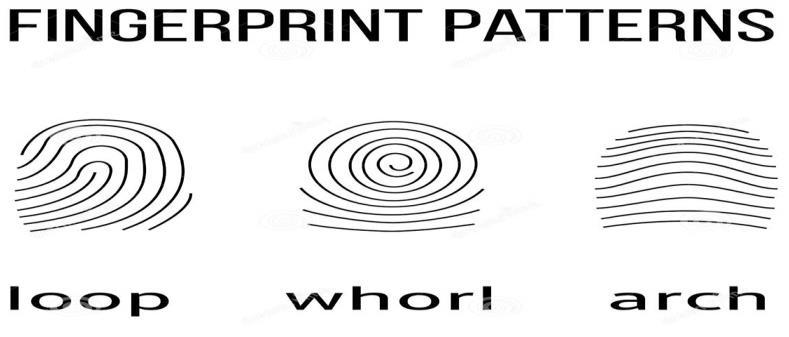
Loop: Thisisthemostcommonfingerprintpattern,where ridges enter from oneside, form a loop, and exit fromthe same side they entered. Loop patterns can be further classifiedasulnarloops(ridgeflowtowardsthelittlefinger) orradialloops(ridgeflowtowardsthethumb).
Whorl: In whorl the Ridges arranged in a circle or spiral make up whorl patterns. They can have a number of differentsubtypes,suchasaccidentalwhorls,doubleloops, centralpocketloops,andplainwhorls.
Arch: In arch Ridges that flow from one side of the fingerprinttotheother,creatinga patternlikewaves,are whatdefinearchpatterns.Unlikeloopsandwhorls,theylack prominentdeltas,ortriangularridgeformations.Basedon theorientationandarrangementoftheridges,aswellasthe existenceofparticularcharacteristicslikedeltasandridge counts,fingerprintpatternsareexaminedandcategorized.
International Research Journal of Engineering and Technology (IRJET) e-ISSN: 2395-0056
Volume: 11 Issue: 03 | Mar 2024 www.irjet.net p-ISSN: 2395-0072
These patterns are used by automated fingerprint recognitionsystemstogeneratedistincttemplatesforevery person,facilitatingpreciseidentificationandverificationina rangeofsettings,suchasaccesscontrol,bordercontrol,and lawenforcement.
Blood group identification is essential for a number of medical operations, including organ transplants, blood transfusions,andforensicinvestigations.Bloodtypinghas traditionallybeendoneviaserologicaltechniques,whichcan belabor-intensiveandneedspecificlabequipment.Butas moresophisticatedtechnologybecomeavailable,there'sa rising interest in creating automated, precise blood group predictionsystems.
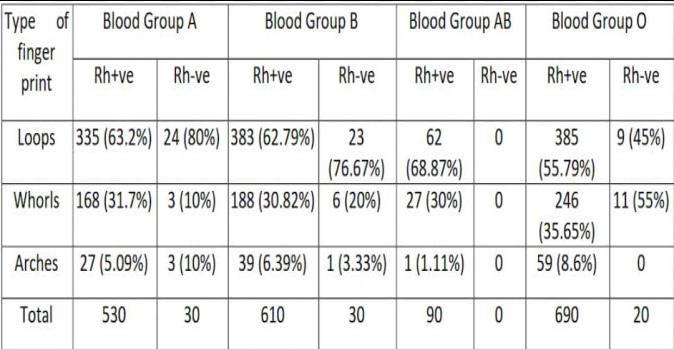
Fig2: RH Factor values of finger print patterns
Generallyspeaking,forwardandreversebloodtypescanbe distinguished by conventional serological testing. In particular,reversetypingisusedtodeterminewhetherantiA, anti-B, and anti-AB antibodies are present in serum or plasma,whereasforwardtypingidentifiesAandBantigens basedonRBCagglutinationbytheparticularantiserumand theintensityofagglutination.Inclinicalbloodtransfusion, theABOantibodytiterisalsoveryimportantandistypically evaluated using several techniques such as the test tube methodandthemicrocolumngelcardmethod.Butbecause hemagglutination is the basis for all of these serological techniques, standardization is challenging and accuracy suffersasaresult.ItisusuallyrequiredtoperformanABO testbeforereceivingabloodtransfusion.However,noone antiserumormethodcanensuretheidentificationofevery uncommon,feeble,ormutantantigen.Furthermore,a few illnesses,likeacutemyeloidleukemia,cancausebloodgroup antigenlevelstodrop.
The Princeton architecture, sometimes referred to as the VonNeumannarchitecture,isahardwarearchitecturethat supportsbasiccomponents.Itpermitsthesequentialuseofa single memory. Since we use a very small amount of fast memory(cache)thatisproximatetotheprocessor,memory accesstimesarestillfarbelowtoday'sprocessingrates.An arithmetic unit, a program control unit, a single bus for memoryaccess,andasingle,sharedmemoryfordataand programsmakeuptheVonNeumannarchitecture.
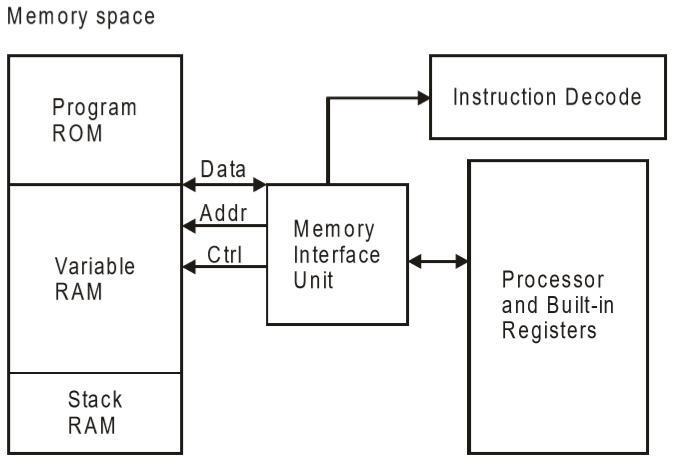
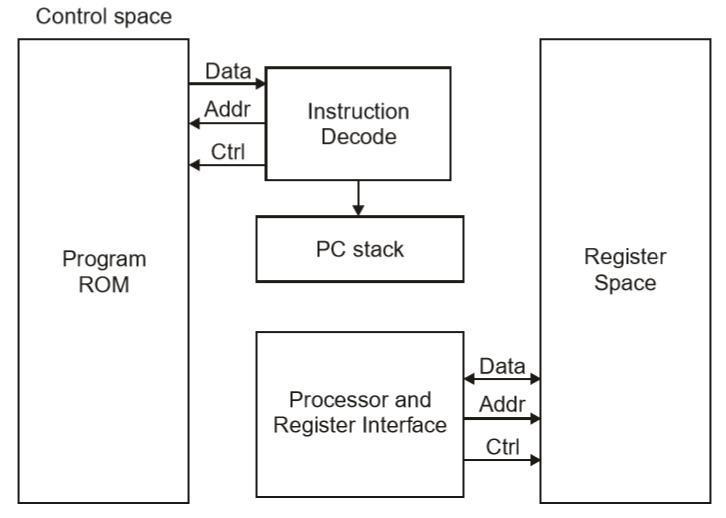
TheHarvardarchitectureprovidesdistinctsignalbusesand storagefordataandinstructions.Withthisarchitecture,the CPUhousesallofthedatastorage;theinstructionstorageis not accessible as data. Internal data buses are used by computers to separate memory sections for program instructionsanddata,enablingsimultaneousaccesstoboth. The CPU could not start up on its own; operators were required to load programs. It is not necessary to share attributes between the two memories in Harvard architecture.
ThisprojectaimstodevelopaK-NearestNeighbour(KNN), modelspecificallydesignedforbloodgrouppredictionusing fingerprint analysis. In order to accurately forecast blood types, the model will be trained to recognize and extract pertinent information from fingerprint photos. Train the systemonalargedatasetoflabeledbloodsamplestoensure that the system can accurately predict the blood group samples. K-nearest neighbors (KNN) can be used in blood group detection by considering the characteristics of differentbloodtypesandcomparingthemtodeterminethe closestmatchtoanunknownsamplebasedonitsfeatures. KNN works by finding the k nearest data points (blood
International Research Journal of Engineering and Technology (IRJET) e-ISSN: 2395-0056
Volume: 11 Issue: 03 | Mar 2024 www.irjet.net p-ISSN: 2395-0072
sampleswithknownbloodgroups)totheunknownsample andassigningthemostcommonbloodgroupamongthose neighbors to the unknown sample. K-nearest neighbors (KNN) can be employed in blood group detection by first creatingadatasetwithfeaturessuchasABObloodtype,Rh factor,andotherrelevantcharacteristics.Then,whenanew blood sample needs to be classified, KNN calculates the distancebetweenthefeaturesoftheunknownsampleand thoseofthesamplesinthedataset.Thebloodgroupofthe unknown sample is then predicted based on the majority voteoftheknearestneighborsinthedataset.Thismethodis particularly useful when dealing with datasets where the boundariesbetweenbloodgroupsarenotwell-defined.
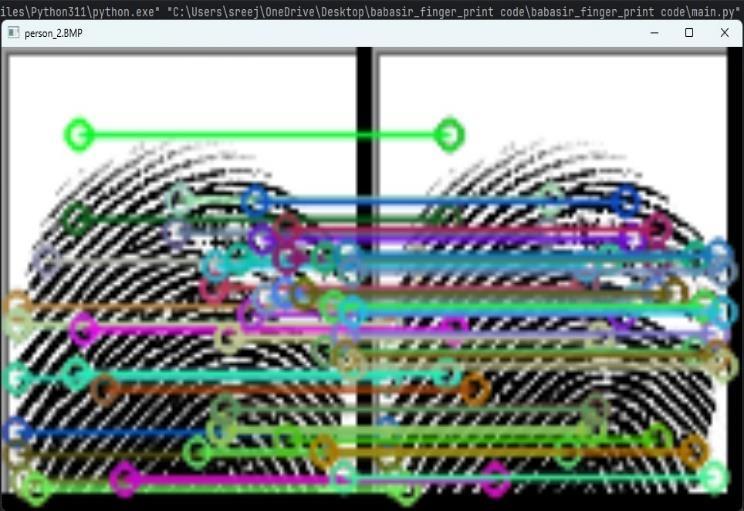
Inaboveimagethereisatrainedimageandsampleimage. Both images are compared by the KNN algorithm. By this imagewecanobservetheKNNalgorithm processthat itcan matchingtheridges,loops,whorls,circleswhicharepresent inthefingerprintpatterns.
Aftermatchingthesek-nearestneighboursintheanyoftwo fingerprintpatternsitcandetectthebloodgroupanditgives theoutputlikebelowFig6
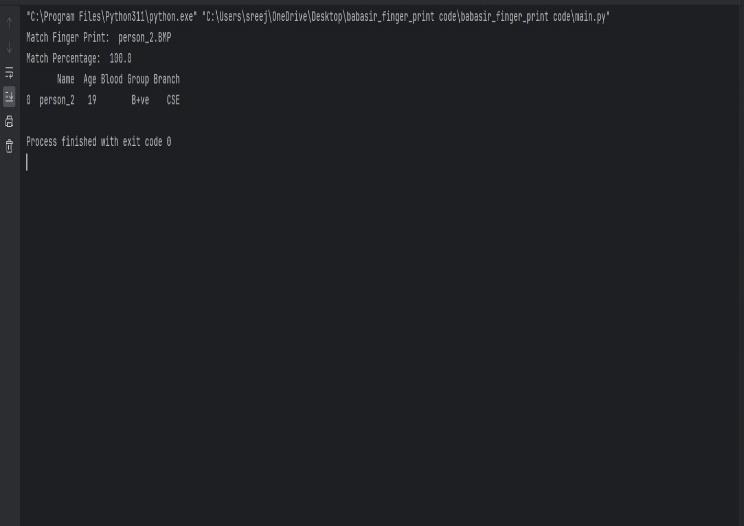
The feature scope of this project is fingerprint scanner. It captures a digital image of the fingerprint. The captured imageiscalledalivescan.Thecomparisonismadebetween the valleys and ridges. Though your whole fingerprint is recorded, the computer takes only parts of the print to comparewithothersrecords.
Utilizing image processing techniques and the K-Nearest Neighbors (KNN) algorithm for blood group detection via fingerprintsoffersapromisingavenuefornon-invasiveand efficientidentification.Throughthismethod,accurateblood group classification can be achieved, providing valuable insightsformedicaldiagnosticsandforensicinvestigations. Moreover,theintegrationofimageprocessingwithmachine learningalgorithmslikeKNNdemonstratesthepotentialfor innovative applications in biometric authentication and healthcare systems. Further research and refinement of these techniques could lead to practical implementations withsignificantreal-worldimplications
1)“Gupta,A.,Agarwal,S.,&Jain,R.,et.al[3]investigatesthe use of machine learning algorithms, including Support VectorMachines(SVM)andRandomForests(RF),forblood groupidentificationusingfingerprintimages”(2023)
2) “Verma,A., &Bhatt, V.et.al [1] providesanoverviewof automated blood group identification methods based on fingerprintanalysis”useofmachinelearningalgorithms(FEB 11,2022)
3) “Vijaykumar Patil N, D. R. Ingle; A Novel Approach to PredictBloodGroupusingFingerprintMapReadinguseof HFDU06Scanner(Apr02-04,2021)”
4)Dr.D.SivaSundharaRajaandJ.Abinaya,“ACost-Effective Method for Blood Group Detection Using Fingerprints”, InternationalJournalofAdvanceStudyandResearchWork ,Volume2,March2019.
5) A. Narkis Banu, V. Kalpana, “An Automatic System to DetectHumanBloodGroupofManyIndividualsinaParallel Manner using Image Processing”, International Journal of PureandAppliedMathematics,vol-118,pp.3119-3127,2018
6) G. Ravindran, T. Joby, M. Pravin, and P. Pandiyan, “DeterminationandClassificationofBloodTypesusingImage ProcessingTechniques,”InternationalJournalofComputer Applications,vol.157,no.1,pp.12–16,Jan.2017.
7)Mouad.M.H.Ali,VivekH.Mahale,PravinYannawar,andA. T. Gaikwad, “Fingerprint Recognition for Person IdentificationandVerificationBasedonMinutiaeMatching”,
International Research Journal of Engineering and Technology (IRJET) e-ISSN: 2395-0056
2016 IEEE 6th International Conference on Advanced Computing,Feb.2016.
8) TejaswiniHV,MSMallikarjunaSwamy“Determination and Classification of Blood Types using Image Processing Techniques”,ITSITransactionsonElectricalandElectronics Engineering(ITSITEEE),Volume-2,pp.2320–8945,2014
9) Ferraz,Ana,Member,IEEE(2013),Automaticsystemfor determiningofbloodtypeusingimageprocessingtechnique”, IEEE3rdPortugueseMeetinginBioengineering(ENBENG), pp.20-23,Feb.2013.
10)S.Pimenta,F.O.Soares,andG.Minas,“Developmentofan automaticelectronicsystemtohumanbloodtyping,”inProc. IEEEAnnu.Int.Conf.Eng.Med.Biol.Soc.(EMBC),Sep.2012
BIOGRAPHIES
First Author
G. Mounika is a student of B. Tech in stream of Electronicsand CommunicationengineeringinBapatla Women’sengineeringcollege,Bapatla,AndraPradesh, india.HereresearchinImageprocessingandKNN gollamownika@gmail.com
Second Author
M. Anusha is a student of B. Tech in stream of Electronicsand CommunicationengineeringinBapatla Women’sengineeringcollege,Bapatla,AndraPradesh, india.HereresearchinImageprocessingandKNN anushamalapati891@gmail.com
Third Author
D. Gopika is a student of B. Tech in stream of Electronicsand CommunicationengineeringinBapatla Women’sengineeringcollege,Bapatla,AndraPradesh, india.HereresearchinImageprocessingandKNN gopikadokku2002@gmail.com
Fourth Author
B. Siva Kumari (guide) ,M.Tech(PhD) AssistantProfessor,DepartmentofECE BapatlaWomen’sEngineeringCollege AffiliatedtoAcharyaNagarjunaUniversity sivakumaribondalapati@gmail.com
Volume: 11 Issue: 03 | Mar 2024 www.irjet.net p-ISSN: 2395-0072 © 2024, IRJET | Impact Factor value: 8.226 | ISO 9001:2008