
International Research Journal of Engineering and Technology (IRJET) e-ISSN: 2395-0056
Volume: 11 Issue: 03 | Mar 2024 www.irjet.net p-ISSN: 2395-0072
International Research Journal of Engineering and Technology (IRJET) e-ISSN: 2395-0056
Volume: 11 Issue: 03 | Mar 2024 www.irjet.net p-ISSN: 2395-0072
1Daneshwari N. Kori
Department of Information Science and Engineering
SDM College of Engineering and Technology
Dharwad,Karnataka,India
Abstract - Blockchain is presently a contentious topic because of its decentralized structure and security features. On the flip side, when threats and attacks rise, internet usage follows suit. The Internet of Things(IoT)is a huge worldwide network of billions of internetconnected physical objects that intends to gather and distribute data on a vast scale. IoTequipmentanddevices are revolutionizing the IT sector, but security is their biggest drawback. IoT attacks have received a lot of attention. The current technologies are not sufficient to fully safeguard IoT devices. Blockchain IoT employs the security featuresoftheBlockchaintoimprovethesecurity and communication risks vulnerability of the IoT.
Keywords - Blockchain and IoT
The term "blockchain" refers to the method of keeping transactionaldatainunitscalled"blocks"thatarelinkedto one another to form a chain. The number of transactions added to the blockchain increases its size. Blocks are recordings that capture and verify the time and order of transactions inside a specific network that is managed by consensusamongnetworkparticipants.Theserecordsare subsequentlystoredontheblockchain.
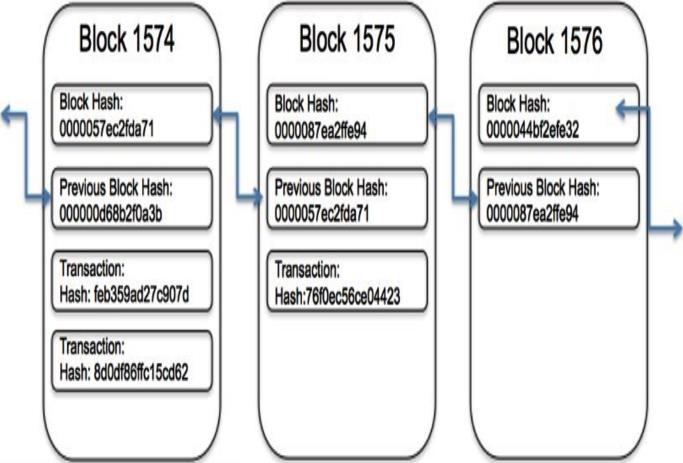
Eachblockincludesatimestampfortheprecedingblock,a hash(atypeofdigitalfingerprintoruniqueidentification), and batches of recently valid transactions that have been timestamped[1].Byconnectingtheblocksandpreventing anymoreormodifiedblocksfrombeingaddedbetweentwo
Department of Information Science and Engineering
SDM College of Engineering and Technology Dharwad,Karnataka,India
already existing blocks, the prior block hash connects the blockstogether.Theblockchainismadestrongeroverallas eachnewblockincreasesthereliabilityoftheonebeforeit. This method makes the blockchain tamper-evident, supportingitscorecharacteristicofimmutability.Inother words,whiletheblockchaindoescontaintransactiondata,it does not entirely replace databases, messaging systems, transaction processing, or business processes. Verified transaction proof is present on the blockchain. While a blockchainisfundamentallyadatabaseforkeepingtrackof transactions,itoffersmanyadvantagesoveraconventional database.
Public,Private,andConsortiumblockchainsarethethree differenttypesofblockchains[5].Anynumberofuserscan shareandindependentlyverifytransactiondataonapublic blockchain.Itisadistributed,decentralizedsystem.Similar toapublicblockchain,aprivateblockchainisdistinctinthat only users with permission from the service provider (a company or organization) to join are permitted. A private blockchain is a centralized blockchain. This sort boosts securityandtransactionspeedusingcentralizedblockchain technology.
Aconsortiumblockchainisoneinwhichmembershipis limitedtothosewhosatisfyspecificrequirementsorhave received advance approval (such as businesses or organizations). It is a decentralized blockchain that is composed of a great deal of joint entities from various companies or organizations. This kind of blockchain is similartoprivateblockchainsinthatonlyauthorizedusers' nodes(computers)arepermittedtouseit.
Twoofthemostrevolutionarytechnologies Blockchain andtheIoT arealreadyreshapingthedigitalworldofthe futureandwillfundamentallychangethewaynetworksare nowsetup.TheadoptionofIoThasgiventheobjectsaround us alifeoftheirown,allowingthemtocommunicatewith one another and collect massive amounts of data by continuouslycapturingthephysicalenvironment.Following ananalysisofthisdata,somewisedecisionswillbemadein response toit.Thefundamental basisofhowweview the physical world has changed as a result, enabling us to achieveouraimofasmoothtransitionbetweenthephysical and digital worlds. The issue with contemporary IoT solutionsisthattheyaskforadecentralizedsystem,suchas a distributed or peer-to-peer (P2P) system, although the originaldesignconceptcalledforacentralizedparty(sucha cloudserver),forconnectingandinteractingviatheInternet. Becauseofthis,thehugeamountsofsensitivedatathatwere
International Research Journal of Engineering and Technology (IRJET) e-ISSN: 2395-0056
Volume: 11 Issue: 03 | Mar 2024 www.irjet.net p-ISSN: 2395-0072
gatheredwereseriouslycompromisedintermsofprivacy andsecurity.
The distributed/P2P blockchain design also makes it possible to accomplish other goals in addition to access authentication,auditability,resilience,security,privacy,and data immutability. It provides a trustworthy and secure meansofinformationsharing.
In order to improve accuracy, efficiency, and costeffectiveness,anypertinenttradesbetweenmachinescanbe recordedbythemachinesandpreservedontheblockchain. Blockchain is used to automate IoT procedures in the use case of trade logistics. Among the numerous stakeholders involved in freight logistics today are manufacturing businesses, forwarders, shippers, customs agents, and insurers. Parties may have distinct objectives and employ various tracking techniques even though they are interconnected and constantly interact. A blockchain with IoT capabilities is employed as the shared ledger to track shippingcontainersastheymovethroughthesystem.The IoTFoundationallowssmartcontractstobeautomatically updated so that users can take advantage of IoT-enabled globaltradeonblockchain.
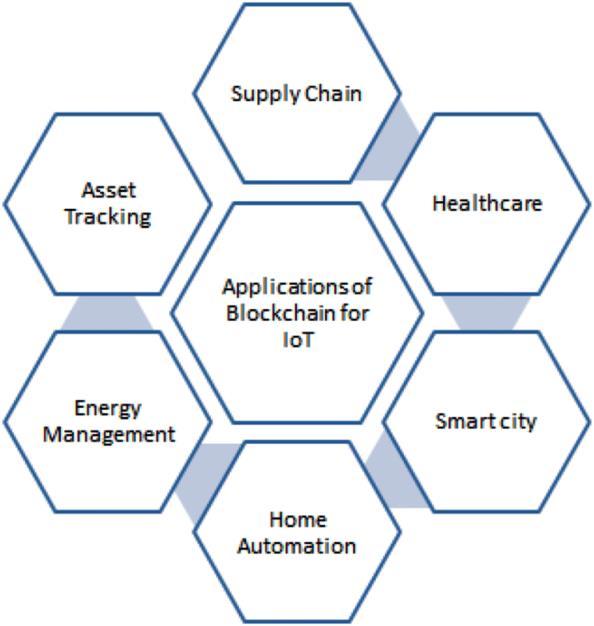
Asupplychainmanagementsystembuiltonblockchain providesareliablerecordofalltheinformationonthestatus ofshipments,thewhereaboutsofvehicles,theconditionsof storagefacilities,andmore. Ashareddistributedledger is thefoundationofit.Aproduct'scompletelifecyclecanbe tracked across the supply chain using blockchain and IoT technology, which benefits both the company and the customer.AllcommunicationsbetweenIoTdevicesarekept in the blockchain, which is an accurate data record. It
providesquickaccesstoallproduct-relateddata,suchasthe day a fish was caught, registered, and sold - a detailed accountofitsjourneyfromoceantofork.
TheusageofblockchainandIoTincross-bordertrading guaranteessecurefreightshipping.Betweenallpartiestoa deal,thetechnologyservesasanelectroniccontract.Thereis a possibility that the contract's terms and conditions are computer-encoded, enabling easy financial transfers betweenanonymousparties.
TheDrugtracing,remotepatientmonitoring,andmedical record management are the three main applications of blockchaininthemedicalindustry.Aswearablesensorsand bodysensornetworksenableremotepatientdiagnosticsin life-threatening situations, IoT in healthcare applications facilitates communication between patients and doctors. Because of the use of IoT in healthcare systems, patients' privacy may be compromised. Security must therefore be takenintoaccount.
Blockchain is one of the trendiest study topics at the moment since it can be used in most IoT contexts. One or moreoftheprimarymotivationsforadoptingtheblockchain in healthcare systems is its key features, which include Decentralization, Immutability, Security and Privacy, and Transparency.
Transportationservicesinsmartcitiescanbenefitfrom theuseofblockchain.Itcouldaidinestablishingapoint-topointvehiclenetwork.Withthehelpofsuchanetwork,itis possible to track vehicles effectively, register drivers and vehicles on a safe platform, and inform owners of critical updates.
TheIoTisasetofconnectedsensors,meters,andlights that are used in smart cities for data collecting and processing.Thecitiesutilizethisinformation,amongother things,toenhancetheirinfrastructure,services,andpublic utilities.Bymaximizingenergyefficiencyandimprovingthe managementofenergyresources,blockchaintechnologycan enhancetheurbanecosystem.
Blockchainisadecentralizedplatform,enablingthesmart home with a smart hub. This approach enables the blockchaintostoredatafromsmartappliances.Inaddition toreceivingauniqueidentificationnumberforeachdevice, users will also receive a private key that they may use to accessthedeviceontheircellphones.IoTmakesitpossible for internet-connected things to send data to private blockchain networks, creating tamper-proof records of sharedtransactions.
Blockchain provides a safe P2P trading platform that keepstrackoftheexchangeofassets,suchanenergyunit,in
International Research Journal of Engineering and Technology (IRJET) e-ISSN: 2395-0056
Volume: 11 Issue: 03 | Mar 2024 www.irjet.net p-ISSN: 2395-0072
transactions.Dataistransparentlystoredonadecentralized networkusingthedistributedledgertechnologyknownas blockchain.Assettracking andtransaction monitoringare done using it. Because to the integration of blockchain technology with IoT devices, consumers can trade and purchaseenergydirectlyfromthegridasopposedtofrom retailers.
A more efficient and traceable supply chain is made possible by blockchain-enabled IoT asset tracking. For tracking the asset lifespan and reducing supply chain entropy while boosting visibility and transparency, DreamzIoT Asset Tracking is an end-to-end Blockchain poweredIoTsolutionbuiltforbusinesses.
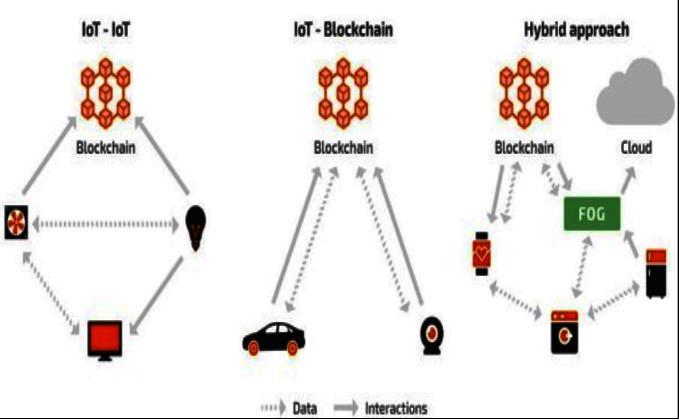
AsallthatisneededtostoreIoTdataisasharingregister, thisisactuallythesimplestwaytointegrateblockchaininto theIoTnetwork.Datawillbesentawayfromtheblockchain viaavarietyofroutingtechniques.Delayswillbeminimized andtransactionswillmovealongquicklyasaresult.Also,this approach allows the gadgets to operate offline. Because it doesn't necessitate major changes to the way IoT devices operate,allthatisneededtoimplementthissimplesolution is to set up the data transfer, storing, and extraction from blockchainratherthanacloudoraserver.
Theblockchain,whichservesasacloudforconventional IoT networks, will be used in this method to facilitate communication between IoT devices. From one angle, this will improve the ability to trace data, communication security,andworkflowautomation.Ontheotherhand,ifthe blockchain is not quick enough, the system will become significantly more sophisticated, which would result in delays.
The integration of this blockchain into IoT networks is challengingbecauseitnecessitatesnumerousadjustmentsto both the operation of IoT devices and blockchain development.Asuitableblockchainshouldbeemployedas well,onewithgreateroperatingspeed,capacity,andnofees. ThisblockchainmaybebuiltonIOTA,Modum.io,orRiddle& Code.
The IoT devices share the majority of the data and interactions,withtheblockchainmerelystoringspecificsorts ofdata.Eventhoughtherearemanybenefitstothis,itisquite difficult to get IoT devices to operate quickly and with minimallatencyinreal-time.
In order to address the shortcomings of blockchain technologyandInternetofThingsdevices,thissolutionalso incorporates fog computing. For instance, you may utilize this computing technique to gather, store, and analyse privatedatausingperipheraldevicesratherthanthecloud, savingmoneyonrunningexpenses.
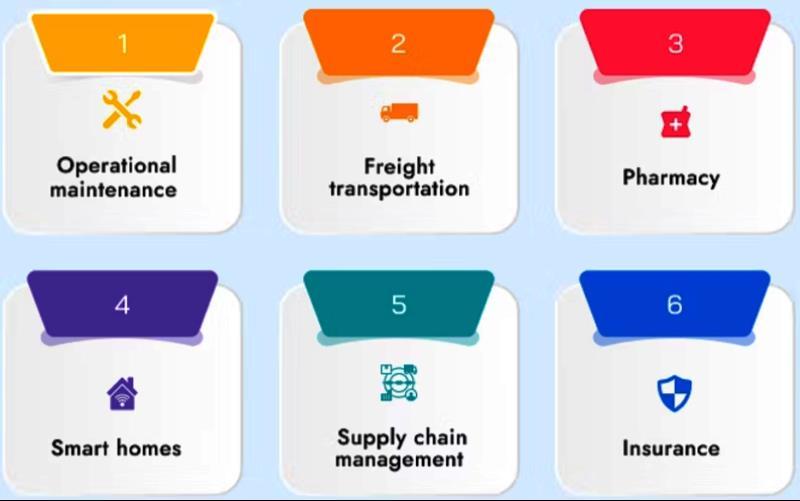
For safety and maintenance, IoT devices monitor the condition of binding machines. Blockchain provides a tamper-prooflogofoperatingdataforanythingfromengines toelevators.
Asaresult,third-partyrepairpartnersareabletoreport theirworkbackontheblockchainandkeepawatchonitfor preventive maintenance. The sharing of operating records with governmental bodies is another option for ensuring compliance.
Freight transportation is challenging and requires cooperationfromnumerousparties.WiththehelpofanIoTenabledblockchain,itispossibletostoreinformationonthe temperatures, arrival timings, and present condition of shipping containers that are in transit. The information is
International Research Journal of Engineering and Technology (IRJET) e-ISSN: 2395-0056
Volume: 11 Issue: 03 | Mar 2024 www.irjet.net p-ISSN: 2395-0072
reliable,soallpartiesmayacttotransferthefreightquickly andeffectively.
c.
Because the pandemic altered our way of life, we are relyingmoreonmedications.Inthepharmaceuticalsector, however,theissueoffakegoodsisgettingworse.Inlightof thefactthatpharmaceuticalcorporationsareresponsiblefor thedevelopment,production,anddistributionofmedicines, itiscrucialthatcertainstepsbetakentoguaranteethatonly safe medications are made available to the general population.
Thespeedyandsecuresupplyofdrugsfromonelocation toanothercanbetrackedthankstoblockchainstransparency andtraceability.
TheIoTisessentialtoourdailyexistence.Becauseallof the appliances in a "smart home" are interconnected, one device, such as a laptop, tablet, smartphone, or gaming console, may access every appliance. A single home automationsystemcanmanagethethermostat,doorlocks, cameras,housemonitors,andkitchenappliances.
Smarthomeshaveneverbeenmorefeasiblebecauseto blockchain'scapacitytosolvesecurityproblemsanddoaway withcentralizedinfrastructure.Toavoidthemisuseofdata collected by smart devices, you can implement security featureslikebiometricandfacial/voicerecognition.
e. Supply chain management
The capacity to track parts used in automobiles, aeroplane,andotherproductsisessentialforsafetyandlegal compliance.Theprovenanceofcomponentsmaybeseenby allpartiesthroughouttheentirelifecyclethankstotheIoT data that is kept in common digital ledgers. It is simple to share information with shippers, regulatory bodies, and manufacturers.
f. Insurance
Theprocessofmanagingclaims,fraud,andpropertyand casualtyinsurancehasbeensignificantlyimprovedbysmart contractsandIoTdatafromlocation-basedsensors(home alarms, factories, warehouses), sensors on products, and wearable personal technology (shipping containers and vehicles).
Blockchain offers a solution by transferring decisionmaking to an IoT device network that runs on consensus. However,whendevelopingthearchitectureforIoTdevices that utilize blockchain, the following challenges must be takenintoaccount:
One of the issues with IoT development that arises frequentlyisscalability.Howcanonehandletheenormous
volumes of data generated by a wide network of sensors while also potentially reducing transaction processing latencies?Thatisaverydifficultquestion.Acleardatamodel that has been designed beforehand makes it simpler to launchtheproduct.
AnIoT-poweredblockchainsystemcanbeenhancedwith smartcontracts.Smartcontractscanboostproductivityby automatingcontractmanagement.Securityissuescouldmake itmoredifficultforIoTtoutilizeblockchaintechnology.
Decentralized public blockchain networks are hard to hack,buttheunderlyingsmartcontractsmayhaveflaws.The worst part is that cyber criminals look for common smart contract vulnerabilities. If you wish to avoid this problem, thoroughlyanalyzeandtestsmartcontracts.Althoughyou can never be guaranteed that your smart contracts won't havedefects,youcanreducethepossibilitythattheywilland thatthiswillleadtoimproperoperationofyourblockchain andIoTarchitecture.
iii. Sensor reliability
How reliable arethecurrentsensors? Thiscanmake it difficulttoassessthecircumstancesnecessarytocompletea transactionaccurately.Inordertocreateasafeandsecure environment for data recording and transactions, it is imperative to take steps to prevent external interference fromshiftingsensors.
iv. Network privacy and transaction confidentiality
It is not possible to use the public blockchain to givea networkofIoT-connecteddevicesaccesstotheshareddigital ledger's transaction history. This happens because informationabouttheidentitiesoftheuserordevicethatare hiddenbypublickeysisinferredthroughtransactionpattern analysis.
Companiesmustevaluatetheirprivacyrequirementsto seewhetherhybridorprivateblockchainsmaybettermeet them,andthentakethenecessaryaction.
v. Computing power and time required
BlockchainisrequiredbyIoTinordertoofferthebest levelofsecuritypossible,necessitatingthe"ProofofWork" (POW)consensusprocess.Thestepsaresimpletofollow.Yet, it requires longer intervals of intense, rapid-fire number crunching. Hence, computationally demanding procedures and associated expenses serve as a disincentive to cybercriminals.
vi. Complex IoT and blockchain projects
Due to the fact that blockchain technology is still a relativelynewconcept,integratingitwithIoTsolutionsmay notbeasstraightforwardasonemayassume.Thisisdueto the fact that experts in both professions must possess the abilitiesandinformationrequiredtohandleanyeventuality. The initiatives will undoubtedly be impacted by the unfortunatepossibilitythatitwouldbechallengingtogettop talentinthisarea
International Research Journal of Engineering and Technology (IRJET) e-ISSN: 2395-0056
Volume: 11 Issue: 03 | Mar 2024 www.irjet.net p-ISSN: 2395-0072
a) Data integrity for quality control
Blockchaintechnologycanoffera strongframework to procedurestoquicklyandcorrectlydetectdataalterations becauseofitsimmutability.
b) Fault detection using device tracking
DuetothevastnessofIoTnetworks,identifyingfailure trends may be challenging. The blockchain provides monitoring tools to find problems and gives each IoT endpointauniquekey,makingiteasiertospotmistakes.
c) Security
Blockchain-baseddata chunksareencrypted,integrityprotected,digitallyvalidated,andauthenticated.
d) Faster automation with smart contracts
Automation made easier by smart contracts. IoT technology alone makes automation possible, but when combinedwithsmartcontracts,automaticresponsescanbe approvedthroughthisnetwork.
e) Decentralization for enhanced security
Becausetheblockchainisdecentralized,hackerswon'tbe abletoattackasingleserveranddamageitsdata,regardless oftheconnectivitytechniquesemployed.
f) Trust
Becauseoftheimmutabilityoftheblockchain,evenifthe owner'skeyisrevealed,blockscannotbechanged(exceptfor blockinthecurrentbreak).
g) Usage logs for employee performance
Going beyond sensors, blockchain technology can also track users’ behavior to enable you know who, when, and how they have used a device. This information may be utilizedtoimproveemployeeperformance.
h) Upgrade & Update
IncorporatingIoTsystemswithblockchaintechnologies (suchassmartcontracts)canhelptoincreasethesecurityof IoTsystemsbyautomaticallyupdatingIoTdevicefirmware toaddresssecurityproblems.
VII. CONCLUSION
The enhanced security and efficiency of blockchain technology,aswellasitsabilitytosupportdecentralization andtheusageofsmartcontracts,canbenefitIoTnetworks. IoT device maintenance, data transport, and data managementcostscanbedecreasedbyusingadecentralized ledgertostoredataonIoTdevices.Thishelpsorganizations safeguardtheinformation.Businessescanalsodoawaywith acentralIoTgatewaythankstoblockchaintechnology.The adoption of blockchain in IoT can speed up processes. Because of this, it works well for a variety of IoT applications. Yet, the decentralized nature of blockchain couldpresentaproblemforIoT.MostIoTplatformsarebuilt
onhub-and-spokeorclient-serverdesigns,whichdependon acentralizedauthoritytocarryouttransactions.Becauseof this,IoTplatformdesignersmustmakesuretheirsystems areinteroperablewithblockchainnetworks.
[1] SameekaSaini;AnkitMaithani;DikshaDhiman;Ankur Rohilla; Nisha Chaube; Amita Bisht, “Blockchain Technology:ASmartandEfficientWayforSecuringIoT Communication”,20212ndInternationalConferenceon Intelligent Engineering and Management (ICIEM), London,UnitedKingdom,28-30April2021.
[2] Hong-NingDai;ZibinZheng;YanZhang,“Blockchainfor Internet ofThings:A Survey”,IEEE Internetof Things Journal,no.19,Volume:6,05June2019.
[3] Nallapaneni Manoj Kumar; Pradeep Kumar Mallick, “Blockchain technology for security issues and challenges in IoT”,International Conference on ComputationalIntelligenceandDataScience(ICCIDS), 2018.
[4] https://www.intuz.com/blog/iot-in-blockchainbenefits-use-cases-and-challenges
[5] Riya Thakore; Rajkumar Vaghashiya; Chintan Patel; NishantDoshi,“Blockchain-basedIoT:ASurvey”,2nd InternationalWorkshoponRecentadvancesonInternet ofThings:TechnologyandApplicationApproaches(IoTT&A2019),Halifax,Canada,August19-21,2019.
[6] Bhabendu Kumar Mohanta; Debasish Jena; Somula Ramasubbareddy; Mahmoud Daneshmand; Amir H. Gandomi,“AddressingSecurityandPrivacyIssuesofIoT usingBlockchainTechnology”,IEEEInternetofThings Journal,no.9,Volume:8,13July2020.
[7] Muhammad Salek Ali; Massimo Vecchio; Miguel Pincheira; Koustabh Dolui; Fabio Antonelli; Mubashir Husain Rehmani, “Applications of Blockchains in the Internet of Things: A Comprehensive Survey”, IEEE Communications Surveys & Tutorials, no.42,Volume: 21,18December2018.
[8] SiddharthRajput;ArchanaSingh;SmitiKhurana;Tushar Bansal; Sanyukta Shreshtha, “Blockchain Technology and Cryptocurrenices”, 2019 Amity International Conference on Artificial Intelligence (AICAI), no. 4, Dubai,UnitedArabEmirates,04-06February2019.
[9] TareqAhram;ArmanSargolzaei;SamanSargolzaei;Jeff Daniels; Ben Amaba, “Blockchain technology innovations”, 2017 IEEE Technology & Engineering ManagementConference(TEMSCON),no.5,SantaClara, CA,USA,08-10June2017.
[10] Henry Rossi Andrian; Novianto Budi Kurniawan; Suhardi,"BlockchainTechnologyandImplementation:A Systematic Literature Review", 2018 International Conference on Information Technology Systems and Innovation (ICITSI), no. 5, Bandung, Indonesia, 22-26 October2018.