
International Research Journal of Engineering and Technology (IRJET) e-ISSN: 2395-0056
Volume: 11 Issue: 03 | Mar 2024 www.irjet.net p-ISSN: 2395-0072
International Research Journal of Engineering and Technology (IRJET) e-ISSN: 2395-0056
Volume: 11 Issue: 03 | Mar 2024 www.irjet.net p-ISSN: 2395-0072
Basawaraj1 , Ramya B G2 , Rekha H.B.3
1 PG Student, 2 Ph.D. student,3 Associate Professor, Department of Civil Engineering, UVCE, Bangalore University, Bengaluru, Karnataka, India ***
Abstract - Bengaluru produces around 5,500 tonnes of municipal solid waste every day with a collection efficiency of 80%. Bengaluru's urban population and waste-generating resources have increased rapidly in the last decade. Gas emissions from landfills were estimated using LandGEM-3.02 version. Methane production rate constant (k) and methane production potential (L0) were determined using the theoretical method. The estimated maximum buried gas volume is 3,083 × 107 cubic meters/year, and methane emission is 1,542 × 107 cubic meters/year. Theenergyrecovery capacity of Bengaluru's MSW can produce 1724.2 TJ of methane and 54 MW of electricity. Lifecycleanalysis isdone to understand which management is better. In thestudy, existing conditions such as open dumps and waste storage areas were considered. Traditional disposal options have proventobethe better option between the two options. On the other hand, research predicts that choosing traditional landfills insteadof open landfills can reduce global warming potential (GWP). Therefore, a waste management system that includes waste materials and energy recovery is not onlyagoodchoiceforthe environment, but also a sustainable, robust and useful choice.
Key Words: LandGEM model, Energy recovery potential, Life cycle analysis.
Municipal solid waste (MSW) is a general term used for wastewatergeneratedfromhouseholdwaste,construction anddemolitionwaste,wastewatertreatment,andmunicipal waste. The resulting waste must be stored, treated, transportedanddisposedofinregularlandfills.Landfillsare low-level places used for the disposal of waste. In India, SWMstilloperatesillegally.Asof2023,India'spopulationis 1.42billion,31%ofwhomliveincities.Additionally,halfof India'spopulationisexpectedtoliveincitiesby2050.Asthe country's population increases, municipal waste managementhasbecomeamajorproblem,notonlydueto environmental and aesthetic concerns, but also because largeamountsofwasteareproducedeveryday.
Bangaloreproducesaround5500tonnesofwasteeveryday and the waste rate is 85%. Waste generation is 0.6 kg/person/day (BBMP 2022). Municipal solid waste per capitaisexpectedtoincreaseby1-1.33%peryear(BBMP).
After municipal waste is recycled and composted, the remainingwastegoestolandfills.Afterawhile,wasterotsin landfillsandharmstheenvironmentbyreleasingpollution andgreenhousegases.Duringrain,leachateisproducedand pollutesthesoil.Landfillgas(LFG)isproducedasaresultof thedecompositionandbiochemicalreactionsofsolidwaste in landfills. The main gas composition is 40-50% carbon dioxide and 50-60% methane (Ramprasad et al. 2022). Garbage thrown into landfills undergoes anaerobic decompositionbymicroorganismsandemitslandfillgases. Gasessuchasmethaneandcarbondioxidefoundinthesoil are important in terms of greenhouse gas production. Methaneemissionsandenergypotentialofalandfillcanbe estimated by various methods. The most commonly used modelsaretheIPCCpresetmethod,Yedla Smethod,firstorder attenuation model and LandGEM model. Geological Geological Survey (LandGEM) has been investigated and reportedasasuitablemodelforestimatingoilandenergy recovery(Ramprasadetal.2022).
Bengaluru'swastedisposalsystemwasdevelopedfromopen landfills.Wastemanagementsystemsincludingseparation, compostingandcontrolledburialhavebeenimplementedat theexistinglandfill.Examiningtheimpactofcurrentorpast wastemanagementinBangalorewillhelpinunderstanding the environmental burden associated with the waste management process. Life cycle assessment (LCA) of processes operating in waste treatment plants will help understand their impacts and therefore make important policydecisions(Sughoshet.al.(2019).
Various lifecycle research studies on open dumping, compostingandlandfilling(known)practicesarereportedin theliterature.Sharmaetal.(2017)examinedsixsolidwaste managementoptionsinMumbai,India,andconcludedthat optionscombiningrecycling,composting,anddisposalhad the least eutrophication and minimal human potential toxicity.Theyalsosaythatsignificantenvironmentalsavings can be achieved through energy recovery from all waste managementoptions.
ScientistsstudiedgaspollutioninBengaluruandotherparts ofthecountry.Landfillsemitgreenhouse gasesthataffect the environment and affect health by causing global warming. Using different models to understand carbon
International Research Journal of Engineering and Technology (IRJET) e-ISSN: 2395-0056
Volume: 11 Issue: 03 | Mar 2024 www.irjet.net p-ISSN: 2395-0072
emissionsfromlandfills,scientistsconductedresearchand foundthatrecyclingreducesglobalcarbonemissionsdueto combining,burningandrecycling.Inthisstudy,LandGEMis apracticaltoolusedtoestimatethetotalwasteemissions, methane,carbondioxide,non-methaneorganiccompounds (NMOC) and energy potential of Bangalore landfills left in the city. A life cycle assessment approach was used to evaluatetheeffectivenessofthecurrentlyproposedwaste managementsysteminBangalorecity.Thisstudyfocuseson theanalysisofemissionsandenergyrecoveryfromlandfills and LCAs using the LandGem tool to evaluate waste managementpracticesinlandfills.
TheFigure1showsthecompletemethodologyadoptedin thepresentstudy.
CollectionofData
EstimationandPrediction ofMethaneEmissions
Determining Lovalueby BMPtestand Kvalue.
LandGEM3.02 Model
Lifecycleanalysistoassesswaste managementpracticesinlandfill
Energy recovery fromLandfill
locality is 562149.The environmental conditions of mittaganahalliareTemperature-30.0℃,Humidity-44.0%. ThedumpingsiteatMittaganahallivillagewhichislocated 0.6km from KannurRoadat Bangalore. The site isspread about10acresarea andithas capacityof 2800-3000 TPD (Tonnesperday).Thewasteisreceivedfrom198wardsfrom Bangalorein372-380vehiclesandcapacityofvehicleis8-9 tonnes,Maximumdistancetravelledbyvehiclesis56-60km (BBMP2022).Fig:2showsthelocationmapofthestudyarea.
Table1:CompositionofMSW.
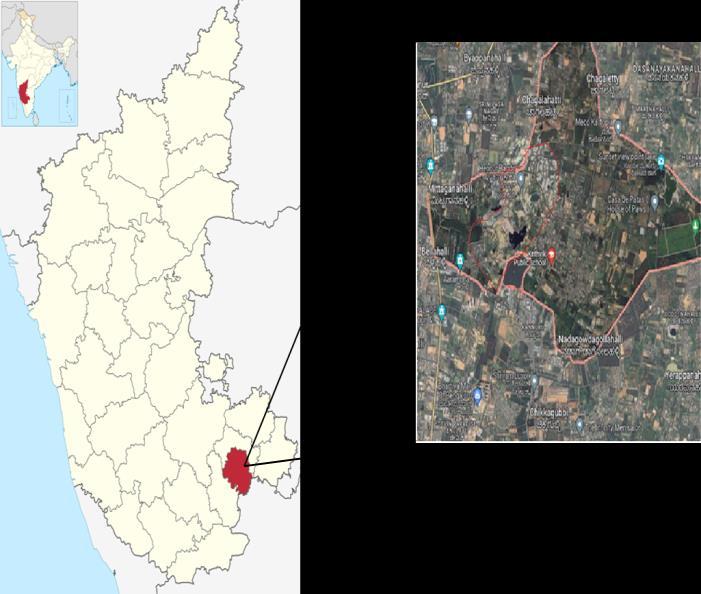
Figure 2:showsthelocationmapofthestudyarea.
Table 1: Composition of MSW
2.1 Study Area
Bangalore is situated in the southeast of Karnataka, at an average elevation of 920mabove mean sea level. It is positionedat12.9716°Nlatitude,77.5946°Elongitudeand covers an area of 1741sq.km. According to Census 2011 information the location code or village code of Mittaganahalli village is 613065. Mittaganahalli village is located in Bangalore East taluka of Bangalore district in Karnataka, India. It is located 13.1090° N latitude and 77.6622°Elongitude.Thetotalgeographicalareaofvillageis 135.24 hectares. Mittaganahalli has a total population of 1,010 peoples, out of which male population is 545 while female population is 465. Literacy rate of mittaganahalli village is 39.90% out of which 44.40% males and 34.62% females are literate. There are about 266 houses in mittaganahalli village. Pincode of mittaganahalli village
(source: BBMP report, 2022)
Landfill Gas Emission Model (LandGEM) version 3.02 is a MicrosoftExcel-basedsoftwareforestimatingtheLFG,CH4 andCO2contentofmunicipalsolidwaste.Itwasestablished bytheUnitedStates(US)EnvironmentalProtectionAgency (EPA).Thesoftwareusesafirst-orderequation.Equation(1) showsthatthefirst-orderdecompositionvalueequationis asfollows:

where
International Research Journal of Engineering and Technology (IRJET) e-ISSN: 2395-0056
Volume: 11 Issue: 03 | Mar 2024 www.irjet.net p-ISSN: 2395-0072
QCH4= annual methane generation in the year of the calculation(m3/year)
i=yearwiseincrement
n = (year of the calculation) - (initial year of waste acceptance)
j=0.1-yeartimeincrement
k=methanegenerationrate(year-1)anditisdeterminedby followingformulaequation2:
k=3.2× (R)+0.01 (2)
Where R is the average annual precipitation in mm. The average annual precipitation of Bangalore is 1958.6mm (IndiaMeteorologicalDepartment2022)respectively
Lo=potentialmethanegenerationcapacity(m3/Mg)andit isdeterminedbyBMPtest.
Mi=massofwasteacceptedintheithyear(Mg)
tij=ageofthejthsectionofwastemassMiacceptedinthe ithyear(decimalyears,e.g.,3.2years).
Biochemicalmethanepotential(BMP)testingisamethodto determinethemethanepotential(Lo)ofthesubstrateunder anaerobicconditions.
Materialsandmethods
The Sludge samples and wastes were collected from STP plant kengeri and Lingendarhalli processing plants. ParameteranalysisofsludgesamplesisshowninTable5. Biochemical methane potential (BMP) testing is a preliminarystudydesignedtoinvestigatetheabilityofthe substrate to produce methane. This test was performed using 70% of the working volume and leaving 30% headspace. The substrate/inoculum ratio (SIR) was set to 1:2.Fromthevial volume of125 ml,a workingvolume of 87.5ml isrepresentedby58.5 mlofinoculumand10g/L substrateconcentration(substrateanddistilledwater).The vialcontainssubstrateandvaccine.Beforecappingeachvial witha rubbercap,nitrogen gas(N2)wasblowninto each vial for approximately three (3) minutes to ensure an anaerobic environment (Rodrigues et al., 2019). Place all bottles in the oven at 37°C (medium temperature). Shake eachbottlegentlybyhandfortwo(2)minutesonceaday. AccordingtoWangetal.(2017)notedthatvibrationaffects thedistributionofbacteria,bacteria,andtemperatureinthe bottles and helps release bubbles in the solution into the headofthebottlewater.Theincubationperiodofthistestis 3040 days. Methane gas was measured qualitatively by
extraction with a syringe at a gas thickness of 1 ml and injected into an Agilent 8890A gas chromatography-flame ionizationdetector(GC-FID)instrument.
This paper follows the method of Yedla S (kumar et al (2014)) to estimate the energy and associated electricity producedbymethane.Thetotalenergyproducedannually fromwasteusingLFSGRisgivenbyEquation3:
= ( × × )( × ) (3)
where, , energy potential from gas recovery (kcal); , annualwastegenerated(tons); ,fractionofwastetobe landfilled; ,fractionofassimilableorganiccarbonin thedegradablewaste; ,methanegenerationrate(m3/t); ,fractionofmethaneinlandfillgas; ,gascollection efficiency; ,calorificvalueofmethane(kcal/m3).Eq.(3) was used to estimate energy potential from methane for MSWinBangalore
Life cycle assessment (LCA) can be used as a decisionmaking tool to select the most sustainable, economic and environmental land disposal options. It is a tool used to analyse the environmental burden posed by a product or activity throughout its life cycle, or "cradle to grave" (Finnveden,1999).LCAhasfourphases:PurposeDefinition and Scoping, Product Analysis, Life Cycle Assessment, InterpretationorDevelopmentAssessment.
Two MSW treatments are discussed here. The first option considerstreatingonlyasmallpart(10%)ofthecollected wastebymixing,withtheremainder(90%)beingdisposed ofdirectlythroughopenlandfill.Thiswasverycommonin Bengaluru in the early 2000s. The second option is to considertreatingwastethroughmechanicalandbiological (such as mechanical analysis and aeration) pretreatment before burial. This represents the current situation of Bangalorecity,wheresolidwastetreatmentisalmostequal to electricity generation capacity. Gases from traditional landfillsareemitteddirectlyintotheatmosphere.Compare the impact of each disposal method and choose the best optionwiththeleastimpactontheenvironment.
Scenario1:
Anopendumpisaplacewherenopowerlinesareinstalled and is used as a temporary or permanent dump. This approachhasnoinitialcost,butitsenvironmentalimpactis serious because water leaks can damage soil and groundwater,andemissionscanalsoharmtheair.Thelimit inthisexampleislandfillandtransportationcostonly.Minor compactionandlevelingworkswerecarriedoutonthefield. Figure3showsthesystemboundaryfortheopendump.
International Research Journal of Engineering and Technology (IRJET) e-ISSN: 2395-0056
Volume: 11 Issue: 03 | Mar 2024 www.irjet.net p-ISSN: 2395-0072
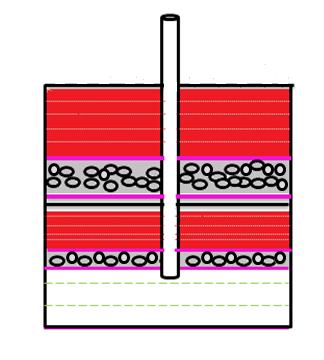
Municipalwasteisfedintodrumscreensofdifferentsizes (200 and 100 mm) to recover recyclables and electronic products.Municipalwastepassingthrougha100mmdrum sieveiscomposted.Thiswasteispassedthrougha16-4mm drumsieve.Thecollectedmaterial(wastematerial)isthen disposedofinlandfills.Theproductfrom4mmiscompost sold as natural fertilizer. In the landfill, before the waste entersthelandfill,a200GSMgeomembraneisfirstplaced onthegroundandthenthewastelayerisplacedataheight of18m.Whenthewastereachesaheightof18m,200GSM geotextileisplacedonthewaste.A300mmlayerofgravel wasplacedontopofthegeotextilelayertocontrolthegas. Then soil layer is placed, then 150 gsm layer is placed on which200gsmgeotextileliner,HDPElineandthen200mm gravellayerisplaced,thenanother200gsmgeotextilelayer isplacedandthensoilisplacedandthen450mmthicksoil is placed. The top layer is covered with grass. HDPE liner reduces the upward movement of embedded gas and the downward movement of rainwater. Figure 4 shows the system boundary of a Conventional landfill, and Figure 5 showsthelandfilllinersystem
The aim of this study is to evaluate the above-mentioned waste management in the city using the LCA method and estimate their impact on the environment. One ton of
International Research Journal of Engineering and Technology (IRJET) e-ISSN: 2395-0056
Volume: 11 Issue: 03 | Mar 2024 www.irjet.net p-ISSN: 2395-0072
municipal waste was selected as a reference to compare municipalwastemanagementpractices.Thediagramabove showsthesystemlimitsforeachscenario.
Current life assessment is done by taking inventory of materials and equipment related to Bangalore burial. Municipal waste, raw materials (lining, clay, petroleum productsandsolidwaste)andenergy(electricityandgas) areconsideredinputstothebody.Theresultsofthesystem are compost, gas emissions and leaks from compost sites/open dumps/landfills. Table 2 shows the material/energyflowinthedifferentprocessesincludedin thestudy.
Output analysis
Theresultsofthissystemaregarbageemissions,opendump emissions,emissions,wasteemissionsasshowninTables7, 8,9,10takenfromtheBBMPreport(2022).
Table 3: Characterization factors based on equivalency factors from IPCC 2001 GWP for 20 years and Eco-indicator 95
Table 2: Unit processes showing the material/energy flow in different scenarios of LCA.
Life Cycle Inventory Analysis
Input analysis
The energy input comes from non-renewable energy (diesel). Fuel requirements for transportation and management, electrical requirements for operation and maintenance,coverandcoatingsystems,leachatecollection and treatment systems, gas collection systems and conversionsystemsareconsideredasinputstothesystem. The first condition does not cover all of these except soil. Thisstudyfocusesontheimportanceofmaterialsthatpose a threat to the environment by being released into the atmosphere and hydrosphere. The composition of waste producedinthecityisshowninTable1.Afterwasteenters thebody,itundergoesphysical,mechanicalandbiological treatmentandturnsintodifferentproducts.Thedemandfor generatorsforopendumpsandlandfillsis0.88L/Tand1 L/Trespectively(BBMPReport,2022).Inrecyclingunitsand composting units, the amount of diesel and electricity required for one ton of waste is increased to 3.2L and 3.2kWh, 0.45L and 0.90 kWh, respectively (Sharma et al., 2017).
Based on the life cycle characteristics of waste/waste treatment,consider environmental impactssuchasglobal warmingpotential(GWP),acidificationpotential(AP),and photochemical ozone generation potential (POCP). Transportation of municipal solid waste often promotes acidification. The impact of each event is calculated by multiplyingtheequation(giveninTable3)bytheequation.
LandgemResults
InputReview:
Landfill characteristics: Landfill Open Year: 2019, LandfillClosureYear(with80-yearlimit):2023,Actual Closure Year (without limit): 2023, Waste Design
48,26,683
International Research Journal of Engineering and Technology (IRJET) e-ISSN: 2395-0056
Volume: 11 Issue: 03 | Mar 2024 www.irjet.net p-ISSN: 2395-0072
Modelparameters:k=0.070/yr.,Lo=66m3/M,NMOC concentration=4,000ppmvashexane,MethaneContent: 50%.
Gases / pollutants selected: Total landfill, Methane, carbondioxide,NMOC.
WasteAcceptanceRates
Graph
Table 4: Waste acceptance rates
Biomethane potential test Results:
Table 5: Analysis of parameters of sample for BMP.
IS3025(Part4) (Reaffirmed-2021)
IS3025(Part5) (Reaffirmed-2018)
pHvalue@25℃ IS3025(Part11) (Reaffirmed-2022)
4 Alkalinity IS3025(Part23) (Reaffirmed-2023) mg/L
5 Bio-ChemicalOxygen Demand asO2 (3days@27℃) IS3025(Part44) (Reaffirmed-2023) mg/L
6 ChemicalOxygen Demand IS3025(Part58) (Reaffirmed-2023) mg/L 13680 7 Totalsolids IS3025(Part15) (Reaffirmed-2019) mg/L 18100
8 Volatileandfixedsolids IS3025(Part18) (Reaffirmed-2022) mg/L 8860 9 Ammonia IS3025(Part 34)(Reaffirmed2019) mg/L 45.9
Result:ThemethanegasgenerationfromBMPtestwas66 m3/Mg
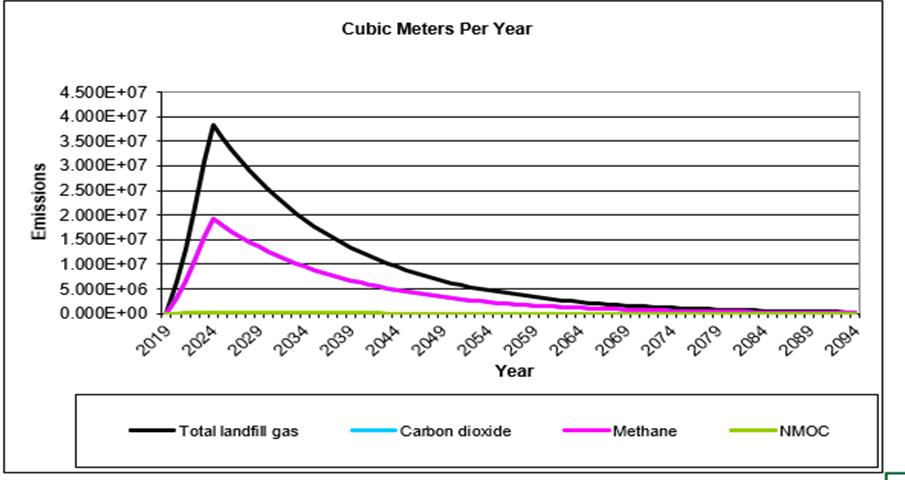
Figure 6:TotalLandfillgasandMethaneemissionsfrom LandGEMmodel
Total wastecollected( ):Bangalore produces 5,500 ton/day of waste and extent of waste collected (collection efficiency) ranges from 76 to 90 % of the waste generated. Taking value of 80 % as collection efficiency =5,500×365×0.80=1,606,000tons.
Fractiontobelandfilled( ):compostingaccountsfor 9-10 % of total waste and extent of recycling in Bangalore is very small. Neglecting recycled waste, a valueof0.9isusedfor
LFGgenerationrate( ):generationrateformethane wasdirectlytakenfromL0value.Itmaybenotedthat reflects generation rate of methane directly and hencefractionofmethaneinLFG( )neglected. Table 6 presents the list of all parameters used for computations Y
International Research Journal of Engineering and Technology (IRJET) e-ISSN: 2395-0056
Volume: 11 Issue: 03 | Mar 2024 www.irjet.net p-ISSN: 2395-0072
Table 6: Parameters adopted for Equation.
(Source: BBMP Report,2022)
Theenergypotential(kcal)wascalculatedas1724.2TJ.The equivalentpowergeneratedisP=54MW.
Life Cycle Analysis Results:
Output analysis
Compostingemissions:CO2=2.45kg/T,CH4=3.4kg/T, NH3=0.11kg/T.
Table 7: Emissions from open dumps
Table 8: Environmental emissions due to landfilling without energy recovery
Table 9: Leachate emissions
Table 10: Impact assessment results for scenarios
Landfillgases(LFG),suchasmethane,carbondioxide, non-methanogenic organic compounds, and carbon monoxide, are considered potential global warming agentsbecausetheyareclassifiedasgreenhousegases. Accordingtotheresearch,theannualkvalueis0.070m3 and the Lo value is 66 cubic meters. m/ton obtained fromthebiomethanecapacitytestreachesthehighest valueonthe30thdayinthisstudy.Methaneemissions fromMittaganahalliwastedisposalsitebetween2019 and2060areshowninFigure6.Landfillgasemissions, methaneemissionsshowasteadyincreaseuntil2024 andthenbegintodecrease.Methaneemissionsarezero in2019andwillreach1,542×107cubicmetersperyear in2023.Authors:(Kumaretal.(2014),Ramprasadetal.
International Research Journal of Engineering and Technology (IRJET) e-ISSN: 2395-0056
Volume: 11 Issue: 03 | Mar 2024 www.irjet.net p-ISSN: 2395-0072
(2022)andChandraetal.(2023))statethatthereare methane emissions. The values estimated by the LandGEMmodelvarydependingonthelocationofthe wasteandthecompositionofthewaste
Theenergyproductionpotentialofmethaneemissions wasdeterminedusingtheYedlaS(Kumaretal.(2014)) method, and MSW can produce 1724.2 TJ of methane energyperyear.Equivalent energyproductionwillbe close to 54 megawatts that households can use. The resultsobtainedareconsistentwiththepreviousstudy of Kumar et al. (2014), Ramprasad et al. (2022) and Chandra et al. (2023). According to a study by the Council on Energy, Environment and Water (CEEW), Indian households used an average of 5.7 kWh of electricityperdayduringApril-May2020.Assuminga city/village equivalent to 1500 households, it would need3.12×106 kWhperyear.Therefore,itisclearfrom the above that the use of energy produced from municipalwastecanreducemethaneemissionsandcan alsobeusedaslocalenergy.
The probability assessment of the two scenarios is showninTable9.Scenario1istheleaststorageoption andcanbeconsidered tohavehigherglobal warming potential(GWP)andphotochemicalozoneproduction potential (POCP) than other options. path. The acidificationpotentialofScenario2isgreaterthanthat of the open landfill. This is due to the release of ammoniafromthecompostunit.Thewastesgenerated inScenario1arereleaseddirectlyintotheenvironment without treatment. This is the effect that can be considered in this case. Scenario 2 is better than Scenario1,butallofthemethaneproducedisreleased into the atmosphere. For example, the GWP of 10% methaneoxidationinsoilis14,260kgCO2e.Theabove resultsareconsistentwiththoseofBabuetal.(2014). Municipalwastetreatmentplantswithwastematerials for recycling, composting and fuel recovery reduce environmental impact and are also sustainable and economical(Babuetal.(2014),BPsharmaetal.(2016)) areagoodchoiceinthefuture.
Landfillisoneofthedisposalmethodsofmunicipalwastein manycountries.Oneoftheenvironmentalproblemsarising fromlandfills(wastegas)canbeeffectivelysolvedbyusing waste gas throughout its life. In this study, the methane production rate (k) and capacity (L0) of the waste were estimated. Natural gas emissions were estimated using LandGEMv3.02.Researchshowsthatthetotalgasemissions fromlandfillsare3,083×107cubicmeters/yearandmethane emissions are 1,542×107 cubic meters/year. We conclude thatmethaneemissionsfromlandfillscanbeharmfultothe environment and air quality. The magnitude of energy recovery will reduce methane emissions and help protect
health.Scenarioscanbeorganizedaccordingtotheimpact ontheenvironmentbydecidingonscenario1>scenario2. Thetraditionaldisposaloptionhasproventobethebetter optionofthetwo.Ontheotherhand,researchpredictsthat choosing traditional landfills instead of open landfills can reducethepotentialforglobalwarming.Therefore,awaste management system that includes waste materials and energy recovery is not only a good choice for the environment, but also a sustainable, robust and useful choice.
[1] Akanksha Kaushal, Sharma M.P(2015), “Methane EmissionfromPankiOpenDumpSiteofKanpur,India”. ProcediaEnvironmentalSciences35(2016)337–347 https://doi:10.1016/j.proenv.2016.07.014
[2] Babu,G.S.,Lakshmikanthan,P.,&Santhosh,L.G.(2014), "Lifecycleanalysisofmunicipalsolidwaste(MSW)land disposal options in Bangalore City". In ICSI 2014: Creating Infrastructure for a Sustainable World (pp. 795-806).DOI:10.1061/9780784478745.075
[3] BruhatBangaloreMahanagaraPalikeReport,(2022).
[4] KumarA,DandR,LakshmikanthanP,SivakumarBabuG. L. (2014), “Methane Production Quantification and Energy Estimation for Bangalore Municipal Solid Waste”.JournalofTheInstitutionofEngineers(India) SeriesA95(1):19–27DOI:10.1007/s40030-014-0059-x
[5] NAVEENB.P.(2021),“Scenariosofwastemanagement inBangalore” https://doi.org/10.1016/j.nexus.2021.100004
[6] Ramprasada C, Tejaa H C , Gowthama V, Vikas V(2022),“Quantification, of landfill gas emissions and energyproductionpotentialinTirupatiMunicipalsolid wastedisposalsitebyLandGEMmathematicalmodel”. MethodsX9(2022)101869 https://doi.org/10.1016/j.mex.2022.101869.
[7] Manualonmunicipalsolidwastemanagement,(2019) MinistryofUrbanDevelopment,Govt.ofIndia.
[8] Finnveden, G., (1999), “Methodological aspects of life cycleassessmentofintegratedsolidwastemanagement systems”. Resources, Conservation and Recycling, 26, 173-187.
[9] Hong, J., Li, X., & Zhaojie, C. (2010), "Life cycle assessmentoffourmunicipalsolidwastemanagement scenariosinChina".Wastemanagement,30(11),23622369. DOI:10.1016/j.wasman.2010.03.038
[10] IPCC, (1996). Guidelines for National Greenhouse Gas Inventories:ReferenceManual.Revised.
International Research Journal of Engineering and Technology (IRJET) e-ISSN: 2395-0056
Volume: 11 Issue: 03 | Mar 2024 www.irjet.net p-ISSN: 2395-0072
[11] Latif NAA, Zaki ZM, Chin K B, Buyong F (2022), “Estimation of methane production via anaerobic codigestion of food waste and sludge by biochemical methanetest”.MalaysianJournalofAnalyticalSciences, Vol26No2(2022):241–250.
[12] Yasim N S E M, Buyong F (2023), “Comparative of experimental and theoretical biochemical methane potential generated by municipal solid waste”. Environmental Advances 11 (2023) 100345 https://doi.org/10.1016/j.envadv.2023.100345
[13] Rodrigues, R.P., Rodrigues, D.P., Klepacz-Smolka, A., Martins,R.C.,Quina,M.J.,(2019),“Comparativeanalysis of methods and models for predicting biochemical methane potential of various organic substrates”. Sci. TotalEnviron.649,1599–1608.
[14] SaeidFallahizadeha,MasoumehRahmatiniac,Zakarya Mohammadid,MarziehVaezzadhe,AliTajamirif,Hamed Soleimanig, (2023), “Estimation of methane gas by LandGEM model from Yasuj municipal solid waste landfill, Iran”. MethodsX 6 (2019) 391–398 https://doi.org/10.1016/j.mex.2019.02.013
[15] Sharma, B. K., & Chandel, M. K. (2017). "Life cycle assessment of potential municipal solid waste management strategies for Mumbai, India". Waste Management & Research, 35(1), 79-91. https://doi.org/10.1177/0734242X166756
[16] ShubhamChandra,RajivGanguly(2023),“Assessment of landfill gases by LandGEM and energy recovery potential from municipal solid waste of Kanpur city, India”. Heliyon 9 (2023) e15187 https://doi.org/10.1016/j.heliyon.2023.e15187
[17] SughoshP;AnusreeN;and SivakumarBabuG.L(2019), “LifeCycleAnalysisasaTooltoAssesstheSustainability of Waste Management Practices in Bangalore City”. GeoenvironmentalEngineeringandSustainability,GeoCongress 2019, 24 - 27 March 2019, Philadelphia, pp. 125-134.
[18] Wang,Bjorn,Stromberg,Nges,I.A.,Nistor,Liu,J.,(2017), “Evaluating the influences of mixing strategies on the biochemical methane potential test”. J. Environ. Management.185,54–59.
[19] Yash Pujara, Janki Govani , Harshit T. Patel , Pankaj Pathak, Deepa,Mashru , P. Sankar Ganesh (2023), “Quantification of environmental impacts associated withmunicipalsolidwastemanagementinRajkotcity, IndiausingLifeCycleAssessment”.EnvironmentalAdvance s12(2023)100364https://doi.org/10.1016/j.envadv.20 23.100364.