
International Research Journal of Engineering and Technology (IRJET) e-ISSN: 2395-0056
Volume: 11 Issue: 03 | Mar 2024 www.irjet.net p-ISSN: 2395-0072
International Research Journal of Engineering and Technology (IRJET) e-ISSN: 2395-0056
Volume: 11 Issue: 03 | Mar 2024 www.irjet.net p-ISSN: 2395-0072
Manoj H M1, Chethan Kumar N2, Anantha Padmanabha B L2, Kulashekar Alwar N2
1Assistant Professor, Dept. of CSE, BMS Institute of Technology and Management, Bengaluru, Karnataka 2U.G. Student(s), Dept of CSE BMS Institute of Technology and Management, Bengaluru, Karnataka
Abstract – Waste monitoring is a critical aspect of urban infrastructure, affecting public health, environmental sustainability,andoverallqualityoflife. Thesetechniquesare frequently inefficient, leading to problems like overflowing bins, unsightly litter, and increased operational costs. To address these issues, an Intelligent waste bin monitoring and alert system using IOT technology leverages cutting-edge technology to optimize waste collection. A Smart-Waste MonitoringProcessdevelopmentmarksanotableprogression in the way cities and municipalities handle waste. By leveraging sensor technology, data analytics, and proactive maintenance,thistechniquenotonlyencouragetheefficiency andcost-effectivenessofmanagingwastebutalsocontributes to a cleaner and more sustainable urban environment. It enhances the residents’ standard of living and supportsglobal efforts to reduce waste and its environmental impact
Key Words: Smart Waste Monitoring System (SWMS/SWM),Dustbinlevel,Ultrasonicsensor,Internetof things (IOT), Moisture level sensor, Microcontroller, GSM/GPRSmodule.
Handling Waste is an integral facet of modern urban life, influencing the health, aesthetics, and cleanliness of our cities and communities. The ever-increasing difficulties associated with waste collection, disposal, and environmentalimpactdemandinnovativesolutions.Inthis context, the rise of SWMSs represents promising technological revolution that promises to addresses challengeseffectively.
Traditional waste monitoring practices often suffer from inefficiencies, high operational costs, and environmental consequences.Overflowingtrashbins,irregularcollection schedules, and excessive fuel consumption by collection vehiclesarecommonissuesinmanyurbanareas.Moreover, astheglobalpopulationcontinuestoconcentrateincities, thedemandforefficientandsustainablewastemonitoring becomesmorepressingthanever.
SWMSutilizecutting-edgeinnovationslikesensornetworks, data analysis techniques, and real-time monitoring to optimizewastecollectionprocesses.Thesetechniquesnot onlyencouragetheefficiencyofwastecollectionitalsoplays
a role to reducing the environmental footprint and improvingthequalityoflifeinurbanenvironments.
SWMSs are not merely a technological novelty; they represent a crucial step forward in urban infrastructure management. As our community’s grapple with the increasing demands of urbanization and environmental stewardship,understanding andembracingthisparadigm shift in waste monitoring is essential. This report aims to shed light on the transformative potential of SWMS and inspire stakeholders to consider its adoption for the bettermentofourcitiesandtheplanetasawhole.Developa SWMS that optimizes waste by leveraging IoT technology and data analytics to reduce operational costs, enhance environmental sustainability, and improve overall urban cleanliness.Inefficientgatheringandoverseeingwasteitems processes lead to increased environmental pollution, resource wastage, and high operational costs. To address this, there is a pressing need for a SWMS that leverages technology,suchassensorsanddataanalytics,tostreamline wastecollectionroutes,reduceenvironmentalimpact,and improveoverallefficiencyinhandlingwaste.
ThemotivationforadoptingSmartWasteMonitoringliesin theurgentneedtoenhancetheefficiency,cost-effectiveness, and sustainability of waste processes in our increasingly urbanizedworld.Itaimstoaddressoverflowingbins,reduce operationalcosts,lowerenvironmentalimpact,andimprove overallurbanqualityoflife.
[1] AspertheresearchconductedbyMohinishPaturi andcolleaguesintheirpapertitled"InnovativeApproachto SolidWasteManagement:LeveragingBlockchainandIoTfor SmartUrbanAreas,"theinnovatedmethodologyadvocates for a decentralized distribution system. This approach incorporatesblockchaintechnologyandsmartcontractsto motivate individuals towards effective waste segregation fromtheoutset.Throughtheovercomeofsmartcontracts, the system efficiently distributes rewards in a prompt manner. Notably, the proposed model demonstrates satisfactoryoperationalspeedwhendeployedontheMatic network,simultaneouslyreducingtransactionfees.
International Research Journal of Engineering and Technology (IRJET) e-ISSN: 2395-0056
Volume: 11 Issue: 03 | Mar 2024 www.irjet.net p-ISSN: 2395-0072
[2] IntheworkauthoredbyPHaribabuandteam,they introducedasmartdustbinthroughtheapplicationofIoTin their publication titled "IoT-enabled Implementation of a SWMS".Theimplementationinvolvedtheutilizationofan Arduino board, a GSM modem, and integration of an Ultrasonicsensor(HC-SR04)intothedustbin.Additionally, thedustbinwasequippedwithabuzzerandLightEmitting Diodes(LEDs)tovisuallyindicatethelevelsofdustexistsin thebin
[3] In research project titled "Smart_Garbage MonitoringSystemonCloudComputing"byJetendraJoshi andcollaborators, theyhavedeviseda method employing cloud computing for efficient garbage monitoring. The project incorporates an ultrasonic sensor to gauge the dustbin's fill level. Moreover, an accompanying mobile application offers the user the most efficient route to the dustbin. Notably, their methodology is grounded in the Stack-BasedFront-Endapproach.Theauthorselaborateon the potential application of machine learning techniques, specificallyhighlightingaDecisionForestRegressionmodel toaugmenttheoverallperformanceofsystem.
[4] In the study conducted by Righa Tandon and colleagues titled "Harnessing the Capabilities of IoT for Sustainable Solutions in Waste Management," the authors propose the integration of IoT devices, sensors, and networksintowastemanagementsystems.Thisintegration, theyargue,providesthecapabilityforreal-timemonitoring, tracking, and control throughout the entire waste managementlifecycle,encompassinggeneration,collection, transportation, and disposal processes. Despite the promisingadvantages,thepaperacknowledgespersistent challengesthatrequireattention.Theseincludeaddressing the high costs with implementing IoT-based waste managementsystems,ensuringtheestablishmentofreliable andsecurecommunicationnetworks,andovercomingthe absence of standardized protocols and regulations in this domain.
[5] Intheprojecttitled"AnAutonomousSmartWaste CollectionSystem"presentedbyShujatullahKhanandteam, theauthorsintroducedacomprehensiveapproachutilizing variouscommunicationmodulessuchasWi-Fi,Bluetooth, Zigbee, and an additional module. Their innovative smart dustbinincorporatesInfra-Red(IR)sensorsforoperation.A GSM modem is employed to transmit data to the relevant rightswhenthewastereachesapredefinedthresholdlevel. Notably,thesystemrecordsdataduringthewastecollection process, and a machine learning algorithm is applied to analyze and calculate the locations where the highest amounts of trash were collected and the specific times at whichthisoccurred.
[6] In the study conducted by Krishna Nirde and colleagues titled "An IoT-based Solid Waste Management SystemforSmartCities,"theresearchersput
forward a concept emphasizing real-time monitoring of dustbinsthroughtwodistinctsensingsystems:waste-filled level sensing and weight sensing. The proposed system involvessendingnotificationswhenthedustbinreachesfull capacity. However, the authors note that while weight sensingwasconsidered,itmaynotbethemostaccurately predictingwhetheradustbinisfullornot.Thisobservation suggests the requirement for further exploration and evaluationofsensingtechniquesto enhancethereliability and precision of real-time monitoring in solid-waste managementsystems.
[7] Theprojecttitled"Smart GarbageMonitoringand Clearance SystemleveragingtheIoT,"presentedbyS.Vinoth Kumar and team, introduced a commendable idea for efficient waste management. However, a limitation was identified in their approach as they faced challenges in predictingthemoisturelevel,accountablefortheunpleasant odor emitted from the dustbin. The system implemented sensorstoaccuratelyindicatewhetherthebinswerefilledor empty.Despitethissuccessfulaspect,theinabilitytoforecast moisturelevelshighlightsapotentialareaforimprovement inaddressingcomprehensivewastemanagementconcerns.
[8] In the paper conducted by Imtiaz A and collaborators, focusing on "Dissipation of garbage using Dynamic Perception and Alarming System: A Smart City Application," the researchers devised an Android-based application. This innovative application enables users to efficiently identify nearby dustbin locations, providing navigational paths on OpenStreetMap (OSM). This dynamic perception and alarming system contribute to enhancingmanagingwasteinsmartcities,offeringauserfriendlyandaccessiblesolutionforindividualstolocateand utilizenearbydustbinseffectively.
[9] In the publication titled "An IoT-Enabled Solid WasteManagementSystemintheContextofIndianSmart Cities" authored by Pooja Devi and team, the researchers introduced a system outcome utilizing a Wi-Fi enabled module. This module is designed to collect data from interfacedsensors,allowing relevantauthoritiestoaccess thereal-timestatusofthewastebinsthroughtheAdafruit cloud. Furthermore, the system provides continuous monitoringofairquality,humidity,andtemperatureinthe surrounding area, offering a comprehensive approach to wastemanagementthatencompassesenvironmentalfactors foramoreholisticsolution.
[10] In the project titled "Smart City Initiative: Traffic and Waste Management" presented by Ankitha S and collaborators, the authors introduced an innovative approachthatinvolvestheutilizationofsmartdustbins,each assignedauniqueIDnumber.Uponreachingfullcapacity, thesesmartdustbinstriggerthetransmissionofamessage toacentralserver.Thisserveractsasahubconnectingall the garbage collection vehicles. The system ensures an
International Research Journal of Engineering and Technology (IRJET) e-ISSN: 2395-0056
Volume: 11 Issue: 03 | Mar 2024 www.irjet.net p-ISSN: 2395-0072
efficient waste management strategy by enabling timely responsesfromtheconnectedvehiclestoaddressthefilled dustbins,contributingtotheoverallsmartcityinitiativefor improvedtrafficandwastemanagement.
The proposed SWMS leverages advanced technology to enhance waste collection in urban environments. It comprisesIoTsensorsinstalledinwastebinstomonitorfill levelsandtransmitreal-timedatatoacentralserver.Data analytics are employed to predict when bins are nearing capacity.Thesystemfocusesonreducingoperationalcosts, carbon emissions, and improving overall environmental sustainabilitywhileengagingthepublicinwastereduction efforts.
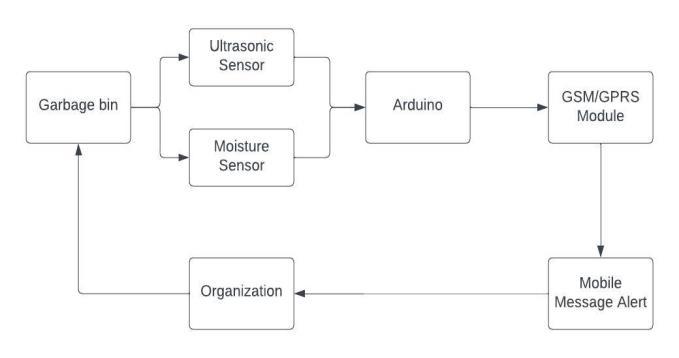
Fig. 4.1: Block-diagramofproposed-system
This project outlines the procedural steps necessary for implementing the proposed SWMS and identifies the essential hardware components required. The SWMS will utilizeanultrasonicrangesensortomeasurethequantityof garbageaccumulatedinwastecontainers.Subsequently,this data will be transmitted via a GSM SIM800L module to designatedphonenumbersregisteredatWasteManagement Centers(WMC).Tooverseethisprocess,amicrocontroller willbeemployedforcontrolandcoordinationpurposes.
The designated contact numbers registered at Waste Management Centers (WMCs) will receive real-time SMS notificationsviatheGSMmodule,displayingthefilllevelsof individualgarbagebinsontheirphonescreens.Oftentimes, even when a dustbin isn't fully occupied, it may emit unpleasantodorsofwetwaste,leadingtounpleasantsmells permeating the locality or city. To address this issue, a moisturesensorisinstalledwithinthedustbintodetectand mitigatetheaccumulationofwetwaste,therebyhelpingto alleviateodor-relatedconcerns.
The moisture sensor is designed to detect the moisture levels within the waste. If the moisture content exceeds a predetermined threshold level, the sensor transmits this informationtothedesignatedcontactnumberatthewaste management center. Upon receiving the SMS notification,
prompt action is taken to address the issue with the respective dustbin, even if it is not at full capacity. This proactive approach effectively prevents the emergence of unpleasantodorsemanatingfromthegarbagebin,thereby preserving thecleanlinessandambiance ofthelocalityor city.
Theimplementedsystemcanalsobeunderstoodusingflow chartbelowin Fig4.2.
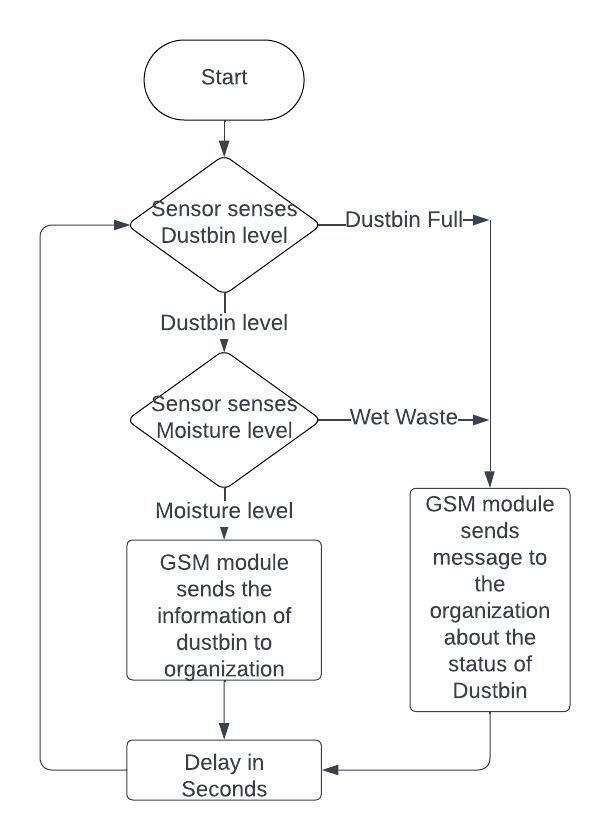
1. Ultrasonic sensor senses the filling level of dustbin.
2. Moisturesensormeasuresthehumidityor moisturelevelofdustbin.Duetopresenceofwet waste,dustbinproducesthestinkysmellwhich increasesthepollutioninsurroundingofdustbin andinneighborhood
3. The real time level of dustbin will send to the given mobile number in fixed and it can have informationofbinwithtimeanddate.
4. Ifmunicipalknowaboutthelevelofthebin,they can send truck driver to clean the bin. In this waygarbagebinscanbestaycleanandhygienic timely.
International Research Journal of Engineering and Technology (IRJET) e-ISSN: 2395-0056
Volume: 11 Issue: 03 | Mar 2024 www.irjet.net p-ISSN: 2395-0072
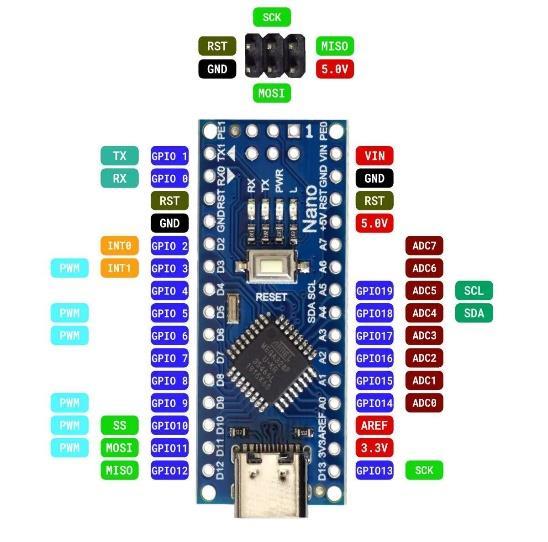
The Arduino Uno is a widely utilized open-source microcontroller board featuring the ATmega328P microcontroller.Recognizedforitsversatility,itservesasa popular choice for prototyping and do-it-yourself (DIY) electronicsendeavours.
Formeasurementoflevel,ultrasonicsensorwhichcalculates the spatial between device and waste. We use Ultrasonic sensorsoperatesontheprincipleofecholocation,similarto howbatsanddolphinsnavigate.Thesesensorsgenerateand emitultrasonicwaves(soundwaveswithfrequenciesabove the human audible range) and use the reflection of these wavestoascertainthedistancetoanobject.
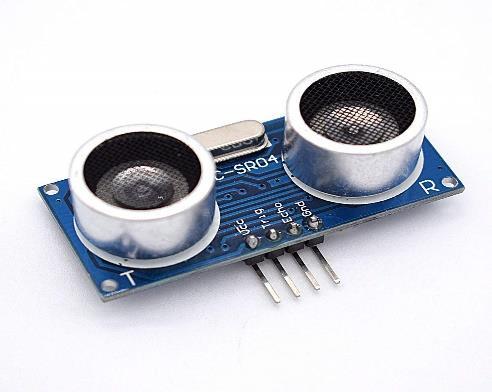
This contains a transducer, which is a device that convert electrical energy into ultrasonic waves. It emits a burst of ultrasonicwavesinaspecificdirection.Whentheultrasonic wavesencounteranobjectintheirpath,theyarepartially reflectedbacktowardsthesensor.Theobjectcanbesolid, liquid, or any surface that reflects sound. The same
transducerthatemittedtheultrasonicwavesnowactsasa receiver.Itdetectsthereflectedwavesreturningfromthe object.Theultrasonicsensormeasuresthetimeittakesfor the emitted waves to travel to the object and back and calculatethedistance.Thecalculateddistancedataisthen typicallyconvertedintoanelectricalsignal,suchasavoltage oradigitalsignal,whichcanbeusedbyamicrocontrolleror anotherdeviceforfurtherprocessingorcontrol.
Severalnon-intrusivemoisturesensortechnologiescanbe employed to accurately measure the moisture content in waste.Capacitancesensors,resistancesensors,andoptical sensors offer cost-effective and reliable solutions for monitoring moisture levels in various waste types. These sensorsaredesignedtobeintegratedseamlesslyintowaste bins or collection points, ensuring minimal disruption to existingwastemonitoringinfrastructure.
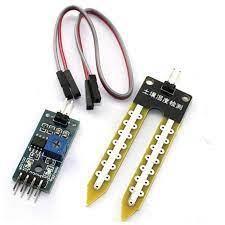
ThemoisturesensorswithIoTdevicesallowsforreal-time datatransmissionandremotemonitoring.Thisconnectivity enables waste management personnel to access comprehensivemoisturedata.
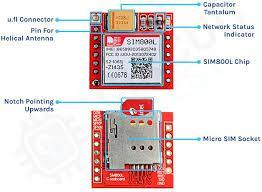
In our system, we utilize the Global System for Mobile Communication (GSM) technology to establish communication between the system and the mobile network. GSM operates as an open digital technology, transmitting data in binary format. In India, it operates within the frequency range of 900MHz to 1800MHz. Specifically,oursystememploysGSMtosendanotification whenadustbinoverflows.
International Research Journal of Engineering and Technology (IRJET) e-ISSN: 2395-0056
Volume: 11 Issue: 03 | Mar 2024 www.irjet.net p-ISSN: 2395-0072
CIRCUIT DIAGRAM
SWMS is implemented using GSM module, sensors, and microcontroller. Below circuit diagram shows the integration of hardware to enable monitoring of the bin levels and moisture level and provide real-time data for efficientcollectionofwaste.
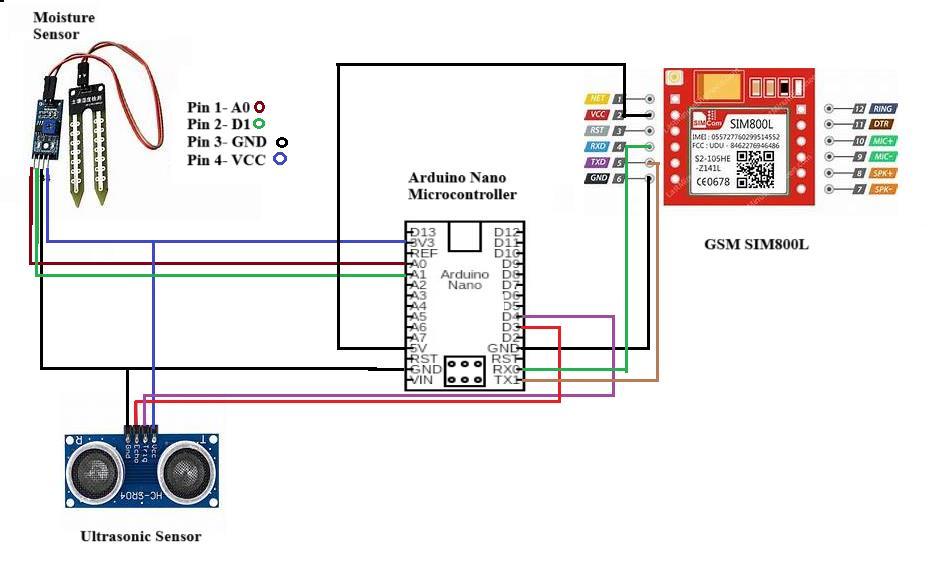
Fig-4.7: AlertMessagetoRegisteredNumber
Ultrasonic Sensor: Connection of Ultrasonic sensor to Arduinonanoareasfollows
Trig Pin: Connected to a digital pin (D4) of the ARDUINONANO
Echo Pin: Connected to a digital pin(D3) of the ARDUINONANO.
VCC:Connectedtothe3Vpowersupply
GND:Connectedtotheground(GND).
Moisture Sensor: ConnectionofmoisturesensortoArduino nanoareasfollows
Pin 1: Connected to a digital pin (A0) of the ARDUINONANO.
Pin 2: Connected to a digital pin(A1) of the ARDUINONANO.
VCC:Connectedtothe3Vpowersupply.
GND:Connectedtotheground(GND).
GSM Module: ConnectionofGSMSIM800LtoArduinonano areasfollows
RX Pin: Connected to the TX pin of the ARDUINO NANO.
TX Pin: Connected to the RX pin of the ARDUINO NANO
VCC:Connectedtothe5Vpowersupply.
GND:Connectedtotheground(GND)
Arduino Nano: ConnectionofArduinonanoareasfollows
GND:Connectedtotheground(GND)
VCC:Connectedtothepowersupply.
Thisprojectsensesthefilllevelaswellasthemoisturelevel ofthebin,thensendsanalertmessageaboutthefilllevelsof a bin to the registered mobile number. The below image shows the notification of an alert sent to the registered mobilenumberalertingthatDustbinisfull.
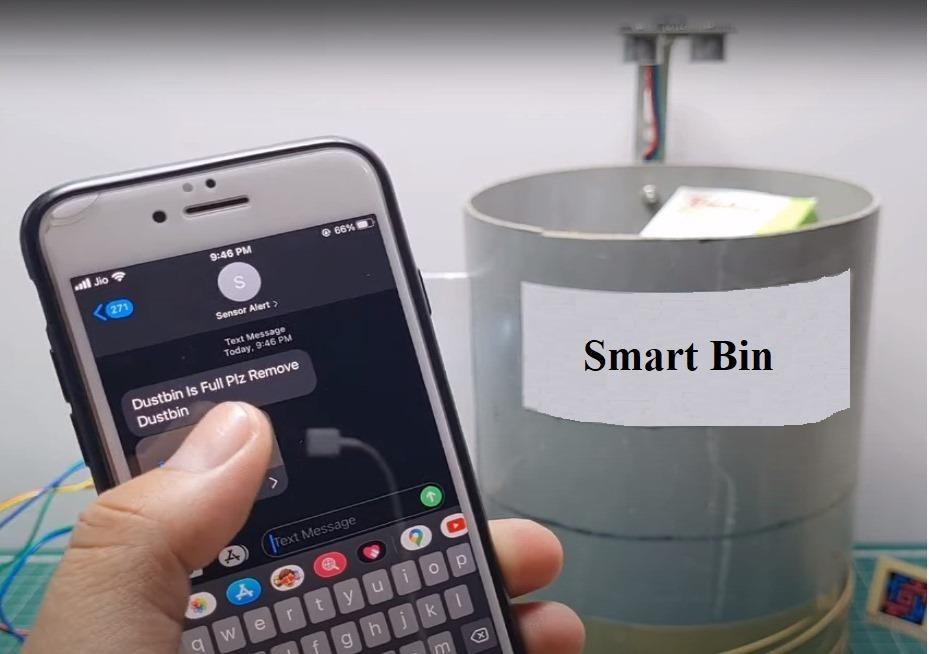
Fig-5.1: AlertMessagetoRegisteredNumber
The implementation of a SWMS marks a significant stride towards modernizing waste monitoring practices. This system, using sensor technology has revolutionized traditionalwastecollectionmethodsbyenablingreal-time
International Research Journal of Engineering and Technology (IRJET) e-ISSN: 2395-0056
Volume: 11 Issue: 03 | Mar 2024 www.irjet.net p-ISSN: 2395-0072
monitoring, optimizing collection routes, and reducing operationalinefficiencies.Theintegrationofintelligentbins equipped using sensors not only facilitates timely waste pickup but also minimizes overflowing bins, curbing environmental hazards and promoting a cleaner urban landscape.
[1]. M. Paturi, S. Puvvada, B. S. Ponnuru, M. Simhadri, B. S.EgalaandA.K.Pradhan,"SmartSolidWasteManagement System Using Blockchain and IoT for Smart Cities," 2021 IEEEInternationalSymposiumonSmartElectronicSystems (iSES), Jaipur, India, 2021, pp. 456-459, doi: 10.1109/iSES52644.2021.00107.
[2]. P. Haribabu, S. R. Kassa, J. Nagaraju, R. Karthik, N. Shirisha and M. Anila, "Implementation of an smart waste management system using IoT," 2017 International Conference on Intelligent Sustainable Systems (ICISS), Palladam, India, 2017, pp. 1155-1156, doi: 10.1109/ISS1.2017.8389367.
[3]. J. Joshi et al., "Cloud computing based smart garbage monitoringsystem,"20163rdInternationalConferenceon ElectronicDesign(ICED),Phuket,Thailand,2016,pp.70-75, doi:10.1109/ICED.2016.7804609.
[4]. R. Tandon and A. Bansal, "IoT-enabled Smart Waste Management:LeveragingthePowerofIoTforSustainable Solutions,"20233rdInternationalConferenceonInnovative SustainableComputationalTechnologies(CISCT),Dehradun, India, 2023, pp. 1-6, doi: 10.1109/CISCT57197.2023.10351210.
[5]. S. Khan, S. Venkat and K. Jayavel, "Autonomous smart wastecollectionsystemusinginternetofthings,"2017IEEE International Conference on Power, Control, Signals and InstrumentationEngineering(ICPCSI),Chennai,India,2017, pp.1181-1186,doi:10.1109/ICPCSI.2017.8391896.
[6].K.Nirde,P.S.MulayandU.M.Chaskar,"IoTbasedsolid waste management system for smart city," 2017 International Conference on Intelligent Computing and ControlSystems(ICICCS),Madurai,India,2017,pp.666-669, doi:10.1109/ICCONS.2017.8250546.
[7]. S. V. Kumar, T. S. Kumaran, A. K. Kumar and M. Mathapati,"Smartgarbagemonitoringandclearancesystem using internet of things," 2017 IEEE International Conference on Smart Technologies and Management for Computing,Communication,Controls,EnergyandMaterials (ICSTM), Chennai, India, 2017, pp. 184-189, doi: 10.1109/ICSTM.2017.8089148.
[8]. A. Imteaj, M. Chowdhury and M. A. Mahamud, "Dissipation of waste using dynamic perception and
alarming system: A smart city application," 2015 International Conference on Electrical Engineering and InformationCommunicationTechnology(ICEEICT),Savar, Bangladesh, 2015, pp. 1-5, doi: 10.1109/ICEEICT.2015.7307410.
[9]. P. Devi, W. S. Ravindra and S. K. L. V. Sai Prakash, "Implementing an IoT Enabled Smart-Waste Management System for Indian Smart Cities," 2018 2nd InternationalConferenceonTrendsinElectronicsandInformatics(ICOEI), Tirunelveli, India, 2018, pp. 64-69, doi: 10.1109/ICOEI.2018.8553764.
[10]. S. Ankitha, K. B. Nayana, S. R. Shravya and L. Jain, "Smartcityinitiative:Trafficandwastemanagement,"The conference cited is the “2017 2nd IEEE International ConferenceonRecentTrendsinElectronics,Informationand Communication technology (RTEICT)”. Bangalore, India, 2017,pp.1227-1231,doi:10.1109/RTEICT.2017.8256794.
© 2024, IRJET | Impact Factor value: 8.226 | ISO 9001:2008 Certified Journal | Page1177