
International Research Journal of Engineering and Technology (IRJET) e-ISSN: 2395-0056
Volume: 11 Issue: 03 | Mar 2024 www.irjet.net p-ISSN: 2395-0072

International Research Journal of Engineering and Technology (IRJET) e-ISSN: 2395-0056
Volume: 11 Issue: 03 | Mar 2024 www.irjet.net p-ISSN: 2395-0072
Dipak Sahu1, Aaliya Khanam2, Saher Fatima3, Yadnik Titarmare4
1Dipak Sahu, Dept of Computer Technology, Priyadarshini College of Engineering Nagpur
2Aaliya Khanam, Dept. of Computer Technology, Priyadarshini College of Engineering Nagpur
3Saher Fatima, Dept. of Computer Technology, Priyadarshini College of Engineering Nagpur
4Yadnik Titarmare, Dept. of Computer Technology, Priyadarshini College of Engineering Nagpur
Abstract - Customers have plenty of options in the rapidly evolving e-commerce scene, which makes it difficult to identify the most convenient and affordable solutions. This study explores the topic of product comparison in ecommerce to offera thorough examination of a range of products on variousonline platforms. Finding the least expensive and most convenient options for customers is the main goal. We collect, process, and analyse product information from several e-commerce websites using a systematic methodology in our study that makes use of advanced data analytics approaches. We consider variables like pricing, shipping, time of delivery, client feedback, and overall user experience. We aim to provide useful insights into dynamic pricing strategies and user satisfaction by employing a comprehensive methodology. This study also looks into how consumer preferences, brand reputation, and product attributes affect the decision-making process. Our objective is to offer a comprehensive comprehension of the intricacies associated with product comparison in the ecommerce domain by means of the assessment of a wide array of product classifications. The results of this study should help consumers who are looking to get the best deal possible and help e-commerce platforms become more competitive. Our research attempts to add to the current conversation on making online buying more transparent and focused onthe needs of thecustomerasthe e-commerce sectordevelops.
Key Words: - web scrapper, e-commerce, web crawler, Django,Pricecomparison
Themoderneraismarkedbyanincredibleriseininternet commerce, with e-commerce growing into a massive marketplace for easy and simple product acquisition. The widespread availability of smart devices and other online platformshasenabledcustomerstomakepurchasesfrom almost any place, hence promoting the ongoing development of the e-commerce environment. This paradigm change has greatly increased consumer participation in online shopping, which is driving the expansion of the e-commerce industry. But as more and moree-commercewebsiteshaveemerged,customersnow face a dilemma as they must search across several platforms in order to compare and choose products. This
makes it difficult for customers to compare prices across differentonlinemarketplacesandlocatethebestoffers.As a result, the suggested solution seeks to empower consumers of the internet by enabling smooth product comparison from many e-commerce websites via a single webinterface.Userswillsaveagreatdealoftime,money, and effort by doing this because they will be able to find the greatest discounts for a specific product without havingtosearchthroughmanywebplatforms.
Thisisdonebyprovidinginsightsaboutpricingstrategies and user satisfaction. This review contributes to the understanding of product comparison in e-commerce. Additionally this review also focuses on how consumer preferences, product attributes, brand reputation affect thedecisionmakingprocess.
During our research for this project, we observed a common practice among e-commerce websites. Many ecommerce platforms use sales and pricing strategies to attract customers. However, we found that these "sales" were often more of a marketing gimmick than a genuine discount. For example, Flipkart, one of India's largest ecommerce websites, often puts its most popular items on salebutonlyreducestheirpricesbyasmallmargin.Atthe same time, the prices of accessories or complementary products are increased, allowing the site to recover its lossesfromthediscounteditems.Thisstrategycreatesthe illusion of a sale while ensuring that the website remains profitable. Similarly, Amazon, a global e-commerce giant, uses a technique called "price anchoring". With price anchoring, a higher-priced item (the anchor) is initially presentedtotheconsumer,indicatingthatthevalueofthe product is high. Subsequently, a slightly discounted price is offered on the actual price, making it seem like a significant discount. The observation of these pricing strategies was the foundation of our idea for this project We were intrigued by how e-commerce websites use pricingtacticstoinfluenceconsumerbehavior.Thisledus toexplorethetopicofproductcomparisonine-commerce, with a focus on providing consumers with a tool to navigate these pricing strategies and find the best deals online. Research papers form IEEE website contributed towards our research and understanding on how our projectwillwork
International Research Journal of Engineering and Technology (IRJET) e-ISSN: 2395-0056
Volume: 11 Issue: 03 | Mar 2024 www.irjet.net p-ISSN: 2395-0072
1) The use of web scraping in computer parts and assembly price comparison LR Julian, F Natalia - 2015 3rd International Conference on, 2015ieeexplore.ieee.org
Thispaperexplorestheuseofwebscrapingtechniquesto compare prices of computer parts and assemblies. The authors discuss the challenges and benefits of web scraping in this context, highlighting the importance of accurate and timely data extraction. They also provide insightsintotheimplementationofwebscrapingtoolsand techniques for price comparison in the computer hardwareindustry.
2) E-Commerce Web-Crawling to Facilitate Consumers for Economical Choices S Saeed, M Naqvi, M MemonInternational Journal of …, 2020journal.scientiaca.org
This paper focuses on the use of web crawling in ecommerce to help consumers make more economical choices. The authors discuss the role of web crawling in collecting and analyzing product information from ecommerce websites. They highlight the benefits of web crawling in providing consumers with access to a wide rangeofproductsandprices,ultimatelyempoweringthem tomakeinformedpurchasingdecisions.
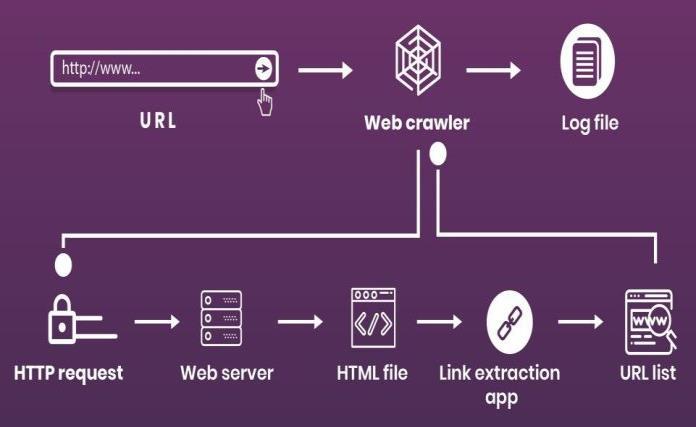
3.1 Web Crawler:
To build the price comparison engine, a web crawler is essentialforgatheringalargeamountofdatafromvarious e-commercewebsites.Manuallycollectingdatafromthese websites is impractical, so a web crawler is used to navigate to these sites and fetch their URLs. These URLs arethensenttoascraperforthescrapingprocess.
3.2 Web Scraper:
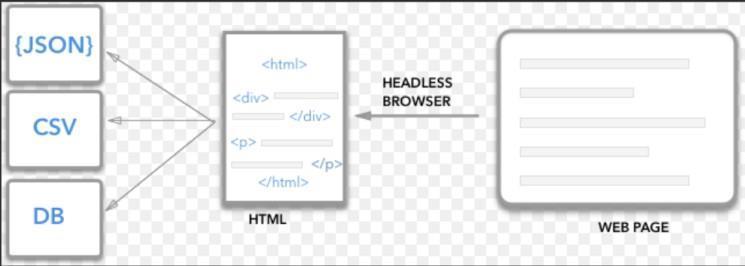
Web scraping involves extracting HTML data from URLs forpersonal use.Sincethisisa pricecomparison website, data is scraped from multiple e-commerce websites. In this system, web scraping is performed using Python libraries such as requests and BeautifulSoup4. BeautifulSoup4 is particularly useful for parsing HTML pages. Using these libraries, product information from different e-commerce sites is scraped and stored in a database.
Django is a Python web framework that expedites web development by enabling efficient coding practices. It is designed to simplify the construction of complex, database-oriented websites. Django facilitates component reuse, rapid development, and code minimization. Python is extensively used within the Django framework, includinginconfigurationfilesanddatamodels.
Inconclusion,thisstudyhaswentdeepintothepracticeof product comparison in e-commerce, focusing on finding the best online deals for consumers. Through web scraping and crawling, we collected and analyzed data from various e-commerce websites, revealing the various pricing tactics used by online retailers. Our findings focusesontheimportanceofinformeddecision-makingin online shopping and the value of tools that enable consumersto make economical choices.The development of our price comparison engine using the Django framework demonstrates the practical application of our research, aiming to enhance transparency and fairness in thee-commercemarket.
International Research Journal of Engineering and Technology (IRJET) e-ISSN: 2395-0056
Volume: 11 Issue: 03 | Mar 2024 www.irjet.net p-ISSN: 2395-0072
Future research could explore integrating AI and ML algorithms to enhance price comparison tools by analyzing consumer behavior and market trends, providing personalized recommendations, and offering real-time price updates. Moreover, establishing frameworks and regulations to ensure fair pricing practices and safeguard consumer data in e-commerce is absolutely necessary. Expanding the scope of price comparisontoolstoincludeawiderrangeofproductsand services, such as travel and accommodation, could also benefit consumers in making informed decisions. Overall, this would help promote a fair and competitive online marketplace.
1. Jin Dai, Tianyu Wang and Shaowei Wang, "A Deep Forest Method for Classify ing E-Commerce Products by Using Title Information", IEEE, International Conference on Computing. Networking and Communications(ICNCj,Mar2020.
2. Fatih Mehmet Yildmm, Abdull ah Kaya and Selin Nur Ozturk,"AReal-WorldText ClassificationApplication for an E-commerce Platform ", IEEE, Innovations in Intelligent Systems and Applications Conference (ASYUj,Jan2020.
3. Ali Cevahir, "Large-scale Multi-class and Hierarchic al ProductCategorizationforanE-commerceGiant",The COLlNG Organizing Committee, 26th International ConferenceonComputationalLinguistics,Dec2016
4. L. Beranek and R. Remes, "E-commerce network with price comparator sites," 2019 9th International Conference on Advanced Computer Information Technologies (ACIT), Ceske Budejovice, Czech Republic, 2019, pp. 401-404, doi: 10.1109/ACITT.2019.8779865.
5. N.Singh,A.RanaandA.Chaudhary,"PriceComparison Using Web Scraping and Machine Learning," 2023 International Conference on Computer Science and EmergingTechnologies(CSET),Bangalore,India,2023.
6. Y. Thushara and V. Ramesh, Volume 149 No.11, September 2016. A Study of Web Mining Application onE-CommerceusingGoogleAnalyticsTool.
7. RiyaShah,KarishmaPathan,AnandMasurkar,Shweta Rewatkar, P.N. Vengurlekar, “Comparison of ECommerce Products using Web Mining”, International Journal of Scientific and Research Publications, Volume 6, Issue 5, May 2016 640 ISSN 2250-3153.
8. Web scraping for unstructured data over web. GN Chandrika, S Ramasubbareddy, K Govinda…EmbeddedSystemsand…,2020-Springer
9. Web Crawlers: Taxonomy, Issues & Challenges. Dr. Rajendra Nath, Khyati Chopra. Proceedings of the International Journal of Advanced Research in Computer Science and Software Engineering, Volume 3,Issue4,April2017,pp.944-948
10. K Rajendra Prasad, C Raghavendra, A Kumaravel, “Study on Secure Health Care Data using Big Data Analytics”, Jour of Adv. Research in Dynamical & ControlSystems,Vol.10,10-SpecialIssue,Aug2018.
11. C. Raghavendra, S. Sivasubramanian, A. Kumaravel, “Improvedimagecompressionusingeffectivelossless compression technique”, Cluster Computing, March 2018.