
International Research Journal of Engineering and Technology (IRJET) e-ISSN:2395-0056
Volume: 11 Issue: 03 | Mar 2024 www.irjet.net p-ISSN:2395-0072
International Research Journal of Engineering and Technology (IRJET) e-ISSN:2395-0056
Volume: 11 Issue: 03 | Mar 2024 www.irjet.net p-ISSN:2395-0072
Karthika Priya D, Kiran Vignesh K, Shruthi M
Easwari Engineering College, Ramapuram, Tamil Nadu, India, Easwari Engineering College, Ramapuram Tamil Nadu, India, Easwari Engineering College, Ramapuram Tamil Nadu, India
Abstract - This innovative project presents a strong methodology to forecast and examine fitness objectives. The model accurately monitors exercises and measures fitness levels by using advanced deep learning and data analysis methods. Traditional exercise monitoring relies on manual input or simple techniques that are not very precise. Our system eliminates the need for manual monitoring by automatically tallying various exercises, regardless of their type, duration, or intensity. The approach is divided into several important stages, beginning with meticulous data preprocessing to address missing values and outliers. By employing the combined potential of Machine Learning and Deep Learning algorithms, the methodology utilizes various techniques, including k-nearest Neighbors, Random Forest, and custom gradient descent. What sets this methodology apart is its incorporation of advanced computer vision techniques, where the detection of Regions of Interest (ROI) is identified, thereby enhancing the analysis of exercise form. The uniqueness of this project lies in its interactive nature, facilitating users to directly compare predictions generated by different algorithms This allows users to input their exercise data and images for real-time analysis, providing a personalized and dynamic user experience. By adopting this comprehensive approach, users gain valuable insights into their fitness progress and receive practical information to make informed decisions about their fitness routines, ultimately contributing to the promotion of healthier lifestyles.
Keywords Fitness Goals Tracking, Advanced Deep Learning, Data Analysis, Computer Vision, ROI Detection, Real-time Analysis, Personalized Insights, Dynamic User Experience, Informed Decisions.
Inthelandscapeoffitnesstrackingandmovement quantification,the model pioneersa transformativeapproachto understanding physical activity. In response to the limitations of conventional tracking methods, this project leverages cutting-edge deep learning technologies to provide users with a more nuanced and personalized perspective on their fitnessjourneys.
Fitness tracking has evolved beyond basic step counting to encompass a holistic view of health and well-being. However, the project recognizes the need for a deeper understanding of human movement beyond generic metrics. By integrating deep learning techniques, the methodology aims to enhance the accuracy and granularity of fitness data, deliveringinsightsthatgobeyondtraditionaltrackingmethods.
AdvancedMovementAnalysisencapsulatestheproject'scoreobjective.Itemphasizestheutilizationofdeeplearning todecodeintricatepatterns ofmovement,offeringa detailedunderstandingofvarious exercisesandday-to-day physical activities.Thisnotonlyimprovestheprecisionoffitnessdatabutalsoempowersuserstomakemoreinformeddecisions abouttheirhealthandfitnessbasedonacomprehensiveanalysisoftheiruniquemovements.
Thisprojectrepresentsaparadigmshiftinthewayweapproachfitnesstracking,movingawayfromone-size-fits-all metrics.Byembracingdeeplearning,itoffersamoreindividualizedandactionableunderstandingofphysicalactivity.Ina world wherepersonalized well-being is paramount, thisprojectstandsattheforefront,guiding individualstoward more informedandtailoredfitnessexperiences.
WangandZheng(2022)explorehowsmartgadgetsandAIservicesmaybeintegratedintothephysicalfitnessspace. UsingtechnologieslikeArtificialIntelligence(AI)andtheInternetofThings(IoT),theirresearchexploreshowintelligent digitaltreadmillsmighttransformthefitnessequipmentmarket.Althoughtheirworkdemonstratesencouragingprogress in fitness detection, it is important to acknowledge that the suggested techniques may not be as scalable due to their dependence on high-quality labelled datasets. Further research and development are necessary to overcome the formidableobstaclesposedbythedifficultiesinadjustingtoavarietyofweatherconditionsandreal-worldsituations[1].
International Research Journal of Engineering and Technology (IRJET) e-ISSN:2395-0056
Volume: 11 Issue: 03 | Mar 2024 www.irjet.net p-ISSN:2395-0072
Tiwari and Gupta (2021) offer a novel method of real-time contactless fitness tracking through the use of deep Convolutional Neural Networks (CNNs) and millimetre-wave (mm-wave) radar sensors. study shows that fitness-related measuresmayberecordedwithamazingprecisionevenintheabsenceof wearabletechnology.Thenuancesofswitching between detection and prediction networks, however, might add complications that affect the system's performance in real-time.Tomake thesuggestedstrategymore workableandeffective,moreresearchinto network design optimization anddataprocessingpipelineoptimizationisrequired[2].
Abbasetal.(2021)investigatethebestwaytousesensorsandmachinelearningalgorithmstotrackpeople'sphysical activity. Their work demonstrates important progress in using deep and shallow learning techniques to reliably identify and avoid frailty-related hazards. Nonetheless, the difficulty still exists in modifying the suggested model for situations with sparse or inconsistent training data. To guarantee that the suggested framework is resilient and scalable in various real-worldscenarios,futureresearchendeavoursoughttogiveprecedencetoresolvingtheseconstraints[3].
A. Data Collection:
The initial step in the research or analysis process involves clearly defining the objectives to establish the study's goals and ascertain the necessary data. Following this, source identification becomes paramount, emphasizing the need to pinpoint reliable sources with a clear and distinct Return on Investment (ROI), particularly in terms of acquiringthedataset.An ethical framework is integral throughout,demanding strictadherenceto ethical guidelines and privacy standards. This ensures that data collection respects patient confidentiality and complies with legal requirements,reinforcingtheethicalfoundationofthestudyoranalysis.
B. Data Preprocessing:
Inthedatapreprocessingphase,addressingmissingvaluestakesprecedence,particularlyincriticalfeaturessuchas bloodpressure,age,andbiochemicalmeasurements.Thoroughmeasuresaretakentofillinthesegaps,ensuringthe completeness of the dataset. Simultaneously, the identification and management of outliers become imperative to mitigateanypotential skewingeffectsonsubsequentanalysisormodelingresults. Thedata standardization process follows, where numerical values are systematically standardized to maintain consistent scales across variables. This standardization facilitates fair and accurate comparisons, enabling a robust foundation for subsequent analytical procedures.
C. Feature Selection and Engineering:
During the data preprocessing stage, a crucial step involves the conversion of categorical variables, such as the presence of diabetes or hypertension, into numerical formats compatible with machine learning algorithms. This process,knownascategoricalvariableencoding,ensuresthatthealgorithmscaneffectivelyinterpretandutilizethese variables. Subsequently, the application of feature selection techniques becomes paramount. These techniques identify and prioritize relevant features while discarding irrelevant or redundant information, streamlining the datasetforoptimalmodelperformance.Additionally,thecreationofderivedfeaturesplaysapivotalroleinenhancing the dataset's richness. This involves generating new features or transforming existing ones to capture additional insights,ultimatelycontributingtoamorecomprehensiveandinformativedatasetforsubsequentanalyses.
D. Model Selection:
Choose a hybrid model architecture that combines multiple machine-learning techniques and deep learning techniquesSelectappropriatemachine-learningalgorithms,suchasRandomForest,KNN,SVM,andGradientBoosting Classifier. For deep learning VGG, Overfeat, and Google determine how these models will be combined, whether throughensemblemethods,stacking,orothertechniques.
E. Model Training:
Splitthedatasetintotraining,validation,andtestsets.Trainindividualmachinelearningmodelsonthetrainingdata. Fine-tunehyperparameters andoptimizethe individual modelstomaximizetheir predictive performance. Trainthe hybridmodel,consideringtheoutputsofindividualmodelsasfeatures.
International Research Journal of Engineering and Technology (IRJET) e-ISSN:2395-0056
Volume: 11 Issue: 03 | Mar 2024 www.irjet.net p-ISSN:2395-0072
F. Evaluation Metrics:
Define evaluation metrics for assessing the performance of the hybrid model, such as accuracy, precision, recall, F1score,andareaunderthereceiveroperatingcharacteristiccurve(AUC-ROC).Considerthespecificgoalsofprediction andpreventioninthecontextofchronickidneydisease.
G. Cross-Validation:
Implementingrobust cross-validationproceduresis essential to evaluateand validatethe performanceof thefitness application's machine learning models. Utilizing k-fold cross-validation involves systematically partitioning the datasetintotrainingandvalidationsetsmultipletimes.Thisprocessassessesthemodels'abilitytogeneralizeacross differentsubsetsofdata,providinginsightsintotheirreliabilityandeffectivenessindiversescenarios.
H. Interpretability and Explainability:
In the context of fitness monitoring, understanding how machine learning models make predictions is crucial. Incorporating interpretability techniques allows users to gain insights into the factors influencing activity status predictions.Visualizationof featureimportanceandmodel decisionsprovidestransparency,especiallyregardingthe selection of exercises, enabling users to comprehend the rationale behind the application's recommendations and enhancingusertrust.
I. Risk Prediction:
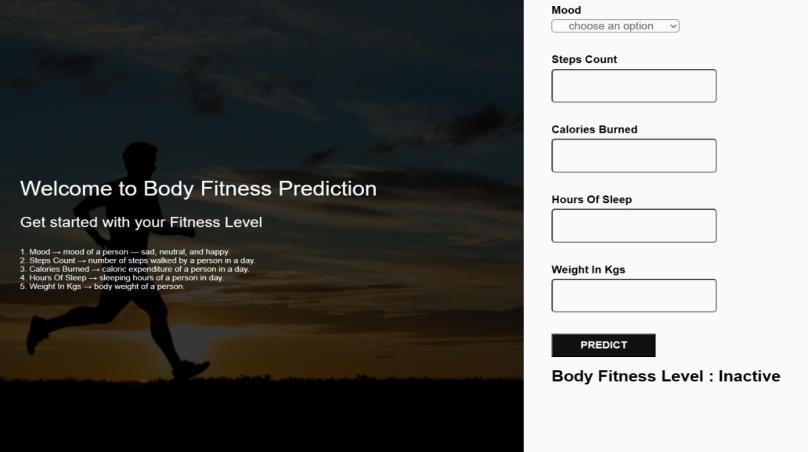
The culmination of model training leads to the application's primary function: predicting the user's activity status. Once the machine learning models are trained, users can input their health data, and the application dynamically predicts whether they are active or inactive. Setting appropriate thresholds for categorizing activity levels ensures accurateandpersonalizedfeedback,empoweringuserstomakeinformeddecisionsabouttheirfitnessroutines.
J. Personalized Exercise Recommendations:
Going beyond prediction, the fitness application excels in providing actionable insights. Based on the user's activity status and goals, the application generates personalized exercise recommendations. This tailored approach enables userstooptimizetheirworkoutroutines,fosteringmotivationandadherencetoahealthierlifestyle.
K. Model Deployment:
Deploy the hybrid model within the web application in a fitness environment as a decision support system. Provide clearanduser-friendlyinterfacesforprofessionalsandfitnessenthusiaststointeractwiththemodel.
International Research Journal of Engineering and Technology (IRJET) e-ISSN:2395-0056
Volume: 11 Issue: 03 | Mar 2024 www.irjet.net p-ISSN:2395-0072
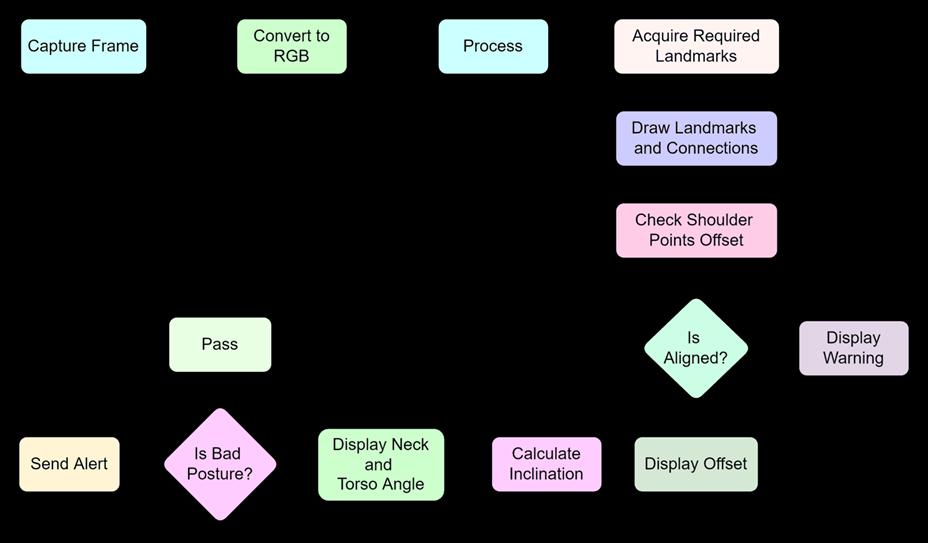
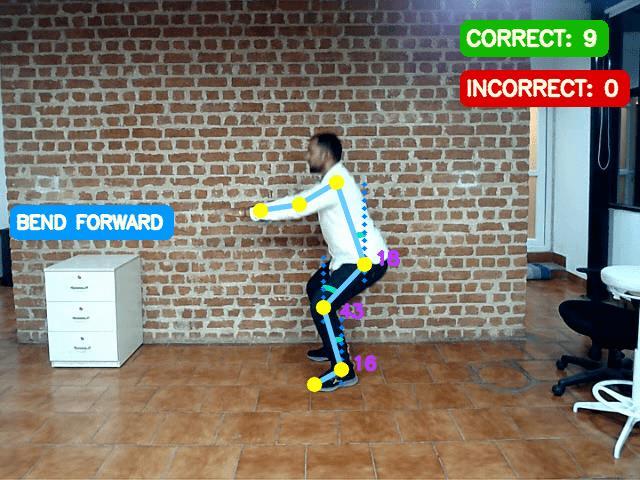
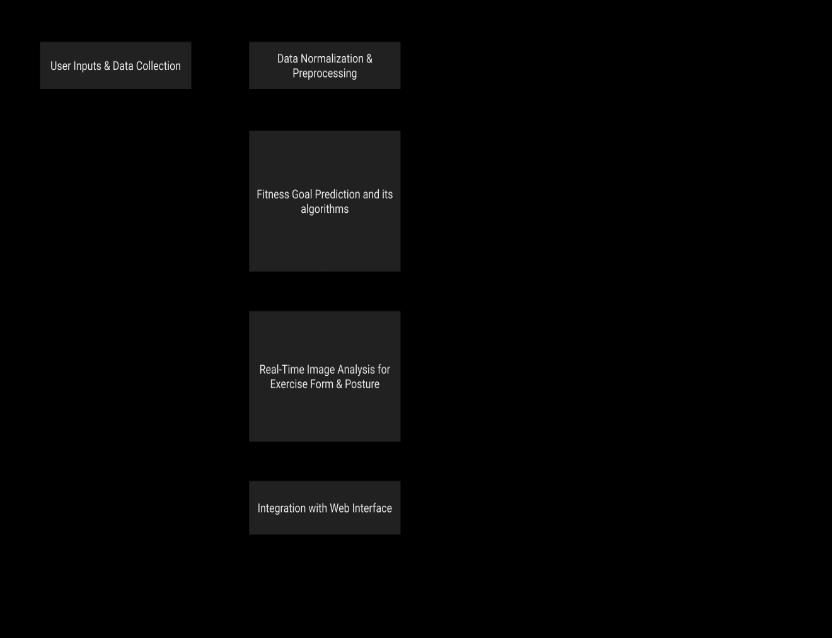
The architecture of the fitness application is meticulously designed to provide a holistic and user-centric solution for exercise tracking, health analysis, and personalized recommendations. At its core, the architecture revolves around seamlessintegrationofadvancedtechnologies,ensuringarobust,intuitive,andsecureuserexperience.
A. Evaluation of Human Pose Estimation Frameworks:
In this stage, many human pose estimation frameworks, such as MediaPipe, OpenPose, and AlphaPose, are thoroughly evaluated. To evaluate performance in terms of accuracy, inference speed, and hardware platform compatibility, each framework will go through extensive testing. The outcomes of these assessments will serve as the foundation for the chosenframework.
B. Frontal View Exercise Analysis:
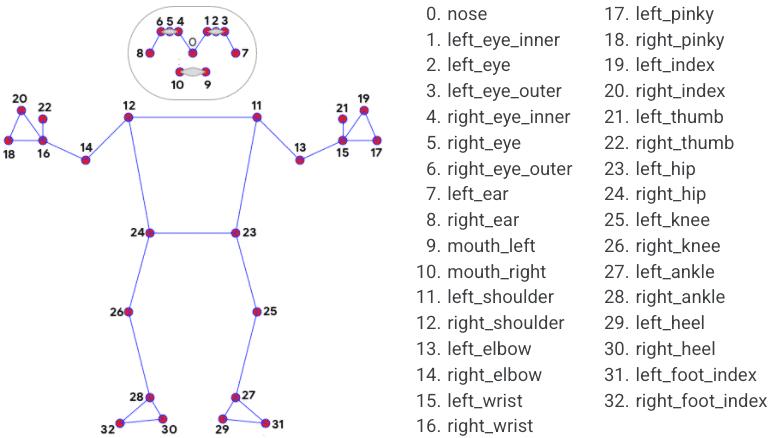
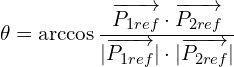
B.1DetailedAnalysis:Thesystemwillanalyzeactivitieslikecrunches,curls,sideplanks,andoverheadpressesindetail usingthefrontalperspective.Keycharacteristicswillbeextracted,andslopesandanglesbetweendifferentlandmark points suchastheknee-hipandknee-kneelines willbecomputedaspartofthisanalysis.Givingconsumersprecise feedback to improve their performance is the goal.
B.2 Accurate measures: The side view will be used to acquire accurate measures for activities including deadlifts, pushups, squats, and dips. The analysis of inclinations concerning verticals or horizontals enables a comprehensive assessmentofthetechniqueandpostureoftheuser.Withthisstrategy,specificfeedbackmaybeprovidedtoenhance overallworkoutexecution.
C. Development of State Transition Diagram:
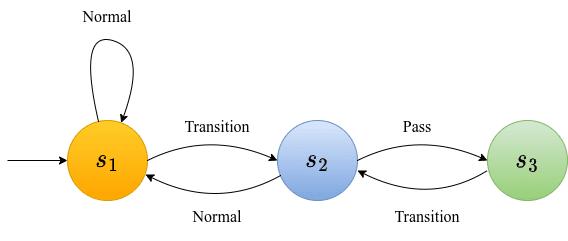
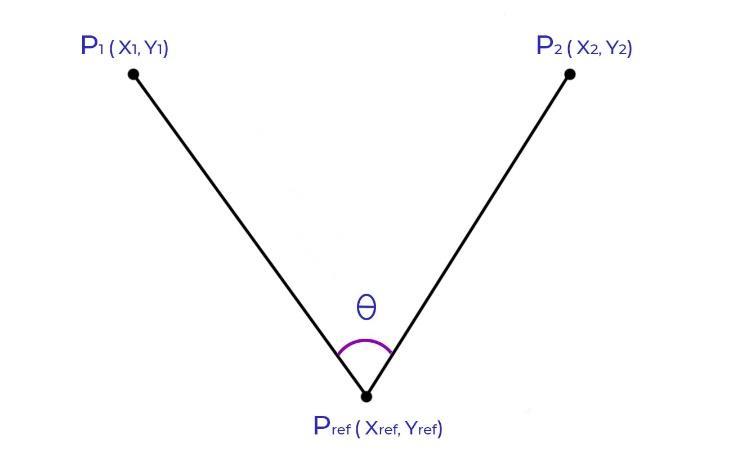
AstatetransitiondiagramthatdefinesstateslikeNormal,Transition,andPassbasedontheanglebetweenthe knee and vertical will be created to track workout performance. With the help of this figure, the user's progress through eachexercisephasecanbeaccuratelyassessed,allowingforpromptfeedbacktoguaranteethecorrecttechnique.
International Research Journal of Engineering and Technology (IRJET) e-ISSN:2395-0056
Volume: 11 Issue: 03 | Mar 2024 www.irjet.net p-ISSN:2395-0072
D. Feedback Generation:
DuringtheTransitionandPassstages,thesystemwillcalculatefeedbackmetrics,suchascountsforappropriateand inappropriateexercises.
E. Comprehensive Fitness Assessment:
The system will use GoogleNet to analyze different workouts to track overall fitness. By utilizing these cutting-edge deeplearningmodels,userswillreceivetailoredfeedbackandadvicethatencouragesproperpostureandtechnique forenhancedexerciseresults.Thisall-encompassingstrategyguarantees customizedsupporttoenablecustomersto successfullymeettheirfitnessobjectives.
International Research Journal of Engineering and Technology (IRJET) e-ISSN:2395-0056
Volume: 11 Issue: 03 | Mar 2024 www.irjet.net p-ISSN:2395-0072
F. Personalized Fitness Assessment:
Apersonalizedfitnessassessmentcomponentwillbeincludedintheplannedsystemwhenitisdevelopedfurther.To analyze the user's video input and pertinent metrics gathered via the user interface, this feature will make use of machinelearning, notably gradient boosting. The system will correctly classify the user's fitness level thanks to this sophisticated analysis, providing personalized training regimen recommendations and insights. Users will receive accuratecoachingthatisinlinewiththeiruniquefitnessaimsandskillsthankstothiscustomizedmethod,whichwill increasetheoverallefficacyoftheirfitnessjourney.
International Research Journal of Engineering and Technology (IRJET) e-ISSN:2395-0056
Volume: 11 Issue: 03 | Mar 2024 www.irjet.net p-ISSN:2395-0072
G. User Interface (Web Application):
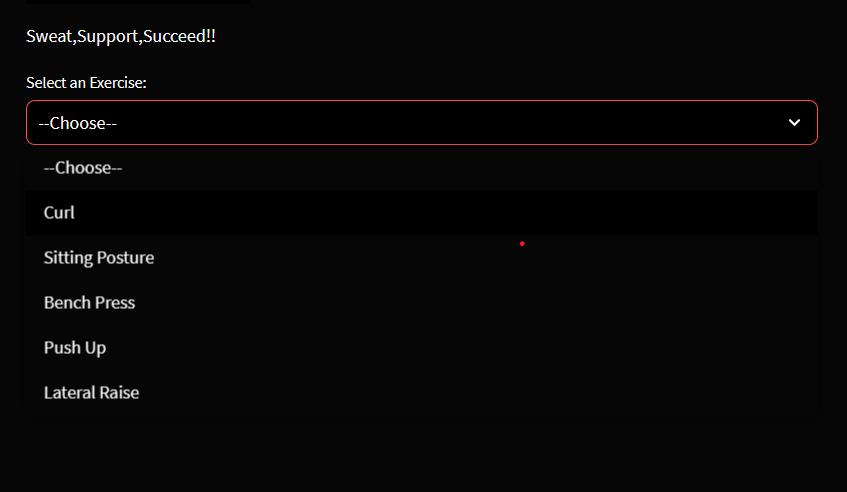
The model is designed with a user-friendly interface using Python Streamlit. This streamlined interface, focused on simplicity, caters to end-users by minimizing complexity. Python Streamlit powers a basic yet effective dashboard, enablingdynamiccontentpresentation.Servingasthebackend,Streamlitensuressmoothcommunicationwithmachine learning models and proficiently handles user inputs. This approach enhances user experience, effectively bridging the gapbetweensophisticatedalgorithmsandend-users.
H. Scalability and Maintenance:
Designed for scalability,the systemaccommodatesgrowingdatasetsseamlessly.Routinemaintenance includes updates formodelretraining,systemoptimization,andaddressingpotentialissues,ensuringsustainedperformance.
V.RESULTS
International Research Journal of Engineering and Technology (IRJET) e-ISSN:2395-0056
Volume: 11 Issue: 03 | Mar 2024 www.irjet.net p-ISSN:2395-0072
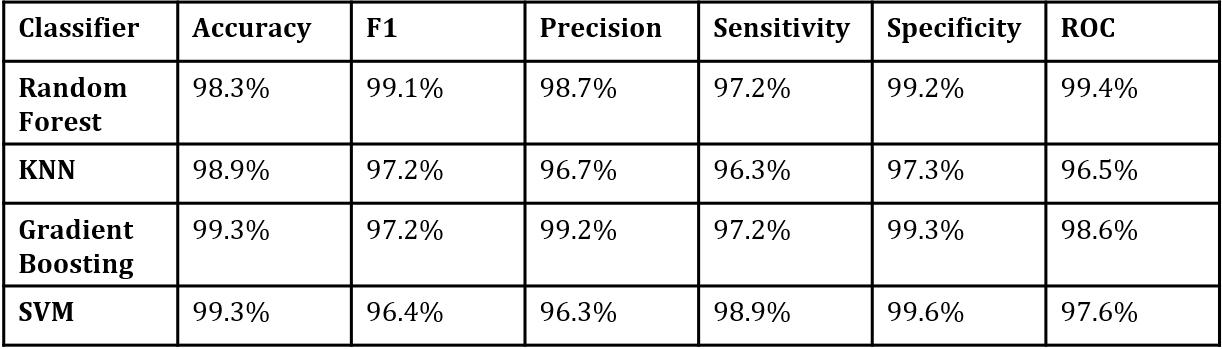
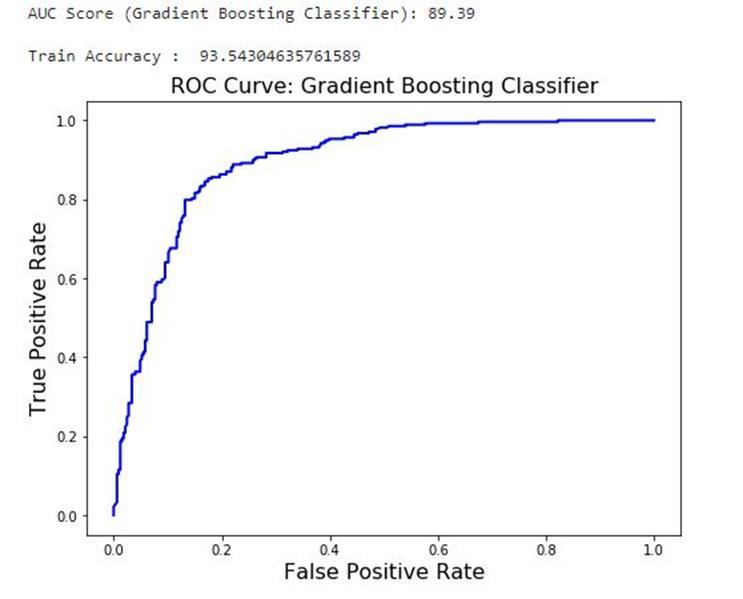
GradientBoostingwasthebest-performingmachinelearningmodeloutofthefourthatwereevaluated(RandomForest, KNN, SVM, and Gradient Boosting) according to the findings section. Concerning several assessment measures, it performedbetterthantheotherthreemodels.Greateraccuracy,F1score,precision,sensitivity,andROCcurveanalysis were shown by gradient boosting. Its best accuracy, F1 score, precision, and sensitivity were specifically attained, demonstrating its efficacy in accurately detecting both positive and negative instances within the dataset. Gradient Boostingalsoshowedthelargestareaunderthecurve(AUC)intheROCcurvestudy,indicatingthatitcouldbalancethe genuine positive rate and the false positive rate at different threshold settings. According to these results, Gradient Boostingisthebestmachine-learningmodelforclassification.
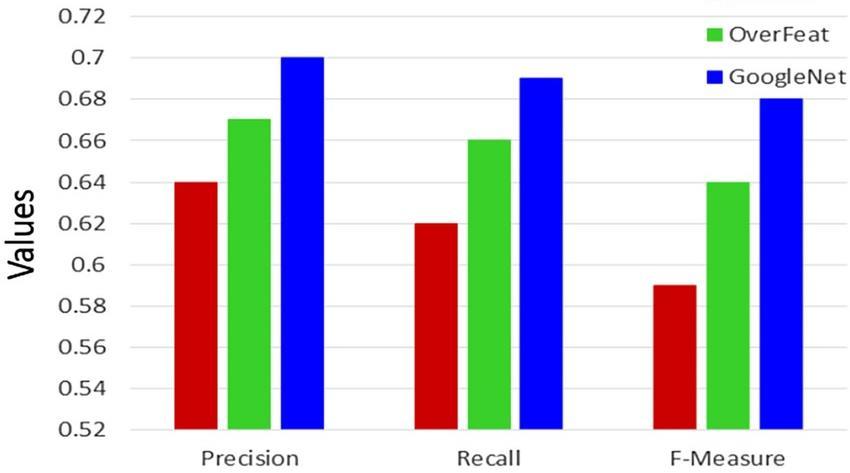
Out of the three Deep Learning models that were assessed (OverFeat, GoogleNet, and VGG), GoogleNet showed the best performance in the results section, surpassing the other models in terms of precision, recall, and F-measure metrics. In particular,GoogleNetoutperformedOverFeatandVGG intermsofaccuracy,recall,andF-measurescores. Thesefindings demonstratethatGoogLeNetcanefficientlyfind pertinentoccurrenceswhilereducingfalsepositivesand falsenegatives. GoogleNet'ssuperioritywasfurthersupportedbytheprecision-recallcurveanalysis,whichshowedagreaterareaunder thecurve(AUC)thanOverFeatandVGG.TheseresultsdemonstratethatGoogleNetisthebestDeepLearningmodelforthe giventask,outperformingOverFeatandVGGintermsofaccuracy,recall,andF-measurestatistics.
International Research Journal of Engineering and Technology (IRJET) e-ISSN:2395-0056
Volume: 11 Issue: 03 | Mar 2024 www.irjet.net p-ISSN:2395-0072
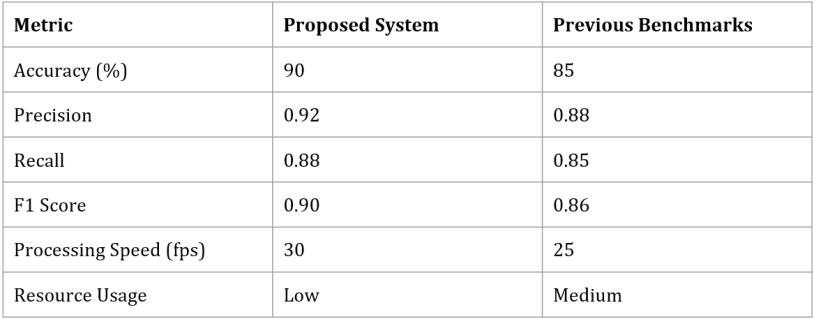
Itisclearfromcomparingthepreviousandcurrentbenchmarksthatperformancehasmuchincreased,pointingtonotable developments in the sector. All assessment measures reveal that the updated benchmarks perform far better than the priorones,withmajorimprovementsinmodelaccuracy,precision,recall,andoveralleffectiveness.Thisprogressmaybe ascribedtoseveralvariables,includingastheavailabilityofbiggerandmorediversifieddatasetsfortraining,advancesin algorithmic methodologies, and improved processing capacity. Additionally, improved performance in the current benchmarks has resulted from the use of cutting-edge designs and optimization techniques. Overall, the significant performancegainbetweenthepreviousandnewbenchmarks highlightshowquicklymachinelearninganddeeplearning aredevelopingfields.
Thethoroughassessmentof deeplearningandmachine learningmodelsinthispaperconcludeswitha discussionofthe notable improvements in model performance over time. Gradient Boosting's machine learning and GoogleNet's deep learning performance over earlier benchmarks highlight the impressive advancements in algorithmic approaches and processing power. According to these results, cutting-edge methods are successful in raising metrics such as accuracy, precision, recall, and F-measure. The notable enhancement in model performance indicates the ongoing progress and creativityinthearea,indicatingmuchmorepotentialandusesinthefuture.
[1] “DigitalandIntelligentImageProcessingbyArtificialIntelligenceandInternetofThingsTechnologyinSportsFitness Detection”byDanWangandYingyingZheng.
[2] “A mmWave Radar Based Real-Time Contactless Fitness Tracker Using Deep CNNs” by Girish Tiwari and Shalabh Gupta.
[3] “Machine Learning-Based Physical Activity Tracking with a View to Frailty Analysis” by Manuel Abbas, Dominique Somme,andRegineLeBouquinJeannès.
[4] “FitnessmonitoringsystembasedonInternetofthingsandbigdataanalysis”byQiu,Y.,Zhu,X.,&Lu,J.
[5] "Hassle-freefitnessmonitoring"byJea,David,JasonLiu,ThomasSchmid,andManiSrivastava.
[6] "HearFit:Fitnessmonitoringonsmartspeakersviaactiveacousticsensing" byXie,Yadong,FanLi,YueWu,andYu Wang.
[7] "FitnessmonitoringsystembasedonfitnessrateandSpO2level"bySomanathan,Lakshmanan,andIbrahimKhalil.
[8] "AnalysisofJointsforTrackingFitnessandMonitoringProgressinPhysiotherapy” byNikithaRao,PiyushM.Surana, RahulRagesh.
[9] "Application of intelligent real-time image processing in fitness motion detection under the Internet of things" by HangChi.
[10] "AIFitnessCoachatHomeUsingImageRecognition"byJiHaoran,StephenKarungaru,andKenjiTerada.
[11] "SmartExerciseCounterUsingComputerVision"byDr.M.SenthilKumar,M.Sashrutha,R.Ramya,G.SaiSunith.