
International Research Journal of Engineering and Technology (IRJET) e-ISSN: 2395-0056
Volume: 11 Issue: 03 | Mar 2024 www.irjet.net p-ISSN: 2395-0072
International Research Journal of Engineering and Technology (IRJET) e-ISSN: 2395-0056
Volume: 11 Issue: 03 | Mar 2024 www.irjet.net p-ISSN: 2395-0072
Laraib Ahmad1, Mr. Ushendra Kumar2
1Master of Technology, Civil Engineering, Lucknow Institute of Technology, Lucknow, India
2Head of Department, Department of Civil Engineering, Lucknow Institute of Technology, Lucknow, India
Abstract - Long-spanbridgesrepresentvitalcomponentsof infrastructure, encountering diverse environmental and operational exigencies over their operational lifespan. This scholarly review scrutinizes the efficacy of Fiber Reinforced Polymer (FRP) jacketing as a means to augment the performance of long-span bridges when subjected to lateral loads.Synthesizingextantliterature,thereviewevaluatesthe structuralbehavior,performanceenhancement,andlongevity of long-span bridges retrofitted with FRP jackets. The examination delineates the fundamental mechanisms underlying FRP jacketing, elucidating its capacity to bolster theflexuralstrength,stiffness,andductilityofbridgeelements. Moreover, the discussion encompasses the impact of lateral loads, such as wind, seismic events, and vibrations induced by traffic, on the behavior of long-span bridges reinforced with FRP jackets. Emphasis is placed on the importance of meticulous design, material selection, and construction methodologies to ensure the efficacy and enduring resilience of FRP retrofitting solutions. Case studies spanning diverse geographic regions and bridge typologies are analyzed to underscorethepracticalapplicationandperformanceofFRP jacketing under lateral loading conditions. The review also confronts challenges and constraints associated with FRP retrofitting, including issues of adhesion, environmental degradation, and the imperative for sustained maintenance. Throughitscomprehensiveexamination,thisreviewfurnishes valuable insights into the optimization of long-span bridge performance via FRP jacketing under lateral loading circumstances, thereby providing guidance for researchers, engineers, and practitioners engaged in bridge retrofitting and maintenance endeavors.
Key Words: Long span bridges, Fiber Reinforced Polymer (FRP) jacketing, Lateral loading, Structural retrofitting, Performanceenhancement,Flexuralcapacity.
Thehistoryofreinforcedconcretebridgesisatestamentto humaningenuityandengineeringprowess,spanningover twocenturiesofinnovationandadvancement.Itallbeganin the late 18th century when the concept of reinforcing concrete with materials like iron was first proposed. However, it wasn't until the mid-19th century that significantprogresswasmade,withpioneerslikeFrançois Coignet and Joseph Monier laying the groundwork for modernreinforcedconcreteconstruction.Thelate19thand
early20thcenturieswitnessedtheemergenceofreinforced concretebridges,withnotableexamplessuchastheAlvord LakeBridgeinSanFranciscoandtheThaddeusKosciusko BridgeinPoland.Throughoutthe20thcentury,reinforced concrete bridge design continued to evolve, driven by advancements in materials science and engineering principles. Innovations like pre-stressed concrete further enhanced the strength and durability of these structures. Today, reinforced concrete bridges are ubiquitous worldwide,symbolizingthetriumphofhumancreativityand engineeringovernaturalobstacles.Aswelooktothefuture, ongoing innovations in materials and construction techniques promise to further improve the sustainability, resilience, and efficiency of these essential components of transportationinfrastructure.
Reinforced concrete bridges are vital components of transportationinfrastructure,renownedfortheirdurability, strength, and versatility. Combining the compressive strength of concrete with the tensile strength of steel reinforcement, these bridges offer remarkable structural integrity, making them suitable for spanning various distancesandsupportingheavyloads.Theconstructionofa reinforced concrete bridge involves meticulous planning, engineering expertise, and adherence to stringent safety standards.Initially,engineersconductthoroughsitesurveys andanalysistodetermine theoptimal design,considering factorssuchastrafficvolume,environmentalconditions,and geological features. Once the design phase is complete, constructionbeginswiththecreationofasturdyfoundation, typicallyusingdeepconcretefootingsorpilingstosupport thebridge'sweightandwithstandexternalforceslikewind and water currents. Next, workers assemble formwork, which serves as a mold for pouring the concrete. Reinforcementbars,usuallymadeofsteel,arestrategically placedwithintheformworktoprovidetensilestrengthand preventcrackingunderstress.
The concrete mixture, composed of cement, aggregates, water,andsometimesadditivesforenhancedperformance, ispouredintotheformworkandallowedtocure.Duringthe curing process, the concrete gradually hardens and gains strength, ultimately forming a solid structure capable of withstanding significant loads. As the concrete cures, engineers closely monitor the construction progress,
International Research Journal of Engineering and Technology (IRJET) e-ISSN: 2395-0056
Volume: 11 Issue: 03 | Mar 2024 www.irjet.net p-ISSN: 2395-0072
ensuring adherence to design specifications and quality standards. Advanced techniques such as post-tensioning maybeemployedtofurtherenhancethebridge'sstrength and resilience, particularly for longer spans or high-load conditions. Upon completion of the primary structure, finishing touches such as surface coatings, railings, and pavementareaddedtoenhancedurability,aesthetics,and safety.Regularinspectionsandmaintenanceareessentialto ensure the long-term integrity and functionality of the bridge, as exposure to environmental factors and heavy usage can lead to wear and deterioration over time. Reinforcedconcretebridgesofferseveraladvantagesover alternative materials and construction methods. Their versatility allows for a wide range of design options, accommodatingvariousarchitecturalstylesandfunctional requirements.Additionally,theyexhibitexcellentresistance tocorrosion,fire,andseismicactivity,makingthemsuitable for diverse geographic locations and environmental conditions.Reinforcedconcretebridgesrepresentapinnacle ofengineeringingenuityandconstructionexpertise,serving as critical components of transportation networks worldwide. With their inherent strength, durability, and adaptability,thesebridgesplayapivotalroleinfacilitating safe and efficient movement of people and goods, contributingtoeconomicgrowthandsocietaldevelopment.

The first reinforced concrete bridge in the world is often attributed to the Alvord Lake Bridge in San Francisco, California.Completedin1889,thisbridgewasdesignedby Ernest L. Ransome, an engineer known for his pioneering workinreinforcedconcreteconstruction.TheAlvordLake Bridge featured reinforced concrete arches, marking a significantmilestoneinthehistoryofbridgeengineering.Its successful completion demonstrated the feasibility and potentialofreinforcedconcreteasaconstructionmaterial for bridges, paving the way for further innovations in the field.

Bridges serve as indispensable lifelines, bridging the gap overnaturalandman-madeobstaclestofacilitateseamless transportationandconnectivity.Theirprimarypurposelies inprovidingsafeandefficientpassageforvariousmodesof travel,whetheritbevehicles,pedestrians,cyclists,ortrains, over rivers, valleys, roads, and railways. Beyond mere physical connectivity, bridges knit together communities, regions, and nations, fostering economic development, cultural exchange, and social cohesion. They are essential arteries of infrastructure, granting access to vital services and resources such as hospitals, schools, businesses, and emergencyservices.Economically,bridgescatalyzegrowth by unlocking new markets, attracting tourism, and supportingindustries.Furthermore,theyplayapivotalrole in enhancing safety and accessibility, ensuring equal opportunities for all individuals, including those with disabilities.Inessence,bridgesarenotmerelystructuresof concrete and steel; they are conduits of progress, linking societies and enabling advancement across every facet of humanendeavor.
Jacketing of bridges is a strategic approach employed to fortifyexistingbridgestructures,particularlywhensignsof deteriorationortheneedforincreasedload-bearingcapacity arise.Thistechniqueentailsaddingsupplementarylayersof materialstothebridge'sframework,typicallyalongitssides orbeneaththedeck.Theadditionallayerservestobolster the structural integrity of the bridge, redistributing loads moreefficientlyandstavingofffurtherdegradation.Various materialslikesteelplates,carbonfiberreinforcedpolymers (CFRP),fiber-reinforcedpolymers(FRP),andconcreteare commonlyusedforjacketing,withtheselectiondependent on factors such as the bridge's design, reinforcement requirements, and environmental conditions. The process involvesmeticulousassessment,analysis,andengineeringto determine the most suitable jacketing solution tailored to
International Research Journal of Engineering and Technology (IRJET) e-ISSN: 2395-0056
Volume: 11 Issue: 03 | Mar 2024 www.irjet.net p-ISSN: 2395-0072
the specific needs and condition of the bridge. Ultimately, jacketingextendsthelifespanofbridges,ensurescompliance withcontemporarydesignstandards,andmitigatesissues likecorrosionandincreasedtrafficloads,thusfacilitatingthe safeandsustainableoperationofvitalinfrastructure.
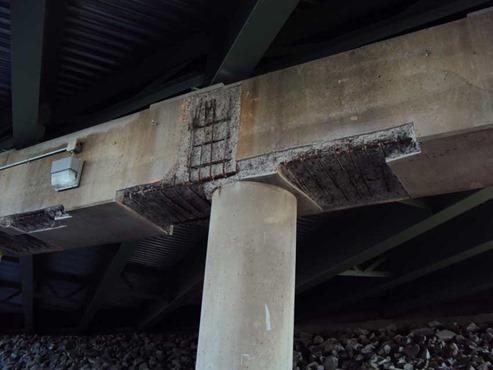
FiberReinforcedPolymer(FRP)compositeshaveemerged as a transformative material in modern construction practices.Offeringaremarkableblendofstrength,durability, andversatility,FRPfindsapplicationsacrossaspectrumof structural and architectural elements. In structural componentslike beams, columns,and bridge decks,FRP's high strength-to-weight ratio and corrosion resistance outperformtraditionalmaterials,leadingtomoreresilient andlonger-lastingstructures.Moreover,FRPreinforcements for concrete, including rebars and grids, provide superior corrosion resistance, reducing maintenance costs and extendingthelifespanofconcretestructuressuchasslabs andfoundations.Beyondconventionalconstruction,FRP's lightweightpropertiesanddesignflexibilitymakeitidealfor architectural elements like panels, cladding, and façade systems,enablinginnovativeandvisuallystrikingbuilding designswhilemaintainingstructuralintegrity.Additionally, FRP's role extends to infrastructure repair and rehabilitation, offering cost-effective solutions for strengtheningdeteriorated structuresandextendingtheir service life. From bridges to pipelines, FRP's impact on construction is undeniable, driving advancements in sustainability,resilience,anddesigninnovation.
In the literature review section, we have studied the previousresearchwork basedonthestrengtheningofthe bridge.Thesummaryofthepreviousresearchworkisgiven belowinthedetails:
Gauvreau (1996): Thisarticlediscussestheimportanceof moment-curvaturerelationshipsandthelengthofhingesin staticpushoveranalysis.Itoutlineshowmaterialproperties and structural specifics influence moment-curvature behavior and hinge length, using examples from three bridges in the Vancouver area for illustration. Simplified models for moment-curvature diagrams and hinge length canassistengineersinevaluatingtheseismicperformanceof existing bridges. However, it is crucial to ensure that the assumptionsmadeinthesesimplificationsaccuratelyreflect theconditionsofthestructurebeinganalyzed.Whilemore comprehensivemodels,basedonengineeringprinciplesand a realistic understanding of material property variations, may require more effort to apply, they offer greater confidenceintheirapplicabilitytodiversesituations.
Michael, Constantine (2000): Thefirstapproachinvolves iterativelineardynamicresponseanalyses,whilethesecond employs non-linear static analysis. These procedures are relatively straightforward and practical for bridge design. However,asignificantchallengeintheirapplicationliesin determininganappropriatevalueforthesoilshearmodulus, G0. Obtaining the soil shear modulus through in-situ measurementsatvariousbridgesiteswouldgreatlyenhance thereliabilityoftheseprocedures.Incorporatingabutment stiffness into the design and retrofit analysis of highway bridgesresultsinamoreaccurateestimationoftheoverall seismic load level and distribution among bents and abutments. Additionally, it improves the accuracy of displacement estimations. Parametric studies reveal that utilizingtheproposedmethodology,whichconsidersbackfill stiffnessreduction,ratherthanasimplifiedprocedure,leads tocalculatedforcesandmomentsatthepiersthatarehigher by25%to60%,anddisplacementsthatarehigherby25% to75%,contingentuponsoilproperties.
Memari et.al (2010): Concrete pedestals have been installed in front of the bearing supports to prevent the displacement of the bearings from their supports. Conversely,thereexistsagapof229mmbetweentheendof thegirdersandthebackoftheabutments.Thisindicatesthat if the superstructure as a whole moves longitudinally towardsoneabutment,itcanonlymoveamaximumof229 mm,ensuringthatadequatebearingseatingremainsatthe opposite end and alleviating concerns regarding bearing displacement.Inscenarioswherelongitudinaldisplacements exceed229mmaccordingtoanalysis,thephysicalcondition of the abutments serves as a safeguard against excessive longitudinalmovements.In-spanhingesareequippedwith auxiliarygirders,termed"catchers,"affixedtotheunderside ofthegirderstopreventanypotentialdislodgement.Thus, giventheseismicactivitylevelsinthePAregion,thecollapse of this superstructure due to bearing support issues is deemedunlikely.Thesolerecommendationpertainstothe addition of restrainers (e.g., [30]) that would connect the ends of the girders to the abutments if the later-added
International Research Journal of Engineering and Technology (IRJET) e-ISSN: 2395-0056
Volume: 11 Issue: 03 | Mar 2024 www.irjet.net p-ISSN: 2395-0072
pedestalslacksufficientanchoragetotheabutment,thereby providinganadditionalsafetymeasure.
Bhruguli, Shah (2012): Thebasesheartendstobehigher for important bridges compared to ordinary bridges. In Zone-V,themomentatthebaseofthepierreachesitspeak. Analysis indicates that for both ordinary and important bridges, the disparity in moment between linear and nonlinearanalysesrangesfrom49.0%to51.0%.However, nonlinearanalysisexhibitsawidervariation,withmoment discrepanciesrangingfrom38%to75%.Momentsforsoft soilconditionssurpassthoseforrockysoil.Inlinearanalysis, the moment difference between soil types 1 and 2 is approximately49%,whileforsoiltype3,itrangesfrom50% to 55%. In nonlinear analysis, the moment disparities are evenmorepronounced,withsoiltype1exhibitingvariations from38%to67%,soiltype2rangingfrom41%to69%,and soiltype3differingfrom42%to75%.
Denis (2014):A comparison was conducted between variousstructuralanalysismethodologiesforseismicdesign andassessmentofbridges,asoutlinedinEurocode8-2and specializedliterature.Thiscomparisonwascarriedoutusing atheoreticalcase-studybridgedesignedforductilebehavior, followingbothEurocode8-2andtheformerFrenchseismic regulations known as “AFPS92”. The findings revealed a reasonablycloseconvergence,withdifferencesfallingwithin amarginofapproximately25%precisionacrossthevarious approaches.Thislevelofconvergenceisdeemedacceptable considering the inherent complexity of the theoretical phenomenagoverningthenon-lineardynamicresponseof structures. The study highlighted that the former French AFPS92 seismic regulations exhibited excessive conservatism due to erroneous assumptions regarding effectivesectionstiffness.Amongthemethodologiestested, theperformancepointpushoveranalysisapproachemerged as particularly suitable for assessing and illustrating the seismicresponseofthestructure.Basedonthesefindings, proposalsformodificationstoEurocode8-2weresuggested, aimedatenhancingtheclarityandconsistencyofeffective cracked stiffness considerations throughout the code. Additionally,analternativepushoveranalysismethodwas proposedforinclusionininformativeannexHofthecode. However,itis noted thatfurthertestingandinvestigation are necessary to extrapolate these conclusions to other bridgetypesorconfigurations,includingthosewithirregular geometries, different types of bearings, or significant soilstructureinteractioneffects.
Vaibhav, Pranesh (2015): Theseismicbehaviorofbridges is significantly influenced by their skew angles. Increased skewnesscannotablyelevatedeckaccelerationandbearing reactions.Thisskewnesscausesthebridgetorespondnot only in the direction of the applied force but also perpendiculartoit,primarilyduetoa couplingeffectthat inducesrotationandconsequentskewangleaugmentation. Moreover, it becomes evident that as the skew angle increases, the impact of torsion cannot be disregarded
alongsideotherinternalforces.Observationsindicatethatas theskewanglerises,theaxialforcesintheexteriorgirders experienceamorepronouncedincreasecomparedtothose in the interior girders. Consequently, exterior girders are rendered more vulnerable to seismic forces than their interiorcounterpartsathigherskewangles.
Aniket, Vishal (2017): Thesectionalpropertiesofcolumns varydependingonthesoilconditionsina30mspanmodel, while no alterations occur in a 20m span model of a footbridgeacrossdifferentearthquakezones.Columnsthat meet the requirements for Earthquake Zones II and III exhibitfailureinEarthquakeZonesIVandV.Additionally, there is an increase in support reactions with changes in earthquakezonesandsoilconditions.
Firoz , Baig (2018): Basedontheaforementionedfindings, the acceleration, displacement, velocity, and base shear values over time in the x-direction exceed those in the ydirection. The acceleration response of the bridge deck is contingent upon both the bridge's characteristics and the appliedgroundmotion.Theresultsdemonstratefavorable correspondence between the seismic response of the superstructureandrecordedgroundmotiondata,evidenced by consistent acceleration, base shear, velocity, and displacementvaluesinbothdirections.Thisunderscoresthe pivotalroleofbaseshearingoverningtheseismicresponse of the bridge deck, serving as a crucial factor in resisting lateralloads.
Yuling (2018): Modifyingthesuperstructuremassby30% resultsinapproximatelya10%changeindeckdisplacement underseismicexcitationfivetimesgreaterthanthedesign earthquake, yet it has no impact on column curvature ductility. Altering the concrete compressive strength does not influence deck displacement or column curvature ductilitywithfixedbearings.Similarly,adjustingtheplastic hinge length does not affect deck displacement but does affect column curvature ductility; specifically, a greater plastichingelengthresultsinreducedcurvatureductility. Furthermore, increasing the plastic hinge length by 50% leadstoaroughly10%decreaseinductility.
Waseem, Saleem (2019): displacement,velocity,andbaseshearovertime,thevalues inthex-directionsurpassthoseinbothdirections,whilethe basemomentovertimeinthey-directionexceedsthevalues intheothertwodirections.Theaccelerationresponseofthe bridge deck is contingent upon the characteristics of the bridgeandtheappliedgroundmotion.
Husain, Heba (2020): Utilizingbridgebearingswithalow shearmodulusenablesthedissipationofseismicenergyand functions as a vibration isolator between the bridge piers and the superstructure. However, increasing the shear modulus significantly aligns the resonance wave and amplitude of both the bridge substructure and superstructure, thereby amplifying the base shear on the
International Research Journal of Engineering and Technology (IRJET) e-ISSN: 2395-0056
Volume: 11 Issue: 03 | Mar 2024 www.irjet.net p-ISSN: 2395-0072
piersandinducingcracksnearthe base.Nonetheless, this increasereducesthemaximumdisplacementamplitudeof the bridge substructure during time history analysis. Monolithic bridge models exhibit lower displacement amplitudes compared to continuous and simple bearing bridge models but tend to develop more excessive cracks thanthelatter.It'snoteworthythatextremeseismicground motionshaveminimalimpactonreinforcedconcretebridge structuresconstructedinaccordancewiththeEgyptiancode of practice. Efficient modeling and analysis of reinforced concretebridgestructurescanbeachievedusingEquivalent LinearizationScheme(ELS)viaAnalyticalElementMethod (AEM).
Nikith et.al(2020): Circularpierbridges,whetherintegral ornon-integral,exhibitgreaterflexibilitycomparedtowall pier bridges, both integral and non-integral. Wall piers generallyexperiencehigherbaseshearacrossallsoiltypes. T-beam bridges with wall piers are capable of bearing heavier loads but tend to fail abruptly, without prior warning. Conversely, T-beam bridges with circular piers carry less base shear and display various failure patterns before collapsing, providing an indication of impending failure.Inregionswheretheabilitytowithstandbaseshear is paramount and seismic activity is minimal, wall pier bridges may be preferred. However, in earthquake-prone areas,circularpiersarerecommendedduetotheirabilityto providewarningsignsbeforefailureoccurs.
Ahmad, Mishra (2020): Seismic investigation serves to elucidate the behavior of structures subjected to tremors. Thisstudyfocusesontheseismicresponseofareinforced concrete(RC)bridgeequippedwithtwotypesofbearings, incorporating viscous dampers throughout the structure. The inclusion of viscous dampers results in a significant reduction in displacement response when the bridge is subjectedtogroundacceleration,withpotentialreductions of up to 47% achievable through the implementation of a comprehensivedampingsystem.Timehistoryandpushover analysesareconductedusingOpenSeesforacompositerigid framebridge.Additionally,abidirectionalpushoveranalysis prediction approach for target displacement response is proposed.Theinfluenceofhighvibrationmodesshouldbe considered,particularlyfor compositerigidframebridges withlargespansandhighpiers.Thenovelpushoveranalysis technique, which combines target displacements of significant modes based on equivalent mass coefficients, enables the prediction of displacement response in both longitudinal and transverse directions for rigid frame bridges.
Venkata,Venkata (2022): Basedontheprecedingresults, theacceleration,displacement,andbaseshearvaluesover time in the x-direction exceed those in the y-direction. However, the base moment in the y-direction becomes greater than that in the x-direction over time. Upon evaluation, the structure's optimal demand-to-capacity
(D/C)ratioinbothorientationswasfoundtobe0.56,which fallswithintheacceptablethresholdof1.Theacceleration response of the bridge deck is contingent upon both the characteristicsofthebridgeandtheappliedgroundmotion.
Hemant, Gupta (2023): The research indicates that the skew angle plays a crucial role in the uplift, deflection, seismic response, anddynamicbehavior of bridges.Finite element analysis has proven invaluable in simulating and forecasting the behavior of skewed bridges. The results indicate that uplift at acute corners tends to rise with an increaseinskewangle,whilemaximumdeflectiondecreases and load-bearing capacity increases. Additionally, seismic responsesinskewedbridgesmarkedlydifferfromthosein non-skewedbridges,contingentuponbothgroundmotion characteristicsandskewangles.
Inconclusion,thereviewpaperonthestrengtheningoflongspan bridges using the jacketing method provides a comprehensive analysis of this innovative approach to enhancing bridge performance and longevity. Through an examination of various case studies, methodologies, and materials employed in jacketing applications, the paper highlights the efficacy and versatility of this technique in addressing structural deficiencies and increasing load capacity. Additionally, the review underscores the importance of careful design considerations, material selection,andconstructiontechniquestoensurethesuccess of jacketing interventions. Overall, the paper contributes valuableinsightsintothestate-of-the-artpracticesinbridge strengthening, offering guidance for engineers and researchersstrivingtooptimizetheresilienceandsafetyof long-span bridge infrastructure in the face of evolving demandsandchallenges.
1. P.Gauvreau'“SeismicAnalysisofConcreteBridgePiers: Practical Considerations ” 1996, 7th Canadian Conference on Earthquake Engineering / Montreal / 1995 7i6me Conf6rence canadienne sur le g6nie paraseismique/Montreal/1995.
2. K.L. Fishman and R. Richards “Seismic Analysis and Design of Bridge Abutments Considering Sliding and Rotation”1997,StateUniversityofNewYorkatBuffalo Department of Civil Engineering Ketter Hall Buffalo, NewYork14260.
3. Michael J Karantzikis1 And Constantine C SPYRAKOS “SeismicAnalysisOfBridgesIncludingSoil-Abutment Interaction”2000,WCEE.
4. EikiYamaguchi1,AtsumiRyuen2,KeitaYamada2,Ryo Okamoto2 “Dynamic Response Analysis Of Bridge UnderSeismicLoadingIncludingCollision”2005,Dept.
International Research Journal of Engineering and Technology (IRJET) e-ISSN: 2395-0056
Volume: 11 Issue: 03 | Mar 2024 www.irjet.net p-ISSN: 2395-0072
of Civil Engineering, Kyushu Institute of Technology, Kitakyushu.
5. AliM.Memari1,*,HarryG.Harris2,AhmadA.Hamid2 and Andrew Scanlon3 “Seismic Evaluation of an Elevated Highway Bridge in a Low Seismic Region” 2010, TheOpenCivilEngineeringJournal,2010,4,7287.
6. Bhruguli Gandhi1 , Dr.B.J.Shah2 “Performance Based SeismicDesignofReinforcedConcreteBridges”2012, International Journal of Engineering Research & Technology(IJERT)ISSN:2278-0181Vol.1Issue5,July -2012.
7. DenisDAVI1 “SeismicAnalysisAndDesignOfBridges AccordingToEc8-2:ComparisonOfDifferentAnalysis Methods On A Theoretical ” 2014, Bridge Engineer, specialized in Earthquake Engineering questions, Cerema - Territorial Division for the Mediterranean Regions.
8. VaibhavKothari1,PraneshMurnal2“SeismicAnalysis ofSkewBridges”2015,JournalofCivilEngineeringand Environmental Technology Print ISSN: 2349-8404; OnlineISSN:2349-879X;Volume2,Number10;AprilJune,2015pp.71-76.
9. Krishnendu Panikkavettil R, Gokul Raveendran K “SeismicAnalysisofIntegralBridgesResearch”2017, International Journal of Scientific & Engineering ResearchVolume8,Issue11,November-201735ISSN 2229-5518.
10. Mr.Aniket Rewatkar, 2Mr.Vishal Gajghate “SEISMIC ANALYSISOFFOOTOVERBRIDGE”2017,International Research Journal of Engineering and Technology (IRJET)e-ISSN:2395-0056Volume:04Issue:04|Apr2017www.irjet.netp-ISSN:2395-0072
11. FirozAhmad,M.A.Baig“Seismicanalysisofboxgirder bridge” 2018, International Journal of Advance Research,IdeasandInnovationsinTechnology.
12. YULING GAO & LAN LIN “Effects Of Modelling ParametersOnTheSeismicAnalysisOfBridges”2018, J.Comp.Meth.andExp.Meas.,Vol.6,No.5(2018)868–879
13. Mohd Waseem1 , Mohammad Saleem2 “Seismic Analysis of Box Girder Bridge using CSiBridge Software”2019,InternationalJournalofManagement, IT&EngineeringVol.9Issue5,May2019,ISSN:22490558ImpactFactor:7.119.
14. M.M.HusainandHebaA.Mohamed“SeismicAnalysis Of Bridge Bearings Using Different Shear Modulus” 2020, International Journal of Civil Engineering and
Technology(IJCIET)Volume11,Issue5,May2020,pp. 181-191,ArticleID:IJCIET_11_05_017.
15. ANikith1,NamithaBV2,SantoshKumarAS3,Prof. Manu Vijay4 “Seismic Performance of Bridges” 2020, Volume7,Issue3,July2020, InternationalJournalof AdvancedResearchinScience&Technology(IJARST).
16. JavidAhmadBhat1,N.BMishra2“SeismicAnalysisof Bridge” 2020, International Journal Of Engineering Research And Development e- ISSN: 2278-067X, pISSN: 2278-800X, www.ijerd.com Volume 16, Issue 9 (September2020),PP.37-43.
17. Shilpa S1, Thejashwini P T2, Shruthi N P3 “Seismic Analysis of Integral Bridges ” 2021, International Research Journal of Engineering and Technology (IRJET)e-ISSN:2395-0056p-ISSN:2395-0072.
18. B Venkata Sai Tharun Teja1 , Dr. E. Arunakanthi2 “SeismicAnalysisOfBridgeStructureUsingCsiBridge Software ” 2022, JOURNAL OF NORTHEASTERN UNIVERSITY Volume 25 Issue 04, 2022 ISSN: 10053026https://dbdxxb.cn/
19. Hemant Rawat1 and Dr. S.M. Gupta 2 “A Critical Analysis of Seismic Performance of RCC Skewed Bridges” 2023, Journal of Civil Engineering and EnvironmentalTechnologyp-ISSN:2349-8404;e-ISSN: 2349-879X;Volume10,Issue2;April-June,2023,pp. 77-80KrishiSanskritiPublications
2024, IRJET | Impact Factor value: 8.226 | ISO 9001:2008