
International Research Journal of Engineering and Technology (IRJET) e-ISSN: 2395-0056 p-ISSN:2395-0072

Volume: 11 Issue: 03 | Mar 2024 www.irjet.net


International Research Journal of Engineering and Technology (IRJET) e-ISSN: 2395-0056 p-ISSN:2395-0072
Volume: 11 Issue: 03 | Mar 2024 www.irjet.net
M. Chaitanya Reddy1 , Y. Subramanyam2 , K. Nadhamuni3 , P. Kushal Kumar 4 , T. Ravi Kumar5 ,
D. Sreenivasulu6
Assistant Professor, Department of Mechanical Engineering, Annamacharya Institute of Technology and Sciences (Autonomous), Tirupati.
2,3,4,5,6 Students, Department of Mechanical Engineering, Annamacharya Institute of Technology and Sciences (Autonomous),Tirupati.
Abstract- The project represents an innovative approach to enhancing energy efficiency in vehicles. Through enormous amount of heat energy is unwantedly disappear in to atmosphere at the time of brakes are applied while vehicle is in running, it will be useful if we store this energy somehow which is otherwise getting wasted out and reuse it while we started to accelerate. In this perspective, here we propose a regenerative braking system with power a monitor. This system allows a vehicle to generate energy each time brakes are applied as well as track the amount of power generated. When brakes are applied strongly more heat energy will be generated. Also, a circuitry is used to track the generated voltage every time while applying force on the brake pedal.
This methodis based onthe principle of converting the kinetic energy created by mechanical energy of the motor into electrical energy and the converted electrical energy is stored in battery for later use. This system furnishes benefits across fuel saving. In consequence this system allows for charging of vehicle battery each time brakes are applied, thus providing a regenerative braking system. It moves us another step ahead towards a pollution free transportation system.
KeyWords:Regenerative braking, Brakes,Kinetic energy, Motor, Generator, Power monitor.
Inthepursuitofescalatingenvironmentalconcerns and the imperative to reduce carbon emissions, the automotive industry is witnessing a paradigm shift towards sustainable and energy-efficient technologies. One such innovation that has garnered significant attention is the Regenerative Braking System (RBS), a groundbreaking approach to harnessing and optimizing energy within vehicularsystems.
Theresearcharticleisgoingtoenlightenonthedesignand fabricationof a regenerativebrakingsystem whichcomes underoneofthecoremechanismsinthedisciplineof

mechanicalengineering.RegenerativeBrakingisanenergy recoverymechanismthatslowsdownamovingvehicleor objectbyconvertingitskineticenergyorpotentialenergy intoanelectricalenergythatcanbeeitherusedimmediately orstoreduntilneeded.
The traditional friction-based braking systems employedinvehiclesdissipatekineticenergyintheformof heat, leading to significant energy wastage and reduced fuel efficiency. Regenerative braking, on the other hand, represents a pioneering solution to this challenge by capturing and converting the kinetic energy during decelerationintoelectricalenergy, whichcanbestoredor redirected for various applications within the vehicle's powertrain.
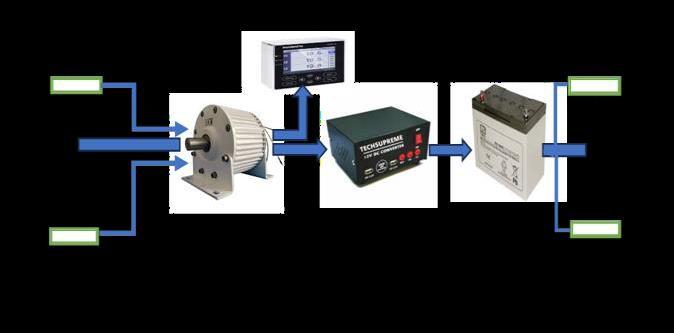
The integration of a power monitoring system with regenerativebrakingholdsimmensepromiseinproviding valuableinsightsintoenergyexhaustingpatterns,efficiency fluctuations,andsystemhealth.Bycloselymonitoringand analyzingthepowerflowduringbrakingevents,researchers andengineerscan refineregenerative brakingalgorithms, maximize energy recapture, and ensureseamlessintegration withthevehicle'spowergrid.
Inthefollowingsections ofthis paper, we will delveinto the technicalaspectsofregenerativebrakingsystems,explore thevarious methodologiesofpowermonitoring,andpresent

International Research Journal of Engineering and Technology (IRJET) e-ISSN: 2395-0056
Volume: 11 Issue: 03 | Mar 2024 www.irjet.net
empiricalevidencefromreal-worldapplications.Througha comprehensive analysis, this research aims to contribute valuable insights to the ongoing discourse surrounding sustainable transportation and the pivotal role of regenerative braking systems with advanced power monitoring inshaping thefutureof automotive engineering.
Theintegrationofregenerativebrakingsystemsinvehicles has gained significant attention due to their potential to improve energy efficiency and reduce environmentalimpact. Power monitoring is a crucial aspect of these systems, providing insights into their performance and optimizing energyrecovery.
AsperthestudiesofPavan KalyanPandranki(2023),The “regenerativebrakingsystem”hasbeenwidelyusedinrecent times in electric and hybrid vehicles. However, the proportionofconventionalfuel-basedvehiclesalloverthe worldissignificantlyhigh compared toEVs. It also enhances the lifespan of braking pads by reducing the frequency of frictionbetweenrotatorsandbrakepads.Accordingtothe consideration of Siva Maran Venkatesan (2022), Regenerative braking is a small, yet very important, step towardoureventualindependencefromfossilfuels.These kindsofbrakesallowbatteriestobeusedforlongerperiods without the need to be plugged into an external charger. Thesetypesofbrakesalsoextendthedrivingrangeof fully electric vehicles. All vehicles in motion can benefit from utilizing regeneration to recapture energy that would otherwise be lost. The studies of Yadav et al. (2022), concluded a “regenerative braking system” reduces fuel consumptionbyapproximately33%byconvertingkinetic energyintoelectricandmechanicalenergy.
BingYangCao(2021),mentionedthattheadvantagesof regenerative braking energy recovery are that it not only improves energy recovery efficiency, but also reduces mechanical wear and tear in mechanical and hydraulic braking, achieving more precise braking control. Yang Y (2020), designed a dual-motor regenerative braking force distributionstrategybased ontheoptimal braking energy recovery.Kulkarni(etal.2020),hasbeenrecognizedthatthe RBSincreasethedrivingrangeupto11-22%basedonthe RBS parameters and “drive cycle settings” such as energy consumption.ArunKumar(2020),revealsthatthissystem hadminimallossintransmissiontherebyleadingtobetter efficiency and better conversion ratio as compared to any otherearlierbrakingsystemusingmotor-generatorsetup.
AsperthestudiesofJagandeepKaur(2017),Theenergylost duringthebrakingisconservedbytheregenerativebraking system. These systems can work at the high-temperature
p-ISSN:2395-0072
ranges and are highly efficient when compared to the conventional brakes. Regenerative brakes are more effective athighermomentum.AsperthenarrationofPratikBhandari (2017), Bhandari concludes that, Regenerative braking is necessarily limited when the batteries are fully charged. Because the additional charge from regenerative braking wouldcausethevoltageofafullbatterytoriseaboveasafe level, our motor controller will limit regenerative braking torqueinthiscase.TribhuvanSinghandShahzadAli(2016), statedthatthelifeofprimarydynamoorthemaindynamo andfurtherourmodificationatthissmallscalecangiveusa maximumof9Vvoltagewhichcanchargealltheequipment’s. There are some more advantages too of using this modificationinregenerativebrakingsystem,afterusingthis modification fuel consumption of the vehicle can also be decreaseduptoacertainvaluewhichwillultimatelysavethe money.
Researchmethodologydefinestheapproachofconducting the entire research on the specific topic by collecting and analyzingadequaterelevantdatainthemostconvenientway withoutfacinganysignificanthazards.Thus,differenttools andmethodsrelatedtoconductingresearcharegougingto beevaluatedinthebelowsection:
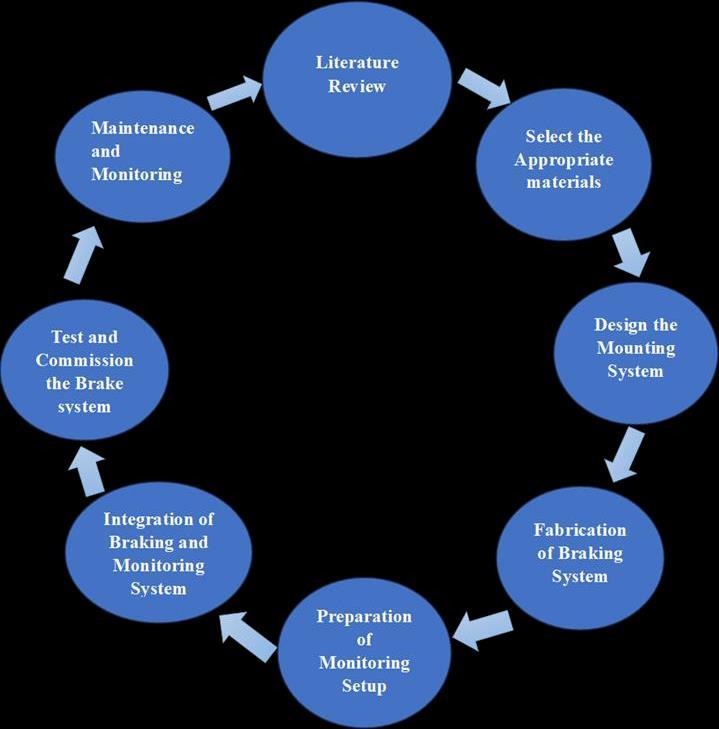
Fig2: MethodologyofRegenerativeBrakingSystem
3.1 Components Used in Carrying Out Performance Testing:
MSSquareTubeandBar(1inch).
Wheel.
International Research Journal of Engineering and Technology (IRJET) e-ISSN: 2395-0056 p-ISSN:2395-0072
Volume: 11 Issue: 03 | Mar 2024 www.irjet.net
100rpmmotor(2inquantity).
1000rpmStarterMotor.
Dynamo(BrakeGear).
Atmega328pArduino.
LCDdisplay.
Wires.
Adhesives.
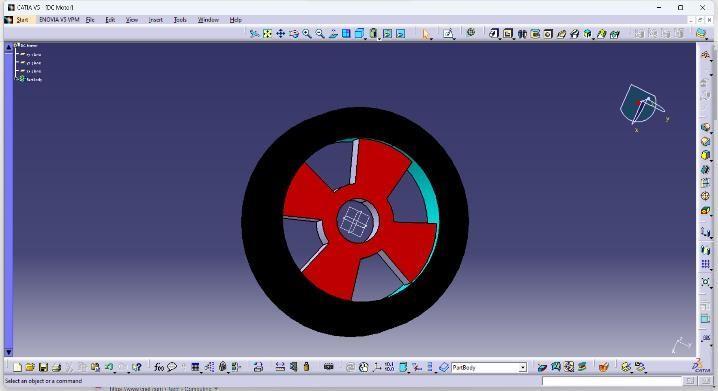
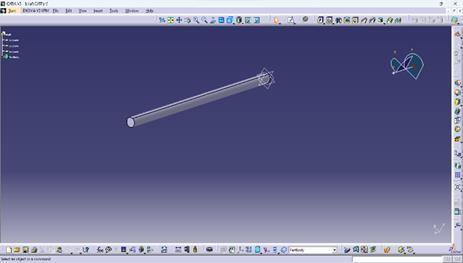
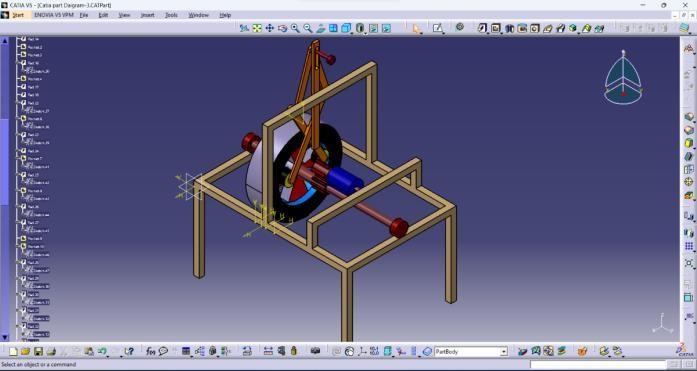
4.1 For setting up the Braking System:
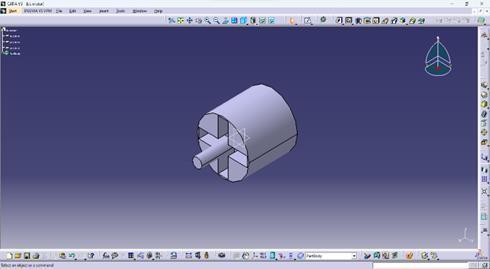
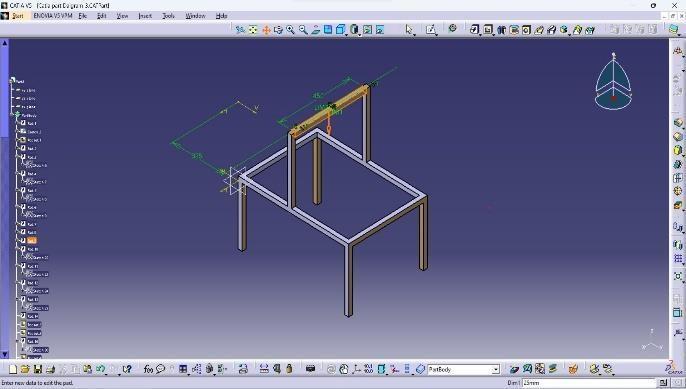
The procedure for setting up the “regenerative braking system”goesthroughthefollowingstepsmentionedinthe belowinasequentialorder.
1. InitiallymarktheMs.SquareTubetotherequired specifications. Place the Ms Square on the Table, then cut the material with accurate dimensions. After marking the material should be welded accordingtothejointsofthesupportingframe.
2. Takethewheelshaftandcouplethemusingsimple nutsandboltsandmountthiswheelontothestand. Use mechanical bushes as a medium between the wheel shaft and the rods to reduce the friction betweentheshaftandrodandtoensureasmooth rotationofthewheelathighspeeds.
3. Take Ms. Flat and mark it to the required dimensions.UsingaRadialdrillingmachinedrilla hole of specified Dia for cross link mechanism, whichisappliedasBrakes.
4. Make a slot vertically on Ms flat for providing up anddownmovementsofcrosslinkmechanismand attachthemotors(Dynamo).
International Research Journal of Engineering and Technology (IRJET) e-ISSN: 2395-0056 p-ISSN:2395-0072
Volume: 11 Issue: 03 | Mar 2024 www.irjet.net
5. Using a Lathe machine drill into the shaft with a drill of the same diameter as the motor and then couplethemotortotheshaft.
4.2 For setting up the Monitoring System:
1. Dynamo attached at the end of the cross link, whenever brakesareapplieddynamoattachment movestowardstheinnersurfaceofrotatingwheel.
2. AttachthewiresofthismotortotheArduinoscreen togetthegeneratedoutputenergy.
3. TheIRmodulewillcontinuouslymeasuretherpm andsend it to Arduino and in the same way, the voltagemodule will measure the voltage after the applicationofthebrakes.

4. ThecodingofArduinoisdoneinsuchaway,thatit will take the readings of voltage and rpm simultaneously.
5. LCDdisplayconnectedtoArduinotoshowthereal time information of power generation during brakesareapplied.
Theregenerativesystemrecoverssomeofthewasteenergy andputsittoworkagain.Thesystemcapturesandconverts this waste energy into electricity. The electricity thus regenerated; charges the battery of an electric or hybrid vehicle. In the regenerative braking system, the motor; whichdrivesanelectricvehicle,alsoperformsthefunction of braking. The system consists of an electric motor with dualfunction.Itworksasamotor,inonedirection,andasa generator,intheoppositedirection.Whenitrunsasamotor, it converts electrical energy into mechanical energy and drives the wheels. However, while braking; it runs in the opposite direction and becomes an electric generator. Applyingthebrakesofanelectricorhybridvehiclecauses theelectricmotortoruninreversedirectioni.e.ingenerator mode, thereby, slowing down the wheels (Kulkarni et al. 2020).
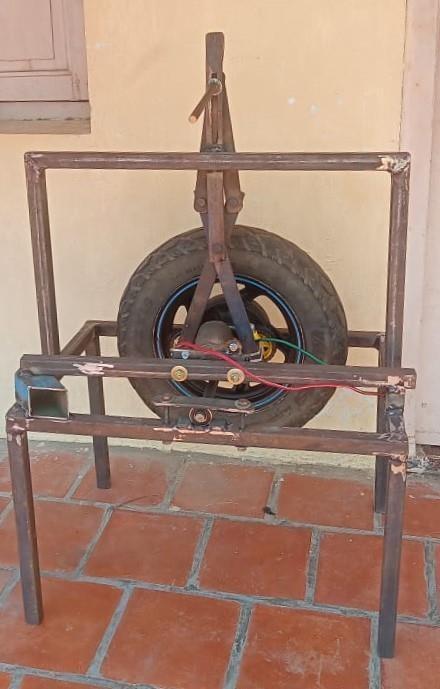
The Regenerative Braking System is developed as the supplementary and advanced braking system, which is mainlyusedalongwith“conventionalbrakingsystems” to enhance the efficiency of braking in stopping cars and restoringthekineticandconcerningbrakingenergyinthe formofelectricenergy.Regenerativebrakingrecapturesup to70%of thekineticenergythatwouldotherwisebelost duringbraking.
By conducting the performance test on the “Regenerative BrakingSystem”inventedthefollowingDataasresults.
SI.No Voltage(v) Speed (rpm) Timetakentofull stopfrom maximumspeed tozero(sec)
Table1: Results(VoltageandSpeed)
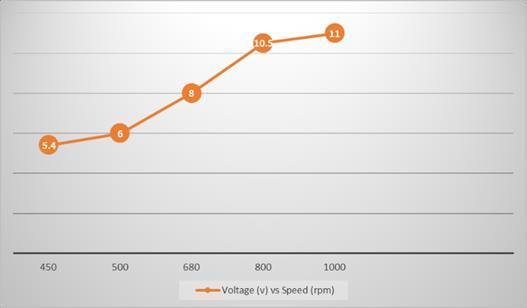
From Table 1, it can be observed that as the voltageincreasesthereisagradualincreasein speed(rpm)ofthewheel.
Chart 1 shows the variation between voltage and the rpm, which is depicted by an almost linearlyincreasinggraph.
From the above observations, it can be concludedthatthemaximumpowergenerated is11V,whichiscapableofglowing5LEDs.
AverageOutputvoltage(v)=8.18V
AverageSpeed(rpm)=686rpm
AverageTimetakentofullstopfrommaximum speedtozerois8.3sec.
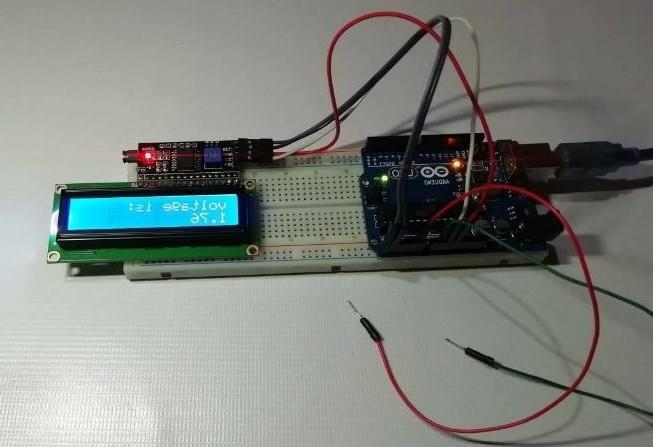
Fig 10 indicates actual model of power monitoring using Atmega328pArduino.ItshowsVoltageonLCDdisplay
Theintegrationofregenerativebrakingsystemswithpower monitoring not only promotes energy efficiency but also contributes to the development of more sustainable and environmentally friendly transportation solutions. As technologycontinuestoadvance,ongoingresearchand
innovation in this field will likely lead to further improvements, making regenerative braking an integral componentoffutureenergy-conscioussystems.
We conclude that as soon as brakes are applied, the LCD display shows the real time information about power generation, it allows drivers to customize their driving experience. This may include adjusting regenerative braking levels, setting preferences for energy recovery, and receiving feedback on driving habits. On the other hand, if we increase the rpm of the wheel, the voltage generatedisalsoincreased.Hence,wecanwiththebacking of scientific studies say that the voltage generated is directlyproportionaltoRpm.
The use of more efficient ceramic composite brake materialscouldleadtoeffectiveBrakingsystem,which stops the moving vehicle quickly. Future research and development on ceramic composite materials will likely lead to further improvements, making regenerative braking systemsa keycomponent of future mobilitysolutions. The useofIntegrated monitoring techniques to this system for providing real time feedback, it is superior to invent well organizedtechniques.
However, the extensive use of the RBS in high-speed vehicles, especially in petrol and diesel engine vehicles, is still a lack of conviction and hence, future research and furtherimprovementarerequired.
(1) PavanKalyanPandranki(2023).DesignAnalysisof RegenerativeBrakingSystem.InternationalJournal forMultidisciplinaryResearch(IJFMR),05(04).
(2) Siva Maran Venkatesan (2022). Regenerative braking power system. Manufacturing Technology Today,Vol.20(11-12).
(3) Hamada,A.T.andOrhan,M.F.,(2022).Anoverview ofregenerativebrakingsystems.JournalofEnergy Storage,52,p.105033.
(4) Yadav, D., Kumar, R., Kulshrestha, U., Jain, A. and Rani, S., 2022. Enhancement of fuel efficiency in heavy duty vehicles through integrated module of TEG, piezoelectric and regenerative braking solutions.MaterialsToday:Proceedings,63,pp.1-5.
(5) Sathishkumar,A.,Soundararajan,R.,Vel,T.M.,Arjith, M.B.S. and Sakthivel, G., 2022. Review on regenerativebrakingsystem.E-Mobility:ANewEra inAutomotiveTechnology,pp.149-163.
(6) Rohan S Kulkarni (2020). Design, Analysis & Performance Testing of Regenerative Braking
International Research Journal of Engineering and Technology (IRJET) e-ISSN: 2395-0056 p-ISSN:2395-0072
Volume: 11 Issue: 03 | Mar 2024 www.irjet.net
System. International Research Journal of EngineeringandTechnology(IRJET),07(08).
(7) Popiołek,K.,Detka,T.,Zebrowski,K.andMałek,K., 2019. Analysis of regenerative braking strategies. system,1,pp.4-84.
(8) Mathur,K.,Choudhary, L.K., Natu,A.M.,Srinivas,K. and Rastogi, V., 2019. Conceptualization and ModelingofaFlywheel-BasedRegenerativeBraking System for a Commercial Electric Bus. SAE International Journal of Commercial Vehicles, 12(0212-04-0018),pp.223-239.
(9) Nagaraja, M., and Bruno, D. (2018). Performance testing of a Regenerative braking system. International Journal of Engineering Research &Technology(IJERT),06(04).
(10) JagandeepKaur,ShrutiKarkra(2017).Regenerative Braking. International Journal on Recent and Innovation Trends in Computing and Communication(IJRITCC),05(5).
(11) LOI WEI CHEONG, “A development and use of a regenerative braking model for a parallel hybrid electricvehicle,”SAETechnicalPaperSeries,2013.
9. ACKNOWLEDGEMENT
Wewouldliketothankourguide,Mr.M.ChaitanyaReddy. AssistantProfessorDepartmentofMechanicalEngineering AITSTirupati,forhisvaluablesuggestions,constantsupport andencouragement.
BIOGRAPHIES


Chaitanya Reddy M, Assistant Professor Department of Mechanical Engineering, Annamacharya Institute ofTechnologyandSciencesTirupati.




Nadhamuni k, Final Year Student of Annamacharya Institute of Technology and Sciences, Tirupati pursuing a B. Tech Degree in MechanicalEngineering.
Kushal Kumar P, Final Year Student ofAnnamacharya Institute of Technology and Sciences, Tirupati pursuing a B. Tech Degree in MechanicalEngineering.
Ravi Kumar T, Final Year Studentof Annamacharya Institute of Technology and Sciences, Tirupati pursuing a B. Tech Degree in MechanicalEngineering.
Sreenivasulu D, Final Year Studentof Annamacharya Institute of Technology and Sciences, Tirupati pursuing a B. Tech Degree in MechanicalEngineering.
Subramanyam Y, Final Year Student ofAnnamacharya Institute of Technology and Sciences, Tirupati pursuing a B. Tech Degree in MechanicalEngineering.