
International Research Journal of Engineering and Technology (IRJET) e-ISSN: 2395-0056
Volume: 11 Issue: 03 | Mar 2024 www.irjet.net p-ISSN: 2395-0072
International Research Journal of Engineering and Technology (IRJET) e-ISSN: 2395-0056
Volume: 11 Issue: 03 | Mar 2024 www.irjet.net p-ISSN: 2395-0072
Digvijay Chavan1
1B.E., Department of Mechanical Engineering, AISSMSCOE, Pune, Maharashtra, India
Abstract - The objective of this paper is to design and develop a dedicated fixture for the drilling and boring operations on the small end of a connecting rod using a Special Purpose Machine (SPM). Initially, the features and functional requirements of the operations are studied upon, based on which a rough sketch of the fixture is made using Solid Edge. Limits, fits, and tolerances are provided for the fixturing components in between mating components wherever necessary. Since the two operations were to be performed on two different machines, various designs were consideredtoobtainanefficientfixturethatcouldperformall the operations in the least amount of time.
Key Words: SPM, Solid Edge, Connecting Rod, Drilling, Boring, Fixture
The fixture is a device utilized for locating, holding, and clamping the given component in its respective position duringmanufacturingprocesses.Additionally,itguidesthe toolwiththeassistanceofajigplateandbushes.Thevalue of fixture design and manufacturing typically constitutes approximately10-20%oftheoverallmanufacturingprocess cost. Various types of fixtures exist according to their applications,suchasmachiningfixtures,assemblyfixtures, and inspection fixtures. Machining fixtures are primarily classified into two types: dedicated fixtures and modular fixtures.Dedicatedfixturesareemployedinmassproduction scenarios where the setup remains constant throughout productionruns.Conversely,modularfixturesareutilizedin batch-type production as they can accommodate similar products within the batch, owing to their reconfigurable nature.Theuseofautomationinfixturedesignisreferredto as computer-aided fixture design, which significantly reducesthetimerequiredforfixturedesignbyeliminating the traditional trial-and-error method. Several software applications are employed for fixture design, facilitating moreefficientandpreciseoutcomes.Theprimaryobjective ofanyfixturedesignistomanufacturethegivencomponent withutmostaccuracy,therebyminimizingtheloadingand unloading time of the component. This reduction in time helps alleviate operator fatigue, subsequently enhancing productivity.Achievinginterchangeabilityofcomponentsis crucialinfixturedesignasitdirectlyimpactstheaccuracyof the manufactured components. Fixture design often necessitatesmulti-modalsolutionstomeetvariousfixturing requirements. By considering the generic fixturing
requirements, a fixture layout that fulfills all necessary aspectsisselectedastheoptimalfixturelayoutforagiven component. This ensures that the manufacturing process operatessmoothlyandeffectively,resultinginhigh-quality componentsproducedwithinthespecifiedtolerances.
The fixture comprises various components, including the locatingsystem,clampingsystem,andsupportingsystem,all carefully chosen to suit the specific requirements of the component being worked on. Locators are particularly critical as they ensure consistent positioning of the componentduringmounting.It'sessentialthatlocatorsare positionedforeaseofmounting,whiletheclampingsystem applies adequate force against them to secure the componentfirmlyinplace.Differenttypesoflocators,such as round and diamond pins, floating locating pins, bullet nose dowels, bullet nose pins, and cone locator pins, are employedbasedonspecificneeds.Diamondpinlocators,for instance, are valuable for compensating for gaps between locating surfaces. Clamping techniques, including strap clamps, hinged clamps, quick-action clamps, and poweroperated clamps, are chosen to ensure that the clamping forceisdirectedappropriatelyontotheworkpiece,holdingit securely.Ininstanceswheremultipleclampsarenecessary, theuseofpower-operatedclampingcanexpeditetheloading andunloadingprocess,reducingoperatorfatigue.
The process of fixture design typically involves four main stages: setup planning, fixture planning, unit design, and verification. During setup planning, the orientation of the componentisdetermined,takingintoaccountitsmachining features. Fixture planning involves defining the desired characteristicsandrequirementsofthefixtureanditslayout toensureeffectivefulfillmentofobjectives.Finally,fixture design verification evaluates the fixture against predetermined criteria to ensure it functions as intended. Any discrepancies or issues are addressed and resolved duringthisphaseto guaranteethefixture'sefficacyinthe manufacturingprocess.
Theobjectiveofthispaperare:
1. Todesign2fixtures,onededicatedfordrillingandone forboringoperation
International Research Journal of Engineering and Technology (IRJET) e-ISSN: 2395-0056
Volume: 11 Issue: 03 | Mar 2024 www.irjet.net p-ISSN: 2395-0072
2. Togiveamodularitysothatitisabletofit4different connecting rods and perform the operations on the smallend,eachhavingdifferentdiameters.
J. Strah and P. W. Zipse., Fixtures are essential tools in manufacturingprocesses,providingsupportandstabilityfor workpieces during various operations. They consist of elementslikelocatingsystemsandclampingmechanisms, chosenbasedonthespecificrequirementsofthecomponent beingworkedon.Locators,suchasroundanddiamondpins, ensure accurate positioning of the workpiece, while clamping systems apply the necessary force to hold it securely in place. The design and development of fixtures playa crucial rolein optimizingmanufacturing processes, with considerations for efficiency, accuracy, and operator ergonomics.
Machining Handbook, Drillingandboringoperationsare common machining processes employed in the manufacturing industry. These operations involve the removal of material from workpieces to create holes or enlarge existing ones. Fixtures are often utilized to hold workpieces steady during drilling and boring, ensuring preciseandconsistentresults.Factorssuchastoolselection, cuttingparameters,andfixturedesigninfluencethequality andefficiencyofdrillingandboringprocesses.
V. P. Saini., SpecialPurposeMachines(SPMs)aretailoredto perform specific manufacturing tasks efficiently and effectively. They are designed to optimize production processes, including drilling, boring, and other machining operations. SPMs offer advantages such as increased productivity,reducedcycletimes,andimprovedaccuracy, makingthemindispensableinvariousindustries.
Connecting rods are crucial components in internal combustionengines,transmittingmotionbetweenpistons andcrankshafts.Themanufacturingofconnectingrodsoften involves intricate machining operations, including drilling and boring, to achieve precise dimensions and tolerances. Fixtures play a vital role in ensuring the accuracy and consistency of these machining processes, contributing to theoverallperformanceandreliabilityofthefinalproduct. Studies and research in fixture design, drilling and boring techniques,specialpurposemachines,andconnectingrod manufacturing continue to evolve, driven by the constant pursuit of improved efficiency, quality, and innovation in manufacturingindustries.
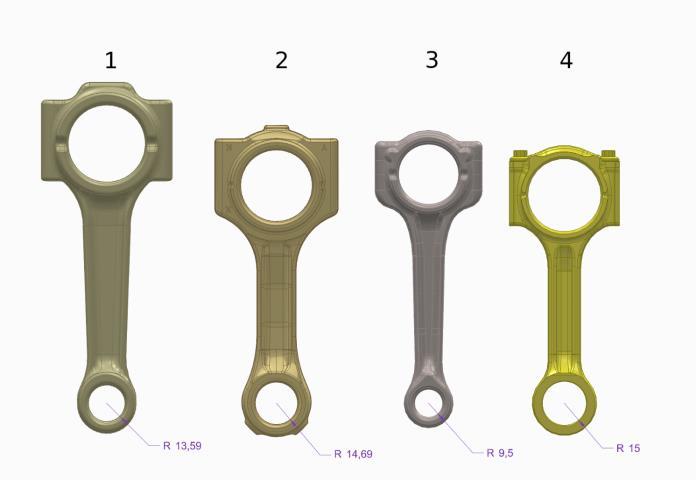
Fig -1:ConnectingRods
Table -1: ConnectingRodDetails
In addition to the careful design considerations for both rough drilling and finish boring fixtures, there are further aspects to consider to ensure optimal performance and safety in machining operations. One crucial aspect is the materialselectionforthefixturecomponents.High-quality materials with appropriate mechanical properties are chosen to withstand the forces and stresses encountered duringmachiningprocesses.Thisensuresthedurabilityand longevity of the fixtures, reducing the risk of premature failureanddowntime.
Furthermore, the design of clamping mechanisms in both fixturesplaysavitalroleinsecuringtheworkpiecefirmlyin placeduringmachining.Theclampsmustprovidesufficient gripping force to prevent anymovement orvibration that couldcompromisetheaccuracyofthemachiningoperations. Additionally, quick-release mechanisms may be incorporatedtofacilitateefficientloadingandunloadingof workpieces, minimizing downtime between machining cycles. Another consideration is the integration of coolant systems into the fixture design to manage heat generated during machining and to aid in chip evacuation. Proper cooling helps maintain cutting tool integrity and prolongs tool life, while effective chip evacuation prevents chip
International Research Journal of Engineering and Technology (IRJET) e-ISSN: 2395-0056
Volume: 11 Issue: 03 | Mar 2024 www.irjet.net p-ISSN: 2395-0072
buildupand potential damagetotheworkpieceorcutting tool. Moreover, ergonomic considerations are essential to ensure ease of use and operator safety. The design of the fixtures should allow for convenient access to tooling and workpiece loading areas, reducing the risk of operator fatigueandpotentialergonomicinjuries.
Lastly, thorough testing and validation procedures are conductedonbothroughdrillingandfinishboringfixtures to verify their performance and reliability. This includes dimensional accuracy checks, functional testing under simulated operating conditions, and assessment of safety featurestoensurecompliancewithindustrystandardsand regulations.Byaddressingtheseadditionalconsiderations, manufacturerscanenhancetheoveralleffectiveness,safety, andreliabilityofthefixture designsforroughdrillingand finish boring operations, ultimately contributing to improvedproductivityandqualityinmachiningprocesses.
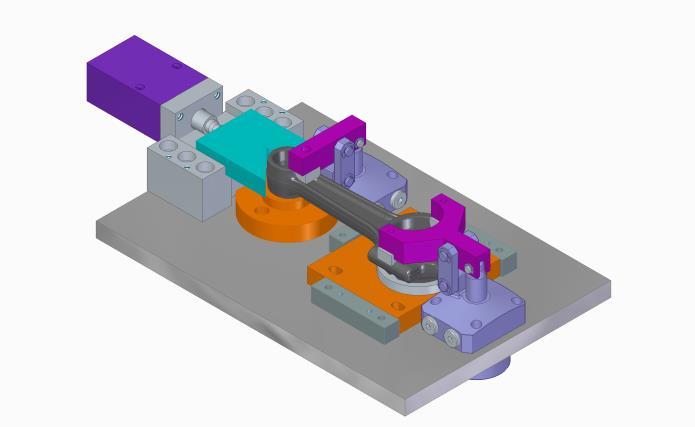
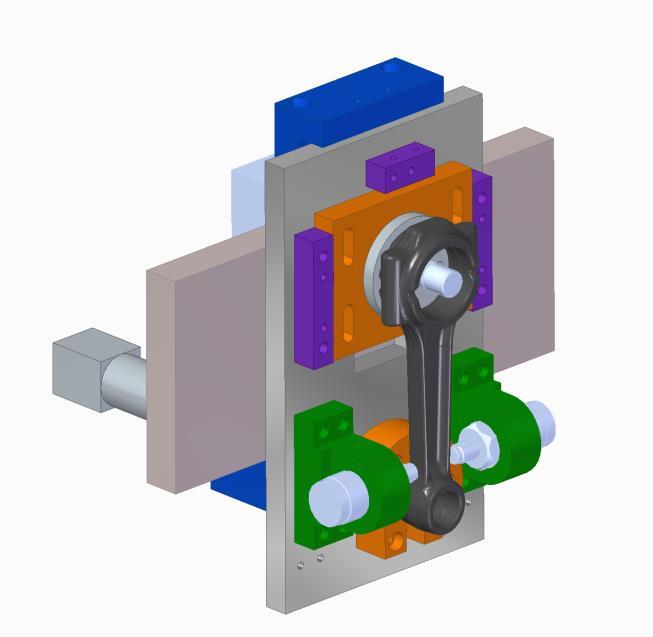
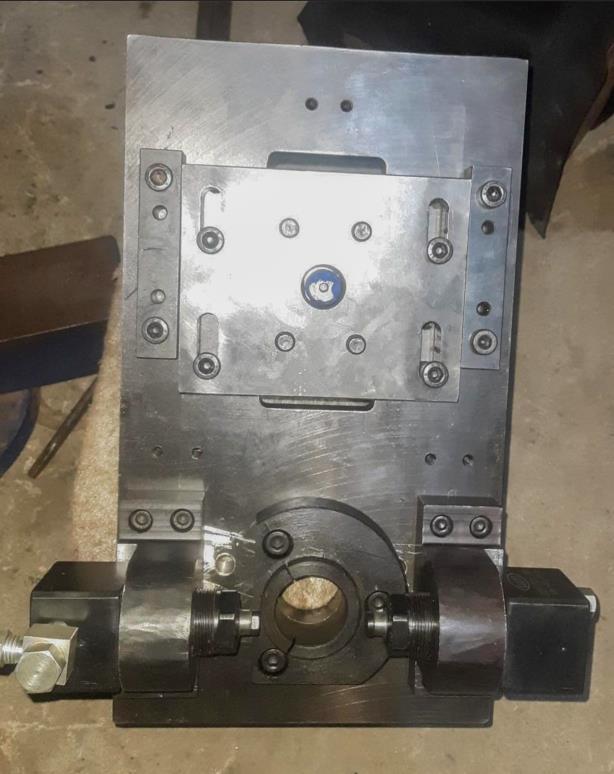
Job Time:Jobtimeencompassesthedurationrequiredfor the entire drilling or boring process, from mounting the workpiece on the fixture to dismounting the finished component.Itincludessetuptime,machiningtime,andany additionalprocessessuchastoolchangesorinspection.
Tool Life:Toollifereferstothedurationforwhichacutting toolmaintainsitseffectivenessbeforerequiringreplacement or resharpening. It depends on various factors such as cutting speed, feed rate, depth of cut, tool material, and workpiece material. Maximizing tool life is essential for minimizingproductiondowntimeandtoolingcosts.
Parameter Drilling Boring
CuttingSpeed 150m/min
FeedRate 0.2mm/rev 0.2mm/rev
JobTime 12min 15min
ToolLife 500holes 650holes
Avoiding changes in the orientation and position of the component during machining operations is crucial for maintainingaccuracyandconsistencyinthemanufacturing process. By minimizing these changes, errors introduced during repositioning are significantly reduced, leading to increasedoverallaccuracy.Theuseofwell-designedfixtures plays a pivotal role in achieving this objective, as they securely hold the component in place and guide the machiningtoolswithprecision.
Aftersuccessfulmanufacturingandtestingofthefixtures,it was demonstrated that they were able to achieve an impressiveaccuracyrateof98.6%across20testjobs.This high level of accuracy is essential for ensuring the quality andreliabilityofthefinishedcomponents,meetingstringent manufacturingstandardsandcustomerrequirements.
Furthermore,theversatilityofthefixturesallowsthemtobe usedfordrillingandboringoperationsonboththesmaller and larger ends of the connecting rod. This flexibility
enhancestheefficiencyofthemanufacturingprocess,asthe samefixturescanbeemployedformultiplemachiningtasks withouttheneedforreconfigurationoradjustments.
[1] "Fixture Design: Manufacturing Engineering and MaterialsProcessing"byJ.StrahandP.W.Zipse.
[2] "MachiningandMachineTools"byA.B.Chattopadhyay.
[3] TheSocietyofManufacturingEngineers(SME)
[4] machineryhandbook.com
[5] "MachiningDynamics:FrequencyResponsetoImproved Productivity"byT.A.Stolarski.
[6] "MachineToolPractices"byR.K.JainandR.S.Khurmi.
[7] IndustryCatalogues
[8] R.Forstmanna,J.Wagner,K.Kreiskother,A.Kampker, D. Busch “Design for Automation: The Rapid Fixture Approach” 27th International Conference on Flexible AutomationandIntelligentManufacturing,FAIM2017, 27-30June2017,ProcediaManufacturing11(2017633 –640.
[9] R.Hunter,A.Vizan,J.Perezb,J.Rıos“Knowledgemodel as an integral way to reusethe knowledge for fixture design process”, , Journal of Materials Processing Technology164–165(2005)1510–15
[10] Machine Design Databook, Central machine tools Institute(CMTI),Bengaluru.
[11] NecettinKaya”Machiningfixturelocatingandclamping position optimization using genetic algorithms “, ComputersinIndustry57(2006)112–120.