
International Research Journal of Engineering and Technology (IRJET) e-ISSN: 2395-0056
Volume: 11 Issue: 03 | Mar 2024 www.irjet.net p-ISSN: 2395-0072
International Research Journal of Engineering and Technology (IRJET) e-ISSN: 2395-0056
Volume: 11 Issue: 03 | Mar 2024 www.irjet.net p-ISSN: 2395-0072
Killamsetty Viswanadham1 , Karthik Kumar2 , Akhil Kumar3 ,Gunachand4
1,2,3,4Student,GITAM(Deemed to be University), Visakhapatnam ,Andhra Pradesh, India. ***
Abstract - Paper ballots and electronic voting machines (EVMs) with Direct Response Electronic (DRE) or Identical Ballot Boxes have long been the mainstay of traditionalvoting methods. These solutions do not, however, come without shortcomings, such as issues with accessibility, security, and accuracy. This paper suggestsanovelsolutionto addressthese drawbacks: a digital voting system that makes use of Iris recognition technology. The study's Iris Recognition-based Voting System, which uses each person's own iris pattern for identity verification, providesareliablesolution.Anautomatic biometric identification technology called iris recognition assesses each person's unique and intricate iris patterns, offering a high degree of precision and dependability The voter's iris is gathered and used for identificationatthevoting location via a straightforward iris scan, which is part of the proposed system. To ensure precise authentication, the iris recognition procedure consists of image acquisition, iris segmentation, feature extraction, and pattern matching. This method solves a number of issues with conventional voting systems by incorporating Iris recognition technology into the voting process. By offering a dependable means of identity verification, it lowers the possibility of fraudulent activity and increases voter accessibility, all of which contribute to increased security. In summary, this research offers a noteworthy progression in votingsystemsbyutilizingstate-ofthe-art technology to surmount the constraints of current approaches. In addition to improving voting's speed and integrity, the Iris recognition-based voting system opens the door for a more safe and welcoming democratic environment.
Key Words: Artificial Intelligence, Convolutional neural network,Irisrecognition,Votingsystem,HougeCircles.
Thevotingprocess'saccessibilityandintegrityarecritical componentsofdemocraticgovernance.Societieshaveuseda variety of techniques over the ages to encourage voter participationinelections,fromtheconventionalpaperballot tothemorerecentcomputerizedvotingsystems.Butthere are drawbacks to these techniques as well, such as issues with inclusivity, security, and accuracy. Technological developments have provided creative answers to these problemsthattrytoimprovethevotingprocess.Thestudy suggests that using Iris recognition technology into the voting process is one such possibility. Based on the distinctive patterns found in the iris, iris recognition, an automated biometric identificationtechnology,provides a
special and trustworthy way to confirm an individual's identity.Inordertoaddressthedrawbacksofconventional votingprocedures,thisstudyinvestigatestheideaofanIris recognition-based voting system. This method seeks to address issues with voter verification, security, and accessibilitybyutilizingthehighaccuracyanddependability ofirisrecognition.Thisinnovativemethodofvotingsystems isbeingintroducedatacriticaltimewheninclusiveandsafe electoralproceduresaremoreimportantthanever.Inorder toaddressthedrawbacksofconventionalvotingprocedures, thisstudyinvestigatestheideaofanIrisrecognition-based voting system. This method seeks to address issues with voterverification,security,andaccessibilitybyutilizingthe high accuracy and dependability of iris recognition. This innovativemethodofvotingsystemsisbeingintroducedata critical time when inclusive and safe electoral procedures aremoreimportantthanever.
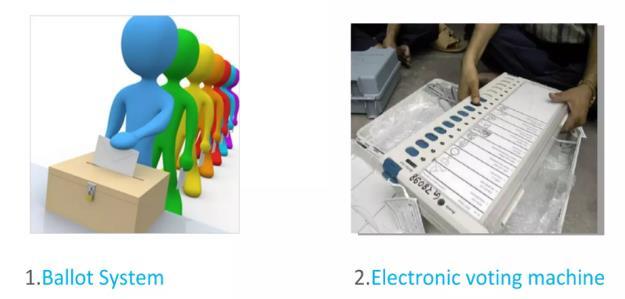
In order to address the drawbacks of conventional voting procedures, this study investigates the idea of an Iris recognition-based voting system. This method seeks to address issues with voter verification, security, and accessibilitybyutilizingthehighaccuracyanddependability ofirisrecognition.Thisinnovativemethodofvotingsystems isbeingintroducedatacriticaltimewheninclusiveandsafe electoral procedures are more important than ever. Electronic voting machines have become more and more commonasa moreeffectivesubstituteforpaperballotsin recent years. Voters can use electronic voting machines (EVMs), and the machine will automatically tabulate the results.Thisexpeditesthetallyingofvotesandsimplifiesthe voting process, allowing for a quicker announcement of electionresults.However,questionsaboutthesecurityand dependability of EVMs have been raised because to their broad adoption. EVMs are susceptible to hacking and tampering,accordingtocritics,jeopardizingthedemocratic process'sintegrityanderodingpublicconfidenceinelection results. Furthermore, traditional techniques of voter authentication,suchpresentingidentificationdocumentsor confirmingvoterregistrationdata,areusedforbothpaperbased ballots and electronic voting machines. These proceduresarenotinfallibleandaresubjecttomanipulation orabuse,eveniftheirgoalistostopfraudandguaranteethat onlylegitimatevotersballotss
International Research Journal of Engineering and Technology (IRJET) e-ISSN: 2395-0056
Volume: 11 Issue: 03 | Mar 2024 www.irjet.net p-ISSN: 2395-0072
This work suggests a fresh approach: an Iris recognitionbased voting system in light of the drawbacks and risks present in conventional voting systems. This method improvesthesecurityandintegrityofthevotingprocessby utilizingIrisrecognitiontechnology,anadvancedbiometric identificationsystem.Irisidentificationtechnologyverifiesa person'sidentifybyusingthedistinctivepatternsfoundin theiriris.Becauseirispatternsaresouniqueandintricate, theyareperfectforbiometricidentification.Thedevicecan identifyavoterbytakingahigh-resolutionpictureoftheir iris, extracting important characteristics, and comparing themtoadatabaseofregisteredvoters.Aneasyirisscanis performedatthevotingplacetostarttheIrisrecognitionbasedvotingsystem'sinstallation.Votersaresubjectedtoa brief,non-invasiveirisscanuponarrival,whichrecordsthe distinctive features of their irises. In order to verify the voter'sidentification,thisbiometricdataisfurtheranalyzed using a number of methods, such as picture capture, iris segmentation,featureextraction,andpatternmatching.The highdegreeofaccuracyanddependabilityofthesuggested approachisoneofitsmainbenefits.Becauseirisrecognition technologyhassuchalowfalseacceptancerate,itisquite unlikelythatsomeonewhoisnotpermittedwillbewrongly recognizedasavoter.Thisimprovesthegeneralsecurityof theelectoralprocessbydrasticallyloweringthepossibility offraudulentactslikeimpersonationormultiplevoting.
Additionally, Iris identification technology makes voting easier for all residents to participate in. Iris recognition removes the requirement for physical identification documents or voter registration records, in contrast to conventionalvoterauthenticationtechniquesthatcancall for such. This facilitates and broadens the voting process, especially for those who might have trouble getting or
showingidentification.Tosumup,theIrisrecognition-based VotingSystemisamajordevelopmentinvotingtechnology that improves voting process security, accuracy, and accessibility while resolving the drawbacks of previous systems.Thismethodprovidesareliablewaytoprotectthe fairness and transparency principles and guarantee the integrityofdemocraticelectionsbyutilizingthecapabilityof biometricidentification.TheIrisrecognition-basedVoting Systemdeliversa level ofsimplicityandinclusivitythat is unmatchedintraditionalvotingtechniques,inadditiontoits unmatched precision and dependability. Voters are guaranteed a seamless experience with the iris scanning techniqueduetoitsefficiencyandsimplicity,incontrastto the laborious steps that are frequently involved with physical identity certificates. This simplified method increases security while minimizing disturbances, making the voting process more accessible overall. Moreover, the useofirisrecognitiontechnologyguaranteesthatthevoting process is more convenient and inclusive for all people, especiallythosewhomightencounterdifficultiesobtaining or presenting physical identification documents or registrationrecords.
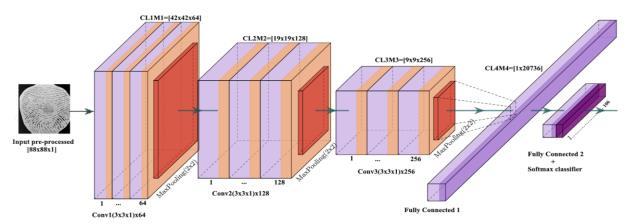
The present study employs a technique that comprises multiplepivotalphaseswiththeobjectiveofexecutingand verifying the Iris recognition-driven Voting System. First, enrollmentanddatagatheringprotocolsweresetupusing certainlocationsthathadirisscannersinstalled.Participants gavetheirinformedconsent,andhigh-resolutionpicturesof theiririsesweretakeninstandardizedlightingsettingsto providethebestpossiblequality.Followingthis,participants wereledthroughaneasy-to-useirisscanningprocedureat pre-designated polling locations. Accurate image capture wasensuredbyreal-timefeedbackmechanisms.Toseparate theirisregionandimproveclarity,theobtainedirispictures were subjected to extensive pre-processing and segmentation.Afterextractingpertinentirischaracteristics using feature extraction techniques as Haar cascades and Houghtransforms,patternrecognitionalgorithmswereused tomatchthefeaturestotheprofilesofenrolledparticipants. Support vector machines and convolutional neural networks twomachinelearningtechniques wereusedto efficiently recognize and classify features. Ultimately, rigorous testing, performance metric evaluation, and validation tests with a variety of datasets were used to confirm the efficiency of the suggested system. Iterative refinement was then carried out to solve any issues or limitationsthatwerefound.
International Research Journal of Engineering and Technology (IRJET) e-ISSN: 2395-0056
Volume: 11 Issue: 03 | Mar 2024 www.irjet.net p-ISSN: 2395-0072
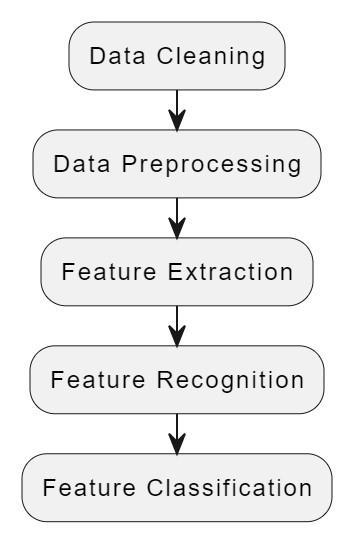
The Iris recognition-based Voting System's suggested algorithm aims to efficiently and accurately authenticate voters. The process starts with the construction of enrollmentcentersoutfittedwithirisscanningequipment, where participants give their informed consent and have standardized, high-resolution iris photos taken. Preprocessing is applied on these pictures to improve clarity and segmentation is done to separate the iris area. The segmented iris images are then processed using methods like Haar cascades and Hough transforms to extract pertinentinformation.Thesetraitsarethencomparedtothe profilesofregisteredparticipantsusingpatternrecognition algorithms,whichclassifythedatausingmachinelearning techniquessuchassupportvectormachinesorconvolutional neural networks. Voters' iris photos are taken at prearrangedspotsduringthevotingprocess,andthesamepreprocessing and feature extraction procedures are used. Basedonthesimilarityoftheiririspatterns,thesederived attributes are then compared with enrolled profiles to validatevoters.Tofurtherevaluatethealgorithm'saccuracy, efficiency,andresilience,evaluationandvalidationphases areincluded.Toensuregeneralizability,extensivetestingis carried out to check performance measures including accuracy and false acceptance rate using a variety of datasets. The system is iteratively refined to solve any constraintsorobstaclesfound,guaranteeingitsefficacyin actual voting settings. Overall, the suggested algorithm contributes to the security and integrity of the voting processbyofferingamethodicalandtrustworthyapproach toirisrecognitionforvoterauthentication.
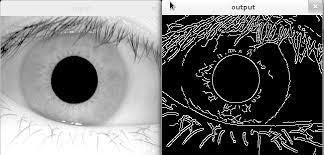
We can prevent faults, automate the voting process, and maintainthetimemaintenancesystembyimplementingthis projectin real time.It isalsoinsensitivetochangesin the amount of noise and brightness. In particular, it makes advantageofthewavelettransform'szerocrossingsforthe distinct characteristics derived from the iris's grey-level profiles. It is less susceptible to noise and quantization mistakesandmorecomputationallyefficientbecauseitonly requires a small number of carefully chosen intermediate resolutionlevelsformatching.Ineveryinstancewhereitis seen,theapplication'sirisdetectionisextremelyaccurate. Comparedtothesurroundingareaandtherestoftheeye, thepupilhasasomewhatdistincttint.Thismakesitpossible to isolate the pupil using an intelligent threshold that is appliedusingdatafromtheimagehistogram.
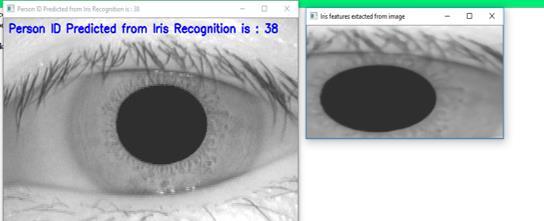
Unfortunately, the iris does not have this feature, which makes it much harder to isolate than the pupil. The population is growing daily, which means that the voting systemneedstobeimproved.Increasingcivicengagementis the main objective of any voting system. While the voting methodsoutlinedaboveareunquestionablyexcellent,there isalwaysroomforimprovement.
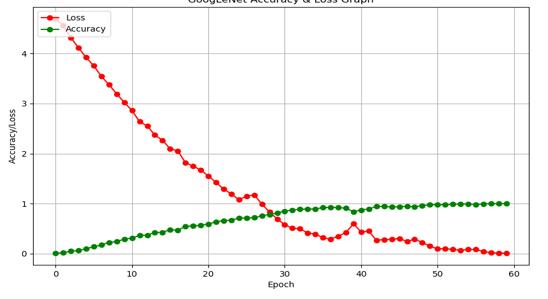
Future improvements to the Iris recognition-based voting system could significantly increase its effectiveness and guaranteethefairnessofelectionprocedures.Onepromising direction for biometric authentication is multi-modal
International Research Journal of Engineering and Technology (IRJET) e-ISSN: 2395-0056
Volume: 11 Issue: 03 | Mar 2024 www.irjet.net p-ISSN: 2395-0072
authentication, which incorporates additional biometric featureslikefingerprintsorfacialrecognitiontoimprovethe system's accuracy and resistance to fraud. Moreover, the incorporation of blockchain technology offers a strong chancetoreinforcetheauditabilityandtransparencyofthe voting procedure by offering an impenetrable ledger for documenting and validating voting transactions. Enabling remote voting, which makes use of the Iris recognition system to enable safe and convenient voting from any locationwithaninternetconnection,isanothercrucialarea forimprovement.Furthermore,continuousimprovementsto the system's interface and interaction design through iterativerefinementaimtoguaranteeasmoothandsimple voting process for all users. Last but not least, putting in placestrongencryptionandcryptographicprotocolswillbe essential to protecting voter privacy and preventing any challengestotheintegrityofelectionsystems.
[1] Anandaraj.S, Anish.R and Devakumar.P.V “ Secured electronic voting machine using Biometrics”, Coiambatore,India.March2015.
[2] S.JehovahJirehArputhamoniandA.GnanaAravanan, "Online Smart Voting System Using Biometrics Based Facial and Fingerprint Detection on Image Processing andCNN",ThirdInternationalConferenceonIntelligent Communication Technologies and Virtual Mobile Networks(ICICV),2021
[3] LLengetal.,"Dynamicweighteddiscriminationpower analysis in DCT domain for face and palmprint recognition", 2010 international conference on information and communication technology convergence(ICTC),2010.
[4] Kar,A.,Singh,M.,Vatsa,M.andSingh,R.,2020,August. Disguised Face Verification Using Inverse Disguise Quality. In European Conference on Computer Vision (pp. 524-540). Springer, Cham.Pavithria.D, Ranjith Baalakrishnan “IoT based Monitoring and Control SystemforHomeAutomation”[2015]