
International Research Journal of Engineering and Technology (IRJET) e-ISSN:2395-0056
Volume: 11 Issue: 03 | Mar 2024 www.irjet.net p-ISSN:2395-0072
International Research Journal of Engineering and Technology (IRJET) e-ISSN:2395-0056
Volume: 11 Issue: 03 | Mar 2024 www.irjet.net p-ISSN:2395-0072
Ravish Kumar1, Mr. Ushendra Kumar2
1Master of Technology, Civil Engineering, Lucknow Institute of Technology, Lucknow, India
2Head of Department, Department of Civil Engineering, Lucknow Institute of Technology, Lucknow, India
Abstract - Theinfrastructureofhighways,particularlythe pavement, is crucial for efficient transportation systems and economic progress. However, conventional pavement materials often have limitations in terms of strength, durability, and sustainability. Recently, there has been a growinginterestinexploringalternativematerialstoimprove pavementperformanceandlessenenvironmentalimpact.One promisingapproachistheuseofelectronicwaste(e-waste)in pavement construction. This review critically evaluates the potential of integrating e-waste materials into highway pavement to enhance its strength and durability. It consolidates existing literature on the characteristics, composition, and properties of e-waste, as well as various techniques for its integration into pavement materials. The reviewunderscorestheadvantagesandchallengesofutilizing e-waste, including its capacity to bolster pavement strength, diminish environmental pollution through waste diversion, and alleviate the depletion of natural resources.
The paper discusses the effects of incorporating e-waste on pavement performance, encompassing its influence on structural integrity, stiffness, fatigue resistance, and rutting behavior.Environmentalaspectssuchasleachability,toxicity, and long-term sustainability are also addressed. By conducting a comprehensive analysis of current research findings and case studies, this review offers insights into the feasibility and potential benefits of employing e-waste in highwaypavementconstruction.Itidentifiesknowledgegaps and proposes areas for future research to optimize the utilization of e-waste in pavement engineering. This review underscores the importance of integrating innovative materials like e-waste into pavement construction practices, thereby contributing to the development of sustainable and resilient transportation infrastructure systems.
Key Words: HighwayPavement,ElectronicWaste,Strength, Polymer,CompressiveStrength
1.HISTORY
Thehistoryofbolsteringhighwaypavementstrengthusing electronicwaste(e-waste)findsitsrootsinrecognizingthe limitations of traditional pavement materials and the growingcallforsustainableinfrastructuresolutions.Inthe late 20th century, rapid technological advancements coincided with a notable increase in electronic device production, leading to a significant surge in e-waste
generation.Thissurgeraisedenvironmentalconcernsdueto thehazardousmaterialspresentinelectronicproducts,such as heavy metals and toxic chemicals. As environmental awarenessgrewandwastemanagementeffortsintensified, researchers and engineers began exploring alternative applicationsfore-waste.Onepromisingareathatemerged wasitspotentialutilizationincivilengineering,notablyin pavement construction. The notion of integrating e-waste into pavement materials gained traction in the early 21st centuryastheneedforsustainableinfrastructuresolutions became more apparent. Early studies focused on understandingthecharacteristicsandpropertiesofe-waste and its suitability for pavement applications. Researchers exploredvariousmethodsforprocessingandintegratingewaste into pavement mixtures, including shredding, grinding, and blending with traditional aggregates and binders.Throughlaboratoryexperimentsandpilotprojects, theyevaluatedthemechanical,chemical,andenvironmental performanceofe-waste-modifiedpavements.
Advancements in materials science and pavement engineering techniques facilitated the development of innovativeapproachesforintegratinge-wasteintopavement designs.Researchersinvestigatedusinge-wasteasapartial replacementforconventionalaggregates,fillers,oradditives toenhancepavementstrength,durability,andsustainability. Asresearchprogressed,numerousstudiesdemonstratedthe potential benefits of incorporating e-waste in highway pavement construction, including improved mechanical properties such as increased compressive strength, enhanced resistance to fatigue and rutting, and reduced susceptibility to environmental degradation. The incorporation of e-waste into pavement construction also provided environmental benefits by diverting hazardous wastefromlandfillsandreducingthe depletionof natural resources, aligning with broader efforts towards circular economyprinciplesandsustainabledevelopmentgoals.In recent years, there has been growing interest from governments, transportation agencies, and industry stakeholdersinpromotingtheadoptionofe-waste-modified pavementsaspartofsustainableinfrastructurestrategies.
Pilotprojectsandreal-worldapplicationshavebeeninitiated toassesstheperformanceandfeasibilityoftheseinnovative pavement designs in various geographical and environmentalconditions.Lookingahead,ongoingresearch
International Research Journal of Engineering and Technology (IRJET) e-ISSN:2395-0056
Volume: 11 Issue: 03 | Mar 2024 www.irjet.net p-ISSN:2395-0072
aims to address remaining challenges, such as optimizing processingtechniques, evaluatinglong-termperformance, and addressing concerns related to leachability and environmentalimpact.Throughcollaborativeeffortsamong researchers,policymakers,andpractitioners,theintegration ofe-wasteintohighwaypavementconstructioncontinuesto evolve as a promising approach for achieving resilient, resource-efficienttransportationinfrastructuresystems.
Highway pavement infrastructure plays a crucial role in supporting transportation networks, facilitating the movementofgoodsandpeoplevitalforeconomicprosperity and societal welfare. However, traditional pavement materials often encounter issues regarding strength, durability,andsustainability,promptingtheexplorationof innovative solutions to tackle these challenges. In recent times, there has been a growing interest in leveraging electronicwaste(e-waste)asa novel resourcetoenhance theperformanceofhighwaypavements.Thewidespreaduse ofelectronic devicesand rapidtechnological progresshas resultedinacorrespondingincreaseine-wastegeneration. This poses significant environmental concerns due to the presence of hazardous substances like heavy metals, brominatedflameretardants,andothertoxiccompoundsin electronicproducts.Managinganddisposingofe-wastehas become a pressing global issue, leading to endeavors to explorealternativeapproachesforitsreuseandrecycling. Onepromisingapproachisintegratinge-wasteintohighway pavementconstruction.E-wastecomprisesvariousmaterials withpotentialengineeringpropertiessuitableforpavement applications,includingmetals,plastics,glass,andceramics. Byincorporatinge-wasteintopavementmaterials,wecan address waste management challenges and enhance the performanceandsustainabilityofhighwaypavements.This paper offers a comprehensive review of research and developments in using e-waste to bolster the strength of highwaypavements.
Itconsolidatesexistingliteratureoncharacterizinge-waste materials, methodologies for integrating e-waste into pavementmixtures,andtheimpactofe-wasteadditionon pavement properties and performance. Moreover, it discusses environmental considerations concerning the utilization of e-waste in pavement construction, such as leachability,toxicity,andlong-termsustainability.Through an exploration of the potential benefits, challenges, and opportunitiesassociatedwithemployinge-wasteinhighway pavementconstruction,thisreviewaimstocontributetothe advancement of sustainable infrastructure practices. By harnessinge-wasteasaresourceforpavementengineering, we can not only enhance the strength and durability of highway pavements but also contribute to environmental preservationandthecirculareconomy.
Highwaypavementdenotestheuppermostlayerofaroad constructedtoendurevehicleloadsandfurnishadurable, evendrivingsurface.Ittypicallycomprisesmultiplelayers, each fulfilling a distinct role to guarantee the road's durability and functionality. These layers commonly encompassthesubgrade,subbase,basecourse,andsurface course.Thesubgradereferstothenaturalsoilorprepared earthbeneaththepavementlayers,furnishingsupportand stability. Above the subgrade, the subbase layer is incorporated to further distribute loads and facilitate drainage.Followingthesubbase,thebasecourseisinstalled to offer additional structural support and aid in load distribution. Lastly, the surface course, also recognized as thewearingcourse,constitutesthetopmostvisiblelayerto drivers. It's engineered to withstand traffic wear and environmental factors while delivering a smooth, skidresistant driving surface. Highway pavement construction employs various materials, including asphalt concrete (commonly known as asphalt), concrete, and composite materials.Materialselectionhingesonfactorssuchastraffic volume, climate conditions, and budgetary constraints. Regular maintenance and periodic resurfacing are imperativeforextendingthelifespanofhighwaypavements andensuringthesafetyandefficiencyofroadtransportation systems.
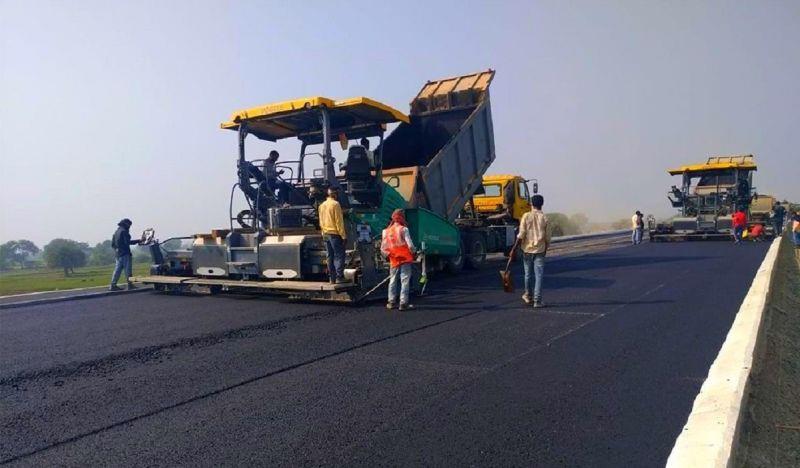
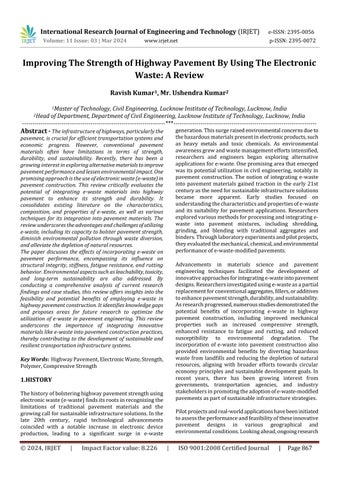
Highwaypavementcanbeclassifiedintoseveraltypesbased on the materials used in construction and the design specifications.Themaintypesofhighwaypavementinclude:
FlexiblePavement
RigidPavement
CompositePavement
International Research Journal of Engineering and Technology (IRJET) e-ISSN:2395-0056
Volume: 11 Issue: 03 | Mar 2024 www.irjet.net p-ISSN:2395-0072
Asphaltconcrete,oftenreferredtoasasphalt,servesasthe principalmaterialinflexiblepavements.Thesepavements are comprised of layers of asphalt mixtures laid atop a compacted base and subbase. Flexible pavements possess theabilitytotolerateminormovementsanddeformations without developing cracks, rendering them suitable for diversetrafficloadsandclimates.
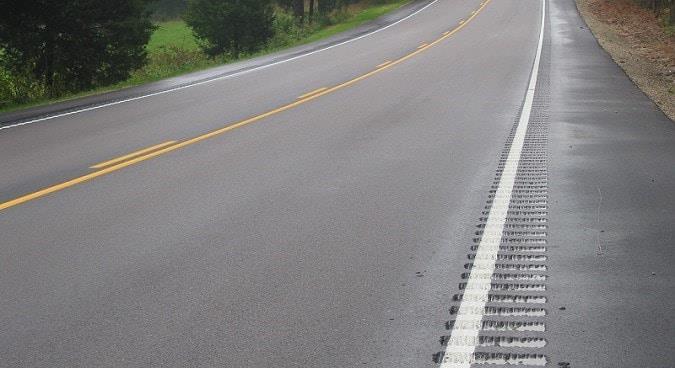
Concrete istheprimary material usedinrigid pavements. Rigid pavements are constructed with reinforced or unreinforcedconcreteslabs,typicallysupporteddirectlyby thesubgradeorathinbaselayer.Theyofferexcellentloadbearing capacity and durability but are less flexible than asphalt pavements, making them more susceptible to crackingundercertainconditions.
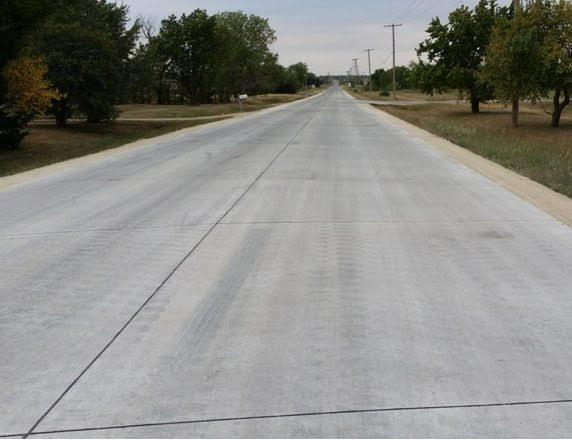
3.1.3. Composite Pavement
Compositepavementsblendfeaturesfrombothflexibleand rigid pavement designs, often incorporating a flexible
asphalt concrete surface layer atop a rigid concrete base layer. The aim of composite pavements is to harness the advantagesofbothflexibleandrigidpavements,resultingin enhanceddurability,load-bearingcapacity,andresistanceto cracking. In highway construction, composite pavement presents a versatile solution comprising multiple layers tailored to optimize performance and longevity. At the surfaceliesthewearingcourse,typicallymadefromasphalt concrete, providing a resilient and skid-resistant driving surface capable of withstanding traffic and weather challenges. Below this, the base layer adds structural integrityandfacilitatesloaddistribution,oftencraftedfrom compacted aggregate materials to resist deformation. Furtherdown,thesubbaselayeraidsinloaddistributionand drainage, commonly composed of granular materials compacted to establish a stable foundation. In certain designs, a concrete base layer reinforces the structure, especially under heavy loads. Finally, the subgrade, the natural soil or prepared earth below, serves as the foundation, requiring appropriate preparation and compaction for stability and support over the pavement's lifespan. Together, these layers create a cohesive system, balancingflexibility,durability,andload-bearingcapacityto meetthedemandsofmoderntransportationinfrastructure.
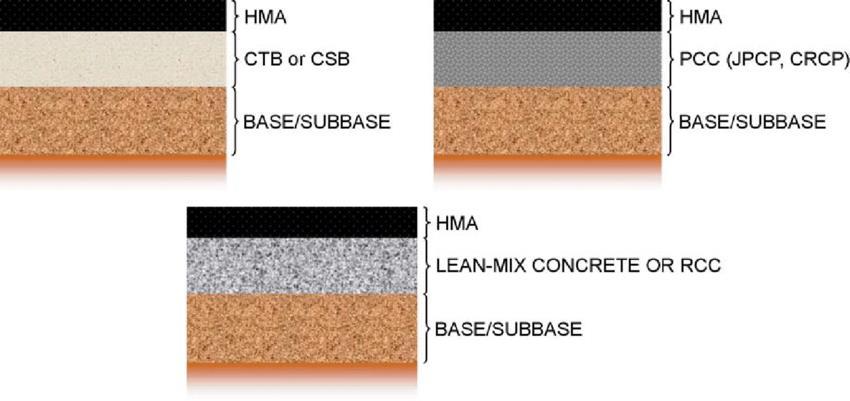
In the literature review, we have studied the previuos researchpaperrelatedtotheimprovementofthehighways pavementbyusingthedifferentmaterials.Thesummaryof thepreviousresearchpaperisgivenbelowindetails:
Imtiaz,Lovell(2012): Anassessmentconsideringtechnical, environmental, and economic aspects highlighted the substantialpotentialofreclaimedpavingmaterials,coalfly ash,blastfurnaceslag,bottomash,boilerslag,steelslag,and rubbertirestosubstituteconventionalmaterialsinvarious highwayconstructionapplications.Itisrecommendedthat these materials be considered for future construction projects. However, it's essential to address technical, economic, and environmental challenges associated with
International Research Journal of Engineering and Technology (IRJET) e-ISSN:2395-0056
Volume: 11 Issue: 03 | Mar 2024 www.irjet.net p-ISSN:2395-0072
their usage before widespread adoption in highway construction.Thesechallengesmustbecarefullyidentified and discussed for each waste material to ensure their effectiveintegrationintohighwayconstructionpractices.
Anoop,Vikas(2015): ThecompressivestrengthofE-waste concrete,withuptoatwentypercentreplacementlevelas fine aggregate, is comparable to the reference concrete at both7and28days.Additionally,thecompressivestrengthof E-wasteconcrete,withafivepercentreplacementascoarse aggregate, surpasses that of the reference concrete. Moreover, E-waste concrete, with up to a twenty percent replacementlevelascoarseaggregate,exhibitscompressive strengthsimilartothereferenceconcreteatbothsevenand twenty-eight days. This suggests that E-waste can be effectivelyutilizedasconstructionmaterials.
Vikramet.al(2017): Thetestsconductedonbitumenwere carried out with precision, and successful results were obtainedforreplacementsof5%and10%.Bitumenwitha 10% replacement rate can be utilized for road paving. Althoughtestswerealsoconductedwitha15%replacement rate,theresultsdidnotmeetthestandardsandwerethus excluded from the report. Further research on 15% replacement may lead to successful outcomes. E-Waste managementisanovelconcept.Iftheproceduresoutlinedin the report are implemented, environmental issues associated with electronic waste could be addressed. Implementation of these procedures in every city has the potentialtominimizeelectronicwasteproduction.
Anupam, Nitin (2018): Our thorough examination of ElectronicWaste(PCB)asaCoarseAggregatereplacement has yielded valuable insights. The specific gravity of the utilizedPCBaveragesat2,withaminimalwaterabsorption rate not exceeding 0.3% of its own weight. Notably, the averageImpactValueforthePCBsusedinFineAggregate reaches17%.Asforthefineaggregate,itsaveragespecific gravityis2.67,withawaterabsorptionratenotsurpassing 1.21% of its own weight. The fineness modulus stands at 3.16,andthebulkdensityrecords1577N/mm3,indicating that the fine aggregates conform to standard grade requirements.
InthetestingofCementgrade43,weobservedanaverage specific gravity of 3.15, a fineness of 3%, a Normal consistencyof31.5%,andinitialandfinalsettingtimesof19 minutes and 625 minutes, respectively. The compressive strengthofthecementcubeafter28daysregisteredat43.33 N/mm2, with an expansion of 3.33 mm in the cement mixture.Movingtothecompressivestrengthoftheconcrete mixture, it ranged from 45.35 N/mm2 to 35.33 N/mm2. Intriguingly,uptoa10%replacementofcoarseaggregate withElectronicWaste(PCB)didnotresultina significant differenceincompressivestrength,beyondwhichadecline was observed, particularly noticeable after a 5% replacement. These findings underscore the potential of
judiciouslyusingElectronicWaste(PCB)inconstruction,but carefulconsiderationisessentialtobalancethebenefitsand maintainstructuralintegrity.
Manjula, Chore (2019): From the few experimental investigations conducted on the reclaimed rubber cell reinforcedmodelpavement,itisevidentthatincorporating reclaimed rubber cells within the sub-base enhances the pavement'sloadcarryingcapacityandreducessettlement. Integrating such waste materials into pavements not only offersapracticalsolutiontotheirdisposal,thusaddressing environmental concerns,butalsopromotestheireffective utilization as sustainable construction materials in road development.Additionally,constructingpavementsinthis manner proves to be cost-effective. This holds particular significancefordevelopingcountrieslikeours.
Malleswara, Khadar (2020): The polymer-coated aggregate, containing a higher percentage of polymers, is compacted into a block exhibiting commendable compressiveandbendingstrength,showcasingtheadhesive prowess of the polymers. This characteristic significantly enhancesthestabilityofthePCAbituminousmix.Duringthe mixing process of bitumen with PCA, conducted at temperatures around 140-150º C, both polymers and bitumenareinafluidstate.Theyamalgamateatthesurface, facilitating thorough bitumen spread and thereby augmentingbondingbetweenaggregateandbitumen.The removal of bitumen occurs at a sluggish pace, with only approximately 85% being extracted, while the remaining portionadherestotheaggregatesurfaceduetothepresence of the coated polymers. Further washing with a polymer solvent, termed "decline," eliminates both bitumen and polymerresidues.Themoltenpolymerservesasaneffective binder,makingitasuitablesubstituteinflexiblepavement mixpreparation.Notably,thequantityofbitumenrequired isreducedproportionallytotheamountofpolymerutilized inthemixpreparation.
Aniket et.al (2020): The approach to proportioning discussedthroughoutthispaperallowsfortheutilizationof awiderangeofE-wasteashvariations.Ithasbeenobserved that the quality of E-waste ash isn't the sole determining factor,butratherthevariationinthatqualityplaysacrucial role. Smart concrete is typically proportioned to include occasionalqualityashuntilthequalityremainsconsistent. ThesignificantadvantageofusingE-wasteashinconcrete liesintheflexibilityitoffersinselectingblendproportions. Byincorporatingtheash,adiverserangeofpotentialblends canbeexploredforanygivenspecification.Ineachscenario, it becomes possible to decide on the most cost-effective blend, the most efficient placement, or the most durable option.E-wasteashhasalowerunitweight,meaningthata higherproportionofashwithinthepasteresultsinbetter lubricated aggregates, leading to improved concrete flow andenhancedbindingwithlimeovertime.Thisaccelerates theattainmentofmaximumstrengthfortheconcretemix.
International Research Journal of Engineering and Technology (IRJET) e-ISSN:2395-0056
Volume: 11 Issue: 03 | Mar 2024 www.irjet.net p-ISSN:2395-0072
Thus, E-waste ash can effectively serve as a material in concreteroadpavementconstruction.
Sahebagouda et.al (2022): Based on all the experiments conducted, it is concluded that e-waste enhances the strengthofthepavement.Atanoptimumbitumencontentof 5%,replacing5%,10%,and15%ofe-wasteplasticpowder with bitumen results in improved strength, with the 10% replacement deemed suitable for pavements. Utilizing ewasteforpavementconstructionnotonlyimprovese-waste management in the environment but also reduces costs. Furthermore, properties of bitumen such as penetration value, ductility, flash and fire point, specific gravity, and softening point are altered. Additionally, the use of aggregatescanbeminimized.
Firdous et.al (2022): This process is environmentally friendly and holds significance in terms of economics, environment, and social aspects. Utilizing e-waste in road development serves two purposes: reducing construction costsandcontributingtoeffectivewastemanagementofthis unwantedmaterial.Thebulkdensitysurpassesthatofthe mix prepared with plain bitumen. Incorporating modified bitumen with approximately 6% processed e-waste by weightofbitumensignificantlyenhancesMarshallStability, strength, fatigue life, and other desirable properties of bitumen while also leading to minor savings in bitumen usage. The recommended ratio of E-Waste plastic for modificationisupto6%bytheweightofbitumencontent, suitable for road construction in hot climates where low penetrationgradebitumenisutilized.Stabilityincreasesby 9%withanincreaseine-wastepercentage.
Shadab , Ankit (2023): The development of sustainable pavement materials to enhance road performance and minimizeenvironmentalimpactisacrucialresearchfocusin modern transportation infrastructure. This thesis concentrates on the process of material selection and characterizationtoassesstheviabilityofrecycledconcrete aggregate (RCA) as a sustainable pavement material. Favorable physical and mechanical properties, including relatively high specific gravity and satisfactory strengths, suggest RCA's potential to meet pavement performance requirements.Moreover,environmentalimpactassessment highlights RCA's lower embodied energy, reduced carbon footprint, decreased water consumption, and minimized wastegeneration,underscoringitssustainabilityadvantages.
Pramodet.al(2023): Utilizinge-wasteinroadconstruction can yield several environmental advantages. E-waste typicallyharborshazardoussubstanceslikelead,mercury, andcadmium.Disposalofe-wasteinlandfillsposestherisk ofthesesubstancesleachingintothesoilandgroundwater, therebycontaminatingtheenvironment.Byincorporatingewaste into road construction, the potential for these hazardousmaterialstoentertheenvironmentismitigated. Inessence,leveraginge-wasteinroadconstructionpresents apromisingsolutionthatnotonlyaidsincostreductionand
durability improvement but also safeguards the environment.
Zahoor, Ashish (2023): All results obtained regarding densities and compressive strengths for the control test demonstrate consistency, meeting the standard requirementsforgrade30(G30)concreteasspecifiedinBS 1881,1978methodoftestingconcrete.Additionalfindings concerningthe percentage replacements of fineaggregate withorewasteat10%,20%,and30%werealsoestablished across various curing ages. Upon analyzing these results, variationsincompressivestrengthsamongconcretecubes producedunderthesereplacementconditionsareevident. Theflexuralstrengthofreinforcedconcretebeamsremains unaffectedbythereplacementofsandwithironoretailing (IOT). Conversely, there is an enhancement of flexural strengthforallpercentagesofsandreplacement.Although theincreaseinflexuralstrengthisnotsubstantial,themixes with10%,20%,and30%IOTperformedbetterintermsof flexural strength compared to the control mixes, respectively.Thissuggeststhefeasibilityofproducingcosteffective concrete with acceptable 7 days and 28 days strengththroughpartialreplacementofIOT.
In summary, this review has delved into the potential of usingelectronicwaste(e-waste)tobolsterthestrengthand durability of highway pavement. Through an in-depth analysisofexistingliterature,itisevidentthatintegratingewastematerials,suchaselectroniccomponentsandprinted circuitboards,offersapromisingsolutiontoaddressboth environmentalconcernslinkedtoe-wastedisposalandthe imperativeforsustainableinfrastructuredevelopment.The incorporation of e-waste in pavement construction brings forthnumerousadvantages,includingenhancedmechanical properties, increased resistance to environmental degradation, and reduced dependency on traditional construction materials. Nevertheless, further research is neededtorefineincorporationtechniques,assesslong-term performance,andevaluatepotentialenvironmentalimpacts. Overall,thefindingsunderscorethatintegratinge-wasteinto highwaypavementholdssignificantpotentialforadvancing sustainable infrastructure practices while concurrently mitigatingtheadverseeffectsofe-wasteaccumulation.
1. IMTIAZ AHMED AND C. W. LOVELL “Use of Waste MaterialsinHighwayConstruction:StateofthePractice andEvaluationoftheSelectedWasteProducts”2012, TRANSPORTATIONRESEARCHRECORD1345.
2. AnoopSingh,VikasSrivastava“UtilisationofE-wastein Concrete - An Experimental Investigation” 2015, International Journal of Engineering Research & Technology (IJERT) ISSN: 2278-0181 Published by, www.ijert.orgISNCESR-2015ConferenceProceedings.
International Research Journal of Engineering and Technology (IRJET) e-ISSN:2395-0056
Volume: 11 Issue: 03 | Mar 2024 www.irjet.net p-ISSN:2395-0072
3. Vikram J. Patel1 , Hemraj R. Kumavat2 , Ganesh V. Tapkire3 “An Experimental Study of Bituminous Pavement adding Electronic-Waste to Increase the StrengthEconomically”2017,InternationalJournalof Innovative Research in Science, Engineering and Technology(AnISO3297:2007CertifiedOrganization) Website:www.ijirset.com.Vol.6,Issue1,January2017.
4. Anupam Kumar Sharma1 , Nitin Dutt Sharma2 “An Experimental Study on Use of E-Waste Materials in Concrete for Rigid Pavements” 2018, International JournalofScienceandResearch(IJSR)ISSN:2319-7064 ResearchGateImpactFactor(2018):0.28|SJIF(2018): 7.426.
5. B.ManjulaDevi,H.S.Chore“UseofReclaimedRubber CellinHighwayPavement:AnExperimentalResearch” 2019,International Journal ofInnovativeTechnology andExploringEngineering(IJITEE)ISSN:2278-3075, Volume-8,Issue-6S4,April2019.
6. P.Naga Malleswara Rao1, B Khadar Mohammed2 “UTILIZATION OF WASTEPOLYMERSFORFLEXIBLE PAVEMENTFORLOW VOLUMERURALROADS”2020, International Research Journal of Engineering and Technology (IRJET) e-ISSN: 2395-0056 Volume: 07 Issue:07|July2020www.irjet.netp-ISSN:2395-0072.
7. Aniket Ravindra Ingole, Shweta Kailashrao Gulhane, Shivani Sanjay Shirbhate, Mayur Pandit Chavhan, Toshini Narendra Makde “Use of Electronic Waste Concrete for RoadConstruction ”2020, International Journal of Engineering and Advanced Technology (IJEAT)ISSN:2249–8958(Online),Volume-9Issue-5, June2020.
8. Sahebagouda R Patil*1,UsheY Neeralakeri*2,Kishan Neelkhant Nagannavar*3, Krishna*4, Vinay A *5 “Experimental Investigation on Replacement of Bitumen with PCB Powder (E-Waste)” 2022, International Journal of Research Publication and ReviewsJournalhomepage:www.ijrpr.comISSN25827421.
9. FirdousAhmedParray,2AmanBathla,3Dr.Gurcharan Singh“StudyonuseofE-WasteinFlexiblePavements” 2022,2022IJRTI|Volume7,Issue5|ISSN:2456-3315.
10. Shadab Akhtar*1, Ankit Sethi*2 “SUSTAINABLE PAVEMENT MATERIAL FOR ENHANCED ROAD PERFORMANCE AND ENVIRONMENTAL IMPACT REDUCTION”2023,InternationalResearchJournalof ModernizationinEngineeringTechnologyandScience( Peer-Reviewed, Open Access, Fully Refereed InternationalJournal)Volume:05/Issue:07/July-2023 ImpactFactor-7.868www.irjmets.com.
11. Mr.PramodBanne1, Mr. ShantanuMane2, Mr. Yash Mane3 , Mr. Pratik Padwal4 , Mr.D.W.Gawatre5 “Utilization of E-Waste in Flexible Pavement: A SustainableSolutiontoWasteManagement”2023,June 2023|IJIRT|Volume10Issue1|ISSN:2349-6002.
12. Zahoor Ahmad Bhat1 , and Mr. Ashish Kumar2 “PavementStabilizationUsingIronOreWaste”2023, International Journal of Innovative Research in Engineering&Management(IJIREM)ISSN:2350-0557, Volume-10, Issue-2, April 2023 https://doi.org/10.55524/ijirem.2023.10.2.1ArticleID IJIR2334,Pages1-4www.ijirem.org