
International Research Journal of Engineering and Technology (IRJET) e-ISSN: 2395-0056
Volume: 11 Issue: 03 | Mar 2024 www.irjet.net p-ISSN: 2395-0072
International Research Journal of Engineering and Technology (IRJET) e-ISSN: 2395-0056
Volume: 11 Issue: 03 | Mar 2024 www.irjet.net p-ISSN: 2395-0072
Kiran Rajput1 , Prof. Shaifali Sehgal2
1M.Tech Student, Building Construction & Technology, NRI Institute of Research & Technology, Bhopal (M.P.) 2 Assistant Professor, Building Construction & Technology, NRI Institute of Research & Technology, Bhopal (M.P.)
Abstract - This study presents a sustainable approach to constructionmaterialdevelopmentandwastemanagementby exploring the innovative use of plastic waste in concrete mixtures. The research aimed to evaluate the feasibility, mechanical properties, and environmental benefits of incorporatingHigh-DensityPolyethylene(HDPE)plasticwaste into concrete. The methodology involved collecting and processing plastic waste into fine aggregates, formulating concretemixes withvaryingpercentagesofplastic waste,and evaluating the resultant concrete's workability, density, compressivestrength, flexuralstrength, thermalconductivity, and durability. The study generated comprehensive data and highlighted the potential of HDPE-modified concrete to contribute to lighter, more thermally efficient construction materials without significantly compromising structural integrity.Moreover, theenvironmentalanalysisrevealedthat using plastic waste in concrete could significantly reduce the environmental footprint of construction activities. The research underscores the need for further optimization to enhance the material's performance and the development of standardstofacilitatetheadoptionofthissustainablepractice in the construction industry. This study lays the groundwork for future research and development in this area, aiming to refine the use of plastic waste in concrete to meet structural requirements while addressing environmental challenges.
Key Words: Sustainable Construction Materials; Plastic Waste Recycling; Concrete Mix Design; HDPE-Modified Concrete;EnvironmentalImpactReduction
The world is currently grappling with the challenge of increasing accumulation of plastic waste, which is consideredoneofthemostpressingenvironmentalissuesof our time. This waste, which is generated from industries, households,andcommercialestablishmentssuchasmalls, poses a significant threat to the environment due to its durability and resistance to degradation. It is therefore essentialtofindinnovativeandsustainablewaystomanage andrepurposeplasticwastesoastomitigateenvironmental impacts and promote circular economic models. One promising way of utilizing plastic waste is through its incorporationintoconcretemixtures.Concreteisthemost widely used construction material in the world, and its production consumes significant natural resources and energy. The integration of plastic waste generated from
industry,householduse,andmallsintoconcretepresentsa uniqueopportunitytoreducetheenvironmentalfootprintof concrete production and address the growing problem of plasticwastemanagement.
The use of plastic waste in concrete mixtures represents a forward-thinking approach to addressing environmentalchallengesintheconstructionindustry.This initiative not only contributes to waste reduction but also opens new pathways for the recycling and repurposing of plasticwasteintheconstructionsector.Bysupportingthe principles of sustainability and circular economy, this practicehelpstocreateabetterandcleanerenvironmentfor future generations. The urgency to find sustainable and environmentally friendly alternatives in construction practiceshasneverbeenmorecritical.Theglobalsurgein plastic waste, exacerbated by rapid urbanization and consumerism, poses a dual challenge: the environmental degradation due to the accumulation of plastics and the increasing demand for construction materials driven by global development.Addressingthese challenges requires innovativecross-disciplinaryapproachesthatcanbridgethe gap between waste management and sustainable construction.
The concept of utilizing plastic waste generated fromindustries,households,andcommercialactivitiesasa component in concrete mixtures not only presents an ingenioussolutiontothepressingissueofplasticpollution butalsooffersapotentialtorevolutionizetheconstruction industry.Byrepurposingplasticwaste,wenotonlydivertit from landfills and oceans, thereby mitigating its environmentalimpact,butalsoreducetherelianceonvirgin materialsforconcreteproduction,whichisassociatedwith significantCO2emissionsanddepletionofnaturalresources.
Furthermore, integrating plastic waste into concrete promptsareevaluationofwasteasaresource,encouraging the construction industry to adopt more sustainable practices.Itopensthedoortocollaborativeeffortsamong waste management companies, construction firms, and policymakers to develop standards and regulations that support the use of recycled materials in construction projects. Looking ahead, continued research and development are essential to optimize the properties of plastic-modifiedconcreteandtoaddressanytechnicaland regulatory challenges. Pilot projects and real-world
International Research Journal of Engineering and Technology (IRJET) e-ISSN: 2395-0056
Volume: 11 Issue: 03 | Mar 2024 www.irjet.net p-ISSN: 2395-0072
applications will be crucial in demonstrating the viability andbenefitsofthisinnovativeapproach,potentiallysettinga new benchmark for sustainable construction practices worldwide.
Severalstudieshavebeenconductedtoinvestigatetheeffects ofusingrecycledconcreteaggregate(RCA)andpozzolanic materialsasapartialreplacementofnaturalcoarseaggregate (NCA) and cement, respectively, on the mechanical and permeabilityproperties ofconcrete mixes.One suchstudy wasconductedbyToghrolietal.(2020),whichfoundthatthe addition of fibers enhancedboth compressiveand flexural strengths.Incorporating100%RCAcombinedwith2%steel fiberand2%nano-clayyieldedaperviousconcretesuitable forstructuralapplications.
Similarly, Mehrabi et al. (2021) studied the use of recycledconcreteaggregate(RCA)andpozzolanicadditives asapartialreplacementofnaturalcoarseaggregate(NCA) andPortlandcement,respectively,inperviousconcrete.The study found that using RCA decreased density and mechanicalstrength,whiletheuseofpumiceandnano-clay hadpositiveeffectsonthestrengthproperties.Thestudyalso foundthatsteelfiberperformedbetterthanothertypesof fibers, and that it is feasible to reduce the consumption of NCAandcementbyusingspecificdosagesofothermaterials. Alqahtani et al. (2020) focused on the use of processed lightweight aggregates (PLA) manufactured using plastic wasteinconcrete.ThestudyfoundthattheadditionofPLAin concrete increased the Poisson’s ratio and thermal conductivityvalues,whilereducingdensityandcompressive strength.ThestudyalsofoundthatPLAconcretecanbecured at temperatures up to 30 °C without significantly affecting compressivestrength.
Kimetal.(2021)quantitativelyevaluatedtheeconomicand environmentaleffectsofusingocean-borneplasticflakesin cementmortar.Thestudyfoundthatthesocialcosttoutilize 1kgofwasteplasticfromtheoceanasfineaggregatesfor concrete was approximately 0.50 USD, which was approximately 80% higher than that of simple disposal. Additionally,anadditional1.1kgofCO2emissionrelatedto strength compensation was yielded. Wong et al. (2020) conductedafieldstudyonconcretefootpathswithrecycled plastic waste (RPW) and recycled crushed glass (RCG) as fillermaterials.Thestudyfoundthattheconcretedesignmix containing10%RPWand10%RCG(volumepercentage)met the local council standard used in concrete footpath construction.
Theaforementionedliteraturesuggeststhattheuse ofplasticwasteinconcretemixcanhavebothpositiveand negative effects on the mechanical and permeability propertiesoftheconcrete.Whiletheadditionoffiberscan enhance the strength properties, using recycled concrete aggregate (RCA) may decrease density and mechanical
strength.Furtherresearchisneededtooptimizetheuseof plastic waste in concrete mix to maximize its benefits and minimizeitsdrawbacks.
Themethodologysectionprovidesadetailedandsystematic approach that outlines the step-by-step process of incorporatingplasticwastegeneratedfromvarioussources, including industries, households, and malls, into concrete mixes. This innovative practice aims to address the dual challenge of managing plastic waste and enhancing the sustainabilityofconcreteproductionbyreducingtheamount ofplasticwastethatendsupinlandfillswhilealsoimproving the strength and durability of the concrete mix. The methodology is based on extensive research and experimentation, and it includes specific guidelines and recommendations for selecting the appropriate type and amount of plastic waste to be used, the preparation and handling of the plastic waste, and the mixing and curing process of the concrete. The methodology is a significant contribution to sustainable construction practices and has thepotentialtorevolutionizethewaywethinkaboutwaste managementandconcreteproduction.Thestepprocedureof themethodologyispresentedinFig.1.
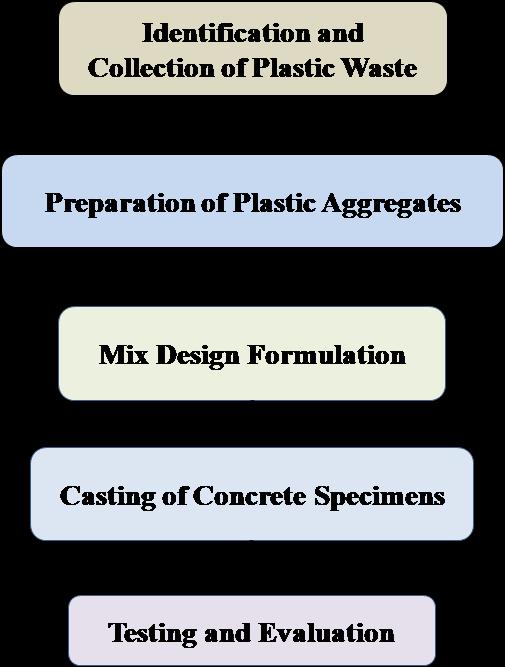
The details about theses procedure are discussed in underneathsection:
i. IdentificationandCollectionofPlasticWaste: The firststepinvolvesidentifyingsourcesofplastic waste, including industrial by-products, householdrefuse,andcommercialwastefrom malls.Thecollectionprocessmustbeorganized andsystematictogatherasufficientquantityof
International Research Journal of Engineering and Technology (IRJET) e-ISSN: 2395-0056
Volume: 11 Issue: 03 | Mar 2024 www.irjet.net p-ISSN: 2395-0072
plasticwasteforsubsequentprocessinganduse inconcretemixtures.
ii. PreparationofPlasticAggregates:Collectedplastic wasteundergoesseveralpreparationprocesses to transform it into a suitable aggregate for concrete:
a. Cleaning: All plastic materials are thoroughly cleaned to remove contaminantsthatcouldaffectthequalityof theconcrete.
b. Shredding and Grinding: The cleaned plastic waste is then shredded or ground into smaller particles. This process is criticalforachievingauniformsizethatcan effectivelyreplacetraditionalaggregatesin concrete.
c. Sieving:Theshreddedplasticparticlesare sieved to obtain a consistent particle size distribution,ensuringuniformitywithinthe concretemixandoptimizingitsmechanical properties.
iii. DesignofConcreteMix:Theconcretemixdesignis crucialfordeterminingtheoptimalproportions of all components, including cement, water, plastic aggregates, and any additional admixtures:
a. Trial Batches: Several trial batches with varying percentages of plastic aggregates are prepared to evaluate their impact on concrete properties such as workability, compressivestrength,anddurability.
b. Optimization:Basedontheoutcomesofthe trialbatches,themixdesignisoptimizedto balance the structural requirements with environmentalconsiderations.
iv. CastingandCuringofConcreteSpecimens:Concrete specimens are cast using the optimized mix design to further evaluate the concrete's performance:
a. Molding: The concrete mix is poured into moldsofspecifiedshapesandsizes.
b. Vibration:Themixisvibratedtoeliminate air pockets and ensure a compact and homogeneousspecimen.
c. Curing: Specimens are cured under controlled conditions to develop the desiredstrengthanddurability.Thecuring periodisdeterminedbasedonthespecific requirementsofthemixdesign.
v. Testing of Mechanical and Durability Properties: After curing, the concrete specimens undergo various tests to assess their mechanical and durabilityproperties:
a. Mechanical Testing: Tests such as compressivestrength,flexuralstrength,and tensilestrengthareconductedtoevaluate thestructuralintegrityoftheconcrete.
b. Durability Testing: Durability aspects, including water absorption, freeze-thaw resistance, and chemical resistance, are assessed to determine the long-term performanceoftheconcrete.
vi. AnalysisandOptimization:Thedataobtainedfrom the testing phase are analyzed to draw conclusionsabouttheperformanceofconcrete withplasticwasteaggregates:
a. Performance Evaluation: The results are compared against those of traditional concrete mixes to identify any improvementsortrade-offs.
b. FurtherOptimization:Ifnecessary,themix designandpreparationprocessarefurther refined to enhance the properties of the concrete.
The Results and Discussion section presents a comprehensiveanalysisoftheoutcomesderivedfromthe experimental process of incorporating plastic waste into concrete mixes. This examination is pivotal for understandingtheimplications,bothpositiveandnegative, ofusingplasticwasteasapartialreplacementfortraditional concreteaggregates.
i. Workability:Theinclusionofplasticwasteslightly reduced the workability of the concrete, as indicated by the slump test. This reduction is attributedtothedifferentsurfacepropertiesof plastic compared to natural aggregates. The slumptestcouldbeobservedformtheTable1.
ii. Density: Concrete mixes containing plastic waste demonstrated a decrease in density. This outcomeisbeneficialforapplicationsrequiring
International Research Journal of Engineering and Technology (IRJET) e-ISSN: 2395-0056
Volume: 11 Issue: 03 | Mar 2024 www.irjet.net p-ISSN: 2395-0072
lightweight concrete, suggesting that plastic wastecaneffectivelyreducetheoverallweight of concrete structures. The density could be observedfromTable2.
Table2.DensityMeasurements
v. FlexuralStrength:Similartocompressivestrength, flexuralstrengthexperiencedaslightdecrease with higher plastic content. Despite this, the levelsremainedadequateformanystructural applications, suggesting a viable trade-off for the benefits obtained. For flexural strength referTable5.
Table5.ImpactofPlasticWastePercentageon WorkabilityofConcrete
iii. Moisture Absorption: The analysis of moisture absorptionrateispresentedinTable3
Table3.MoistureAbsorptionRates
vi. ThermalConductivity:Theincorporationofplastic wasteresultedinlowerthermal conductivity, indicating improved insulation properties of theconcrete.Thischaracteristiccouldenhance theenergyefficiencyofbuildings.Thethermal conductivitycanbeobservedfromTable6.
Table6.ComparisonofEnvironmentalImpact
iv. Compressive Strength: Initial reductions in compressive strength were observed with increasingpercentagesofplasticwasteinthe concrete mixes. However, the decrease remainedwithinacceptablelimitsforspecific construction applications, highlighting the potentialforoptimizingthemixdesign.Table4 helpsinidentifyingthecompressivestrength.
Table4.MoistureAbsorptionRates
vii. Durability:Durabilitytestsshowedvariedresults; however, concrete mixes with plastic waste maintained acceptable resistance to environmentalstressors.Thespecificeffectson durability parameters like freeze-thaw resistance and water absorption varied with thetypeandamountofplasticwasteused.
The relationship between HDPE percentage and workability tests results graph is presented in Fig. 2. Andtheenvironmentalbenefitsofusingplasticwastein concrete, focusing on CO2 and energy savings is
International Research Journal of Engineering and Technology (IRJET) e-ISSN: 2395-0056
Volume: 11 Issue: 03 | Mar 2024 www.irjet.net p-ISSN: 2395-0072
presented in Fig. 3. In Fig. 4. a graph showcasing the relationship between HDPE content and a composite durabilityscoreforconcreteispresented.
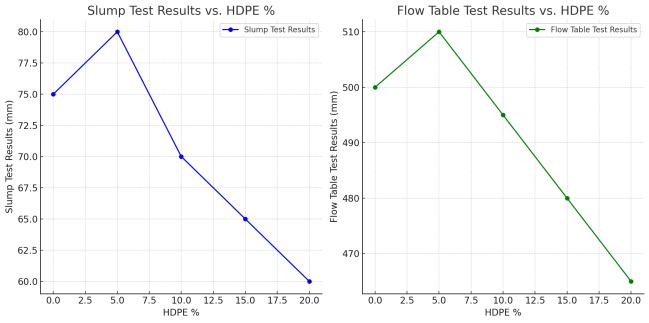
Figure2:TherelationshipbetweenHDPEpercentage andworkabilitytestsresults
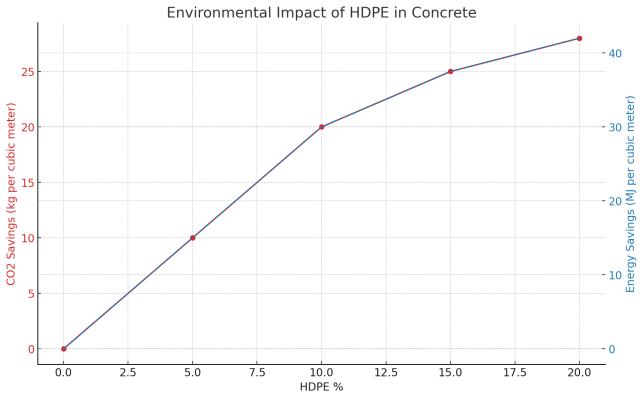
Figure3:Theenvironmentalbenefitsofusingplastic wasteinconcrete,focusingonCO2andenergysavings
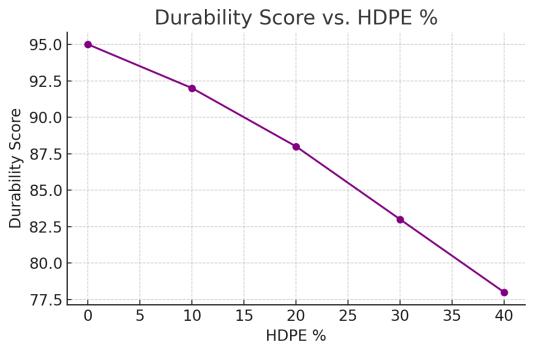
Figure3:TherelationshipbetweenHDPEcontentand acompositedurabilityscoreforconcrete
Theinvestigationintotheincorporationofplasticwasteinto concrete mixtures has highlighted a promising pathway towards sustainable construction practices. The study's findings reveal that this innovative material presents a significant environmental advantage by diverting nonbiodegradable material from landfills and reducing the carbon footprint associated with the production of
conventional concrete. While there are some slight reductions in workability and mechanical strengths, the potentialforspecializedusesofthismaterial,suchasinnonload-bearing structures or buildings requiring enhanced insulation, is high. Continued research and collaboration across industries, academia, and regulatory bodies are necessary for the broader adoption of this sustainable practiceintheconstructionindustry.Thisstudyrepresentsa steptowardstheintegrationofsustainabilityprinciplesinto the construction industry, contributing to the circular economy and paving the way for more eco-friendly constructionmaterials.
Thestudyunderscorestheneedforfurtherresearch tooptimizemixdesigns,exploretheuseofdifferenttypesof plastic waste, and assess long-term performance in realworld applications. Investigations into the lifecycle assessment of plastic waste-incorporated concrete would providedeeperinsightsintoitssustainability.
[1] AliToghroli;PeymanMehrabi;MahdiShariati;Nguyen ThoiTrung;SoheilJahandari;HalehRasekh; "Evaluating TheUseofRecycledConcreteAggregateandPozzolanic Additives in Fiber-reinforced Pervious Concrete with IndustrialandRecycledFibers", CONSTRUCTIONAND BUILDINGMATERIALS, 2020.
[2] Peyman Mehrabi; Mahdi Shariati; Kamyar Kabirifar; Majid Jarrah; Haleh Rasekh; Nguyen Thoi Trung; Ali Shariati;SoheilJahandari; "EffectofPumicePowderand Nano-clay on The Strength and Permeability of Fiberreinforced Pervious Concrete Incorporating Recycled ConcreteAggregate", CONSTRUCTIONANDBUILDING MATERIALS, 2021.
[3] FahadK.Alqahtani;IdreesZafar; "Characterizationof Processed Lightweight Aggregate and Its Effect on PhysicalPropertiesofConcrete", CONSTRUCTIONAND BUILDINGMATERIALS, 2020.
[4] MinOokKim;HyoKyoungLee;Hyeong-KiKim; "Cost andEnvironmentalEffectsofOcean-bornePlasticFlakes inCementMortarConsideringEquivalent-strengthMix Design", CONSTRUCTIONANDBUILDINGMATERIALS, 2021.
[5] Yat Choy Wong; Sahan Perera; Zipeng Zhang; Arul Arulrajah; Alireza Mohammadinia; "Field Study on Concrete Footpath with Recycled Plastic and Crushed Glass As Filler Materials", CONSTRUCTION AND BUILDINGMATERIALS, 2020.