
International Research Journal of Engineering and Technology (IRJET) e-ISSN: 2395-0056
Volume: 11 Issue: 03 | Mar 2024 www.irjet.net p-ISSN: 2395-0072
International Research Journal of Engineering and Technology (IRJET) e-ISSN: 2395-0056
Volume: 11 Issue: 03 | Mar 2024 www.irjet.net p-ISSN: 2395-0072
Daniel Tekleweyni1, Samuel Tuquabo1, Samuel Ghebregziabher1, Ramesh Babu Aremanda1*
1Graduate, Department of Chemical Engineering, MCET, Eritrea
1*Assistant Professor, Department of Chemical Engineering, MCET, Eritrea
Abstract - There is a threefold increase in global fruit production during 1973-2022, whereas in Eritrea the ministry of agriculture recently expanded the fruit cultivation from 734 ha to over 5000 ha in 2023. As a result, production of banana, papaya and mango together accounted for 28,369 tons, in which banana alone adds more than 90% of the production. Post consumed fruit waste, when it is disposed into the landfills causes significantly in releasing greenhouse gases. In context, a survey conducted to assess the post consumption fruit waste from selected business centers in Asmara and to understand their current waste management practices. Survey revealed that the major fruit waste accounted for papaya and banana fruits, causative more than 80% (by weight). In addition, total post consumption wastes of selected fruits; banana, papaya and mango estimated as 8274 tons in 2023 based on their specific waste generations, which is notably huge amount to manage. Despite practicing to feed the post consumed fruit waste to animals, as the fruit production rises in 2023, special attention must be paid by the researchers for improved valorization of the waste through its prudential utilization
Key Words: Fruit waste assessment, waste management, postconsumptionfruitwaste,environmentalpollution,solid wastemanagement,bio-wastevalorization
The major fruits by their production globally include banana, apples, grapes, mangoes, papayas, oranges and watermelons[1].However,theirproductionquantitiesvary acrossdifferentcountriesandregionsbasedontheiragroclimaticconditions[2].Bananasareoneofthemostwidely produced fruits with a global export industry generating around USD 9.1 billion per year. In 2020, South American suppliers exportedanestimated530,000tonsof bananas, with Brazil and Peru being the leading exporters. India is alsoa significant producer ofbananas,with morethan 30 million tons produced annually [3]. Papayas are predominantlygrownintropicalregions,withIndia,Mexico, andBrazilbeingamongthetopproducers.Further,papayas accountforapproximately15.36%ofthetotaltropicalfruit production, behind mangoes and pineapples [4]. Nevertheless, global production of papayas projected to reach 18 million tons by 2032 [5]. Mexico is the largest globalexporterofmangoeswitha3%growthinexportsin 2020.Mangoesarethesecondmostproducedtropicalfruit, accounting for approximately 10.66% of total fruit
production[5].India,China,Thailand,andIndonesiaarealso amongthetopproducersofmangoes,withglobalproduction projectedtoreach84milliontonsby2030[2,3]
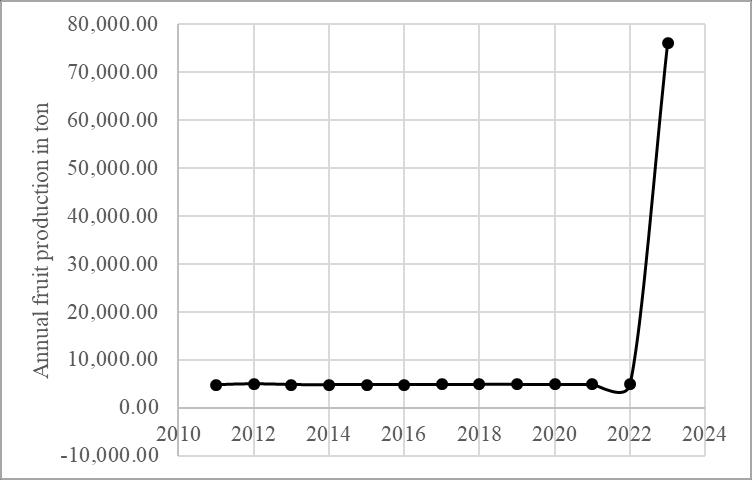
Thecurrentproductionandproductivityofmostfruit cropsinEritreaislowwhencomparedtoregionalandworld averages. The fruits that are cultivated in Eritrea include banana,papaya,mango,orange,guava,lemon,mandarinand others.Basedontheyear2022statisticsthefruitharvested areainEritreawasestimatedat734haandtheproduction offruitswasatalevelof4,871.53tonnes.Asshowninchart 1.,theannualfruitproductioninEritreavariedinbetween 4791tonnesperyearin2011to5000tonnesin2012.Over the period considered (2011-2022) for the production of fruitsinEritrea,however,continuedtoindicatearelatively flattrendpatternduetovarietyofproblemsliketechnical, environmentalandeconomicissues[6].Invalueterms,fruit productionexpandedremarkablyto$15Min2022estimated inexportprice[7].Furthermore,theministryofagriculture (MoA) in Eritrea has focused on improving their fruit production in 2023 and expanded the fruit cultivation to over5000hectaresandasaresultmore76000tonsoffruits wereproducedin2023asshowninchart1[8].
Withtheglobalproductionoffruitsbetween1973and 2022increasedsubstantiallyfrom290millionto933million tons, the generation of large amounts of by-products and wastehasbecomeasignificantconcern[7].Ingeneralfruit
International Research Journal of Engineering and Technology (IRJET) e-ISSN: 2395-0056
Volume: 11 Issue: 03 | Mar 2024 www.irjet.net p-ISSN: 2395-0072
wasteincludefruitinjuries,bruising,over-ripeningduring food transport and storage, and by-products from fruit processing. Otherwise, the term "post-consumption fruit waste"referstothewastegeneratedaftertheconsumption offruits,whichencompassesthewastegeneratedbytheend consumerofamaterialstream.Thistypeofwasteincludes partsthatarenotneeded,suchasfruitskins,seedsandthey are typically discarded in waste receptacles, landfills, or throughotherdisposalmethods.Post-consumedfruitwaste contributes to greenhouse gas emissions through various processes. When food waste, including fruits, ends up in landfills, it decomposes and produces methane, a potent greenhouse gas that contributes to climate change. Thus globally, wasted food accounts for about 8% of all greenhouse gas emissions [9]. Furthermore, the carbon footprintofyearlyfoodwasteisapproximately3.3gigatons of carbon dioxide, emphasizing the need to develop strategies to curtail food wastage and manage food waste effectively[10].Therefore,thepropermanagementofpostconsumed fruit waste is essential for mitigating its contribution to greenhouse gas emissions and addressing climatechange.
Fruitwastenotonlyimpactstheenvironmentbutalso representsalossofvaluableresources.Severalstudieshave highlightedthepotentialbenefitsofconvertingfruitwaste into energy, such as biofuel production, emphasizing the needtounderstandtheimpactofpost-disposalwasteand the potential for energetic purposes [11], which not only minimizeswastebutalsoreducestheoverallcostofrunning businesses. Therefore, the proper assessment and managementofpost-consumedfruitwasteareessentialfor mitigating environmental impacts and promoting sustainablepractices.
In developing countries, the management of postconsumed fruit waste poses several challenges, including lack of infrastructure for waste management, limited resources such as scarce financial and technical facilities [12], food safety concerns, variety of waste and environmental impacts for implementing effective waste management practices [13]. Addressing these challenges requiresamulti-facetedapproach,includinginvestmentin infrastructure, technology, and resource management, as well as the development of tailored waste management strategiestosuitthespecificcharacteristicsofeachregion. Incontrast,theassessmentofpost-consumptionfruitwaste offersseveralpotentialbenefitssuchasrecoveryofbioactive compounds[14],sustainableresourceutilization,creating economic opportunities, enhanced health benefits contributionto“ZeroWaste”goals[15]andthepromotionof circular-economy practices globally. Further, a circular economymodelproposesthemanufacturingofbioplastics basedonfruitwastetominimizethecarbonfootprintand productioncost,whilealsocontributingtothegenerationof employment and recovering the value of fruit residues through packaging manufacturing [16]. Another study
revealsthattheintegratedvalorizationoffruitby-products from food processing industries creates a potential opportunity for the extraction of value-added compounds through the application of sustainable and green methodologies, contributing to the circular economy approach[17].
Basedonexistingknowledge,itisknownthatEritrea's agriculturalsectorproducesavarietyoffruits,andthewaste generatedmayincludefruitinjuries,over-ripening,andbyproducts from fruit processing. However, detailed information on the specific types of fruit waste and their managementinEritreaisnotreadilyavailableinanyofficial reports so far and hence in the present work, focused on assessmentofpost-consumptionfruitwastethatgenerates fromseveralfruitconsumingbusinesscentersinAsmara,the capitalofEritreaasthedatageneratedmayserveassource forfurthermanagementactionstobeimplemented.
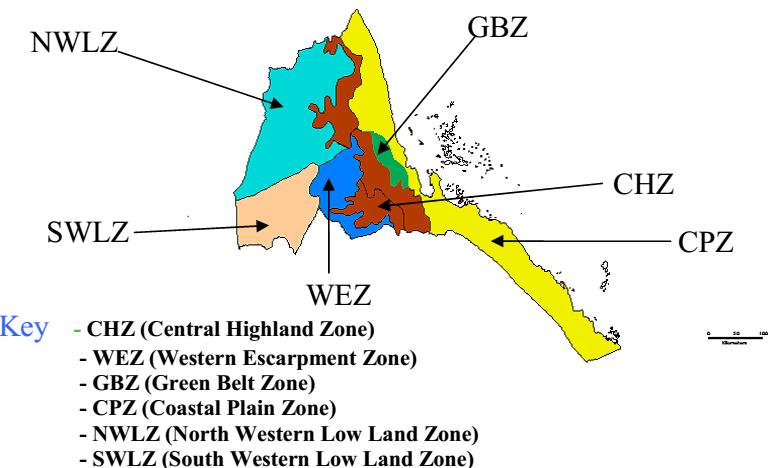
Asmara,asthecapital,isoneofthemostpopulouscity of Eritrea with 13 administrative regions, located in the highlands of the Central Region. It is situated on a rocky highland plateau, which separates the western lowlands fromtheeasterncoastalplainsandislocatedat2,352-meter (7,628ft.),altitude.Inspiteofitssmallsize,Eritreadivides into six main agro-climatic zones as displayed in fig 1 Generally, Eritrea has two types of prevailing climates, subtropicalhighlandclimateandcoldsemi-aridclimate[18]. Thealtituderangesfromlessthan100metersinthecoastal plainsupto2400metersinthecentralhighlandswithsmall areaabovethat.IntheHighlands,Western-Escarpmentand South Western Lowlands rainfall usually occurs during summer(June-September).Averageannualrainfallinthese area ranges from 400 to 700 mm. in the coastal plains rainfalloccursduringthewintermonthswithanaverageof less than 200 mm per year. The Green Belt Zone is an exceptionalareathatenjoyshighrainfalloccursduringthe periodNovember-March.Averageannualrainfallinthiszone exceeds1000mm.
The diverse agro-climatic regions of Eritrea is an advantageforproducingdiversifiedfruitcrops.Extending the season is also possible for many crops creating an opportunityformanycropstobeavailablethroughoutthe year. Generally, fruits crops like banana, papaya, mango, orange,guava,lemon,mandarinandothersareproduced.
Papaya(CaricapapayaL.)isashort-livedtreegrown throughoutthetropicsandinmildsub-tropicalclimatesin Africa, Australia and North America. In Eritrea, it was introduced earlyinthe1900sandiscommonlycultivated alongriverbanksinthemidlandsandlowlands,e.g.around Merebvalley,Filfil,Ghinda,Keren,Mai-HabarandMai-Aini, 500-1,600mandcultivatedwholeyear.Mango(Mangifera
International Research Journal of Engineering and Technology (IRJET) e-ISSN: 2395-0056
Volume: 11 Issue: 03 | Mar 2024 www.irjet.net p-ISSN: 2395-0072
indicaL.)isalsoatropicalfruittreescultivatedinwarmer areasofEritrea.Itproductionisbiennialandcultivatedwell from500to1,800malongtheriverbanksofAnseba,Barka, Mereb-gash and in irrigated horticultural sites. Banana (Musa sp. family) is grown in all tropical and some subtropicalcountries.InEritrea,bananacangrowinallpartsof Eritrea’slowlands,majorityproducedalongtheriverbasins ofAnseba,BarkaandMereb-Gash(MinistryofInformation, Eritrea).Themajorityofthebananacultivationiscarriedout in the subzones of Agordet, Dighe, Tesseney, and Haikota areasintheGash-Barkaregionanditsproductionextends thewholeyear(butdifferinmanagementsystem)[19].
Theassessmentofpost-consumedfruitwasteinvolves variousmethodologies,includingdataanalysis,experimental
assessments, and practical measurement methods. This study was conducted during the months of June, July and Augustin2023onceinaweekforeightconsecutiveweeks forbananaandpapaya,sixconsecutiveweeksforthecaseof mangoatthreedifferentfruitbasedbusinesscenterslocated inAsmarasuchasMilkias,ShallomandCapriastheseplaces consumeconsiderableamountsoffruitsdailyforjuicesand otherkindoffruitprocessedproducts.
Practical methodologies for assessing fruit waste includeself-reportedquestionnairesandpreplannedwaste collectionmethods,whichhavebeencomparedempirically to measure post consumed fruit waste accurately. In each study center, waste fruit generated is collected in plastic containers of 100 or 200-liter capacity. The survey is conductedattheendofeachstudydayandtheamountof fruit waste produced is separately quantified directly throughaweightingmachineandrecorded.
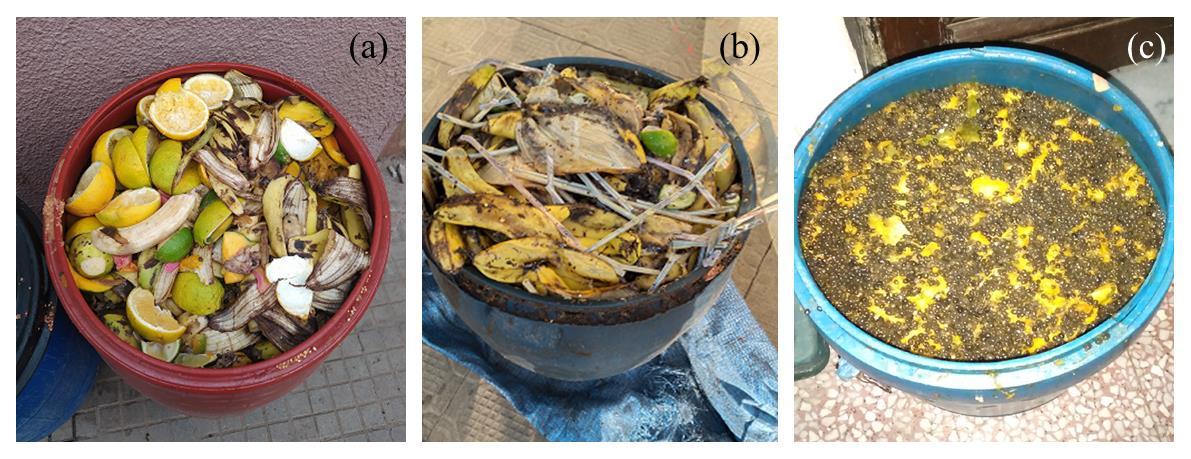
The management of post-consumption fruit waste involvedidentifyingwastedisposalandcollectionmethods, andpotentialrecyclingtechniques,emphasizingtheneedfor a comprehensive approach to waste assessment and management. Post-consumed fruit waste that include skin andseedswascollectedmanuallyintheplasticcontainersat thestudiedcentersasshowninfig3.Totalwastageoffruits selected for this study composed of different non-edible (unavoidablewaste)wastageparts.Incaseofpapayaspeel andseed,frommangoes,peelsandkernelarefoundaswaste, whileinthecaseofbananapeelandrottenfruits.Overall,the assessment of post-consumed fruit waste encompasses a range of analytical and practical methods, aiming to understandwastegenerationthroughtheinterpretationof survey reports, feasibility of utilization, and effective managementstrategies.
International Research Journal of Engineering and Technology (IRJET) e-ISSN: 2395-0056
Volume: 11 Issue: 03 | Mar 2024 www.irjet.net p-ISSN: 2395-0072
Asthestudyidentifiespapaya,bananaandmango fruits are the major sources of post-consumed fruit waste generated from the centers studied in Asmara, capital of Eritrea.Thewastesgeneratedwerequantifiedendofevery business day for eight consecutive weeks. As the table 1. shows,thedailyaveragefruitwastegeneratedoneachday weremeasuredas44.56kg,41.76kgand19.48kgforpapaya, banana and mango fruits respectively. The resultfrom the
study evidently showed that papaya and banana generate highestwastesduetotheirhighconsumptionatfruitjuice businesscentersstudied.However,wastefrommangowas notedlowduetoitslimitedseasonalavailability.Overall,as non-consumableweightofpapayafruitincludingseedand peelisquitemore,thestudydisclosesthatpost-consumed fruitwastegeneratedfrompapayaisthehighestthanbanana.
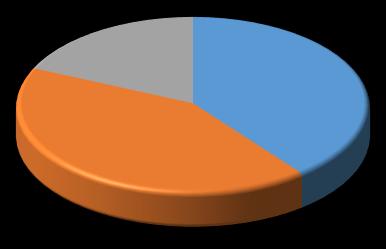
Thespecificfruitwasteisdefinedasthewastegenerated per kilogram of fruits. Specific wastes of papaya, banana, mango and orange fruits were determined after their consumptionforatleast10samplesforeveryvarietyofthe fruits and the average values are reported as 0.295kg, 0.475kg,0.28kgand0.25kgforpapaya,mango,bananaand orange fruits respectively.Although mangofruitsgenerate approximately 50 % of its weight as waste, due to its uncertain availability as the supply depend on suitable seasons, it doesn’t contribute significantly in the postconsumptionfruitwastegeneratedfromthecentersstudied. Further,asportrayedinChart2,thewastegeneratedfrom papayacontributesfor42.11%,thehighestonethan39.48% and18.4%sharedbybananaandmangofruitsrespectively.
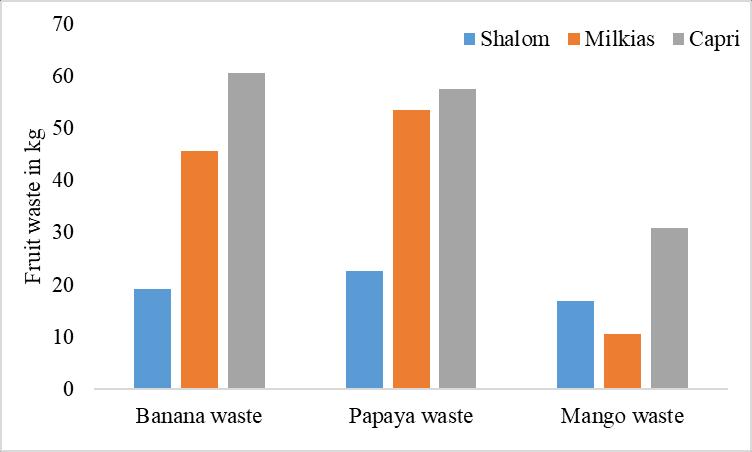
The post-consumed fruit waste of selective varieties at different business centers studied have varied randomly based on their supply management issues, seasonal availability of fruits, and their locations which inherently determinetheaccessibilitytocustomers.AsdepictedinChart 3, the study revealed that Capri fruit juice center generate morewastethanothers.Consequently,thesegregatedwastes of all selected fruit; banana, papaya and mango are also measuredhigheratCapricenter.Further,papayaandbanana consumptionsatMilkiascenterfoundcompetitivewithCapri business center while Shalom center left with lowest fruit waste than others although which is one of the significant localbusinesscenter.
Thebestpracticesformanagingpost-consumptionfruit wasteincludevariousmethodssuchascomposting,feeding to livestock, and donation to food banks. Composting fruit and vegetable waste is an effective method to reduce the environmental impact of waste disposal. It allows for the organic matter to decompose and be reused as a natural fertilizer, promoting a circular economy approach and reducingthevolumeofwastesenttolandfills[20].Further, giving fruit and vegetable culls to local food banks is a beneficial practice that helps to reduce food waste while providing nutritious food to those in need. This approach supportsthecommunityandcontributestothereductionof post-consumptionfruitwaste[21].Inaddition,storingculled fruit and vegetable waste on-site for a limited time and returning it to the field on which it was grown can be an effectivemethodtomanagewastewhileallowingfornatural decompositionandnutrientrecycling[22].Otherwisefruit andvegetablewastecanbeutilizedasanimalfeed,providing
International Research Journal of Engineering and Technology (IRJET) e-ISSN: 2395-0056
Volume: 11 Issue: 03 | Mar 2024 www.irjet.net p-ISSN: 2395-0072
a sustainable and low-cost alternative to traditional feed sources. This practice not only reduces waste but also contributestothecircularuseofresourceswithinthefood system[21].
Poor management practices of post-consumption fruit wastecanleadtoenvironmentalandeconomicchallenges.In caseofspecificpost-consumptionfruitwastegeneratedfrom the business centers studied from Asmara, majorly from banana and papaya fruits are managed by utilizing it as a livestockfeed.Otherwise,themangokernelsarepracticedfor compostingandusingitasafertilizer.Inaddition,thefruit wastegeneratedfromthehouseholdseventuallyendedinto municipalsolidwaste,whichhasbeenpracticingtocarryand dumpingatnearbetgiorgis(Scarico)location.
Further, the management of industrial fruit wastes is important not only to decrease the volume of food waste accumulated in the landfillsbut also to promote a circular economy approach [1]. Circular economy approach emphasizes the need for novel and new processes and productstoallowtheutilizationofvirgininasecondstep,to maximizetheuseofthewastethroughoutthesupplychain, bypromotingcircularity,thusclosingtheloopanddecreasing the amount of noxious materials deposited in the environment.ThepeopleinEritreaneedtobepracticedto segregatetheirwastebeforedumpingittothemunicipality, which may help the authorities to recover value added productsatpredefinedscales.Incontext,theauthoritiesneed to provide such awareness campaigns to the public to circulate their household waste in an optimized direction. However,thelackofintegratedrecoverystrategiesforfruit waste leads to the under-utilization of its potential value, including the recovery of bioactive compounds and the production of commercial products [2]. Additionally, the excessivelandfill disposal offruit waste contributes to the generation of methane, a potent greenhouse gas, and represents a lost opportunity for resource recovery and recycling[1].
3.4 Potential scope of utilizing selective fruit waste for distinguished applications
Papaya(Carica papaya L.)isoneofthemosteconomically importantfruitcultivatedthroughouttheyearanditisrichin variousbioactivecompoundssuchascarotenoids,phenolic compounds, vitamins like A, C and E. Further, papaya also enriched with minerals like potassium and magnesium. In addition,papaya fruitisfolateandfiber,whichhavemany beneficial health effects onour bodythatare attributedto antioxidant properties [23]. Current study discloses that papaya peel (PP) and papaya seed (PS) are the major byproductsofpapayaprocessingandtogetherrepresenting 29.5%offruitweight.Furtherreviewsfocusedonanalyzing physicochemicalcompositionandvalorizationofPPrevealed that, it can be used for obtaining many valuable products suchasbiofuels,adsorbents,dietaryfibers,biomedicinesand biomaterialsbyfermentation[23].Anotherreviewdescribes thatPSexploitedasanalternativeproteinfeedingredientfor poultry with crude protein of 24-30%, in vitro protein digestibilityof80%andproportionofessentialaminoacids of47%[24].
Banana(Musa sp. family)isthehighlyconsumedfruitin Eritreaandthegeneratedpeelwasteismanagedbyutilizing itascattlefeed.Asmanyconsumersavoidconsumptionof meatandmeatproductsduetohighcholesterollevelbutby feedingbananapeels,serumcholesterolintheblood,meat andliver reported to be reduced [25].In fact, banana peel reportedwithconsiderableamountofmineralashwhenitis convertedintobiocharwhichcanimprovethequalityofthe soil. Banana peel also reviewed as a potential source of carbonwitheminentdenitrificationabilitytoenrichnitrogen contentofthesoil.Furtherthepotassiumcontentofbanana peelreportedas40%ofthepeelcontent,whichimprovesthe germination of the crops when applied as fertilizer. In addition,severalstudiesrevealedthatfeedingpoultrywith starchy banana peel rapidly rises the rate of production, particularlyweightgaininchicken[26].
Today,thematerialssciencegainedmuchattentioninthe world, banana peel suggested as a porogenous agent by blending 20 weight % of itwith clayas itcontains 73.4% (weight)ofstarch,fordevelopinghighlyporousceramics.An attemptalsomadetoutilizetheripenedbananaskinpowder toproduceediblecoatingsandactivepackagingfilmsbased on various functions exhibited by their carbohydrates. Further,thepresenceofhighqualitylipidsofabout34%in bananapeelmadethemacheapandefficientfeedstockfor the cultivation of microorganisms resulting in improved biodiesel.Inaddition,asbananapeelshaveadistinguished level of nutrients, employing cow dung as inoculum, they eventuallyhiketheproductionbiogas[26].
Themango(Mangifera indica L.)isconsideredtooneof the world’s preferable fruit because of its color, taste and
International Research Journal of Engineering and Technology (IRJET) e-ISSN: 2395-0056
Volume: 11 Issue: 03 | Mar 2024 www.irjet.net p-ISSN: 2395-0072
excellentnutrients.Asthemangopeelconstituents10-20% ofthefruitwhichcontains51.2%ofdietary
fiberitcanbeconsumedinfoodproductslikebiscuitsthat are incorporated with improved antioxidant properties. It wasalsoreportedthatmangopeelisagoodsourceofhigh qualityjellygradepectin.Mangopeelscanalsobeusedfor biogasproductionbyanaerobicdigestion,whichcanproduce agasthatcontains40-52%ofmethane. Further,themango kernelcontains10-15%ediblefat,itcanbeusedinbakery, confectionery and pharmaceutical products. Seed kernel extracts determined with high quantity of phenolic components, which aresuitable foruse infood,cosmetics, nutraceutical and pharmaceutical applications. The seed kernelalsofoundinapplicationsofanimalfeed,composting andvermicomposting[27].Further,feedingofmangoseed kernel waste in poultry diets reviewed on solving the problemofcompetitionbetweenpoultriesandhumansfor cerealgrainsaswellascontributingtoreducethedisposal issues[28].
3.5 Valorization of Eritrean Fruit Waste for its Potential Applications
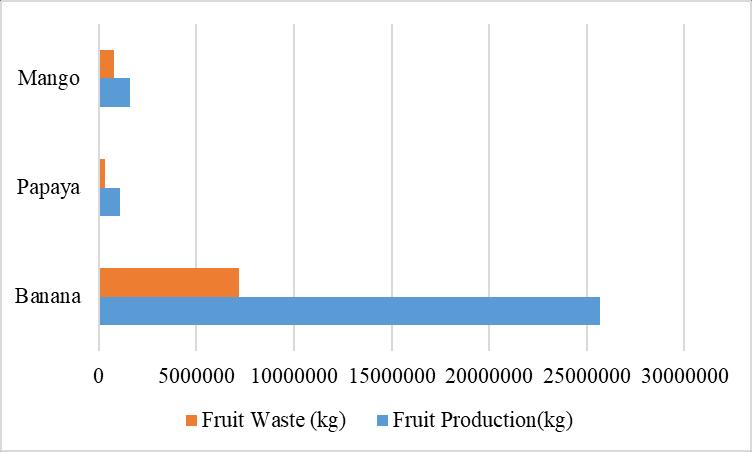
Eritrea is a small country with 3,687,728 of population measured in the month of May, 2023 [29]. Further, the major fruit varieties produced in the country include banana, papaya and mango besides the other commonfruitslikecactifruits(belles),oranges,lemon,date palm,watermelon,peach,tangerine,applesandgrapes[6]. Amongthethreeselectedmajorfruitvarietiesasshowninfig 4, banana production is on top with 25659.6 ton in 2023 followed by mangoandpapaya productions of 1610.6and 1098.9tonsrespectively.
-4
Further,itwasestimatedthat,bananaalonegeneratethe postconsumedwasteof7184.688tonsperyearwhichhas been practicing traditionally as a cattle feed. In contrary, sincetheministryofagriculture(MoA)inEritreahasbeen
tryingtofindabestnaturalfertilizer,bananapeelcouldbea better choice to serve as a feedstock for biochar fertilizer productionwhichcanstabilizethesoil withenrichmentof nutrientssuchasnitrogenandpotassium.Inaddition,mango and papaya fruit wastes of 765 tons and 325 tons respectively, could also be significant feedstock for value added products.For instance, papaya peel and seed waste could be a better feedstock for biofuel or biomedicine. Besides, mango fruit waste also has potential to use as a feedstockforbiogasproductionbyfermentation.Although thesewastehaveseveralbenefitsofusingitasanimalfeed, yet local researchers can divert their works for further potentialbenefitsofthecountry.
Post-consumedfruitwastescontributesignificantlyin municipal solid waste everywhere in the world. A survey carriedoutatthreefruitbusinesscentersinEritreancapital city,Asmarahasdisclosedthatthepeelandseedwasteof papaya is about 42.11% (by weight), followed by banana peelwastewith39.48%andtherestbymangokerneland skinwastes.Althoughthespecificwasteofmangoisquite higherthanbananaandpapaya,itscontributioninthetotal wasteisquitelowduetoitsseasonalavailability.Currently, the fruit waste generated managed by feeding animals partially from the business centers, but the waste comes fromthehouseholdsdirectedintomunicipalsolidwasteand therebycontributingtogreenhousegasesreleasesfromthe landfills. Since ministry of agriculture (MoA) of Eritrea expanded the cultivation of fruits from 734 ha in 2022 to over5000hain2023andasaresultapproximately76000 tonsoffruitproductionrecorded.Bananafruitwastealone estimated as 7185 tons, which is notably higher than the wastegeneratedin2022andthusitissalienttoassessthe total fruit waste generation for more appropriate managementinthefuture.Inaddition,banana,papayaand mangofruitwastesfoundinseveralapplicationswithvalue added products. Hence, the local researchers need to pay attentiontodiverttheirideasforbettervalorizationofthese wastes.
Authorswouldliketoexpresstheirdeepestgratitudeto Ms. Heaven Kifelemariam, from the Horticulture Dept., Hamelmalo College of Agriculture for her invaluable contribution in providing necessary data. Authors further extendtheirthankfulnesstothestaffmembersofministryof agriculture(MoA) for necessarysupportin facilitatingthe dataneededfortheproject.Authorsalsoliketoexpresstheir appreciation to Ms. Samrawit Zerezghi and Dr. Sujana Ramesh for their untired support in proof reading of this article.
International Research Journal of Engineering and Technology (IRJET) e-ISSN: 2395-0056
[1] Fruit: World production by type 2022.(2024,February 6).
Statista.https://www.statista.com/statistics/264001/w orldwide-production-of-fruit-by-variety/
[2] List of countries by fruit production.(2023,January2). Wikipedia,thefreeencyclopedia.RetrievedFebruary22, 2024, fromhttps://en.wikipedia.org/wiki/List_of_countries_b y_fruit_production
[3] Home. (n.d.). OECD iLibrary.https://www.oecdilibrary.org/sites/e1ed44a3en/index.html?itemId=%2Fcontent%2Fcomponent%2F e1ed44a3-en
[4] FE913/FE913: An overview of global papaya production, trade,andconsumption.(n.d.).Ask IFASPoweredbyEDIS.
https://edis.ifas.ufl.edu/publication/FE913
[5] Home. (n.d.). OECD iLibrary. https://www.oecdilibrary.org/sites/08801ab7en/1/3/11/index.html?_csp_=cdae8533d2f4a8eebccf87 e7e1e64ccd&itemContentType=book&itemIGO=oecd&it emId=%2Fcontent%2Fpublication%2F08801ab7-en
[6] The fruits of production in Eritrea - knoema.com. (2022).Knoema.https://knoema.com/data/agricultureindicators-production+eritrea+fruits
[7] Eritrea'sfruitmarketreport2024-Prices,size,forecast, andcompanies.(2024,February1).IndexBox-Market IntelligencePlatform-2MillionReports.
https://www.indexbox.io/store/eritrea-fruits-marketreport-analysis-and-forecast-to-2025/
[8] Eritrea: Ministry of agriculture holds annual assessment meeting.(2024,January27).
Africa.com.https://www.africa.com/eritrea-ministryof-agriculture-holds-annual-assessment-meeting/
[9] Sarah K. (2021). A third of all food in the U.S. gets wasted. Fixing that could help fight climate change. https://www.washingtonpost.com/climatesolutions/2021/02/25/climate-curious-food-waste/
[10] Bhatia,L.,Jha,H.,Sarkar,T.,&Sarangi,P.K.(2023).Food wasteutilizationforreducingcarbonfootprintstowards sustainable and cleaner environment: A review. International Journal of Environmental Research and PublicHealth,20(3),2318.
https://doi.org/10.3390/ijerph20032318
[11] Pour,F.H.,&Makkawi,Y.T.(2021).Areviewofpostconsumptionfoodwastemanagementanditspotentials for biofuel production. Energy Reports, 7, 7759-7784. https://doi.org/10.1016/j.egyr.2021.10.119
[12] ] Sahoo, A., Dwivedi, A., Madheshiya, P., Kumar, U., Sharma, R. K., & Tiwari, S. (2023). Insights into the management of food waste in developing countries: WithspecialreferencetoIndia.EnvironmentalScience andPollutionResearch.
https://doi.org/10.1007/s11356-023-27901-6
[13] Lipiński, A. J., Lipiński, S., & Kowalkowski, P. (2018). Utilization of post-production waste from fruit processing for energetic purposes: Analysis of Polish potentialandcasestudy.JournalofMaterialCyclesand WasteManagement,20(3),1878-1883.
https://doi.org/10.1007/s10163-018-0729-2
[14] Deng,G.,Shen,C.,Xu,X.,Kuang,R.,Guo,Y.,Zeng,L.,Gao, L.,Lin,X.,Xie,J.,Xia,E.,Li,S.,Wu,S.,Chen,F.,Ling,W.,& Li, H. (2012). Potential of fruit wastes as natural resourcesofBioactivecompounds.InternationalJournal ofMolecularSciences,13(7),8308-8323.
https://doi.org/10.3390/ijms13078308
[15] Lucarini,M.,Durazzo,A.,Bernini,R.,Campo,M.,Vita,C., Souto,E.B.,Lombardi-Boccia,G.,Ramadan,M.F.,Santini, A., & Romani, A. (2021). Fruit wastes as a valuable source of value-added compounds: A collaborative perspective.Molecules,26(21),6338.
https://doi.org/10.3390/molecules26216338
[16] ChicaizaPedraza,L.T.,&RoblesCamargo,J.C.(2021). Proposal for a circular economy for the recovery of value from fruit waste in packaging manufacturing. DYNA,88(217),140-149.
https://doi.org/10.15446/dyna.v88n217.91850
[17] Campos, D. A., Gómez-García, R., Vilas-Boas, A. A., Madureira,A.R.,&Pintado,M.M.(2020).Management offruitindustrialby-products Acasestudyoncircular economyapproach.Molecules,25(2),320.
https://doi.org/10.3390/molecules25020320
[18] CATBT(ClimateAsmara–temperature,Besttime)to visit,Weather,retrievedfrom https://www.Besttimetovisit.co.uk
[19] Useful trees and shrubs in Eritrea: Identification, propagation, and management for agricultural and pastoral communities. (1996). Regional Soil ConservationUnitRscu/Sida.
Volume: 11 Issue: 03 | Mar 2024 www.irjet.net p-ISSN: 2395-0072 © 2024, IRJET | Impact Factor value: 8.226 | ISO 9001:2008 Certified Journal | Page65
International Research Journal of Engineering and Technology (IRJET) e-ISSN: 2395-0056
Volume: 11 Issue: 03 | Mar 2024 www.irjet.net p-ISSN: 2395-0072
[20] Preventing wasted food at home. (2023, June 14). US EPA.https://www.epa.gov/recycle/preventing-wastedfood-home
[21] Managingfruitandvegetablewaste.(2022).Extension| UGACooperativeExtension.
https://extension.uga.edu/publications/detail.html?nu mber=C988&title=managing-fruit-and-vegetable-waste
[22] GaryL.H.(2022).ManagingFruitandVegetableWaste, UGA Cooperative Extension Circular 988 https://secure.caes.uga.edu/extension/publications/file s/pdf/C%20988_3.PDF
[23] Pathak,P.D.,Mandavgane,S.A.,&Kulkarni,B.D.(2018). Wastetowealth:Acasestudyofpapayapeel. Waste and Biomass Valorization, 10(6),1755-1766. https://doi.org/10.1007/s12649-017-0181-x
[24] Sugiharto,S.(2020).Papaya(CaricapapayaL.)seedasa potent functional feedstuff for poultry – A review. August-2020, 13(8),1613-1619.
https://doi.org/10.14202/vetworld.2020.1613-1619
[25] Housagul, S., Sirisukpoka, U., Boonyawanich, S., & Pisutpaisal,N.(2014).BiomethaneproductionfromCodigestion of banana peel and waste glycerol. Energy Procedia,61,2219-2223.
https://doi.org/10.1016/j.egypro.2014.12.113
[26] Vijayasri.K, Hemamalini.S, Ramalakshmi.K, Madhushalini.D. (2021). Prospects of utilizing banana peel as a raw material-A review, , Journal of Chengdu UniversityofTechnology,Vol26(9).
[27] Mitra,S.,Pathak,P.,LembisanaDevi,H.,&Chakraborty, I. (2013). Utilization of seed and peel of mango. Acta Horticulturae,(992),593-596.
https://doi.org/10.17660/actahortic.2013.992.74
[28] Gebremedhn.B, Alemu.A. (2015). Review of Mango (Mangifera indica) Seed-kernel waste as a diet for Poultry,JournalofBiology,AgricultureandHealthcare, Vol5(11),pp.156-159.
[29] Khamail A, Midian S, Osman M, Semir Y, Ramesh B.A (2023). Production of bio-briquettes and bio-charcoal briquettes. Thesis Report, Mainefhi College of EngineeringandTechnology,Eritrea.
2024, IRJET | Impact Factor value: 8.226 | ISO 9001:2008