
International Research Journal of Engineering and Technology (IRJET) e-ISSN: 2395-0056
Volume: 11 Issue: 03 | Mar 2024 www.irjet.net p-ISSN: 2395-0072
International Research Journal of Engineering and Technology (IRJET) e-ISSN: 2395-0056
Volume: 11 Issue: 03 | Mar 2024 www.irjet.net p-ISSN: 2395-0072
1,2,3,4,5,6 (BE Student, Dept of Mechanical Engineering, Amrutvahini COE, Sangamner) ***
Abstract - Thisstudyintroducesaself-rechargeableelectric cycle designed to improve cargo mobility in rural areas. Addressing transportation challenges, the innovation integrates renewable energy sources, allowing continuous battery recharging during operation. This self-sustaining feature eliminates the need for external charging infrastructure, making it ideal for remote areas with limited access to electricity grids. The cycle's design prioritizes durability,efficiency,andeaseofmaintenance,tailoredtothe uniqueterrainandusagepatternsofruralregions.Harnessing mechanical and recuperative energy from wheel rotation maximizesrangeandloadcapacity,whileminimizingcarbon emissionsalignswithglobalsustainabilitygoals.Theresearch encompasses design, prototyping, and testing phases, demonstrating the feasibility and efficacy of the selfrechargeable electric cycle. Results highlight its potential to enhance rural cargo mobility, benefiting local businesses, agriculture,andlast-miledeliveryservices.Theintegrationof renewableenergyandrural-specificdesignelementspromotes equitable development and improves the quality of life in underserved rural communities
Key Words: Self-recharging,Cargo,Ruralmobility,Electric vehicle,Tricycle
1.Introduction
Thisstudyaddressesthechallengeshinderingthe developmentofelectricvehicles(EVs)inIndia,focusingon issuessuchaspollution,inadequatecharginginfrastructure, highcosts,andlimitedawareness,particularlyinruralareas. Despitegovernmentinitiativespromotingalternatefuels,EV progress faces obstacles like low battery range and dependency on foreign battery manufacturing. The study emphasizestheneedforhomegrownbatteryproductionto reducecosts.Itexplorestheuniquechallengesfacedbyrural farmersandurbancargotransporters,proposingasolution in the form of a self-rechargeable electric cargo tricycle designedtocarryasubstantialload.Theinnovationaimsto alleviatepoverty,improvehealth,andcontributetoIndia's development by addressing the specific needs of these populations.Theresearchsuggestsusingwheelrotationto rechargethetricycle'sbatteries,offeringapotentialsolution toincreasechargingefficiency.Theproposedelectriccargo tricycle seeks to raise awareness about EVs in rural areas andprovideapractical,sustainabletransportationsolution forbothurbanandruralcommunities
2.1 Peoples facing difficulties while carrying load.
2.1.1 Farming






2.2.1 Limited Battery Range:
Oneoftheprimarychallengesinthedevelopmentof electric vehicles is the limited range offered by current batterytechnologies.Whileadvancementshavebeenmade, theenergydensityofbatteriesisstillaconstraint,impacting thedistanceanEVcantravelonasinglecharge.
Limited range can be a significant deterrent for potentialEVbuyers,especiallyforthosewhoneedtocover longdistancesregularly.Thisissueisparticularlynoticeable inregionswithinadequatecharginginfrastructure.
International Research Journal of Engineering and Technology (IRJET) e-ISSN: 2395-0056
Volume: 11 Issue: 03 | Mar 2024 www.irjet.net p-ISSN: 2395-0072
For electric vehicles to be widely used, charging facilities must be readily available. In many areas, the charging infrastructure is insufficient, hindering the convenience and feasibility of owning an electric vehicle. Without a robust charging network, EV users may face challengesinfindingchargingstations,especiallyduringlong journeys.Thislimitationcandiscouragepotentialbuyersand restricttheuseofelectricvehiclesincertainregions.
Evenwithfast-chargingtechnologies,thecharging process for electric vehicles is generally longer than refuelling a traditional vehicle with gasoline. This longer durationcanbeinconvenientforuserswhoareaccustomed to quick refuelling The time it takes to charge an electric vehicle can impact the user experience, affecting the acceptanceofEVsfordailyuse,especiallyinsituationswhere timeisacriticalfactor.
Awarenessaboutelectricvehiclesisoftenlowerin rural areas compared to urban centres. Limited access to information and education about the benefits of electric vehiclescanhindertheiradoptionintheseregions.Without sufficient awareness, potential buyers may not consider electricvehiclesasaviableoption.Thislackofawarenesscan also affect the development of necessary support systems, suchascharginginfrastructure,inruralareas.
3. Literature Review
3.1 Phapale Ishwar et.al. developed a system to power bicycles using an alternator for battery recharging. Initiallyreliantonthebattery,ourelectricvehiclemodel integratesa magnetic alternatortosustaincontinuous energygeneration.ThissetupmaintainsasteadyRPMof approximately 3000, ensuring consistent electricity production. Pedal torque initiates the alternator's rotation, which then generates power for battery replenishment. This innovative design allows for selfrechargingcapabilityduringcycling,enhancingthebike's energyefficiency
3.2 Avesh Khan et.al.createdabicycletrolleywithahitch systemandwheelsforcarryingbicyclecargoinsteadofa motor.Itcansignificantlyraisethecargocapacityofa bicycle.Thetrolleycouldbeneededasageneral-purpose goods carrier or for a specific purpose, like the transportation of passengers or a certain kind of merchandise. Since it has been around for a very long time,trolleyshavemadeiteasierforpeopletotransport itemsratherthanhavingtodoitthemselves.
3.3 Shubham U. Tayde et.al. createdanelectricvehiclein response to fuel restrictions and environmental concerns two issues that are critical to the modern economy and fast-paced lifestyle. Due to their role in pollutionandglobalwarming,traditionalvehiclesmust givewaytomoreenvironmentallyfriendlyoptions,such ase-bikes.Thesedohavecertainrestrictions,though.In ordertoovercomethem,wehavecreatedanelectronic bikethatgeneratespoweronitsownwithouttheneed for external fuel or charging sources. Because of its creativedesign,whichproducesallofitsownelectricity, it operates continuously and has no negative environmentaleffects.
3.4 GIRISH B KALLIHAL et.al. traction system for an autonomous Electric Vehicle combines batteries anda dynamo. It efficiently integrates two energy storage systemsforenhancedperformance.Byanalysingvehicle characteristicsandroutingprofiles,energyconsumption is determined. The system components, including batteries, dynamo, power converters, and control strategy, are detailed. A control strategy is devised to optimizeenergymanagementandincreaseautonomy.
3.5 Mazlan, Rozdman et.al. basedonalternatorspeed,an energyauditwasdoneonalternatoroutputandbattery voltage.Alternatorshavebeenchangedtoaccommodate thegrowingneedforpowerincars.Thisstudyemploysa Proton Preve 1.6 Manual automobile to examine how alternator speed affects the charging system. Three engine speeds were put to the test: 1500 RPM for the idle, 3000 RPM for the cruise. The findings show that improved power generation and quicker battery chargingratesarecausedbyfasteralternatorspeeds.
Research
Volume: 11 Issue: 03 | Mar 2024 www.irjet.net p-ISSN: 2395-0072
4.1.1.1
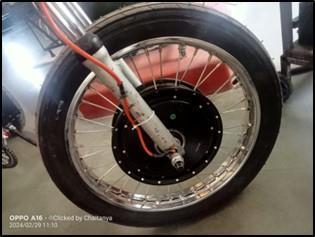
Aspertherequirementthatmotormustbeableto carry the 170 kg load with the full speed of 25 km/hr the motormustbepowerful.ByDesigncalculationsmentionin the next section the motorweare going to use will be the 1000 W Brushless DC motor. It will be the hub motor (Assembledwithinthetireassembly)mountedtothefront wheelofthecycle.Wehavechosenfrontwheeltoassemble themotortogethigherstartingtorqueandhigherspeed.
4.1.1.2
Asperthemotorspecificationthebatteryshouldbe capable to provide enough amount of voltage. So, by the calculationwedecidetouseLithium-ionbatterybecauseof itsadvantageslikeHighenergydensity,Lowmaintenance, Performance and longevity, Versatility, Improvement of safetyperformance.ThePoweroutputofthebatterywillbe 48vvoltageand24ahcurrent.Asperthecalculationbattery iscapabletodrivethemotor.
4.1.1.3
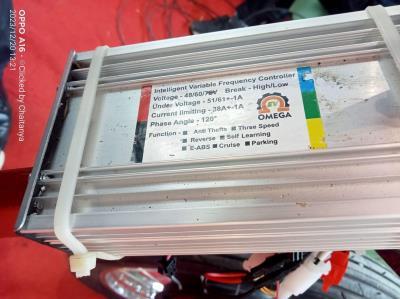
Inthiscase,themotorgeneratesabackemfdirectly proportional to its speed and is normally powered by a voltagefromthecontroller.Duetothedifferencebetweenthe controller's output voltage and the motor's back emf, the motor'sbackemfgrowsandthecurrentreducesasitmoves faster.Thecurrentceaseswhenthemotorspeedreachesa veryhighlevelbecausethebackemfmatchestheoutputof thecontroller.Ifthemotorrunsevenfasterthanthecurrent, itmustgonegative(feedingbackintothecontroller)since theback emfisnowgreaterthantheoutputvoltageofthe controller.Andsothebrakingbegins.Thecontrollerhasto managethiscurrent.
Analternatorisakeycomponentinthegenerationof electrical power in various applications, most notably in automobiles. Its fundamental purpose is to convert mechanicalenergy,oftenderivedfromanengine'srotation, intoelectricalenergy.Aspertherequirementswearegoing tousealternatorusedincar.
A voltage regulator is a critical component in electrical systems, tasked with maintaining a stable and controlledoutputvoltagewithinaspecifiedrange.Itplaysa crucialroleinvariousapplications,includingpowersupplies, automotive systems, and generators. There are different types of voltage regulators, such as linear and switching regulators, each with its own characteristics. Linear regulatorsuseaseriespasselementtoregulatevoltage,while switchingregulatorsrapidlyswitchtheinputvoltageonand off,providinghigherefficiency.Theprimaryfunctionsofa voltage regulator include ensuring voltage stability, regulating the output despite changes in load or input voltage, and providing protection mechanisms against overvoltageandundervoltage.Someregulatorsalsoinclude featureslikecurrentlimitingandtemperaturecompensation.
Inthiselectricalsystem,thetricycleispropelledbya motor powered by a battery. As the wheels rotate during movement, this mechanical motion is harnessed by an alternatorconnectedtothewheelrotation.Thismechanical energyistransformedintoelectricalenergybythealternator. Aclosed-loopsystemiscreatedwhenthebatteryischarged usingtheelectricalenergythatwasproduced.
Thebatteryinitiallyprovideselectricalpowertothe motor for tricycle propulsion. The alternator is triggered simultaneouslybythewheelsturning,convertingmechanical energy back into electrical energy. The second battery is recharged by rectifying this electrical energy to direct current. AS the first working battery get discharged the battery swapping will get placed and the vehicle will be
International Research Journal of Engineering and Technology (IRJET) e-ISSN: 2395-0056
Volume: 11 Issue: 03 | Mar 2024 www.irjet.net p-ISSN: 2395-0072
driven by the second battery. Consequently, the system maintainsacontinuouscycleofconvertingbetweenelectrical andmechanicalenergy,ensuringasustainedpowersupply forthemotorandotherelectricalcomponentsasthetricycle moves.
Ifsomehowbatterygetdischargedthetricyclecan bedrivenandchargedbymeansofmechanicalpedalling,the chanceofhappeningsuchincidenceisabout1%only.
4.2 Mechanical Arrangement
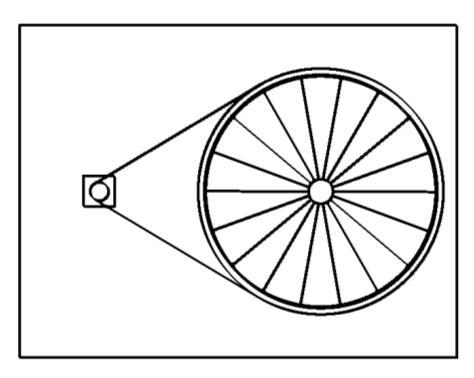
Fig4.AlternatorArrangement
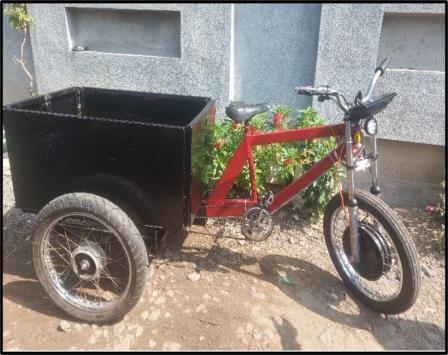
Herethetricyclewilllooklikeanordinarytricyclewith backtrolleyonlythechangewehavemadetoincreasethe rechargingefficiencyistobeattachedextrasprockettorear wheels which will act as a large pulley. The chain on the sprocketwillbeattachedtothealternatorpulley(rotor).This systemwillmakemultiplerotationsofalternatoragainstone rotationofthewheel.
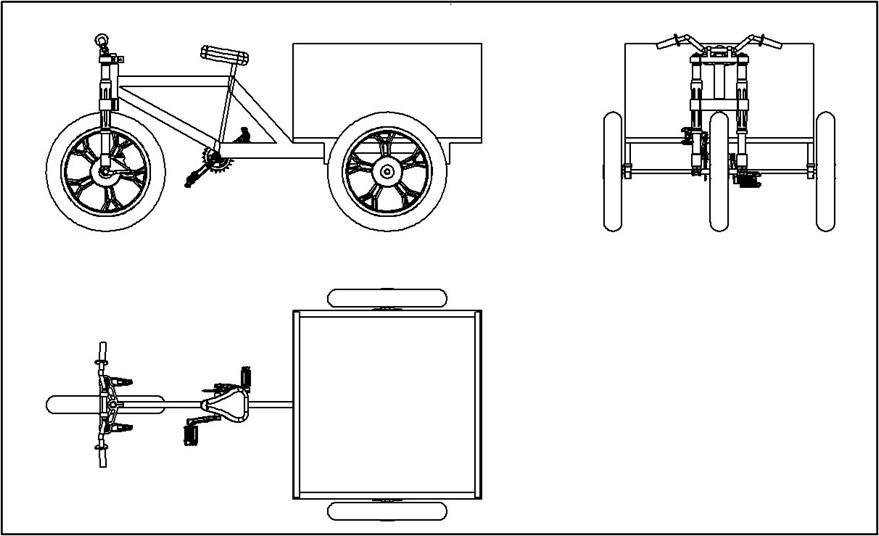
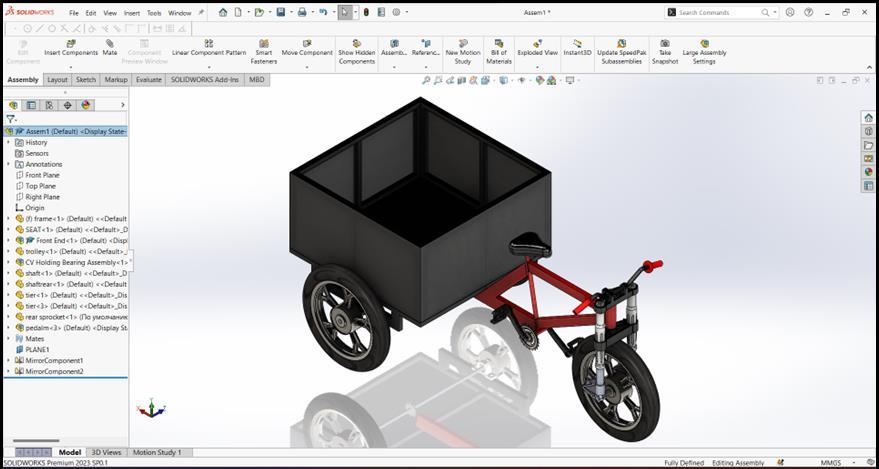
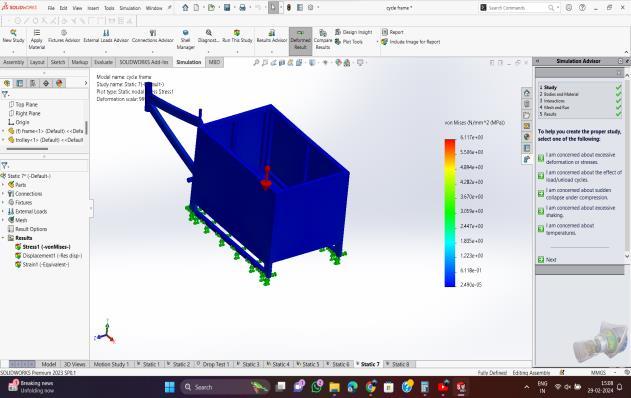
5. Model Views
5.1 Orthographic Views
International Research Journal of Engineering and Technology (IRJET) e-ISSN: 2395-0056
Volume: 11 Issue: 03 | Mar 2024 www.irjet.net p-ISSN: 2395-0072
6. Result
6.1 Power Transmission Efficiency Comparison
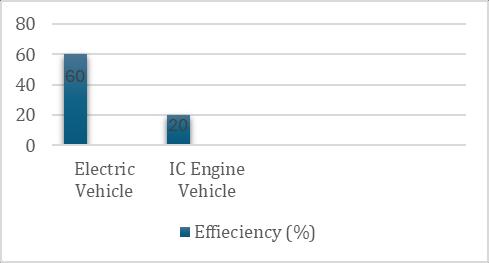
Fig9 PowerTransmissionEfficiencyComparison
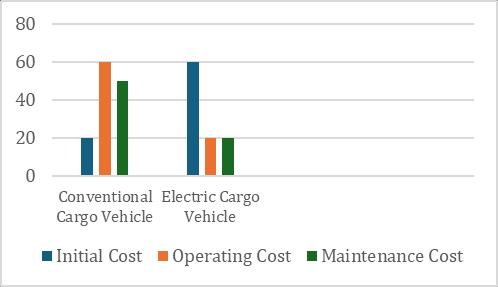
6.2 Comparison between conventional cargo vehicles and Electric cargo Vehicle w.r.t Initial cost, operating cost, and maintenance Fig10.CostComparison
6.3 Recharging Efficiency Comparison
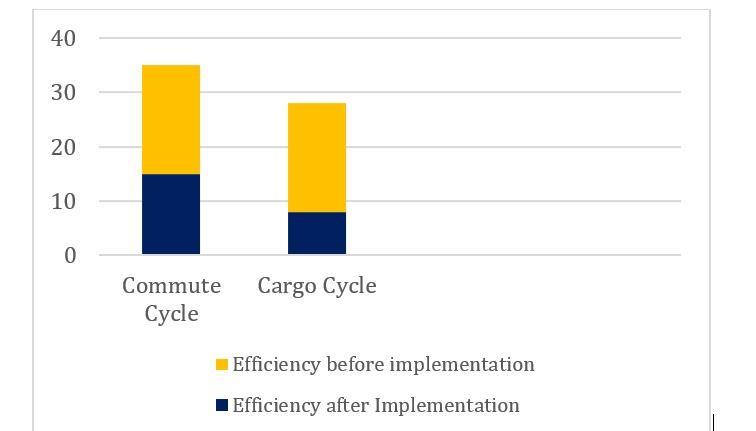
Fig11 RechargingEfficiencycomparison
6.4 Comparison with cargo cycles available in market
Table1.Comparisonwithcargocyclesavailableinmarket
3.
Thefinalproductacargotricycleiscapabletocarry the170kgloadat40kg/hrspeed.Thebatteriesoftricycle can be recharged around 35 % in the span of 50 km. The designoftricycleisverymuchsimple,anditismanufactured atcollegecampusbytheprojectmemberswiththescrapand inlowercost.Asthisiscostefficientthanavailableproducts itwillhelpfulforsmallscaleloadcarryingoperations.
[1] Phapale Ishwar Devidas;Deshmukh Sudarshan Ramdas;Ghegadmal Chaitanya Kishor;Hase Om Santosh;AmbreVishalDipaket.al.ElectricBicyclewith self-rechargingUnit.AU2021100240A4
[2] AveshKhan1,MushrafSyed2,MayankPawar3.DESIGN ANDFABRICATIONOFCOMPACTBICYCLETROLLEY.eISSN:2395-0056.p-ISSN:2395-0072
[3] Shubham U. Tayde, Neha W. Makode2, Umesh M. Laybar3 , Prof. Bhushan S. Rakhonde4. SELF POWER GENERATING ELECTRICAL BICYCLE. e-ISSN: 23950056
[4] 1GIRISHBKALLIHAL,2ZEINULABEDINK,3SAIFULLA LOHAR, 4 IRSHAD ALI KH 5MUZAFFAR AHAMED G. SELF CHARGING ELECTRIC BICYCLE. 2018 IJCRT | Volume6,Issue2April2018|ISSN:2320-2882
[5] Mazlan,Rozdman&MatDan,Reduan&Zakaria,Mohd& AbdulHamid,AbdulHadi.(2017).Experimentalstudy on the effect of alternator speed on the car charging system. MATEC Web of Conferences. 90. 01076. 10.1051/matecconf/20179001076.
ACKNOWLEDGEMENT
We would like to take this opportunity to sincerely thank everyonewhohelpedustosuccessfullycompletethisstudy. First and foremost, we would like to express our sincere gratitudetoProf.S.D.Galande(Asst.Prof.AVCOE)andProf. I.D.Phapale(Asst.Prof.AVPOLY),whoservedasourmentor
International Research Journal of Engineering and Technology (IRJET) e-ISSN: 2395-0056
andguide,fortheirsteadfastsupport,wisdom,anddirection duringthisattempt.
BIOGRAPHIES






Volume: 11 Issue: 03 | Mar 2024 www.irjet.net p-ISSN: 2395-0072 © 2024, IRJET | Impact Factor value: 8.226 | ISO 9001:2008
ChaitanyaKishorGhegadmal (BE Mechanical, Hons. Electric Vehicle)
OmSantoshHase (BEMechanical)
SonalBalasahebGamane (BEMechanical)
RohitDilipBibave (BEMechanical)
VishalDipakAmbre (BEMechanical)
VaibhavKailasGhule (BE Mechanical, Hons. Electric Vehicle)