
International Research Journal of Engineering and Technology (IRJET) e-ISSN: 2395-0056
Volume: 11 Issue: 03 | Mar 2024 www.irjet.net p-ISSN: 2395-0072
International Research Journal of Engineering and Technology (IRJET) e-ISSN: 2395-0056
Volume: 11 Issue: 03 | Mar 2024 www.irjet.net p-ISSN: 2395-0072
MD. Rashid Hussain1 , Dr. Ajay Singh2 , Ashish Verma3
1Scholar, Department of Mechanical Engineering, Radharaman Institute of Technology and Science, Bhopal, M.P, INDIA
2Head and Prof., Department of Mechanical Engineering, Radharaman Institute of Technology and Science, Bhopal, M.P, INDIA
3Assistant Professor, Department of Mechanical Engineering, Radharaman Institute of Technology and Science, Bhopal, M.P, INDIA
Abstract - This research paper investigates the heat transfer and skin friction characteristics of tube bank arrangements, comparing circular and diamond-shaped configurations. The study explores how variations in longitudinal pitch impact Nusselt number and skin friction coefficient for different Reynolds numbers. The findings reveal several significant conclusions. First, transitioning from a circular tube arrangement to a diamond-shaped triangular tube bank arrangement results in a remarkable 35% reduction in skin friction coefficient. This substantial decrease underscores the potential benefits of diamond-shaped tube banks in terms of reducing drag and energy consumption. Second, the research indicates that for circular tube banks, the Nusselt number reaches its peak value when the longitudinal pitch is 2.5 times the tube diameter (2.5D). This optimal pitch length holds true across various Reynolds numbers, demonstrating the consistency of heat transfer performance in circular tube bank arrangements. Similarly, the skin friction coefficient in circular tube banks also reaches its maximum value at a longitudinal pitch of 2.5D, aligning with the Nusselt number trend. In contrast, the study highlights specific nuances in diamond-shaped tube bank arrangements. Initially, the Nusselt number is maximized at a longitudinal pitch of 2D for Reynolds numbers up to 12,000. However, beyond this threshold, a longitudinal pitch of 3D offers the highest Nusselt number values, indicating a transition in optimal pitch length. Additionally, in diamond-shaped tube banks, the minimum skin friction coefficient is achieved with a longitudinal pitch of 2.5D, showcasing a distinct behavior compared to circular arrangements. This research paper provides valuable insights into the performance differences between circular and diamond-shaped tube bank arrangements, shedding light on the potential for optimizing heat transfer and reducing drag in various engineering applications.
Key Words: TubeBankArrangement,CFD,DiamondShape,CircularShape,SkinFrictionCoefficient,NusseltNumber
Tubebankarrangementsplayapivotalroleinnumerousengineeringandindustrialapplicationswhereheattransfer,pressure drop,andenergyefficiencyarecriticalconcerns.Theseconfigurationsofcloselypackedtubesareextensivelyusedinheat exchangers,boilers,condensers,andothersystemstofacilitatetheexchangeofthermalenergybetweena fluidandsolid surface.Theefficiencyandperformanceofthesesystemsaresignificantlyinfluencedbythegeometricarrangementofthe tubeswithinthebanks.Thedesignoftubebanksinvolvesadelicatebalancebetweenmaximizingheattransferratesand minimizingtheassociatedpressuredroporskinfriction.Achievingthisbalanceisofparamountimportanceinenhancingthe overalleffectivenessofheatexchangersandsimilardevices.Engineersandresearchershave,therefore,devotedconsiderable effortstounderstandingtheimpactofvarioustubebankconfigurationsonheattransferandfluidflowcharacteristics.One intriguingareaofinvestigationisthecomparisonbetweentraditionalcirculartubearrangementsandalternativegeometric configurations,suchasdiamond-shapedtriangulartubebanks.Byalteringtheshapeandorientationoftubeswithinabank,it ispossibletosignificantlyinfluenceheattransferandfluiddynamics,potentiallyleadingtomoreefficientandcost-effective solutions. This research aims to contribute to this ongoing discourse by systematically analysing and comparing the performanceofcircularanddiamond-shapedtubebankarrangements.Thispaperpresentsacomprehensiveexaminationof theNusseltnumber,adimensionlessparameterusedtoquantifyheattransfer,andtheskinfrictioncoefficient,ameasureof drag,forbothcircularanddiamond-shapedtubebanks.Weinvestigatehowvariationsinlongitudinal pitchimpactthese parameters across different Reynolds numbers, shedding light on the optimal configurations for various engineering applications.Thefindingsofthisresearchareexpectedtohavefar-reachingimplications,offeringvaluableinsightsintothe designandoptimizationoftubebankarrangementstomeetthedemandsofdiverseindustries,fromaerospacetoenergy production,whereheatexchangeandfluidflowarefundamentalprocesses.
International Research Journal of Engineering and Technology (IRJET) e-ISSN: 2395-0056
Volume: 11 Issue: 03 | Mar 2024 www.irjet.net p-ISSN: 2395-0072
Mustafa Erguvan et al. [1], Thepaperinvestigatesenergyandexergyanalysesofunsteadycross-flowoverheatedcircular cylindersthroughnumericalsimulations,consideringvariousparameterssuchasthenumberofinlinetubes,inletvelocity, pitchratios,andReynoldsnumber.Theenergyefficiencyrangesfrom72%to98%forallcases,withviscousdissipationhaving aminimaleffectonenergyefficiencyatlowReynoldsnumbers. Waheed Ahmad et al. [2], Thisstudyinvestigatestheideal spacingbetweendiamond-shapedcoolingtubesusingfreeconvection.Diamond-shapedtubesarearrangedinafixedspace, andthespacingisdeterminedbyBejan'sconstructaltheory,maximizingheattransferdensity. Yi Chun Li et al. [3], Thepaper explorestheimpactofwakeregiononthermohydraulicperformanceinfinnedtubeheatexchangersusingsection-streamlined tubes.Numericalsimulationsvalidatetheproposedtubeconfigurationsandangleθ,showingimprovedoverallperformance compared to traditional tube shapes. S. Sahamifar et al. [4], The paper presents a numerical optimization study usinga generalizedpatternsearchalgorithmtofindtheoptimumlongitudinalandtransversepitchesofcross-flowstaggeredtube banksinturbulentflowregime.Thestudyshowsthattheoptimumdimensionlesslongitudinalandtransversepitchesofthe staggeredtubebanksareindependentoftheinletReynoldsandPrandtlnumbersintheturbulentregimeandequaltoPL, opt ≅ 1andPT,opt ≅ 1.3,respectively. Nasif Kuru et al. [5], Thepaperinvestigatesthenumericaloptimizationofheatand fluid flow over staggered tube banks, both with and without axial fins. Ansys Fluent software is used for the numerical computation. Tahir Erdnic et al. [6], Thestudyinvestigatesthethermo-hydrauliccharacteristicsofcircularanddiamondshapedcross-sectionsinperiodicflowusingnumericalsimulations.Themainobjectiveistodetermineifdiamond-shaped cross-sectionscanprovidebetterthermalperformancecomparedtocircularones.. Tahir Erdnic et al. [7], Thepaperfocuses onthecomputationalthermal-hydraulicanalysisandgeometricoptimizationofcircularandellipticwavyfinandtubeheat exchangers(FTHE)inastaggeredarrangement.Theanalysisisconductedusingnumericaloptimizationstudieswithmode FRONTIER2021R3softwareandcomputationalfluiddynamics(CFD)analysiswithANSYSFluentR2021a.. A Alamir et al. [8], Thepaperproposesanartificialneuralnetwork(ANN)modelforpredictingthecoolingtemperatureandperformanceofa thermoacousticrefrigerator(TAR).TwoANNmodelswerepresentedwithdifferentnumbersofneuronsinthehiddenlayers, andtheresultsshowedhighaccuracyinpredictingTARcoolingtemperatureandperformance.Theuseoftwohiddenlayers wasfoundtobesufficientforachievingthehighestmodelaccuracy. Fatimah Al Zahra et al. [9], Thermoacousticinvolvesthe conversionofthermalandacousticalenergiesforgreentechnologyapplications.Thispaperfocusesontheoscillatoryflow within a parallel-plate structure in a standing-wave thermoacoustic system, studying the effects of the entrance and exit regionsontheflowdynamics.. J. Yaio et al. [10], Thispaperintroducesamethodologyformodelingoccupants'stochastic behaviorwithregardtoairconditioninginbuildings.Thisapproachcombinesmeasureddata,statisticalanalysis,andlogistic regressiontocreatemodelsthatpredictwhenoccupantsarelikelytoturnontheairconditioning,atwhattemperaturethey willsetit,andwhentheywillturnitoff. Iikar Gokay et al. [11], Thermoacousticcoolingsystemsarenotwellcomparedto compressorcompressioncoolingsystems,andthisstudyaimstoinvestigateandsolvethereasonsforthis.Theperformanceof athermoacousticcoolingsystemdependsonvariousfactors,andthisstudyfocusesontheeffectofdifferentwaveformsonheat transferinathermoacousticcooler. S Gabriel et al. [12], Pulsatilebloodflowinduceslocalflowdisturbancescharacterizedby significantoscillations,whichhavephysiologicalsignificanceinthecardiovascularsystem,particularlyinrelationtotheir proatherogenicexpressiononendothelialcells. Anas A Rehman et al. [13], Thepaperpresentstheapplicationofartificial neuralnetwork(ANN)techniquetopredicttheoscillatoryheattransfercoefficientinthermoacousticheatexchangersunder differentoperatingconditions.TheANNmodeldevelopedforastandingwavethermoacousticrefrigeratorshowspromising accuracyinpredictingtheoscillatoryheattransfercoefficientcomparedtoexperimentalandcalculatedresultsfromother correlationsintheliterature. Alberto Alberellio et al. [14], Thepaperinvestigates the existence and propertiesof nonbreaking, wave-induced turbulent flow in the ocean, which injects mixing into subsurface layers. The authors present measurementsofthevelocityfieldofoscillatoryflowsinducedbymechanicallygeneratedrandomwavefields,demonstratinga power-lawscalinginthespectraltailofthevelocityfieldandhighlightingtheemergenceofintermittencyinoscillatoryflows throughstatisticalanalysisofstructurefunctions. Mario R et al. [15], Thestudyinvestigatestheimpactofdifferentsurface roughnessvaluesoncoppertubesinpoolboilingofwater,findingthatevensmallincrementsinsurfaceroughness,alongwith theadditionofhydrophobicpatterns,cansignificantlyenhanceheattransfer. Chidanand K et al. [16], Thepaperinvestigates theuseoflongitudinalsplitterplatesasfinsinastaggeredcrossflowtubebankforheattransferenhancement.Thegeometric configuration of the splitter plates, such as length and thickness, is varied to improve the overall thermal-hydraulic performanceofthetubebank.Experimentalandnumericalstudiesareconductedtoevaluatetheeffectsofdifferentsplitter plateconfigurationsontheNusseltnumberandpressuredrop. A. M. N. Elmekawy et al. [17], Thepaperinvestigatestheeffect ofattachingasplitterplatetothecirculartubeontheperformanceofaheatexchangerwithacirculartubebank,usingaCFD modeltosimulatethecross-flowbehaviourinsidetheheatexchanger.Resultsshowthatattachingsplitterplatestothetubes can reduce pressure drop and increase the Nusselt number, leading to better overall thermal performance for the heat exchangers. M. E. Nakhchi et al. [18], The paper presents a numerical investigation of the turbulent characteristics and thermalenhancementparameterofCuO-waternanofluidsinheatexchangersenhancedwithdoubleV-cuttwistedtapes.The studyexplorestheeffectsoftwistratio,cutratio,Reynoldsnumber,andnanoparticlesvolumefractiononfluidmixingandheat transferenhancement.Theresultsshowthatthemodifiedtwistedtapeswithcutsimprovefluidmixingandheat transfer, leadingtoa14.5%increaseinheattransferforananofluidwithavolumefractionof1.5%. H. A. Refaey et al. [19], Thepaper presents2-DnumericalinvestigationsofturbulentflowoverastaggeredtubebankusingacommercialCFDpackage,focusing
International Research Journal of Engineering and Technology (IRJET) e-ISSN: 2395-0056
Volume: 11 Issue: 03 | Mar 2024 www.irjet.net p-ISSN: 2395-0072
on the effect of various parameters on heat transfer and flow characteristics. The simulation results are compared with experimental data and previous analytical results, showing acceptable agreement. Ram P. Bharti et al. [20], The paper investigatesthesteadyflowofnon-Newtonianpower-lawfluidsthroughaperiodicsquarearrayofcircularcylindersusing numericalsimulations.Thestudyexplorestheflowcharacteristicsbyvaryingthefluidvolumefraction,Reynoldsnumber,and power-lawindex.Thesteadyflowofnon-Newtonianpower-lawfluidsacrossaperiodicsquarearrayofinfinitelylongcircular cylindersisstudiednumericallyusinganunstructuredfinitevolumemethod.
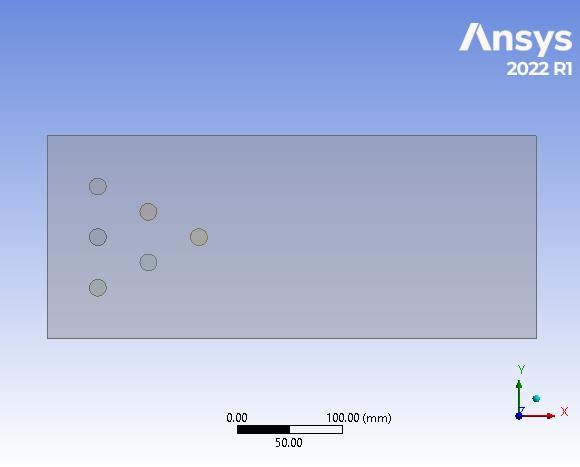
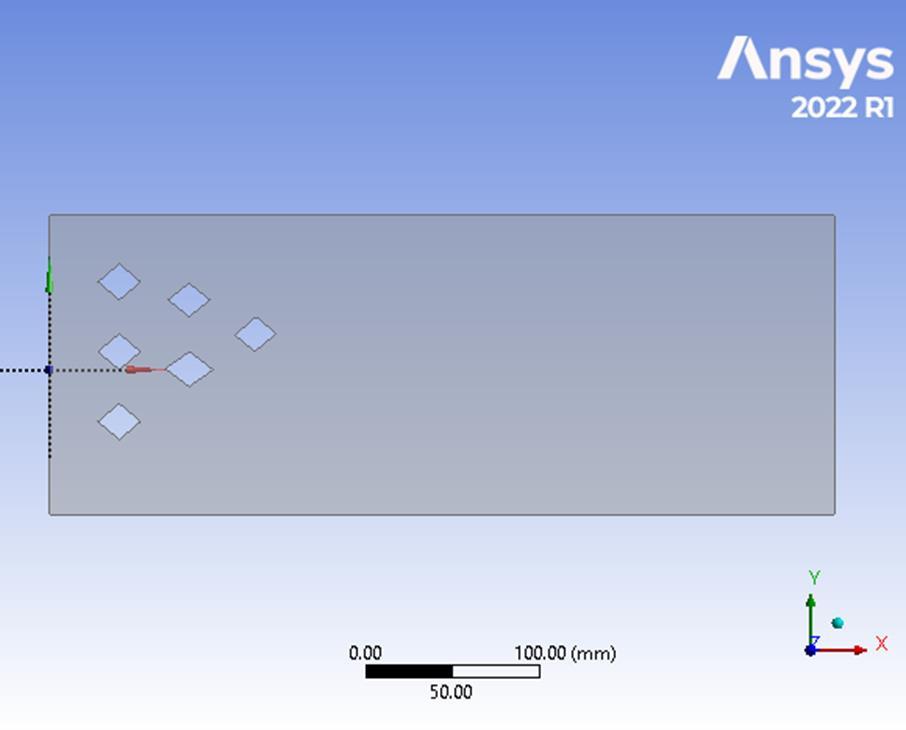
Thisprojectfocusesonanalyzingcircularanddiamond-shapedtubesarrangedinatriangularpatterntoenhancethermal performancethroughpassivemethodswithoutincreasingprojectcosts.ThestudywasconductedusingANSYS2022R1.The impactofthediamondshapeinatriangulartubebankarrangementontheNusseltnumberandskinfrictioncoefficientis examined. Skin friction coefficient and Nusselt number variations with Reynolds number under specific parameters are determined. Diamond-shaped tubes are found to induce better turbulent flow compared to circular tubes due to a large pressure gradientat the tube'stail end. After reachingtheminimum pressurevalue,aninverse pressuregradientforms, leading to the formation of vortices, intensifying turbulence and enhancing thermal performance. The inline tube bank arrangementfeaturesaninletat3Dfromthefirstcolumnandanexitat20Dfromthelastcolumn,withconstantlongitudinal andtransversepitchvaluesof3D.
TheliteraturesurveysuggeststhatSSTandturbulenceK-epsilonmodelsaresuitablefortubebankarrangementsincross-flow heatexchangers.Aftersimulatingbothmodels,the K-epsilonmodel producesmore accurateresults.The selectionof the turbulencemodeliscrucial,givendifferingrecommendationsfromvariousauthors,andnopriorresearchonCFDanalysisof triangulartubebankarrangements.SST-K-epsilonwasfoundtobethemostsuitablemodelforsimulatingtheinlinetubebank arrangement,asexplainedinthefollowingsteps.
International Research Journal of Engineering and Technology (IRJET) e-ISSN: 2395-0056
Volume: 11 Issue: 03 | Mar 2024 www.irjet.net p-ISSN: 2395-0072
3.1.
Numericalmodelwasdevelopedunderthefollowingassumptions
1. Thephysicalpropertiesoftheworkingfluidandthetubeareconstant.
2. Theincompressibleflowislimitedaslaminarflow.
3. Theflowandheattransferareinsteadystate.
4. Theviscousdissipationisnegligible.
3.2.
Thefirstcaseinvolvescircular-shapedtubesarrangedinacompacttriangularpattern.Thisarrangementrequireslessspace comparedtoinlineandstaggeredgridlayouts.Inletandoutletsectionsarepositionedatspecificdistancesfromthetubes, measuredfromthetubecenter,toensureuniformvelocitydistributionattheinletandfullydevelopedflowattheoutlet. Boundaryconditionsareappliedasfollows:
1. Attheentrancevelocityisgivenwith3,4,6,8,10m/s.
2. Thetubeisgivenwallasnoslipconditionwiththeheatgenerationof25000W.
3. Topandbottomwallsareadiabaticwithpressureoutletconditions. Thenullvalueofpressureisappliedatalltheboundaryconditions.
3.3.
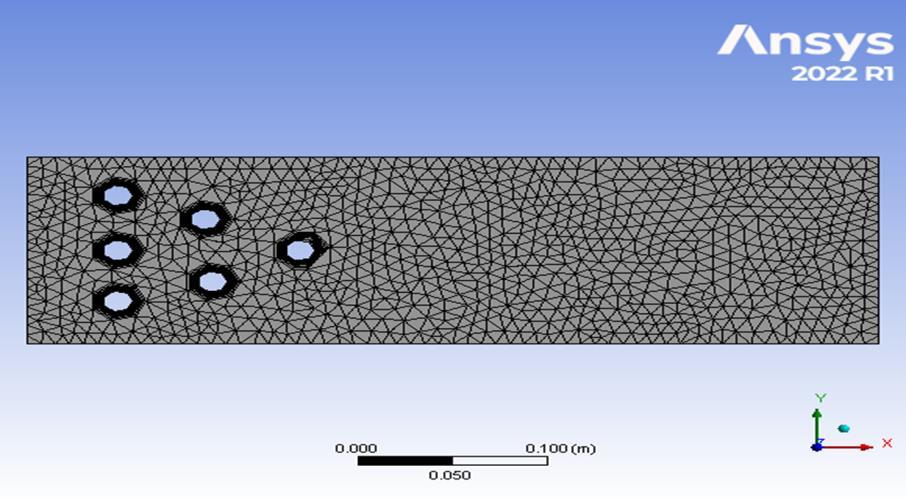
Structuredmeshisgeneratedoverthetubebankarrangementandthedomain,andfirstcellheightofthemesh(dy)neartothe wallofthetubeis0.0000026accordingtothevalueofY+equaltoone.ThevalueofY+indicatesthedistanceuptowhich boundarylayerwillbepronouncedanditgovernstheproductionofkineticenergy.Meshdetailsareasfallow,Y+equaltoone, atotalnumberofnodesequalto71517andqualityofthemeshwillbemorethan80%.Aftermeshgenerationthemeshis solvednumericallywithCFDsolution.Fig.2.3showsschematicdrawingofthepresentcomputationaldomain.Thestructured meshofelementsize71517isdevelopedwithnearwallmeshrefinementofY+=1.0andthemeshqualityisabove90%.
International Research Journal of Engineering and Technology (IRJET) e-ISSN: 2395-0056
Volume: 11 Issue: 03 | Mar 2024 www.irjet.net p-ISSN: 2395-0072
Inthisstudy,airastheworkingfluidflowsthroughadomainwithvelocitiesrangingfrom2m/sto10m/s,correspondingto Reynoldsnumbersof6477to18127.Apressure-basedsolverwiththeSST-Kepsilonmodelandfirst-orderupwindflowis employed.Thediamond-shapedtubesurfacehasano-slipboundary,whiledomainboundarieshaveslipconditions.Theoutlet issetasapressureoutletatatmosphericpressure,andthediamond-shapedtubesgenerate25000Wofheat.Thesimulation, conducted in 2D, examines the impact of Reynolds number on a triangular tube bank arrangement, involving geometry, modelling,meshgeneration,CFDsolution,andanalysisofresults.
The SST k-€ turbulence model proves superior for external flow over a circular-shaped triangular tube bank. The study exploresdifferentsolverswiththismodelforanalysisanddiscussestheresults.Simulationisdoneatpressure-basedsolver andtheschemeisSIMPLEandboundaryconditionforgivengeometryoftubeisdefinedintable1.Solutioninitializationis standardwiththeabsolutereferenceframe.
Table 1:ParameterandInputValues
Parameters InputValues
AnalysisType
PressureBased,SteadyState, Scheme-SIMPLE
TurbulenceModel k-€(SST)
MaterialFluid Water(DensityConstant)
Inlet VelocityInlet
CircularTube
Surface NoSlip
Domain Boundaries
Top PressureOutlet
Bottom PressureOutlet
Inlet Wall(NoShear)
Outlet Wall(NoShear)
4.1.
From table 2 to table 4, different values of Nusselt Number and Skin Friction Coefficient for circular shaped tubes are mentionedandthereadingweretakenfromANSYS2022R1.
International Research Journal of Engineering and Technology (IRJET) e-ISSN: 2395-0056
Volume: 11 Issue: 03 | Mar 2024 www.irjet.net p-ISSN: 2395-0072
Table 2:DataforNusseltNumberandSkinFrictionCoefficientwrtReynoldsNumberforPitchof3D
Reynolds
Thetable2NusseltnumberincreaseswithrisingReynoldsnumber,evidentfromFluentdata.Thisrelationshipapproximatesa straightline,aligningwiththeoreticalexpectationsofNusseltnumbergrowthwithincreasingReynoldsnumber.Thehighest Nusselt number, 92.65, occurs at Reynolds number 18127 with a longitudinal pitch of 3D. In contrast, the skin friction coefficientdecreaseswithhigherReynoldsnumbers,exhibitingasteepinitialdeclinefrom0.022184to0.016938,followedbya gradualdecreaseto0.014127.ThisalignswiththeinverserelationshipbetweenskinfrictioncoefficientandReynoldsnumber influidmechanics.
Table 3:DataforNusseltNumberandSkinFrictionCoefficientwrtReynoldsNumberforPitchof2.5D
The table 3 shows Nusselt number increasing with Reynolds number, as observed in Fluent data. When compared to a longitudinalpitchof3D,there'saslightincrement.ThehighestNusseltnumber,103.49,occursatReynoldsnumber18127with a horizontal pitch of 2.5D. The graph also reveals a steep decline in skin friction coefficient from 0.028463 to 0.021723, followedbyagradualdecreaseto0.018023withincreasingReynoldsnumber,aligningwiththeexpectedtrendofdecreasing skinfrictionwithhigherReynoldsnumbers.
Table 4:DataforNusseltNumberandSkinFrictionCoefficientwrtReynoldsNumberforPitchof2D
Thetable4illustratestherelationshipbetweenskinfrictioncoefficientandReynoldsnumberforalongitudinalpitchof2D.The highestskinfrictioncoefficient(0.0279588)occursatReynoldsnumber6477,followedbyasteepdeclineto0.022515and gradualdecreasesathigherReynoldsnumbers.
International Research Journal of Engineering and Technology (IRJET) e-ISSN: 2395-0056
Volume: 11 Issue: 03 | Mar 2024 www.irjet.net p-ISSN: 2395-0072
From table 5 to table 7, different values of Nusselt Number and Skin Friction Coefficient for diamond shaped tubes are mentionedandthereadingweretakenfromANSYS2022R1.
Table 5:DataforNusseltNumberandSkinFrictionCoefficientwrtReynoldsNumberforPitchof3D
The table 5 demonstrates that Nusselt number increases with higher Reynolds numbers, aligning with Fluent data. This relationship forms a straight line, consistent with the theoretical expectation of Nusselt number growth with increased Reynolds number. The highest Nusselt number, 107.92, occurs at a Reynolds number of 18127. In contrast, skin friction coefficientdecreaseswithrisingReynoldsnumbers,showinganinitialsteepdeclinefollowedbyagradualdecreasein line withtheestablishedtrend.
Table 6:DataforNusseltNumberandSkinFrictionCoefficientwrtReynoldsNumberforPitchof2.5D
Thetable6illustratesNusseltnumberincreasingwithhigherReynoldsnumbers,confirmedbyFluentdata.Simultaneously,the graphdisplaysadecreaseinskinfrictioncoefficientwithrisingReynoldsnumbers,characterizedbyaninitialsteepdecline followedbyagradualreduction.
Table 7:DataforNusseltNumberandSkinFrictionCoefficientwrtReynoldsNumberforPitchof2D
Thetable7showsNusseltnumberincreasingwithReynoldsnumber,consistentwithFluentdataandtheoreticalexpectations. Itformsastraight-linerelationship.ThehighestNusseltnumber,similartothevalueatalongitudinalpitchof3D,isobserved. Simultaneously,thegraphrevealsadecreaseinskinfrictioncoefficientwithhigherReynoldsnumbers,characterizedbyan initialsteepdeclinefollowedbyagradualreduction.
International Research Journal of Engineering and Technology (IRJET) e-ISSN: 2395-0056
Volume: 11 Issue: 03 | Mar 2024 www.irjet.net p-ISSN: 2395-0072
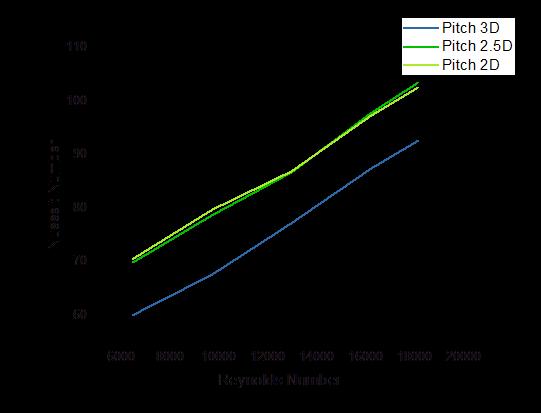
Chart 1:ComparisonofNusseltnumbervs.Reynoldsnumberforcirculartube
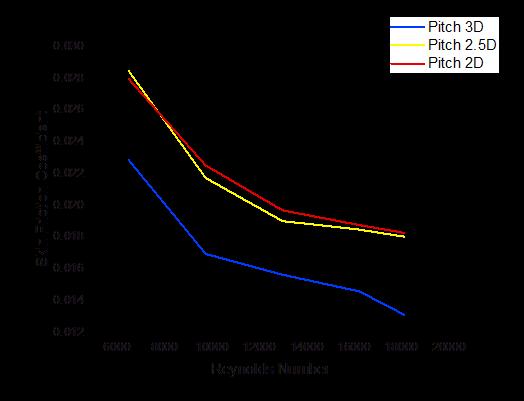
Chart 2: ComparisonofSkinFrictionCoefficientvs.Reynoldsnumberforcirculartube
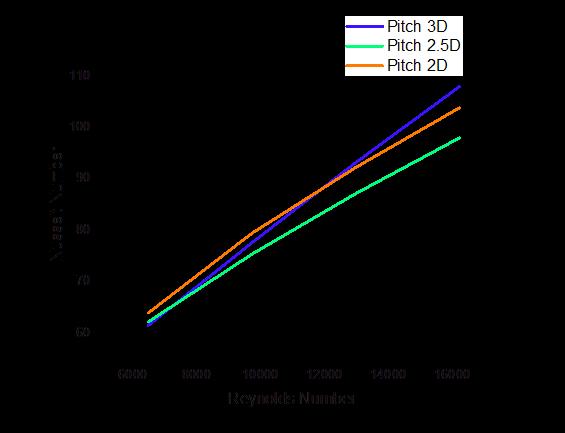
Chart 3:ComparisonofNusseltnumbervs.ReynoldsnumberforDiamondTube
International Research Journal of Engineering and Technology (IRJET) e-ISSN: 2395-0056
Volume: 11 Issue: 03 | Mar 2024 www.irjet.net p-ISSN: 2395-0072
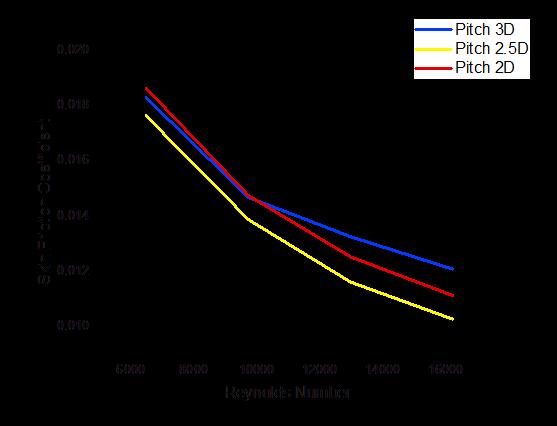
Incomparingcircularanddiamond-shapedtubetriangulartube bank arrangements, a substantial 35%reductioninskin frictioncoefficientisobservedforthelatter.Forcirculartubes,theNusseltnumberishighestwithalongitudinalpitchof2.5D atvariousReynoldsnumbers.Similarly,theskinfrictioncoefficientpeaksatalongitudinalpitchof2.5D.However,fordiamondshapedtubes,Nusseltnumberisinitiallyhighestat2DuptoaReynoldsnumberof12,000, butbeyondthat,3Dbecomes optimal.Thelowestskinfrictioncoefficientfordiamond-shapedtubesoccurswithalongitudinalpitchof2.5D.
[1] M.Erguvan,D.W.MacPhee,Energyandexergyanalysesoftubebanksinwasteheatrecoveryapplications,Energies11 (2018),https://doi.org/10.3390/en11082094.
[2] A. Waheed, A. Adil, A. Razzaq, The optimal spacing between diamond-shaped tubes cooled by free convection using constructaltheory,Proc.Rom.Acad.Ser.A-MathematicsPhys.Tech.Sci.Inf.Sci.19(2018)129–134.
[3] Y. Li, Z. Qian, Q. Wang, Numerical investigation of thermohydraulic performance on wake region in finned tube heat exchanger with section-streamlined tube, Case Stud. Therm. Eng. 33 (2022), 101898, https://doi.org/10.1016/j. csite.2022.101898
[4] S.Sahamifar,F.Kowsary,M.H.Mazlaghani,Generalizedoptimizationofcross-flowstaggeredtubebanksusingasubscale model,Int.Commun.HeatMassTran.105(2019)46–57,https://doi.org/10.1016/j.icheatmasstransfer.2019.03.004
[5] M.NasifKuru,M.T.Erdinc,A.Yilmaz,Optimizationofheattransferandpressuredropinaxiallyfinnedstaggeredtube banks,HeatTran.Eng.42(2021)1268–1285,https://doi.org/10.1080/01457632.2020.1785696.
[6] M.T.Erdinc,A.E.Aktas,M.N.Kuru,M.Bilgili,O.Aydin,Anoptimizationstudyonthermo-hydraulicperformancearraysof circular and diamond shaped cross- sections in periodic flow, Int. Commun. Heat Mass Tran. 129 (2021), 105706,https://doi.org/10.1016/j.icheatmasstransfer.2021.105706
[7] M.T.Erdinc,Computationalthermal-hydraulicanalysisandgeometricoptimizationofellipticandcircularwavyfinand tube heat exchangers, Int. Commun. Heat Mass Tran. 140 (2023), 106518, https://doi.org/10.1016/j. icheatmasstransfer.2022.106518.
[8] M.A.Alamir,Anartificialneuralnetworkmodelforpredictingtheperformanceofthermoacousticrefrigerators,Int.J.Heat MassTransf.164(2021)120551.
[9] W.A. Allafi, F.A.Z.M. Saat, Entrance and exit effects on oscillatory flow within parallel-plates in standing-wave thermoacousticsystemwithtwodifferentoperatingfrequencies,J.KingSaudUniv.-Eng.Sci.(2020).
International Research Journal of Engineering and Technology (IRJET) e-ISSN: 2395-0056
Volume: 11 Issue: 03 | Mar 2024 www.irjet.net p-ISSN: 2395-0072
[10] J.Yao,Modellingandsimulatingoccupantbehaviouronairconditioninginresidentialbuildings,EnergyBuild.175(2018) 1–10.
[11] I. G¨okay, R. Karabacak, Experimental investigation of the effect of different waveforms on heat transfer in a thermoacousticcooler,Int.J.Refrig.(2021).
[12] S.A.Gabriel,Y.Ding,Y.Feng,Quantifyingtheinfluenceofoscillatoryflowdisturbancesonbloodflow,J.Theor.Biol.430 (2017)195–206.
[13] A.A.Rahman,X.Zhang,Predictionofoscillatoryheattransfercoefficientforathermoacousticheatexchangerthrough artificialneuralnetworktechnique,Int.J.HeatMassTransf.124(2018)1088–1096.
[14] A.Alberello,M.Onorato,F.Frascoli,A.Toffoli,Observationofturbulenceandintermittencyinwave-inducedoscillatory flows,WaveMotion84(2019)81–89.
[15] M.R.M.Arenales,S.Kumar,L.Kuo,P.Chen,Surfaceroughnessvariationeffectsoncoppertubesinpoolboilingofwater,Int J.HeatMassTran.151(2020),119399,https://doi.org/10.1016/j.ijheatmasstransfer.2020.119399
[16] C.K.Mangrulkar,A.S.Dhoble,J.D.Abraham,S.Chamoli,Experimentalandnumericalinvestigationsforeffectoflongitudinal splitterplateconfigurationforthermal-hydraulicperformanceofstaggeredtubebank,Int.J.HeatMassTran.161(2020), 120280,https://doi.org/10.1016/j.ijheatmasstransfer.2020.120280.
[17] A.M.N.Elmekawy,A.A.Ibrahim,A.M.Shahin,S.Al-Ali,G.E.Hassan,Performanceenhancementfortubebankstaggered configuration heat exchanger – CFD Study, Chem. Eng. Process: Process Intensif. 164 (2021), 108392, https://doi.org/10.1016/j.cep.2021.108392.
[18] M.E.Nakhchi,J.A.Esfahani,NumericalinvestigationofturbulentCuO–waternanofluidinsideheatexchangerenhanced withdoubleV-cuttwistedtapes,J.Therm.Anal.Calorim.(2020),https://doi.org/10.1007/s10973-020-09788-4
[19] H.A.Refaey,A.M.Sultan,M.Moawad,M.A.Abdelrahman,Numericalinvestigationsoftheconvectiveheattransferfrom turbulent flow over staggered tube bank, J. Inst. Eng. India Ser. C 100 (6) (2019) 983–993, https://doi.org/10.1007/s40032-018-0493-z
[20] R.P.Bharti,R.P.Ram,A.K.Dhiman,Computationalanalysisofcross-flowofpower-lawfluidsthroughaperiodicsquare arrayofcircularcylinders,AsiaPac.J.Chem.Eng.(2022)e2748.