
International Research Journal of Engineering and Technology (IRJET) e-ISSN: 2395-0056
Volume: 11 Issue: 02 | Feb 2024 www.irjet.net p-ISSN: 2395-0072
International Research Journal of Engineering and Technology (IRJET) e-ISSN: 2395-0056
Volume: 11 Issue: 02 | Feb 2024 www.irjet.net p-ISSN: 2395-0072
S. M. Tandale1 , A. S. Sajane2 , S. K. Patil3
1 PG Student, Civil department, Dr. J. J. Magdum College of Engineering, Jaysingpur,Sangli,Maharashtra,India
2 Associate Professor, Civil department, Dr. J. J. Magdum College of Engineering, Jaysingpur, Sangli Maharashtra,India
ABSTRACT- Management of riskinconstructionprojectshas been recognized as a very important management process in order to achieve the project objectives in terms of time, cost, quality and scope. This project proposes identification and analysis of risks associated with the infrastructure projects. Based on a comprehensive assessment of conditions of contracts, this project identifies risks and classifies theminto few categories. After Quantitative risk analysis, “change in design”, “opposition from social bodies”,“suspensionofwork”, are recognized to influence the project objectives maximum.
Key words- Risk, risk management, construction projects, contract, qualitative risk analysis
Constructionprojectsareuniqueincharacteranddonotlend themselves to standardization. Projects are constructed under environmental conditions of weather, location, transportation andlaborthataremoreorlessbeyond the contractor’s control. The agencies involved may differ, the ownerrequirementsmaydiffer,thesiteconditionswouldbe different,marketconditions wouldvary.The construction business isavolatileone, withmanyseasonal andcyclical upsanddowns.Hence,eachconstructionprojectrequiresa lotofcareinhandlingbecauseofthedynamicnatureofthe constructionindustry.Also,constructionactivityinvolvesa numberofagenciesliketheclient,anarchitect/engineer,the contractor&theseagencieshaveconflictingintereststoan extentbecausetheclientwantstheworktobeaccomplished withhisrequirementsfulfilledandwithminimumcosttohim andalsowithminimumhasslesandresponsibilitieswhereas thecontractorwantstoaccomplishtheworkbymakingas much profit as possible and with least amount of hassles. Hence in order to establish the duties, obligations, rights, responsibilitiesamongstthe variousagencies,acontractis required to be made between them which willestablish a mutual relationship to do a work The most of civil engineering work is performed under contract. A contract provides a “self-contained statement of obligations as betweenitsownparties”.Contractsarevitaltothesuccessof a project is important difficult, costly and lengthy proceedings.
The study of various risks and their management is becomingpre-requisiteformanyconstructionprojectsand cansignificantlybeneficialmostallparties.Theconstruction activityinvolvesanumberofagencieslikeowner,consultant and contractor may have conflicting interests. In order to establish the duties, obligations, rights, responsibilities amongst the agencies, a contract is required to be made betweenthemwhichwillestablishamutualrelationshipto do a work. The contracts may be used as a risk managing tooltobyallocatingriskstothevariousagenciesthroughthe variouscontractsbetweenthemandclient,contractorsand investors.Thequalitativeriskanalysisisusedforanalysis whichhelpstopredictseverityofrisks.Risk management includesidentificationofrisksincontractdocuments,risk classification,riskanalysisandthenriskcontrol.Ithasbeen foundthatseveritiesofimportantriskshavebeencalculated consideringthesuitablecontrol measures fromclientand contractorspointofview.Thefindingsofstudymaybeused asreferencetosimilarconstructionprojectsinIndiai.e.for localclients,contractors,investorsandalsoforGovernment. Managingrisksinconstructionprojectshasbeenrecognized asaveryimportantmanagementprocessinordertoachieve the project objectives in terms of time, cost, quality and scope.Inthisidentificationandanalysisofrisksassociated withtheinfrastructureprojects.Basedonacomprehensive assessmentofconditionsofcontracts,thispaperidentifies risks and classifies them into few categories. After Quantitative risk analysis, “change in design”, “opposition fromsocialbodies”,“suspensionofwork”,arerecognizedto influencetheprojectobjectivesmaximum.
1. B.A.K.S. Perera, Indika Dhanasinghe and Raufdeen Rameezdeen studied cases from srilanka construction industry. In the study the risk of defective design, late approvals,latehandlingoverofthesite,tentativedrawing and unforeseen site ground condition had thwarted the contractor on many occasions. A few risks that were not relevanttothetwocasesunderstudy.
2 Dr.NadeemEhsan,EbtisamMirza,MehmoodAlam, inthis paper,theperceptionofriskbycontractorsandconsultants ismostlybasedontheirintuitionandexperience.Themost
International Research Journal of Engineering and Technology (IRJET) e-ISSN: 2395-0056
Volume: 11 Issue: 02 | Feb 2024 www.irjet.net p-ISSN: 2395-0072
utilizedriskresponsemeasuresareriskeliminationandrisk transfer.However,therespondentshaverevealedthatthese practicescausetheproblemsofdelays,lowqualityandlow productivityinprojects.
3 Mr.SatishK.Kamane,Mr.SandipA.MahadikInthispaper, thesuccessofeveryprojectdependsonhowefficientlyand effectivelythe.Riskavoidancemayincludeareviewofthe overall project objectives leading to a reappraisal of the project as a whole. Depends on how efficiently and effectivelytheuncertaintiesarehandled.Riskmanagement willnotremoveallrisksfromtheprojects.Itsmainobjective is to ensure that risks are managed most effectively. The formalriskanalysisandmanagementtechniquesarerarely usedbyconstructionindustryduetolackofknowledgeand expertiseetc
Themainobjectivesofstudyare
1. To identify and classify the types of construction projectrisksinagivensetofcontractdocuments.
2.Tostudydifferentmethodsavailableforevaluatingrisks
3. To evaluate risk by Relative important index (RII) method,bytakingsuitablecasestudy
4.1 Qualitativeriskanalysis
Qualitativeriskanalysisisprojectmanagementtechnique concernedwithdiscoveringtheprobabilityofariskevent occurringandtheimpacttheriskwillhaveifitdoesoccur. Allriskshavebothprobabilityandimpact.Probabilityis thelikelihoodthatariskeventwilloccurandimpactisthe significanceoftheconsequencesoftheriskevent.Impact typicallyaffectsthefollowingprojectelements,schedule, budget,resources,deliverables,cost,quality,scope, performance.Itincludestheindivisualprojectrisks.
4.2 Quantitativeriskanalysismethod
Quantitative risk analysis does not refer to one specific method of determining potential risk. It is a category of analysisstyles,soyoucanchoosethemethodthatbestsuits your needs. Common types of quantitative risk analysis includethefollowing:
4.2.1 EMVAnalysis
InanEMVanalysis,allyouneedisanexpectedcostofarisk you face and the probability of that risk occurring By multiplying the cost of each risk by its probability and addingupalltheresultingnumbers,yougenerateanoverall projectedriskamountfortheproject
Relative Importance Index (RII) is a non-parametric technique widely used by construction and facilities management researchers for analyzing structured questionnaire responses for data involving ordinal measurementofattitudes.
InformationgivenbycontractorNo1.
List of questions Answer given by the contractor in interview Risk identified from the response
1. What are the projectstoprisks? How sever there impactisandhow likely they are occurring?
2. How welldoes the business manage its biggestrisks?
Risksinconstructionprojects areProjectbudgets,financial supportandfund.Availability ofFundisthemostcommon riskswhicharefacedbythe contractor now a days. Because without financial support no business is possible. In case of the big projectlet-downtocarryout theworkswithcontract
Constructionisauniqueand complex industry. Each building project is distinct and has its own set of opportunitiesandobstacles. It might be challenging to identifyandmanageproject risks,butitisnotimpossible with proper planning and execution.
Financial risks, Contractual risks
Construction risks, Financialrisks
3. Does the business have plansinplacefor dealing with improbable seveerevents?
4. How the time, cost, and quality oftheprojectwill be impacted by contract requirements such as work suspension, design changes, additional work, and labor regulations
Maintaining thorough records is one of several strategies to improve the effectiveness and efficiency oftheriskreportingprocess. Share risks by using indemnification decrease in workeraccidents. Physicalrisks, Politicalrisks
Availability of labors is the most common risk and it affectsthecost,time,quality of project. In some cases changeindesignmayoccurs anditwilldisturbtheproject accomplishment time of projecti.e.projectmaydelay bysometime.Suspensionof work also affects quality of projectandthetimecost
Construction risks, Design risks
5. Is there opposition from In private construction companies opposition from Politicalrisks, legal risks
International Research Journal of Engineering and Technology (IRJET) e-ISSN: 2395-0056
Volume: 11 Issue: 02 | Feb 2024 www.irjet.net p-ISSN: 2395-0072
social bodies or political issues during project construction work.
6. If project completion time is raised due to pandemic conditions or labor regulation, it will affect the estimatedcost?
7. If extra works occurs it will affect the estimatedcost.
8. What about insurance and indemnity is it affectfinancial?
social bodies or political issuesmaynotaffecttocarry outproject.
Due to pandemic project completion time of project may increase and it affects the estimatedcostofproject. Also due to pandemic labor shifts to their villages. So workmay delayandpenalty willbepaidbycontractor.
Extra works affects the estimatedcostoftheproject and also the completion period.
Every company has insurancesoitwillnotaffect financial.
InformationgivenbyContractorNo.2
List ofquestions Answer given by the contractor in interview
1. What are the projects top risks? How sever there impact is and how likely they are occurring?
2.Howwelldoesthe business manage its majorrisks?
Theprojectrisksare financialsupportand fund. Logistic risks physical risks, contract language, projectbudgets,labor rates
Avert dangers. Shift the risks minimize risk. Accept danger. To fulfil their obligations and reduce any harm to thecost-performance of construction projects
3.Doesthebusiness have plans in place for dealing with improbable severe events?
4.Howthetime,cost, and quality of the project will be impactedbycontract requirementssuchas work suspension, design changes, additionalwork,and laborregulations.
For improbable extremeevents,there exist response strategies.
Changes in design, laborlaws,additional work, and contract suspension will all havean influenceon the project's timing, level of quality, and cost.
Contractual risks
Designrisks
Contractual risks
Risk identified from the response
Financialrisks
5.Isthereopposition fromsocialbodiesor politicalissuesduring project construction work.
6. If project completion time is raised due to pandemicconditions orlaborregulation,it will affect the estimatedcost?
7. If extra works occurs it will affect theestimatedcost.
8. What about insurance and indemnityisitaffect financial?
Social bodies or political issues does not opposes the project construction work.
Pandemic conditions or labor availability affects the costand timeofproject.
Extraworkincreases estimated cost of project.
There will be no problem ofinsurance andindemnity.
InformationgivenbycontractorNo3
1.Whatarethemain project risks? How serious are the effects, and how likely are they to happen?
2.Howwelldoesthe business manage its majorrisks?
Construction risks, Financial risks
Physical risks, Politicalrisks
constructionrisk, Designrisks
3.Doesthebusiness have plans in place for dealing with improbable severe events?
4.Howthetime,cost, and quality of the project will be impactedbycontract terms such as work suspension, design changes, additional work, and labor regulations.
5.Isthereopposition fromsocialbodiesor politicalissuesduring project construction work.
Politicalrisks
Contractualrisks
Designrisks
Contractualrisks
Project budget, labor rates, change orders, design errors and omissions and financial support these are the main project risks in construction
Once risks have been identified, you must be able to appropriately analyze, manage, and keep an eye on them in ordertopreventtragedy.
Extremeeventsoccursin rare cases and company have the plans to overcomethem
The term "technical conditions of contract" referstoadocumentwith the title "technical specification"that,when read in accordance with thecontract,outlinesthe objective, scope, design requirements, and other technical standards for thejob.
The opposition from socialbodiesandpolitical issues are very less or negligible.
Financialrisks
Constructiona l risks, Financialrisks
Physicalrisks, Politicalrisks
Construction risks, design risks
Politicalrisks
International Research Journal of Engineering and Technology (IRJET) e-ISSN: 2395-0056
Volume: 11 Issue: 02 | Feb 2024 www.irjet.net p-ISSN: 2395-0072
6. If project completion time is raised due to pandemicconditions orlaborregulation,it will affect the estimatedcost?
7. If extra works occurs it will affect theestimatedcost?
Due to pandemic the estimated costofproject affects and also the project completion time ofproject.
According to owners requirements there may be change in design occurs so in that case estimated cost may increases
8. What about insurance and indemnityisitaffect financial?
Subcontractor handles the insurance and indemnity it not affects financially.
Informationgivenbycontractorno4.
Contractual risks
6. If project completion time is raised due to pandemic conditions or labor regulation, it will affecttheestimatedcost?
Financial risks, constructional risks
Designrisks
Contractual risks
List of questions Answer given by the contractor in interview Risk identified from the response
1. What are the main project risks? How serious are the effects, and how likely are they tohappen?
Contractual risks, financial support, legal aspects, fund these are some risks andtheyoccurdueto pandemicconditions, labor availability, material availability, change in rates etc. theirimpactismainly ontimecompletionof projectandestimated cost.
2. How well does the business manage its majorrisks? By executing risk management plans company tries to overcomerisks
3.Doesthebusinesshave plansinplacefordealing with improbable severe events?
4.Howthetime,cost, andqualityoftheproject will be impacted by contract terms such as worksuspension,design changes,additionalwork, andlaborregulations.
5. Is there opposition from social bodies or political issues during project construction work.
Unlikely extreme events occurs in rarecases.
Ifchangeinoccursin RCC then it affects completion time to redesignstructure
There is no opposition from social bodies and political issues in project construction
Financial risks
Construction risks, Financial risks
Physical risks, Politicalrisks
Construction risks,Design risks
Politicalrisks work.
Due to pandemic conditions there is problem in availability of constructionmaterial and there is fluctuation in cost of materialand labours so it will affect the estimatedcost.
7.Ifextraworksoccursit will affecttheestimated cost. As per owner requirements extra works may occurs and it will affect the costofproject.
8.Whataboutinsurance andindemnityisitaffect financial? Company already have insurance so there is no issues of insurance and indemnity.
InformationgivenbycontractorNo5
List of questions
1.Whatarethe mainprojectrisks? Howseriousarethe effects, and how likely are they to happen?
Answer given by the contractor in interview
Due to increase and decrease of rates of various construction materials, it affects the cost of project and also depends upon availability of materials. Also the financial conditions and fund available
2. How well does the business manage its major risks?
3.Doesthebusiness haveplansinplace for dealing with improbable severe events?
Avert dangers. Shift the risks. Minimize risk. Accept danger. To fulfil their obligations and reduce any harm to the cost-performance of constructionprojects
Extremeeventsoccursin rarecasesandcompany have the plans to overcomethem
Contractual risks
Designrisks
Contractual risks
Risk identifiedfrom the response
Financial risks
Constructio n risks, Financialrisks
Physical risks, Politicalrisks
International Research Journal of Engineering and Technology (IRJET) e-ISSN: 2395-0056
Volume: 11 Issue: 02 | Feb 2024 www.irjet.net p-ISSN: 2395-0072
4. How the time, cost,andqualityof the project will be impacted by contracttermssuch asworksuspension, design changes, additional work, and labor regulations.
5. Is there opposition from social bodies or political issues during project constructionwork.
6. If project completion time is raised due to pandemic conditionsor labor regulation, it will affecttheestimated cost?
7. If extra works occursitwill affect theestimatedcost.
8. What about insurance and indemnity is it affectfinancial?
List of questions
1.Whatarethe projects top risks? How sever there impactis and how likely they are occurring?
2. How well does the business manage its major risks?
3. Does the businesshaveplans inplacefordealing with improbable severeevents?
Availability of labors is the most common risk and it disturbs the cost, time, quality of project. Insomecaseschangein designmayoccursandit will disturb the project accomplishment time of project i.e. project may delay by some time. Suspensionofworkalso affectsthecost,qualityof projectandtime.
There is no opposition fromsocialbodies
Construction risks, financial risks, environmental risks, design risks, physical risks
Pandemic situation was the most dangerous situation for the constructionbusiness.It affects the project completiontimeandcost ofproject.
PoliticalRisks
the project will be impacted by contracttermssuch asworksuspension, design changes, additional work, and labor regulations.
timecompletionandalso cost of the project. There are rare cases of change in technical conditions while the work of construction is goingon, Ifany change in RCC then it affects time to redesign structure. risks
5. Is there opposition from social bodies or political issues during project constructionwork. There is no opposition from social bodies and political issues.
Contractual risks
Extraworksareavoided. Designrisks
There is no effect of insuranceandindemnity onfinance.
Contractual risks
Answergivenbythe contractorin interview Risk identifiedfrom the response
Financialsupportand fundaremajorrisksand itsimpactisverysevere aswithoutfinance.
Onceriskshavebeen identified, you must be able to appropriately analyze, manage, and keep an eye on them in ordertopreventtragedy.
Unlikely extreme events occurs in some rarecasesand company overcomeit
4.Howthetime, cost,andqualityof Laborregulationmay varies so it affects the
Financial risks
6. If project completion time is raised due to pandemic conditionsor labor regulation, it will affecttheestimated cost?
7. If extra works occurs it will affect the estimatedcost.
Due to pandemic conditions there is probleminavailabilityof construction material andthereisfluctuationin cost of material and labors so it will affect theestimatedcost.
As per owner requirements extra worksmayoccursandit will affect the cost of project.
8. What about insurance and indemnity is it affectfinancial? There isno effectof insuranceandindemnity onfinance.
InformationgivenbyContractorNo7
Political risks
Constructio n risks, Contractual risks
Physical risks, Political risks
Constructio n risks, Design
Contractual risks.
Designrisks
Contractual risks
List of questions Answer given by the contractor in interview Risk identifiedfrom the response
1. What are the projects top risks? How sever there impact is and how likely they are occurring?
Risk is the probably most common in constructionbusiness. Finance and fund is themostcommonrisk Financialrisks
2. How well does the business manage its majorrisks? By executing risk management plans company tries to overcomerisks
3. Does the business haveplansinplacefor dealing with improbable severe events?
Unlikely extreme eventsoccursinsome rare cases and companyovercomeit
Construction risks, Financial risks
Physical risks, Politicalrisks
4.Howthetime,cost, and quality of the project will be Change in design, laborregulation,extra work, suspension of Construction risks, design risks,
International Research Journal of Engineering and Technology (IRJET) e-ISSN: 2395-0056
Volume: 11 Issue: 02 | Feb 2024 www.irjet.net p-ISSN: 2395-0072
impacted by contract terms such as work suspension, design changes, additional work, and labor regulations.
5. Is there opposition from social bodies or politicalissuesduring project construction work.
6. If project completion time is raised due to pandemic conditions orlaborregulation,it will affect the estimatedcost?
7. If extra works occursitwillaffectthe estimatedcost.
contractwillaffectcost qualityofprojectand thetime
8. What about insurance and indemnity is it affect financial?
Thereisnoopposition fromsocialbodiesand politicalissues.
Pandemic conditions affects thecostand timeoftheproject.
Legal risks, politicalrisks
Contractual risks
According to owners requirements there may be change in design occurs so in that case estimated costmayincreases
There is no effect of insurance and indemnityonfinancial
Contractual risks
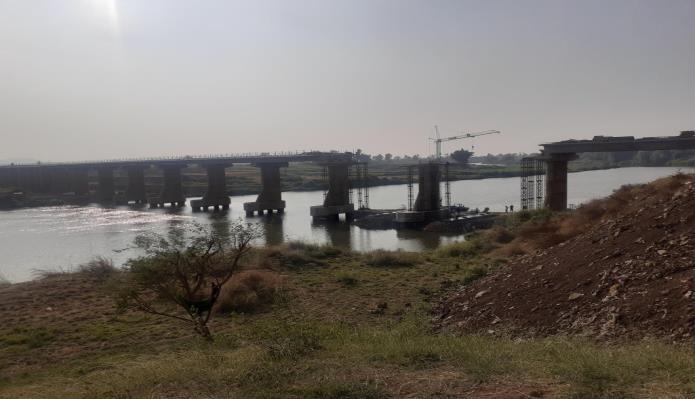
Contractrecordsfromtheinfrastructureprojecttobuilda bridge with approaches over the Krishna River on the HaripurtoKothaliRoadODR-112Tal-Miraj,Dist-Sangliwere used for this study. Client of the project is Public work division, Miraj. Consultant of project is Manoja Sthapatya. Krishna River is having length of approach is 175m from kothali and 115m from Haripur. Basic advantage of this projectiseasytransportfromdistrictKolhapurtosangli.
Nameofwork-Constructionofmajorbridgewithapproaches across Krishna River on Haripur to Kothaliroad ODR 112 Tal-Miraj,Dist-sangli.
As per development plan 2001-2021, the road between Haripur and Kothali (ODR-112) km 0/00 to 10/340 is classified as MDR-93. The total length of 10.34 km is in Sangli and Kolhapur district.A road length from Ch.9/340 i.e.0.50kmisunderP.W.Division,Mirajformaintenance& repairs.RoadlengthfromHaripursideis115m.Roadlength fromKothalisideis175m.In - betweenthesevillage210m lengthbridgeandtotal290mapproachroadareproposedin thework.Theaveragerainfallis400to500mmperyear.The average road widthis 11.40m with heightof embankment varies from0 to11.50m. This road passes through BC soil withadjoiningcultivatedland.
Quantitativeriskanalysisisthemethodofanalysisofrisks which includes numerical analysis. In this project RII
(Relativeimportantindex)methodfortheanalysisofrisksis used.Therisksareidentifiedbythetakingwalkininterview and responses of contractors and then top five risks are identified from the response of contractors. For the case studybridgeunderconstructionsiteisconsidered. There aremanymethodsforanalysisofrisks.(ExpectedMonetary Value)EMVmethodofanalysisofriskisalsoappliedforthe analysisofcasestudyapartfromquestionnairesurvey.As pertheinformationgivenbythesiteengineer,riskinterms ofcostisidentifiedwhichmayoccurredintheproject.
Bridgeunderconstructionsiteforcasestudy
Risk categorizat ion from response of contractor s for particular question
No of contract ors strongly agree for the risk identifie d from respons e of question s(5)
No of contract ors agree for the risk identifie d from respons e of question s(4)
Noof contract ors neutral forthe risk identifie dfrom respons eof questio ns(3)
No of contractor s disagree for the risks identified from response of contractor s(2)
No of contract ors strongly disagree for the risk identifie d from the question s(1)
International Research Journal of Engineering and Technology (IRJET) e-ISSN: 2395-0056
Volume: 11 Issue: 02 | Feb 2024 www.irjet.net p-ISSN: 2395-0072
Aspertheinformationgivenbyengineerofconstructionsite of bridge and according to the government tender & conditionsofcontract,thefollowingrisksmayoccurinthe project. After studying the contract document and the conditions of contract the risks for particular clause is identified. Below table shows the different risks in the project's contract documents and those are listed, investigated, and evaluated. Using the site engineer's providedchecklist,multipleprovisionspertainingtogeneral conditions, technical specifications, and special circumstancesareidentified. Everyaspectofacontracthas the potential to become a risk, which in turn can affect various aspects of a project, such as its timeline, budget, scope, and quality. To help, identify and categorize these risks, an evaluation is developed based on their potential influenceontheclientandcontractor.
Byanalysingthetermsandconditionsofthecontract,one canhaveabetterunderstandingoftherisksinvolved,many ofwhichpertaintotheclient.
Belowtableshowsriskassociatedwitheachclauseincluded intenderdocument
Conditions of contract Risk
Clause 1.Supply of the materials by thecontractors
Design,construction
Clause2.Executionofwork Construction
Clause3.Executionofwork Design
Clause4. Controloverwork Construction
Clause5. Alterations in drawingsandspecifications
Clause 6. The power to make additions and alterations in drawingsorspecifications
Design,contractual
Design,construction
Clause7.Materialsleftonsite Financial
Clause 8. Removal and substitution ofmaterials Financial
Clause 9Workmanship Construction
Clause10.Action and compensationpayable in case of badwork Contractual,Financial
Clause 11. Responsibility of contractorduetodamagebyfire Construction, contractual, environmental
Clause 12. Execution of work included inthecontract Contractual
Clause 13. Action when work is notcompleted Contractual,Financial,
Clause14.Finalcertificate Contractual
Clause15. Actionwhencontractor becomes bankrupt Contractual
Clause16.Paymenttocontractor for workdone Contractual,financial
Clause17.Certificate Contractual
Clause 18. No compensation for alterationinorrestrictionofwork donetobecarriedout Contractual
Clause19.Compensation undertheworkmen compensation Contractual
Clause 20. Refund of quarry fees royalties Financial
Clause21.Securitydeposit Financial, contractual, construction
Clause22.Compensationfordelay Contractual,Design
Clause 23. Action when the progressofanyparticularportion oftheworkisunsatisfactory Contractual
Clause 24. Liability for damages arisingfromnon-provisionoflight fencing Physical, Environmental
Clause25Liability of contractor fordamagedoneinoutside Environmental
Clause26.WorkonSunday Contractual
Clause27.Minimum age ofpersonsemployed theemployment Legal
Clause28. -
Clause29.Minimum age ofpersonsemployed the employment Legal
Clause30.Employmentofscarcity labor Contractual
Clause31.Employmentofscarcity labor Contractual
Clause32.Employmentofscarcity labor Contractual
Clause33.Employmentofscarcity labor Contractual
Clause 34. Action when whole of thesecuritydepositisforfeited Contractual
Clause 35.Conditionfor material Physical, environmental
Clause 36. Condition relating to insuranceof contractworks Contractual
Clause 37. Condition relating to insuranceofcontractworks Contractual
International Research Journal of Engineering and Technology (IRJET) e-ISSN: 2395-0056
Volume: 11 Issue: 02 | Feb 2024 www.irjet.net p-ISSN: 2395-0072
Determiningareasofuncertainty
Fromtheinformationwhichisgivenbyengineerfollowing arethe uncertaintiesoccursatsiteduringconstruction
As the project is started in 2020, it had faced pandemic condition.Duetopandemicconditionlaboursshiftedtotheir villagesandworkisstoppedinlockdown.Sothereisdelayin projectcompletion
Availabilityofmaterialinlockdown
Financialproblem:duetochangeindesigncostofprojecthas increased
Naturalhazards:AsKrishnaRiverisaperinealriver,itfaces floodsituationin every year so dueto this naturalhazard constructionworkwasstopped1montheveryyear.
Villagerswhicharelivingnearthebridgestartedopposingto the construction of bridge so there is delay in project completionandaffecttheestimatedcost
AssessthecostofeachriskExpectedcostofeachrisk
1. Financialrisk–
Suspensionofwork=60000
Changeindesign=10000000
Penaltyfordelay=360000
Extraworks=100000
Pricevariationclause=200000
Totalfinancialrisk=10720000
2.Environmentalrisk
Penaltyfordelay=360000
Labourregulation=1000000
Totalcostofenvironmentalrisk=13600003.
Physicalrisks=400000
Politicalrisk=720000
Step3:Determineprobabilityofeachriskoccurring
1.Financialrisk=80%
2.Environmentalrisk=60%
3.Physicalrisk=50%
4.Politicalrisks=20%
Step4:Tocalculateexpectedcostbymultiplyingandadding probabilityandexpectedcostofpotentialrisK
Forbigprojectsitisverynecessarytoidentifyandmitigate the probable risks to complete the project in time and availableresources.Theriskidentificationshouldbedonein early stage of the project. The very first step of risk identification is contract itself. There can be number of clauses in contract that create ambiguity about the responsibilityandscopeofwork
Therefore questionnaire survey was carried out by preparingquestionsforidentifyingrisksinvariousstagesof construction. The response of questionnaire survey was takenfromvariouscontractorsandconsultants.Theanalysis ofresponsewasdonebyRIImethod.Fromtheanalysisthe topfiveriskswereidentified.Thoserisksare
1. Financialrisks
2. Contractualrisks
3. Physicalrisks
4. Politicalrisks
5. Constructionrisks
Latertheseriskswererelatedtothedifferentclausesinthe contract,inordertocategorizetheriskswithrespecttothe clausesincontracts
To mitigate the top five risks in construction projects, the suggestionsandsolutionsweretakenfromthecontractorsby discussing risks in the project orally. According to the contractorstheadoptionofriskmanagementpracticeshelps toincreasethesuccessrateofprojectandthenenhancethe competitivenessoforganizations.Riskmanagementaimsto identifyrisksandtakeactionstoreduceoreliminatetheir probability and impact so that project is kept from being damaged by risks. It is started from the feasibility phase onward, clients, contractors, designers, and governmental agenciesmustcollaboratetoaddresspotentialhazardsina timelymannerandtomakegoodpreparationsforcarrying out safe, effective, and high-quality construction activities. Throughtheusageofmultiplecontractsbetweenthevarious agencies, the agreement are employed as instrument to manage
Theseincludeensuringthattheprojecthassufficientfunding, collecting additional geotechnical information, performing
International Research Journal of Engineering and Technology (IRJET) e-ISSN: 2395-0056
Volume: 11 Issue: 02 | Feb 2024 www.irjet.net p-ISSN: 2395-0072
constructability reviews, setting reasonable contract performancedeadlines,collectinginformationonworkand reworkcosts,implementingphasedpricing,anticipatingthe need for permits, utilities, and zoning, pre-defining rates, equations, and procedures, and using project staff with relevantexperience.Aproactive,informedapproachtorisk distribution and contracting procedures can benefit all parties engagedina building project intheshortand long periods.Bysharingconstructionriskswhenappropriateand fairlydistributingandcompensatingforthosethatcannotbe shared,contractingpartiesshouldaimtocloselyaligntheir interests.
The major risk affecting the infrastructure project are systematically examined for successful completion of any infrastructureproject,alsoitisnecessarytostudyallaspects ofprojectdependinguponcontractovermajorriskinvolved inprojectandcriticalfactorsresponsibleforcostandtime overruns.
Contract document used as a tool to manage risk by identifying and allocating risk to various agencies through sub-contracts to minimize the chances of failure or under performance of project risk management policy must be implementsandevaluateregularlyintoconstructionproject
7. References
1. Richard Clough, Construction Contracting, WileyInterscience,NewMexico,1972
2.ContractdocumentofbridgebyPWDMiraj
3.MarkH.McCallum,“AQuickPrimeronConstructionRisks and Contracting Practices”, American Corporate Counsel AssociationAnnualMeetingOctober,2000.
4.RogerFlanagan&GeorgeNorman,“Riskmanagementand construction”, Blackwell Scientific Publications, London, 1993.
5. N.J.Smith, “Managing Risk in construction projects”, BlackwellScience,Oxford,1999.
6.DvanWell-Stam, ProjectriskManagement- Anessential tool formanaging and Controlling projects”; Kogan Page Limited,Dutch,2005.
7. L. Y. Shen, Risk management, International Journal Of ConstructionEngineeringAndManagement,Vol.127,
8. Fédération Internationale des Ingénieurs-Conseils (FIDIC), ConditionsofContractforConstruction,May2005.
No.1,Pp76-81,Jan/Feb,2001


She is an excellent academic person and PG student with intend in Researchwork Workingonnumberof projects which is related with constructionmanagement
He is Research scholar having more than 12 years teaching experience. Publishednumberofresearchpaper, guidednumberofresearchprojectand PG,UGstudent.