
International Research Journal of Engineering and Technology (IRJET) e-ISSN: 2395-0056
Volume: 11 Issue: 02 | Feb 2024 www.irjet.net p-ISSN: 2395-0072
International Research Journal of Engineering and Technology (IRJET) e-ISSN: 2395-0056
Volume: 11 Issue: 02 | Feb 2024 www.irjet.net p-ISSN: 2395-0072
Rounak Biswas1, Ananya Tripathi2
1Student, Faculty of Architecture & Planning, AKTU, Uttar Pradesh, India
2Research Scholar, Faculty of Architecture & Planning, AKTU, Uttar Pradesh, India
Abstract - A designated infrastructure design, planning and implementation is mandatory for any region to be ready to host industries and industrial activities. The various infrastructure sectors like land based transportation services, water supply, waste management, power services management need to be planned in an efficient way to support an industrial setup in the region. These services act as basic pillars on which the functioning of the industries and the town/city as a whole largely depends, and thus need to be emphasized upon when the future of the industries are concerned because it directly affects the economy of the state and eventually the country. In case of industrial towns where the basic functioning and economy of the town is driven by one or more dominant industries, it is mostly seen that a pilot industrial development takes place in the region, which boosts the infrastructure development and thus a capacity building takes place which means that the particular town or region becomes competent enough to accommodate more industries, thus leading to the development of the region as an industrial town. Further with the drive to keep on supporting the industrial functions and as the economy generated from the industries is circulated in the town, the town experiences growth. To have a better understanding of this phenomenon, the case of Durgapur is being studied. This research paper, thus attempts to study the various factors with respect to infrastructure planning and management that enabled Durgapur to become a successful industrial hub in its inception. The study of these factors will ultimately lead to the findings which suggest the role of infrastructure planning in determining the growth and success of an industrial region. The paper deals with the key decisions, developments and guiding forces with respect to planning and allotment of necessary services and implementations regarding infrastructure development of the region.
Key Words: Industrialization, Infrastructure, Industrial planning, Hydroelectricity, Thermal power, Road networks, opportunities, Raw materials, Transportation, Utilization, Production, Generation
Aregionmarkedbythepresenceofseveralmedium-scaleorlargescaleindustriespointstowardscertainpre-determined requisiteswhichhavebeenfulfilledinthefirstplacetomaketheregionsuitableforsettinguptheindustries–thebasicand advancedservicesthatareessentialfortheirfunctioning(Hauff,2016).Studyofdifferentsuchindustrialtownsandregions enablesabetterunderstandingoftheinfrastructuresinplace. DurgapurisaplannedintegratedindustrialcityinWestBengal, India;plannedbyarchitectsJosephAllenSteinandBenjaminPolkin1955.IthasproveditselfasamajorindustrialhubinWest BengalbybecomingthefourthlargesturbanagglomerationafterKolkata,AsansolandSiliguriinthestate(Chakroborty,2014) In the second five-year plan, an investment of 1000 crore rupees was planned for Durgapur as a part of the large scale investments being made in the heavy industries sector (Jagannathan, 1987). There were few primary objectives for this decision,oneofwhichwastoefficientlyusetherichmineralresourcesavailablenearby.Accordinglythetransportnetworks andconnectionroutestomajormarketswereplannedfortransportation.TheDurgapurBarrageprojectbyDamodarValley Corporation(DVC),completedin1955wasoneoftheforerunnersamongthemajordevelopmentprojectswereundertakenin theregionpost-independence.Asaresultofthis,variousindustriesstartedtobesetupintheregionwhichledtheregiontobe establishedasanindustrialstrongholdandaprimepoleoftheDurgapur-AsansolindustrialbeltwiththelikesofKolkatabeing amajorexportandimportmarketfortheproduceandmaterials.Agriculturalproductionwaspredominantlylowintheregion andtheregionaleconomymostlycomprisedofminingactivitiesintheRaniganj-Jamuriacoalbelt(CityDevelopmentPlan, 2006).Thevariousaspects ofplanning Durgapurasan industrial cityincludesholisticallydevelopingtheinfrastructures requiredandtakingcareofeachsectorforasustainedindustrialdevelopment.
International Research Journal of Engineering and Technology (IRJET) e-ISSN: 2395-0056
Volume: 11 Issue: 02 | Feb 2024 www.irjet.net p-ISSN: 2395-0072
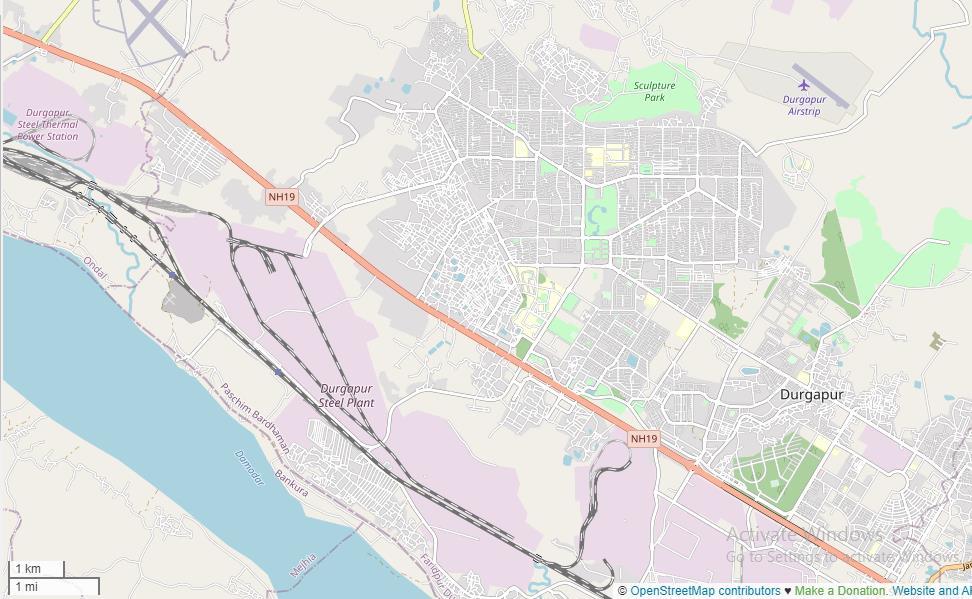
Fig-1:MapshowingtheDurgapurintegratedindustrialtownship(OpenStreetMap,2023)
ThePlanningCommissionwassetupin1950forthe“balancedandmosteffectiveutilizationofthecountry’sresources”.Even beforetheFirstFiveYearPlanwasimplemented,theblueprintsofvariousmajorprojectslikemultipurposeschemesandsteel plants,wereunderstudy,andsomeimportantprojectshadalreadybeencommenced.Forindustryandmining,theoutlay proposedundertheSecondPlanwasapproximatelyninetimestheactualoutlayoftheFirstPlan.Thedevelopmentofcoal resourceswasassignedasahighpriority.Thetargetforcoaloutputin1960wasfixedat60milliontons,anincreaseof22 milliontonsover1955,ofwhich12milliontonswastobeextractedfromcollieriesundertheholdingsofthepublicsector (Mohan&Aggarwal,1990).
Table-1:DistributionofIndia’splanoutlayintheindustryandminingsectorduringtheFirstandSecondFiveYearPlans (Commission,1956)
TheindustrialprioritieslaiddownintheSecondPlan(forbothpublicandprivatesectors)wereincreasedproductionofiron andsteelandheavychemicals,developmentofheavyengineeringandmachine-buildingindustries,expansionofcapacityin respectofotherproducergoods,modernizationandre-equipmentofexistinglarge-scaleindustries,suchascottonandjute textilesandsugar,betterutilizationofexistingcapacity,expansionofcapacityforconsumergoods.Theexpansionofthesteel industrywasgiventhehighestpriority,andheavyengineeringindustries(includingstructuralfabricationandmachinetools)
International Research Journal of Engineering and Technology (IRJET) e-ISSN: 2395-0056
Volume: 11 Issue: 02 | Feb 2024 www.irjet.net p-ISSN: 2395-0072
hadaprioritysecondonlytosteel.Threenewmajorsteelplants,eachwithafinishedsteelcapacityofabout0.7–0.8million tons and costing in all Rs. 3.5 billion (since revised to Rs. 5 billion), were proposed to be set up in the public sector; simultaneously,theexistingsteelmillsintheprivatesectorwereplannedtobeexpanded(Sharma,1958)
Thus,withthebudgetallocationandthedrivetoboostindustrialdevelopmentandproductioninthenation,actionswere takentosetuptheselargescaleindustriesandforsupportingtheseindustries,arosetheneedtosetupplannedindustrial townstogenerateandsustainthehumanresourcesrequiredforrunningtheindustries.Forafunctionalplanninganddesignto takeplace,somekeyissuesareaddressed.
Followingtheaddressal,thefoundationforawellplannedindustrialareaislaid.Thevariousissuesidentifiedwere:
-Asitesuitabilityassessment.
-Thepollutionpotentialoftheproposedindustrieswerestudiedandaccordinglycategorizationandzoningwasdonebasedon theprevalentrestrictionsondegreeofpollutioncontributedbytheindustries.
-Thenecessarywidthsoftheinfrastructurecorridorsaccordingtoindustrialdevelopmentnormsandtheenvironmental regulationsweretakenintoconsideration.Thesealsoincludedaspectslikegreencorridorsforseamlesstransportationof goodsandservicesforindustrialactivities.
-Planningofthevariousmandatoryinfrastructureswhichincludelogisticsandtransportation,watersupplyandwastewater, energy,wastemanagement,blue-greeninfrastructure,security,disastermanagement,etc.
-Climaticconditionsandaccordinglyefficiencyoftheunits.
WiththesettingupoftheDurgapurBarragebyDVC,differentpublicsectorunitsstartedshowinginterestinestablishing industrialunitsintheregionlookingatthepotentialandlocationaladvantagesofDurgapur.Themassivefollowupconsistedof DurgapurSteelPlant(1960),AlloySteelsPlant(1965),DurgapurProjectsLimited(1961),DurgapurChemicalsLimited(1963). Thedriveforindustrializationwasaccompaniedbytheestablishmentofancillaryanddownstreamunits(Basu,2018).Thus cateringtotheneedsoftheupcomingindustrialcorporations,theinfrastructureplanningoftheregionwastakenuptoprovide qualityfacilitiesforsmoothoperationoftheindustries.
Table-2:Majorforerunnersofindustrialcorporationsandtheiryearsofcommission/incorporation(Basu,2018)
Name of industrial corporation
DurgapurSteelPlantLtd.
DurgapurProjectsLtd.
DurgapurChemicalsLtd.
AlloySteelsPlant
Year of commission/incorporation
1960(commissioned)
1961(incorporated)
1963(incorporated)
1965(commissioned)
3.1. Water
Post-independence,thecountrysawanurgencyfortheindustrialsectortobelookedafterandcontributetotheeconomic upliftmentofthenation.TheDamodarValleyCorporation(DVC)wassetupin1948withtheprimaryaimoffloodcontrol, irrigation,powergenerationandnavigationintheDamodarriver.ThelongtermplansofoperatingindustriesinDurgapurgave risetotheneedforwaterandpowergenerationinthefactories.ThustheDurgapurBarragewasopenedin1955.Itredirected andsuppliedwatertotheindustriesandtheresidencesalongwiththeotherprimaryaimsofkeepingthefloodundercheck andsubsequentlygenerationofhydroelectricity,currentlycappedat1000MW.Therefore,themajorrequirementofwaterin theindustrialactivitieswassolvedandalongchannelizingthewaterforuse,cametheopportunityofgeneratingelectricity, whichwassuccessfullyexploredaswell.
Volume: 11 Issue: 02 | Feb 2024 www.irjet.net
Withtheestimationofthetotalpowerrequirementoftheindustriesin1950-60,theDamodarValleyCorporationsetupthe DurgapurThermalPowerStation(DTPS),initiallywithtwounitsof75MWandoneunitof140MWintheFirstStage.Inthe SecondStage,anew210MWunitwasinstalledinSeptember1982tocatertotherisingpowerdemandsoftheexpanding industries(Carmen,2021).Thispowergeneratedinthethermalpowerstationwasfedtotheindustriestopowertheindustrial operations.Easyavailabilityofnon-cokingcoalisprimaryforproductionofthermalpowerintheplant.
Table-3:CapacityofinstalledunitsunderDTPS(Corporation,2008)
TheRaniganjcoalfieldswerethesiteoffirstcommercialcoal-mininginIndiaandhasbeenyieldingcoalsince1820.Itisspread acrossanareaof443.50squarekilometresandcontainstotalcoalreservesofaround49.17billiontonnes.Itisthesecond largestcoalfieldinthecountryintermsofreserve.Thecokingandnon-cokingcoalmineswerenationalizedin1972and1973 respectively; and Coal India Limited was formed in 1975 of which, The Eastern Coalfields Limited was a subsidiary that managedthecoalextractionandproductionintheRaniganjcoalfields(MSME-DevelopmentInstitute,2017-18).Coalbeingone ofthemajoringredientsoftheplantsinDurgapur,thelocationofDurgapurwithrespecttothecoalreservesisextremely important.Non-cokingcoalfromthereservesareusedmajorlyintheDurgapurThermalPowerStationassteamcoalforpower generation,whereascokingcoalisusedtoproducecokewhichinturnisanessentialfuelandreactantintheblastfurnaceused inindustrialsteel-making.Someamountofprimecokingcoalwithlowashcontentisimported(Limited,2022).
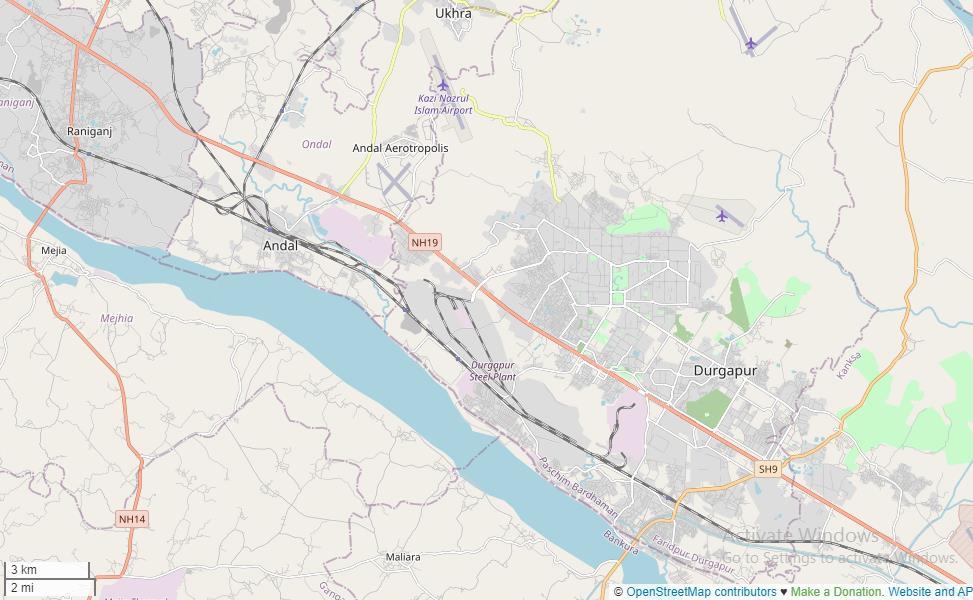
Fig-2:MapshowingthelocationofDurgapurwithrespecttotheRaniganjcoalfieldsand theirlinkage(OpenStreetMap,2023)
International Research Journal of Engineering and Technology (IRJET) e-ISSN: 2395-0056
Volume: 11 Issue: 02 | Feb 2024 www.irjet.net p-ISSN: 2395-0072
Steel Authority of India Limited (SAIL) operates 8 iron ore mines and 2 flux mines spread across Jharkhand, Odisha and MadhyaPradeshtosupplyironoretoitsplants(SAIL,2022).TheDurgapurSteelPlantgetsitsshareofironoremajorlyfrom theBolaniironoreminesofOdisha(bharatonline.com,2018).ItistransportedmainlythroughroadwaysnamelytheDurgapurRaghunathpurRoadwhichlatermergesintotheNationalHighway19andreachesthesteelplant.Theplantconsumesabout 2.9milliontonnesofironorelumpsandfines.
Table-4:Consumptionofironore,2016-17&2017-18(in000’tonnes)(Mines,2018)
DurgapurisalinearlyplannedcityalongtheNationalHighway19alsoknownastheGrandTrunkRoadwhichconnectsKolkata andDelhi.TheGrandTrunkRoadisoneofAsia’soldestandlongestroadspassingthroughcitieslikeDhaka,Kolkata,Allahabad, Delhi,KabulconnectingvastpartsofSouthernAsiaforalmost2500years.Itisanimportanttraderouteprovidingcommercial opportunitiestothevariouscitiesandperi-urbanareasitpassesthrough.Thusplanningofanintegratedindustrialcityonit seemsreasonableconsidering,logisticsandtransportation.
Theindustrialcityhadtobeatanoptimumdistancefromthesupplyregionoftherawmaterialandresources,andfromthe majormarketswheretheproducecanbesoldandexportedfrom.Thus,thetransportationcorridorwasdesignedtakinginto considerationtwomajoraspects:
-Thetransportationofnon-cokingcoalfromRaniganjcoalfieldsforthermalpowergenerationtopowertheindustries.
-Thetransportationofsteel-theprimaryproductfromtheindustriestoKolkata,whichisthebiggestimport-exportmarketin EasternIndia.AlsoofferingconnectivitytoothermajormarketsofthecountrylikeDelhi,Varanasi,Kanpur.Allahabad.
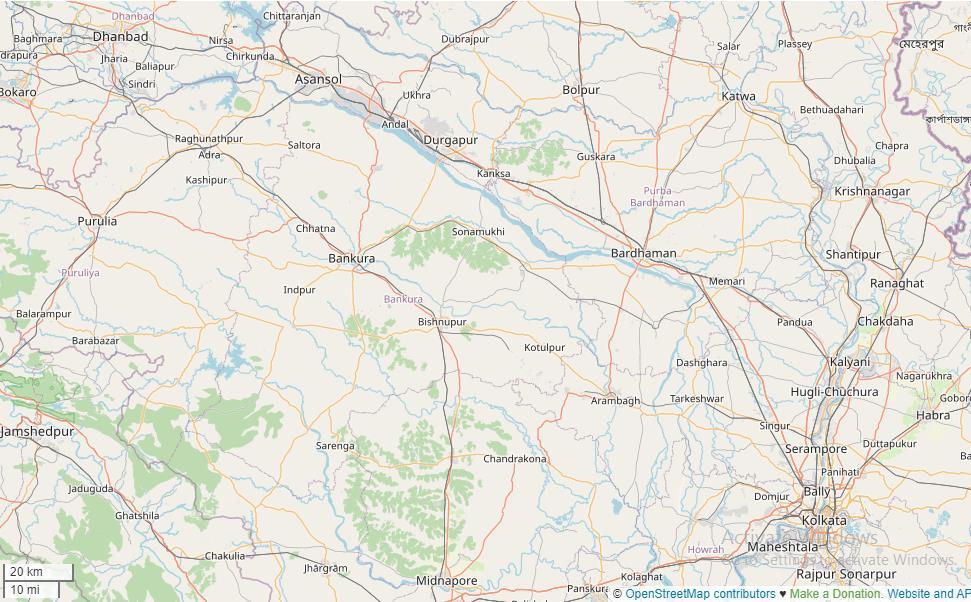
Fig-3:MapshowingthelocationofDurgapurwithrespecttothemajorcitiesin theregion(OpenStreetMap,2023)
ThecityisdividedintotwodistinctregionsbytheNationalHighway19passingthroughtheheartofthecity.TheNorthernpart consistingoftheresidentialsectorofthecitybasedongridironplanningpattern.AndtheSouthernpartwhichhaslandparcels exclusivelyconsistingofindustrialpropertiesandunits.Themainroad(NH19)actsasthespineofthecityandfacilitatesboth theindustrialsectoraswellastheothersectors.Thelocationoftheroadinthecityplaysamajorroleinthetransportationof
International Research Journal of Engineering and Technology (IRJET) e-ISSN: 2395-0056
Volume: 11 Issue: 02 | Feb 2024 www.irjet.net p-ISSN: 2395-0072
industrialgoodsandlogisticalsolutionsasitactsasanarterialroadintheurbanlevelandalsobeingaNationalHighway,it allowsthehighspeedaccessofindustrialvehiclesmakingitthemostimportantpartoftheindustrialcorridor.
Durgapurwasconceivedtobeatadistanceofapproximately40kilometersfromtherichcoalproducingregionofRaniganj. Therailwaytrackpresentsince1855intheRaniganjregionwereworkedonandallowedforeasytransportationofextracted coal fromthemines totheindustries(Wikipedia,n.d.). AstheindustriesinDurgapurweresetup,therailwaylineswere extended with regular stations in the name of the industrial units like Durgapur Coke Oven Plant. Thus, a direct linkage betweenthesourceofrawmaterialsandtheindustrieswasachieved.Theprospectiveindustriesbegantofunctionwiththe assuranceofaregularsupplyofcokingandnon-cokingcoal,primaryingredientsforthesteelmakingindustriesinDurgapur.
Thispaperexploresthedifferentsectorsandtheconcernedinfrastructuredevelopmentthattookplaceduringtheinceptionof DurgapurasoneofthefirstmajorindustrialtownsinindependentIndiawiththeaimofmakingthenationamanufacturing superpower.Thesteelplantandthemajorpublicsectorprojectsweresetupinthecitywiththehelpofextensiveresearchand planninginthesectorslikewater,transportationcorridors,power,rawmaterials,etc.However,therearemoreaspectsto exploreinthenearfutureastheregionfacesstuntedindustrialgrowthpostthe1990s.
Variousreasonscanbeheldaccountableforthefateofthisintegratedindustrialtownship,majoronebeingtheoveralldecline ofindustrialactivityinBengalduetothecontinuouspoliticalturmoilduringthe1970sand80sextendingintothe2000s (Bagchi,1998).Withloweredproductioncapacitiesandshuttingdownofunits,thecityfacestheriskofoutmigrationofthe youngpopulaceinsearchofbetteropportunities.
Thus,theseconditionsdefinitelydemandactionsfromthepublicandtheprivatesectorstodrawupsolutionstorestoreand upgradetheindustrialoperationsinDurgapur.Theexistinginfrastructurehasexperienceddeclineoverthecourseofthe lifetimeofthecity,thusadvancedplanningcanbeimplementedinlinewiththeglobalstandardstoimprovetheconcerned sectors.Besidesthis,pollutionlevelsinthecityshouldalsobebroughtundercheckasaccordingtotherecentrecordedlevels, thelevelofpollutioninthecitycontributedmajorlybytheindustrialactivities,isquitehigh(Basu,2018).
Somepositiveactionstakenbythegovernmentsandthepublicsectorundertakingstorevitalizetheindustrialpresenceinthe region should be noted. The Mining and Allied Machinery Corporation (MAMC) set up in 1964 with the help of Soviet cooperationusedtosupplyequipmentsforminingindustriesintheWest.However,withtheendoftheCivilWar,theindustry beganseeingitsdownfallandin1992,itstartedincurringlosses,ultimatelybeingshutdownintheearly2000s.In2019,a consortiumconsistingofCoalIndia,DamodarValleyCorporationandBharatEarthMoversacquiredtheMAMC.Theacquisition willhelpbothDVCandCoalIndiaingettinghighqualityequipmentsfortheirthermalpowerplantsandundergroundmining operations respectively (report, 2010). Further an improved line of mining machinery production with the help of technologicalinputsfromthenationalandinternationalinstitutionscanenabletheunittoexportmachineriestodifferent mininggiantsintheworldbesidesproducingfordomesticuse.
GasAuthorityofIndiaLimited(GAIL)in2021,completeda348kilometerpipelineprojectfromDobhiinBihartoDurgapurin WestBengalatacostof2433crorerupeesaspartofthePradhanMantriUrjaGangaproject.Itbringsenvironment-friendy naturalgastotheeasternregionofIndiabenefittingthestatesofBihar,Jharkhand,WestBengalandOdisha.Besidesproviding cheapercookingfuelconnectivitypointsintheregion,italsobringsfuelforproductionofurea,anecessityofthefertiliser industry.Thusthisprojectopensupanopportunityforarangeofactivitiesforgasbasedeconomyintheregion.Withthe projectedproductionofureaandusageofnaturalgas,thedemandforcostlynaphthaandpollutingcoalisexpectedtogodown (PTI,2021).
OnemajorindustrialestablishmenttakingadvantageofthisnewlyconstructednaturalgaspipelineextensionistheMatix FertilisersandChemicalsLimited.Itconsistsofa1.27MTPAfullyintegrated,gasbasedureaplant,locatedatPanagarh,near Durgapur.ItisamongIndia’slargestsingle-streamfertilizerfacilities(Chemicals,2022).TheHindustanFertiliserCorporation (HFC)plantwhichgotcloseddownattractedsomeattentionfromRashtriyaChemicalsandFertilisers(RCF),whoexpressed interestinrevivingtheplantin2007(Chakraborty,2007).Withtheavailibiltyofasteadysupplyofnaturalgasintheregion, therightinitiativescanrevivetheunit.
International Research Journal of Engineering and Technology (IRJET) e-ISSN: 2395-0056
Volume: 11 Issue: 02 | Feb 2024 www.irjet.net p-ISSN: 2395-0072
TheDeucha Pachamicoal block saidtobethelargestcoal reserveinIndia,isata distanceofaround 75kilometersfrom Durgapur.Ithasfourcoalseamsoflowestgradethermalcoalbuttheviabilityoftheentireprojectisquestionableduetothe difficultyofextractionandtheuncertainconditionofusablecoalinside.Althoughtherehabilitationandresettlementpolicies arelinedup,itwillbeadifficultgambletoefficientlyextractthecoalanduseitthankstotherenewabletechnologiesandthe shiftofpolicyfocustorenewableoptionsofenergy(Bose,2022).However,itcontainsnearly2102milliontonnesofcoal reserves,andcanprovetobeamajorsourceofrawmaterialforthesteelandthermalenergyplantsinDurgapur,boostingup thesteelproductionandpowergeneration.Also,thecoalblockisownedbytheGovernmentofWestBengalthusmakingthe pathwayofextractedcoaltotheindustriessmooth,withoutanythirdpartyinterference.
AccordingtotheDigitalEmploymentOutlookReport2022byTeamLease,Durgapurisamongthe20emergingdestinationsfor ITinIndia.TheITcompanieswouldlooktoestablishtheirofficesintheseemerginglocations,takingthejobstothepeopleas these20citiesareprojectedtocontributemorethan85%oftheworkforcefromemerginglocationsacrossIndia(Sethi,2022). TheSoftwareTechnologyParkofIndia(STPI),Durgapurestablishedin2004wassetuptopromote,encourageandboost softwareexportfromtheregion.ThestategovernmenthasfacilitatedthesettingupofsomeprivateITparksacrossthecity post2011,attemptingtocreateanecosystemforthegrowthoftheITindustry,howeveralotstillneedstobedoneintermsof facilitation of ease of business to the interested corporations and provision and service with respect to the required infrastructure,formakingitamajorIThubinIndia.
TheKaziNazrulIslamAirportlocatedatAndalintheoutskirtsofDurgapurwaspartofthefirstprivatesectorairportcity projectinIndiain2012tore-invigorateeconomicdevelopmentintheregion.Itprovidesairconnectivitytodifferentpartsof thecountryandwasenvisagedtodivertthecongestedairtrafficflowfromtheNetajiSubhashChandraBoseInternational AirportinKolkata.However,thisairportandtheentireprojecthasbeenfarfrombeingasuccess.Theconditionoftheallied industriesandtheoverallindustrialeconomicactivityandemploymentgenerationintheregionwillbecrucialindecidingthe fateofthismegaproject.
ItisimportantforthecityofDurgapurtoevolveanddevelopaccordingtotherecenttrendsintermsofindustry,infrastructure andeconomics.Thisevolutionshouldbeguidedbythepoliciesandstrategiesofthestateandthecentralgovernmentsinline withthemoderntrendsofdemandandsupply.Durgapurhasthepotentialofbeingatorch-bearerinindustrialdevelopmentin EasternIndiaandsubsequentlyIndia,asitwasenvisionedtobeduringitsinception,thusbringingamajorpositivechangein theeconomicstateofWestBengal.
ACKNOWLEDGEMENT
Iwouldliketoexpressmygratitudetomyguideswhohelpedmeinwritingthisresearchpaper.
[1] Bagchi,A.K.(1998).StudiesontheEconomyofWestBengal sinceIndependence.EconomicandPoliticalWeekly, 2973-2974.
[2] Basu, M. (2018, August). A GEOGRAPHICAL ANALYSIS OF URBANIZATION, DEMOGRAPHIC STRUCTURE AND PROBLEMSINASANSOLDURGAPURPLANNINGAREA(ADPA).JournalofEmergingTechnologiesandInnovative Research(JETIR),282.
[3] bharatonline.com.(2018).bharatonline.com.Retrievedfrombharatonline.com:http://www.bharatonline.com/westbengal/travel/durgapur/steel-plant.html
[4] Bose,P.R.(2022,January4).WestBengal'sApproachToIndustrialDevelopmentUnderMamataBanerjeeIsDifficult ToIdentify,HarderToAppreciate.Retrievedfromswarajyama.com:https://swarajyamag.com/politics/west-bengalsapproach-to-industrial-development-under-mamata-banerjee-is-difficult-to-identify-harder-to-appreciate
[5] Carmen. (2021, December 14). Durgapur Steel Thermal Power Plant, India. Retrieved from https://www.powertechnology.com/:https://www.power-technology.com/marketdata/durgapur-steel-thermal-power-plant-india/
[6] Chakraborty, A. (2007, March 20). RCF eyes Durgapur fertiliser unit. Retrieved from The Telegraph Online: https://www.telegraphindia.com/business/rcf-eyes-durgapur-fertiliser-unit/cid/723078
[7] Chakroborty,S.(2014).TrendofurbanisationandgrowthofsmalltownsinBardddhamanDistrict,WestBengal,India. ScientificAnnalsofAlexandruIoanCuza-GeographySeries,201-209.
[8] Chemicals,M.F.(2022).Plant.RetrievedfromMatixFertilizers&Chemicals:https://www.matixgroup.com/plant/ [9] Commission,P.(1956).SecondFiveYearPlan.Delhi:GovernmentofIndia.
International Research Journal of Engineering and Technology (IRJET) e-ISSN: 2395-0056
Volume: 11 Issue: 02 | Feb 2024 www.irjet.net p-ISSN: 2395-0072
[10] Corporation, D. V. (2008). Durgapur Thermal Power Station (DTPS). Retrieved from dvcindia.org: https://web.archive.org/web/20100516205935/http://www.dvcindia.org/Durgapur.htm
[11] Hauff, M. v. (2016). Industrial zone planning according to the requirements of sustainable development. MegacityYangon:Transformationprocessesandmoderndevelopments.SoutheastAsianModernities,pp.245-247.
[12] Jagannathan,N.V.(1987).PlanninginNewCitiesTheDurgapurExperience.EconomicandPoliticalWeekly, 554.
[13] Limited,T.D.(2022).TheDurgapurProjectsLtd.Retrievedfromhttp://thedpl.in/:http://thedpl.in/industry/ [14] Mines,I.B.(2018).IndianMineralsYearbook2018,57thEdition,IronOre.IndianBureauofMines.
[15] Mohan,R.,&Aggarwal,V.(1990).CommandsandControls:PlanningforIndianIndustrialDevelopment,19511990.JournalofComparativeEconomics,683-685.
[16] MSME-DevelopmentInstitute,K.(2017-18).DistrictIndustrialProfile-PaschimBardhaman.Kolkata:Ministry ofMicro,SmallandMediumEnterprises,GovernmentofIndia.
[17] OpenStreetMap. (2023). OpenStreetMap. Retrieved from OpenStreetMap: https://www.openstreetmap.org/#map=13/23.5500/87.2864
[18] PTI. (2021, February 6). Gail completes Rs 2,433 crore pipeline project in West Bengal. Retrieved from Business Today: https://www.businesstoday.in/industry/energy/story/gail-completes-rs-2433-crore-pipelineproject-in-west-bengal-286816-2021-02-06
[19] report, O. (2010, June 12). Joint venture to revive MAMC. Retrieved from The Telegraph Online: https://www.telegraphindia.com/west-bengal/joint-venture-to-revive-mamc/cid/515676
[20] SAIL. (2022). Mines, SAIL. Retrieved from sail.co.in: https://sail.co.in/en/plants/raw-materialsdivision#:~:text=SAIL%20iron%20ore%20mines%20are,at%20Kuteshwar%20in%20Madhya%20Pradesh.
[21] Sethi,V.(2022,August3).DurgapurandSalemamong20emergingITdestinationsinIndia:TeamLease. Retrieved from Business Insider India: https://www.businessinsider.in/tech/enterprise/news/durgapur-salemcochin-jaipur-indore-among-top-20-emerging-it-destinations-in-india/articleshow/93314811.cms
[22] Sharma,N.A.(1958,January1).EconomicDevelopmentinIndia:TheFirstandtheSecondFiveYearPlans. Retrievedfromelibrary.imf.org:https://www.elibrary.imf.org/view/journals/024/1958/001/article-A002-en.xml [23] Wikipedia. (n.d.). Raniganj Coalfield. Retrieved from wikipedia.org: https://en.wikipedia.org/wiki/Raniganj_Coalfield