
International Research Journal of Engineering and Technology (IRJET) e-ISSN: 2395-0056
Volume: 11 Issue: 02 | Feb 2024 www.irjet.net p-ISSN: 2395-0072
International Research Journal of Engineering and Technology (IRJET) e-ISSN: 2395-0056
Volume: 11 Issue: 02 | Feb 2024 www.irjet.net p-ISSN: 2395-0072
Wayan Suparta1,2 , Mohamad Haifan2, Syahril Makosim2, Yenny Widianty2 , Rulyenzi Rasyid2 , Adi Setiawan3
1Department of Electrical Engineering, Institut Teknologi Nasional Yogyakarta, Jalan Babarsari, Caturtunggal, Depok, Sleman, Yogyakarta 55281, Indonesia
2Study Program of Engineering Profession Program, Indonesia Institute of Technology
Jl. Raya Puspiptek, Serpong, Tangerang Selatan, Banten 15314, Indonesia
3Study Program of Electrical Engineering, Indonesia Institute of Technology
Jl. Raya Puspiptek, Serpong, Tangerang Selatan, Banten 15314, Indonesia
e-mail: wayan@itny.ac.id
Abstract - Drones or unmanned aircraft in various forms, functions and purposes have developed rapidly recently. One of the developments in drones discussed in this article is for transportation purposes, especially delivering goods. This is in line with the massive development of online transactions (e-Commerce) since the Covid-19 pandemic. This paper discusses the development of drones for package delivery and considers their social impact on professionalism and ethics. Experimental methods and qualitative analysis will be used as an approach. The research results show that a goods delivery drone has been successfully developed in the form of a hexacopter and can be used to send goods under 1 kg. Goods or packages can be received by customers according to the GPS coordinates provided in Google Maps. From testing’s carried out in the field, the drone's position experienced a shift of 5% when the package was released at the customer's coordinates. This is partly caused by weather disturbances along the drone's pathways. During testing and operation, many external factors must be considered so that drone development becomes a standard, professional product and meets the regulations applicable ina region.
Keywords: Hexacopter drone, Delivery of goods, Professionalismandethics,Engineeringprofession
1.
Professionalism and ethics are important keys in developing expertise, especially within the framework of engineering professional practice. Law of the Republic of IndonesiaNumber11of2014containsengineeringwhich includes, among other things, components of professionalism and ethics [1]. Professionalism is the quality of attitude that members of a profession have towards their profession as well as the degree of knowledgeandexpertisetheyhavetobeabletocarryout their duties well [2]. The nature of professionalism will lead to professionalism, namely the nature of pursuing perfectresults,requiringseriousnessandthoroughnessin work, perseverance and fortitude, and requiring high integrity. Therefore, guidelines for implementing
professionalismasanengineerinapplyingtheirexpertise have been established by the Indonesian Engineers Association(or Persatuan Insinyur Indonesia -PII)asseen inbasicprinciples (Catur Karsa) andattitude&behaviour demands (Sapta Dharma) [3]. Meanwhile, ethics is also included in Catur Karsa and Sapta Dharma, which are related to aspects of morality and noble character. The Engineering Code of Ethics is a guide for Professional Engineers in making various difficult decisions in engineering practice. Ethics encourages an engineer to always work responsibly, honestly, with integrity and prioritizetheinterestsofmanypeople.Carryingoutwork that adheres to a code of ethics will avoid conflicts of interest, and still adhere to concepts that are believed to bring success and the resulting products to be standard, usefulandabletoimprovethewelfareofsociety.
Dronesorunmannedaircraftareaproductofengineering practice. The use of drones is becoming increasingly popular in modern logistics operations. In recent years, the rapid rise of online ordering and the booming ecommerceindustry,coupledwiththeCOVID-19pandemic, have accelerated the need to find alternative safe and contactlessdelivery models[4].Roadtrafficcongestion in urban areas, especially road traffic that is used beyond capacity, has spurred the development of drone delivery technology to become increasingly intense. As a result, manyretail andlogisticsindustriessuchasAmazon, DHL, FedEx, Google, PizzaHut, UPS, and Walmart have invested in and used drone technology to implement scalable alternative delivery models [5-7]. With advancesin drone technology and increasing commercial use, types of drones such as quadcopters, hexacopters, octacopters or hybrids(betweenwingandmultirotormodels)withstable vertical flight capabilities or VTOL (Vertical Take-Off and Landing) can be used to carry cargo such as parcels, fast food, foodstuffs, medical products or other purpose products. These long-distance drone delivery operations are gaining traction due to increased accuracy, ease of operation,fasterdeliverytimes,andloweroperatingcosts [8]. According to analysts, operational costs for drone
International Research Journal of Engineering and Technology (IRJET) e-ISSN: 2395-0056
Volume: 11 Issue: 02 | Feb 2024 www.irjet.net p-ISSN: 2395-0072
delivery services are 40% to 70% lower than traditional vehicle delivery service models. This will increase global demand for delivery services and the drone market is currently growing from US$228 million in 2022 to US$5.556billionin2030[9].
This article discusses the development of drones for package delivery by paying attention to social impacts such as professionalism and ethics. This social impact needs to be taken into account because some of the products produced are not all the result of professional work, for example just trials and errors, modifying or costuming products without permission, playing with dronesinrandomlocations,orexposingphotoshootsthat arenotactuallywithintheirscope.Thiscanbecategorized asaviolation.Thesocialimpactofdronedevelopmentcan be seen from two points of view, namely internal aspects and external aspects. Internal aspects refer more to the quality of the product itself, such as itsairworthiness and functionality. Meanwhile, the external aspect is related to regulationsinitsoperationandaspectsofSecurity,Safety, Occupational Health and Environment. By showing professionalism and ethics in drone development, it is hoped that professional engineers or prospective engineers can apply the basic values of ‘Catur Karsa’ and ‘Sapta Dharma’ intheirdailyactivities.
Todesignadrone,thereisawidechoiceofmodelsinterms of weight, flight autonomy and stability characteristics for each required mission. The mission of the drone in this project is to develop a hexacopter capable of flying stably and transporting light packages (maximum 1 kg). In addition, the flight time must be carefully calculated according to the distance traveled. Therefore, internal stability is very important because the goods sent must reach their destination within the specified time. Fig. 2.1 showsthemaincomponentsselectedfora deliverydrone. All components selected take into account the availability of funds with the main aim being that the system can providehighperformance.
It can be seen in Fig. 2.1(a) that the main brain of this system is the Pixhawk 2.4.8 autopilot 32-bit (PX4) flight controller.Itisanadvancedhigh-performance32-bitARM CortexM4processor,knownasFMUV3inChibiOS[10].The advantages of the Pixhawk system include a Unix/Linuxlike programming environment. The Pixhawk has a 32bit STM32F427 Cortex M4coreprocessor withFPU, 168MHz, 256KB RAM, 2MB Flash, fail-safe 32 bit STM32STMF100 Co-processor, and sensors like ST Micro L3GD20H 16 bit Gyroscope, ST Micro LSM303D 14 bit Accelerometer/magnetometer, InvenSense’s MPU 6000 3axis accelerometer/gyroscope, and MEAS MS5611 barometer. Furthermore, explanations of other componentsin Fig.2.1 canrefertoarticles[11],[12].
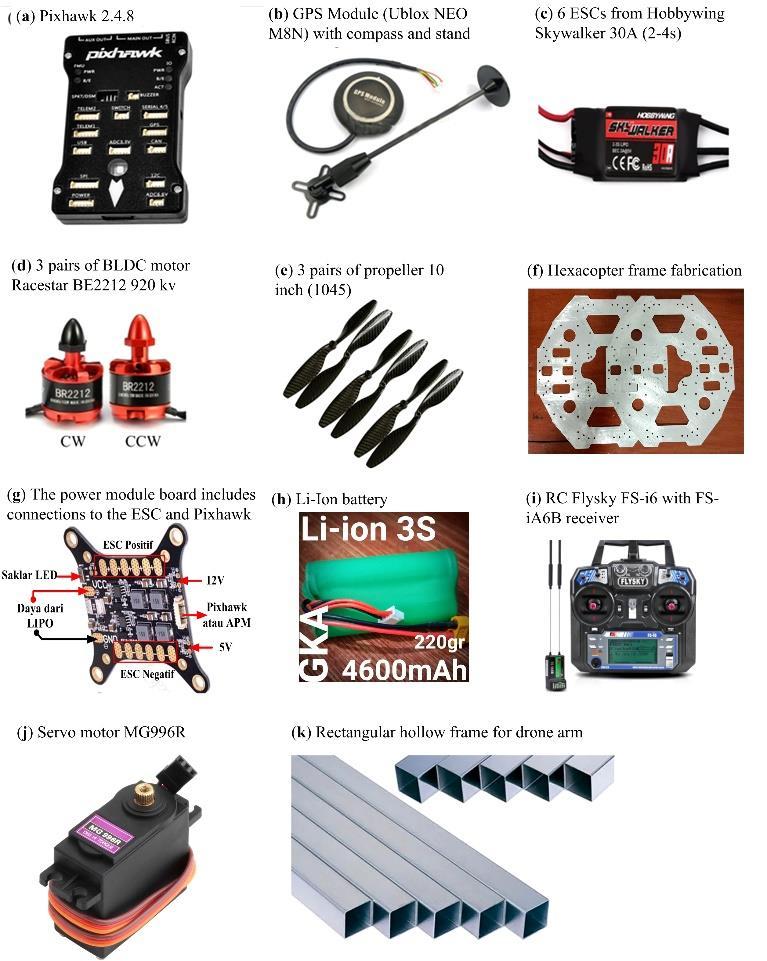
Fig. 2.1 Selectionofmaincomponentsfordevelopinga hexacopterdronethatisusedfordeliveringgoods
Oncethemaincomponentsasin Fig. 2.1 areavailable,the hexacopter drone can be built as in the schematic in Fig. 2.2. Note that the frame designed usesaluminum material 2 mm thick and the length and width are 21 cm 23 cm respectively. . Apart from that, the drone arm is also built usinghollowaluminummaterialwithdimensionsof1.5cm 1.5 cm 33 cm with a wheel distance of 700 mm. The installation of a DC (BLDC) motor on each drone arm and the propeller on the motor axis must follow the color instructionsin Fig. 2.2,wheredarkgreenisclockwise(CW = clockwise) and light green is counterclockwise (CCW = clockwisecounters).
After all components are assembled as in Fig. 2.2, the drone can then be tested before being taken to the field. TheswitchbuttonispresseduntiltheLEDonthePixhawk issolidgreen.ThegreenLEDindicatesthattheGPSsignal has been connected (locked) between the receiver and transmitter (Remote Control). Before testing, the drone must be set up and calibrated to be autonomous or autopilot. One of the ways this can be done is using open access software, namely Mission Planner [13]. The latest version of mission planner used in this work is Mission Planner-1.3.81(Dec8,2023).
International Research Journal of Engineering and Technology (IRJET) e-ISSN: 2395-0056
Volume: 11 Issue: 02 | Feb 2024 www.irjet.net p-ISSN: 2395-0072
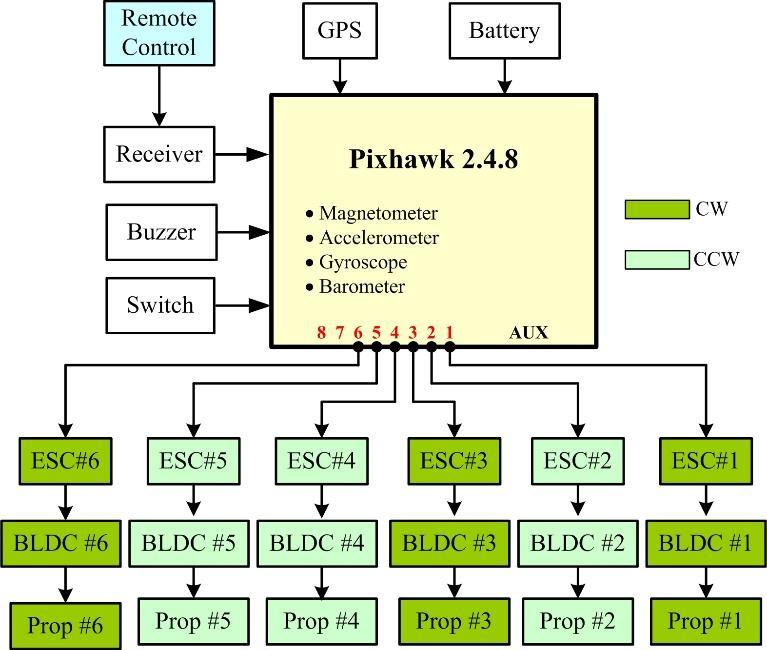
Fig.2.2 Basicschematicfordevelopingahexacopterdrone usingPixhawk2.4.8
The window for the Mission Planner can be seen in Fig. 2.3. Settings are done via the SETUP menu and must be done starting from Frame Type, Initial Tune Parameter, Accel Calibration, Compass, Radio Calibration, ESC Calibration, Flight Modes and Failsafe in the Mandatory Hardware Submenu. Next, set the battery monitor used and test the motor's functionality in the Optional Hardware Submenu. Settings for drone operation can be doneviatheCONFIGMenu,thisincludeschangingthePID (Proportional–Integral–Derivative) controller value if the available default PID is not able to optimize drone performance. How to set autopilot in Mission Planner can furtherrefertoSupartaandHandayani[11].
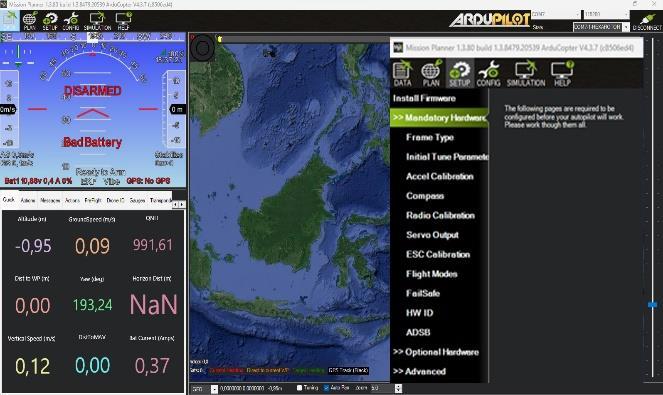
Fig. 2.3 ThefrontfaceoftheMissionPlannerconnectedto Pixhawk2.4.8
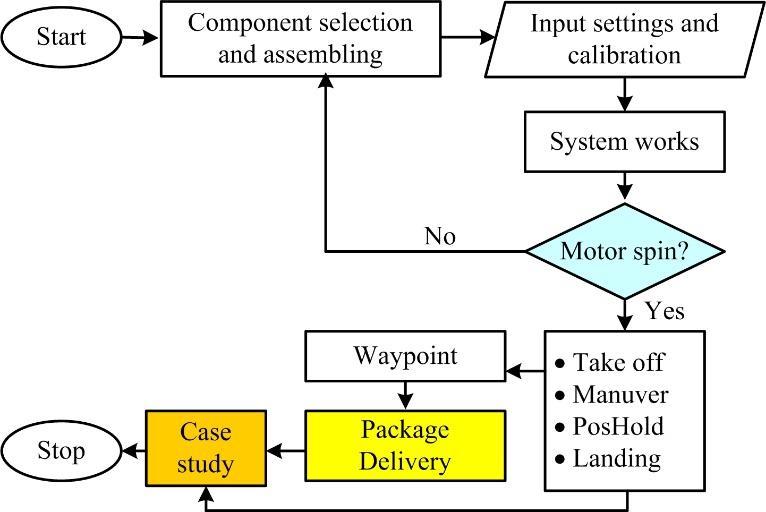
In general, the research flow in the development of hexacopterdronesfordeliveringgoodscarriedoutinthis project is also seen as a case study for implementing professionalism and ethics as can be seen in Fig. 2.4. The
main task accomplished before implemented for package delivery purposes is testing the stability of the drone. Manychallengesoccur in thissection,starting with drone malfunctions,crashesandevenburnsduetoflatbatteries, and the most important is the ability or skills to control droneviaremotecontrol.
3.1 Results of Hexacopter Drone Development
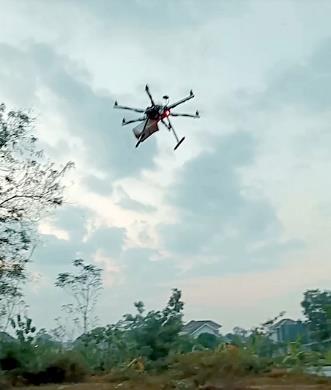
Fig. 3.1 shows the hexacopter drone that has been developed Thecontroltestforpackagedeliverywherethe drone takes off and flies to the customer's coordinates. Before the drone is given a payload or package, their stability test is first carried out, such as take-off, landing, maneuvering(see Fig. 2.4)arecarriedoutfirst.Ifoptimal stability has been achieved, then the drone is equipped a payload ranging from 500 grams to 1000 grams. The test results showed that the drone was unable to take off carrying a load of more than 987 grams. With a load weighing 987 grams, the drone can only fly for less than 10 minutes with a range of less than 1 km. If given a load weighing 700 grams, the drone can fly for 12 minutes assuming the weather is normal. If given a load of 512 grams, the drone can reach a distance of up to 3 km. In other words, a drone that is forced to lift objects beyond itscapabilitieswillcauseanaccidentonthedroneitself.
During flight testing to achieve optimal stability, several accidents happened to the drone and operator. The first incident was that the flying drone did not follow the waypoint and when it was forced to return to the launch point, the drone immediately fell, resulting in broken arms, propellers and landing legs. The next incident, the dronecouldnotbecontrolledandflewashighaspossible. IfthereisanerrorinchargingtheLiPobattery,thebattery will become swollen. The LiPo is inflated and the drone falls at a certain height from the earth's surface causing thebatterytodischargeandexplode.
International Research Journal of Engineering and Technology (IRJET) e-ISSN: 2395-0056
Volume: 11 Issue: 02 | Feb 2024 www.irjet.net p-ISSN: 2395-0072
For the test case before the drone was taken to the field, motor testing was carried out by installing a propeller on the motorbike and the drone suddenly jumped and hit a wall,andatothertimesgrabbedthehand,causinginjuries to the fingers. It is common for drones to flip over during field trials. This is the character of a homemade drone (DIY = Do It by Yourself) and is certainly different from commercial or professional drones. However, the advantage of homemade drones is that we can carry out inspections or track and repair which parts are working lessthanoptimallyorreinstallthem.
Apartfromtheincidentsabove,accidentsandworksafety in the development and operation of drones, their impact alsodamagestheenvironment.Damagenotonlyoccursto the drone but also causes injury or death to the operator (pilot) or even other people due to drone malfunctions. Fig. 3.2 shows several examples of drone accidents. In response to these cases, an attitude of professionalism must be developed, especially for novice drone users, whose skills have not been optimally trained, and who usually lack patience in flying drones, maneuvering techniquesorloweringdronessmoothly.Themainsource of drone accidents, whether manufactured or assembled, isusuallyalack ofmastery ofremotecontrol.Settingsfor
a remote control are an important key in drone control. Therefore, to operate a drone, a professional pilot must receive training or obtain a certificate from a Drone Association, for example the Indonesian Drone Pilot Association (APDI) [14]. The basic training is to understand the rules, how to operate safely, and to get a remote drone pilot certificate. This includes an introduction to the classification, components and functions of drones, drone regulations in Indonesia, handling emergency situations and risk management in operating drones. With drone training, we can maximize the potential of using drones and increase efficiency, safetyandproductivityindailydroneoperations.
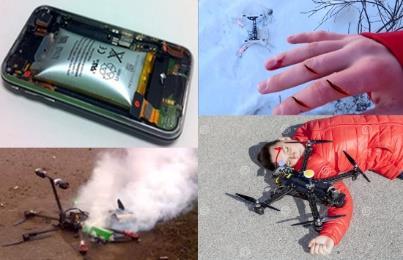
Fig. 3.2 Severalexamplesofaccidentsoriginatingfrom drones[Source:https://forum.dji.com/thread-48897-11.html]
Actualizing professionalism in designing and operating drones must be followed by the implementation of ethics. Several drone development incidents related to Catur Karsa and Sapta Dharma from the Indonesian Engineers Association(PII)canbedescribedasfollows:
1. TurnontheDroneorArming(Catur Karsa 3and Sapta Dharma 2). DIY drones require special knowledge of how the drone is turned on when flying or turned off after landing. This is done via remote control by controllingthethrottlelever.
2. Remote Control Settings (Catur Karsa 4 and Sapta Dharma 2&7).Theremotecontrolisthedronecontrol part that is driven by the pilot on earth. Before the drone is turned on, the remote control needs to be set first according to the mission to be carried out. Get to know the remote control features and their buttons. Pressing the button incorrectly will have fatal consequences. Perform standard settings for normal droneperformanceordronewithoutpayload.
3. Flying a Drone (Catur Karsa 3, Sapta Dharma 2, 3, and 5): Here you need a driving permit or license from a related party if the drone is used professionally and
International Research Journal of Engineering and Technology (IRJET) e-ISSN: 2395-0056
Volume: 11 Issue: 02 | Feb 2024 www.irjet.net p-ISSN: 2395-0072
flies above a height of 100 meters from the earth's surface. Drone flights under 100 m in areas far from densely populated settlements or airports or just as a hobby for photography, videography or other light missions only require qualified pilot skills. However, professionally,ifthedronefalls,thepilotmusttakethe risk and be responsible if it injures other people or causesahousefireduetothedronebatteryexploding. In other words, drones can be flown slowly, maneuveringincertainsituations.Todeliverpackages, dronessimplyneedtobeflownnormallybysettingthe customer's coordinates precisely using the waypoint method.
4. Location for flying the drone (Catur Karsa 3 and 4, Sapta Dharma 2): If this is a professional or commercial drone, it usually has a safe runway or a special terminal. The terminal can be located in an openfieldorartificial field ontopofa house/building. Professional pilots can certainly fly drones and drones backtopredeterminedcoordinatepoints.
5. Drone Operational Regulations (Catur Karsa 4, Sapta Dharma 2 and 3): Operators must follow the Minister of Transportation Regulation No. 37 of 2020 concerning Standard Operating Procedures (SOP) for Operating Drones in Open Air Spaces [15]. Minister of Transportation Regulation No. 63 of 2021 concerning the function of supervising the operation of small unmanned aircraft/drones, namely the Civil Aviation SafetyRegulationPart107[16],alsoneedstobetaken intoaccount.
6. Charging/Recharging Drone Batteries (Catur Karsa 3, and Sapta Dharma 2 & 7): Drone operations usually use LiPo or similar Lithium batteries because they are lightandhighperformance.Eachbatterycontainscells from 1s to 8s. Each cell has a minimum voltage of 3.7 Volts and if fully charged the maximum voltage is 4.2 Volts.Dronebatteriescanlastalongtimeifthepower usage is left at 30% of the minimum limit. The weakness of LiPo batteries is that they can only operate for around 10-20 minutes. Charging errors on LiPo batteries result in bloating. If bloated, the potentialforthebatterytoexplodeishigh.So,thepilot mustbeabletopredictwhenabatteryrunsoutsothat heimmediatelylowersthedroneandstops.
7. DroneDesign(Catur Karsa 3and4, Sapta Dharma 2,5 and 7): There are various types of drone shapes starting from the rotor: monocopter (helicopter), bicopter, tricopter, quadcopter, hexacopter, and octacopter,eventhefixedtypewings.Thetypechosen dependsonthemissiontobecarriedout,whetheritis ahigh-flyingmission,long-distanceflyingorcarryinga load. A professional who works in the field of drone design is certainly able to understand, model and simulate the performance of the drone that will be
produced. Apart from that, additional equipment or sensors carried by drones must also be carefully considered.
8. Drone Copyright (Catur Karsa 3 and Sapta Dharma 2 and5):Asaprofessionalwhowantstodevelopadrone independentlywithaspecificmission,itiscertainthat if you make a modification or costume it has received permission.The best wayto findouttheresultsofour professionalismisthroughcopyrightregistrationinthe form of a patent or simple patent. This is important to avoid that the products we produce and sell on the marketareplagiarizedfromotherpeople'swork.Ifthis happens the dignity of the individual and the integrity ofthecompanywillalsobeaffected.
Ingeneral,workprofessionalismmeanstheprofessional's commitment to their profession and is shown by being proud of themselves as professionals, continuously trying to develop their professional abilities, and adhering to ethics. There are several negative indications of the value of professionalism carried out by individuals or professional groups, including carrying out work without careful planning, working not in accordance with their duties and functions, and carrying out work with results that do not comply with standards. To prevent these negative indications, cultivating professionalism among professionalsrequiresadesireforactualization.
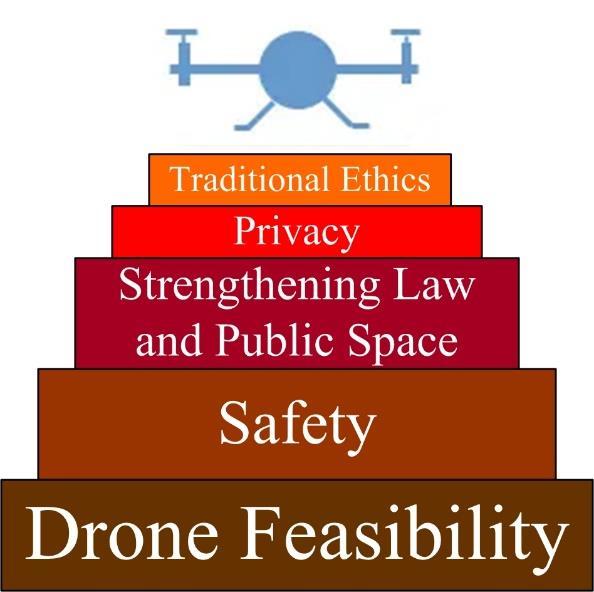
In cases related to the code of ethics, the application of Catur Karsa 1and Sapta Dharma 4and6 isconsidered as the main solution to the development of drones for package delivery. The application of Catur Karsa 1 (prioritizing nobility of mind), can be seen in the engineer's position as an innovator in scientific developmentandresponsibleforcreatingnewproductsto provide solutions to society. Practical ethics in drone developmentcanbeillustratedin Fig. 3.3.Thefirstethicis drone suitability, where for the purposes of delivering packages,usedroneswithhighhealth.Thesecondethicis safety, where drone operators must be trained and the droneandpilotmustbeinasafeandcontrolledcondition. Additionally, drones must not be flown in weather conditions that exceed the limits of the drone's ability to operate safely, and must be flown in a manner that ensures public safety. The third ethic is strengthening the law in public spaces where drone operators must comply with the regulations that apply in the airspace where dronesareoperated,namelybynotdisturbingthegeneral public in public places. The fourth ethic is privacy, where dronesmustbeoperatedinawaythatdoesnotendanger the privacy of non-public persons. Lastly is Traditional Ethics, meaning operators need to follow the advice and unwrittenrulesoflocalculture.
Regarding the impacts that occur when operating drones, the safety factor is the main key, for example drones fallingonpeople,propertyorriceplantsinricefields.This
International Research Journal of Engineering and Technology (IRJET) e-ISSN: 2395-0056
Volume: 11 Issue: 02 | Feb 2024 www.irjet.net p-ISSN: 2395-0072
meansthat Sapta Dharma 4mustbeenforced.Meanwhile, forsolutionsrelatedtotheapplicationof Sapta Dharma 4, namely avoiding conflicts of interest, a professional engineermustbeabletomaintainhisprofessionalismand dignity. The key to professionalism is the success of projects that are built on the basis of one's own or team abilities and the results are well received by the community.
MatthewSchroyerinDroneJournalism.org
Fromthiscase,theauthoristhepartydirectlyinvolvedin developingdroneswhichareappliedforpackagedelivery, if there are modifications, of course the source and state which part will be developed. Thus, no professional code of ethics is permitted. This includes avoiding conflicts of interest when it comes to the use of drone materials in mechanicalparts.
In the case of drone development which is linked to security, safety, occupational health and the environment (K4L),theapplicationof Catur Karsa 2and Sapta Dharma 1 and 2, namely prioritizing occupational safety, security andhealth(inthiscaseengineersandcolleagues)canbea preventive measure to prevent similar cases from recurring.Severalcasesrelatedtotheapplicationof Sapta Dharma 1areasfollows:
• Safety: Operatingdrones mustofcourse payattention to regulations for flying drones, choosing a location (must be far from airports and densely populated residential areas), and using personal protective equipment (PPE) such as gloves when conducting test flightsorwhenthedroneisoperated.
• Safety: There are at least two identified dangers from drone operation, namely propellers and batteries (see Figure 6). So, when carrying out tests in the lab, the propeller must be removed. The propeller can hit the face or hands, or anything in the fraternity. Next is a
battery that has the potential to explode which will destroyandscorchtheenvironment.
• Health: Related to the health of the drone and the health of the user (user or pilot). Before a drone is flown or carries out a particular mission, it must be ensured that all its components and systems are functioning properly. Apart from that, a pilot must be healthy and have skills and certification in flying drones. Skill is the main key in operating a drone. The second factor is patience in playing the drone. Tired pilots are advised to rest and be replaced with other professionals.
• The physical work environment is everything around workers that can influence them in carrying out the tasks assigned to them. In this case, making a DIY dronecaninterfereorcausenoisefromtherotationof the propeller and also when producing the frame. Drone operations must also avoid areas with high voltage, such as playing drones near the PLN power grid. This is because radiation from high voltage can turn off the communication system on the flight controller and the GPS compass which contains the magnetometer. Apart from that, flying a drone must also stay away from residential areas because if the drone falls into a resident's house (for example on the roof of a house), the potential for the drone battery to explode is very high and this will certainly cause a housefire.
A droneintheformofa hexacopterhasbeensuccessfully built and used to deliver packages weighing under 1 kg. The social impact of this development is linked to professionalismsuchascompliancewithethicsandcodes of conduct so as to avoid conflicts of interest. With professionalism, it is believed that the standard products produced will be useful, bring success and bring prosperitytosociety.Professionalismmakesapersonable to place himself in his work environment and commit himself to being faithful to his professional oath, being responsible and providing benefits from the services provided. Grounding professionalism and ethics in the developmentandoperationofdronescanbedonebyfirst establishing Standard Operating Procedures (SOP) as engineeringpracticessothatSafety,Health,WorkSecurity and the Environment can be realized or mitigated properly.
The material in this paper was partly funded by an International Exchange Grant (IEG) under contract 01/ITNY/LPPMI/Int.Ex.Gr./I/2023
International Research Journal of Engineering and Technology (IRJET) e-ISSN: 2395-0056
Volume: 11 Issue: 02 | Feb 2024 www.irjet.net p-ISSN: 2395-0072
[1] LawoftheRepublicofIndonesiaNumber11of2014 concerning Engineering (Undang-Undang Republik Indonesia Nomor 11 Tahun 2014 Tentang Keinsinyuran), (Online), (https://jdih.kemenkeu.go.id/fullText/2014/11TAH UN2014UU.HTM[Accessedon5November2023].
[2] T. P. Doni, “Differences in the meaning of profession, professionalism,professionalismandprofessionalism (Perbedaan pengertian profesi, profesional, profesionalitas, dan profesionalisme),” 2023 (Online) (http://bankidonk.blogspot.co.id/p/resume-profesikependidikan.html[Accessedon5November2023].
[3] I. W. Redana, “Ethics in engineering practice (Etika dalam praktek keinsinyuran),” Seminar dan Rapat Kerja Nasional2018,Yogyakarta,26-27July2018.
[4] L. Goasduff, “Why flying drones could disrupt mobility and transportation beyond COVID-19,” May 19,2020.
[5] T. Vazhavelil and A. Sonowal, “The future of delivery with drones: contactless, accurate, and high-speed, August2021.
[6] T. Stewart, “Google tests drone deliveries in project wing trials, 2022, (Online), (https://www.bbc.com/news/technology-28964260 [Accessedon31October2023].
[7] H.Zhang,S.Wei,W.Yu,E.Blasch,G.Chen,D.Shenand K. Pham, “Scheduling methods for unmanned aerial vehicle-based delivery systems,” Proceedings of the IEEE/AIAA Digital Avionics Systems Conference (DASC), Colorado Springs, CO, USA, 5–9 October 2014
[8] F.Castellano,“Commercialdronesarerevolutionizing business operations,” (online), https://www.toptal.com/finance/market-researchanalysts/drone-market [Accessed on 31 October 2023].
[9] Drone package delivery market, 2021, (Online), (https://www.marketsandmarkets.com/MarketReports/drone-package-delivery-market10580366.html[Accessedon2November2023].
[10] ArduPilot, Firmware site, path: /Tools/MissionPlanner, https://firmware.ardupilot.org/Tools/MissionPlanne r/[Accessedon30November2023]
[11] W. Suparta, A. Basuki, M. Arsyad, "The development of quadcopter using Arducopter APM 2.8 with
autopilot for tracking point of drop-off goods," IOP Conf. Ser.: Earth Environ. Sci., vol. 1151, no. 012032, DOI:10.1088/1755-1315/1151/1/012032.
[12] W. Suparta and T. Handayani, "Development of quadcopter for atmospheric data collection," INFOTEL, vol.14, no.1, pp. 57-64, 2022, https://doi.org/10.20895/infotel.v14i1.727.
[13] Ardupilot, "Mission planner home," https://ardupilot.org/planner/ [Accessed on 1 December2023]
[14] APDI, “Regulations regarding drones in Indonesia (Peraturan tentang drone di Indonesia),” (Online), https://apdi.id/peraturan-tentang-drone-diindonesia/[Accessedon5November2023].
[15] Minister of Transportation Regulation Number 37 of 2020concerningtheOperationofUnmannedAircraft in the Airspace Served by Indonesia (Peraturan Menteri Perhubungan Nomor 37 Tahun 2020 Tentang Pengoperasian Pesawat Udara Tanpa Awak di Ruang Udara yang Dilayani Indonesia), (online), (https://onedrive.live.com/download?cid=61919CCE D358D3B8&resid=61919CCED358D3B8%2113291& authkey=ABDHGnXlqK0nj0o&em=2 [Accessed on 5 November2023].
[16] Minister of Transportation Regulation 63 of 2021 concerningCivilAviationSafetyRegulationsPart107 concerning Small Unmanned Aircraft Systems (Permenhub 63 Tahun 2021 tentang Peraturan Keselamatan Penerbangan Sipil Bagian 107 tentang Sistem Pesawat Udara Kecil Tanpa Awak), (Online), (https://www.jogloabang.com/gaya/permenhub-632021-peraturan-keselamatan-penerbangan-sipilbagian-107-sistem-pesawat-udara [Accessed on 5 November2023].
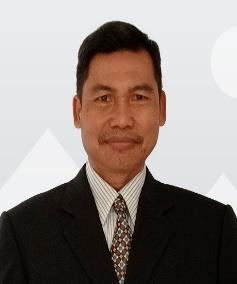
Wayan Suparta, isaprincipallecturer at the Institut Teknologi Nasional Yogyakarta (2022-Now) and is currently pursuing a professional engineerprogramatInstitutTeknologi Indonesia (ITI), Serpong He earned his PhD in electrical, electronic and systems engineering from Universiti Kebangsaan Malaysia (UKM) in 2008. He was lecturer of Electronics EngineeringofLegendaCollegeGroup, Malaysia A Post-Doctoral Fellow (2007-2008), Senior Lecturer (4 years) and Associate Professor (5 years) in UKM. His teaching fields are communicationelectronics,analogand
International Research Journal of Engineering and Technology (IRJET) e-ISSN: 2395-0056
Volume: 11 Issue: 02 | Feb 2024 www.irjet.net p-ISSN: 2395-0072
digital systems, robotics, machine learning and advanced softcomputing His research focused on GPS/GNSS technology, communication systems (remote sensing), smart systems, and UAV/drones.
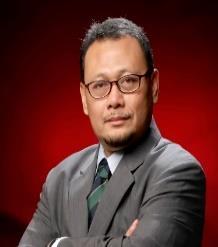
Mohamad Haifan is earned a bachelor's degree in the Agricultural Engineering/Mechanization, Gadjah Mada University (UGM) Yogyakarta in 1989. Received a Master's degree in Agriculture (MAgr) from Gifu University, Japan with a specialization in Agricultural Postharvest Technologyin1995.Heisapermanent lecturer at the Indonesia Institute of Technology, Serpong, Indonesia (since 1992) and now with homebase in the Study Program of Engineering Profession Program. He teaches courses in fluid mechanics, heat transfer, engineering economics, machinery & instrumentation and factory design. His research areas are inthefieldoffoodprocessingmachine & equipment design, agroindustry feasibility analysis and food managementsystems.
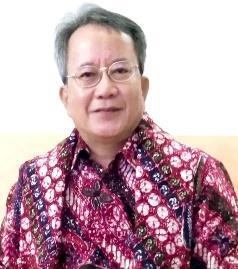
Syahril Makosim is graduated with a Bachelor of Agricultural Industrial Technology from the Indonesian Institute of Technology (ITI), Serpong, Indonesia. He obtained his Master's degree from the Biotechnology Program of the Institut Pertanian Bogor(IPBUniversity).Heisalecturer at the ITI Professional Engineer Study Program(PSPPI).Hiscompetencyisin the agricultural industry related to technology/food industry. He is also known as a trainer for MSMEs in the field of food processing, and teaches several courses such as Biochemistry, tissue culture, molecular biology and genetics in the Undergraduate Program.
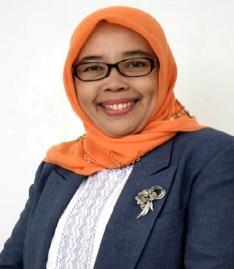
Yenny Widianty graduated from the Bachelor of Industrial Engineering, Faculty of Engineering Technology, Indonesian Institute of Technology (ITI) in 1992 and immediately started her career as a permanent lecturer at the ITI Industrial Engineering Department. He holds a Masters in
Industrial Engineering (MT) from the University of Indonesia (UI). Since 2022, she has served as a lecturer (home base) in the Engineering Profession Study Program. He teaches courses in Product Design & Development, Productivity Engineering, Feasibility Studies, Human Factors Engineering & Ergonomics. His field of research is Human Factors Productivity Engineering.
Rulyenzi Rashid has teaching experience since 1990 at the Indonesian Institute of Technology (ITI). He earned a master's degree in occupational safety and health at the University of Indonesia (2002) and attended environmental science training at Shiga University, Japan. He has recently focused on teaching and research in the field of occupational safety and health (K3, safety engineering)from2005tothepresent. HealsoworksasanK3practitionerin the industrial world and also in government (SMK3 expert staff in the downstream oil and gas industry, Director General of Oil and Gas 2017–2018) as well as an K3 instructor at theMinistryofManpower.
Adi Setiawan has begun his career as lecturer at Electrical Engineering Department, Institut Teknologi Indonesia in Tangerang Selatan, Indonesia since 2003. He earned his bachelor degree from Universitas Gadjah Mada, Yogyakarta and his master degree from Curtin University of Technology, Australia. He has teaching experience in electrical measurement and instrumentation, data and mobile communications, and digital signal processing. He has also contributed to several book chapters in area of digital literacy, digital transformation and business for some nationalpublishers.