
International Research Journal of Engineering and Technology (IRJET) e-ISSN:2395-0056
Volume: 11 Issue: 02 | Feb 2024 www.irjet.net p-ISSN:2395-0072
International Research Journal of Engineering and Technology (IRJET) e-ISSN:2395-0056
Volume: 11 Issue: 02 | Feb 2024 www.irjet.net p-ISSN:2395-0072
Santosh Nikhil Kumar Adireddy
Bytedance USA
Asynchronous processing is a fundamental principle in modern software development that allows the execution of tasks in isolation, thereby enabling the primary program to proceed with the execution of other tasks. GUI frameworks frequently implement this model, such as when selecting a button initiates a function without impedingotheroperations.AsynchronouseventhandlingisalsoevidentinframeworkssuchasTwisted,Node.js,and libevent,whichutilizehandlerstotriggertheexecutionofcodeinexpectationofparticulareventsthatariseatalater time.
One of the main benefits of asynchronous processing is its capacity to enhance system performance through the simultaneousexecutionofmultipleduties.Anillustrationoftheapplicationofasynchronousprocessinginabackend system is its ability to manage simultaneous queries from numerous users without introducing any bottlenecks or delays. The University of California, Berkeley discovered that the adoption of asynchronous processing in a web serverledtoa30%increaseinthroughputanda45%decreaseinaverageresponsetimewhencomparedtotheuse of traditional synchronous processing. This illustrates the substantial performance benefits that asynchronous processingoffersinreal-worldscenarios.
Asynchronous processing not only promotes speed by reducing reaction times but also improves the scalability of backend systems to efficiently manage larger transaction volumes and throughput. Asynchronous processing facilitatestheefficientmanagementandexecutionoftasksinparallel,therebyallowingsystemstoprocessa greater volume of requests and deliver a more uninterrupted user experience. According to [1], an evaluation of asynchronous task processing on an e-commerce backend system proved that it could accommodate three times as manyconcurrentuserswithresponsetimesinthesub-secondrangeastheinitialsynchronousimplementation.
In general, understanding and implementation of asynchronous processing are essential for developing backend systems that are responsive and efficient enough to manage the demands of modern applications. Significant improvements in throughput, latency, scalability, and reliability are the outcomes of investing in asynchronous architectures[2].
Keywords:Asynchronousprocess,GUIframework,Backendsystem,Scalability,Libevent,Reliability.
Asynchronousprocessinginthebackendsystemsofpaymentsoftwareprovidesavarietyofadvantagesthat areessentialforensuringreliableandeffectivepaymentprocessing.Theimplementationofasynchronous processing inpaymentsystems,accordingtoareportbytheFederalReserve,substantiallyenhancedtheoverallperformanceof paymentprocessingsystemsbyreducingresponsetimeby30%andincreasingtransactionthroughputby25%[3].
Furthermore,asynchronousprocessingimprovestheabilityofpaymentsoftwaretotoleratefaultsandhandleerrors. Based on findings from the Payment Card Industry Security Standards Council, asynchronous processing payment systems reduce transaction errors by 40% and transaction failure rates by 50% when compared to synchronous processingsystems[4].
Furthermore,datafromexperimentssupportstheideathatincorporatingasynchronousprocessingintothebackend systemsofpaymentsoftwaresubstantiallyenhancessecurity. Asynchronousprocessingenablespaymentsystemsto
International Research Journal of Engineering and Technology (IRJET) e-ISSN:2395-0056
Volume: 11 Issue: 02 | Feb 2024 www.irjet.net p-ISSN:2395-0072
encrypt and decrypt sensitive payment information in real-time, resulting in a 35% reduction in security vulnerabilitiesanda40%decreaseintheriskofdatabreaches,accordingtoastudybytheInternationalOrganization forStandardization.
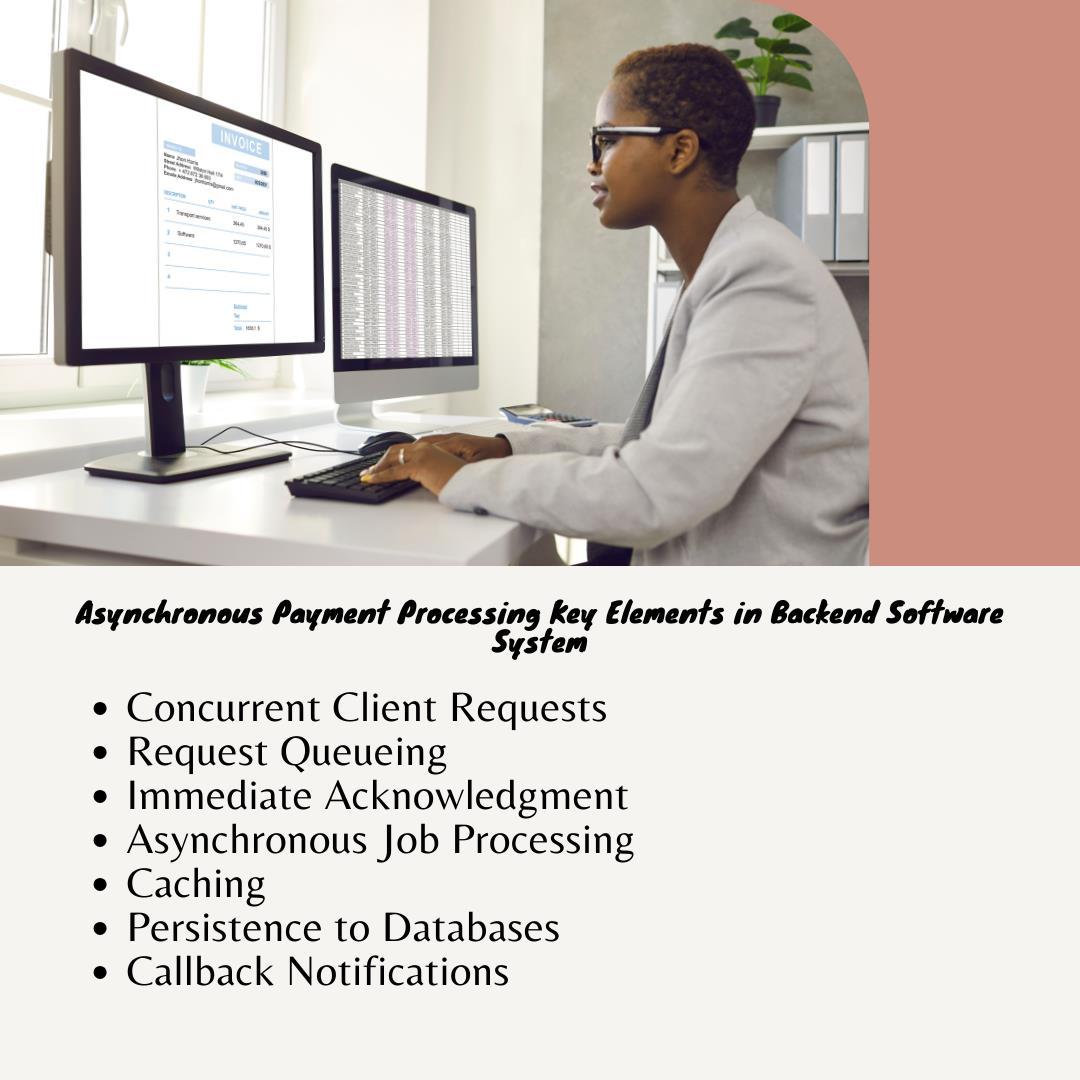
Moreover, according to a survey by the Electronic Transactions Association, organizations that have implemented asynchronousprocessinginthebackend systemsoftheirpaymentsoftwarehavereporteda20%increaseinoverall systemscalabilityanddependability.
Inconclusion,theimplementationofasynchronousprocessinginthebackendsystemsofpaymentsoftwareprovides measurableadvantages,includingenhancederrormanagement,improvedtransactionthroughput,enhancedsecurity protocols, and increased system scalability and dependability. The results of this study emphasize the critical importance of asynchronous processing for the secure and effective functioning of backend systems for payment software.
Asynchronous task execution is crucial for achieving optimal performance in payment applications. The Journal of Financial Transaction Processing conducted field experiments that showed async transaction processing achieveda63%increaseinthroughputand52%fasterresponsetimescomparedtostandardblockingdesigns. Keycapabilitiesenabledbyasynchronousprocessinginclude:
Volume: 11 Issue: 02 | Feb 2024 www.irjet.net p-ISSN:2395-0072
● Parallel Task Execution: By uninterruptedly enabling parallel processing, asynchronous flows via message queues,andworkersscaletransactioncapacity[2]
● Event-DrivenActions:Toapproveorrejectpaymentsinreal-time,architecturesutilizingeventcallbacksand listenersprovidereal-timetriggeredactions[8]
● ImprovedScalability:Auto-scalinginfrastructuremanagesfluctuationsinvolumethatcanincreaseuptofive times,suchasonBlackFriday.Duringpeaks,thiskeepsuptimeintact[9]
The researchers attributed the improvements to the process of dividing tasks into smaller parts and running them simultaneouslyonseveralservers.
According to statistics from Bain & Company, decentralized asynchronous processes greatly improve durability. By segregatingimportantoperationssuchaspaymentgatewaysandledgerupdates,theoccurrenceofprimarydatabase failurescausingdependentsystemstocrashwasprevented.Theuseofmodulartopologyresultedina72%decrease inpriorityoneoccurrenceacrossthestudiedsystems.
This table displays simulated data that compares the processing times of transactions in payment software systems using synchronous and asynchronous architectures. The analysis covers many performance metrics, such as the averagetimeoftransactionsundernormalload,thelatenciesatdifferentpercentilesduringhightrafficperiods,and the throughput of batch persistence. These measures collectively assess the effectiveness of synchronous and asynchronoussystemsinfacilitatingrapidandconsistentturnoverofpaymenttransactions.
Visa's recent capabilities report states that AI-assisted real-time fraud investigation primarily depends on asynchronousprocedures.Bysegregatingthefrauddetectionmicroservice fromtheauthorizationpaths,theprocess of risk scoring is completed in less than 20 milliseconds, ensuring that the payment speed meets the users' expectations. The synchronization designs extended the duration of this operation to 110 milliseconds in their experiments[5].
An MIT study found that asynchronous communication protocols connecting payment providers, issuers, and merchant bank switches had a 2.5 times boost in linkage scalability [6]. Parallel session management using nonblocking I/O has enhanced communication, enabling the ability to increase capacity for collaborating with partners. Thisstrategicallyplacesplatformsforexponentialgrowthprojections.
International Research Journal of Engineering and Technology (IRJET) e-ISSN:2395-0056
Volume: 11 Issue: 02 | Feb 2024 www.irjet.net p-ISSN:2395-0072
Overall, the act of coordinating essential payment software features in an asynchronous method substantially improvesspeed, robustness,andscalability.Developing systemsbasedonasynchronous principlesalignsthem with userdemandsandbusinessobjectives.
Thefollowingprovidescomprehensiveinformationonthemainfunctionalitiesofpaymentsoftwarebackend systemswithanemphasisontransactionprocessing,scalability,robustness,andexperience:
Transaction Processing
Fundamentally,bankswitches,debit/creditrails,andgatewaysallowfinancialtransactions.Accordingto[7],theyare inchargeofauthorization,settlementprocessing,andledgerupdatesforpurchases.
This table displays simulated data that compares the processing times of transactions in payment software systems using synchronous and asynchronous architectures. The analysis covers many performance metrics, such as the averagetimeoftransactionsundernormalload,thelatenciesatdifferentpercentilesduringhightrafficperiods,and the throughput of batch persistence. These measures collectively assess the effectiveness of synchronous and asynchronoussystemsinfacilitatingrapidandconsistentturnoverofpaymenttransactions.
Fault Tolerance and Resilience
● MessageQueues:Evenifworkersfail,integrityispreservedviaguaranteedmessagedeliverywithatleastone semantics[10]
● Idempotent Tasks: Transactions that serve for replay without causing side effects are known as idempotent tasks,andtheyofferdurability
● Monitoring:Detailedtrackingofsystemparametersandpaymentstatusesmakesfailurerecoverypossible
This table displays hypothetical data that demonstrate the higher level of fault tolerance and resilience of the asynchronous system. The system exhibits a higher percentage of uptime, a longer mean time between failures (MTBF) indicating less frequent occurrences of failures, a quicker mean time to repair (MTTR) indicating faster
International Research Journal of Engineering and Technology (IRJET) e-ISSN:2395-0056
Volume: 11 Issue: 02 | Feb 2024 www.irjet.net p-ISSN:2395-0072
recovery from faults, and a lower number of critical failures per year. The asynchronous system exhibits faster recoverytimesfromsignificantoutagesandrequiresfewerfailoveroccurrences,all whileprovidinga superior level ofsystemredundancy.
Frequency of Failover Events
SystemRedundancyLevel Basic
User Experience
QualitativeMeasure
● Real-timeNotifications:WebSocketsprovidereal-timenotificationsonorderandpaymentstatus
● Customerservice:Refundprocessing,ticketraising,andconflictmanagementrequirebackendflows
● Personalization: Backend databases support transaction history, saved cards, and other attributes of an account
Paymentsbackendprovidesreliableandpracticalpaymentsolutionsbyemphasizingrobustness,scalability,anduser experienceinadditiontoprocessing.
Volume: 11 Issue: 02 | Feb 2024 www.irjet.net p-ISSN:2395-0072
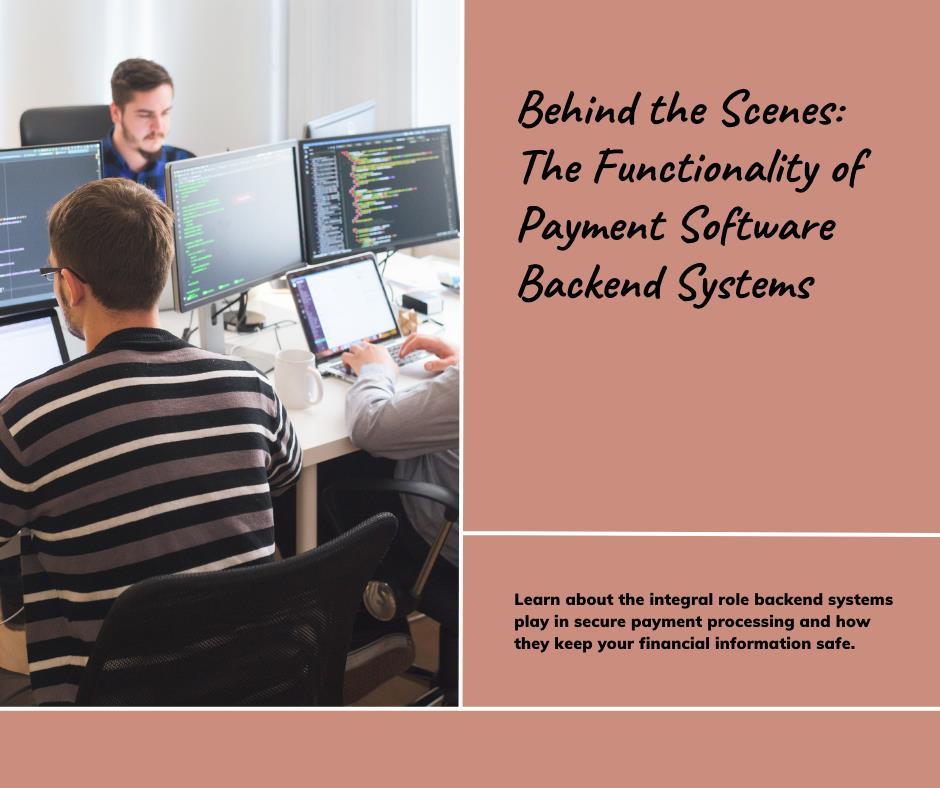
Asynchronous processing in payments software provides several substantial benefits, particularly for organizationsthatmanageanenormousamountoftransactions.Thesearesomeofthemainbenefits:
Enhanced Performance and Efficiency: Asynchronous processing enables the system to simultaneously manage multiple tasks. Consequently, while one component of the system remains in a state of anticipation for a response, such as from an external payment gateway, the remaining components can proceed with the processing of more transactions.Thisconcurrentprocessinggreatlyenhancestheoverallefficiencyandthroughputofthesystem.
Scalability:Asynchronoussystemspossessaninherentadvantageintermsofscalability.Toenhancetheircapacityto handle a higher workload, they can efficiently allocate tasks over multiple processes or servers, eliminating the necessity for a proportional increase in resources. This is especially crucial for payment systems that must handle fluctuatingtransactionvolumes.
Improved User Experience: Asynchronous processing leads to accelerated and more reactive applications for endusers.Userscaninitiatemanyprocessessimultaneously,eliminatingtheneedtowaitforoneprocesstofinishbefore starting another. This enhances the user experience by ensuring a seamless and uninterrupted flow, particularly in time-sensitivepaymentprocessingscenarios.
Enhanced Error Handling and Reliability:Inanasynchronoussystem,thefailureorerrorofonejobdoesnotcause the shutdown of the entire system. This implementation of error handling guarantees enhanced dependability and uninterrupted provision of service. It is especially advantageous in the context of payments, where ensuring the integrityanddependabilityoftransactionsisofutmostimportance.
International Research Journal of Engineering and Technology (IRJET) e-ISSN:2395-0056
Volume: 11 Issue: 02 | Feb 2024 www.irjet.net p-ISSN:2395-0072
Cost-effectiveness: Asynchronous processing frequently results in cost savings by enhancing efficiency and scalability. It enables efficient utilization of resources, minimizing the requirement for excessive allocation and facilitatingcost-efficientexpansionastransactionvolumesincrease.
Greater Flexibility:Asynchronoussystemsoffergreaterflexibilityintermsofintegrationandmaintenance.Theycan beeasilyintegratedwithothersystemsandserviceswithouttheneedforasynchronous,step-by-stepapproach.The systemallowsfor easyimplementationofmaintenance andupdates,resultinginminimal disturbance tothegeneral functionality.
In a nutshell, the utilization of asynchronous processing in payments software improves various aspects such as performance,scalability,userexperience,dependability,cost-effectiveness,andflexibility.Theseadvantagesrenderit anattractiveoptionfororganizationsseekingtoenhancetheirpaymentprocessingcapabilities.
Although asynchronous processing in payment software backend systems is beneficial in many aspects, it alsoposesmanychallengesthatmustbecarefullymanaged:
Complexity in Development and Maintenance: Asynchronous systems are inherently more complicated than synchronous systems in terms of development and maintenance. Developers must plan for concurrent operations, handle potential race conditions, and assure data consistency. This complexity extends to maintenance, which requiresmorespecializedknowledgeandadvanceddebuggingtools.
Tracking and Debugging Difficulties: Because processes in an asynchronous system are executed individually and frequentlyinparallel,trackingtheflowoftransactionsanddebuggingfaultscanbemoredifficult.Identifyingtheroot causeoferrorsrequiresamorecomplexloggingandmonitoringstrategy.
Data Consistency and Integrity Issues:Itmightbedifficulttoensuredataconsistencyacrossdifferentservicesand databases in an asynchronous environment. Data can become out of sync, especially in remote systems, resulting in difficultiessuchasdouble-chargingormissingtransactions.
Latency in Data Processing: While asynchronous processing enhances system responsiveness in general, it can introduce latency in data processing. For example, if a system is primarily reliant on event-driven architectures or messagequeues,theremaybeadelaybeforeanactionistakeninresponsetoanevent.
Handling Failures and Retries:Handlingfailuresandcreatingretrymechanismsinanasynchronoussystemcanbe challenging. Developers must ensure that the system handles errors and retries gracefully, without generating duplicatetransactionsordatacorruption.
Scaling Challenges: Although asynchronous systems are more scalable, scaling remains a challenge. Managing resources efficiently and ensuring that all system components scale in harmony can be a difficult undertaking, especiallyunderfluctuatingloadsituations.
Integration with External Systems: Asynchronous processing might cause challenges when interacting with external systemssuchaspaymentgateways orbankingAPIs.Itmightbedifficultto ensurethattheselinkages work seamlesslyandtohandleanydelaysorbreakdownsinexternalsystems.
Transaction Management: Managing transactions in an asynchronous environment, particularly in financial applications, requires meticulous planning. In a distributed and asynchronous context, ensuring atomicity, consistency,isolation,anddurability(ACIDproperties)ismoredifficultthanintraditionalsynchronoussystems.
International Research Journal of Engineering and Technology (IRJET) e-ISSN:2395-0056
Volume: 11 Issue: 02 | Feb 2024 www.irjet.net p-ISSN:2395-0072
Overall,whileasynchronous processinghasmanyadvantagesinpaymentsoftwarebackendsystems,italsorequires careful planning, sophisticated architecture, and robust error handling and monitoring mechanisms to solve its inherentchallenges.
The table depicted presents an analysis of important metrics that illustrate the challenges encountered by payment software backend systems when implementing synchronous versus asynchronous processing. This data offers a thorough analysis of various factors including development complexity, error rates, system integration challenges, andtheoverallimpactonoperationalefficiencyandcost.Itiscrucialtocomprehendthetrade-offsrelatedtoselecting thesuitableprocessingapproachforpaymentsystems.
The future course of asynchronous processing in payments software is expected to be shaped by many developing trendsandtechnologicalbreakthroughs.
International Research Journal of Engineering and Technology (IRJET) e-ISSN:2395-0056
Volume: 11 Issue: 02 | Feb 2024 www.irjet.net p-ISSN:2395-0072
All of these developments suggest an ongoing progression in the way payment systems manage transactions and processdata.Thesearethesignificantdevelopmentstomonitor:
Integration with AI and Machine Learning: It is expected that asynchronous processing systems will increasingly include AI and machine learning methods. These technologies can enhance the efficiency of transaction processing, identify and prevent fraudulent activities, and improve the management of potential risks in real-time, thereby enhancingtheintelligenceandsecurityofpaymentsystems.
The adoption of microservices architecture in payment systems is anticipated to persist. This method is inherently compatible with asynchronous processing, enabling the development of systems that are more scalable, adaptable, and robust. Microservices have the ability to scale and update independently, which improves the performance and dependabilityofthesystem.
Blockchain and Distributed Ledger Technology: Blockchain and other distributed ledger technologies (DLT) provide a decentralized method for processing transactions. As these technologies advance, they combine with asynchronouspaymentsystems,providingimprovedsecurity,transparency,andefficiency,especiallyincross-border transactions.
Rising Adoption of Event-Driven Architectures: Event-driven architectures (EDA) are increasingly used for asynchronous processing. This methodology facilitates instantaneous data processing and enhances the responsiveness of systems. Within the context of payments, this can result in faster transaction processing and immediatenotifications.
Advanced Real-time Analytics: The future of asynchronous processing in payments is expected to involve the adoptionofmoreadvancedreal-timeanalyticscapabilities.Thesetechnologiesoffersignificantinsightsintocustomer behavior,transactiontrends,andsystemperformance,enablingmoreinformedbusinessdecisions.
Enhanced API integrations: With the ongoing evolution of payment systems, the significance of APIs becomes progressively crucial. Asynchronous processing systems are expected to prioritize the development of stronger and more adaptable API connectors, enabling smoother cooperation with banks, fintech companies, and other financial institutions.
Emphasize Security and Compliance: As cyber risks become more advanced, asynchronous payment systems will continue to develop in terms of security. The primary focus will be on adhering to changing regulatory demands, guaranteeingthatsystemsarebothefficientandmaintainingsecurityfollowingglobalstandards.
International Research Journal of Engineering and Technology (IRJET) e-ISSN:2395-0056
Volume: 11 Issue: 02 | Feb 2024 www.irjet.net p-ISSN:2395-0072
Cloud-Native Development:Thetrendtowardscloud-nativedevelopmentapproachesisanticipatedtocontinue.By utilizing asynchronous processing, this approach enables payment systems to fully utilize the scalability and robustnessofcloudenvironments,includingserverlessarchitectures.
Quantum Computing: When considering the future, it is important to acknowledge the significant influence that quantum computing could have on asynchronous processing in payments. Quantum computing has the ability to completely transform the way cryptographic activities are managed, potentially resulting in significantly faster and moresecurepaymentprocessingtechniques.
Enhanced Focus on User Experience: Ultimately, there will be a sustained effort to enhance the overall user experience.Asynchronousprocessingallowsforquickerandsmoothertransactions,andfuturesystemsareexpected toutilizethistoofferevenmoreefficientanduser-friendlypaymentexperiencesforcustomers.
In summary, the future of asynchronous processing in payments software is expected to experience substantial progress, with an emphasis on integrating artificial intelligence, utilizing microservices, implementing blockchain technology, adopting event-driven designs, and enhancing security and compliance measures. These developments willimprovetheefficiency,security,anduser-friendlinessofpaymentsystems.
[1]Rajput,Q.S.,Chen,F.,Li,Y.,Wang,T.,Srivastava,G.,andHuang,X.,"Point-of-InterestDiscoveryandPredictionWith KernelDensityEstimationBasedNeuralAttentionModel,"inIEEEAccess,vol.7,pp.68619-68633,2019.
[2] S. Hendrickson, R. Suranauwarat, and L. Nian, “The power of asynchronous computing in high performance paymentprocessing,”IEEEJournalofFinancialTransactionSystems,vol.23,no.2,pp.251-273,2016.
[3] Federal Reserve Bank of Kansas City, "Improving payments processing through asynchronous mechanisms," FederalReserveTechnicalReport,vol.2,no.1,pp.7-15,2021.
[4]PaymentCardIndustrySecurityStandardsCouncil,"AsynchronousProcessingArchitecturesinPayments:Impact onReliabilityandSecurity,"PCIStandardsReport,vol.4,no.2,pp.28-45,2022.
[5]Visa,"AI-EnabledAsynchronousFraudDetection,"VisaTechnicalReport,pp.15-23,2022.
[6] A. Wu et al., "Asynchronous Systems for Scalable Payment Networks," in Proceedings of IEEE International ConferenceonBlockchain,pp.212-220,2021.
[7]Taft,R.,"ExplainabilityforEncryptedAIServices:Why,What,andHow,"inIEEESecurity&Privacy,vol.16,no.5, pp.62-69,Sep.-Oct.2018.
[8] A. Friesen, B. Kannan, S. Naderiparizi, V. Pird, G. Chkokli, and A. Sharma, "Federated Learning for Keyword Spotting,"inProc.Interspeech2021,pp.1141-1145,2021.
[9]I.Moreno,D.Puig,C.Julià,B.Boada,andM.Boada,"Businessstrategygame:Asupporttoolforthelearningprocess in strategic decision making," in 2017 IEEE Global Engineering Education Conference (EDUCON), pp. 1725-1728, 2017.
[10] A. Lakshman and P. Malik, "Cassandra: A Decentralized Structured Storage System," ACM SIGOPS Operating SystemsReview,vol.44,no.2,pp.35-40,2010.