
International Research Journal of Engineering and Technology (IRJET) e-ISSN: 2395-0056
Volume: 11 Issue: 02 | Feb 2024 www.irjet.net p-ISSN: 2395-0072
International Research Journal of Engineering and Technology (IRJET) e-ISSN: 2395-0056
Volume: 11 Issue: 02 | Feb 2024 www.irjet.net p-ISSN: 2395-0072
1Mr. Manish Salvi, 2Mr. Arshvir Singh Kalsi
Department of Computer Engineering, Thakur Polytechnic, Mumbai, Maharashtra India
Abstract - Automation is changing consumer expectations and industry standards in the quickly developing field of mobile app development. This shift affects industries includingbankingandhealthcareinadditiontotechnology. The global desire for automated functionality is causing a huge shift in the mobile app environment. Automation is becoming essential for several reasons, such as enabling smoothuser-deviceinteractionsandenhancingappsecurity throughreal-timeanomalydetection.Usercomfortisbeing enhanced by the increasing interconnection of gadgets, apps,andsensors.Moreover,thegoalofintegratingremote monitoring and intelligent real-time analytics is to greatly improvethequalityofcustomersupport.Butasautomation spreads,itbecomesclearthatskilledlaborisneeded.While startupsandsmalleragenciescouldfinditdifficulttomake thistransition,largercompanieswithhighlyskilledworkers canadopt smart technologies with ease. Fororganizations to effectively adjust to these changes, ensure a seamless transition,andmaximizethebenefitsofautomation,skilled personnel is essential. The continuous expansion and integration of automation are intimately linked to the development of mobile apps, which hold the potential to improveproductivityandcreativityinthedigitalsphere.In conclusion,automationplaysasignificantroleinthemobile app development sector by providing improved user experiences,simplerworkflows,andhigherproductivity.[1]
Keywords – automation, event, data integrity, analysis, unique emotional narratives.
PREPARATIONSTOPOST-EVENTANALYSIS:
The use of technology, automation, and artificial intelligence (AI) has significantly changed the course of event planning. Automation is a driving force behind this shift,freeinguporganizers,venues,andstakeholdersfrom the laborious and repetitive chores that consume their time. This allows them to focus on the strategic and creative aspects of events. Handwritten guest lists are a thing of the past; in the modern industry, smooth digital experiences are paramount. Although many tools and resources have been used, event planning has reached previously unheard-of heights thanks to the skillful
application of technology, ushering in a new era of creativityandproductivityintheindustry.
Automationhasawiderangeofapplicationsinthe field of event planning, including participation management, budget tracking, marketing campaigns, and day-of coordination. We explore the critical responsibilities that automation plays in effectively overseeing all aspects of event execution, including RSVP tracking and smooth cooperation. This study attempts to offernewinsightsbyilluminatingcutting-edgetechnology andsolutionsthatarecommoninbusiness.Itlooksathow automation technologiesmightspeedupthe furnishing of real-time data on availability, pricing, and contract changes.Italsoemphasizeshowcrucialcostestimatesand automated spending monitoring systems are to the development of successful budget management techniques. The paper aims to provide insight into the possibilitiesofautomationineventplanningbyexamining thesesubtleelements.[2]
Effectivemarketingandpromotionareessentialto anevent'ssuccess,andautomationbooststheseactivities' effectiveness.Onthedayoftheevent,coordinationmustbe flawless,andautomationplaysasignificantroleinensuring that everything runs smoothly. The study examines how automated check-in and registration technologies, together with real-time warnings and communication, all contributetoaseamlesseventdayexperience.[4]
Automation also has benefits that continue after the event has ended. Continuous improvement requires post-eventanalysisandfeedbackgathering,andthisarticle explores how automation technologies might expedite these procedures while offering insightful information for futureeventdesign.[3]
International Research Journal of Engineering and Technology (IRJET) e-ISSN: 2395-0056
Volume: 11 Issue: 02 | Feb 2024 www.irjet.net p-ISSN: 2395-0072
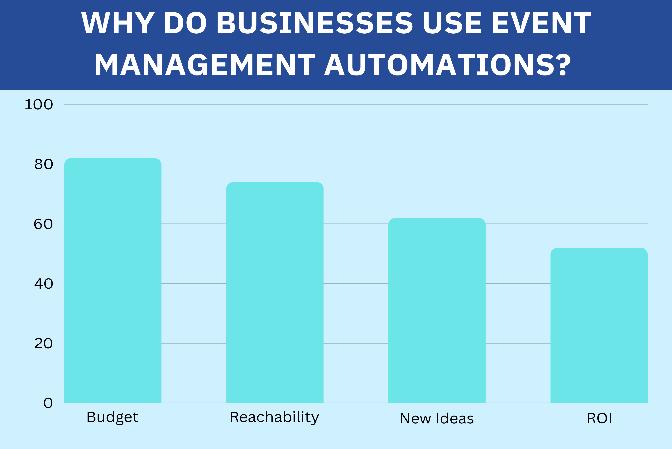
Intotalthereare4differentlevelsofautomation.Inorder frommostgeneraltomostspecific,theyare:
Fixed automation systems, also known as hard automation, are designed to complete a single set of tasks repeatedly. Fixed automation systems typically are used for discrete mass production or continuousflowsystems.
An example of a fixed automation system is an automated conveyor belt in the auto manufacturing industry that moves objects with minimaleffort,increasingefficiency.[5]
Programmable automation systems are controlled by commands delivered by a computer program. Because of this, the automated processes can vary based on the instructions sent to the computer by thedesigner’scode.
Programmable automation is commonly used in settings where similar items are produced using thesameautomatedstepsandtools.
For example, paper and steel rolling mills use the same steps to create many different types of products.[13]
Flexible automation, also known as soft automation, is typically used in batch processes withavarietyofproducts.Eachpieceofequipment is given instructions for a computer operated by a human, so changing code can be delivered to the computer,allowingformoreflexibleproduction.
The primary advantage of flexible automation is that the product changeovers occur quickly and automatically because they are conveyed by the
controlsystem,eliminatingtheextratimerequired toreconfiguretheequipmentinbetweenbatches.
Industries that use flexible automation include textile manufacturing, food processing or paint manufacturing.[1]
Integratedautomation systemsinvolvetotallyautomating manufacturingplantswithminimalhumaninvolvement.
Integrated automation can be used with continuous process manufacturing and batch processmanufacturing.[14]
Flexible Automation is built for a variety of batch processes,andeventautomationisinlinewiththat.When it comes to event planning, computer systems are used to provide instructions, making it possible to quickly adapt fordifferentjobsandsituations.
Whatsetsitapartfrompermanentandprogrammable automation is its flexibility in accommodating changes in attendancepreferences,logisticalneeds,anddetails.Event automation fits into the flexible automation paradigm becauseofitscapacitytoswiftlyadjusttochangingneeds, whichisidealgiventhedynamicandever-changingnature ofeventpreparation.[1]
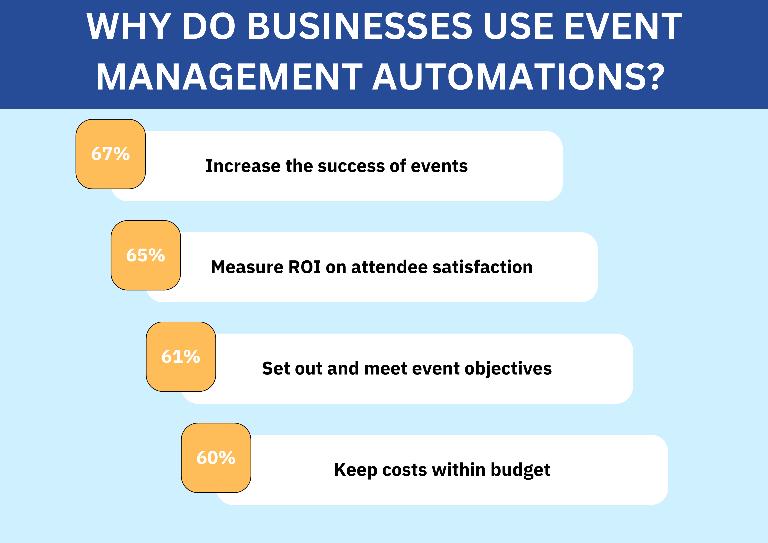
Thepurposeofeventautomationistostreamlineand enhance various aspects of event planning and execution using technology, software, and automated processes. Event automation serves multiple purposes, contributing to efficiency, precision, and an overall improved experience for event planners, organizers, and attendees. Herearekeypurposesofeventautomation:
When data entry, RSVP (répondez s’il vous plait) tracking, and guest list management are done automatically, manual, repetitive processes associated with event planning are eliminated. Event planners can now concentrate on more strategic and innovative elements of the event since they have saved a substantial amountoftime.[12]
When manual processes are automated, the possibility of human error is decreased. Automated RSVP tracking systems, for instance, minimize errors in guest countandrelatedlogisticsbyprovidingpreciseandup-todateupdatesonvisitoranswers.[13]
International Research Journal of Engineering and Technology (IRJET) e-ISSN: 2395-0056
Volume: 11 Issue: 02 | Feb 2024 www.irjet.net p-ISSN: 2395-0072
Efficientparticipantmanagementismadepossibleby automated technologies, which let organizers take care of things like sending invitations, getting responses, and sharing updates in a smooth manner. A more engaging experience is enhanced by customized communication thatisbasedonthepreferencesoftheguests.[13]
D. Budget Management:
Using automated cost tracking systems, event automation helps in monitoring and controlling spending. Real-timebudgetmonitoringallowsplannerstospotareas ofoverspendingandmakenecessaryadjustments.[12]
E. Targeted Marketing:
Event organizers can send customized marketing messages and segment guest lists thanks to automation. This raises the possibility of attendance by ensuring that promotionalcontentreachestheappropriateaudience.[11]
F. Efficient On-the-Day Coordination:
Automated registration and check-in systems expedite admissions, cutting down on wait times and improvingvisitors'experiencesingeneral.Alertsandrealtimecommunicationassistorganizersinquicklyresolving anyproblems.[11]
G. Post-Event Analysis and Feedback:
The process of gathering post-event feedback using automated survey forms is made easier by automation. The information offered by this data helps the organizers evaluate the event's performance and identify areas for development.[13]
H. Predictive Analytics and Insights:
The future of event automation involves the use of predictive tools to foresee attendee behaviour, enabling data-driven decisions for enhanced attendee experiences. Analytics provide insights into attendance rates, engagementlevels,andreturnoninvestment(ROI).[11]
To put it briefly, Event planners may increase productivity, accuracy, and attendee pleasure by utilizing technologyandautomatedsolutions,whichwillultimately resultinsuccessfulandunforgettableevents.[12][11]
A. Modelling
Use case diagrams (UCDs) and data flow diagrams (DFDs) are essential tools for modelling an event automation application since they help to capture the functionsanddataflowoftheprogram:
1. Use Case Diagram:
Use Case Diagrams are a useful tool for visualizing the differentwaysthatusersandtheeventautomationsystem interact. Use examples are used to illustrate important features including guest management, RSVP tracking, venueselection,budgetmanagement,marketing,anddayof coordination. The foundation for development is this visual depiction, which facilitates comprehension of the user-systemdynamics.[8]
2. Data Flow Diagram:
Data Flow Diagrams which show the flow of data within the event automation software, complement UCDs. They demonstrate the information flow from inputs, such as guest information and event needs, through various processing steps and outputs, like budget reports and finished guest lists. When determining data sources, destinations, storage locations, and the procedures in chargeofdatatransformation,DFDsareessential.[8]
Whencombined,thesemodellingapproachesprovide a thorough understanding of the event automation application. Use case diagrams put the user's interactions front and centre, making sure the program properly satisfies their demands. However, data flow diagrams guarantee the smooth transfer of information throughout the application by illuminating the underlying data operations.
International Research Journal of Engineering and Technology (IRJET) e-ISSN: 2395-0056
Volume: 11 Issue: 02 | Feb 2024 www.irjet.net p-ISSN: 2395-0072
The architecture of the app must be carefully considered to ensure user pleasure and to optimize data managementforsuccessfuleventautomation.
Tools Used:
Expo serves as the foundation for React Native apps and offers a range of services and tools to make crossplatformappcreationanddeploymenteasier.Expomakes the modelling step easier by providing a wealth of UI design libraries and components, expediting the developmentprocess,andfacilitatingrapiditeration.[13]
B. React Native
AJavaScript framework calledReactNativeisused to createnativemobileapplications.Itenablesdevelopersto create components with React, resulting in quicker developmentcyclesandcross-platformcodereuse.During the modelling stage, React Native is essential for creating dynamic and responsive user interfaces. Because of its component-based architecture, different app functionalities may be modelled effectively and modularly.[7]
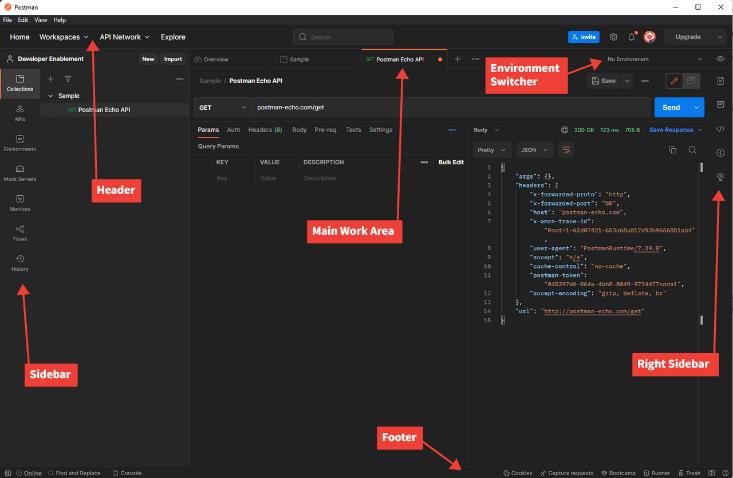
C. Postman
Designing, testing, and documenting APIs is made easier using Postman, an API development and testing platform. The event automation application uses Postman to model and test the APIs. It makes sure that all the components communicate with each other smoothly and inaccordancewiththerequiredstandards.
D. Google APIs
The app is enhanced with significant capabilities by therangeofservicesthatGoogleAPIs offer,suchascloud services, authentication, and maps. Google APIs are essential to modelling because they specify how an application communicates with Google services. This
entails using cloud services for data storage, leveraging authentication for safe access, and integrating Google Mapsforvenueidentification.[12]
As developers’ type, TabNine, an AI-powered code completiontool,anticipatesandsuggestscodesnippetsto improve efficiency. By offering insightful code recommendations, TabNine expedites the modelling stage andminimizesthetimeandeffortneededtocodeintricate features.
Cursor Code Editor is an efficient code editing tool with a wealth of features, including collaborative tools, autocompletion, and syntax highlighting. By giving developers a strong and cooperative environment for effectivelydeveloping,editing,andmanagingcode,Cursor CodeEditorenhancesthemodellingstage.
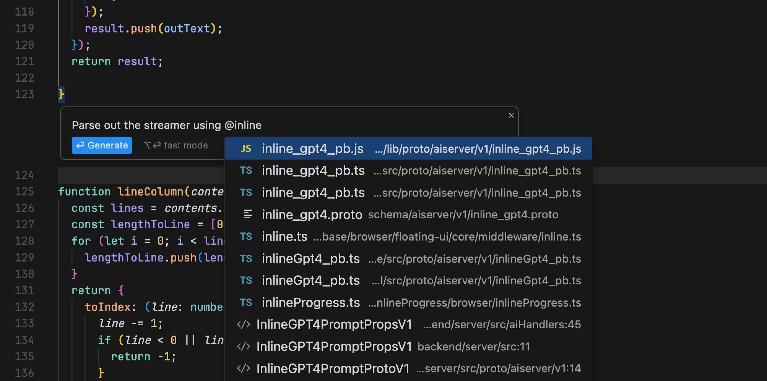
Fig -4:
By combining Expo, React Native, Postman, Google APIs,TabNine,andCursor,thedevelopmentteamensures a robust, efficient, and feature-rich event automation app. These tools collectively contribute to the successful modelling of the app, setting the stage for a seamless and user-friendlyeventplanningexperience.
B. Construction
UI/UXDesign:SeamlessExperiences
User Interface (UI) and User Experience (UX) design are carefully considered during the event automation app's creation process to guarantee a smooth and enjoyable user experience across multiple screens. Thisisa thorough examinationof the fundamental screen designelements.
11 Issue: 02 | Feb 2024 www.irjet.net
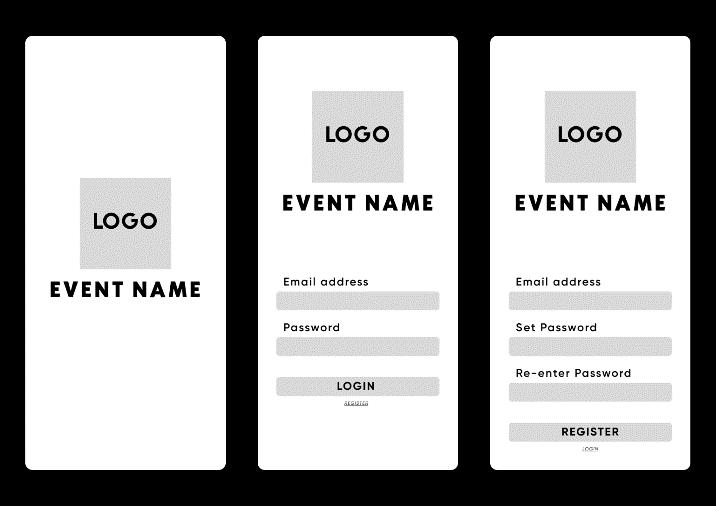
The email address, username, and password input forms are placed in convenient locations on the login screen, making it easy for users to navigate. The required information is requested in a well-organized form with visually appealing yet elegant colour schemes on the signup screen. User behaviours are simplified by having separate submit and navigation buttons. Real-time validation, tooltips, and guided onboarding processes make it simple for users to complete the signup process. Improved user experience can be achieved through progressivedisclosureandvisualcues.[6]
Theeventspaneldisplayseventtitles,thumbnails,and synopses in a dynamic card-based arrangement. The accessibility of filters and sorting options facilitates effective event discovery. An immersive exploration of available events is made possible by intuitive navigation, seamless transitions, and sensitive touch interactions. Updates on event availability in real time improve user engagement.
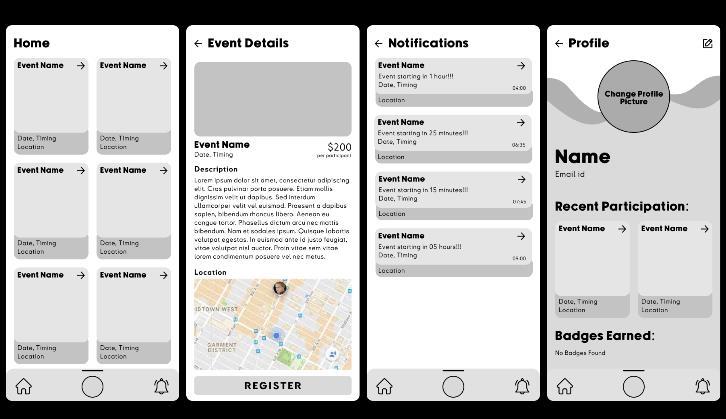
The screen including event photos, schedules, and pertinent information has an eye-catching design. Simple navigation components make exploration simple. Swipeable galleries and foldable sections are examples of userfriendlygesturesthatimprovetheuser'sabilitytoexplore extensive event information. There are thoughtfully positionedcalls-to-actionforregistration.
Anintuitiveformontheregistrationscreencollectsall relevant participant information. An easy-to-use form filling interface, contextual help options, and real-time validation all help to ensure a seamless registration process. The payment procedure is made simpler with a simple design that offers alternatives for payment methods and clear transaction reports. The user experience when paying is enhanced by allowing in-app commentsontransactionsthataresuccessfullycompleted andbyprovidingopenerrorhandling.Brightconfirmation messages on the event registered screen praise the user's successful registration. Participation is improved overall whensectionsoractivitiesaretransitionedsmoothly.[10]
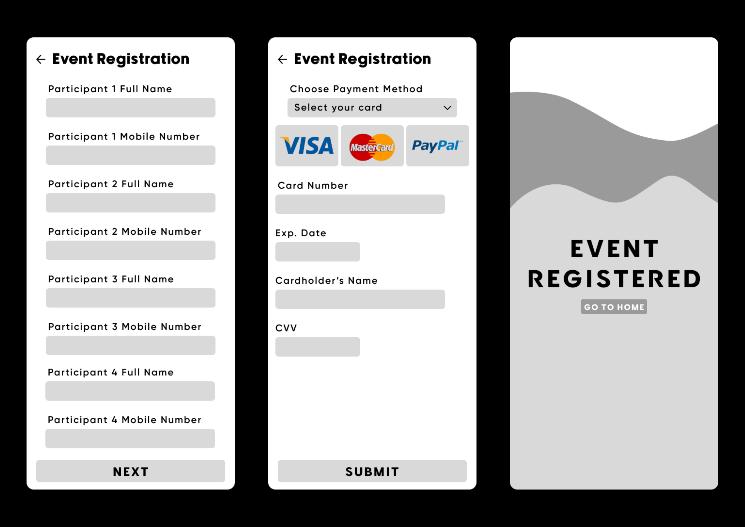
In conclusion, great effort has been taken to balance utility and aesthetics in the UI/UX design of the login,signup,events,eventinformation,eventregistration, payment, and event registered screens. During the creation process, user-centric design concepts are prioritized to guarantee a straightforward, visually appealing,andpleasurableexperienceforusersoftheapp throughouttheireventplanningjourney.
The integration of the Google Sheets API in the event automation app serves as a pivotal component, offering a robust mechanism for storing, retrieving, and managing
International Research Journal of Engineering and Technology (IRJET) e-ISSN: 2395-0056
Volume: 11 Issue: 02 | Feb 2024 www.irjet.net p-ISSN: 2395-0072
critical event-related data. Here's an in-depth exploration ofitsfunctionalities:
When the application launches or interacts with the user, it initializes the Google Sheets API. This entails creating a secure link between the app and the specified Google Sheets document, which acts as the main location foreventdata.Thisentailsasafeauthenticationprocedure thatverifiestheidentityoftheappbeforeallowingaccess totheGoogleSheetsdocument,usuallyviaOAuth2.0.
B.
Data is arranged in rows and columns within the Google Sheets document, which functions as a structured database. The document may contain separate sheets for different areas of event preparation, like RSVP answers, guest lists, budget information, and more. When entering orchangingdata,theappformatstheentriesintheGoogle Sheets document using the established structure. This guaranteesuniformityandpromoteseffortlessretrieval.
Any changes you make to the data in the Google Sheets document automatically update the app. More complex setups may make use of webhooks or triggers, which would enable the app to get alerts automatically whenever something changes in the Google Sheets, eliminatingtheneedforregularmanualchecks.
D.
By ensuring that data is encrypted during transmission between the app and Google Sheets, the API protects confidential event data from being accessed by unauthorizedparties.Throughtheapp'slogincredentials, access to the Google Sheets document is restricted to individualswhopossessthenecessaryauthorization.
Theproject'sgoalistoinvestigatethecomplexeffects of event automation on the planning and carrying out of various events. The study highlights how event automation may coexist with the dynamic and multifacetednatureofeventplanning,withafocusonhow it aligns with flexible automation concepts. The study places significant emphasis on clarifying the potential benefits of event automation, including increased efficiency, streamlined workflows, and customized experiences.
It goes over the many uses and advantages of this technology in detail, covering important areas including guestmanagement,RSVPtracking,venueselection,budget management, marketing initiatives, and day-of
coordination. The research emphasizes how the use of automation results in more smooth and effective executionofeventsthroughreal-worldexamplesandcase studies.Ithighlightshowthefieldofeventautomationhas changed because of technology breakthroughs and projectsanexpansionofautomation'spossibleusesinthe future.
Examiningautomationsystems'flexibilityinreal-time settings, the research highlights how quickly they can adjust to changes. Overall, the project's goal is to give a thoroughunderstandingofhoweventautomation,withits dynamic capabilities, not only solves the problems facing event planning today, but also paves the way for a more technologicallyadvancedandflexiblefuturefortheevents sector [9][5]

A. Risk of Failure
Failure risk always looms over automation tools that could result in project delays and decreased productivity. [10]
B. Continuous Maintenance
Automation tools and processes will require continuous maintenance and monitoring to ensure they areup-to-dateandfunctioningwithouthiccups.
C. Lack of Quality Supervision
Automationtoolsdon’tofferthelevelofsupervisionof a human. Hence, there are chances that automation can provide unreliable results in cases where human interventionisneeded.[10]
D. Limited Scope
Due to their limited understanding of the context of softwaredevelopment,automationtoolsmaynotconsider allthefactorsinmakingdecisions.[10]
International Research Journal of Engineering and Technology (IRJET) e-ISSN: 2395-0056
Volume: 11 Issue: 02 | Feb 2024 www.irjet.net p-ISSN: 2395-0072
“You’re either the one that creates the automation or you’regettingautomated.”-TomPreston-Werner
In conclusion, the exploration of the event automation application, it becomes evident that the integration of advanced technologies significantly enhancesthelandscapeofeventplanning.Thisinnovative application, built on Expo, React Native, Postman, Google APIs, Tabnine, and Cursor Code Editor, reflects a commitment to efficiency, precision, and a user-centric approach.
The modeling phase, incorporating Use Case Diagrams and Data Flow Diagrams, showcases the application's adaptability to diverse event scenarios. Movingintotheconstructionphase,particularattentionto UI/UX design ensures a seamless and visually pleasing journey for users across login, signup, event details, registration,payment,andviewingregisteredevents.
GoogleSheetsAPI,employedfordatastorageand retrieval, streamlines information management, while Maps API adds a spatial dimension by facilitating venue location sharing. These integrations, coupled with Expo's capabilities, establish a robust foundation for the app's functionality.
However, there are several difficulties along the automation path. Maintaining continuous performance requiresconstantmaintenance,andit'simportanttofinda balance to prevent relying too much on technology. The necessityofflexibilityinthefaceofchangingeventplanning requirementsisunderscoredbythepotentialrigidityseen inestablishedsystems.
The event automation application, in its most basic form, is the union of technology innovation with usercentered design, providing event planners with an allinclusive tool to optimize workflows, boost productivity, and create unforgettable event experiences. This application demonstrates the industry's dedication to innovation as the automation landscape develops, guaranteeing that upcoming events are not only wellplanned but also dynamic, efficient, and enhanced by the potentialofautomation.[14][10]
[1] RichestSoft,“TheImpactofArtificialIntelligence(AI)on Mobile App Development,” Oct. 31, 2023. https://www.linkedin.com/pulse/impactartificialintelligence-ai-mobile-app developmentdxscc#:~:text=Incorporating%20AI%20int o%20mobile%20app,success%20in%20a%20competitiv e%20marketplace
[2] Z. Laliwala and S. Chaudhary, "Event-driven ServiceOriented Architecture," 2008 International Conference on Service Systems and Service Management, Melbourne, VIC, Australia, 2008, pp. 1-6, doi: 10.1109/ICSSSM.2008.4598452. keywords: {Business; Service-oriented architecture; Engines; Web services; Standards;Computerarchitecture;Monitoring},
[3] B. Singh, X. Han, Z. Wu, V. I. Morariu and L. S. Davis, "Selecting Relevant Web Trained Concepts for Automated Event Retrieval," 2015 IEEE International Conference on Computer Vision (ICCV), Santiago, Chile, 2015, pp. 4561-4569, doi: 10.1109/ICCV.2015.518. keywords: {Videos; Detectors; Visualization; Training; Calibration;Tires;Computationalmodeling},
[4] M. A. Afanasev, M. S. Kliachin and D. V. Demidko, "AnalysisandAutomationofBusinessProcessesofMass Events Using Situational Management Methodology," 2018 IEEE International Conference "Quality Management, Transport and Information Security, Information Technologies" (IT&QM&IS), St. Petersburg, Russia, 2018, pp. 299-303, doi: 10.1109/ITMQIS.2018.8525060.keywords:{Automation ;Information systems; Organizations; Planning; Databases; Kernel; event; management; situation; automation;adoption;approbation},
[5] L. J. Ekanayake, D. Ihalage and S. P. Abyesundara, "Performance Evaluation of Google Spreadsheet over RDBMS through Cloud Scripting Algorithms," 2021 International Conference on Computer Communication andInformatics(ICCCI),Coimbatore,India,2021,pp.17, doi: 10.1109/ICCCI50826.2021.9402432. keywords: {Structured Query Language;Relational databases;Writing;Internet;Planning;Reliability;Arrays; Performance Analysis;Google Apps Script;RDMBS;Spreadsheets;Algorithms},
[6] P. Afsar, M. Faizudheen, M. Jasim Anikkadan, P. Mohammed Rashad and U. Mohammed Shabeer, "Intelligent Event Finder and Management System," 2021 Fifth International Conference on I-SMAC (IoT in Social,Mobile,AnalyticsandCloud)(I-SMAC),Palladam, India, 2021, pp. 1191-1195, doi: 10.1109/ISMAC52330.2021.9640719. keywords: {Seminars;Filtering;Engineering profession;Conferences;Layout;Education;Indexes;Event; Finder;Promotion;Registration;Onboarding;QR Code;Artificial Intelligence;Machine Learning;Deep Learning;HybridRecommendationSystem},
[7] “Introduction · React native,” Dec. 08, 2023. https://reactnative.dev/docs/getting-started
[8] “Comparison of diagramming tools.” https://www.umsl.edu/~sauterv/analysis/f06Papers/Ni takorn/#:~:text=Unlike%20Flow%20Charts%2C%20Da
International Research Journal of Engineering and Technology (IRJET) e-ISSN: 2395-0056
Volume: 11 Issue: 02 | Feb 2024 www.irjet.net p-ISSN: 2395-0072
ta%20Flow,and%20the%20relationships%20between% 20them
[9] P. Hathaiwichian, L. Siriwittayacharoen, A. Wongwachirawanich,andC.Ragkhitwetsagul,"Android application for event management and information propagation," 2014 Third ICT International Student Project Conference (ICT-ISPC), Nakhonpathom, Thailand, 2014, pp. 139-142, doi: 10.1109/ICTISPC.2014.6923236. keywords: {Java;Databases;Registers;Testing;Androids;Humanoid robots;android application;event management;QR code},
[10] Vlinkinfo,“Benefitsofautomationtestinginmobileapp development,” VLink. https://www.vlinkinfo.com/blog/benefits-ofautomationtesting/
[11] A.Chaturvedi,“15BenefitsofAutomatedtestinginapp development,” Mar. 03, 2023. https://www.linkedin.com/pulse/15-benefitsautomatedtesting-app-development-abhay-chaturvedi/
[12] “GoogleSheetsAPIOverview,” Google for Developers https://developers.google.com/sheets/api/guides/conc epts
[13] “Expo documentation,” Expo Documentation. https://docs.expo.dev/
[14] R.Weyers,“6Typesofautomation[Benefits,Pros/Cons, Examples],” Conger Industries Inc. - Wisconsin’s Material Handling Experts, Jan. 17, 2024. https://www.conger.com/typesofautomation/#:~:text=Industrial%20automation%20i s%20the%20application,industrial%20manufacturing %2C%20and%20other%20processes
2024, IRJET | Impact Factor value: 8.226 | ISO